How to Read a French Bulldog DNA Color Test: Results Explained

A French Bulldog DNA color report can look like a page of codes rather than a useful answer. Results such as B/b, d/d, e/e, ky/ky, and N/co only become meaningful when you know what the symbols represent and which genes must be read together.
Reading each line separately can lead to the wrong conclusion. Some genes change pigment, some control patterns, and others can hide a result that is still present in the dog’s genotype. This guide gives you a practical order for translating a completed report into likely visible color, carried traits, and important limitations.
How to read a French Bulldog DNA color test: First identify the laboratory’s notation and determine whether the dog has zero, one, or two copies of each tested variant. Next, interpret the E, K, and A loci together to establish the base coat expression. Then apply brown, Cocoa, dilution, Pied, and Merle results before comparing the prediction with the dog’s visible coat.
- One copy often means a recessive variant is carried but not visibly expressed.
- Two copies may produce a recessive trait, depending on the locus and other genes.
- Some genes can mask colors or patterns shown elsewhere on the report.
Nusually means the tested variant was not detected, not that every possible variant was ruled out.
Understand the Report Before Interpreting the Color
Before predicting a color, learn how your specific laboratory presents its results. The same biological finding may appear as allele symbols, “one copy,” “two copies,” “clear,” or “carrier,” depending on the company and panel.
Genotype vs. Phenotype
Genotype means the genetic results reported for the tested variants. Phenotype means what you can see, including coat color, nose pigment, white spotting, Brindling, and Merle mottling.
A dog’s genotype and phenotype may appear not to match. The dog may carry a hidden trait, one gene may mask another, or the panel may not include every relevant variant.
For a broader visual overview, use our French Bulldog colors guide alongside the laboratory report.
Get Weekly Dog Care Tips Free
Join 10,000+ dog owners. Vet-approved advice every week
🔒 No spam. Unsubscribe anytime.
What Two Copies Mean
A dog generally inherits one copy of a gene from each parent. Reports often display those two copies as a pair of letters or symbols.
| General Result | Typical Interpretation |
|---|---|
N/N |
The tested variant was not detected in either copy. |
N/variant |
One copy of the tested variant was detected. |
variant/variant |
Two copies of the tested variant were detected. |
| Carrier | The dog has a variant that may not affect its visible coat. |
| Expressed | The result may affect appearance, depending on dominance and interactions with other genes. |
This is a general framework, not a rule that works identically for every test. Dominant, recessive, and incompletely dominant traits behave differently, and Merle requires special interpretation.
ℹ️ Check the Laboratory Key
Never assume that two laboratories use identical symbols or test the same variants. Read the interpretation key supplied with your report, and remember that “normal” or N applies only to the variants included in that test.
How to Read a French Bulldog DNA Color Report Step by Step
Step 1: Identify the Laboratory and Tested Variants
Start with the laboratory name, report date, panel version, and list of tested genes. Look for any result marked inconclusive, unavailable, or requiring a new sample.
Panels change over time. Two reports can list the same locus but test different known variants, so do not compare them as if their coverage were identical.
Step 2: Mark Zero, One, or Two Copies
Create a simple worksheet before choosing a color label. Record the exact result rather than rewriting it from memory.
| Locus | Reported Result | Copies Detected | Visible or Carried? |
|---|---|---|---|
| E | Add report result | 0, 1, or 2 | Interpret with K and A |
| K | Add report result | 0, 1, or 2 | Interpret with E and A |
| A | Add report result | 0, 1, or 2 | May be visible or masked |
| B and Cocoa | Add report results | 0, 1, or 2 | Apply to dark pigment |
| D | Add report result | 0, 1, or 2 | Check for dilution |
| S and M | Add report results | Varies by test | Evaluate patterns separately |
Leave the final column open until you consider the interacting loci. A result can be genetically present without being obvious in the coat.
Step 3: Read the E Locus
The E locus, associated with MC1R, affects whether dark eumelanin can appear in the hair. In French Bulldogs, an e/e result is commonly associated with recessive Cream and can conceal patterns that the dog still carries genetically.
Mask-related variants can produce dark facial hair when the rest of the genotype allows the mask to show. A report may therefore contain mask information even when the dog’s visible coat makes the mask hard or impossible to see.
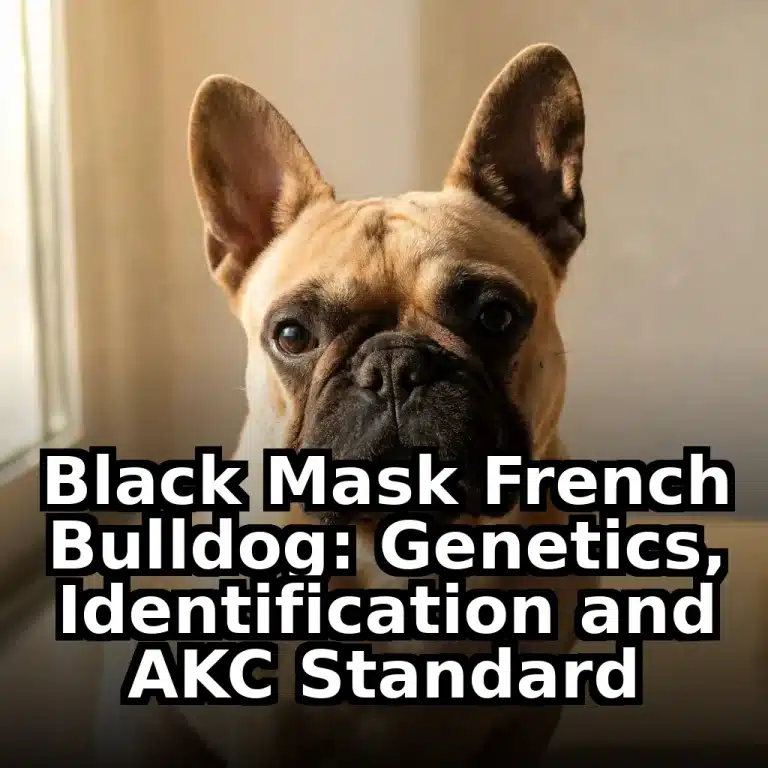
Use the Cream French Bulldog guide for recessive Cream identification and the Black Mask French Bulldog guide for facial pigment distinctions.
Step 4: Interpret the K and A Loci Together
The K locus helps decide whether A-locus patterns can appear. Depending on the reported alleles, it may support dominant black expression, Brindling, or allow the A locus to control more of the visible pattern.
The A locus, associated with ASIP, contributes information about patterns such as Fawn/Sable and Tan Points. However, selecting a color from the A-locus line alone can be misleading because E- or K-locus results may change or hide its expression.
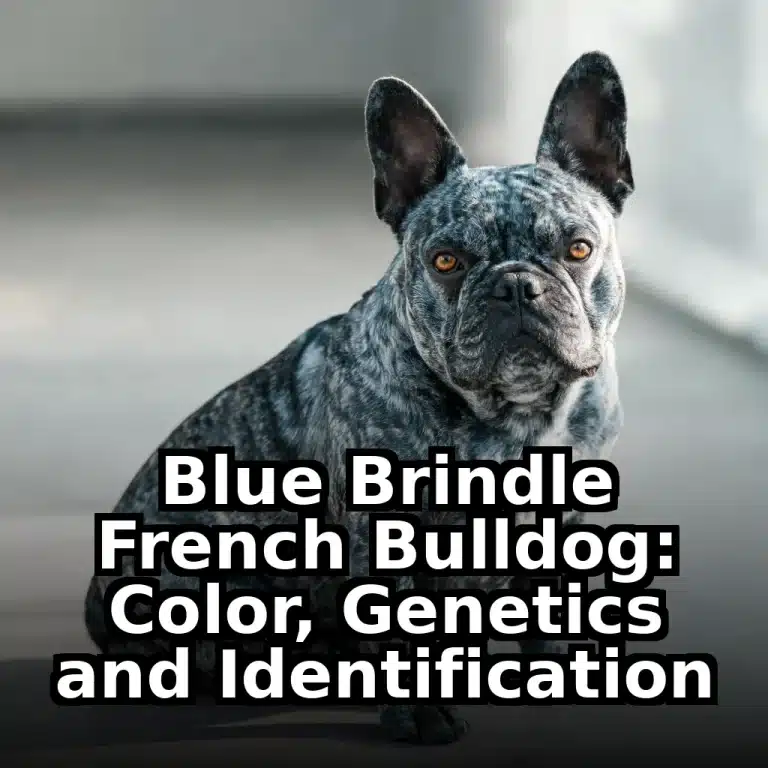
When the report and coat are difficult to reconcile, compare the visible dog with our Brindle, Fawn, and Sable French Bulldog identification guides.
⚠️ Common Interpretation Mistake
Do not predict a Frenchie’s color from the A-locus result alone. Read E, K, and A together before deciding which base pattern is likely to appear.
Step 5: Apply Brown and Cocoa Results
Brown-associated variants change normally black eumelanin to brown. This change may affect the coat as well as the nose, lips, eye rims, and paw-pad pigment.
The traditional B locus, associated with TYRP1, and Cocoa, associated with HPS3, are separate tests. A laboratory may report both, and not every brown-looking Frenchie has the same tested genotype.
One brown-associated copy may be carried without making the dog visibly brown. Historical labels such as “testable Chocolate” and “non-testable Chocolate” can also be confusing because testing has developed and laboratory terminology has changed.
Our Chocolate French Bulldog guide explains how brown pigment differs from black and dilute pigment.
Step 6: Apply the Dilution Result
The D locus, commonly associated with MLPH variants, can dilute eumelanin when the relevant combination is present. Black pigment may appear slate or blue-gray, while brown pigment combined with dilution may appear lighter and warmer.
Apply dilution only after identifying the underlying color or pattern. A Blue Fawn French Bulldog, for example, keeps a Fawn body while normally black pigment in the nose, mask, lips, and eye rims becomes diluted.
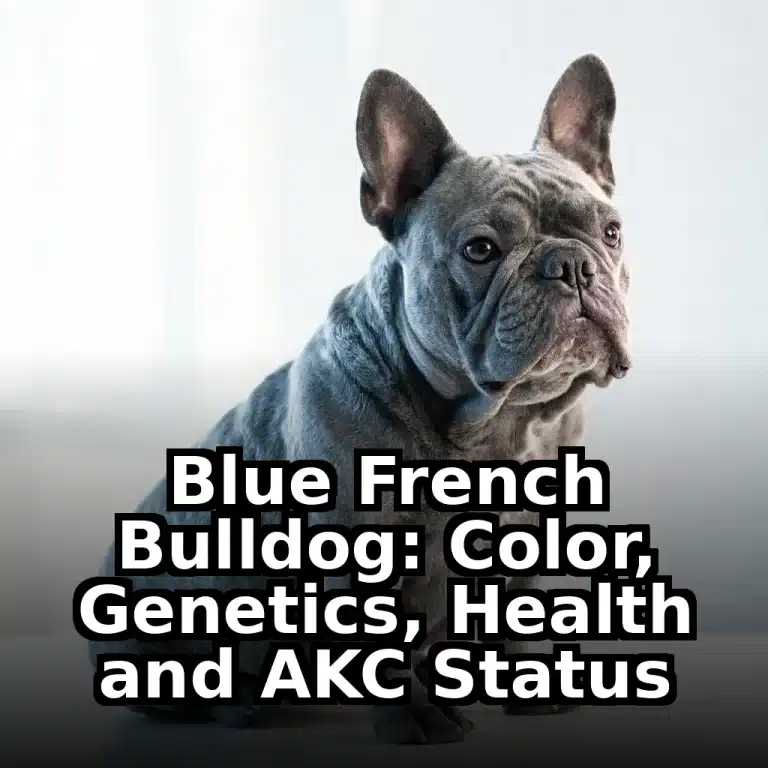
A solid-looking Blue French Bulldog has a different visible pattern. Brown plus dilution may receive breeder labels such as Lilac or Isabella, but those names are not used consistently.
Use our Blue vs. Lilac vs. Isabella comparison and Isabella French Bulldog guide to compare those labels without treating them as universal genetic diagnoses.
Step 7: Evaluate Pied, Merle, and Other Patterns
Pied or Piebald affects where pigmented and white areas appear. It does not erase the dog’s underlying color genotype, and a color panel cannot reliably predict the exact size, shape, or location of the patches.
A Pied French Bulldog can therefore have Fawn, Brindle, or another color in its pigmented areas. Small flecks within white coat are ticking, which is different from Pied itself; see our Pied vs. ticking guide.
Merle, associated with PMEL, modifies pigment distribution and creates mottling. It is not a simple recessive system in which “one copy” can automatically be interpreted as a harmless hidden carrier result. Allele size and the laboratory’s reporting method may matter.
If a Merle result is uncertain or complex, ask the testing laboratory or a veterinary geneticist to interpret it. Our Merle French Bulldog guide covers identification and health context in more detail.
🛡️ Color Testing Is Not Health Testing
A coat-color result does not replace breed-appropriate health screening or professional breeding guidance. Do not use this article or a color panel alone to choose a breeding pair.
Step 8: Compare the Prediction With the Visible Dog
Finally, compare the report with the dog’s body color, nose, lips, eye rims, mask, Brindle striping, Sable tipping, white patches, and Merle mottling. Use neutral daylight because warm bulbs, flash, shadows, and photo filters can change how pigment looks.
An apparent mismatch may be caused by a masked genotype, a variant not included in the panel, different terminology, an inconclusive result, or incorrect visual identification. Sample or record errors are less common possibilities that should be discussed directly with the laboratory.
French Bulldog Color-Locus Reference Table
| Locus or Test | Main Interpretive Role | Important Limitation |
|---|---|---|
| E / MC1R | Recessive Cream and mask-related expression | Can hide patterns indicated at other loci |
| K / CBD103 | Dominant black- and Brindle-related expression | Must be read with E and A |
| A / ASIP | Fawn/Sable and Tan Point pattern information | May be masked by E or K |
| B / TYRP1 | Some brown-associated variants | Does not explain every brown phenotype |
| Cocoa / HPS3 | Cocoa-associated brown pigment | Separate from the traditional B locus |
| D / MLPH | Dilution of eumelanin | Known tests may not explain every dilute dog |
| S / MITF | Pied or white-spotting information | Does not predict exact patch placement |
| M / PMEL | Merle-associated patterning | Not a simple recessive carrier system |
| I / MFSD12 | Red-to-yellow pigment intensity information | Does not determine the complete color alone |
Test availability and reporting formats differ by laboratory. The UC Davis French Bulldog coat-color panel is a useful example of how one laboratory defines its included tests, but always follow the key supplied with your own report.
Worked French Bulldog DNA Report Examples
The examples below are fictional and simplified for education. They are not breeding predictions, and another laboratory may display the same general findings differently.
Example 1: A Cream Frenchie Carrying Hidden Variants
Imagine a report showing e/e at E, ky/ky at K, an A-locus pattern result, one brown-associated copy, one dilution-associated copy, and one Pied-associated copy.
- The
e/eresult is considered first because recessive Cream can prevent dark eumelanin patterns from appearing in the hair. - The K and A results remain part of the genotype even if the Cream coat hides their visible expression.
- One brown-associated and one dilution-associated copy may be carried without producing brown or dilute pigment in this dog.
- A single white-spotting-associated result must be interpreted using the laboratory’s model and cannot predict exact markings.
Key lesson: A visibly Cream Frenchie can carry color and pattern information that its coat does not reveal.
Example 2: A Blue Fawn Frenchie
Now imagine a report that allows Fawn expression through the E, K, and A combination and shows two copies of a tested dilution variant at D.
- E, K, and A establish the Fawn-based pattern first.
- The dilution result is applied afterward to normally dark eumelanin.
- The body can remain tan, honey, or reddish Fawn while the nose, mask, lips, and eye rims look blue-gray.
- The result should not automatically be relabeled as a uniformly solid Blue coat.
Key lesson: Dilution modifies the pigment allowed by the underlying pattern; it does not replace the pattern.
Example 3: Brown Plus Dilution
Consider a simplified report showing an expressed brown-associated combination and an expressed tested dilution combination.
- The brown result changes normally black eumelanin to brown.
- The dilution result then lightens that brown-based pigment.
- A seller may call the result Lilac or Isabella, but the exact label can vary by breeder community and underlying pattern.
- The formal laboratory genotype is more precise than a marketing name.
Key lesson: Record the tested alleles and visible pattern before relying on a color label.
Why the DNA Result May Not Match the Visible Coat
A mismatch does not automatically mean the test is wrong. Work through these common explanations first:
- One gene is masking another.
- The panel did not include every relevant variant.
- The dog carries a recessive trait without expressing it.
- A breeder label differs from laboratory terminology.
- Age, lighting, coat condition, or image processing changes the visible shade.
- Patch placement or Brindle intensity cannot be predicted precisely.
- The report contains an inconclusive result that needs laboratory review.
Recheck the laboratory key, confirm the tested variants, interpret E, K, and A together, apply pigment modifiers afterward, and evaluate Pied and Merle separately. If the result still makes no sense, contact the testing laboratory with the report number and clear daylight photographs.
What a French Bulldog DNA Color Test Cannot Tell You
A coat-color panel cannot independently prove:
- The dog’s overall health or whether it should be bred
- Purebred status or pedigree accuracy
- Parentage unless a separate parentage test was performed
- Exact adult coat shade or patch placement
- The amount of Brindling or Sable tipping
- Temperament, structure, or breed quality
- AKC conformation eligibility
- Every undiscovered or untested color variant
AKC registration and conformation color eligibility are also different questions. Review our AKC French Bulldog colors guide before assuming that a laboratory label is an accepted show color.
✅ Use the Report for the Right Purpose
A DNA color panel can clarify tested pigment and pattern variants, but it cannot measure health, temperament, structure, or responsible breeding quality. Treat it as one limited source of evidence.
Frequently Asked Questions
What Does “Carrier” Mean on a French Bulldog DNA Test?
A carrier generally has one copy of a recessive tested variant and may not express it visibly. The exact meaning depends on the gene, inheritance pattern, and results at other loci.
Does N/N Mean My French Bulldog Carries No Color Variants?
No. N/N ordinarily means the specific variant or variants covered by that test were not detected. It does not rule out every known, unknown, or untested cause of coat color.
Can Two French Bulldogs With the Same DNA Results Look Different?
Yes. Shade, pattern distribution, Brindling, white spotting, age, and untested modifiers can create visible differences even when the reported results are similar.
Can a Cream French Bulldog Carry Blue, Chocolate, or Pied?
Yes. A Cream Frenchie may carry underlying dilution, brown, or white-spotting variants even when recessive Cream prevents some of that information from appearing clearly in the coat.
Does a DNA Color Test Confirm a French Bulldog Is Purebred?
No. Coat-color testing examines selected genetic variants. It is not the same as pedigree verification, parentage testing, or a breed-ancestry analysis.
Can a DNA Test Predict a French Bulldog Puppy’s Exact Color?
It can help predict possible pigments and patterns, but it cannot guarantee exact shade, patch placement, Brindle intensity, or adult appearance.
Final Takeaway
To interpret a French Bulldog color report accurately, start with the laboratory’s key and record the number of tested copies. Read E, K, and A together to establish the base expression, then apply brown, Cocoa, dilution, Pied, and Merle findings.
Compare that prediction with the visible dog, but treat breeder color names cautiously and remember the panel’s limits. When a result remains unclear, the testing laboratory or a veterinary geneticist is the right source for case-specific interpretation. The individual color guides linked above can then help you examine the coat and pigment in greater detail.