Sable French Bulldog: Color, Genetics and Identification

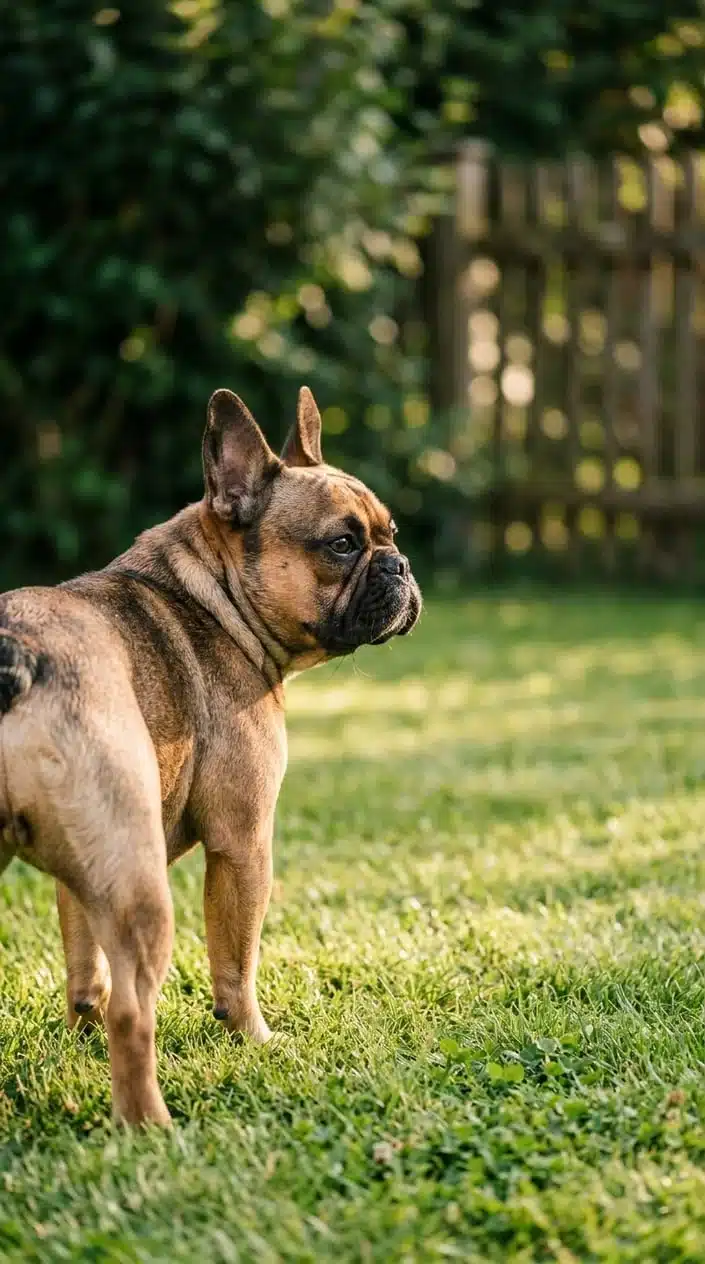
A sable French Bulldog can be difficult to identify because “sable” is used differently by breeders, owners, genetic laboratories, and breed standards. In practical terms, it usually describes a fawn-to-red coat with noticeable dark-tipped or dark-shaded hairs, often across the ears, head, shoulders, back, or tail.
The dark overlay is different from a black facial mask and from the defined striping of brindle. This guide explains how to recognize sable shading, understand modern genetics, and place the appearance within the wider French Bulldog color spectrum.
A sable French Bulldog usually has a yellow, tan, gold, or red-fawn base with visible dark-tipped hairs or darker shading. These hairs commonly appear on the ears, forehead, neck, shoulders, spine, or tail.
- Sable generally describes shading over a fawn-based coat.
- A black mask may occur with sable, but it is a separate facial feature.
- Sable tipping is not the same as brindle striping.
- The AKC standard does not list sable as a separate French Bulldog color.
- A conventionally pigmented dog may fit within fawn with black shading.
- Modern ASIP testing may describe a related pattern as Shaded Yellow.
- Appearance alone cannot reveal every inherited color variant.
What Does a Sable French Bulldog Look Like?
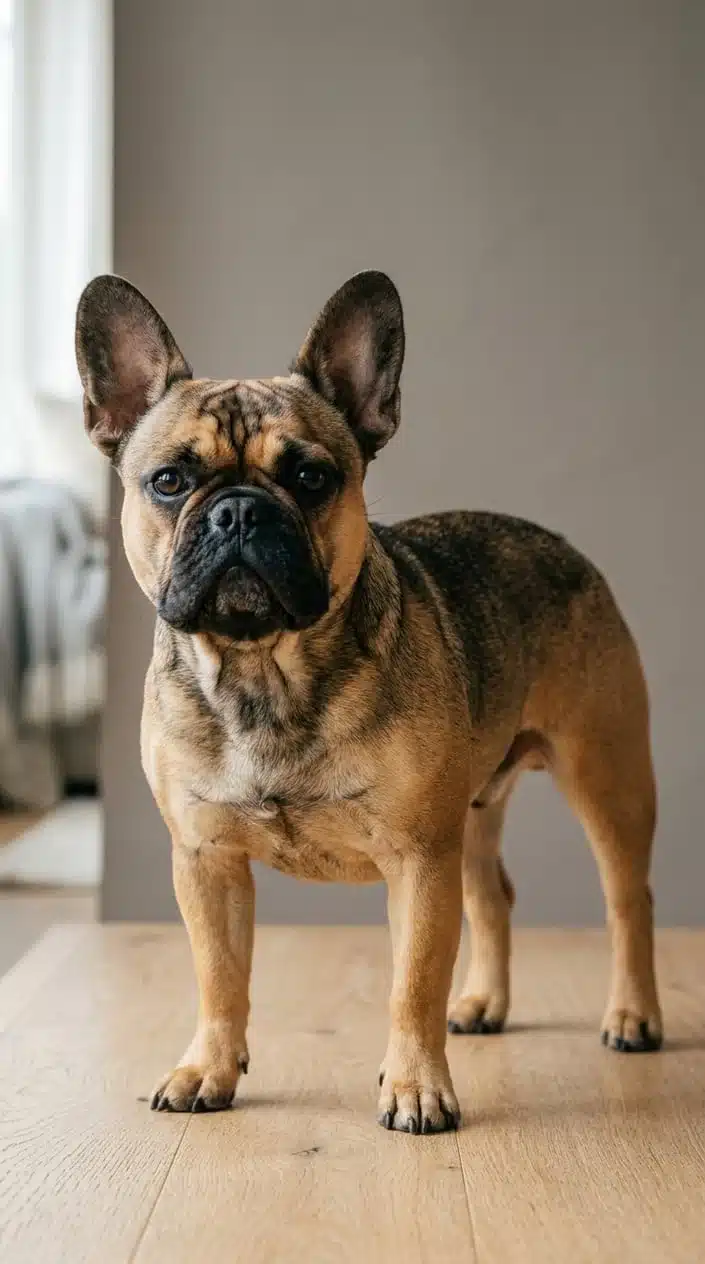
A sable Frenchie starts with an underlying coat in the fawn family. That base may be pale tan, honey, golden, reddish tan, or deep red. Dark pigment then appears as tipped hairs, scattered darker hairs, or an overlay concentrated in particular areas.
The Underlying Fawn or Red Base
Look beneath the dark shading before assigning a label. The visible base should still look yellow-to-red rather than solid black, gray, or brown.
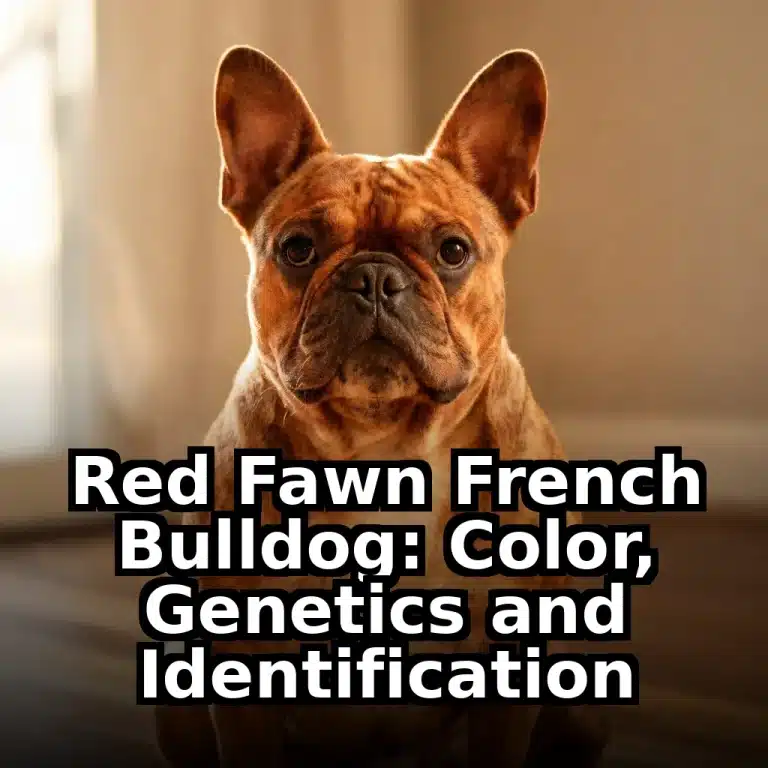
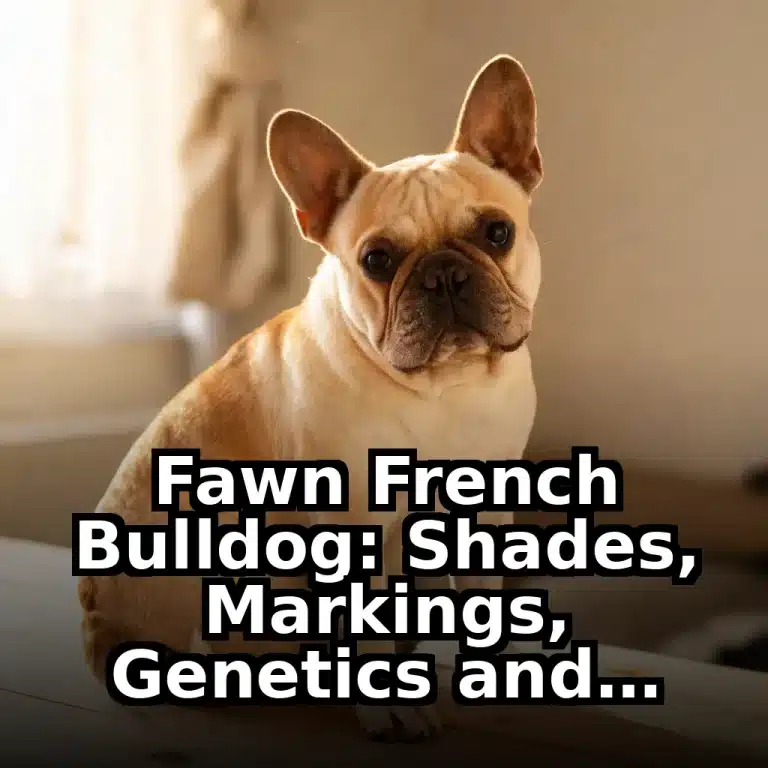
Our complete Fawn French Bulldog guide explains the full shade range. A deeper, coppery base is covered separately in the Red Fawn French Bulldog guide.
Where Dark-Tipped Hairs Usually Appear
Dark hairs are often easiest to see on the ears, forehead, neck, shoulders, along the spine, and near the tail. The amount varies from a light dusting to a noticeable dorsal overlay.
Get Weekly Dog Care Tips Free
Join 10,000+ dog owners. Vet-approved advice every week
🔒 No spam. Unsubscribe anytime.
Light, Moderate and Heavy Sable Shading
| Appearance | What You May See | Identification Caution |
|---|---|---|
| Light shading | A few dark-tipped hairs on the ears or back | May simply be labeled fawn |
| Moderate shading | Visible tipping across the head, shoulders, and spine | Often described as sable or shaded fawn |
| Heavy shading | A strong dark overlay over a clearly fawn or red base | Can be confused with brindle or another pattern |
| Facial darkness only | Dark muzzle and surrounding facial hair | May be a black mask rather than sable |
Why There Is No Universal Sable Cutoff
No objective percentage of dark hair turns a fawn Frenchie into a sable Frenchie. Two knowledgeable people may label a lightly shaded dog differently, especially when photographs, coat length, and lighting change the appearance.
Part the coat in a naturally shaded area and inspect individual hairs in indirect daylight. Sable is better judged by the pigment and distribution of the hairs than by the dog’s overall darkness from a distance.
Is Sable a Color, Pattern, or Shading?
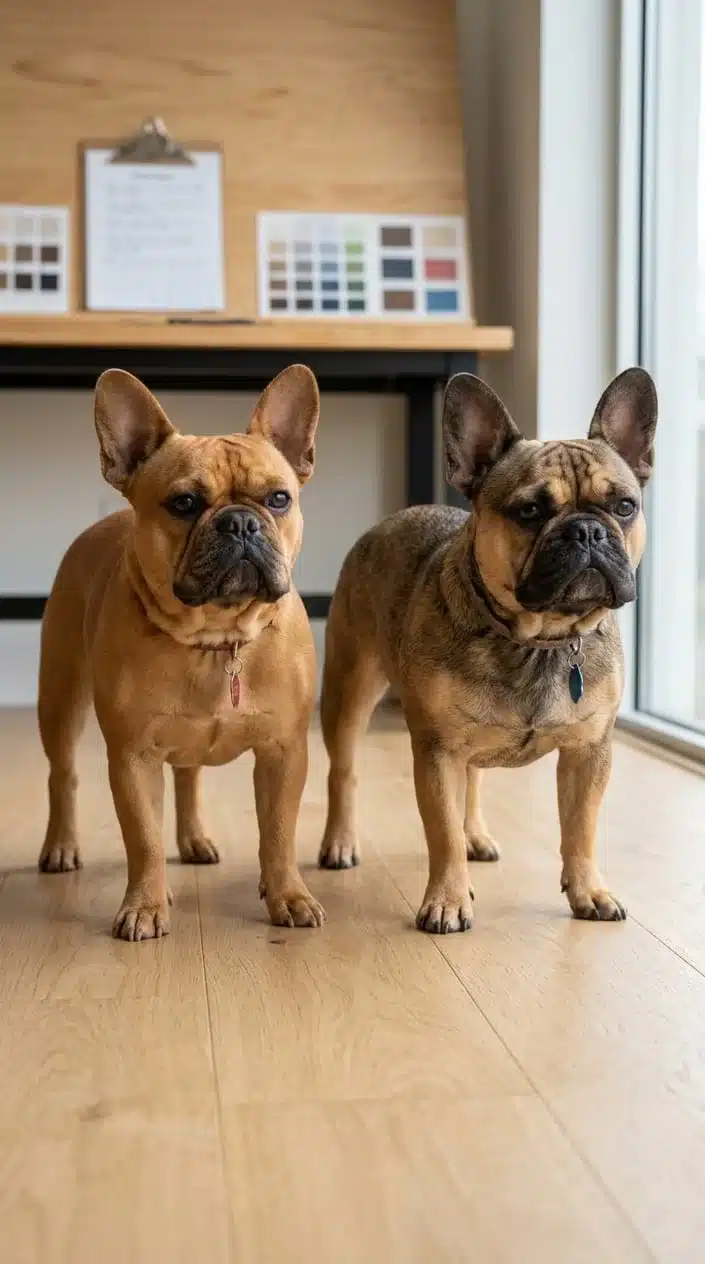
The answer depends on context. Breeders commonly use sable as a visual color label, while genetic laboratories may use Shaded Yellow for a related ASIP pattern. The French Bulldog breed standard refers to black shading rather than listing sable as its own color.
How Breeders Use the Word Sable
In puppy listings, sable may mean anything from a few black-tipped hairs to a heavily shaded red-fawn coat. Some sellers also attach sable to blue, chocolate, lilac, or Isabella combinations, even though those labels involve additional pigment modifiers.
How Genetic Laboratories Use Shaded Yellow
Modern ASIP testing distinguishes patterns such as Dominant Yellow and Shaded Yellow. Dominant Yellow generally produces a clearer yellow-to-red coat, while Shaded Yellow can permit dorsal dark-tipped hairs when other genes allow dark pigment to appear.
How the Breed Standard Uses Black Shading
The French Bulldog Club of America standard recognizes fawn from light through red fawn and includes black shading among accepted markings. It does not provide a separate sable color category.
“Sable,” “shaded fawn,” “black shading,” and “Shaded Yellow” can describe related ideas, but they are not perfect synonyms. A marketing label, a visual description, a registration entry, and a laboratory result answer different questions.
Are Sable French Bulldogs AKC Recognized?
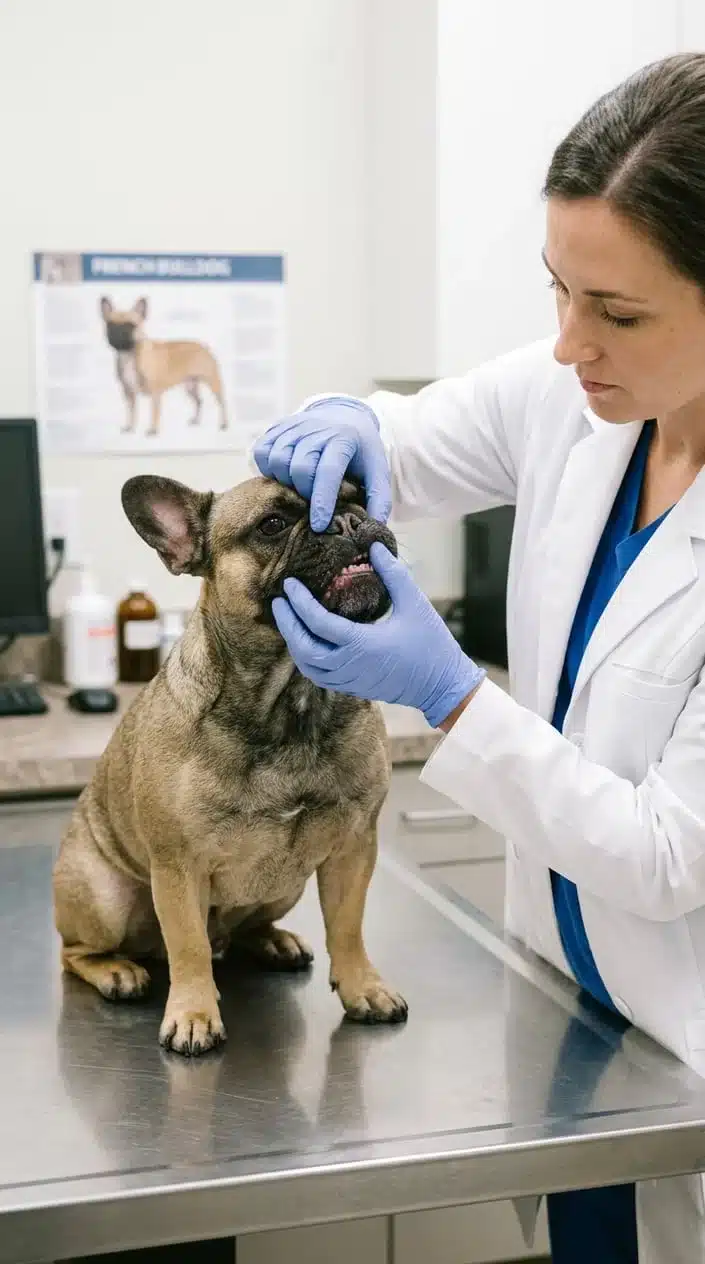
Sable is not listed as a separate official French Bulldog color. The standard accepts white, cream, fawn from light fawn through red fawn, and permitted combinations, along with recognized markings such as black shading, black masks, brindle, piebald, and white markings.
A conventionally pigmented Frenchie described as sable may therefore be evaluated as a fawn dog with black shading. The complete phenotype still matters, including base color, mask, striping, white pattern, nose pigment, eye rims, lips, and paw pads.
Registration Terminology vs. Show Evaluation
Registration records describe the color selected from available choices; they do not certify that every informal label is official or that a dog meets the entire breed standard. Show evaluation considers the visible dog rather than a sales description alone.
Nose, Lip, Eye-Rim and Paw-Pad Pigmentation
Do not judge standard status only from a warm body coat. Blue-gray or brown pigment on the nose, lips, eye rims, mask, or dark hairs may reveal dilution or altered eumelanin that changes the classification.
A standard-looking sable Frenchie may fall within recognized fawn with black shading. However, the word “sable” alone cannot prove breed-standard compliance.
Sable vs. Fawn French Bulldog

| Feature | Clear Fawn | Sable or Shaded Fawn |
|---|---|---|
| Base coat | Yellow, tan, gold, or red | Yellow, tan, gold, or red |
| Dark-tipped hairs | Minimal or absent | Noticeable in one or more areas |
| Common dark areas | Mask or limited shading | Ears, head, neck, shoulders, spine, or tail |
| Overall effect | Relatively clear and even | Shaded or overlaid |
| Exact boundary | No universal cutoff | No universal cutoff |
| Separate AKC color | Registered within fawn | Sable is not separately listed |
A clear fawn has little visible dark tipping outside a possible facial mask. A sable or shaded fawn retains the same basic coat family but carries more noticeable dark hair across the body.
Borderline identification is normal. A few dark hairs on a young puppy may be called light sable by one breeder and ordinary fawn shading by another.
Sable vs. Red Fawn French Bulldog

Red fawn and sable describe different features. Red fawn describes the warmth and depth of the underlying pheomelanin coat, while sable describes the presence and distribution of darker hairs over that base.
A Frenchie can therefore be clear red fawn, red fawn with a black mask, or red fawn with sable shading. Warm indoor light can deepen the base and hide dark tipping, so compare unedited photographs in neutral daylight.
Sable vs. Similar French Bulldog Coats
| Coat or Feature | Primary Visual Clue | How It Differs From Sable |
|---|---|---|
| Clear fawn | Even tan-to-red base | Little or no dark tipping |
| Red fawn | Deep copper or reddish base | Depth of base color, not dark overlay |
| Sable | Dark-tipped hairs over fawn or red | Shading is the identifying feature |
| Black mask | Dark hair concentrated on the face | Location is facial rather than dorsal |
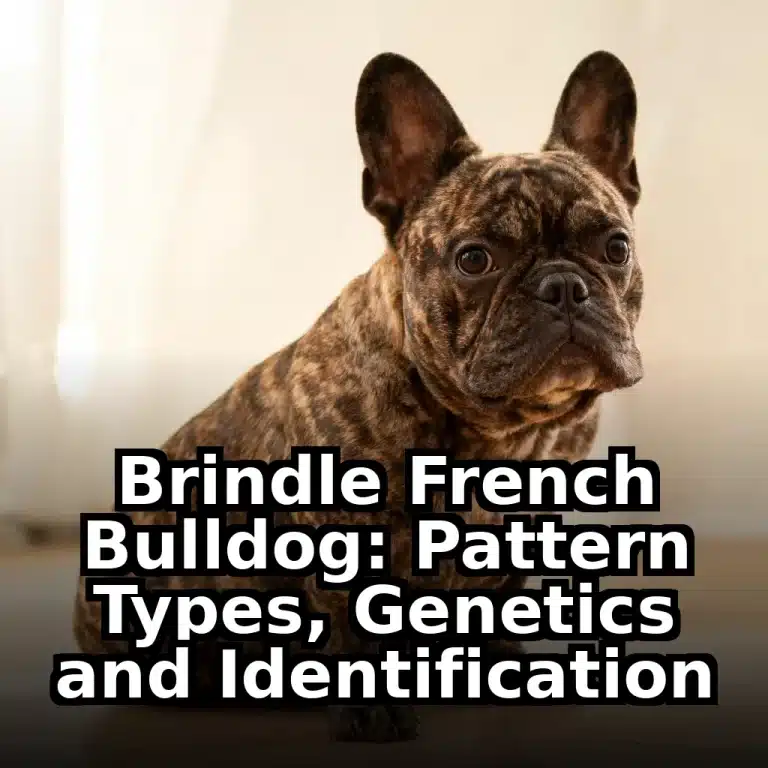
| Brindle | Recognizable dark stripes | Striping rather than tipping |
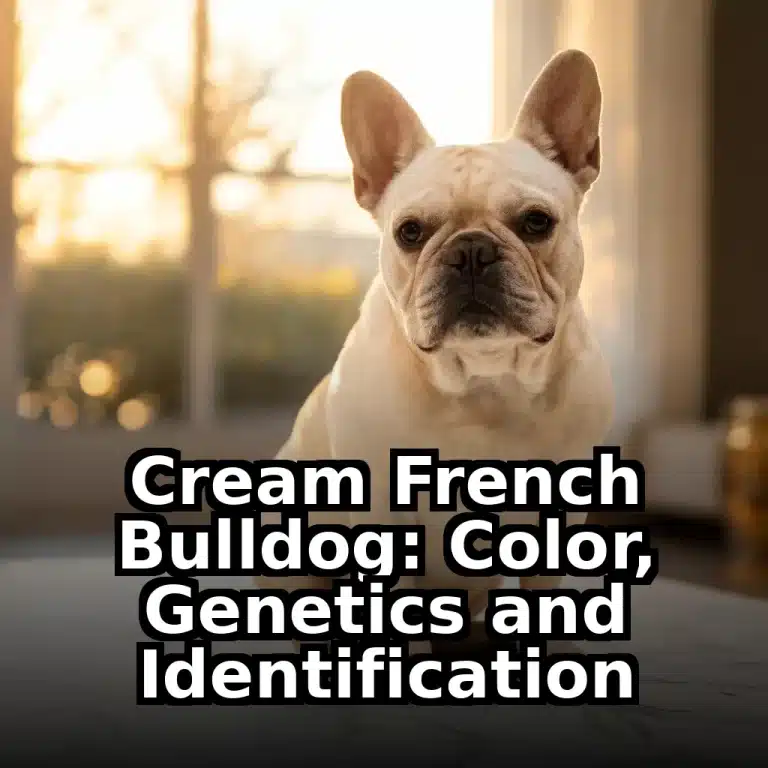
| Cream | Pale, relatively uniform ivory coat | Usually lacks a sable overlay |
| Agouti | Different ASIP pigment distribution | Not a synonym for every sable appearance |
| Diluted fawn | Blue-gray or altered dark pigment | Eumelanin is diluted rather than normally black |
Sable vs. Brindle
Sable usually creates tipped hairs, scattered dark hairs, or a dorsal overlay. Brindle creates defined dark stripes across a fawn background. Our Brindle French Bulldog guide shows how sparse striping differs from irregular sable tipping.
Sable vs. Black Mask
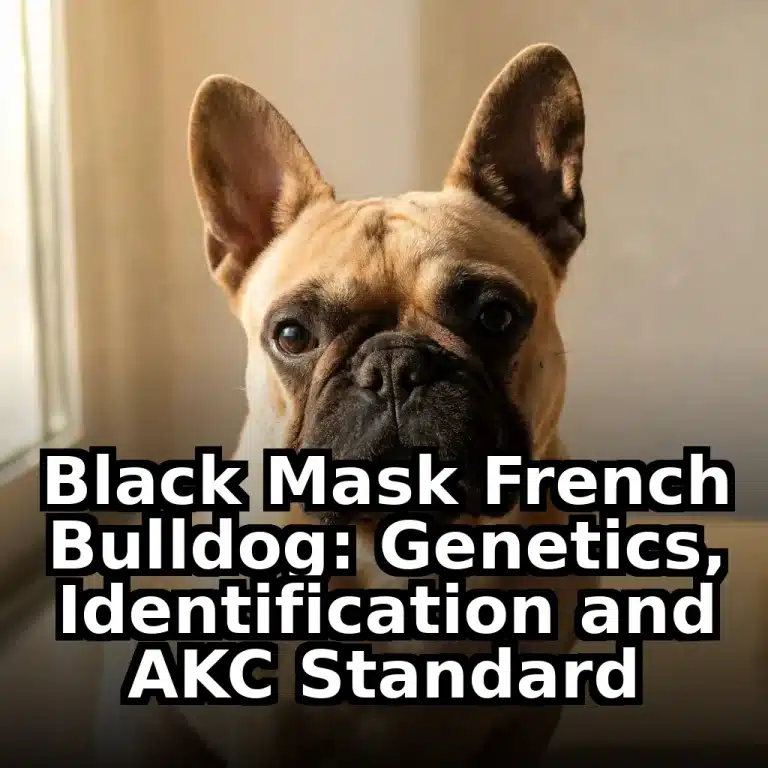
A black mask is concentrated around the muzzle and may extend toward the eyes, cheeks, forehead, or ears. Sable shading is usually more broadly distributed across the head and body. See the Black Mask French Bulldog guide for mask genetics and identification.
Sable vs. Agouti
Modern laboratory terminology separates Shaded Yellow from Agouti. Sable is a broad traditional word used inconsistently across breeds, so a photograph should not be used to diagnose an exact ASIP genotype.
Sable vs. Cream
Cream Frenchies generally have an even ivory-to-off-white appearance. Sable Frenchies have a fawn or red base with visible dark hairs. Very pale coats can be difficult to classify from overexposed images, so use the Cream French Bulldog guide for a closer comparison.
Sable vs. Diluted Fawn
Standard sable shading should look black. Blue-gray tips, a slate nose, or pale gray eye rims suggest dilution, while brown hairs and a brown nose suggest altered brown pigment. The fawn base does not make every pigment combination standard.
Dark hairs along the back do not automatically make a Frenchie brindle. Look for repeated, recognizable stripes before using the brindle label.
Can a Sable French Bulldog Have a Black Mask?
Yes. A sable French Bulldog can have both dorsal shading and a black facial mask because the features are influenced by different parts of the pigment system.
A full mask surrounds much of the muzzle and may extend toward the eyes. A partial mask covers less of the face, while a white blaze or spotting can interrupt it. Dark forehead shading alone should not be mistaken for a mask.
A black nose also does not prove a mask. The nose is skin pigment, while a mask consists of dark hair on the face.
Can a Sable French Bulldog Have White Markings?
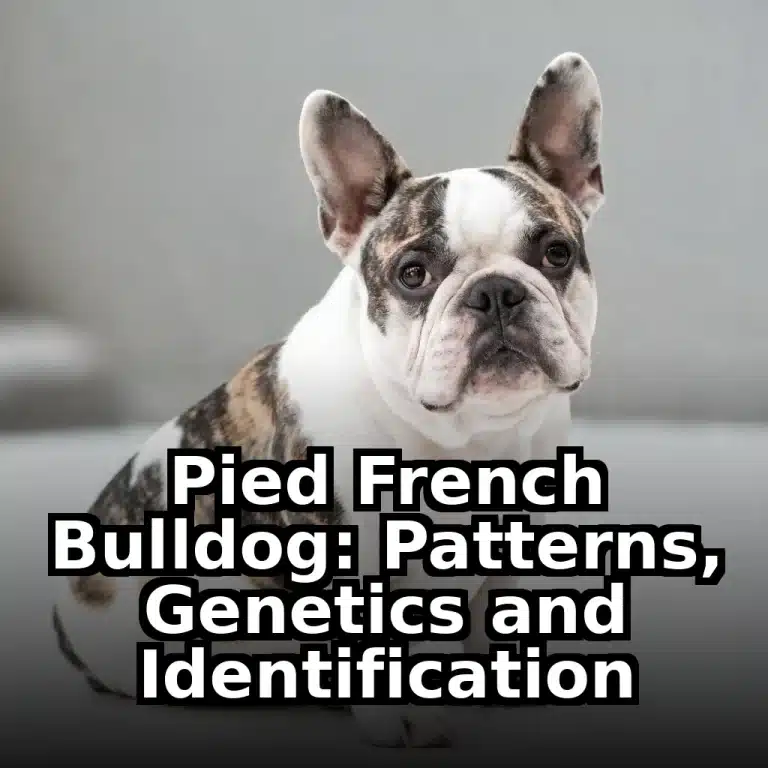
Yes. A sable Frenchie may have small white markings on the chest or toes, broader fawn-and-white areas, or a pied pattern with sable-fawn patches.
Sable-Pied French Bulldogs
White spotting can conceal much of the underlying shaded coat. On a predominantly white dog, sable tipping may appear only within the colored patches. A facial blaze can also interrupt a black mask or head shading.
The Pied French Bulldog guide explains patch distribution, while the White French Bulldog guide covers extensive white coverage and look-alike coats.
Sable French Bulldog Genetics Explained
Dog coat color results from interactions among several genes, not one simple “sable gene.” Two pigment types create the visible coat: eumelanin produces black or brown-based pigment, while pheomelanin produces yellow-to-red pigment.
How ASIP Controls Pigment Distribution
ASIP signaling helps determine where and when dark eumelanin and yellow-to-red pheomelanin appear. Modern research identifies ASIP haplotypes including Dominant Yellow, Shaded Yellow, Agouti, Black Saddle, Black Back, and Recessive Black.
Dominant Yellow tends to produce a clearer yellow-to-red coat with little dark tipping. Shaded Yellow can produce a similar base with dorsal dark-tipped hairs, making it especially relevant to sable identification.
Why the Older Ay Explanation Is Incomplete
Older panels often grouped fawn and sable-type appearances under Ay. That terminology can still appear in reports, but it does not fully represent the newer ASIP haplotype model or explain the exact amount of visible shading.
The Roles of MC1R and the K Locus
MC1R, often called the E locus, affects whether and where eumelanin can appear. A mask-associated Em variant can allow dark facial hair. K-locus variants can permit or override ASIP patterning, and brindle-related variants may add striping.
White spotting can hide portions of the coat, while brown and dilution variants alter normally black eumelanin. These interactions explain why two fawn-based dogs can look very different.
Modern ASIP results can distinguish clearer Dominant Yellow patterns from Shaded Yellow patterns associated with dorsal dark tipping. Even then, genotype does not precisely measure the amount of sable shading an adult dog will show.
Can a DNA Test Confirm a Sable French Bulldog?
A modern color panel can support identification, but it cannot turn the subjective sable label into an exact visual grade. Results must be interpreted alongside the dog’s appearance and the laboratory’s testing method.
| A Color Panel May Help Identify | It Cannot Reliably Guarantee |
|---|---|
| Dominant Yellow vs. Shaded Yellow haplotypes | Exact amount of adult dark shading |
| Mask-related MC1R variants | How the coat looks in every light |
| Brindle-related K-locus variants | A universal sable marketing label |
| Brown or dilution variants | Breed-standard compliance by itself |
| Selected white-spotting variants | Health, structure, or temperament |
| Tested variants the dog carries | Exact adult appearance from puppy DNA alone |
Older panels may still report Ay rather than current ASIP haplotypes. Ask which variants and interpretation system the laboratory uses.
DNA can clarify selected inherited variants, but it cannot assign a universally accepted sable grade. Color testing also does not replace breed-relevant health testing.
Do Sable French Bulldog Puppies Change Color?
Sable French Bulldog puppies may look more heavily shaded than they will as adults. Dark tipping can become less noticeable as puppy hair is replaced, although some dogs retain clear shading on the ears, shoulders, spine, and tail.
The apparent mask may also look smaller as the muzzle and facial proportions grow. White areas usually remain in roughly the same places, but the relative size of patches changes as the body develops.
No breeder can guarantee an exact adult shading density from newborn photographs. Sudden hair loss, redness, scaling, or patchy coat change should not be dismissed as normal color development and deserves veterinary attention.
The underlying fawn family is often visible early, but the amount of dark tipping can change with the adult coat. Treat exact adult-color promises cautiously.
How to Identify a Sable French Bulldog
- View the Frenchie in indirect natural daylight.
- Identify the underlying coat as light fawn, standard fawn, or red fawn.
- Inspect the ears, forehead, neck, shoulders, spine, and tail area.
- Part the coat and examine individual hairs for darker tips.
- Decide whether the dark pigment forms tipping, scattered hairs, or stripes.
- Separate a concentrated facial mask from body shading.
- Look for defined repeated stripes that suggest brindle.
- Record white areas that may interrupt or conceal shading.
- Check whether the dark pigment is black, brown, or blue-gray.
- Compare unedited photographs from both sides and above the dog.
- Use modern DNA results when inheritance or classification matters.
- Avoid assigning an exact genotype from appearance alone.
Inspect Individual Hairs
A distant photograph can blend tipped hairs, shadows, and stripes into one dark area. Examine the hairs at the ears, shoulders, spine, and tail while the coat is dry and clean.
Compare Natural-Light Photographs
Warm bulbs, golden-hour sunlight, high saturation, camera sharpening, wet hair, and dark backgrounds can exaggerate shading. Request unedited daylight photographs from consistent angles.
Indirect daylight reveals the base coat, hair tips, and pigment color more reliably than warm indoor light or direct sun. Check the nose and eye rims separately from the body coat.
Standard Sable vs. Blue, Chocolate, Lilac and Isabella Sable
“Sable” does not cancel the effect of other pigment genes. A standard-looking sable has normally expressed black eumelanin in its tips, mask, nose, lips, eye rims, and paw pads.
Blue-Gray Diluted Shading
Blue sable or blue fawn typically involves dilution that changes black pigment to gray-blue. The change may be visible in the nose, mask, hair tips, and paw pads.
Brown or Chocolate Shading
Chocolate or brown sable alters eumelanin from black to brown. A brown nose and brown facial or tipped hairs are important clues, even when the body remains warm fawn.
Lilac and Isabella Pigmentation
Lilac and Isabella labels generally describe combinations that further modify dark pigment. These should not be treated as equivalent to conventional black shading simply because the base is fawn.
A warm fawn body does not determine the status of the complete coat. Blue-gray or brown pigment in areas that should be black can indicate an additional nonstandard modifier.
Does Sable Coloring Affect Health?
Standard black-tipped sable shading is not itself a disease and does not independently predict lifespan. However, a standard-looking color does not guarantee that a Frenchie was responsibly bred or will be healthy.
Breed-relevant evaluation matters more than shading density. Buyers should ask for documented screening appropriate to French Bulldogs and discuss breathing, spine, heart, joints, eyes, skin, and overall structure with qualified veterinary professionals.
A coat-color panel explains selected pigment variants. It does not evaluate the airway, spine, heart, joints, eyes, or overall health of a French Bulldog.
Does Sable Coloring Affect Personality?
Coat shading does not reliably predict affection, intelligence, trainability, energy, stubbornness, or protectiveness. Sable Frenchies have the same range of individual temperaments found throughout the breed.
Personality is shaped by genetics beyond coat color, early handling, socialization, training, health, and daily environment. Claims that one shade is automatically calmer, smarter, or more loyal are marketing, not a sound selection method.
Are Sable French Bulldogs Rare?
The term sable is recorded inconsistently, making rarity claims difficult to verify. A lightly shaded dog may be registered and advertised as fawn, while a similar dog may be marketed elsewhere as rare sable.
The density of dark hair does not prove a unique genotype or better quality. “Rare sable,” “premium sable,” and “exotic sable” should be treated as promotional descriptions unless the seller clearly explains the phenotype, tested variants, and breed-standard implications.
How Much Does a Sable French Bulldog Cost?
A fixed nationwide price range becomes unreliable because location, age, pedigree, health documentation, breeder practices, and demand vary. A higher price for heavier shading does not prove genetic rarity, health, structure, or breed quality.
Legitimate costs may reflect veterinary care, responsible rearing, documented health screening, registration, and parent evaluation. Color premiums deserve caution when the sales pitch relies on urgency or undefined rarity.
Choosing a Sable French Bulldog Puppy Responsibly
- Request unedited natural-light photographs from both sides and above.
- Ask the breeder to identify the underlying base coat clearly.
- Compare the registered color with the informal sales terminology.
- Review parent, pedigree, and relevant genetic information.
- Ask for an explanation of any brown or dilution variants.
- Request breed-relevant health-test documentation.
- Reject guarantees about exact adult shading.
- Ignore personality promises based only on coat color.
- Do not accept pressure based on rarity or limited availability.
- Request written veterinary and care records.
- Ask how puppies are socialized and raised.
- Prioritize breathing, structure, health, and temperament over shade.
Be cautious when a seller guarantees a precise adult shade, treats a color panel as proof of health, or charges a large premium without explaining the dog’s complete pigmentation and health testing.
Frequently Asked Questions
What Is a Sable French Bulldog?
A sable French Bulldog generally has a fawn-to-red base with noticeable dark-tipped or overlaid hairs. The shading often appears on the ears, head, shoulders, spine, or tail.
Is Sable an Official AKC French Bulldog Color?
No. Sable is not separately named in the French Bulldog color list, although a conventionally pigmented sable-looking dog may fit within recognized fawn with black shading.
What Is the Difference Between Sable and Fawn?
Both usually share a fawn-family base. Sable has more noticeable dark-tipped hairs or body shading, while clear fawn looks relatively even.
Is Sable the Same as Red Fawn?
No. Red fawn describes the depth and warmth of the base coat, while sable describes darker hairs over that base. A dog can display both traits.
How Can You Tell Sable From Brindle?
Sable produces tipping, scattered dark hairs, or an overlay. Brindle produces recognizable dark stripes across the fawn background.
Can a Sable Frenchie Have a Black Mask?
Yes. A black mask and sable shading can occur together, but the mask is concentrated on the face while sable shading can extend across the body.
Can a Sable French Bulldog Be Pied?
Yes. White spotting may create a pied dog with sable-fawn patches, and the white areas can interrupt or hide some of the shading.
Do Sable Puppies Lose Their Dark Hairs?
Some sable puppies become less heavily shaded as adult hair replaces the puppy coat, while others retain visible dark tipping. Exact adult shading cannot be guaranteed.
Can DNA Testing Confirm Sable?
Advanced ASIP testing may identify Shaded Yellow and other relevant variants, but it cannot guarantee the exact amount of adult shading or settle every visual sable label.
Is Sable the Same as Shaded Yellow?
They can describe related appearances, but they are not always interchangeable. Sable is a broad visual term, while Shaded Yellow is a modern genetic classification.
Are Sable French Bulldogs Rare?
There is no universal rarity threshold for sable shading, and the term is recorded inconsistently. A “rare sable” claim alone does not prove an unusual genotype.
Do Sable French Bulldogs Have Special Health Problems?
Standard sable shading is not itself a disease. General French Bulldog health and any separate pigment modifiers should be evaluated independently.
Is Blue Sable an Accepted French Bulldog Color?
Blue sable includes dilution that changes normally black pigment to gray-blue. It should not be treated as equivalent to conventional black shading within a standard fawn coat.
Final Takeaway
Sable commonly describes dark-tipped shading over a fawn or red-fawn French Bulldog coat. It is not separately named in the AKC color list, although a conventionally pigmented dog may fit within recognized fawn with black shading.
Evaluate the base coat, dark hair distribution, facial mask, brindle striping, white spotting, and pigment color separately. Modern ASIP testing adds useful information, but health documentation, structure, temperament, and breeder transparency matter far more than the density of sable shading.