Cream French Bulldog: Color, Genetics and Identification


A cream French Bulldog has a pale ivory or warm off-white coat that usually looks even across the body. A standard cream Frenchie should also retain dark pigmentation on the nose, lips, eye rims, and paw pads.
The difficult part is that cream can resemble light fawn, white, or coats marketed as platinum. It can also conceal patterns that the dog carries genetically, so appearance alone does not always tell the full story.
This guide explains how to identify a cream Frenchie, how cream genetics work, and how standard cream differs from similar-looking and nonstandard coats. For the wider context, see our complete guide to French Bulldog colors.
A Cream French Bulldog has a pale ivory or warm off-white coat produced by recessive red/cream expression, which prevents black or brown pigment from appearing in the hair. Cream is an AKC-accepted color; a black nose is preferred, although a lighter nose is acceptable but not desirable in a Cream dog without a black mask.
Key identification points:
- The coat usually appears even and warmer than a bright white coat.
- Unlike light Fawn, Cream normally conceals visible masks, dark shading, and Brindle striping.
- White markings can occur on a Cream coat and may look brighter than the surrounding ivory hair.
- Natural-light inspection helps identify the visible color, while reputable DNA testing is more reliable when the underlying genetics matter.
What Does a Cream French Bulldog Look Like?

A cream Frenchie generally has a soft, uniform coat ranging from pale ivory to a slightly warm buttery shade. The coat should not show obvious fawn shading, dark striping, or strongly contrasting colored patches.
The exact appearance can change with daylight, indoor bulbs, camera exposure, and the dog’s coat condition. Some cream dogs look nearly white in bright photographs but noticeably warmer in person.
Get Weekly Dog Care Tips Free
Join 10,000+ dog owners. Vet-approved advice every week
🔒 No spam. Unsubscribe anytime.
| Feature | Typical Standard Cream Appearance |
|---|---|
| Body coat | Even ivory, off-white, or pale warm cream |
| Nose | Black |
| Lips and eye rims | Dark, normally black |
| Paw pads | Dark pigmentation |
| Visible mask | Usually concealed by cream expression |
| Visible brindle | Usually concealed, even if genetically inherited |
| Eyes | Dark, consistent with normal breed pigmentation |
One feature should never be used by itself. Coat warmth, nose color, eye-rim pigment, eye color, pedigree, and reliable DNA results may all contribute when identification matters.
Is Cream an Accepted French Bulldog Color?
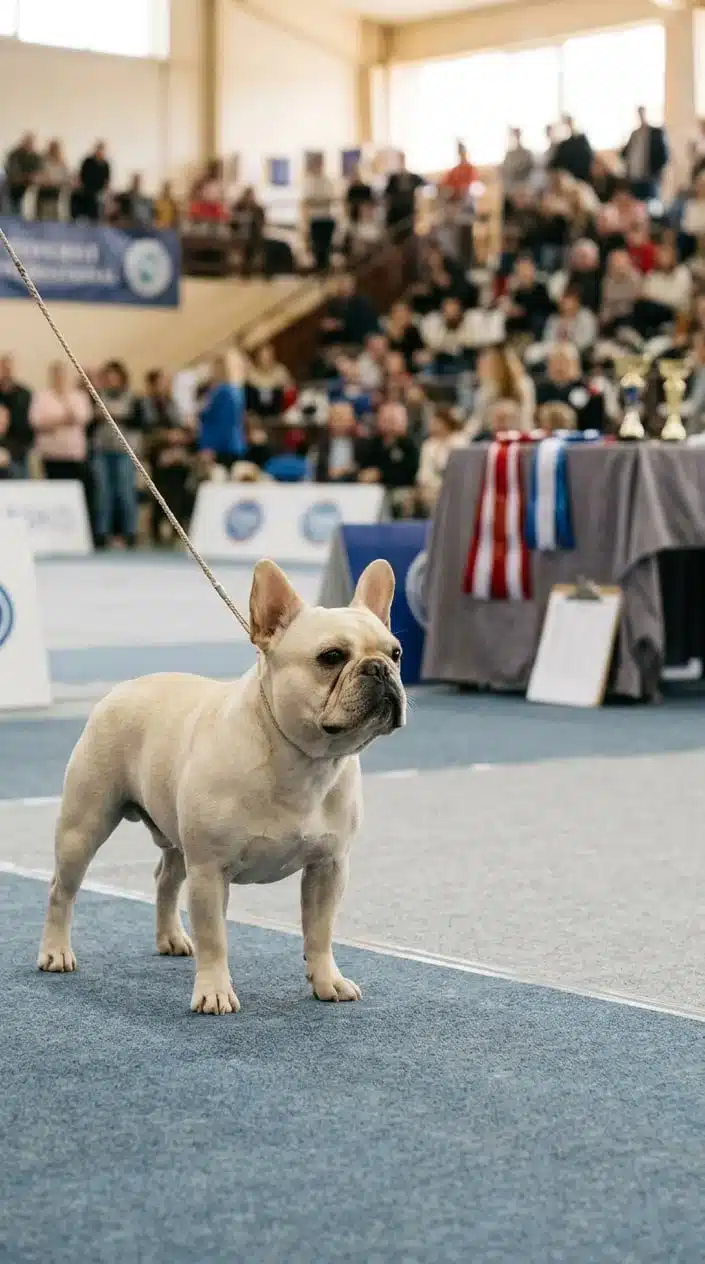
Yes. Cream is included among the accepted colors in the French Bulldog breed standard. A cream Frenchie may meet the color portion of the standard when its pigmentation is otherwise correct.
That does not mean every pale Frenchie advertised as cream is standard. Dilution, brown pigment, merle, or other nonstandard traits may be hidden or modified beneath a cream-looking coat.
Registration also does not prove that a dog meets every part of the breed standard. Registration records ancestry, while conformation evaluation considers the complete dog, including structure, movement, pigmentation, and other requirements.
Cream French Bulldog vs. Light Fawn

Light fawn and cream are commonly confused because both can appear pale yellow or beige. The difference is easier to see in natural light and through the way markings and shading appear.
| Feature | Cream French Bulldog | Light Fawn French Bulldog |
|---|---|---|
| Overall color | Ivory or warm off-white | Pale tan, honey, or yellow-beige |
| Coat variation | Usually visually even | May show warmer or deeper shading |
| Black mask | Generally hidden | May be clearly visible |
| Brindling | May be genetically present but concealed | Visible stripes make the coat brindle |
| Genetic expression | Recessive cream suppresses visible dark hair | Fawn pigment remains visibly expressed |
| Breed-standard status | Accepted | Accepted |
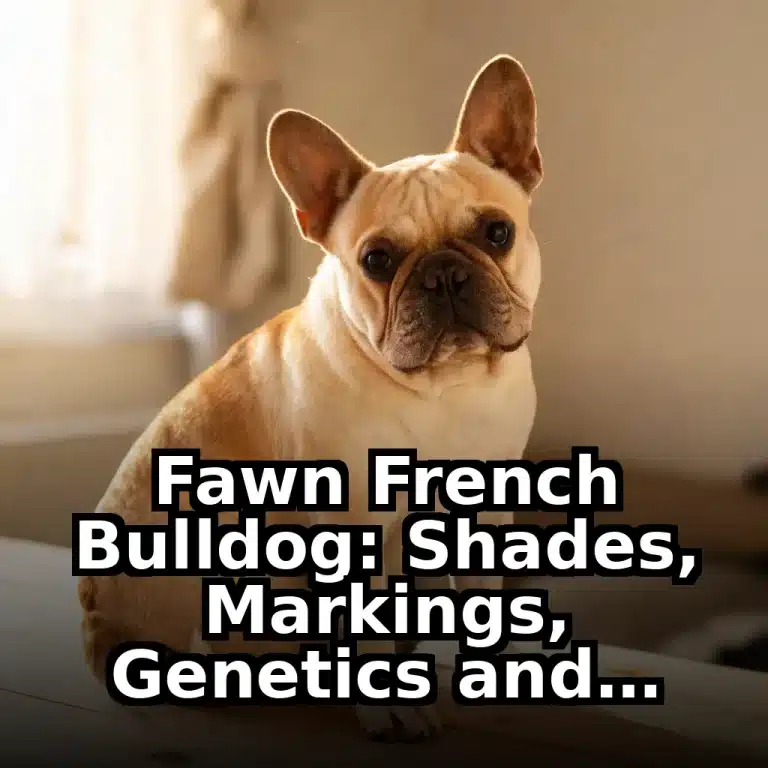
A light fawn Frenchie typically has more visible tan or honey warmth than a cream dog. It may also have a black mask, darker ears, or noticeable shading.
Our Fawn French Bulldog guide explains the accepted fawn range, masked and maskless coats, and how to distinguish fawn from other similar colors.
Cream French Bulldog vs. White

Cream and white are not interchangeable descriptions. Cream contains a pale warm coat pigment, while white areas result from the absence or restriction of visible pigment in those areas.
A cream dog often looks ivory, vanilla, or off-white. A white dog may look brighter and cooler, although lighting can make the distinction difficult.
| Feature | Cream | White |
|---|---|---|
| Visual tone | Warm ivory or off-white | Brighter or cooler white |
| Coat pigment | Pale pigment expressed across the coat | Pigment restricted in white areas |
| Colored patches | Usually uniform, though white markings can occur | May occur with separate colored patches |
| Effect of warm lighting | Can look more yellow | Can falsely appear cream |
A dog can also have both cream and white. White spotting may create brighter areas against a warmer cream background, especially on the chest, face, feet, or body.
Cream French Bulldog vs. Platinum
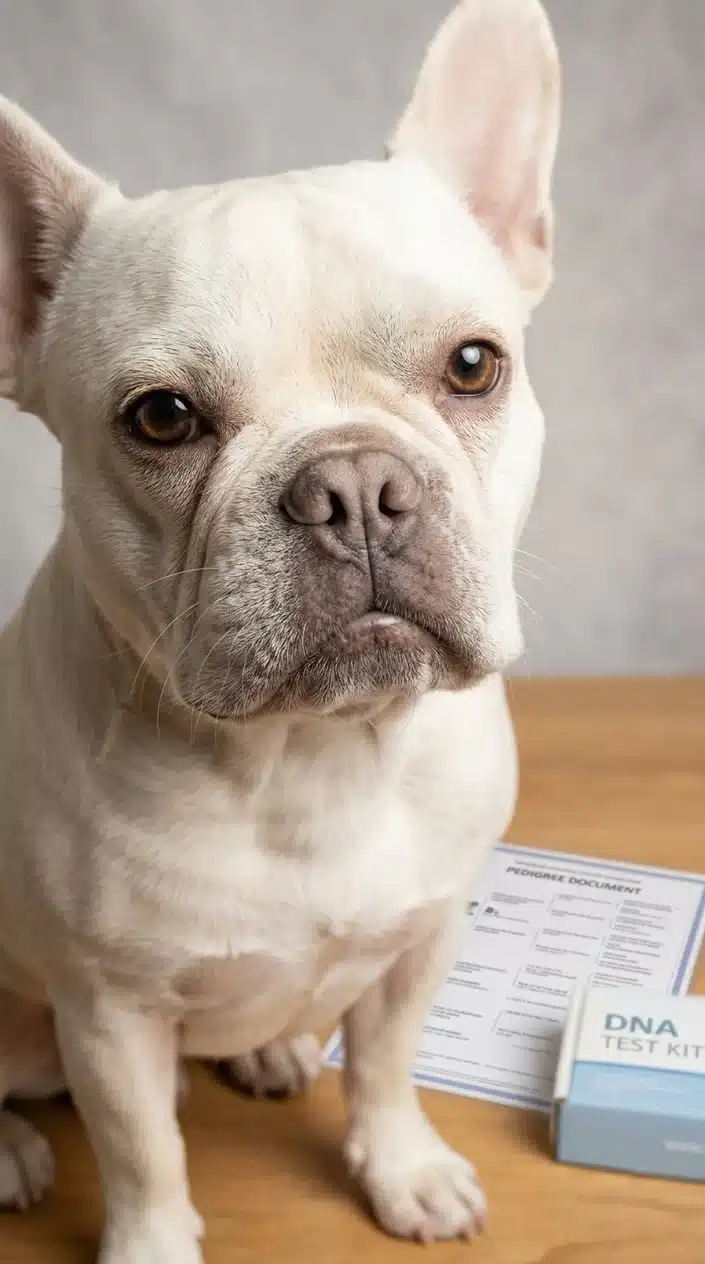
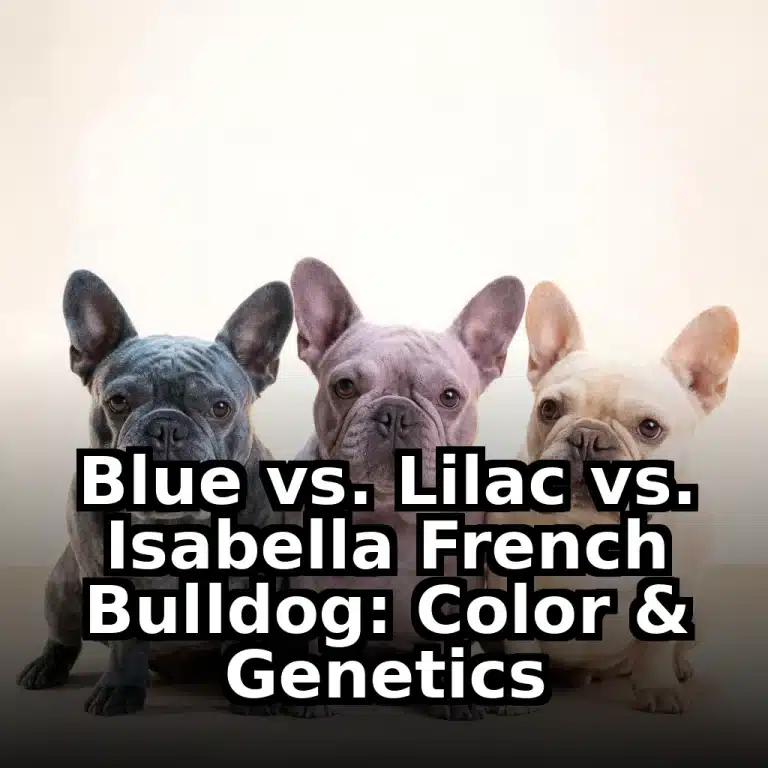
“Platinum” is not simply a premium or extra-light form of standard cream. It is breeder terminology commonly used for a cream-looking dog whose normally dark pigment has been modified by other color genes.
The pale coat may hide the underlying color, while the nose, lips, eye rims, paw pads, and eyes provide clues. Depending on the genetics involved, these areas may appear brown, gray-blue, pale, or otherwise different from standard black pigmentation.
| Feature | Standard Cream | Coat Marketed as Platinum |
|---|---|---|
| Body coat | Pale cream or ivory | Often cream-looking or nearly white |
| Nose and eye rims | Normally black | May be diluted, brown, or otherwise modified |
| Official terminology | Accepted color name | Breeder or marketing term |
| Underlying traits | Can carry hidden traits | Typically promoted for nonstandard underlying pigmentation |
| Breed-standard status | May meet the color requirement | Modified pigmentation may be disqualifying |
Names such as platinum, champagne, exotic cream, or lilac cream should not be accepted as proof of genetics. Ask for clear natural-light images, pedigree information, and laboratory reports if the distinction matters.
What Patterns Can Cream Conceal?
Recessive cream can prevent dark hair patterns from being visibly expressed in the coat. A cream Frenchie may genetically inherit a trait even when you cannot see it.
Cream may conceal or reduce the visible expression of:
- Brindle striping
- A black facial mask
- Dark coat shading
- Tan-point patterning
- Some underlying body-color differences
This is why two cream parents or a cream puppy can produce confusing color discussions. Visible appearance is only the phenotype—the traits you can see—while the genotype includes inherited variants that may remain hidden.
For example, brindle normally produces dark striping over fawn areas. A cream Frenchie may carry or inherit brindle without showing the stripes that define a visible brindle French Bulldog.
How Cream Genetics Work
Dog coat color is influenced by several genetic locations. Cream expression is commonly associated with recessive variants at the E locus.
In simple terms, a puppy usually needs to inherit the relevant recessive variant from both parents to visibly express cream. The result limits dark eumelanin in the hair, producing the pale cream coat.
Dark pigment can remain in the skin and other areas, which is why a standard cream Frenchie can still have a black nose, lips, eye rims, and paw pads.
Other genes can affect:
- Whether the normally black pigment becomes brown or dilute
- The warmth or intensity of the pale coat
- White spotting and patch distribution
- Patterns carried beneath the cream expression
- The traits a dog can pass to puppies
Genetic shorthand can make cream sound simpler than it is. Test panels also differ in the variants they examine and how results are reported.
Can a DNA Test Confirm Cream?
A reputable coat-color DNA panel can identify variants associated with recessive cream and other pigment traits. It may help clarify a dog’s visible appearance or inherited traits.
Testing still has limits. Results should be interpreted with the visible coat, pedigree, family history, and the laboratory’s current scientific guidance.
How to Identify a Cream French Bulldog
Use this step-by-step process when a pale Frenchie could be cream, light fawn, white, or a coat marketed under another name.
1. Examine the Coat in Natural Light
Use indirect daylight outdoors or beside a window. Warm indoor bulbs can make white look cream, while overexposure can make cream look white.
2. Look at the Overall Coat Tone
True cream usually appears uniform ivory or warm off-white. Noticeable honey, tan, gold, or reddish shading may point toward light fawn.
3. Search for Visible Patterns
Check the shoulders, face, legs, sides, and area beneath the tail for stripes, dark-tipped hairs, colored patches, or obvious shading.
4. Check the Nose, Lips, and Eye Rims
Standard cream should retain normal dark pigmentation. Brown, gray-blue, or unusually pale pigment may indicate that another color gene is modifying the dog’s appearance.
5. Compare Cream and White Areas
If the dog has white markings, compare them directly with the main coat. White areas may appear brighter or cooler against the warmer cream.
6. Review Unedited Puppy Photographs
Earlier images may show the coat under different lighting and help reveal whether the puppy was warm cream, pale fawn, or clearly white.
7. Check Records When Accuracy Matters
Review breeder records, registration information, pedigree, and reputable laboratory results. An experienced breed professional or canine geneticist may help when the appearance and records conflict.
Do Cream French Bulldog Puppies Change Color?
A cream puppy does not normally change into a completely different genetic color as it grows. However, the visible warmth and depth of the coat may change as the adult coat develops.
A cream French Bulldog puppy may:
- Look almost white shortly after birth
- Develop a warmer ivory tone
- Appear lighter after seasonal shedding
- Look more yellow in sunlight or warm indoor lighting
- Appear white in overexposed photographs
- Show different contrast beside white markings
Eye color also changes during puppyhood. Temporary blue-gray puppy eyes do not automatically indicate dilute, lilac, Isabella, or platinum genetics.
Are Cream French Bulldogs Rare?
Cream is an established French Bulldog color, not a newly discovered exotic variety. Exact breed-wide color frequencies are difficult to prove because registration labels, visual identification, and breeder terminology are not always consistent.
A seller may call a puppy rare cream, pure cream, champagne, platinum, or exotic cream to support a higher price. Those terms do not independently establish rarity, standard status, or responsible breeding.
Price may be influenced by location, pedigree, parental screening, veterinary expenses, puppy-raising practices, demand, and contract terms. A higher asking price does not prove that the puppy is healthier.
Do Cream French Bulldogs Have Special Health Problems?
Standard cream is not a disease and is not known to create a separate cream-specific lifespan or disorder. Cream Frenchies remain vulnerable to the health concerns affecting the breed generally.
Important concerns can include breathing difficulty, heat intolerance, spinal problems, eye conditions, joint disease, allergies, and skin-fold irritation.
Cream is also not the same as albinism. A standard cream dog retains pigment, especially on the nose, lips, eye rims, paw pads, and eyes.
Health claims involving platinum, dilute, merle, or other modified pigmentation should be evaluated separately from ordinary standard cream. The cream coat itself should not be blamed for risks associated with a different underlying trait.
Does Cream Affect Personality?
There is no reliable evidence that cream makes a French Bulldog calmer, friendlier, smarter, more stubborn, or easier to train.
Temperament is shaped by broader inherited traits, early socialization, health, training, environment, maternal care, and individual personality. Coat pigment does not reliably predict behavior.
Grooming a Cream French Bulldog
Cream Frenchies need the same basic coat and skin care as other short-coated French Bulldogs. Brush once or twice weekly with a soft grooming mitt to remove loose hair and check the skin.
Clean and dry facial folds according to your veterinarian’s advice. Also inspect the ears, paws, nails, and tail pocket regularly.
A pale coat can make some stains or redness easier to notice, but it does not cause them. Persistent itching, odor, hair loss, sores, or discoloration should be evaluated by a veterinarian.
What to Ask a Cream French Bulldog Breeder
A responsible breeder should be prepared to discuss much more than color.
- What health screening was completed for both parents?
- Can the results be independently verified?
- How were the parents evaluated for breathing and structure?
- What health concerns have appeared in the family line?
- Can I see the puppy and mother through a visit or live video?
- Can I see unedited photographs in natural light?
- How is the puppy’s color recorded on its paperwork?
- What does the breeder mean by cream, platinum, or exotic cream?
- Are color-DNA claims supported by the full laboratory report?
- What veterinary care has the puppy received?
- What health guarantee and return agreement are included?
- How have the puppies been socialized?
Common Cream French Bulldog Myths
Cream and Light Fawn Are the Same
They can look similar, but recessive cream and visibly expressed light fawn are not identical coat descriptions.
Cream Means Albino
Standard cream Frenchies retain pigment and are not automatically albino.
Platinum Is a Premium Standard Cream
Platinum is breeder terminology generally associated with modified underlying pigmentation. It is not simply the official name for an especially pale cream coat.
A Cream Coat Cannot Carry Brindle
Cream can conceal visible dark hair patterns. A dog may carry or inherit brindle even when no stripes are visible.
Cream Guarantees Better Health
An accepted coat color does not prove responsible breeding, comfortable breathing, sound structure, or completed health screening.
Cream Determines Temperament
Coat color does not reliably predict affection, intelligence, energy, trainability, or aggression.
Frequently Asked Questions
Are Cream French Bulldogs Recognized by the AKC?
Yes. Cream is an accepted French Bulldog color, although the dog must meet the rest of the breed standard and have appropriate pigmentation.
What Color Is a Cream French Bulldog?
A cream Frenchie usually has an even ivory, vanilla, or warm off-white coat with black pigmentation on the nose, lips, eye rims, and paw pads.
Is a Cream French Bulldog the Same as a White French Bulldog?
No. Cream contains pale warm pigment, while white areas reflect an absence or restriction of visible coat pigment.
Can a Cream French Bulldog Have a Black Mask?
A cream Frenchie may genetically inherit a mask, but recessive cream generally prevents the dark mask hairs from being visibly expressed.
Can a Cream Frenchie Carry Brindle?
Yes. Cream can conceal brindle striping, so a dog may carry or inherit brindle without displaying visible stripes.
Is Platinum the Same as Cream?
No. Platinum is marketing or breeder terminology generally used for a cream-looking dog with modified underlying pigmentation.
Do Cream French Bulldog Puppies Get Darker?
The coat may develop a warmer ivory tone as the puppy matures, but lighting, shedding, sun exposure, and photography also change how pale coats appear.
Do Cream French Bulldogs Have More Health Problems?
Standard cream is not linked to a unique cream-specific disorder. Breed-wide health risks and verifiable parental screening matter more than the coat shade.
Are Cream French Bulldogs More Expensive?
Prices vary widely and may be influenced by marketing. A higher price or rarity label does not prove health, quality, or responsible breeding.
Can DNA Testing Identify Cream?
A coat-color panel can identify variants associated with cream, but it must be interpreted carefully and cannot replace veterinary or breed-relevant health screening.
Final Thoughts
A cream French Bulldog should have a pale ivory or warm off-white coat with normal dark pigmentation. The most useful identification clues are the coat’s overall warmth, the absence of visible fawn shading, and black pigment on the nose, lips, eye rims, and paw pads.
Compare the dog in natural light before deciding whether it is cream, light fawn, white, or a coat marketed as platinum. When accurate genetic identification matters, use appearance together with pedigree information and results from a reputable laboratory.
Most importantly, do not let a beautiful pale coat or a rarity label outweigh health. Comfortable breathing, sound structure, verifiable screening, good socialization, and responsible lifelong care matter far more than color terminology.