What Is an Isabella French Bulldog? Genetics, Color and Identification

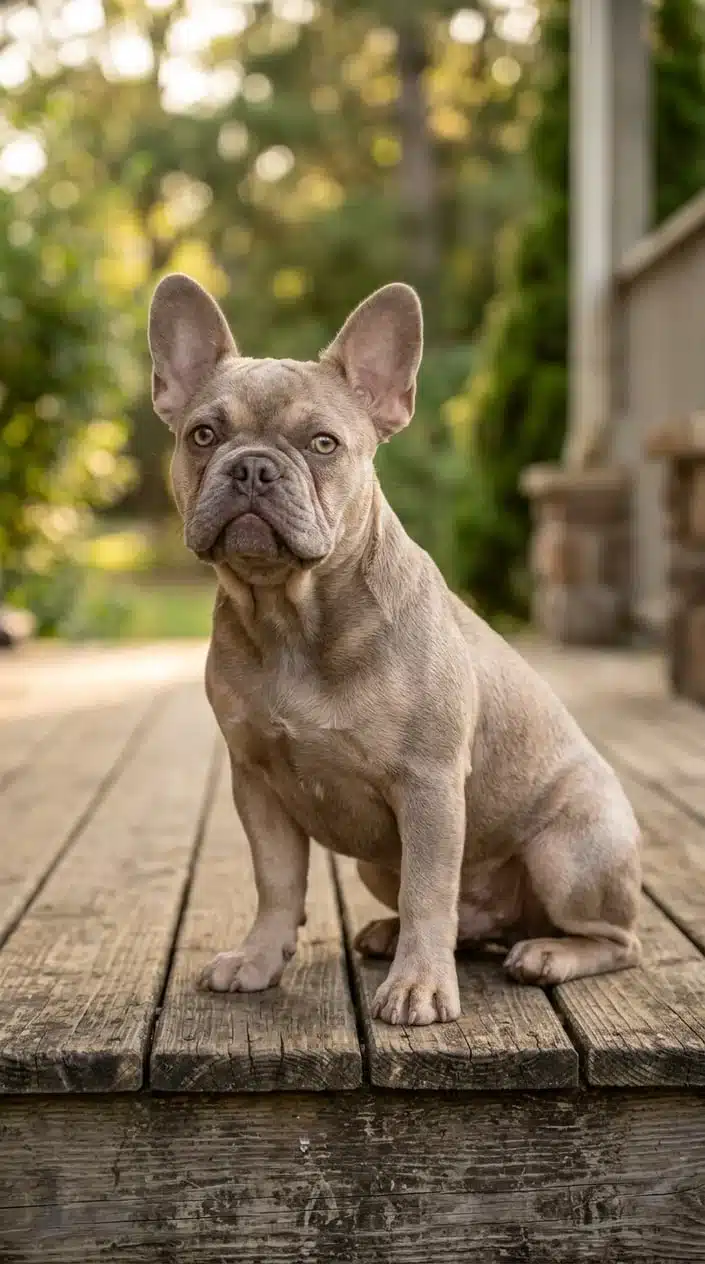
An Isabella French Bulldog has brown eumelanin that has also been diluted, creating a pale brown, muted taupe, or silvery-beige appearance. The label sounds simple, but “Isabella” and “lilac” are used inconsistently by breeders, so coat color alone is not reliable proof.
Correct identification requires looking at the coat together with the nose, lips, eye rims, paw pads, underlying pattern, and—when the distinction matters—results from a suitable DNA panel. This guide explains how Isabella fits within the wider French Bulldog colors cluster without treating a marketing name as a diagnosis.
- Isabella generally describes brown eumelanin modified by dilution.
- The coat may appear pale brown, champagne, muted taupe, or silvery beige.
- The nose, lips, eye rims, and paw pads should show diluted brown rather than black or slate pigment.
- Isabella, lilac, blue, and blue fawn are not automatically interchangeable labels.
- Breeder terminology varies, so laboratory results are more useful than color names alone.
- Isabella is outside the accepted colors in the current AKC French Bulldog breed standard.
- Color testing does not predict overall health, temperament, or whether Color Dilution Alopecia will develop.
What Does an Isabella French Bulldog Look Like?
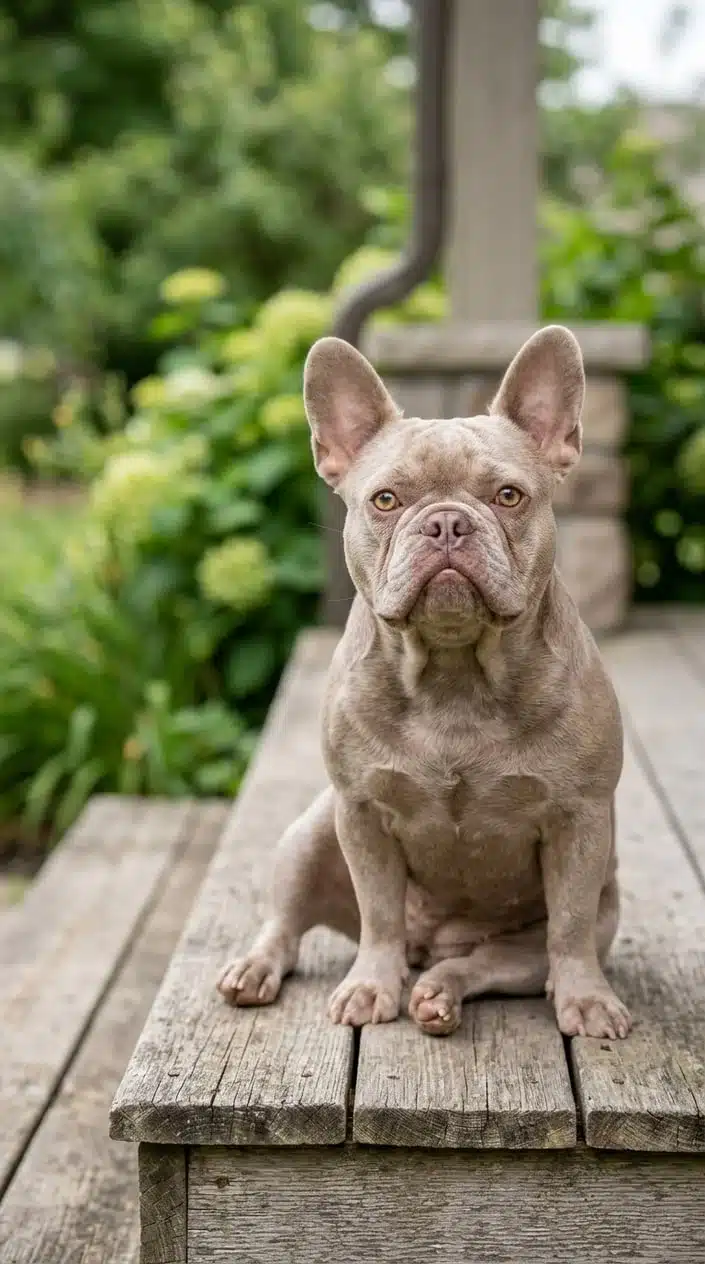
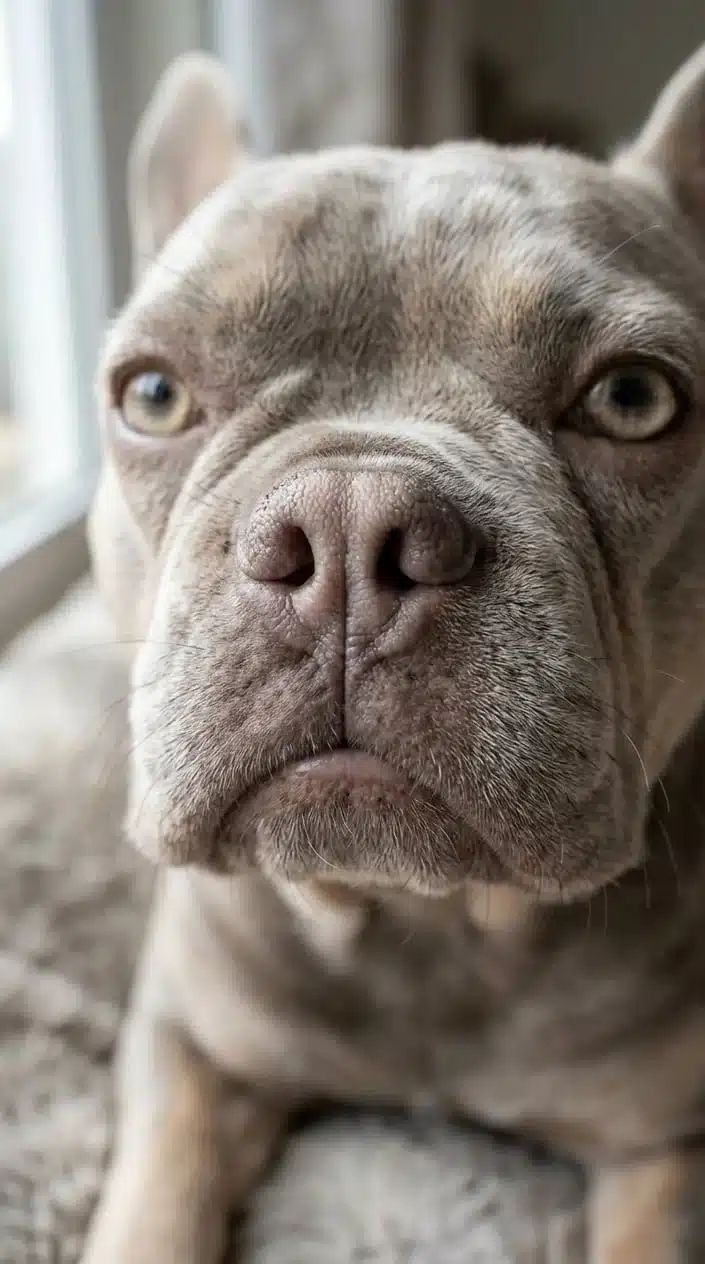
An Isabella Frenchie usually has a softly diluted, brown-based appearance. Depending on lighting and the dog’s other color genes, the coat may look pale cocoa, champagne, dusty taupe, silvery brown, or muted beige.
The shade is only one clue. Hairless pigment is especially important because a dog with a beige-looking coat may actually be cream, fawn, blue fawn, lilac fawn, or another light color.
Coat and Pigment Clues
| Feature | Typical Isabella Clue | Why It Matters |
|---|---|---|
| Body coat | Pale brown, taupe, champagne, or silvery beige | Shows the overall phenotype but can change under different lighting |
| Nose | Muted liver, pale brown, or pinkish-brown | Helps separate diluted brown from black- or blue-based pigment |
| Lips and eye rims | Diluted brown rather than black | Often provides a clearer pigment clue than the coat |
| Paw pads | Pale brown or pinkish-brown | Useful when the face is difficult to assess |
| Eyes | May be light in puppies but can darken | Eye color alone never confirms Isabella |
| Pattern | Solid-looking, fawn, tan-pointed, pied, brindle, or merle | Pattern is inherited separately from the base pigment |
A pale coat is not enough to identify Isabella. Examine the nose, lips, eye rims, paw pads, pattern, and unedited natural-light photographs together.
Why Lighting Can Be Misleading
Warm indoor lights may make a gray-brown coat look chocolate, while cool daylight can make the same dog appear silver or lilac. Camera white balance, filters, shadows, and image editing can change the visible shade even more.
For comparison, use several unedited photographs taken in indirect daylight. Close-ups of the nose and paw pads are more useful than a heavily edited full-body image.
Get Weekly Dog Care Tips Free
Join 10,000+ dog owners. Vet-approved advice every week
🔒 No spam. Unsubscribe anytime.
Why Is the Color Called Isabella?
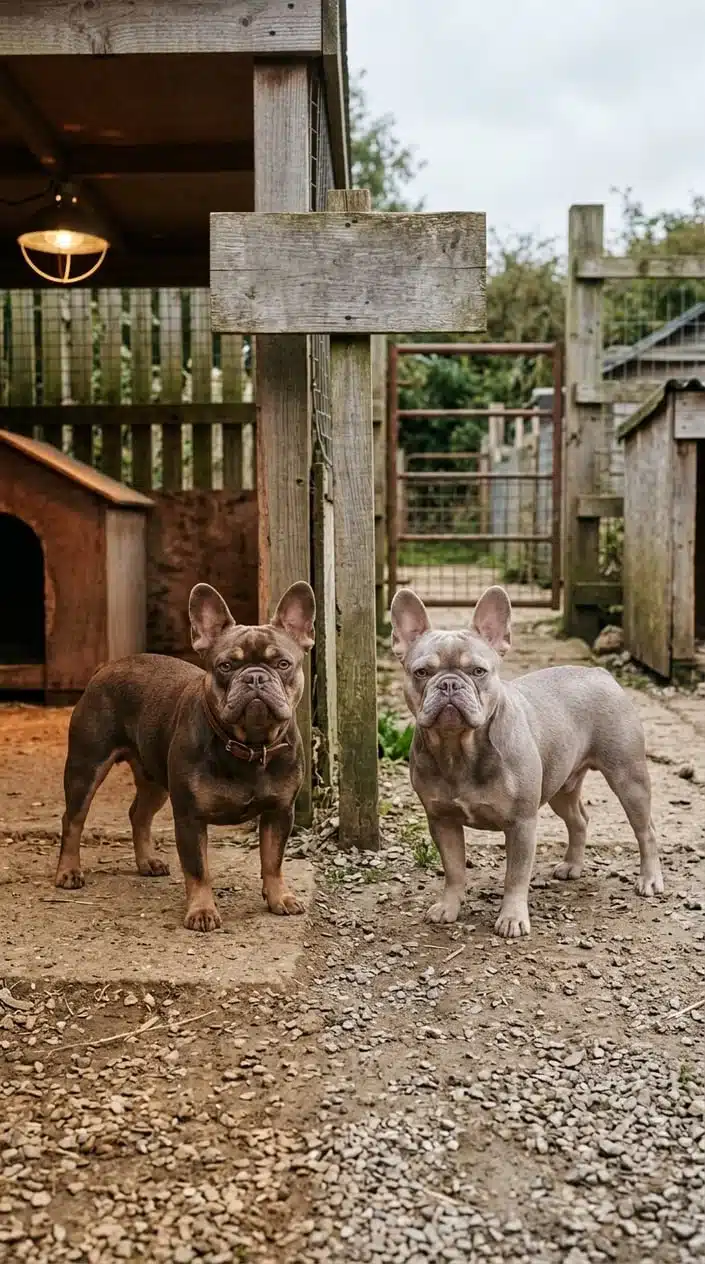
“Isabella” is a traditional color word used in several animal breeds for a pale, diluted brown appearance. In French Bulldogs, it is commonly used for brown pigment that has been lightened by dilution.
The difficulty is that breeders do not all apply the term in the same way. Some separate Isabella from lilac according to the tested brown pathway, while others use the names interchangeably or add labels such as “true lilac,” “double lilac,” and “new shade.”
Ask what genetic definition a seller is using and request the complete laboratory report. A fashionable label is not a substitute for phenotype and test results.
Isabella French Bulldog Genetics Explained
Dog coats contain two main pigment types. Eumelanin creates black or brown pigment in the coat and hairless areas, while pheomelanin creates shades ranging from cream and yellow to red.
Isabella concerns eumelanin. Brown-associated variants change normally black eumelanin to brown, and dilution-associated variants lighten that brown pigment further.
The Brown Locus and TYRP1
Variants in TYRP1 can produce testable brown pigment. Dogs generally need an appropriate brown-producing combination inherited from both parents to show the brown phenotype.
“Chocolate” is sometimes used broadly in sales listings, but a visual chocolate label does not reveal which tested genetic pathway is involved.
The Dilution Locus and MLPH
Variants associated with MLPH affect how pigment is distributed along the hair shaft. When a dog inherits a dilution-producing combination, black can look blue-gray and brown can look pale, washed, or silvery.
Modern laboratories may test several known dilution variants. Different combinations can produce dilution, and currently known variants do not explain every dilute French Bulldog.
Why “b/b + d/d” Is a Simplified Explanation
The formula is helpful as an introduction, but it hides variation within both the brown and dilution loci. It also does not account for cocoa, which is genetically distinct from tested TYRP1 brown, or for pattern genes that determine where eumelanin appears.
A complete interpretation may need brown, cocoa, dilution, brindle, fawn, tan-point, white-spotting, merle, and coat-length results. Even then, a DNA panel does not predict the exact visible shade.
Dilution does not create a new blue or beige pigment. It changes the appearance of pigment the dog was already genetically capable of producing.
Isabella vs. Lilac French Bulldog
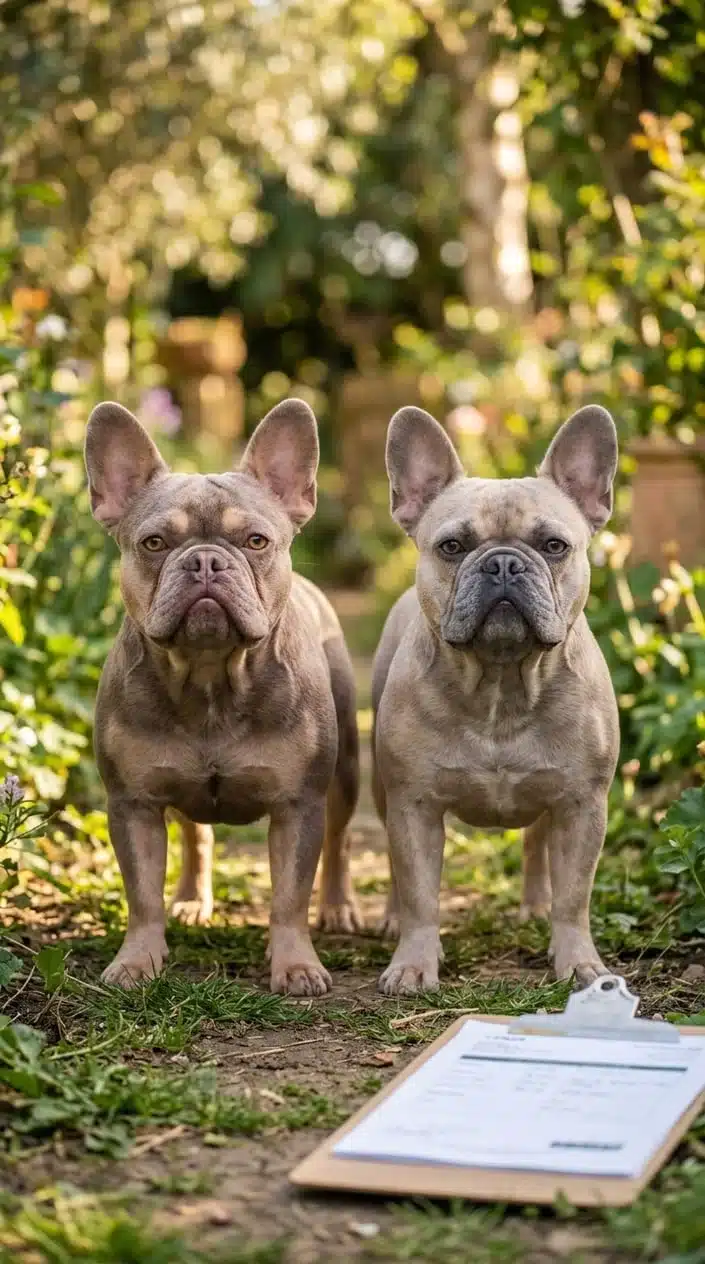
The distinction depends on the definition being used. Many breeders call any diluted brown Frenchie lilac, while others reserve Isabella for diluted testable brown and use lilac for cocoa-based dilution.
Other sellers use “new-shade Isabella” for combinations involving tested brown, cocoa, and dilution. Because the vocabulary is inconsistent, two visually similar dogs may receive different labels.
Our Lilac French Bulldog guide explains the broader lilac terminology. When accuracy matters, compare the phenotype and full laboratory report instead of relying on the advertised name.
Isabella vs. Blue French Bulldog
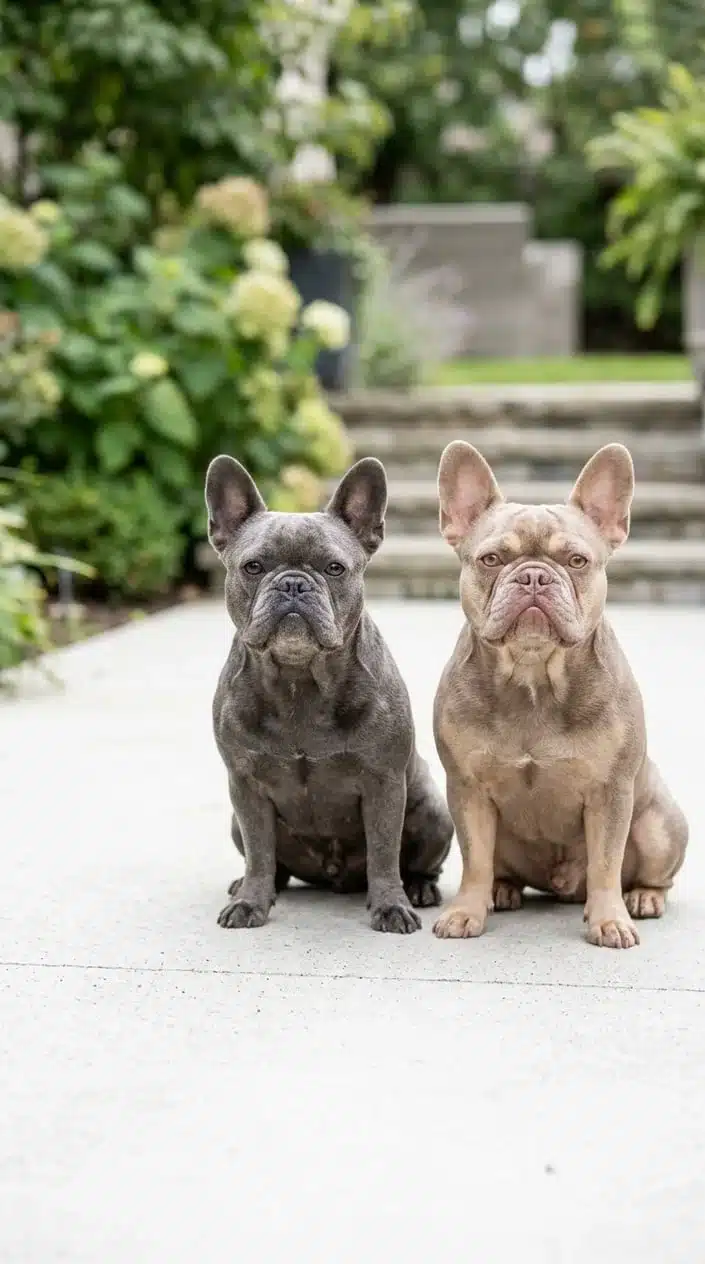
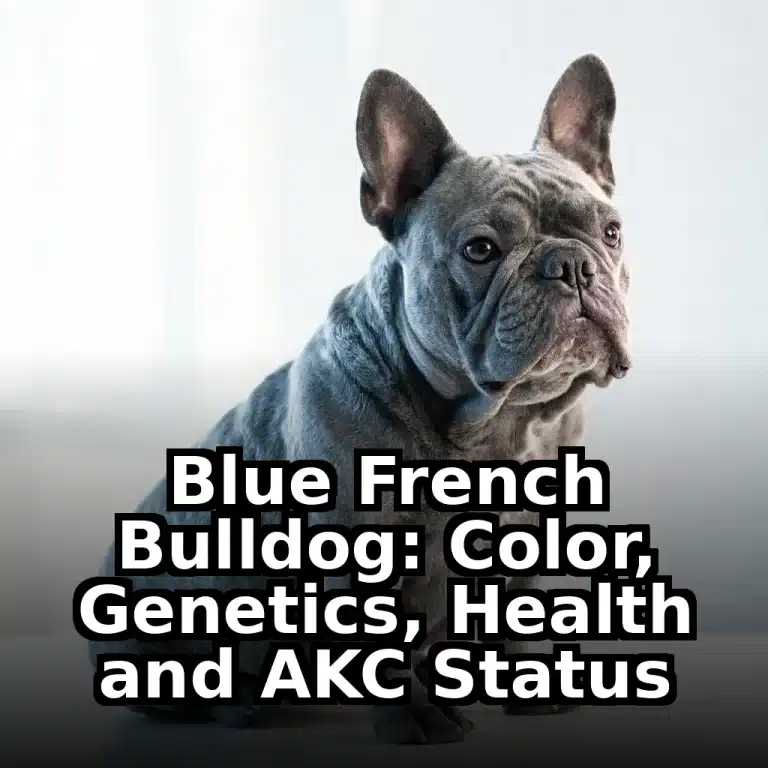
A Blue French Bulldog has diluted black eumelanin, so its coat and hairless pigment generally look slate, steel-gray, or charcoal. Isabella involves diluted brown eumelanin, producing warmer pale-brown or taupe tones.
The nose is often the clearest difference. Blue dogs usually retain slate-gray pigment, while Isabella dogs tend toward muted liver, pale brown, or pinkish-brown pigment.
Isabella vs. Similar French Bulldog Colors
| Color | General Appearance | Useful Distinction |
|---|---|---|
| Isabella | Pale brown, taupe, champagne, or silvery beige | Diluted brown hairless pigment |
| Lilac | Muted gray-brown or lavender-gray | Definition varies; request the DNA report |
| Blue | Slate, steel, or blue-gray | Diluted black rather than diluted brown |
| Chocolate | Undiluted brown or cocoa impression | Usually deeper, richer hairless pigment |
| Blue fawn | Fawn body with diluted dark pigment | Body color is primarily pheomelanin |
| Isabella fawn | Fawn body with Isabella-modified pigment | Not the same as a solid Isabella coat |
| Platinum | Very pale or cream-looking body | Hidden pigment may require genetic context |
| Cream | Even ivory or off-white coat | Standard cream should retain dark pigment |
| Sable | Fawn or red coat with dark-tipped hairs | Shading is different from a uniformly diluted-brown coat |
Isabella vs. Fawn and Sable
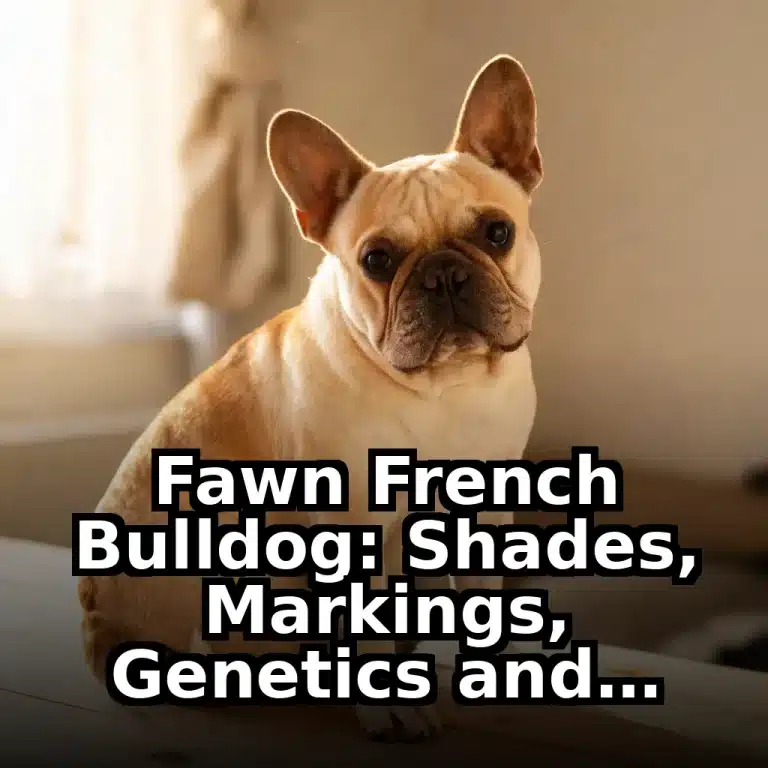
A fawn French Bulldog is primarily displaying pheomelanin across the body. An Isabella fawn can have a fawn body while its nose, mask, and other eumelanin are modified by brown and dilution.
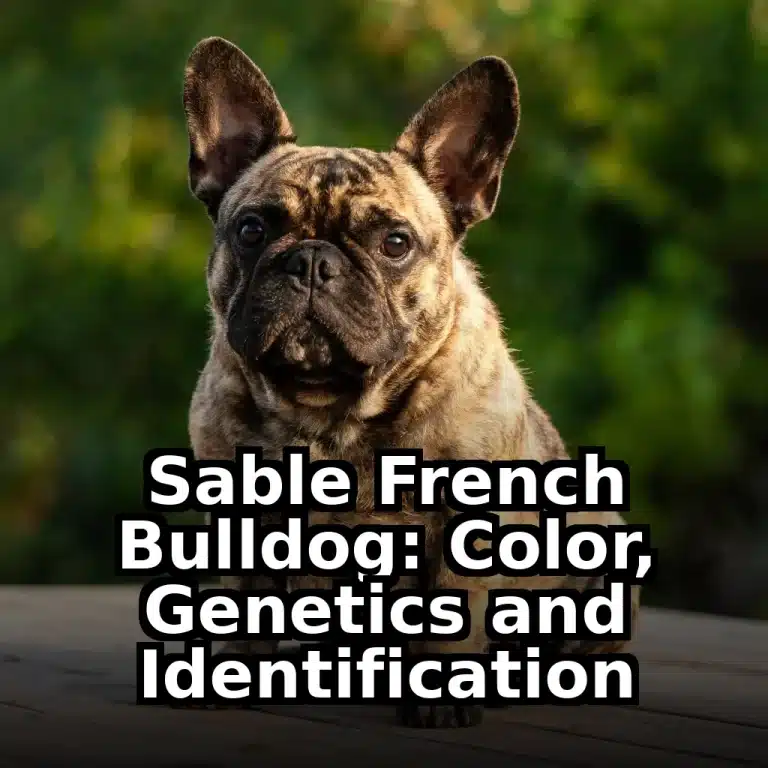
A sable French Bulldog has dark-tipped or shaded hairs over a fawn-to-red background. Those shaded hairs can also be modified, which makes classification from photographs especially difficult.
When two pale coats look similar, the nose, lips, eye rims, and paw pads often reveal whether the eumelanin is black, blue-gray, brown, or diluted brown.
Types of Isabella French Bulldogs
Isabella describes pigment, not the dog’s complete pattern. Separate genes can add fawn, brindle, tan points, white spotting, merle, or long hair over the same pigment background.
Solid Isabella
A solid-looking Isabella has diluted brown eumelanin across most visible colored hair. Small white markings may still occur, and hidden pattern genetics can complicate the word “solid.”
Isabella and Tan
Organized tan points usually appear above the eyes, on the cheeks, chest, lower legs, and beneath the tail. The tan areas are pheomelanin, while the Isabella areas represent modified eumelanin.
Isabella Fawn
An Isabella fawn has a fawn body with Isabella-modified eumelanin on features such as the nose and any mask or shaded hairs. It should not be labeled solid Isabella solely because the coat is pale.
Isabella Brindle
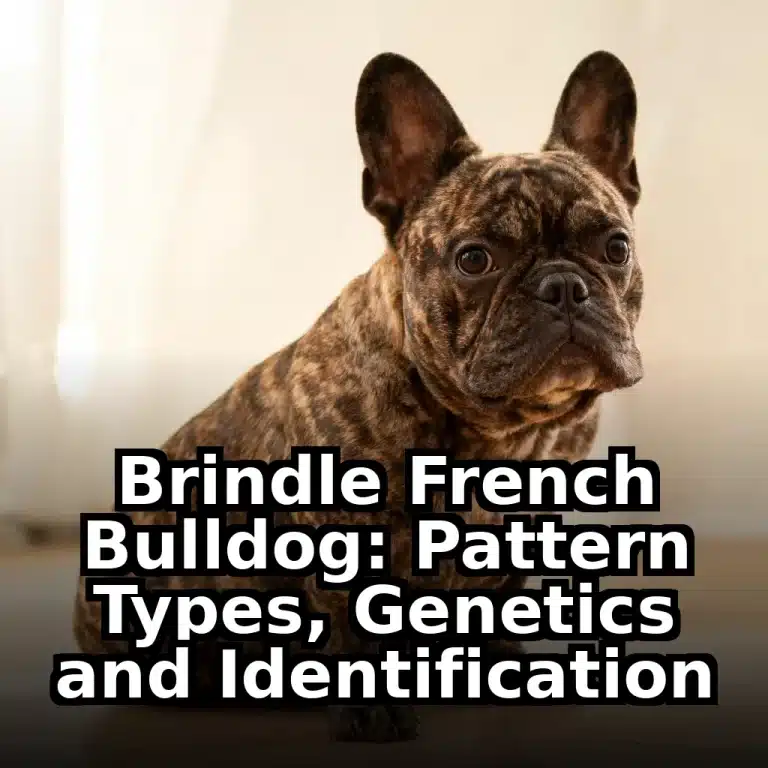
Brindle creates eumelanin striping over a fawn background. In an Isabella brindle, the stripes may appear soft brown or taupe and can be hard to see in photographs. Learn how the pattern works in the Brindle French Bulldog guide.
Isabella Pied
A pied dog has white spotting with patches containing Isabella pigment or another underlying pattern. The amount of white does not determine whether the colored patches are Isabella.
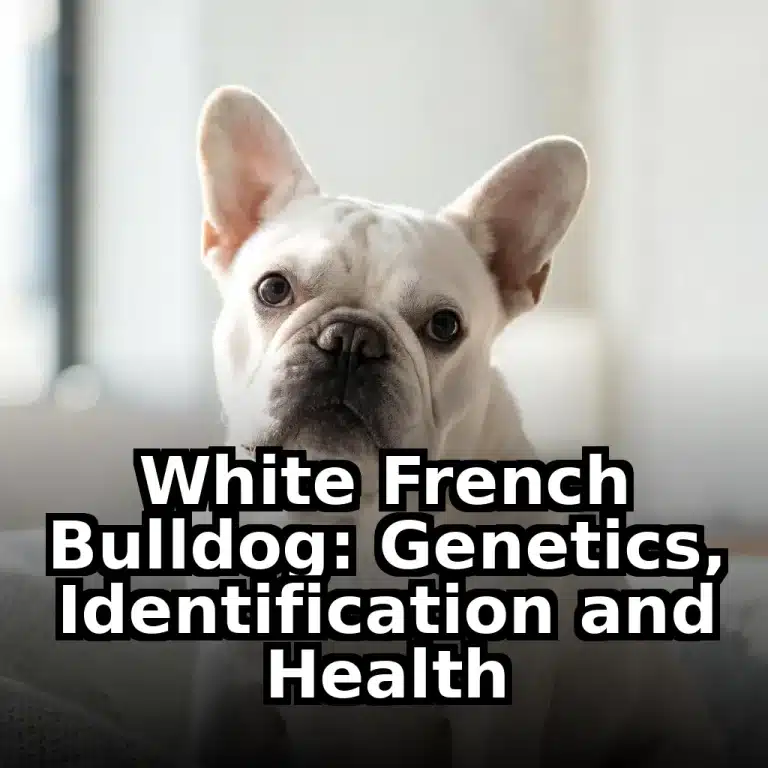
Compare the patch pigment with our Pied French Bulldog and White French Bulldog guides.
Isabella Merle, Platinum, and Fluffy
Merle changes the distribution of pigment, platinum is a breeder term for a very pale coat that may conceal other color genetics, and fluffy describes long coat length. None of these traits independently proves Isabella pigment.
What Is a New-Shade Isabella French Bulldog?
“New-shade Isabella” is a breeder term commonly used for dogs reported to combine tested brown, cocoa, and dilution. It is not an official AKC color classification, and its use is not standardized across laboratories or sellers.
Ask for the laboratory name, tested variants, and complete genotype. A screenshot containing only selected results may omit merle, pattern, or other information that changes the interpretation.
Request the complete report and confirm which variants the laboratory tested. “DNA confirmed” is not meaningful when the tested panel and results are hidden.
Can an Isabella French Bulldog Have Tan Points?
Yes. Tan points are a separate pattern and can appear on an Isabella-pigmented dog when the relevant genetic conditions allow the pattern to show.
Clearly organized points differ from a general fawn body. “Big rope” describes an exaggerated facial skin-fold feature rather than a color gene; our Isabella Tan Big Rope French Bulldog article covers that narrower variation.
Can DNA Testing Confirm an Isabella French Bulldog?
A suitable panel can identify tested brown, cocoa, and dilution variants and help explain the visible pigment. It can also test modifiers such as tan points, brindle, merle, white spotting, and long coat.
Results still require interpretation. Laboratories may cover different variants, and currently known tests may not explain every dilute phenotype.
| Color DNA May Help Identify | Color DNA Cannot Establish |
|---|---|
| Tested brown and cocoa variants | The exact adult shade |
| Tested dilution variants | How a coat will look in every light |
| Brindle and tan-point variants | Exact visible striping or point intensity |
| Included white-spotting variants | The precise amount of white |
| Merle and long-coat variants | Overall health or temperament |
| Tested color inheritance | Breed quality or ethical breeding |
| A reported genotype | Whether CDA will develop |
| Genetic context for a label | AKC conformation eligibility by itself |
A color panel explains selected coat traits. It does not replace breed-relevant health screening, veterinary records, or careful evaluation of the parents.
How to Identify an Isabella French Bulldog
- View the dog in indirect natural daylight.
- Use unedited photographs from several angles.
- Examine the complete body coat rather than one pale patch.
- Inspect whether the nose is black, slate, brown, or diluted brown.
- Check the lips and eye rims for matching pigment.
- Examine the paw pads.
- Compare warm pale-brown tones with cooler slate-gray and cocoa tones.
- Look for a fawn underlying coat.
- Check for subtle brindle striping.
- Map any white spotting rather than treating white as the base color.
- Look for organized tan points above the eyes and on the legs.
- Compare photographs from puppyhood and later growth stages.
- Review the parents’ complete color results when available.
- Use a suitable DNA panel when precise classification matters.
- Separate a breeder’s marketing label from the laboratory findings.
- Never infer health, purity, or temperament from color alone.
The most reliable visual assessment combines hair color with the pigment on the nose, lips, eye rims, and paw pads.
Do Isabella French Bulldog Puppies Change Color?
The puppy’s inherited genotype does not change, but its visible shade can. The coat may lighten or deepen as adult hair grows, while tan points, brindling, or shading may become easier to see.
White patches can appear proportionally different as the body grows. Light puppy eyes may also darken, so a breeder should not guarantee permanently blue or green eyes based on an early photograph.
Age can change how the color looks, not the inherited color variants. Newborn photos are poor evidence for an exact adult shade.
Are Isabella French Bulldogs AKC Recognized?
The current AKC French Bulldog breed standard accepts white, cream, fawn, and specified combinations and patterns. Colors outside the accepted list are disqualifying for conformation, and the standard specifically addresses liver pigment, nonblack noses, and blue or green eyes.
Registration and breed-standard acceptance are different. A dog may have purebred ancestry or registration papers while displaying a color that is not accepted in the show standard.
An AKC certificate does not certify Isabella as an accepted show color, confirm the seller’s color label, or replace health testing.
Are Isabella French Bulldogs Healthy?
Isabella coloring does not cause every French Bulldog health problem. Breathing difficulty, spinal disease, eye problems, allergies, joint disorders, and heat intolerance are breed-wide concerns that can affect Frenchies of any color.
A standard color does not guarantee health, and a nonstandard color does not diagnose disease. Responsible selection should focus on documented health screening, functional structure, veterinary history, and the breeder’s priorities.
Isabella French Bulldogs and Color Dilution Alopecia
Color Dilution Alopecia, or CDA, is a hair and skin disorder associated with dilute-colored areas in some dogs. Possible signs include thinning hair, broken hairs, scaling, clogged follicles, bumps, and secondary skin infections.
Not every dilute dog develops CDA, and a normal puppy coat does not guarantee that signs will never appear. Color DNA testing also cannot reliably predict which individual dog will be affected.
Hair loss is not automatically CDA. Allergies, parasites, infection, friction, hormonal disorders, and other conditions can look similar, so a veterinarian should investigate the cause.
Do not diagnose CDA from coat color or photographs. New thinning, scaling, irritation, odor, bumps, or infection warrants veterinary assessment.
Does Isabella Coloring Affect Personality?
No reliable evidence shows that Isabella Frenchies are inherently calmer, more affectionate, smarter, more stubborn, or better with children because of their pigment.
Temperament is influenced by ancestry, health, early handling, socialization, training, environment, and individual experience. Color-based personality promises are marketing claims.
Are Isabella French Bulldogs Rare?
Isabella requires particular inherited color combinations, but recessive inheritance alone does not provide a measured population frequency. Deliberate color breeding and inconsistent labels also make rarity claims difficult to verify.
“Rare Isabella,” “true lilac,” and “new shade” may describe a seller’s preferred terminology rather than a standardized population category. Rarity should never outweigh health, structure, or transparent breeding records.
How Much Does an Isabella French Bulldog Cost?
There is no reliable fixed nationwide price because markets, locations, pedigrees, breeder practices, and demand change. A high price does not prove the advertised genotype, purebred status, health, or breeding quality.
Costs should be evaluated alongside complete DNA reports, breed-relevant health testing, veterinary documentation, parent information, contract terms, and the breeder’s willingness to answer detailed questions.
Choosing an Isabella French Bulldog Puppy Responsibly
- Request unedited natural-light photographs.
- Ask for close-ups of the coat, nose, lips, eye rims, and paw pads.
- Compare photographs from multiple ages.
- Ask the seller to identify both the color and underlying pattern.
- Request the laboratory name and complete DNA report.
- Review brown, cocoa, dilution, merle, and other relevant results.
- Ask for breed-relevant health-test records for both parents.
- Request veterinary skin histories for the parents.
- Reject guarantees against CDA based only on color DNA.
- Do not accept guaranteed permanent blue or green eyes.
- Ignore personality promises based on color.
- Be cautious of urgency built around “rarity.”
- Review parent, pedigree, and registration information.
- Obtain written purchase and health documentation.
- Choose health and functional structure before color.
Be cautious when a seller uses a premium color label but will not share complete laboratory results, parent health records, natural-light images, or written veterinary documentation.
Frequently Asked Questions
What Is an Isabella French Bulldog?
It is a French Bulldog whose brown eumelanin is also diluted, usually creating pale brown, taupe, champagne, or silvery-beige pigment.
What Genes Produce Isabella Coloring?
A simplified explanation combines brown-associated variants with dilution-associated variants. Cocoa and multiple dilution variants make complete laboratory interpretation more complex than a single formula.
Is Isabella the Same as Lilac?
Not under every definition. Some breeders use the terms interchangeably, while others separate them by brown or cocoa test results.
What Is a New-Shade Isabella Frenchie?
It is a nonstandard breeder term often used for reported combinations of brown, cocoa, and dilution. Ask for the full genetic report.
Is Isabella the Same as Blue Fawn?
No. Blue fawn primarily displays a fawn body with diluted black pigment, while Isabella refers to diluted brown eumelanin.
Can an Isabella Frenchie Have Tan Points?
Yes. Tan points are a separate pattern that can appear with Isabella-modified eumelanin.
Can an Isabella Frenchie Be Pied?
Yes. White spotting can create a pied pattern with Isabella-colored patches.
Can Isabella French Bulldogs Be AKC Registered?
Registration may be possible depending on ancestry and documentation, but registration does not mean Isabella is an accepted conformation color.
Can an Isabella French Bulldog Be Purebred?
Color alone cannot prove or disprove purebred ancestry. Pedigree and parentage documentation address ancestry, while the breed standard addresses accepted appearance.
Do Isabella Puppies Change Color?
The genotype remains the same, but the visible shade, eye color, markings, and contrast may change as the puppy matures.
Do Their Eyes Stay Blue or Green?
Not necessarily. Puppy eyes commonly darken, and no seller can reliably guarantee a permanent eye shade from an early photograph.
Do All Isabella French Bulldogs Develop CDA?
No. CDA affects some dilute dogs, but color testing cannot reliably predict whether an individual dog will develop it.
Are Isabella French Bulldogs Unhealthy?
Color alone does not diagnose health. Evaluate breed-wide screening, family history, veterinary records, structure, and any pigment-related skin concerns separately.
Are Isabella French Bulldogs Rare?
They require particular inherited combinations, but there is no dependable universal frequency supporting every “rare” sales claim.
Final Takeaway
An Isabella French Bulldog is best understood as a brown-eumelanin dog whose pigment is also diluted. The coat may look champagne, taupe, pale brown, or silvery beige, but the nose, lips, eye rims, paw pads, underlying pattern, and appropriate DNA results provide stronger identification evidence.
Isabella, lilac, blue, and Isabella fawn should not be treated as interchangeable without defining the terms. Isabella is outside the accepted AKC show colors, color DNA is not health testing, and dilute pigment does not guarantee CDA.
Choose breeder transparency, functional health, and documented screening over rarity claims or premium color marketing.