Pied vs. White French Bulldog: Key Differences and How to Tell

A pied and a white French Bulldog can look nearly identical, especially when a pied dog has only a tiny colored patch. The key difference is that pied describes a pattern, while white describes visible coat color.
This guide explains how to compare the coat, markings, pigment, and genetic information without assuming that a photograph tells the whole story.
- A pied French Bulldog usually has a white base with clearly defined colored patches.
- A white French Bulldog looks solid or almost entirely white, but the appearance can have more than one genetic explanation.
- An extreme pied may have so little visible color that it appears white.
- A pale cream Frenchie may look white in bright or edited photos.
- Ticking creates small flecks within white areas; it is not the same as large pied patches or merle mottling.
- DNA testing can clarify tested coat variants, while BAER testing evaluates hearing in each ear.
Pied vs. White French Bulldog: The Main Difference
A pied French Bulldog has extensive white spotting with one or more areas of pigmented coat. Those patches may be brindle, fawn, cream, or another color, depending on the dog’s other coat genes.
A white French Bulldog appears white across all or nearly all of the body. However, “white” describes what you see; it does not automatically identify the genetic reason for that appearance.
| Feature | Pied French Bulldog | White French Bulldog |
|---|---|---|
| Main description | A white-spotting pattern | A visible color description |
| Colored patches | Usually clear and defined | Absent, tiny, or easy to miss |
| Possible overlap | Extreme pied may look white | May be described as white despite underlying spotting |
| Nose and eye rims | Often dark, but may vary | May also be normally pigmented |
| Can photos confirm genetics? | No | No |
| AKC terminology | Piebald is an accepted pattern | White is an accepted color |
The distinction matters most when you are identifying a puppy, interpreting registration terms, evaluating a breeder’s claim, or considering hearing testing.
What Is an Extreme Pied French Bulldog?
An extreme pied is a dog with such extensive white spotting that very little pigmented coat remains. A small patch may appear on one ear, around an eye, near the tail, or elsewhere on the body.
If the remaining patch is tiny, hidden, or covered by a photo angle, the dog may look completely white. “Extreme pied” is a useful appearance term, but there is no universal percentage of white that turns a pied dog into an extreme pied.
Get Weekly Dog Care Tips Free
Join 10,000+ dog owners. Vet-approved advice every week
🔒 No spam. Unsubscribe anytime.
White spotting is associated with the MITF gene, although expression can be complex. The UC Davis Veterinary Genetics Laboratory notes that dogs with similar test results can show different amounts of white, so genotype and appearance do not always match perfectly.
Do not assume every visually white Frenchie is an extreme pied. Cream, extensive white spotting, and other pigment mechanisms can create similar photographs, so supporting records and testing may be needed.
How to Tell a Pied Frenchie From a White Frenchie
Start with the dog in natural daylight. Filters, bright flash, and overexposure can erase pale markings and make cream fur look bright white.
1. Look for Defined Colored Patches
Check the ears, eye area, back, rump, and base of the tail. A clear fawn or brindle patch strongly supports a pied description, even when most of the dog is white.
2. Inspect Dark Patches Closely
A patch that looks black from several feet away may contain fine fawn hairs. That can make it brindle rather than solid black, which is important when interpreting the French Bulldog breed standard.
3. Check for Warm Undertones
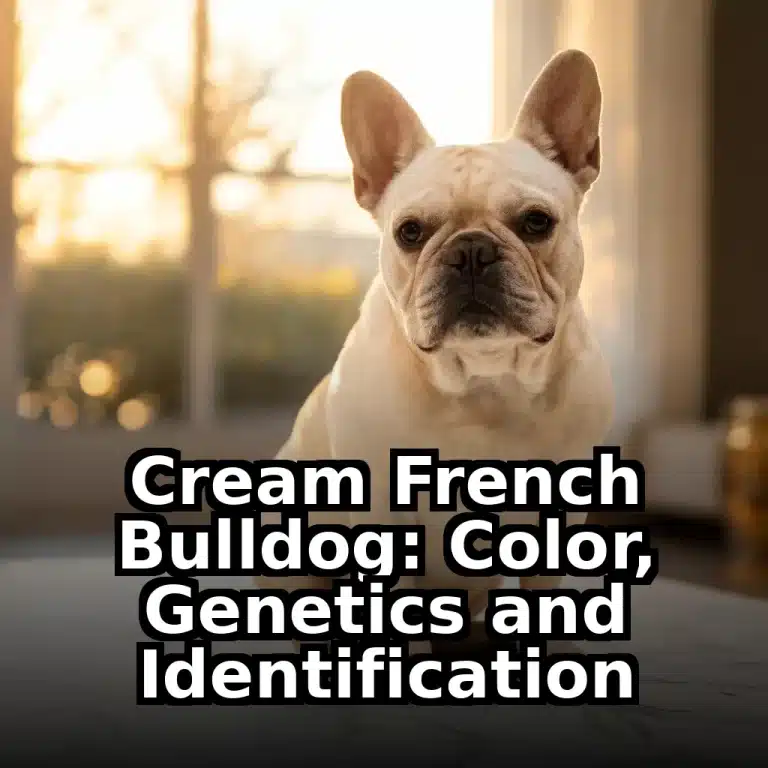
A cream French Bulldog often has an ivory, eggshell, or pale-yellow cast across the coat. The warmth may be easiest to see beside a white object in indirect daylight.
4. Separate Patches From Ticking
Pied patches are larger areas of pigment with recognizable boundaries. Ticking appears as small flecks or individual pigmented hairs within a white area and may become more obvious as a puppy matures.
5. Review DNA and Registration Information
A coat-color panel may identify tested white-spotting and color variants. Registration records can tell you how the dog was recorded, but neither a label nor a photo should be treated as a complete genetic diagnosis.
| Clue | What It May Suggest | Conclusive? |
|---|---|---|
| Large, defined colored patches | Pied pattern | Strong clue, not a full genotype |
| One tiny patch on an ear or tail | Extreme pied | No |
| Uniform ivory undertone | Cream | No |
| Small flecks in white fur | Ticking | No |
| Mottled areas within pigment | Possible merle | No |
| Coat-color DNA report | Variants included in the panel | Yes, for the tested variants |
Pied vs. White vs. Cream French Bulldog
These three descriptions are frequently mixed together in puppy listings. The easiest starting point is to ask whether you see colored patches, a uniform warm tone, or a clear white appearance.
| Trait | Pied | White or Extreme Pied | Cream |
|---|---|---|---|
| Overall look | White with defined patches | Solid or almost entirely white | Uniform ivory or pale yellow |
| Colored coat patches | Normally visible | Absent or extremely limited | Usually absent |
| Warm undertone | Not the defining feature | Usually clear white | Common |
| Dark nose possible | Yes | Yes | Yes |
| Visual identification always reliable? | No | No | No |
Cream can also mask patterns that the dog carries genetically. That is why an even cream coat is not classified by searching for hidden pied patches with the eye alone.
Pied vs. Ticking, Freckles and Merle
Ticking is pigment that appears as small hairs or flecks inside white areas. Owners may call these marks freckles, but they are different from the broad patches that define a pied pattern.
Skin spots may also show through short white fur. Pigmented skin underneath the coat does not necessarily mean the dog is developing new pied patches.
Merle creates irregular mottling within pigmented coat rather than simple flecks limited to white areas. If the markings look marbled or patchily diluted, compare them with our complete Merle French Bulldog guide.
Tiny spots are not automatically merle, and a dark patch is not automatically solid black. Examine the hairs closely and use genetic documentation when the distinction matters.
Black-and-White vs. Brindle Pied
Brindle may be so dense that a patch looks black at first glance. Under the French Bulldog standard, a brindle pied needs at least a trace of the expected fawn background visible within a brindled patch.
A truly solid-black patch without brindling is treated differently for conformation. The French Bull Dog Club of America’s color explanation is helpful here because it shows why close inspection matters.
This distinction affects show-standard terminology, not whether a Frenchie can be a loved companion. It also should not be used to make claims about temperament or quality.
Does a White Coat Mean the Frenchie Is Albino?
No. A white or extreme-pied French Bulldog is not automatically albino.
Many white-coated dogs retain normal pigment in the nose, lips, eye rims, eyes, and paw pads. White spotting can also leave pink skin beneath white hair, so a small area of pink skin does not prove albinism.
Albinism involves disrupted pigment production and requires more than a visual guess. A breeder should not advertise a dog as albino—or rule it out—based only on white fur.
Pied and White French Bulldog Genetics
Pied is commonly linked to white spotting involving MITF. The amount and placement of white can vary, which explains why one dog has several obvious patches while another appears almost entirely white.
Other genes control the pigment that would be visible in the colored portions. A pied dog may therefore have brindle, fawn, cream, blue, chocolate, merle, or another underlying color or pattern.
White appearance can result from extensive spotting, but it may also be confused with very pale cream or other pigment conditions. For a broader explanation of how color and pattern work together, see our French Bulldog colors guide.
Are Pied and White French Bulldogs AKC Recognized?
The official AKC French Bulldog breed standard lists white, cream, and fawn as acceptable colors and includes brindle and piebald among accepted markings and patterns. Ticking is acceptable but not desired.
However, the color inside a pied patch still matters. Adding white spotting does not make an otherwise disqualifying color or pattern acceptable for conformation.
AKC registration, the color entered on paperwork, and eligibility under the conformation standard are related but different. Registration does not guarantee that every visible color or marking meets the show standard.
Are Pied or White French Bulldogs More Likely to Be Deaf?
White pigmentation and piebald genes have been associated with hereditary congenital deafness in dogs, but that does not mean every pied or white French Bulldog has hearing loss.
A mostly white head, especially around the ears, can justify extra caution. Clapping, calling the puppy, or watching its response to household noises cannot reliably rule out hearing in only one ear.
A BAER test measures the auditory response of each ear separately. The Orthopedic Foundation for Animals explains that BAER is the accepted method for evaluating congenital deafness.
Ask for documented BAER results when hearing is a concern. A puppy reacting to sound may still have one-sided hearing loss, which routine observation can miss.
Do Coat Color and Pattern Affect Temperament?
There is no sound basis for treating pied or white Frenchies as separate personality types. Both are French Bulldogs, and coat appearance does not reliably predict behavior.
Socialization, training, health, home environment, and individual personality are much more useful when evaluating temperament.
What to Ask a Breeder
A responsible breeder should provide more than attractive photos and a color label. Ask for information that helps you verify both identity and health.
- Clear, unedited photos in natural light
- The registered colors and patterns of both parents
- A full coat-color report when genetic claims affect the price
- BAER results if hearing is a concern
- Verifiable hip, patella, cardiac, and eye screening
- Veterinary records for the puppy
- Parent identities and pedigree information
- A written health guarantee and return policy
Color DNA testing does not replace health testing. It can clarify selected coat variants, but it does not prove that the puppy has healthy airways, joints, eyes, spine, or heart.
Frequently Asked Questions
Can a Pied French Bulldog Be Almost Completely White?
Yes. An extreme pied may retain only a tiny colored patch and can appear solid white in some photos. The amount of visible color is variable, so there is no reliable universal percentage cutoff.
Can a White French Bulldog Have a Black Nose?
Yes. A white or extreme-pied Frenchie can have a black nose, dark eye rims, and dark paw pads. Normal dark pigment does not prevent the coat from appearing white.
Why Is My White Frenchie Developing Spots?
Ticking, pigmented skin, or previously subtle hairs may become more noticeable as the puppy matures. New small flecks are not automatically pied patches or merle markings.
Is a White French Bulldog the Same as a Cream French Bulldog?
No. Cream usually has a warm ivory or pale-yellow tone, while white looks clearer and brighter. Lighting can blur the difference, so compare the coat in indirect daylight rather than filtered photos.
Can DNA Testing Confirm a Pied French Bulldog?
A coat-color panel can identify included white-spotting variants and other color genes, but white expression is complex. Use the laboratory result together with the dog’s appearance, pedigree, and registration information.
Are Pied and White French Bulldogs Rare?
Both descriptions occur in French Bulldogs, and rarity claims vary by breeder and market. A higher price should not be justified by a vague “rare” label without genetic documentation and strong health screening.
Final Takeaway
The simplest visual distinction is that a pied French Bulldog has a white-spotted coat with defined colored patches, while a white French Bulldog appears solid or nearly solid white. The important exception is extreme pied, which can leave so little visible color that the two descriptions overlap.
Use natural-light inspection, close examination of patches, and genetic or registration records when needed. If hearing is a concern, request a BAER test rather than relying on reactions to everyday sounds.