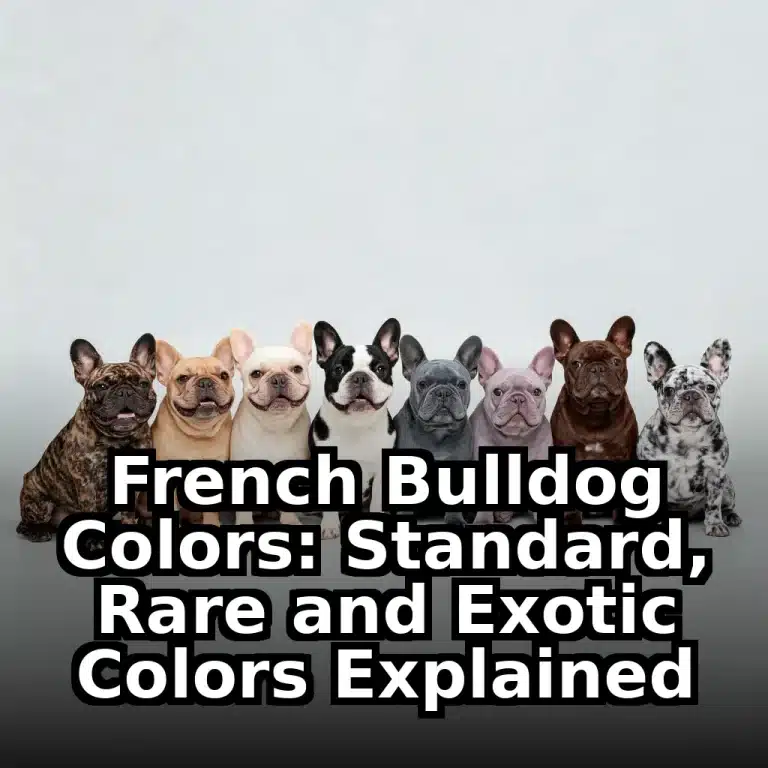
Blue Fawn French Bulldog: Color, Genetics and Identification

A Blue Fawn French Bulldog can look tan, honey, beige, or even reddish at first glance. That surprises many owners because the word “Blue” sounds as though the entire body should be gray.
In this color, Blue mainly describes the dog’s diluted dark pigment. The fawn body remains warm, while the mask, nose, lips, eye rims, paw pads, and shaded hairs may look slate or blue-gray.
- Appearance: The body stays visibly fawn rather than becoming a uniformly blue-gray coat.
- Genetics: Blue Fawn combines a visible fawn pattern with expressed D-locus dilution; known MLPH tests do not identify every dilution variant found in French Bulldogs.
- Identification: Slate or blue-gray points distinguish Blue Fawn from standard Fawn, but photographs alone cannot confirm the genotype.
- AKC status: Blue Fawn is specifically disqualifying for AKC conformation, although registration and show eligibility are separate.
Blue Fawn is only one part of a much larger coat system. Our French Bulldog Colors guide explains how recognized colors, nonstandard colors, patterns, and markings fit together.
Blue Fawn French Bulldog at a Glance
| Feature | Blue Fawn French Bulldog |
|---|---|
| Breed status | A French Bulldog, not a separate breed |
| Visible body coat | Warm tan, beige, honey, gold, or reddish fawn |
| Dark pigment | Slate, charcoal, or blue-gray rather than black |
| Common shorthand | Fawn-pattern expression plus two dilution variants, often written as Ay/- ky/ky d/d in legacy notation |
| Mask | May have a blue-gray mask or be maskless |
| Nose and skin pigment | Usually slate or blue-gray |
| Official color status | Not an accepted AKC conformation color |
| Photo identification | Suggestive, but not reliable enough to confirm genotype |
| Main color-related concern | Possible color dilution alopecia, although not every dilute dog is affected |
| Temperament | No established Blue-Fawn-specific personality |
What Is a Blue Fawn French Bulldog?
A Blue Fawn French Bulldog is a Frenchie with an expressed fawn pattern and expressed dilution. It is not a mix of two breeds, and Blue Fawn is not a separate breed or personality type.
“Fawn” describes the broad warm-colored body pattern. “Blue” describes what happens to eumelanin, the pigment that would normally make the dog’s nose, mask, lips, eye rims, paw pads, and darker hairs look black.
When that dark pigment is diluted, it looks slate, charcoal, or blue-gray. The result is a warm fawn dog with cool-toned points and shading—not necessarily a dog with a solid blue body.
Get Weekly Dog Care Tips Free
Join 10,000+ dog owners. Vet-approved advice every week
🔒 No spam. Unsubscribe anytime.
What Does a Blue Fawn Frenchie Look Like?
Body-Coat Shades
The body can range from pale beige and sand to honey, golden tan, cinnamon, or red-toned fawn. The exact intensity is influenced by more than the D locus, so two DNA-confirmed Blue Fawns may not have identical shades.
For the broader fawn spectrum, compare these dogs with our Fawn French Bulldog guide.
Blue-Gray Mask and Facial Shading
A masked Blue Fawn has a cool slate or gray-blue mask instead of a black one. The diluted mask may be obvious around the muzzle and eyes, or it may blend softly into a darker fawn face.
Nose, Lips and Eye Rims
The nose is one of the most useful visible clues. It is generally slate or blue-gray, with the lips and eye rims showing a similar cool pigment.
A brown, taupe, or pinkish-brown nose may suggest expressed brown-associated genetics rather than uncomplicated Blue dilution. A pale nose alone does not prove any genotype.
Paw-Pad Pigment
Paw pads often carry the same slate-gray pigment as the nose. They can help when a dog is maskless, but lighting, age, and natural pigment variation still limit visual identification.
Masked and Maskless Blue Fawns
A Blue Fawn may inherit a melanistic mask or have no visible mask. Maskless dogs can still be Blue Fawn because dilution remains visible in the nose, lips, eye rims, paw pads, and any dark-tipped hairs.
White Markings
Small white markings may appear on the chest, face, or toes. Larger white areas can produce a Pied presentation, because white spotting is inherited separately from the underlying fawn and dilution traits.
Blue Fawn French Bulldog Genetics
Blue Fawn is a multilocus phenotype. The common breeder formula—Ay + d/d—is a useful shortcut, but it does not explain every genetic requirement or every modern laboratory report.
The A Locus and Fawn Pattern
Older color reports commonly use Ay for fawn or sable. A dog may be written as Ay/Ay or Ay/at, but Blue Fawn does not require every dog to be Ay/Ay.
Modern ASIP testing can report haplotypes such as Dominant Yellow and Shaded Yellow. These results can help explain why one dog has a clearer fawn coat while another has heavier dark-tipped shading.
Legacy Ay vs. Modern ASIP Results
The older four-allele A-locus model does not describe every pattern equally well. The UC Davis Veterinary Genetics Laboratory A-locus explanation describes newer ASIP testing that separates patterns more precisely.
This distinction matters when comparing Blue Fawn with Blue Sable. A simple legacy Ay result may not reveal how heavily shaded the adult coat will appear.
The K Locus and Pattern Expression
The A-locus pattern must be allowed to show. In legacy notation, ky/ky commonly permits fawn or sable expression, while dominant black can override the usual A-locus pattern.
Brindle-related K-locus expression can add dark striping. A fawn-based dog with visible diluted brindling is better described as Blue Brindle than clear Blue Fawn.
The D Locus and MLPH
The D locus affects the intensity of eumelanin. A Blue Fawn must express dilution, not merely carry one dilution variant.
The shorthand d/d can include two copies of the same tested variant or a compound combination. Depending on the laboratory panel, results may include d1/d1, d2/d2, d3/d3, d1/d2, d1/d3, or d2/d3.
A result such as D/d generally means the dog carries one tested dilution variant but is not expected to express Blue dilution. The UC Davis D-locus test explains the relationship between tested dilution variants and coat pigment.
The E Locus and Facial Mask
An Em result can produce a melanistic mask. In a Blue Fawn, the eumelanin in that mask is diluted from black to blue-gray.
A dog without an expressed mask variant can be maskless. Recessive red or Cream at e/e can inhibit eumelanin in coat hair and conceal the expected fawn pattern, making the dog appear Cream instead.
How the Loci Interact
| Component | Common Shorthand | Careful Interpretation |
|---|---|---|
| Fawn pattern | Ay/- |
Legacy notation; modern tests may report Dominant Yellow or Shaded Yellow ASIP haplotypes |
| A-locus expression | ky/ky |
No expressed dominant-black pattern blocking the fawn phenotype |
| Blue dilution | d/d |
Two tested dilution variants, including possible compound combinations |
| Masked Blue Fawn | Em/- |
Mask eumelanin becomes blue-gray when dilution is expressed |
| Maskless Blue Fawn | No expressed Em |
A visible mask is absent, but diluted nose and skin pigment remain useful clues |
| Cream masking | e/e |
Can conceal the expected Blue Fawn coat pattern |
| Brown or Cocoa | Not required | Expressed results may shift terminology toward Chocolate, Lilac, or Isabella Fawn |
The UC Davis French Bulldog color panel illustrates why these loci should be interpreted together rather than treating Blue Fawn as a single-gene color.
Does Dilution Turn the Fawn Hair Blue?
Not in the simple way many sales pages imply. Dogs make two broad pigment types: eumelanin, which normally appears black or brown, and pheomelanin, which creates red-to-yellow shades such as fawn.
D-locus dilution is most obvious in eumelanin. It changes normally black areas to gray-blue, including the mask, nose, lips, eye rims, paw pads, and dark hair tips.
The fawn body remains largely warm because it is rich in pheomelanin. Diluted dark shading can give the overall coat a cooler cast, but “Blue Fawn” does not mean every fawn hair has become blue.
Blue Fawn vs. Fawn French Bulldog
| Feature | Standard Fawn | Blue Fawn |
|---|---|---|
| Body coat | Tan, cream-fawn, honey, golden, or red | Similar warm fawn range |
| Nose | Black | Slate or blue-gray |
| Mask | Black or absent | Blue-gray or absent |
| Lips and eye rims | Black | Slate gray |
| Paw pads | Usually black | Usually blue-gray |
| D-locus dilution | Not expressed | Expressed |
| AKC conformation status | Fawn is accepted when other features meet the standard | Blue Fawn is specifically disqualifying |
The body shade may overlap so closely that the nose and skin pigment become the most visible difference. DNA is still the best confirmation.
Blue Fawn vs. Blue French Bulldog
A solid-looking Blue French Bulldog displays diluted eumelanin across much of the body. Its coat may appear steel gray, charcoal, or silver-blue.
A Blue Fawn expresses a broad warm fawn pattern. Blue-gray pigment is concentrated in areas that would otherwise be black, rather than covering the body as a mostly solid Blue coat.
Blue Fawn vs. Blue Sable French Bulldog
A Blue Fawn generally has a clearer fawn body with limited blue-gray shading. A Blue Sable typically has more blue-gray-tipped hairs over the fawn base, especially along the back, ears, shoulders, and face.
The boundary is not always sharp. Shading exists on a continuum, puppy coats can be darker, and breeders do not use “Sable” consistently.
Modern Dominant Yellow versus Shaded Yellow ASIP results may provide better context than a legacy Ay result alone. Our Sable French Bulldog guide covers tipped hairs and the difficulty of separating clear and shaded coats from photographs.
Blue Fawn vs. Lilac or Isabella Fawn
Blue Fawn involves expressed D-locus dilution without requiring expressed brown or Cocoa. Its nose and skin pigment generally lean slate-gray.
Lilac or Isabella Fawn usually combines dilution with expressed brown-associated pigment. The nose, eye rims, lips, and pads may look paler, browner, taupe, or pinkish-brown rather than clearly slate.
These names are used inconsistently, so inspect the B-locus and Cocoa results instead of trusting shade alone. Our Blue vs. Lilac vs. Isabella comparison and Isabella French Bulldog guide explain those pigment combinations in detail.
Blue Fawn vs. Blue and Tan French Bulldog
A Blue and Tan Frenchie has a primarily Blue background with organized tan points on the eyebrows, cheeks, chest, lower legs, and under the tail.
A Blue Fawn has a broadly distributed fawn body. It does not have small, sharply placed tan points over a mostly Blue coat.
Blue Fawn vs. Cream French Bulldog
Recessive Cream at e/e can conceal much of the coat pattern that would otherwise be visible. A Cream dog may carry or express dilution beneath a pale ivory coat without looking like a typical Blue Fawn.
A visibly Blue Fawn should retain a tan, honey, beige, or red cast. When the coat is extremely pale, use the complete DNA report and compare the phenotype with our Cream French Bulldog guide.
Types and Variations of Blue Fawn French Bulldogs
Masked Blue Fawn
This variation has a blue-gray facial mask. The mask may be deep slate around the muzzle or softer gray shading across the face.
Maskless Blue Fawn
A maskless Blue Fawn lacks a distinct dark facial mask. Diluted nose, lip, eye-rim, and paw-pad pigment remain helpful identification clues.
Blue Fawn With White Markings
Small white areas may appear on the chest, toes, neck, or face. White markings do not change the underlying Blue Fawn pigment.
Blue Fawn Pied
A Blue Fawn Pied has larger areas of white spotting with Blue Fawn pigment in the colored patches. Pied and Blue Fawn describe separate genetic layers, as explained in our Pied French Bulldog guide.
Blue Fawn Merle
Merle can create mottled or irregular dilution in areas containing eumelanin. It is a separate pattern and should be confirmed through an M-locus report, not inferred from a few light patches or unusual eyes.
Fluffy Blue Fawn
“Fluffy” describes longer hair, not a color. A long-haired Frenchie can also express Blue Fawn, but the hair-length result does not prove the color genotype.
How to Identify a Blue Fawn French Bulldog
- Examine the dog in neutral daylight. Use open shade or indirect window light rather than golden sunlight or cool indoor bulbs.
- Look for a warm fawn body. Tan, honey, beige, golden, and red-fawn shades can all occur.
- Inspect the nose. Slate or blue-gray pigment supports expressed dilution; black suggests standard Fawn, while brown or taupe needs closer testing.
- Check the mask, lips, and eye rims. These areas should show a similar cool gray-blue pigment when eumelanin is present.
- Examine the paw pads. Slate pads can support the identification, especially on a maskless dog.
- Look for tipped hairs or stripes. Heavy blue-gray tipping may fit Blue Sable, while visible striping suggests Blue Brindle.
- Compare puppy and adult photographs. Puppy coats and eye colors can change substantially.
- Confirm the laboratory report. Review A, K, D, and E results, plus brown, Cocoa, Pied, and Merle when relevant.
| Visible Clue | What It Suggests | Common Confusion | Reliability |
|---|---|---|---|
| Warm fawn body | Fawn-pattern expression | Standard Fawn, Sable, Lilac Fawn, Cream | Low alone |
| Slate-gray nose | Expressed dilution | Lighting or pale brown pigment | Moderate |
| Blue-gray mask | Diluted eumelanin plus mask expression | Blue Sable facial shading | Moderate |
| Slate lips and eye rims | Diluted skin pigment | Natural pigment variation | Moderate |
| Gray-blue tipped hairs | Diluted eumelanin in the coat | Blue Sable or Blue Brindle | Low to moderate |
| Blue or light eyes | May occur for several reasons | Merle, age, lighting, normal variation | Very low |
| Complete DNA report | Shows tested color variants | Incomplete panels or misunderstood carrier results | High when interpreted correctly |
Why Photos Can Be Misleading
Warm bulbs can make a slate nose look brown, while cool LEDs can make an ordinary dark nose appear bluer. Golden-hour sunlight, flash, white balance, exposure, phone processing, and beauty filters can all shift the apparent coat color.
Wet hair looks darker, sun-faded hair may look lighter, and a surrounding wall or blanket can reflect color onto the coat. Puppy pigment and shading can also change during maturation.
Neutral daylight produces a more useful visual check, but no photograph reveals the full genotype.
Can Blue Fawn French Bulldogs Have Blue Eyes?
Some Blue Fawn puppies have light gray or blue-looking eyes, but puppy eye color often darkens with age. Adults may have brown, amber, hazel, gray, or lighter-looking eyes.
Blue eyes are not required for Blue Fawn and cannot prove D-locus dilution. Merle, white spotting, development, and other genetic factors can also influence how eyes appear.
The AKC French Bulldog standard lists blue or green eyes, or any trace of them, as a disqualification. This is separate from whether a dog can be registered.
What DNA Results Should You Request?
The French Bulldog DNA color-test guide explains how to combine the A, K, D, and E locus results correctly.
- Which D-locus variants did the laboratory test?
- Does the dog have two tested dilution variants rather than one carrier result?
- Was a legacy or modern ASIP A-locus system used?
- What did the K locus report?
- Is a mask variant present at the E locus?
- Was recessive Cream tested?
- Were both B-locus brown and French Bulldog Cocoa tested?
- Were Pied and Merle tested when those patterns are claimed or possible?
- Which variants are expressed, and which are merely carried?
- Can you review the original laboratory report rather than a rewritten summary?
Is Blue Fawn Recognized by the AKC?
See our AKC French Bulldog Colors guide for accepted colors, disqualifications, and registration distinctions.
Blue Fawn is not an accepted AKC conformation color. The AKC French Bulldog breed standard specifically names Blue Fawn among the disqualifying colors.
Registration and show eligibility are not the same. A dog may have registration paperwork or an alternate color recorded while still being ineligible for conformation because of its color or another disqualifying feature.
The Royal Kennel Club lists Blue Fawn and Blue Fawn with white markings as non-breed-standard colors. The FCI accepts fawn, brindled or not, with or without white spotting, and disqualifies dilutions of black.
Are Blue Fawn French Bulldogs Rare?
Blue Fawn requires expressed dilution together with a visible fawn-pattern phenotype, so it is less common than ordinary Fawn in many populations. However, no reliable breed-wide database provides an exact percentage.
Availability on breeder websites is not population data. “Rare” is often used as a sales term, and a high asking price does not prove an unusual genotype.
How Much Does a Blue Fawn French Bulldog Cost?
There is no reliable universal Blue Fawn price. Asking prices vary with the breeder, location, pedigree, age, coat pattern, hair length, breeding rights, health screening, and current demand.
Do not treat a higher price as proof of accurate color identification or responsible breeding. The original DNA report and verifiable health records are more useful than a premium color label.
Do Blue Fawn French Bulldogs Have Health Problems?
Color Dilution Alopecia
Some dogs with diluted pigment develop color dilution alopecia, or CDA. Possible signs include dry or dull hair, thinning, broken hairs, patchy hair loss, blackheads, scaling, and secondary skin infections.
Not every dilute dog develops CDA, and a color panel cannot predict with certainty whether an individual dog will be affected. The VCA overview of color dilution alopecia explains why diagnosis requires a veterinary assessment rather than appearance alone.
Symptoms Requiring Veterinary Assessment
Arrange an examination if your Frenchie develops persistent hair loss, itching, redness, odor, sores, flaking, or recurrent skin infections. Allergies, parasites, hormonal conditions, friction, and bacterial or yeast infections can resemble or occur alongside CDA.
Breed-Wide French Bulldog Health
Breathing, spine, joints, heart, eyes, allergies, and skin-fold health remain more important than the coat label. Blue Fawn does not protect a dog from the major conditions affecting French Bulldogs.
Why Color Testing Is Not Health Testing
A color report describes tested pigment variants. It does not evaluate airway function, hips, patellas, spine, cardiac health, eye health, temperament, or the health history of close relatives.
Does Blue Fawn Affect Size, Lifespan or Temperament?
No reliable evidence establishes a Blue-Fawn-specific adult size, lifespan, trainability level, exercise requirement, or personality. Color genes do not create a separate temperament type.
Expect normal French Bulldog variation. The parents, broader genetics, health, early socialization, training, environment, and the individual dog matter far more than the color label.
What to Ask Before Buying a Blue Fawn Frenchie
- Can I see the original color-panel report?
- Which A-, K-, D-, and E-locus variants were tested?
- Were B-locus brown and Cocoa included?
- Are any listed traits merely carried rather than expressed?
- Was Merle or Pied tested when relevant?
- Have this dog or close relatives had unexplained hair thinning or CDA?
- What breathing or BOAS assessment was completed?
- Were patellas, hips, heart, and eyes evaluated?
- Is there a history of spinal disease in close relatives?
- Can health results be verified rather than viewed only in a sales graphic?
- What health problems have occurred in parents, siblings, or previous litters?
- Is the price based mainly on the color name?
Frequently Asked Questions
What Makes a French Bulldog Blue Fawn?
A Blue Fawn Frenchie expresses a fawn body pattern and two tested D-locus dilution variants. Dilution changes normally black eumelanin to blue-gray while the fawn body remains warm.
What DNA Produces a Blue Fawn Frenchie?
Legacy shorthand often uses Ay/- ky/ky d/d, with an optional Em mask. Modern reports can use different ASIP and D-locus notation, so the complete A, K, D, and E results matter.
Does a Blue Fawn French Bulldog Look Blue?
Usually not across the entire body. The body is generally tan, beige, honey, golden, or red-fawn, while the nose, mask, rims, pads, and darker hairs look slate or blue-gray.
What Color Nose Does a Blue Fawn Frenchie Have?
The nose is usually slate or blue-gray rather than black. A brown or taupe nose may indicate additional brown-associated genetics, but photographs alone cannot confirm the cause.
Can a Blue Fawn Be Maskless?
Yes. A mask is controlled separately, so a Blue Fawn can lack a visible facial mask while still showing dilution in the nose, lips, eye rims, paw pads, and shaded hairs.
Is Blue Fawn the Same as Blue?
No. A Blue Frenchie may show widespread diluted eumelanin across the body, while a Blue Fawn retains a broadly warm fawn coat with dilution most visible in normally dark pigment.
Is Blue Fawn the Same as Blue Sable?
Not necessarily. Blue Sable generally shows heavier blue-gray-tipped shading across the fawn coat, while Blue Fawn is typically clearer, but breeder usage and coat shading can overlap.
Is Blue Fawn the Same as Lilac Fawn?
No under common terminology. Lilac or Isabella Fawn generally adds expressed brown-associated pigment to dilution, producing paler brown-gray or taupe points rather than straightforward slate-gray pigment.
Can a Blue Fawn Frenchie Have Blue Eyes?
It can, especially as a puppy, but blue eyes are not required and do not prove the coat genotype. Eye color may darken with age and can be influenced by other traits.
Do Blue Fawn Puppies Change Color?
Yes. The coat may lighten, darken, or lose some puppy shading, and eye color often changes. Adult photographs plus the original DNA report provide better evidence than newborn pictures.
Is Blue Fawn Accepted by the AKC?
No for conformation. The AKC breed standard specifically identifies Blue Fawn as a disqualifying color, even though registration paperwork and conformation eligibility are separate matters.
Can an AKC-Registered Frenchie Be Blue Fawn?
Registration may still be possible under the registry’s procedures, but registration does not mean Blue Fawn is an accepted show color or that the dog meets every requirement of the breed standard.
Are Blue Fawn French Bulldogs Rare?
The combination is less common than ordinary Fawn in many breeding populations, but there is no trustworthy breed-wide percentage. Breeder availability, advertisements, and price do not prove rarity.
Do All Blue Fawn Frenchies Develop CDA?
No. Diluted dogs can develop color dilution alopecia, but many do not. A color test does not predict CDA, and hair loss should be evaluated by a veterinarian.
Can a Blue Fawn Also Be Pied, Merle or Fluffy?
Yes. Pied, Merle, and long hair are separate inherited traits that can occur with Blue Fawn. Each layer should be identified and tested independently.
Final Takeaway
If you are comparing several pale or diluted Frenchies, start with the dog’s visible pattern, then verify the pigment genes individually. That approach is more reliable than choosing a color name from a sales photo.