Brindle French Bulldog: Pattern Types, Genetics and Identification


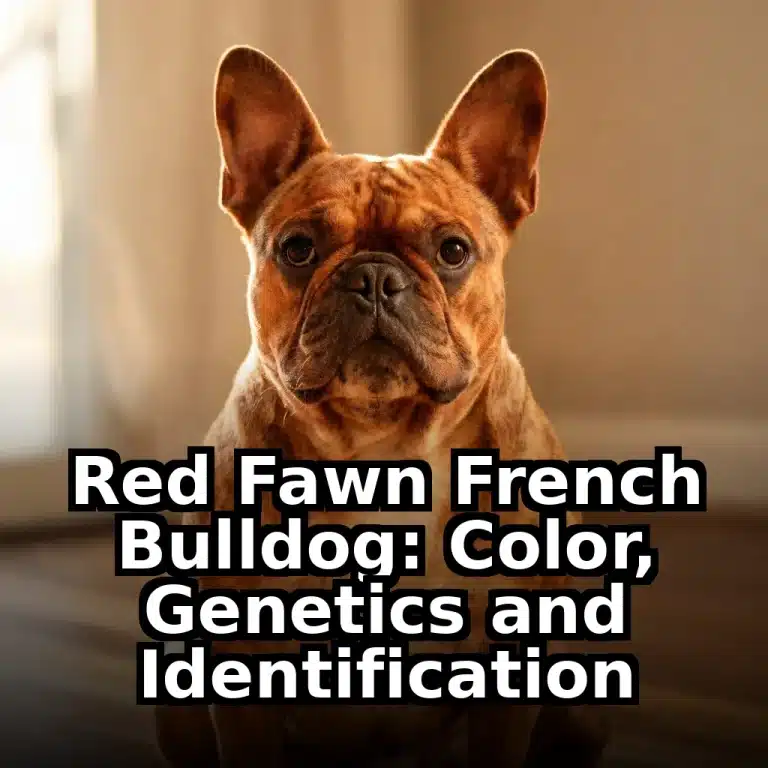
A brindle French Bulldog has dark stripes over a lighter fawn background. The stripes may be fine and widely spaced, or so dense that the Frenchie looks almost completely black.
Brindle is a coat pattern, not a separate French Bulldog type. It is accepted under the French Bulldog breed standard when the dog has standard black pigmentation.
A Brindle French Bulldog has clearly defined black stripes over a fawn background. The striping can be sparse or so heavily concentrated that only a trace of fawn remains visible; brindle is AKC-accepted, while solid black without any brindle trace is disqualifying.
Key identification points:
- Brindle is a coat pattern, not a separate base color.
- Stripe density can range from light to almost completely black.
- Brindling may appear across the body or only within Pied patches.
- Natural daylight helps reveal faint fawn hairs on heavily Brindled coats.
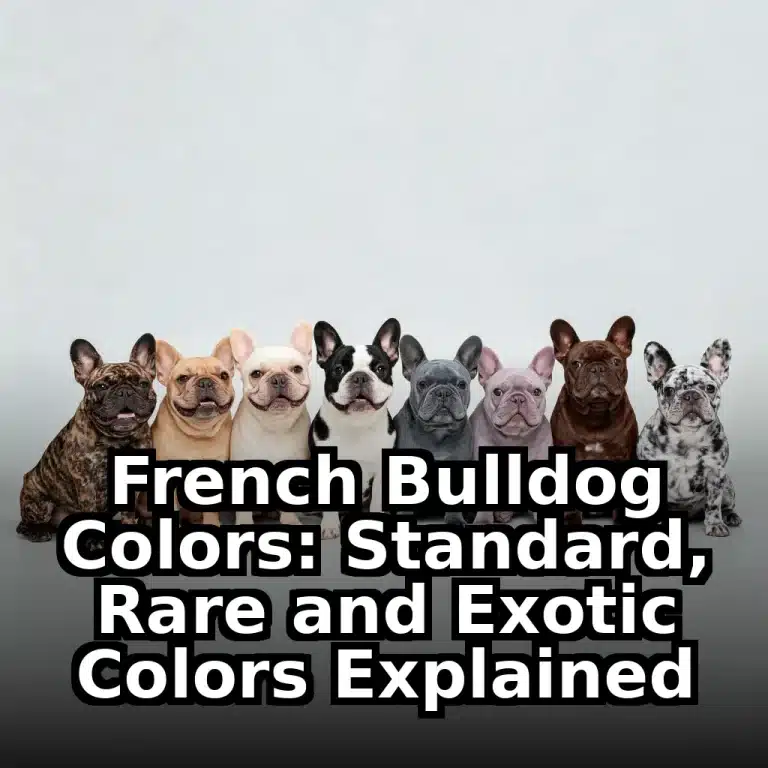
You can compare brindle with other recognized and marketed appearances in our complete guide to French Bulldog colors.
What Is a Brindle French Bulldog?

A brindle French Bulldog has dark stripes or bands over areas that would otherwise appear fawn. The dark striping may range from sparse and easy to see to extremely heavy.
When the stripes are widely spaced, plenty of the fawn background remains visible. When they are tightly concentrated, the coat can look nearly black unless you examine it in good natural light.
Get Weekly Dog Care Tips Free
Join 10,000+ dog owners. Vet-approved advice every week
🔒 No spam. Unsubscribe anytime.
Brindling may cover most of the body or appear only inside colored patches on a pied Frenchie. The placement and density differ from one dog to another.
The French Bull Dog Club of America breed standard describes brindle as a pattern ranging from sparse black stripes over a fawn background to heavy black striping known as black brindle.
What Does a Brindle French Bulldog Look Like?

The classic brindle appearance consists of black stripes against a fawn or reddish background. The contrast can look similar to subtle tiger striping, although the pattern is often irregular rather than evenly spaced.
A brindle Frenchie may have:
- Fine black stripes over a clearly visible fawn coat
- Thick black bands with narrow areas of fawn
- An almost-black coat with only a few visible fawn hairs
- A black mask over the face
- A white chest or limited white markings
- Brindled patches on an otherwise white coat
Brindling can be especially difficult to see on the face, ears, shoulders, or back of a heavily marked dog. Small fawn bands may be more noticeable on the legs, sides, chest, or beneath the body.
Types of Brindle French Bulldogs

Several labels are used to describe brindle coats. These are generally visual descriptions, not separate breeds or universally standardized genetic categories.
Light Brindle French Bulldog
A light brindle Frenchie has relatively sparse black striping, allowing much of the fawn background to remain visible.
Some breeders call this appearance “tiger brindle.” The dark bands are usually easier to identify than they are on a heavily brindled dog.
Dark Brindle French Bulldog
A dark brindle coat contains more concentrated black striping. The fawn background is still present, but it occupies less visible space.
“Dark brindle” is a useful visual description, although there is no precise percentage of dark striping required to use the term.
Black Brindle French Bulldog
Black brindle is the darkest standard brindle appearance. The black striping is so heavy that the Frenchie may look solid black from a distance or in poor lighting.
A closer examination should reveal at least a trace of fawn. That small amount of visible background distinguishes black brindle from a genuinely solid-black coat.
Brindle and White French Bulldog
A brindle and white Frenchie has a predominantly brindled coat with limited white markings. White may appear on the chest, neck, face, feet, or other areas.
The dog remains visually more brindle than white.
White and Brindle French Bulldog
A white and brindle Frenchie is predominantly white with one or more brindled patches. This appearance is often described as brindle pied.
The colored patches should contain visible brindling. If the patches are entirely black without any fawn trace, the appearance may be black and white rather than white and brindle.
Reverse Brindle French Bulldog
“Reverse brindle” is used inconsistently. Some people use it for a dark coat with narrow fawn bands, while others use it for a lighter coat with unusually prominent stripes.
It is better to describe the Frenchie as lightly or heavily marked brindle. These descriptions tell the reader what the dog actually looks like without treating “reverse brindle” as a separate genetic type.
Seal Brindle French Bulldog
“Seal brindle” is another loosely used term. It may describe a Frenchie that looks black but shows reddish or fawn tones in bright light.
Because breeders may use the label differently, it should not replace a careful description of the visible coat and pigmentation.
Black Brindle vs. Solid Black French Bulldog

Black brindle and solid black can look nearly identical at first glance. The deciding feature is whether any fawn background remains visible within the dark coat.
| Appearance | How to Identify It | Breed-Standard Status |
|---|---|---|
| Black brindle | Almost black with at least a small trace of fawn | Accepted |
| Brindle and white | Primarily brindle with limited white markings | Accepted |
| White and brindle | Primarily white with brindled patches | Accepted |
| Solid black | Uniform black without any brindle trace | Disqualifying |
| Black and white | Solid-black patches without visible brindling | Disqualifying |
The French Bull Dog Club of America explains that only a trace of the lighter background color may be needed to identify black brindle. On a pied Frenchie, that trace may appear within only one colored patch.
Examine the dog outdoors in indirect daylight. Bright indoor bulbs, shadows, camera filters, and dark photographs can hide small fawn hairs.
Are Brindle French Bulldogs Recognized by the AKC?
For the complete accepted-color and disqualification list, see our AKC French Bulldog Colors guide.
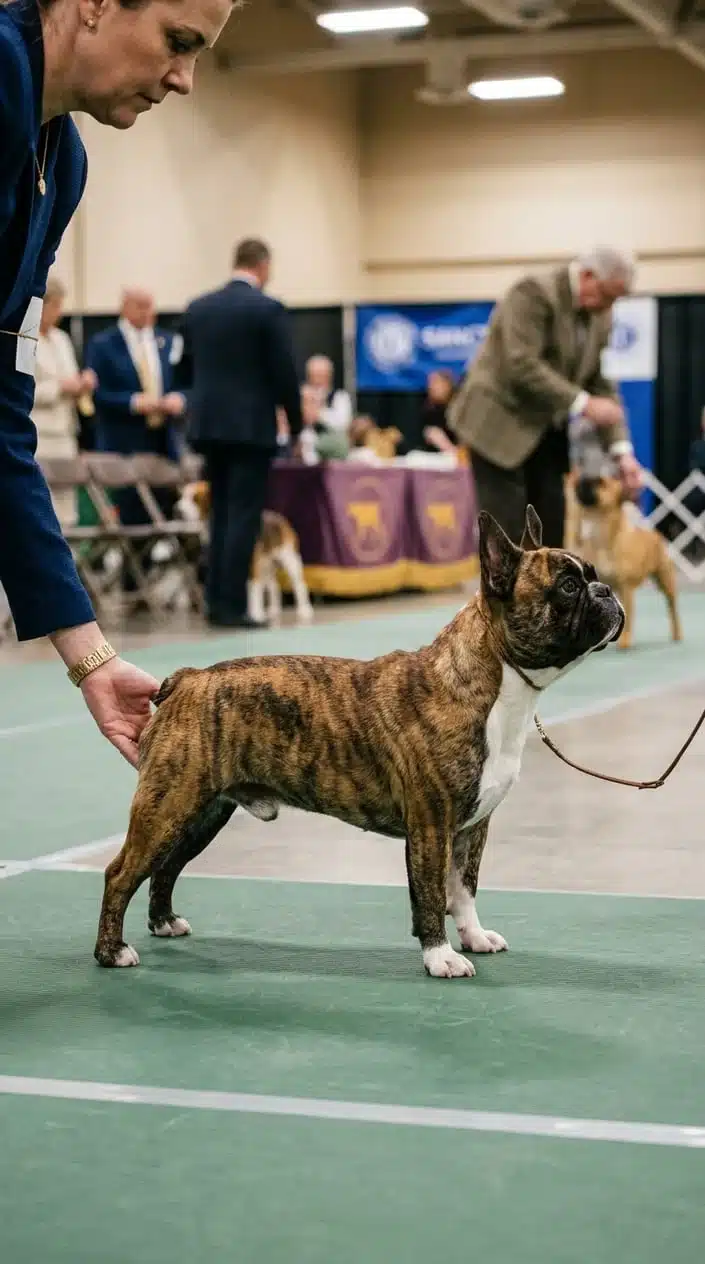
Yes. Brindle is an accepted French Bulldog pattern under the American Kennel Club breed standard.
Accepted brindle-related appearances include brindle, brindle and white, and white and brindle. Black masks, white markings, black shading, piebald, and ticking may also be accepted when combined appropriately with standard colors.
However, brindling does not make an otherwise disqualifying pigment acceptable. Blue, liver, chocolate, lilac, or other nonstandard pigmentation remains outside the breed standard even if brindle striping is present.
| Brindle Appearance | Pigment | AKC Breed-Standard Status |
|---|---|---|
| Standard brindle | Black stripes over fawn | Accepted |
| Black brindle | Heavy black striping with a fawn trace | Accepted |
| Brindle pied | Brindled patches on white | Accepted |
| Blue brindle | Diluted gray-blue pigment | Disqualifying |
| Chocolate brindle | Brown or liver pigment | Disqualifying |
| Lilac or Isabella brindle | Modified dilute brown pigment | Disqualifying |
| Merle brindle | Merle combined with brindling | Disqualifying |
An AKC-registered French Bulldog does not automatically have a breed-standard coat. Registration records ancestry, while the breed standard determines eligibility and evaluation in conformation events.
Standard vs. Nonstandard Brindle Appearances
Standard brindle involves black striping over a fawn background. Other genes can change the dark pigment or add a separate pattern, creating appearances marketed as blue brindle, chocolate brindle, or merle brindle.
Standard Brindle Appearances
- Lightly marked brindle
- Heavily marked or black brindle
- Brindle and white
- White and brindle
- Brindle pied
The dog must still meet the complete breed standard. Having an accepted coat does not by itself confirm appropriate structure, health, or breeding quality.
Nonstandard Brindle Combinations
- Blue brindle
- Chocolate or liver brindle
- Lilac brindle
- Isabella brindle
- Merle and brindle combinations
These dogs can still be loved companions. The distinction relates to the written breed standard, not the dog’s value as a family pet.
How Brindle Genetics Work
Two primary pigment types help produce canine coat colors.
Eumelanin creates dark pigment, normally black in a standard brindle Frenchie. Phaeomelanin creates lighter pigment ranging from cream or yellow to deeper fawn and red tones.
In a brindle coat, dark eumelanin stripes appear across areas where fawn phaeomelanin would otherwise be visible.
Recessive cream can conceal dark hair patterns, so a genetically brindle dog may not display visible stripes. Our cream French Bulldog guide explains how cream can hide underlying coat patterns.
Brindle expression is associated with the K locus. However, the final appearance is influenced by several genes rather than one simple “brindle gene” acting alone.
Other genetic factors can affect:
- The color of the dark stripes
- The shade of the fawn background
- The density and width of the stripes
- Whether white spotting covers part of the pattern
- Whether brindling is visible across most of the body
- Whether another pattern complicates identification
A brindle pied Frenchie, for example, may show the pattern only inside its colored patches because white spotting limits where pigment appears.
Can a DNA Test Confirm Brindle?
Use our French Bulldog DNA color-test guide to interpret K-locus results together with the other loci.
A coat-color DNA panel can provide information about variants associated with pigment and pattern. It may be useful when planning a breeding program or investigating an uncertain appearance.
Testing has limitations, however. A result must be interpreted alongside the dog’s visible coat, pedigree, and the laboratory’s current understanding of the relevant variants.
A color test cannot determine whether a Frenchie is healthy, structurally sound, responsibly bred, or suitable for reproduction.
How to Identify a Brindle French Bulldog
1. Examine the Coat in Natural Light
Take the Frenchie outdoors in indirect daylight. Avoid harsh midday sunlight, deep shade, and colored indoor bulbs. Natural light makes small areas of fawn easier to see.
2. Search for Fawn Hairs or Bands
Look for tan, gold, reddish, or fawn hairs between the black stripes. On a black brindle Frenchie, the lighter color may be limited to only a few narrow bands.
3. Check Multiple Parts of the Body
Inspect the shoulders, legs, sides, face, chest, belly, and area beneath the tail. Brindling may be more visible in one location than another.
4. Inspect Every Patch on a Pied Frenchie
If the dog is mostly white, check each dark patch separately. A small amount of brindling in one pigmented patch can help identify a white-and-brindle coat.
5. Check the Nose and Pigmentation
A standard brindle Frenchie should have black pigmentation. A blue-gray, brown, or unusually pale nose can suggest that the dark pigment has been modified. Nose color alone is not sufficient for a final identification, but it provides a useful clue.
6. Compare Puppy and Adult Photographs
Earlier photographs may reveal striping that is difficult to see in the current lighting. They can also show how the contrast became clearer as the puppy coat developed.
7. Review Records if Identification Matters
Check the pedigree, breeder records, registration information, and any laboratory results. Ask a qualified canine geneticist or experienced breed professional if the appearance remains unclear.
Do Brindle French Bulldog Puppies Change Color?
A brindle puppy does not normally change into a completely different genetic pattern as it grows. However, the visibility and contrast of the brindling can change.
Fine striping may be difficult to see on a newborn puppy. As the puppy grows and develops a mature coat, fawn bands may become easier to identify.
Several factors can affect how the coat looks:
- Development of the adult coat
- Seasonal shedding
- Sun exposure
- Coat length and condition
- Indoor or outdoor lighting
- Camera exposure and color processing
- Grooming products
- Normal aging
A dark puppy may appear lighter in some photographs and nearly black in others. This is why color identification should not be based on one heavily edited image.
Are Brindle French Bulldogs Rare?
Brindle is historically common in French Bulldogs and is one of the breed’s established patterns. A particular stripe distribution may be distinctive, but that does not necessarily make the dog genetically rare.
Terms such as “rare tiger brindle,” “exclusive reverse brindle,” or “unique seal brindle” may be used to support a higher asking price. These labels do not automatically represent recognized varieties.
The price of a French Bulldog can be influenced by breeder reputation, parental health screening, pedigree, location, veterinary expenses, contract terms, puppy-raising practices, and coat-color marketing. A high price does not prove that a puppy is healthier or more responsibly bred.
Do Brindle French Bulldogs Have Special Health Problems?
Standard brindle is not a disease and is not known to give French Bulldogs a separate lifespan or brindle-specific disorder.
A brindle Frenchie remains vulnerable to the health problems affecting the breed generally. These may include breathing difficulties, spinal disorders, skin problems, eye conditions, joint disease, and heat intolerance.
Nonstandard pigment combinations require separate consideration. For example, a blue brindle Frenchie carries dilute pigmentation in addition to brindling. Dilute pigmentation can be associated with color dilution alopecia in susceptible dogs, although not every dilute-colored dog develops it.
Does Brindle Affect Personality?
There is no reliable evidence that brindle causes a French Bulldog to be calmer, more energetic, more affectionate, or easier to train.
Temperament is influenced by broader inherited traits, early socialization, maternal health and behavior, breeding practices, training, environment, physical health and comfort, and individual personality.
Brindle Frenchies may share the sociable, playful, and people-oriented characteristics commonly associated with the breed. Those qualities come from the individual dog and its background—not the stripe pattern.
Grooming a Brindle French Bulldog
Brindle Frenchies have the same basic grooming needs as other standard short-coated French Bulldogs.
Brush the coat once or twice weekly with a soft brush or grooming mitt. This removes loose hair and helps you notice skin redness, thinning areas, bumps, or irritation.
Clean and dry the facial folds according to your veterinarian’s advice. Check the ears, paws, nails, and tail pocket regularly. Persistent itching, hair loss, odor, redness, or skin discoloration deserves veterinary attention.
Photographing a Dark Brindle Coat
- Use soft natural daylight.
- Position the dog near a window or outdoors in open shade.
- Avoid a black or very dark background.
- Do not use heavy filters.
- Focus on the side where striping is most visible.
- Slightly brighten the image without changing the coat color.
What to Ask a Brindle French Bulldog Breeder
- What health screening was completed for both parents?
- Can the health results be independently verified?
- Have the parents been evaluated for breathing and structural problems?
- What health concerns have appeared in the family line?
- Can I see the puppy and mother in person or through a live video call?
- Can I see unedited photographs in natural light?
- How is the puppy’s color recorded on its paperwork?
- Is the breeder charging more based mainly on a marketing label?
- What veterinary care has the puppy received?
- What health guarantee and return agreement are included?
- How have the puppies been socialized?
- Will the breeder remain available after the puppy goes home?
Common Brindle French Bulldog Myths
Brindle Frenchies Are a Separate Type
Brindle describes a coat pattern. It does not create a separate French Bulldog breed, size, or temperament group.
Black Brindle Means Solid Black
Black brindle contains extremely heavy black striping, but at least a trace of fawn remains. A truly solid-black coat has no visible brindling.
Reverse Brindle Is a Unique Genetic Variety
The term is used inconsistently and usually describes the visual concentration of striping. It is not a separate French Bulldog breed.
All Brindle Frenchies Look the Same
Stripe density, width, placement, background shade, white markings, and facial patterns can differ considerably between dogs.
Brindle Guarantees Better Health
An accepted pattern does not guarantee responsible breeding. Health screening and sound structure remain essential.
Brindle Determines Temperament
Coat pattern does not reliably predict affection, intelligence, aggression, trainability, or energy level.
AKC Registration Proves the Coat Is Standard
Registration and conformation eligibility are different. A registered Frenchie may still have a disqualifying color or pattern.
Frequently Asked Questions
Is Brindle a Color or a Pattern?
Brindle is a pattern consisting of dark striping over a lighter fawn background. The amount of visible striping can range from sparse to extremely heavy.
What Is the Rarest Brindle French Bulldog?
There is no authoritative population database that proves which visual brindle variation is rarest. Many rarity claims are based on breeder terminology and marketing rather than verified breed-wide statistics.
What Is a Black Brindle French Bulldog?
A black brindle Frenchie has such dense black striping that it appears almost solid black. At least a small trace of the fawn background should remain visible.
Is a Brindle French Bulldog Recognized by the AKC?
Yes. Brindle, brindle and white, and white and brindle can meet the coat-color portion of the AKC breed standard when standard black pigmentation is present.
What Is the Difference Between Black Brindle and Solid Black?
Black brindle contains at least a trace of fawn within the dark coat. Solid black has no brindling and is disqualifying under the French Bulldog breed standard.
Is a Blue Brindle French Bulldog Standard?
Our Blue Brindle French Bulldog guide explains how dilution changes the dark Brindle stripes and how to identify the pattern.
No. Brindle patterning does not make blue pigmentation acceptable under the breed standard. Blue brindle remains a nonstandard appearance.
Do Brindle French Bulldog Puppies Get Lighter?
The visibility and contrast of the stripes can change as the adult coat develops. Lighting, seasonal shedding, sun exposure, and photography can also make the coat appear lighter or darker.
Do Brindle French Bulldogs Have More Health Problems?
Standard brindle is not associated with a unique brindle-related disorder. Breed-wide health risks and responsible parental screening are more important than stripe density.
Are Brindle French Bulldogs More Aggressive?
There is no evidence that brindle causes aggression. Temperament depends more on broader genetics, health, socialization, training, environment, and individual personality.
Can DNA Testing Identify a Brindle Frenchie?
Coat-color testing can provide useful genetic information, but results require careful interpretation. Color testing does not replace health screening or an examination of the dog’s visible coat and pedigree.
Final Thoughts
Brindle is one of the French Bulldog’s established and most varied coat patterns. It can range from obvious black striping over fawn to an almost-black coat containing only a small trace of lighter pigment.
The most important identification difference is between black brindle and solid black. Examine the coat in natural light, look for visible fawn hairs, and inspect every colored patch on a pied Frenchie.
Whether a Frenchie is lightly brindled, heavily brindled, or brindle pied, health and responsible breeding should always matter more than color terminology. A beautiful pattern cannot replace sound structure, comfortable breathing, verifiable screening, and proper lifelong care.