Blue vs. Lilac vs. Isabella French Bulldog: Color & Genetics

Blue, Lilac, and Isabella French Bulldogs can look remarkably similar in photographs. All three may appear gray, silver, taupe, or muted brown, while lighting and breeder terminology can make the labels even harder to understand.
The clearest comparison starts with pigment genetics. Blue generally means diluted black-based pigment. Lilac and Isabella generally describe diluted brown-based pigment, but those two names are not applied consistently across breeders, laboratories, or registries.
The Blue vs. Lilac vs. Isabella French Bulldog comparison starts with pigment genetics: Blue usually describes diluted black pigment that appears slate or blue-gray, while Lilac and Isabella generally describe diluted brown pigment that appears warmer gray-brown, taupe, or silvery brown. Because Lilac and Isabella are not used consistently by every breeder or laboratory, appearance and marketing labels cannot reliably confirm the genotype.
The simplest distinction is:
- Blue: typically diluted black-based pigment.
- Lilac or Isabella: typically dilution combined with brown-associated pigment.
- Best confirmation: the original D-locus, B-locus, and Cocoa laboratory results interpreted together.
Blue vs. Lilac vs. Isabella French Bulldog at a Glance
This table gives you the simplest working comparison. The DNA shorthand reflects common Frenchie-community usage, not a universal rule followed by every laboratory or breeder.
| Feature | Blue | Lilac | Isabella |
|---|---|---|---|
| Underlying pigment | Diluted black-based eumelanin | Usually diluted brown-based eumelanin | Usually diluted brown-based eumelanin |
| Typical coat tone | Slate, steel gray, charcoal, or silver-gray | Gray-brown, lavender-gray, or cool taupe | Pale brown, beige-taupe, or silvery brown |
| Nose and skin pigment | Usually slate or blue-gray | Often pale gray-brown | Often brown, pinkish-brown, or liver-toned |
| Common DNA shorthand | Dilution expressed, commonly written as d/d, without expressed brown |
Often described as dilution plus Cocoa, commonly d/d + co/co |
Often described as dilution plus B-locus brown, commonly d/d + b/b |
| Is the name standardized? | Relatively consistent | No | No |
| Can appearance prove DNA? | No | No | No |
| Accepted for conformation? | No | No | No |
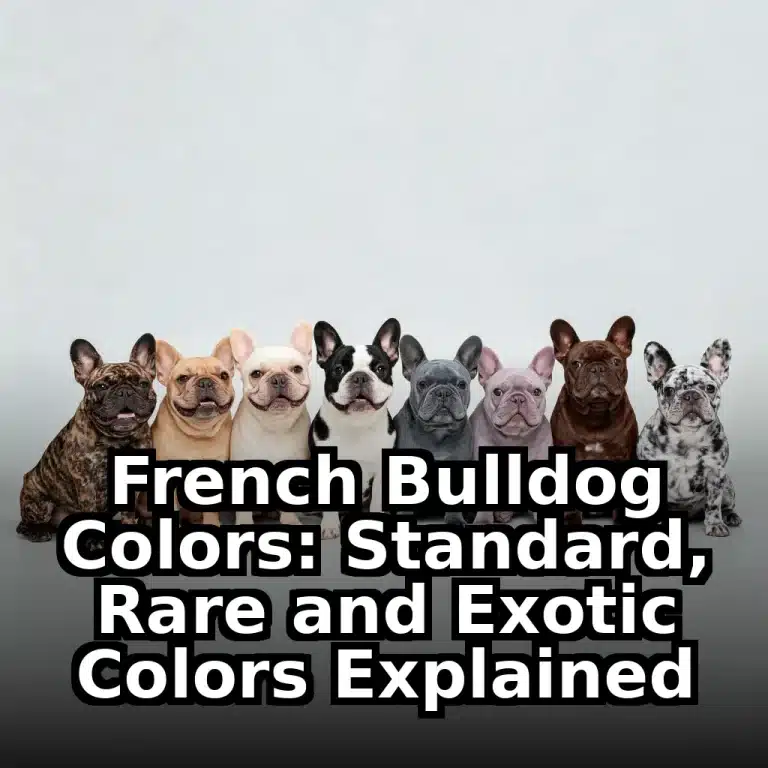
For a broader view of accepted colors, nonstandard colors, and coat patterns, start with our complete French Bulldog Colors guide.
The Most Important Difference: Black-Based vs. Brown-Based Dilution
Dogs produce two main pigment types. Eumelanin creates black or brown pigment in the coat, nose, lips, eye rims, and paw pads. Pheomelanin creates red-to-yellow pigment, including fawn and cream-like shades.
Get Weekly Dog Care Tips Free
Join 10,000+ dog owners. Vet-approved advice every week
🔒 No spam. Unsubscribe anytime.
The dilution associated with the D locus changes the way eumelanin appears. When black-based pigment is diluted, it looks gray or blue-gray. When brown-based pigment is diluted, it becomes a paler gray-brown, taupe, or silvery beige.
What Dilution Does to Black Pigment
A genetically black-based coat does not turn bright blue. It becomes slate, charcoal, steel gray, or silver-gray. Dark skin pigment also lightens, so the nose, lips, and eye rims commonly look blue-gray rather than black.
That is the foundation of the Blue label. Our complete Blue French Bulldog guide explains its appearance, genetics, health considerations, and breed-standard status in more detail.
What Dilution Does to Brown Pigment
If a dog expresses brown-associated pigment as well as dilution, the result is lighter and warmer than typical Blue. The coat may look mushroom, taupe, lavender-gray, beige-brown, or silvery brown.
This is where Lilac and Isabella terminology begins to overlap. Both labels are commonly attached to diluted brown pigment, although some Frenchie breeders separate them according to which brown-associated variants were detected.
Blue is best understood as diluted black-based pigment. Lilac and Isabella are generally diluted brown-based pigment, but you need the laboratory report to know which brown-associated variants are involved.
What Is a Blue French Bulldog?
A Blue French Bulldog usually has a cool gray coat instead of true black pigment. Its shade can range from deep charcoal-blue to pale silver, depending on the dog’s other coat genes and how light falls on the hair.
Blue pigment also appears in areas that would normally be black. Check the nose, lips, eye rims, and paw pads. They commonly look slate or blue-gray rather than brown.
Blue describes a pigment modification, not a complete pattern. A Frenchie may be solid-looking Blue, Blue Fawn, Blue Brindle, Blue Pied, Blue and Tan, or Blue Merle. Those dogs share dilution, but other genes determine where the pigment appears.
What Is a Lilac French Bulldog?
Lilac usually describes a diluted brown coat with a soft gray-brown or lavender-taupe cast. Compared with Blue, it often looks warmer and less charcoal. Its nose and skin pigment may also appear pale gray-brown rather than slate.
In one common French Bulldog naming system, Lilac refers to a dog that expresses dilution and the breed’s Cocoa-associated brown variant. Breeders may summarize that as d/d + co/co.
However, the word is also used more broadly. Some people call almost any diluted Chocolate Frenchie Lilac, regardless of whether the brown came from Cocoa, tested B-locus variants, or both.
Lilac alone does not describe the whole coat. A Lilac Fawn has a different visible pattern from a solid-looking Lilac or Lilac-and-Tan dog. Read our detailed Lilac French Bulldog guide for the full standalone explanation.
What Is an Isabella French Bulldog?
Isabella commonly describes pale diluted-brown pigment. The coat may look silvery brown, warm taupe, muted beige, or pale gray-brown, while the nose, lips, and eye rims often have a brown or pinkish-brown cast.
A common breeder definition uses Isabella for dilution combined with B-locus brown variants, often summarized as d/d + b/b. UC Davis also uses Isabella in its French Bulldog color panel for a diluted Chocolate phenotype.
That definition is useful, but it is not enforced across the entire Frenchie community. Another breeder or registry may apply Isabella to the same dog someone else would call Lilac.
Isabella also does not identify the dog’s pattern. Isabella Fawn, Isabella and Tan, Isabella Pied, and Isabella Merle can look different even when their brown-and-dilution results overlap. Our Isabella French Bulldog guide covers those variations and identification details.
Are Lilac and Isabella French Bulldogs the Same?
Sometimes they are treated as the same color, and sometimes they are separated. There is no single naming rule used by every breeder, DNA laboratory, kennel club, or pet owner.
Some Frenchie breeders use this distinction:
- Lilac: dilution plus the French Bulldog Cocoa variant.
- Isabella: dilution plus B-locus brown.
- New Shade Isabella: dilution plus both B-locus brown and Cocoa.
Other breeders use Lilac and Isabella interchangeably for any diluted-brown Frenchie. Laboratories may report the tested alleles without confirming the exact marketing name used in a puppy listing.
The practical solution is to move past the label. Ask for the original DNA report and identify the dog’s D-locus, B-locus, and Cocoa results separately. Then consider the genes controlling Fawn, Brindle, Pied, Merle, tan points, and Cream.
Lilac and Isabella are not controlled registry terms with one universally enforced genotype. Always ask which tested variants a seller’s label represents.
What Does “New Shade Isabella” Mean?
“New Shade Isabella” is breeder terminology commonly used for a dog reported to express dilution, B-locus brown, and Cocoa together. You may see this summarized as d/d + b/b + co/co, although the exact allele notation on laboratory reports can differ.
The phrase does not identify a separate kennel-club color. It also does not describe whether the dog is Fawn, tan-pointed, Pied, Brindle, Merle, or covered by Cream.
Terms such as “triple dilute” may sound scientific but can be misleading. They combine results from different pigment pathways into a sales label without fully describing the visible coat or the dog’s health.
How to Tell Blue, Lilac, and Isabella Apart
Visual inspection can help you recognize tendencies, but it cannot reliably prove genotype. Use these steps to make a better preliminary comparison.
1. Examine the Dog in Neutral Daylight
View the coat outdoors in open shade or beside a window with neutral daylight. Warm bulbs can make Blue look brown, while cool lighting can make Lilac or Isabella look more silver.
2. Compare Cool and Warm Undertones
Blue usually has the coolest slate or steel cast. Lilac often looks gray-brown or lavender-taupe. Isabella may appear warmer, paler, or more visibly brown, but individual shades overlap.
3. Inspect the Nose, Lips, and Eye Rims
These areas show eumelanin pigment clearly. Slate pigment leans toward Blue, while brown or pinkish-brown pigment supports a brown-based classification. Sunlight, age, and pigment intensity can still affect what you see.
4. Check the Paw Pads
Paw-pad color can support the facial-pigment clues. Blue-gray pads suggest diluted black, while pale brown or liver-toned pads suggest diluted brown. Do not use this feature alone.
5. Do Not Rely on Eye Color
Blue, gray, greenish, hazel, or amber eyes are often used in color advertisements. Puppy eye color changes, and Merle can independently affect the eyes. No eye shade proves that a Frenchie is Lilac or Isabella.
6. Compare Puppy and Adult Photographs
A puppy’s coat and eyes may change as it matures. Request unfiltered photographs taken in similar neutral light at several ages rather than relying on one heavily edited image.
7. Confirm the DNA Results
Follow our French Bulldog DNA color-test guide to interpret each result in the correct order.
Use appearance as a clue and testing as supporting evidence. Request the laboratory’s allele-level report instead of accepting a color name typed into an advertisement.
| Visible Feature | Blue Tendency | Lilac Tendency | Isabella Tendency | Reliability |
|---|---|---|---|---|
| Coat undertone | Cool slate or steel | Gray-brown or lavender-taupe | Warm taupe or silvery brown | Low to moderate |
| Nose pigment | Slate or blue-gray | Pale gray-brown | Brown or pinkish-brown | Moderate |
| Eye color | Variable | Variable | Variable | Low |
| Photograph alone | Often misleading | Often misleading | Often misleading | Low |
| D, B, and Cocoa report | Clarifies tested pigment variants | Clarifies tested pigment variants | Clarifies tested pigment variants | Highest when interpreted correctly |
Why Photographs Can Be Misleading
Phone cameras automatically change exposure, contrast, and white balance. A warm room may turn a cool gray dog taupe, while an overexposed outdoor picture can wash a brown coat into silver.
Filters, colored walls, bright grass, wet hair, grooming products, sun fading, and shadows also change the apparent shade. Two photos of the same Frenchie can therefore receive different color labels online.
This is especially important for pale puppies. Coat tone may deepen or soften with maturity, while adult skin pigment and a complete DNA report usually provide better evidence than one puppy photograph.
Blue, Lilac, and Isabella Genetics
The D Locus and MLPH
The D locus involves variants in the MLPH gene that can dilute eumelanin. Dogs that express the tested dilution variants commonly have black pigment changed to blue-gray or brown pigment changed to pale diluted brown.
Laboratories may test different known variants, so compare what was included in the panel rather than looking only for a simplified “d/d” label.
The B Locus and TYRP1
Variants associated with TYRP1 can change black eumelanin to brown. Multiple brown variants exist, and a laboratory may report them with allele-specific notation rather than a single generic “b.”
When B-locus brown is expressed together with D-locus dilution, the resulting pale brown pigment may be called Isabella or Lilac, depending on the naming system.
The French Bulldog Cocoa Variant
French Bulldogs also have a Cocoa-associated brown variant that is tested separately from the traditional B locus. A dog can express Cocoa-based brown, B-locus brown, or a combination of both.
This is why saying every Chocolate, Lilac, or Isabella Frenchie has one universal genotype is inaccurate. Our Chocolate French Bulldog guide explains the brown-pigment foundation in more detail.
How the Loci Interact
The D locus changes pigment intensity, while B-locus and Cocoa variants affect whether eumelanin is black-based or brown-based. Other loci decide where that pigment can appear and whether it is covered by another color or pattern.
Interpret the results as a system. One locus rarely tells you the dog’s complete visible phenotype.
Ask for the original report showing every tested allele at the D locus, B locus, and Cocoa test. A summary that says only “Lilac” or “Isabella” leaves out the evidence needed to understand the label.
How Other Coat Genes Change the Appearance
Blue, Lilac, and Isabella describe pigment changes, not a full map of the coat. The same pigment results can look very different when other genes alter placement or visibility.
Fawn and Tan-Point Patterns
A Fawn dog may show its modified eumelanin mainly on the nose, mask, and hair tips rather than across the entire body. Tan points create lighter markings on areas such as the eyebrows, cheeks, chest, and legs.
Brindle
Brindle adds dark striping over a fawn background. If the dark pigment is diluted or brown-based, the stripes may look muted and can be hard to recognize in pale photographs.
Pied White Spotting
Pied removes visible pigment from large areas, leaving a mostly white coat with colored patches. A Pied French Bulldog can therefore have Blue, Lilac, or Isabella pigment inside its remaining patches.
Merle
Merle creates irregular mottling within eumelanin areas. It can also affect eye pigmentation, which is another reason light or partly blue eyes cannot prove a Blue, Lilac, or Isabella classification. Learn more in our Merle French Bulldog guide.
Recessive Cream
Recessive Cream can prevent much of the underlying eumelanin pattern from showing in the hair. A visually pale Cream French Bulldog may still have dilution or brown-associated variants detectable in its DNA and skin pigment.
Marketing labels such as “Isabella Platinum” often combine the visible Cream phenotype with underlying color results. The label alone does not explain the full genotype.
AKC, UK, and FCI Classification
For a detailed explanation of the American standard and registration terminology, see our AKC French Bulldog Colors guide.
DNA results, visual color, registration wording, and conformation acceptance are different things. A dog can have a laboratory-confirmed color genotype without that color being accepted in the show ring.
| Organization | Relevant Standard | Blue | Lilac or Isabella |
|---|---|---|---|
| AKC/FBDCA | Colors outside the described standard are disqualifying; Blue and Liver-associated coloring are not accepted | Disqualifying | Disqualifying |
| Royal Kennel Club | Brindle, Fawn, and Pied are the correct colors | Not a correct color | Not a correct color |
| FCI | Fawn, Brindled or not, with or without white spotting; Mouse Gray and Brown are disqualifying | Disqualifying | Disqualifying |
Registration paperwork should not be treated as a complete genetic report or proof of conformation eligibility. Always read the current rules of the organization relevant to you.
Do These Colors Affect Health or Temperament?
There is no established personality type for a Blue, Lilac, or Isabella Frenchie. Temperament is influenced far more by inherited behavioral traits, early socialization, training, health, and daily environment than by a marketing color name.
Dilute pigmentation is associated with color dilution alopecia in some dogs. Possible signs include dry or brittle hair, thinning in diluted areas, recurrent bumps, and patchy hair loss. Not every dilute French Bulldog develops the condition, and coat color alone cannot diagnose it.
A veterinarian should examine persistent hair loss, itching, redness, odor, or skin lesions. Allergies, parasites, infection, hormonal disease, friction, and other problems can cause similar signs.
Color testing also does not replace breed-wide screening. A responsible breeding plan should prioritize breathing and BOAS assessment, spine, patellas, eyes, heart, hearing when relevant, sound structure, and transparent family health history.
What to Ask a Breeder or DNA Laboratory
- Which exact D-locus variants did the laboratory test?
- Does the dog express dilution, or does it only carry a tested variant?
- Which B-locus brown variants were tested?
- Was the French Bulldog Cocoa variant tested separately?
- What exact genotype does “Lilac” or “Isabella” represent in this listing?
- Could recessive Cream be hiding the underlying pigment?
- Are Pied, Merle, Brindle, Fawn, or tan-point traits also present?
- Can you review the original laboratory report rather than a typed summary?
- Which breed-wide health screenings were completed on both parents?
- Is there a family history of hair thinning or color dilution alopecia?
Frequently Asked Questions
What Is the Main Difference Between Blue, Lilac, and Isabella French Bulldogs?
Blue generally means diluted black-based pigment. Lilac and Isabella generally mean diluted brown-based pigment, although their exact names overlap and may depend on which brown-associated variants were tested.
Are Lilac and Isabella French Bulldogs the Same Color?
Some people use the names interchangeably. Others reserve Lilac for Cocoa-based diluted brown and Isabella for B-locus-based diluted brown, so the exact DNA results matter more than the label.
What DNA Makes a Blue French Bulldog?
A Blue Frenchie expresses tested D-locus dilution affecting black-based eumelanin. The complete result must also be interpreted with brown, pattern, and masking genes to describe the whole coat accurately.
What DNA Makes a Lilac French Bulldog?
In common Frenchie breeder usage, Lilac may mean expressed dilution plus Cocoa-associated brown. Other sources use Lilac more broadly for diluted brown, so ask which D, B, and Cocoa results support the name.
What DNA Makes an Isabella French Bulldog?
Isabella often refers to expressed dilution plus B-locus brown, but not every breeder applies the term that way. Confirm the laboratory’s allele-level D-locus, B-locus, and Cocoa findings.
What Is a New Shade Isabella French Bulldog?
The phrase commonly describes a Frenchie reported to express dilution, B-locus brown, and Cocoa together. It is breeder terminology, not a separate accepted kennel-club color or a complete description of the coat pattern.
Can You Identify These Colors From Photographs?
You can make a preliminary guess from coat undertone and skin pigment, but lighting, filters, camera settings, and puppy development can change the appearance. Photographs cannot reliably prove genotype.
Do Light Eyes Prove a French Bulldog Is Isabella?
No. Puppy eye color changes, and Blue, Lilac, Isabella, Merle, and other genetic factors may be associated with lighter eyes. Eye color alone cannot confirm a coat-color genotype.
Are Blue, Lilac, or Isabella French Bulldogs Accepted by the AKC?
These colors are outside the accepted French Bulldog conformation standard. Registration terminology and eligibility to compete in conformation are not the same thing.
Do All Dilute French Bulldogs Develop Color Dilution Alopecia?
No. Dilution may be associated with color dilution alopecia, but many dilute dogs are not affected. A veterinarian must evaluate hair loss because several unrelated skin conditions can look similar.
Can a Cream French Bulldog Carry Blue or Isabella Genetics?
Yes. Recessive Cream can hide much of the underlying eumelanin color in the hair. Skin pigment and DNA testing may reveal dilution and brown-associated variants that are not obvious from the coat.
Which Results Should I Request From a DNA Laboratory?
Request the full allele-level report for the D locus, B locus, and French Bulldog Cocoa test, plus relevant pattern and masking loci. Confirm which variants the laboratory actually included in its panel.
Final Comparison Takeaway
Blue is the dilution of black-based pigment. Lilac and Isabella generally describe diluted brown-based pigment, but their names overlap and are not applied consistently.
For reliable identification, use the dog’s complete D-locus, B-locus, and Cocoa results together with its other pattern genes. Coat shade, eye color, price, or a breeder’s marketing label cannot provide the same certainty.