Blue Brindle French Bulldog: Color, Genetics and Identification

A Blue Brindle French Bulldog can look almost solid gray in one photograph and clearly striped in another. That is why this coat is frequently mislabeled as solid Blue, Blue Fawn, Blue Sable, or even Blue Merle.
The key is not the word “Blue” alone. A true Blue Brindle Frenchie combines an expressed Brindle pattern with dilution that changes normally black pigment to slate or blue-gray.
A Blue Brindle French Bulldog is a French Bulldog with an expressed Brindle pattern and coat-color dilution: normally black Brindle hairs and dark skin pigment appear slate or blue-gray, while fawn or reddish hairs remain visible between them. It is not a separate breed, and Blue pigmentation is disqualifying for AKC conformation even though standard Brindle is accepted.
Key identification points:
- The nose, lips, eye rims, and paw pads are usually slate-gray rather than black.
- Dark or faint Brindling can make some puppies look nearly solid Blue in photographs.
- Neutral daylight and original DNA reports provide stronger evidence than eye color or a breeder label alone.
- Color DNA testing helps identify tested coat variants but does not replace breed-wide health screening.
Blue Brindle French Bulldog at a Glance
| Feature | Typical Blue Brindle Trait |
|---|---|
| Visible coat | Slate or blue-gray dark hairs mixed with fawn, tan, or reddish Brindle hairs |
| Pattern | Brindle striping, streaking, or intermingled bands rather than a fully even coat |
| Nose and skin pigment | Slate-gray or blue-gray instead of black |
| Main genetic interaction | Expressed Brindle pattern plus expressed D-locus dilution |
| AKC conformation status | Not accepted because Blue is a disqualifying color |
| Best identification method | Neutral-daylight examination plus original laboratory results |
| Possible color-related concern | Color dilution alopecia can occur, but not every dilute dog develops it |
What Is a Blue Brindle French Bulldog?
A Blue Brindle French Bulldog is a French Bulldog whose Brindle pattern is expressed alongside coat-color dilution. In an ordinary Brindle coat, the darkest hairs and skin pigment are black. In a Blue Brindle, that normally black pigment is diluted to slate, steel-gray, or blue-gray.
The lighter hairs between those diluted dark hairs remain fawn, tan, gold, or reddish. Depending on how densely the hairs are distributed, the coat may show obvious stripes or look nearly solid until it is examined in neutral daylight.
Blue Brindle is not a separate breed, size, or temperament type. It is one possible color-and-pattern combination within the French Bulldog breed.
Get Weekly Dog Care Tips Free
Join 10,000+ dog owners. Vet-approved advice every week
🔒 No spam. Unsubscribe anytime.
Blue Brindle is not simply a solid Blue coat with random tan spots. It is a Brindle-pattern coat in which normally black eumelanin has been diluted to blue-gray.
What Does a Blue Brindle Frenchie Look Like?
Slate or Blue-Gray Dark Hairs
The darkest coat hairs should appear charcoal, slate, steel-gray, or blue-gray rather than true black. The exact shade can vary with lighting, coat density, and the proportion of lighter hairs.
The word “Blue” is a traditional dog-color term. It does not mean the hair contains blue pigment.
Fawn or Reddish Brindle Hairs
Brindle creates alternating or intermingled areas of dark and lighter pigment. The lighter hairs may look cream-fawn, golden, tan, copper, or red, while the diluted dark hairs form the gray striping or overlay.
Some dogs show clear tiger-like streaks. Others have narrow, scattered hairs that are easiest to see on the shoulders, ribs, flanks, or legs.
Nose, Lips, and Eye Rims
Skin pigment is one of the most helpful clues. A Blue Brindle commonly has a slate-gray nose, lips, and eye rims instead of the black pigment expected on a standard Brindle Frenchie.
A photograph can distort coat shade, but the pigment around the nose and eyes often remains a more useful comparison point.
Paw-Pad Pigment
The paw pads may also appear slate or blue-gray. Check several pads because wear, dryness, dirt, and natural variation can make one pad misleading.
White Markings
A white chest, white toes, or a facial blaze can occur, but white markings are not required. A dog with larger white areas and Blue Brindle patches may be described as Blue Brindle Pied.
For a clearer explanation of white spotting, see our Pied French Bulldog guide.
Blue Brindle French Bulldog Genetics
Blue Brindle cannot be explained accurately by a single “color gene.” The visible result depends on several coat-color loci working together, especially the K locus for Brindle expression and the D locus for dilution.
The French Bulldog DNA color-test guide explains the larger system, including how A, K, E, D, B, Cocoa, Merle, and spotting results can affect the final phenotype.
How the K Locus Relates to Brindle
Brindle is associated with the K locus and the CBD103 region. The commonly used breeder notation places dominant black as KB, Brindle as kbr, and recessive non-black as ky.
A visibly Brindle dog is often described as kbr/kbr or kbr/ky. However, readers should not assume every laboratory uses or directly reports that same three-allele notation.
The standard UC Davis dominant-black test, for example, reports results such as K/K, K/N, and N/N and explains limitations involving Brindle. More specialized testing may identify the Brindle allele directly, so the laboratory name and test method matter.
How the D Locus Creates Blue-Gray Pigment
The D locus affects the intensity of eumelanin, the pigment that would otherwise appear black or brown. When dilution is expressed in a black-pigmented dog, black hair and skin pigment become gray, slate, or “Blue.”
The shorthand d/d is widely used, but it hides important detail. The UC Davis Veterinary Genetics Laboratory recognizes three known dilution variants, called d¹, d², and d³.
| D-Locus Combination | Expected Interpretation |
|---|---|
D/d¹, D/d², or D/d³ |
Usually carries a tested dilution variant without expressing the associated dilute phenotype |
d¹/d¹, d²/d², or d³/d³ |
Expected to express dilution |
d¹/d², d¹/d³, or d²/d³ |
Compound combinations expected to express dilution |
| No matching known combination | Does not always rule out dilution because not every causal variant is necessarily identified by a given panel |
How Brindle and Dilution Work Together
Brindle determines the switching or intermingling between dark eumelanin hairs and lighter phaeomelanin hairs. Dilution changes the normally black portion to blue-gray.
The French Bull Dog Club of America’s color education page similarly explains that hairs that should be black in a Brindle dog appear slate-blue or mouse-gray when dilution is present.
Do not translate every K-locus report into kbr/ky on your own. Confirm whether the laboratory directly tested Brindle, inferred it, or only tested for dominant black.
Does Dilution Turn the Fawn Hairs Blue?
D-locus dilution is usually easiest to recognize in eumelanin: the dark Brindle hairs, nose, lips, eye rims, and paw pads. Those areas change from black to slate-gray.
The lighter fawn or reddish portions are produced mainly by phaeomelanin and do not simply turn into the same slate color. Their visible shade can still vary because of other genes, hair distribution, lighting, and coat development.
Blue Brindle vs. Standard Brindle French Bulldog
The main difference is the color of the darkest pigment. A standard Brindle French Bulldog has black Brindle hairs and black skin pigment, while a Blue Brindle has diluted gray Brindle hairs and slate skin pigment.
| Feature | Standard Brindle | Blue Brindle |
|---|---|---|
| Dark hairs | Black | Slate or blue-gray |
| Nose | Black | Slate-gray |
| Eye rims and lips | Black | Diluted gray |
| Visible dilution | No | Yes |
| AKC conformation color | Accepted when otherwise compliant | Disqualifying Blue coloration |
Blue Brindle vs. Black Brindle French Bulldog
Black Brindle is a descriptive term often used for a heavily Brindled dog whose dark hairs dominate. Those hairs, along with the nose and eye rims, remain black.
A Blue Brindle can also be very dark, but its darkest pigment should be slate or charcoal rather than true black. Neutral daylight and the nose are more reliable than a breeder label.
Blue Brindle vs. Solid Blue French Bulldog
A solid-looking Blue French Bulldog may show a relatively even gray coat with little visible fawn patterning. A Blue Brindle has at least some fawn or reddish hairs forming streaks, bands, or an intermingled Brindle pattern.
Very heavy or faint Brindling can disappear in indoor photographs. DNA results and a close daylight examination can help when the visual distinction is unclear.
Blue Brindle vs. Blue Fawn French Bulldog
A Blue Fawn French Bulldog usually has a broad, warm fawn body. Dilution is most obvious in its nose, mask, rims, lips, pads, and any dark shading.
A Blue Brindle instead shows repeated diluted dark hairs mixed through the fawn pigment. The pattern may be obvious striping or a dense overlay, but it should not be only a uniform fawn body with slate skin pigment.
Blue Brindle vs. Blue Sable French Bulldog
A Blue Sable label is generally used for a fawn-based coat with diluted dark-tipped hairs or shading. The dark overlay may concentrate on the ears, back, shoulders, or tail rather than forming repeated Brindle bands.
Our Sable French Bulldog guide explains why breeder use of “Sable” is inconsistent. In borderline cases, hair placement and a full DNA report are more useful than one puppy photo.
Blue Brindle vs. Blue Merle French Bulldog
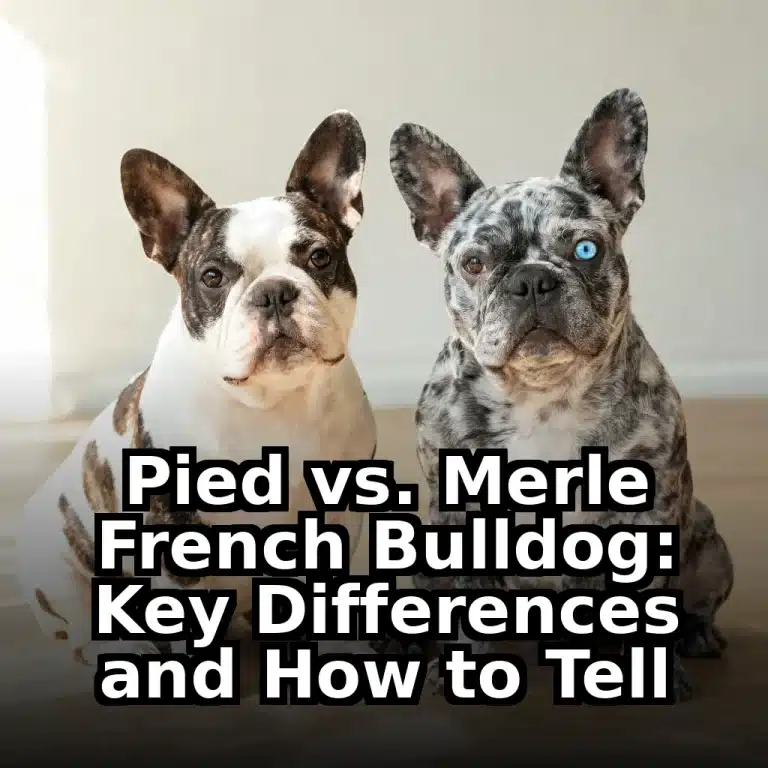
Brindle and Merle are different patterns. Brindle creates stripes or intermingled dark and fawn hairs, while Merle creates irregular areas of reduced pigment, marbling, or mottling within pigment capable of showing the pattern.
A dog can inherit more than one pattern, making identification harder. Review the Merle French Bulldog guide and request the original Merle test when mottled patches are present.
Blue Brindle vs. Blue and Tan or Blue Trindle
Blue and Tan usually has organized tan points over the eyebrows, cheeks, chest, legs, and beneath the tail. Blue Brindle distributes fawn or reddish hairs as striping rather than limiting them to classic tan-point locations.
“Trindle” is informal breeder terminology often used for a tan-point dog that also shows Brindling within some tan areas. Because the label is not applied consistently, inspect the visible placement and laboratory report instead of relying on the name.
Types of Blue Brindle French Bulldogs
Light Blue Brindle
This label may describe a dog with a paler gray appearance, more visible fawn hairs, or wider lighter bands. It is a visual description, not a standardized genetic category.
Dark Blue Brindle
Dark Blue Brindles have dense diluted dark hairs that can hide much of the fawn pattern. They are among the easiest to mistake for solid Blue in photographs.
Reverse Blue Brindle
“Reverse Brindle” is commonly used when lighter Brindle striping appears prominent against a darker-looking coat. It does not mean the underlying genetic process literally runs in reverse.
Blue Brindle With White Markings
A dog may have a white chest, blaze, toes, or collar along with Blue Brindling. Small white markings do not automatically make the dog Pied.
Blue Brindle Pied
A Blue Brindle Pied has extensive white spotting with one or more patches containing the Blue Brindle pattern. The Pied pattern controls where pigment is absent; it does not create the Blue or Brindle pigment inside the colored patches.
Light, dark, reverse, and “Trindle” are not uniformly standardized labels. Treat them as descriptions and verify the actual phenotype and DNA results.
How to Identify a Blue Brindle French Bulldog
- Use neutral daylight. Examine the coat outdoors in open shade or beside a bright window.
- Find the lighter hairs. Look for fawn, tan, gold, copper, or reddish hairs between the gray hairs.
- Check the pattern. Determine whether those lighter hairs form repeated streaks, bands, or Brindle intermingling.
- Inspect the nose. A true dilute coat commonly has slate-gray rather than black nose pigment.
- Check lips and eye rims. These should also show diluted gray pigment.
- Look at several paw pads. Blue-gray pads support dilution but are not enough alone.
- Compare puppy and current photos. Faint Brindling may become easier to see as the coat develops.
- Review original DNA results. Confirm the laboratory, tests performed, D-locus variants, and how Brindle was established.
No single feature proves the complete genotype. The most reliable conclusion combines phenotype, pigment, family information, and appropriate laboratory testing.
Why Blue Brindle Puppies Can Look Solid Blue
A Blue Brindle puppy may have extremely narrow lighter hairs, dense dark coverage, or Brindling concentrated on the sides and legs. A short puppy coat and low-resolution photographs can make those details almost invisible.
The genetically determined pattern does not appear from nowhere later in life. Instead, existing Brindling can become easier to notice as the coat grows, changes texture, or is photographed under better lighting.
Why Photographs Can Be Misleading
Warm sunlight can make fawn hairs look redder, while cool LED lighting can exaggerate gray. Flash may flatten the pattern, and filters can push black toward Blue or Blue toward lilac.
Wet hair, sun fading, white balance, shadows, and compressed listing images also change appearance. Ask for unfiltered photographs in neutral daylight from several angles, including close views of the nose and coat hairs.
Blue-looking eyes do not confirm a Blue Brindle coat. Eye color can change with age and may be influenced by other genetics, so it should never replace pigment inspection or DNA testing.
What DNA Results Should You Request?
Request the original laboratory reports rather than a screenshot of a breeder’s summary. The useful panel depends on the dog, but the following results help explain possible look-alikes and hidden traits.
| Test Area | Why It Matters |
|---|---|
| K locus or specialized Brindle test | Helps assess dominant black and Brindle expression, subject to the laboratory’s method |
| D locus | Checks known variants associated with Blue dilution |
| E locus | Helps identify patterns that may mask or alter visible eumelanin expression |
| A locus | Provides information about the pattern available beneath K-locus effects |
| B locus and Cocoa | Helps distinguish diluted black from brown-based or Cocoa-related combinations |
| Merle | Important if mottling, patchiness, or Merle ancestry is suspected |
| Spotting or Pied-related testing | Helps interpret extensive white areas |
A result can show that a dog carries a trait without visibly expressing it. It can also miss an untested or not-yet-characterized variant, so interpret the complete report with the laboratory or a qualified canine geneticist.
Is Blue Brindle Recognized by the AKC?
For the complete standard-versus-registration distinction, see our AKC French Bulldog Colors guide.
Standard Brindle is accepted, but Blue Brindle is not an accepted AKC conformation color. The official French Bulldog breed standard disqualifies Blue and colors or patterns not specifically described, and it generally requires a black nose.
Registration and conformation eligibility are not the same. A dog may have registration records while still possessing a color that disqualifies it from the breed ring.
Royal Kennel Club and FCI Status
The Royal Kennel Club accepts Brindle within its standard colors but treats Blue as non-breed-standard. Its French Bulldog standard also expects black pigmentation around the eyes and lips.
The FCI French Bulldog standard accepts fawn coats with or without Brindling or white spotting, requires a black nose, and disqualifies dilutions of black. Blue Brindle therefore does not become standard merely because Brindle itself is accepted.
Are Blue Brindle French Bulldogs Rare?
Blue Brindle may be less commonly seen than standard Brindle, but there is no reliable breed-wide population percentage that proves a precise rarity claim. Registration data may not use the same labels as breeders, and visual labels are not always genetically verified.
“Rare” is also used as a marketing term. It should not be treated as evidence of quality, health, ancestry, or an accurate color diagnosis.
How Much Does a Blue Brindle French Bulldog Cost?
There is no stable, authoritative Blue Brindle price. Asking prices vary by location, age, pedigree, demand, breeding rights, seller practices, and the health work completed on the parents.
Color should never be the main reason to accept a higher price. Compare original health results, breathing function, structure, temperament, contract terms, and breeder support before considering the coat label.
Do Blue Brindle French Bulldogs Have Health Problems?
Blue Brindle Frenchies can experience the same breed-wide concerns as other French Bulldogs, including airway, spinal, joint, eye, skin, and heat-related problems. The Blue dilution also makes color dilution alopecia a relevant topic, but it is not a guaranteed outcome.
Color Dilution Alopecia
Color dilution alopecia, or CDA, is an inherited follicular disorder associated with dilute pigmentation in some dogs. Signs may include thinning hair, patchy hair loss, broken hairs, dry or flaky skin, bumps, blackheads, itching, or secondary infection.
A puppy can be born with a normal-looking coat and develop signs later. The VCA overview of color dilution alopecia explains that diagnosis requires ruling out other causes of hair loss.
When to Contact a Veterinarian
Arrange a veterinary examination for persistent hair thinning, bald patches, inflamed skin, odor, crusting, discharge, significant itching, or repeated infections. Allergies, mites, bacterial or yeast infections, hormonal conditions, friction, and other problems can resemble CDA.
Why Color DNA Is Not Health Testing
A D-locus result evaluates tested color variants. It does not diagnose CDA, predict whether an individual dog will develop it, or clear the dog of other French Bulldog disorders.
Not every dilute French Bulldog develops color dilution alopecia. New hair loss or inflamed skin needs a veterinary diagnosis because several treatable conditions can look similar.
Breed-Wide Health Screening
The French Bull Dog Club of America’s health-testing guidance identifies hips, patellas, heart, and eyes among the core CHIC requirements. Responsible evaluation should also consider breathing function, spinal history, mobility, skin history, and the health of close relatives.
Does Blue Brindle Affect Temperament, Size, or Lifespan?
No credible evidence establishes a Blue-Brindle-specific temperament, adult size, or lifespan. Those outcomes are shaped by broader genetics, health, structure, environment, training, nutrition, and veterinary care.
Claims that this color is naturally calmer, smaller, more muscular, or longer-lived should be treated as marketing unless supported by evidence about the individual dog.
What to Ask Before Buying a Blue Brindle Frenchie
- Can I see the original color reports from the named laboratory?
- Was Brindle directly tested, inferred from phenotype, or reported through another method?
- Which known D-locus variants were tested?
- Can I see unfiltered puppy and parent photos in neutral daylight?
- What health evaluations were completed on both parents?
- Can I verify the results through OFA, CHIC, or the relevant registry?
- How were breathing function and exercise tolerance assessed?
- Is there a family history of hair loss, chronic skin disease, spinal problems, or airway surgery?
- What does the contract cover if an inherited disorder is diagnosed?
- Can I meet the puppy and mother or arrange an independent veterinary examination?
A seller’s phrase “DNA clear” is incomplete unless it names every condition and variant tested. Color results and disease results belong in different parts of your evaluation.
Choose breathing function, sound structure, verified health screening, and responsible support before color. A high price or unusual label does not prove responsible breeding.
Frequently Asked Questions
Is a Blue Brindle French Bulldog the same as a Brindle Blue French Bulldog?
Usually, yes. “Brindle Blue French Bulldog” is an alternate word order, but confirm that the dog actually has diluted gray pigment and an expressed Brindle pattern.
Can a Blue Brindle Frenchie look solid Blue?
Yes. Dense, narrow, or faint Brindling can disappear in poor lighting or small photographs, especially in a young puppy.
Do Blue Brindle puppies become more Brindle with age?
The genetic pattern is already present. Coat development can make existing lighter hairs and bands easier to see, but a genetically non-Brindle puppy does not acquire the Brindle allele later.
What color is a Blue Brindle French Bulldog’s nose?
It is generally slate-gray or blue-gray rather than true black. Nose pigment is useful, but identification should still include the coat pattern and DNA results.
Can a Blue Brindle French Bulldog have white markings?
Yes. Small white areas can occur, and extensive white spotting can produce a Blue Brindle Pied appearance.
Are Blue Brindle French Bulldogs AKC standard?
No. Brindle is accepted, but the Blue dilution is disqualifying for AKC conformation under the French Bulldog standard.
Does a D-locus test prove a dog is Blue Brindle?
No. It can support Blue dilution involving the tested variants, but Brindle expression and the complete phenotype require additional information.
Do all Blue Brindle French Bulldogs develop color dilution alopecia?
No. CDA can occur in dilute dogs, but it does not affect every Blue Brindle Frenchie, and a veterinarian must rule out other causes of hair loss.
Is Blue Brindle rarer than regular Brindle?
It may be less commonly observed, but no dependable breed-wide percentage supports a precise rarity claim. Marketing labels and inconsistent recording make comparisons unreliable.
Final Takeaway
A Blue Brindle French Bulldog has an expressed Brindle pattern in which normally black hairs and skin pigment are diluted to slate or blue-gray. The remaining fawn or reddish hairs create the visible striping, streaking, or intermingled pattern.
Identify the coat through neutral daylight, skin pigment, hair distribution, and original laboratory reports—not through eye color, edited photographs, price, or a breeder label alone. For the wider context, compare this variation with the complete French Bulldog Colors guide.