AKC French Bulldog Colors: Accepted Colors, Markings and Disqualifications

French Bulldog color information becomes confusing when the words accepted, standard, registered, and recognized are used as though they mean the same thing. They do not.
The American Kennel Club provides registration color choices, while the official French Bulldog breed standard determines which colors and markings are acceptable in conformation. A Frenchie may therefore have AKC registration paperwork without having a coat color that is eligible for the show ring.
This guide separates those rules clearly. For a broader look at inherited pigments, marketed color names, and individual variations, start with our complete French Bulldog Colors guide.
AKC French Bulldog Colors accepted by the current breed standard are White, Cream, and Fawn from light Fawn through Red Fawn, including permitted combinations. Brindle, Piebald, black masks, black shading, white markings, and ticking are accepted patterns or details, although ticking is not desired. Blue, Blue Fawn, liver-related colors, Merle, Black and Tan, and solid Black without a trace of Brindle are disqualifying for conformation.
What owners should know:
- AKC registration does not automatically make a dog’s color standard or conformation eligible.
- If the correct registration color is unclear, use the AKC photo-review process rather than choosing an inaccurate label.
AKC French Bulldog Colors at a Glance
| Question | Short Answer |
|---|---|
| Foundational accepted colors | White, Cream, and Fawn from light Fawn through Red Fawn |
| Accepted patterns and markings | Brindle, Piebald, black mask, black shading, and white markings |
| Ticking | Acceptable but not desired |
| Common disqualifying colors | Solid Black, Black and Tan, Blue, Blue Fawn, liver-related colors, and other unlisted colors |
| Disqualifying pattern | Merle |
| Registration meaning | The dog is recorded through the applicable AKC process; it is not a promise of show eligibility |
| Best source for show rules | The current written French Bulldog breed standard |
What Colors Does the AKC Accept for French Bulldogs?
The current written standard identifies White, Cream, and Fawn as the accepted color foundation. Fawn may range from light Fawn to Red Fawn, and accepted combinations of these colors may appear with permitted patterns and markings.
This is why a short statement such as “the AKC accepts nine French Bulldog colors” can be technically confusing. Nine standard descriptions appear in the registration list, but several are combinations or patterned descriptions rather than nine unrelated pigment colors.
Get Weekly Dog Care Tips Free
Join 10,000+ dog owners. Vet-approved advice every week
🔒 No spam. Unsubscribe anytime.
White
White is an accepted description, but a dog that looks white is not automatically genetically identical to every other white-looking Frenchie. Extensive white spotting, extreme Piebald patterning, very pale Cream, and true White appearances can overlap visually.
Dark nose and facial pigment remain important under the standard. Our White French Bulldog guide explains how to distinguish White from pale Cream and heavily white-spotted coats.
Cream
Standard Cream usually appears ivory, warm off-white, or pale custard rather than stark paper-white. A Cream Frenchie should retain the required dark pigment rather than displaying a Blue, brown, or lilac-toned nose.
Because photographs often flatten these differences, compare natural-light coat color and skin pigment together. See our Cream French Bulldog identification guide for a closer comparison.
Fawn From Light Fawn to Red Fawn
Fawn covers a broad recognized range, from pale beige and honey to deeper copper or Red Fawn. A Fawn dog may have a black mask, black shading, Brindle, white markings, or accepted combinations, depending on its visible coat.
The word “Fawn” should not be used to hide nonstandard pigment. A warm body coat with a slate, brown, or lilac nose may involve Blue Fawn, Chocolate Fawn, Lilac Fawn, or another modified pigment. Our Fawn French Bulldog guide explains the accepted shade range and identification clues.
Accepted Color Combinations
The registration list includes combinations such as Brindle and White, Fawn and White, White and Brindle, and White and Fawn. Word order often reflects which color appears first or predominates on the dog.
These labels do not override the underlying standard. White markings added to a disqualifying Blue, liver, or solid-Black coat do not make the underlying color acceptable.
Complete AKC French Bulldog Color-Code Chart
The AKC’s standard registration descriptions use three-digit administrative codes. These codes help record the dog’s appearance; they are not genetic test results.
| Standard AKC Description | Code | What It Generally Describes |
|---|---|---|
| Brindle | 057 | A Brindle-patterned coat without predominant white |
| Brindle & White | 059 | Brindle with white areas, with Brindle listed first |
| Cream | 076 | A pale Cream coat with appropriate pigment |
| Fawn | 082 | Fawn from light through Red Fawn |
| Fawn & White | 086 | Fawn with white areas, with Fawn listed first |
| Fawn Brindle | 088 | A Fawn coat expressing Brindle patterning |
| White | 199 | A predominantly White appearance |
| White & Brindle | 203 | Predominantly White with Brindle areas |
| White & Fawn | 207 | Predominantly White with Fawn areas |
An AKC code records a color description. It does not certify the dog’s genotype, health, breeding quality, or conformation eligibility beyond what the current breed standard permits.
Why Do Some Websites Say Nine Colors and Others Say Eleven?
Different totals usually come from counting different things. One writer may count the nine standard registration descriptions. Another may count White, Cream, and Fawn as foundational colors while counting Brindle, Pied, masks, and white markings separately.
Older articles may also rely on an outdated color list or combine standard and alternate registration choices. Some treat “Pied” as a separate pigment color, although Pied or Piebald actually describes the distribution of large white areas and colored patches.
The safest approach is not to memorize a marketing number. Use the current registration list for paperwork and the current written breed standard for conformation rules.
Accepted French Bulldog Markings and Patterns
A coat color describes pigment, while a pattern or marking describes where that pigment appears. This distinction explains why Brindle or Piebald may appear alongside White, Cream, and Fawn in registration wording.
Brindle
Brindle creates dark striping over visible Fawn or reddish pigment. The stripes may be light and obvious or so dense that the dog appears almost Black from a distance.
Brindle is accepted when the coat and pigment otherwise comply with the standard. Our Brindle French Bulldog guide shows how to find faint striping and distinguish very dark Brindle from genuine solid Black.
Piebald or Pied
Pied and Piebald describe large white areas that interrupt colored portions of the coat. The pigmented patches may be Brindle, Fawn, or another underlying color, which means owners must identify both the white pattern and the pigment inside the patches.
Learn how patch color and distribution work in our Pied French Bulldog guide.
Black Mask
A black mask concentrates dark hair around the muzzle and sometimes the eyes, cheeks, or forehead. It is a marking, not a separate body color, and it commonly appears on Fawn and Red Fawn Frenchies.
Black Shading
Black shading may appear as dark-tipped or shaded hair over parts of an otherwise accepted Fawn coat. It should not be confused with a solid Black body or organized Black-and-Tan points.
White Markings
White may appear on the chest, face, neck, toes, or other areas in accepted combinations. The amount and placement affect the best registration description, but white markings do not change a nonstandard underlying pigment into a standard one.
Is Ticking Accepted by the AKC?
Yes. The standard states that ticking is acceptable but not desired. Ticking appears as small pigmented hairs or flecks within white areas, often becoming easier to see as a puppy matures.
That wording matters. “Not desired” does not equal an automatic color disqualification, but it indicates that a cleaner white area better matches the preferred expression of the standard.
AKC French Bulldog Disqualifying Colors
The standard lists examples of disqualifying colors and patterns and also covers any other color, pattern, or marking not specifically described. This catchall prevents a newly marketed name from becoming acceptable merely because the exact label is not printed in the examples.
| Color or Pattern | AKC Conformation Status | Key Identification Point |
|---|---|---|
| Solid Black | Disqualifying without a trace of Brindle | Inspect carefully for even a small Fawn or reddish Brindle trace |
| Black and Tan | Disqualifying | Organized tan points on eyebrows, cheeks, legs, chest, and under the tail |
| Black and White | Disqualifying when the Black is solid without Brindle | White does not rescue a solid-Black underlying coat |
| White with solid Black | Disqualifying | Check dark patches for genuine Brindle hairs |
| Blue | Disqualifying | Slate or blue-gray coat and skin pigment |
| Blue Fawn | Disqualifying | Warm Fawn body with diluted slate pigment |
| Liver-related colors | Disqualifying | Brown pigment replaces expected Black pigment |
| Merle | Disqualifying | Irregular mottling or patchy pigment reduction |
| Other unlisted colors or patterns | Disqualifying | A marketing name does not create breed-standard acceptance |
Solid Black
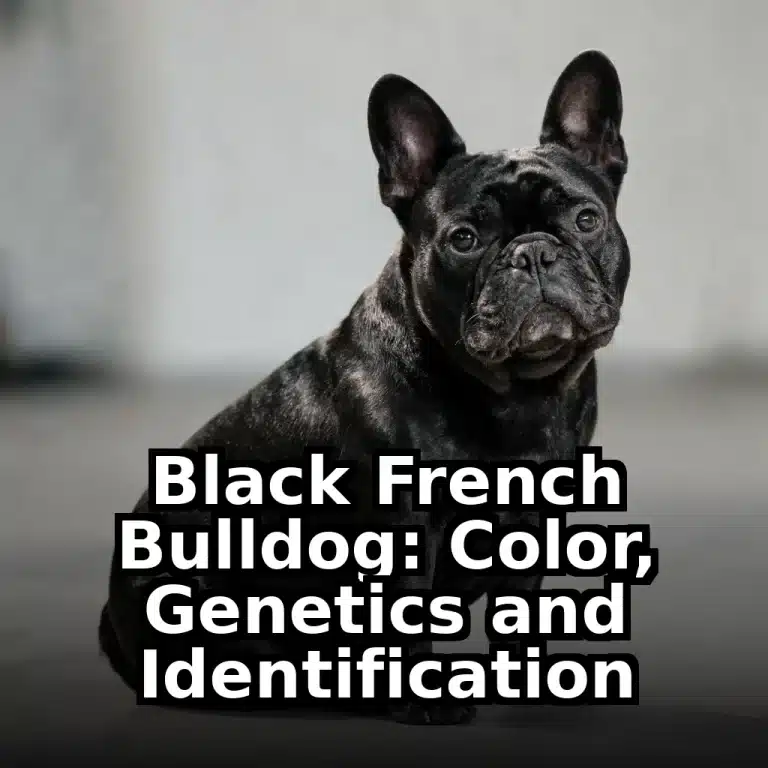
Solid Black without any trace of Brindle is disqualifying. The difficult part is that a heavily Brindled dog can look Black in indoor lighting or an ordinary phone photo.
Before selecting a Black label, inspect the shoulders, sides, legs, chest, and area behind the ears in neutral daylight. Our Black French Bulldog guide explains this identification problem in detail.
Black and Tan
Black and Tan produces organized lighter points rather than scattered Brindle hairs. Typical locations include the eyebrows, cheeks, lower legs, chest, and beneath the tail.
It should not be registered as Brindle simply because Brindle is a standard choice. If the visible description does not fit the available form, request AKC review.
Blue and Blue Fawn
Blue pigmentation dilutes areas that would ordinarily appear Black to slate or blue-gray. In a solid-looking Blue French Bulldog, the coat and skin pigment may both look gray. In a Blue Fawn French Bulldog, the body remains Fawn while the nose, lips, rims, mask, and other dark pigment appear diluted.
Both descriptions are nonstandard for AKC conformation. Calling a Blue Fawn simply “Fawn” leaves out a visible pigment difference that the standard treats as important.
Liver, Chocolate, Lilac, and Isabella
The standard uses liver-related language for brown pigment that replaces expected Black pigment. Modern breeder terminology may divide these coats into Chocolate, Cocoa, Lilac, Isabella, and other names based on their genetic combination and appearance.
Those labels are not accepted conformation colors. Our guides to Chocolate French Bulldogs, Lilac French Bulldogs, and Isabella French Bulldogs explain why similar-looking brown and dilute coats may carry different test results.
Merle
Merle creates irregular areas of pigment reduction, often producing a mottled or marbled appearance. It is specifically disqualifying under the current standard.
Merle should not be confused with Pied patches, ticking, ordinary shading, or Brindle striping. See our Merle French Bulldog guide for identification, genetic, and health-testing details.
Other Unlisted Colors and Patterns
Labels such as platinum, new shade, fluffy-color combinations, or other marketing terms do not gain breed-standard status merely because a seller uses them. The deciding question is whether the dog’s expressed color, pattern, markings, nose, and eyes comply with the written standard.
Never choose Fawn, Brindle, or Cream solely because it is the closest standard option. An intentionally inaccurate label can create confusion in pedigrees, breeding decisions, and future registration records.
Why Black Brindle Is Accepted but Solid Black Is Not
A very dark Brindle Frenchie may have only a few visible Fawn or reddish hairs. Those hairs show that the coat expresses an accepted Brindle pattern rather than genuine solid Black.
This difference can be easy to miss on a puppy. Examine multiple body areas under neutral daylight and compare earlier photographs, because the smallest visible Brindle trace may be hidden by shadows, a dense coat, or image compression.
Do not assume that every Black-looking dog is acceptable or that every dark photo proves solid Black. The conclusion must come from the actual coat.
Can a Nonstandard-Colored French Bulldog Be AKC Registered?
Registration and conformation eligibility are different questions. A dog may be eligible for an AKC registration process based on its parentage, application, and supporting information while still having a color that would disqualify it from conformation.
That does not mean every dog of every color is automatically registrable. Owners must follow the applicable AKC requirements, describe the dog accurately, and provide requested documentation.
If a nonstandard color appears as an alternate choice, that entry helps the AKC record the dog truthfully. It does not convert the coat into a standard color.
AKC Registration vs. Conformation Eligibility
| Term | What It Means | What It Does Not Prove |
|---|---|---|
| AKC registered | The dog is recorded through the applicable registration process | Standard color, good health, or show eligibility |
| Standard color | A color description classified as standard for the breed | That every marking, feature, or structural trait meets the standard |
| Alternate color | A separate registration description outside the standard list | Acceptance in conformation |
| Conformation eligible | The dog can be evaluated without that particular disqualification | That the dog will win, finish a title, or be suitable for breeding |
| Breed-standard coat | The expressed color, pattern, markings, nose, and eyes comply with the written standard | A complete health or temperament assessment |
What Are Alternate AKC Colors?
Alternate colors are registration descriptions kept separate from the standard list. In the AKC color-and-marking system, an alternate option may be marked with an asterisk when it represents a breed-standard disqualification and is ineligible for conformation.
The presence of an alternate choice is administrative recognition that the appearance exists. It is not an endorsement of the color or a change to the written standard.
A color can be recordable without being standard. Always read the registration list and the breed standard as two connected but different documents.
How to Choose the Correct Color on an AKC Registration Form
1. Examine the Dog in Neutral Daylight
Indoor bulbs, shadows, flash, and filters can turn Black into Blue, Cream into White, or Fawn into Red. Use clear daylight photographs without color enhancement.
2. Check the Nose, Lips, Eye Rims, and Paw Pads
Skin pigment often reveals dilution or brown pigment that the body coat hides. Compare several areas because dryness, dirt, and lighting can make one spot misleading.
3. Identify the Main Coat Color
Decide whether the visible foundation is White, Cream, Fawn, Black-based, Blue-gray, brown, or another appearance. Do not begin with the seller’s marketing label.
4. Identify Patterns Separately
Look for Brindle stripes, large Pied white areas, Merle mottling, organized tan points, masks, shading, white markings, or ticking. A dog can express more than one layer.
5. Decide Which Color Predominates
For combinations such as Brindle and White versus White and Brindle, determine which description best matches the dog’s visible balance and the AKC instructions.
6. Compare the Current Standard and Alternate Lists
Use the current AKC form or online system rather than an old breeder chart. Lists and administrative instructions can change.
7. Request Photo Review When Unsure
If the correct description is missing or uncertain, follow the AKC instructions for submitting color photographs. Clear front and side images are more reliable than guessing.
8. Keep the Original Records
Save the submitted photographs, laboratory reports, application, and AKC response. These records can help resolve later questions about the dog’s description.
Does AKC Registration Prove Color, Health, or Breeding Quality?
No. Registration records information supplied and reviewed through the applicable process. It does not replace a veterinary examination, breed-relevant health screening, structural evaluation, or an independent review of coat genetics.
An AKC pedigree also does not guarantee that every color label used in earlier generations was genetically complete. Older records may predate modern testing, and visual descriptions can be mistaken.
Coat color paperwork should never replace evaluation of breathing, spine, hips, patellas, heart, eyes, skin, and the wider health history of the dog and its parents.
Nose and Eye-Color Rules
The standard requires a black nose, with limited allowance for a somewhat lighter nose on certain Cream or Fawn dogs without a black mask. A nose that is Blue-gray, brown, flesh-colored, or otherwise lacking the required pigment may reveal a disqualifying color or pigment fault.
The eyes should be dark and match the characteristic expression. Blue or green eyes, or any trace of Blue or green, are disqualifying under the standard.
Eye color alone should not be used to name the coat. Puppy eyes can darken with age, while Merle, extensive white, and other genetic factors can affect eye appearance.
Does Coat DNA Determine AKC Status?
DNA can help explain which pigment and pattern variants a dog carries or expresses, but conformation judges evaluate the dog’s visible phenotype against the written standard. A laboratory report and a show-ring evaluation answer related but different questions.
Results may be especially useful when distinguishing dilution, brown pigment, Merle, Pied, masking, and Brindle. However, laboratories may test different variants and use different notation, so one line on a report should not be treated as a complete color diagnosis.
Our French Bulldog DNA color-test guide explains how the main loci interact and why carried traits do not always appear in the coat.
Common AKC French Bulldog Color Mistakes
- Calling every AKC-listed registration option an approved show color.
- Treating Brindle and Pied as identical types of color.
- Registering a Blue Fawn dog simply as Fawn.
- Calling a heavily Brindled dog solid Black without checking for lighter hairs.
- Calling a solid-Black dog Brindle to avoid a disqualifying description.
- Assuming white markings make any underlying color acceptable.
- Using a breeder’s marketing name instead of the visible coat and current form.
- Assuming an alternate color is standard because the AKC can record it.
- Using DNA color testing as a substitute for health screening.
- Assuming AKC registration automatically proves conformation or breeding quality.
Frequently Asked Questions
How Many AKC-Standard French Bulldog Colors Are There?
The current registration list contains nine standard descriptions. However, the written breed standard groups the accepted foundation as White, Cream, and Fawn from light through Red Fawn, with permitted combinations, patterns, and markings.
Is Brindle an AKC-Recognized French Bulldog Color?
Yes, Brindle is accepted when the dog’s underlying coat and pigment comply with the standard. Genetically and visually, it is more precise to describe Brindle as a stripe pattern.
Is Pied an AKC-Standard French Bulldog Color?
Piebald is an accepted pattern that creates broad white areas and colored patches. The color inside those patches must also comply with the standard.
Are Blue French Bulldogs AKC Recognized?
Blue may be recordable through an applicable alternate description, but Blue pigmentation is disqualifying for AKC conformation. Registration and show acceptance are not the same.
Can a Merle French Bulldog Be AKC Registered?
Registration eligibility depends on the AKC process, parentage, application, and accurate supporting information. Merle itself is a disqualifying pattern under the French Bulldog conformation standard.
Is Black Brindle Accepted by the AKC?
A very dark Brindle coat can be accepted if it contains a genuine trace of Brindle and otherwise meets the standard. Solid Black without a trace of Brindle is disqualifying.
Is Ticking a Disqualification?
No. The standard says ticking is acceptable but not desired. That wording expresses a preference rather than an automatic color disqualification.
Does an AKC Color Code Confirm Genetics?
No. A three-digit color code is an administrative coat description, not a laboratory genotype. DNA testing may provide additional information about inherited pigment and patterns.
What Should I Do If My Frenchie’s Color Is Not Listed?
Do not select the nearest standard color just to complete the form. Follow the AKC’s current instructions for color photographs and internal review.
Can a French Bulldog With a Nonstandard Color Compete in Other AKC Activities?
A color disqualification applies to conformation evaluation under the breed standard. Eligibility for obedience, rally, agility, and other activities follows the rules of each event, so verify the current requirements for the activity you plan to enter.
Final Takeaway
The clearest way to understand AKC French Bulldog colors is to separate registration language from conformation rules. White, Cream, and the accepted Fawn range form the color foundation, while Brindle, Piebald, masks, shading, white markings, and ticking describe accepted patterns or details under specific conditions.
Blue, Blue Fawn, liver-related colors, Merle, Black and Tan, and solid Black without Brindle are not accepted for conformation. An alternate registration option does not change that status.
Describe the dog honestly, examine pigment and patterns in natural light, and request official review when the form does not fit. Accurate records protect owners, breeders, and the breed far better than forcing a dog into the closest standard label.