Black French Bulldog: Color, Genetics and Identification


A black French Bulldog can look simple to identify, but the label often hides an important question: is the dog genuinely solid black, or is it an extremely dark brindle with only a small trace of lighter hair?
This difference matters because the American French Bulldog breed standard treats solid black and genuine brindle differently. This guide explains how to inspect the coat, interpret registration language, understand the relevant genetics, and compare black with other appearances in the wider French Bulldog color spectrum.
A Black French Bulldog has a uniformly black coat across all colored areas with no genuine trace of Brindling. Under the current AKC/FBDCA breed standard, solid Black is disqualifying for conformation, while a nearly Black coat with a visible Brindle trace is classified as Black Brindle and is accepted.
- Solid Black has no fawn, tan, gold, or reddish Brindle pattern.
- Very dark or reverse Brindle can look Black from a distance.
- White markings do not make a genuinely solid-Black coat acceptable.
- DNA can support color identification, but appearance alone cannot prove the exact genotype.
What Does a Solid-Black French Bulldog Look Like?
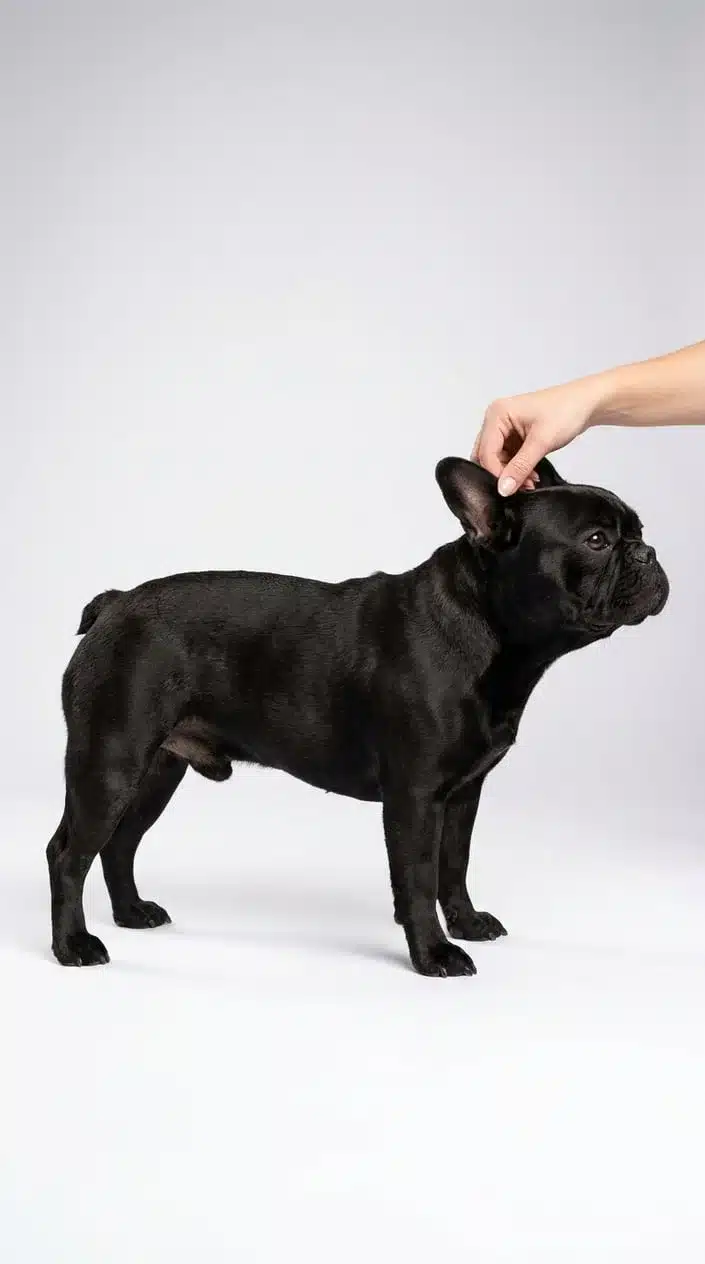
A genuinely solid-black Frenchie has black hair across all colored areas of the body, with no visible fawn or reddish brindle pattern. The coat usually appears deep neutral black rather than brown, slate gray, or warm reddish black.
Uniform Black Pigment
Inspect the shoulders, ribs, flanks, legs, neck, face, and area behind the ears. A solid-black coat remains black throughout these regions instead of revealing repeated fawn hairs or narrow reddish stripes.
The nose, lips, and eye rims should also be evaluated. A black body paired with a brown nose suggests altered brown pigment, while a slate or charcoal nose may indicate dilution rather than ordinary black eumelanin.
Solid Black With a White Chest Patch
A black French Bulldog can have white on the chest, toes, chin, or head. These markings describe white spotting; they do not convert the underlying black coat into brindle or make solid black acceptable under the breed standard.
Get Weekly Dog Care Tips Free
Join 10,000+ dog owners. Vet-approved advice every week
🔒 No spam. Unsubscribe anytime.
Why Lighting Can Misrepresent the Coat
Direct sun can reveal subtle brindle hairs, but it can also create warm reflections and sun-bleached highlights. Indoor bulbs, wet hair, shadows, image filters, high saturation, and phone-camera sharpening can make a coat look warmer or more uniform than it truly is.
| What You See | Possible Explanation | What to Check |
|---|---|---|
| Uniform neutral-black hair | Solid black | Search every colored area for genuine brindling |
| Mostly black with sparse fawn hairs | Very dark brindle | Check shoulders, legs, neck, and underside |
| Black body with organized tan points | Black and tan | Inspect eyebrows, cheeks, legs, chest, and under tail |
| Charcoal or blue-gray coat | Diluted black or blue | Check nose, eye rims, lips, and paw pads |
| Brown-black coat with brown nose | Chocolate or liver pigment | Evaluate pigment in neutral daylight |
| White coat with dark patches | Pied, black pied, or dark brindle pied | Inspect each colored patch closely |
Do not classify a Frenchie from one front-facing photograph. Examine both sides, the legs, neck, belly, and colored patches in indirect natural daylight.
Are Black French Bulldogs AKC Recognized?
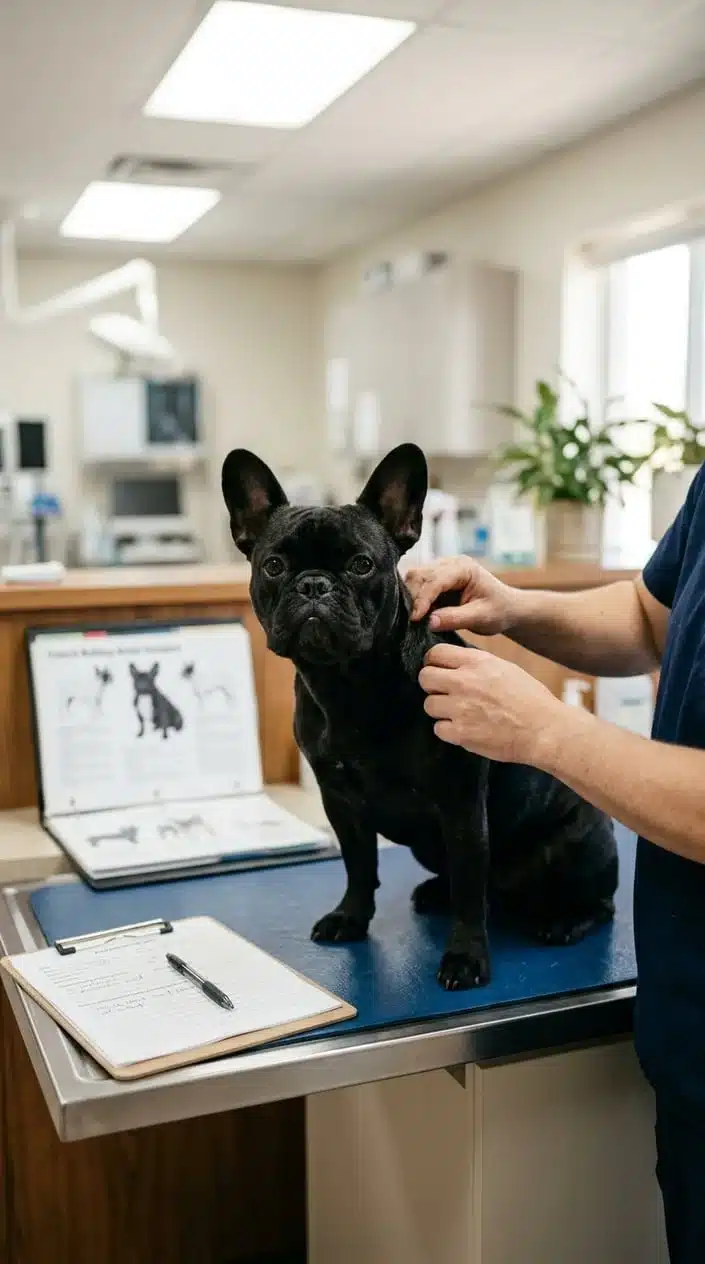
The answer depends on what “recognized” means. The current American breed standard lists solid black—defined as black without a trace of brindle—as a disqualification. It also disqualifies black and tan, black and white, and white with black.
Brindle is accepted, including a coat so heavily brindled that only a small amount of fawn-colored pattern remains. This makes accurate visual inspection more important than a breeder’s sales label.
Registration vs. Conformation Eligibility
AKC registration records a dog and uses available color choices, but registration is not a certificate that every visible trait complies with the conformation standard. A registered purebred Frenchie may still have a disqualifying color.
Likewise, a registration paper does not settle whether a nearly black dog has a qualifying trace of brindle. Conformation classification depends on the visible phenotype and the applicable breed standard.
What “Black Means Black” Actually Means
In the French Bulldog standard, black means black without any trace of brindling. The practical question is therefore not whether the dog looks mostly black, but whether genuine fawn or reddish brindle hair exists anywhere in the colored coat.
You can review the wording in the official AKC French Bulldog standard and the French Bulldog Club of America color interpretation.
An AKC registration does not prove that a Frenchie’s color is permitted in the show ring. Registration status, color terminology, and conformation eligibility are separate questions.
Solid Black vs. Black Brindle French Bulldog
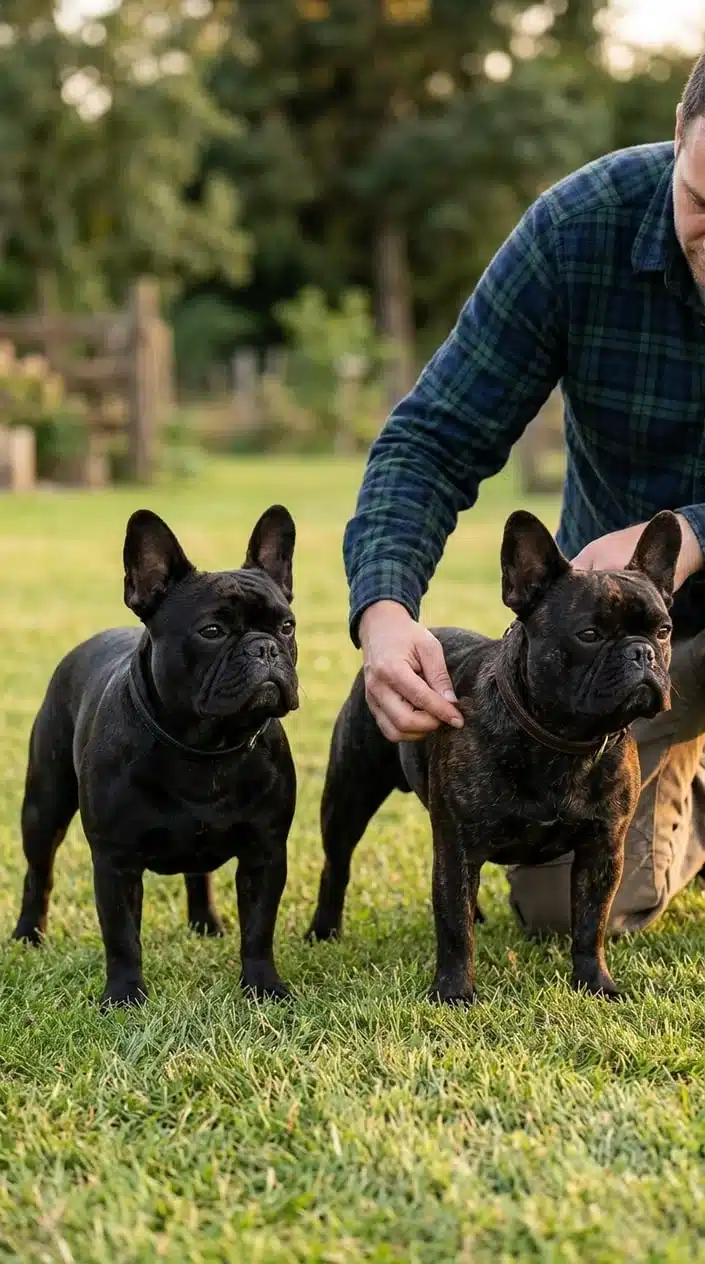
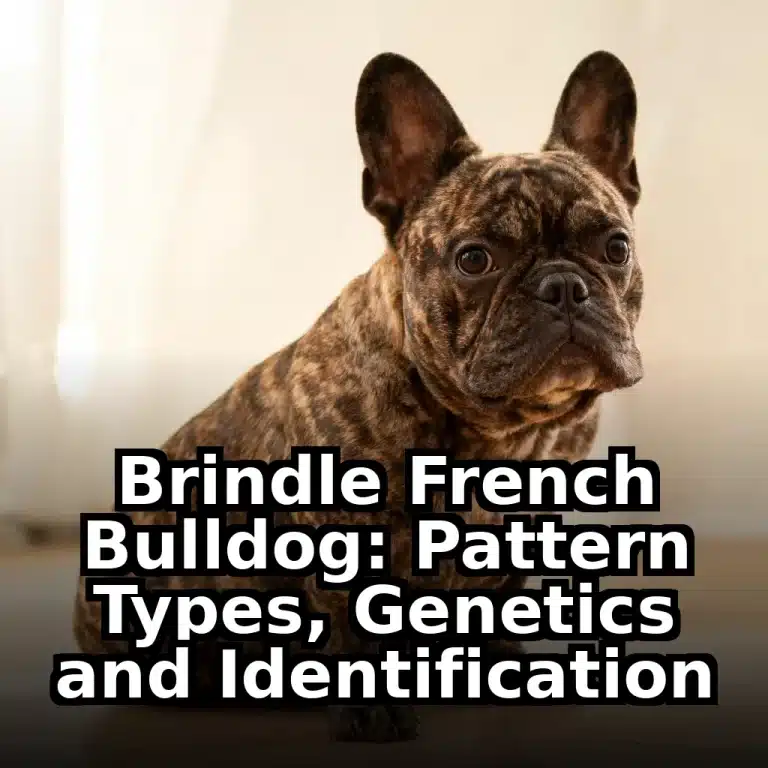
This is the most important comparison. A dark brindle French Bulldog may appear nearly black because dense dark striping hides most of the underlying fawn or red-fawn coat.
| Feature | Solid Black | Very Dark Brindle |
|---|---|---|
| Overall appearance | Uniformly black | May look almost completely black |
| Fawn or reddish hairs | No trace of brindling | At least one genuine brindle trace |
| Pattern | No striping | Sparse stripes or interspersed fawn hairs |
| Common inspection areas | Entire colored coat | Neck, shoulders, legs, flanks, and underside |
| Breed-standard status | Disqualification | Accepted when genuine brindling is present |
| DNA alone sufficient | No | No |
| White patch changes classification | No | No; the colored coat still matters |
What Counts as a Trace of Brindle?
A trace should be genuine fawn, tan, gold, or reddish pattern within the black colored coat. It may appear as a narrow stripe, a small cluster of lighter hairs, or sparse patterning in a hidden area.
One piece of lint, dandruff, sun glare, scarred hair, or a few randomly faded hairs should not automatically be called brindling. Inspect the hair roots and surrounding pattern rather than relying on one bright pixel in a photograph.
Where Sparse Brindle Hairs May Appear
Check behind the ears, across the shoulders, on the ribs and flanks, inside and outside the legs, around the neck, and on the underside. Part the short coat and compare several areas.
If show classification matters, seek an experienced breed-standard evaluation. A photograph and a sales description cannot always settle borderline cases.
Brindle is a repeated pigment pattern, not simply a warm reflection on black hair. Look for real fawn or reddish hairs within the colored coat and verify them from more than one angle.
Black vs. Reverse Brindle French Bulldog
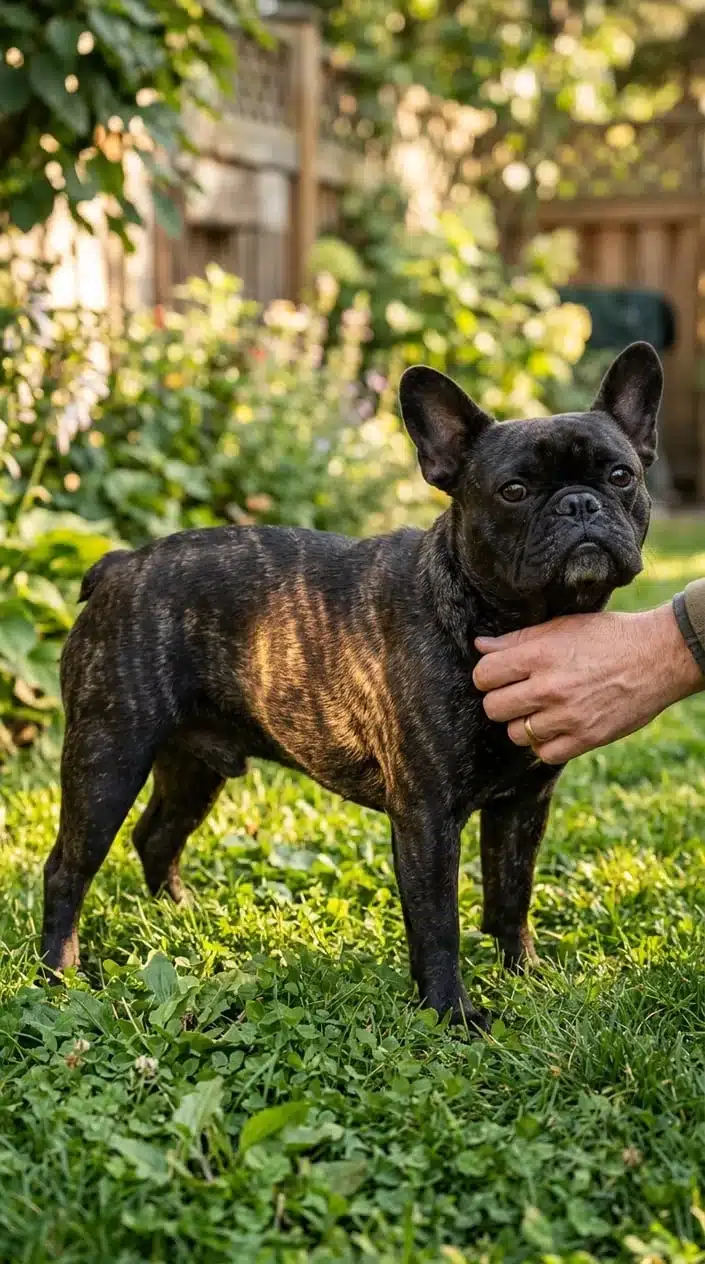
“Reverse brindle” is an informal term for a brindle coat in which dark striping covers so much of the lighter base that the visual balance seems reversed. The Frenchie may look black until sunlight or close inspection reveals sparse fawn patterning.
Reverse brindle is not the same as a uniformly black coat. The deciding visual clue is still a genuine brindle trace, even when the trace covers only a small area.
Breeders also use “black brindle” inconsistently. Ask the seller to point out the visible brindling in unedited close-up photographs rather than accepting the label alone.
Black French Bulldog vs. Similar Dark Coats

| Coat or Feature | Main Visual Clue | How It Differs From Solid Black |
|---|---|---|
| Solid black | Uniform black coat | No brindle trace or organized tan points |
| Dark brindle | Sparse fawn or reddish striping | Contains genuine brindle pattern |
| Reverse brindle | Black-dominant brindle appearance | Lighter base remains visible in small areas |
| Black and tan | Defined tan points | Organized lighter markings in predictable areas |
| Black mask | Dark hair concentrated on the face | Body remains fawn, red fawn, brindle, or pied |
| Sable | Dark-tipped hairs over a fawn or red base | Base remains visibly warm and lighter |
| Blue | Slate or blue-gray pigment | Black eumelanin is diluted |
| Chocolate | Brown coat and brown nose | Eumelanin is brown rather than black |
| Black pied | White coat with dark patches | White spotting changes distribution, not patch color |
Black vs. Black and Tan
A black-and-tan Frenchie has organized lighter points above the eyes, on the cheeks, chest, lower legs, or beneath the tail. A small white chest patch is not a tan point, and warm reflected light does not create a tan-point pattern.
Solid black and black and tan are both disqualifying under the current standard, but they are visually and genetically different phenotypes.
Black vs. Black Mask
A black mask affects facial hair, usually around the muzzle and sometimes toward the eyes, cheeks, and forehead. The body remains another color, commonly fawn or red fawn.
A black nose alone does not prove a mask because nose pigment and facial hair are different features. The Black Mask French Bulldog guide explains this distinction in detail.
Black vs. Sable
A sable French Bulldog has dark-tipped hairs or shading over a visible fawn-to-red base. A solid-black Frenchie lacks that warm underlying body color.
The base beneath heavy brindling may be fawn or deeper red fawn, but only small traces may remain visible.
Black vs. Blue
Blue is diluted black pigment. It often appears slate, charcoal, or blue-gray in the coat, nose, eye rims, lips, and paw pads. A dark blue dog may look black in a dim room, so examine normally black areas in neutral daylight.
Black vs. Chocolate
Chocolate or liver pigment changes black eumelanin to brown. The nose and eye rims are particularly useful clues because a very dark chocolate coat may appear nearly black in photographs.
A dark coat is not automatically black. Compare the body hair with the nose, lips, eye rims, and paw pads to distinguish neutral black from brown or blue-gray pigment.
Can a Black French Bulldog Have White Markings?
Yes. White spotting and dark coat color are separate features. A solid-black Frenchie may have a small white chest, white toes, a chin patch, or broader white areas while remaining genetically and visually black in its colored coat.
Black and White French Bulldogs
“Black and white” often describes a mostly black dog with noticeable white markings. Under the breed standard, adding white does not make a genuinely non-brindled black coat acceptable.
White With Black Patches
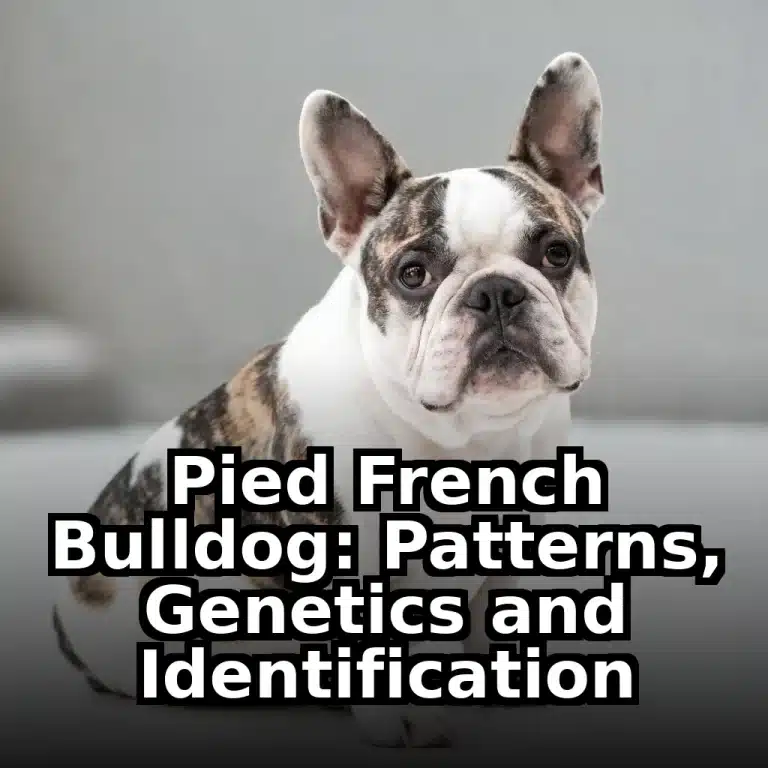
A predominantly white dog with dark patches may be called black pied, black and white, or white and black. Inspect each colored patch closely because extremely dark brindle patches can look solid black from a distance.
If a colored patch contains genuine brindling, the dog may be better described as white and brindle or brindle pied. The complete Pied French Bulldog guide explains how colored patches are distributed.
Why Extensive White Can Hide the Answer
When only a small amount of colored coat remains, a trace of brindle may be limited to one patch. Our White French Bulldog guide covers extensive white spotting and coats that only appear pure white.
Black French Bulldog Genetics Explained
Dog coat color results from interactions among several genes. It is inaccurate to claim that every solid-black French Bulldog has one identical genotype.
Eumelanin and Pheomelanin
Eumelanin produces black-based pigment, which can be modified to brown or diluted to gray-blue. Pheomelanin produces yellow-to-red pigment and forms the lighter background visible between brindle stripes.
Recessive Black at ASIP
ASIP helps control the distribution of dark and light pigment. Two tested recessive-black ASIP variants can produce a broadly black base coat when other loci permit eumelanin to be expressed.
Dominant Black at the K Locus
A dominant-black K-locus variant can override many ASIP patterns and produce a broadly solid dark coat. The K locus is also important to brindle expression, which is why it belongs in any accurate black-versus-brindle explanation.
Why Not Every Black Frenchie Has the Same Genotype
The visible result depends on interactions involving ASIP, the K locus, MC1R, and pigment modifiers. White spotting changes where the colored coat appears, while brown and dilution variants change the appearance of eumelanin.
For this reason, a photograph cannot prove recessive black, dominant black, or every hidden variant the dog carries. The UC Davis dog coat-color overview provides a useful introduction to these gene interactions.
Recessive-black ASIP variants and dominant-black K-locus variants can both contribute to a broadly dark phenotype. Never assign an exact genotype from appearance alone.
Can DNA Testing Confirm a Black French Bulldog?
A suitable color panel can clarify inherited variants, but it cannot replace examination of the visible coat. Laboratory results and phenotype answer related but different questions.
| A Color Panel May Help Identify | It Cannot Reliably Determine |
|---|---|
| Tested recessive-black ASIP variants | Whether a few pale hairs satisfy a show judge |
| Dominant-black K-locus variants | Exact visible classification from DNA alone |
| Brindle-associated K-locus status | Where a trace of brindling will appear |
| Brown or cocoa variants | Whether a photograph shows true neutral black |
| Dilution variants | Adult appearance in every type of light |
| Selected tan-point variants | Health, temperament, or breed quality |
| MC1R variants affecting expression | Conformation eligibility without phenotype review |
Ask which variants the laboratory tests and how it reports them. A negative result for one known variant does not prove that every possible color mechanism has been excluded.
Use DNA to understand tested inheritance, then compare the result with the actual coat. A color panel cannot replace visual evaluation or breed-relevant health testing.
Do Black French Bulldog Puppies Turn Brindle?
Some black-looking puppies show more obvious brindle as they mature. Their genotype does not change; the existing pattern becomes easier to see as the body grows and the adult coat changes the contrast.
A tiny fawn stripe may cover a larger visible area on an older puppy. Changes in hair texture, coat length, sun exposure, and photography can also reveal pattern that was difficult to notice in newborn images.
Other puppies are genuinely solid black and remain visibly black. White markings usually stay in the same locations, although their proportions appear smaller as the puppy grows.
No responsible seller should guarantee an exact adult classification from one newborn photograph. Request unedited images from several ages and angles.
A puppy does not genetically change from black to brindle. Existing sparse brindling may simply become easier to see as the dog and adult coat develop.
How to Identify a Solid-Black French Bulldog
- View the Frenchie in indirect natural daylight.
- Confirm whether the dark pigment is neutral black, brown, or blue-gray.
- Inspect both shoulders, ribs, flanks, neck, and area behind the ears.
- Check the inner and outer legs, underside, chest, and groin.
- Part the short coat and examine individual hairs.
- Look for genuine fawn, tan, gold, or reddish brindle hairs.
- Decide whether lighter pigment forms stripes, scattered hairs, or organized tan points.
- Separate a black facial mask from whole-body color.
- Map every white marking and inspect each colored pied patch.
- Compare unedited photographs from both sides, above, and underneath.
- Review puppy photographs from several ages when available.
- Do not treat registration terminology as proof of standard status.
- Use an appropriate DNA panel when inheritance matters.
- Seek experienced evaluation if conformation classification is important.
Separate Brindling From Random Pale Hairs
Genuine brindling is a pigment pattern within the coat. Dandruff, lint, scars, sun bleaching, and reflected light can all create misleading pale spots.
Check for Tan Points
Look above the eyes, along the cheeks, on the chest and lower legs, and beneath the tail. Predictable, organized points indicate a different phenotype from solid black.
Compare More Than One Photograph
Request clear images in neutral daylight without filters. One photograph can hide sparse brindling, exaggerate brown tones, or make diluted pigment appear black.
Use unedited close-ups from both sides, above, and underneath the dog. Consistent daylight photographs are more useful than a single dramatic image.
Does Black Coloring Affect Health?
Ordinary black eumelanin is not a disease, and a solid-black classification does not cause brachycephalic health problems. Color alone also cannot prove that a Frenchie is healthy or unhealthy.
Separate pigment modifiers must be evaluated separately. For example, dilution may be relevant to coat and skin concerns in some genetic contexts, but it should not be assumed in a genuinely black dog.
More important questions involve airway function, spine, patellas, hips, heart, eyes, skin, overall structure, and family health history. Ask for documented breed-relevant screening and discuss individual results with a veterinarian.
A coat-color panel is not a health screen. Prioritize breathing, structure, documented health testing, veterinary records, and responsible rearing over a marketable color label.
Does Black Coloring Affect Personality?
Black coloring does not reliably predict affection, intelligence, trainability, energy, stubbornness, protectiveness, or compatibility with children and other dogs.
Temperament is shaped by broader genetics, health, early development, socialization, training, and daily environment. Claims that black Frenchies have a special personality are marketing generalizations, not a responsible way to select a puppy.
Are Black French Bulldogs Rare?
Solid black may be seen less often than standard brindle or fawn, but no dependable population figure establishes a universal rarity level. Marketplace listings are especially unreliable because sellers use black, black brindle, reverse brindle, and black pied inconsistently.
Some puppies advertised as solid black later reveal brindle hairs. Others labeled rare black may carry no unusual tested genotype. Visual scarcity, genetic rarity, and sales availability are different ideas.
Treat “rare,” “exclusive,” “premium,” and “exotic” as promotional terms unless the breeder clearly explains the phenotype, genetics, registration terminology, and breed-standard implications.
How Much Does a Black French Bulldog Cost?
A fixed nationwide price range quickly becomes unreliable because location, age, pedigree, health documentation, breeder practices, and demand vary. A high asking price does not prove that a black Frenchie is rare, healthy, or responsibly bred.
Legitimate costs can reflect veterinary care, parent evaluation, documented health screening, responsible puppy raising, registration, and long-term breeder support. A large color premium deserves caution when it is based mainly on urgency or undefined rarity.
Choosing a Black French Bulldog Puppy Responsibly
- Request unedited daylight photographs from both sides, above, and underneath.
- Ask for close-ups of any claimed trace of brindling.
- Confirm whether the dark pigment is black, brown, or blue-gray.
- Ask the breeder to explain white markings and colored pied patches.
- Compare informal sales terminology with registration terminology.
- Request parent, pedigree, and relevant color-panel information.
- Ask for disclosure of brown, dilution, and tan-point variants when relevant.
- Review documented breed-relevant health testing.
- Reject guarantees about exact adult color classification.
- Ignore personality promises based only on coat color.
- Do not accept pressure based on rarity or limited availability.
- Request written veterinary and care records.
- Ask how the puppies are raised and socialized.
- Prioritize breathing, structure, health, and temperament over color.
Be cautious if a seller calls a puppy “rare black” without showing the full coat, treats registration as proof of show eligibility, or uses color DNA as a substitute for health testing.
Frequently Asked Questions
Is Black an Official French Bulldog Color?
Solid black without a trace of brindle is a disqualification under the current American French Bulldog breed standard. Genuine brindle is treated differently, even when the coat looks almost black.
Can a Solid-Black French Bulldog Be AKC Registered?
Registration and conformation eligibility are separate. An AKC-registered Frenchie can still display a color that is disqualifying under the breed standard.
Why Is Solid Black Disqualified?
The current breed standard specifically defines black as black without a trace of brindle and lists it among disqualifying colors. The rule reflects the written standard, not a claim that black pigment itself is a disease.
How Can You Tell Solid Black From Dark Brindle?
Inspect the entire colored coat in natural daylight for genuine fawn or reddish stripes or hairs. Dark brindle contains a visible trace of brindling; solid black does not.
What Counts as a Trace of Brindle?
A trace is genuine lighter pigment forming part of the brindle pattern within the colored coat. Glare, lint, dandruff, scars, or random sun-faded hairs should not automatically be counted.
Can a Black French Bulldog Have a White Chest?
Yes. A black Frenchie can have a white chest or toes, but white spotting does not change the underlying black coat or make solid black compliant with the breed standard.
Is Black Pied an Accepted French Bulldog Color?
The label is used inconsistently. A white dog with genuinely non-brindled black patches is different from an accepted white-and-brindle or brindle-pied dog, so inspect every colored patch closely.
Do Black Puppies Become Brindle?
The genotype does not change, but sparse existing brindling may become easier to see as the puppy grows and develops an adult coat. Some genuinely solid-black puppies remain visibly black.
What Genes Cause a Solid-Black Coat?
Recessive-black ASIP variants and dominant-black K-locus variants are two possible routes to broadly dark pigment. Other loci affect whether and how that pigment appears.
Can DNA Confirm a Solid-Black Frenchie?
A color panel can identify selected variants associated with black, brindle, brown, dilution, and other patterns. It cannot replace coat inspection or independently decide conformation classification.
Are Black French Bulldogs Rare?
They may be less commonly seen than standard brindle or fawn, but inconsistent labeling makes reliable rarity estimates difficult. A “rare black” sales claim is not proof of genetic rarity.
Do Black French Bulldogs Have Special Health Problems?
Ordinary black pigment is not itself a disease. General French Bulldog health and any separate pigment modifiers should be evaluated independently through appropriate veterinary care and health screening.
Is Black the Same as Black and Tan?
No. Black and tan includes organized lighter points above the eyes, on the cheeks, chest, legs, or beneath the tail. Solid black lacks that defined point pattern.
Is a Black Frenchie the Same as a Black-Masked Fawn?
No. A black-masked fawn has dark facial hair over a fawn body, while a solid-black Frenchie has black hair across nearly all colored areas of the coat.
Final Takeaway
A solid-black French Bulldog has a genuinely black coat without a trace of brindling. A dog that appears black from a distance may instead be very dark or reverse brindle, and even a small genuine brindle trace changes the breed-standard interpretation.
White markings do not change the underlying colored coat, and AKC registration does not equal conformation approval. Examine the complete phenotype, use DNA only as supporting evidence, and prioritize health testing, structure, temperament, and breeder transparency over rarity or color premiums.