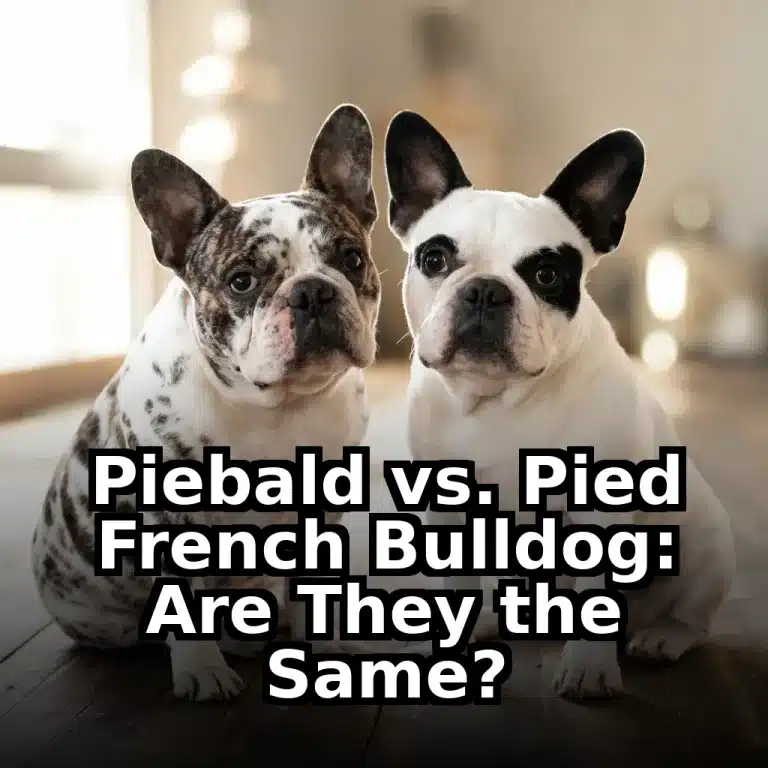
Black Mask French Bulldog: Genetics, Identification and AKC Standard

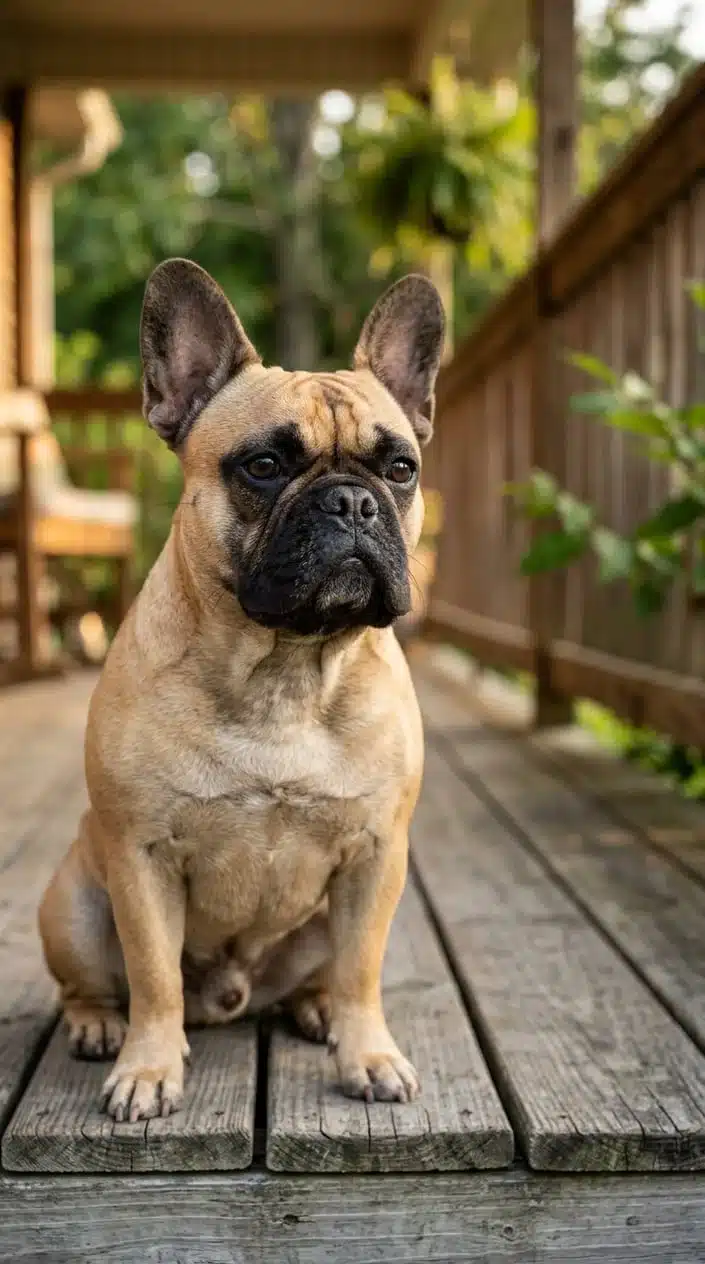
A black mask French Bulldog has dark hair concentrated around the muzzle and sometimes extending toward the eyes, cheeks, forehead, ears, or chin. The dog’s underlying coat may still be fawn, red fawn, brindle, or pied because a black mask is a facial marking—not a separate coat color.
That sounds simple, but dark nose leather, lip pigment, brindle hairs, sable shading, facial-fold shadows, and photo lighting can all resemble a mask. This guide explains how to identify the marking, what the genetics mean, how the AKC treats it, and what to check when choosing a puppy. For the wider coat system, start with our complete French Bulldog colors guide.
A Black Mask French Bulldog has black hair concentrated around the muzzle and sometimes extending toward the cheeks, eyes, forehead, ears, or chin. The black mask is an AKC-accepted facial marking—not a separate coat color—and it may appear over fawn, red fawn, brindle, or the colored areas of a pied coat.
Key identification points:
- Judge the dark facial hair, not the black nose, lips, or skin alone.
- A mask may be full, partial, uneven, or interrupted by white spotting.
- The MC1R Em variant is associated with melanistic masking, but other coat genes can hide or obscure it.
- The dog’s complete coat color and pattern still determine whether it meets the AKC breed standard.
What Does a Black Mask Look Like on a French Bulldog?
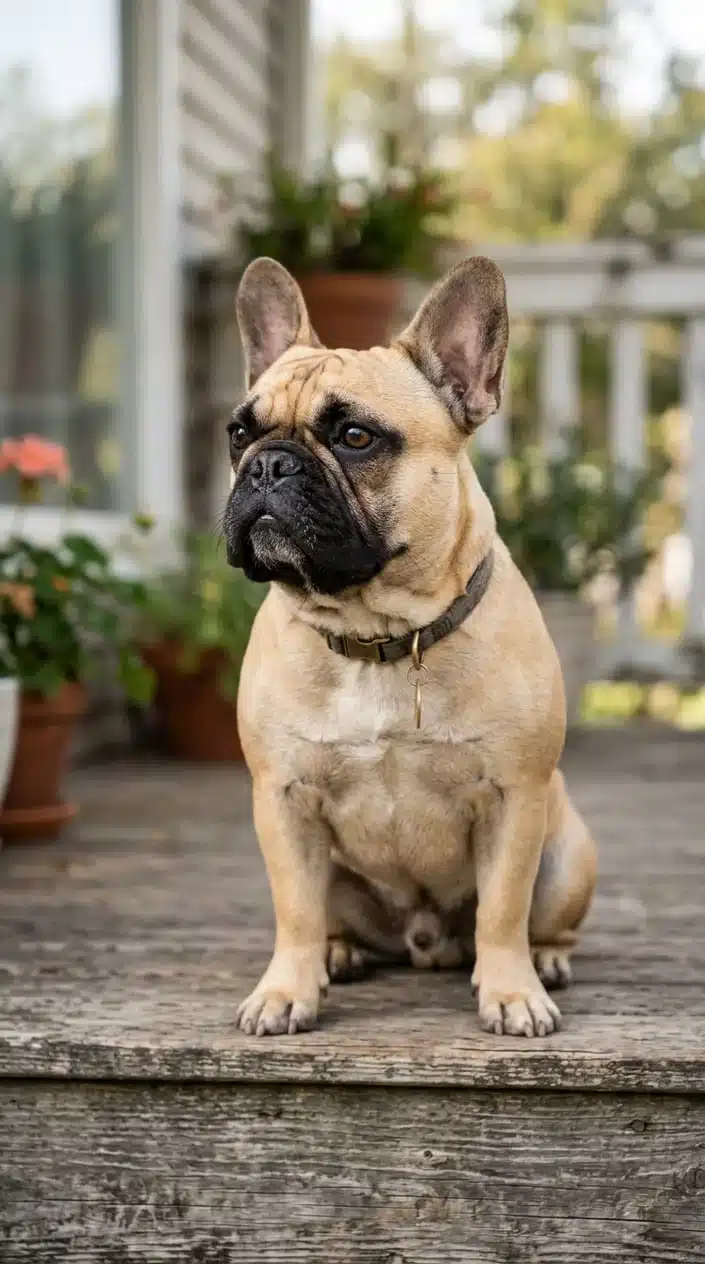
The clearest black mask appears as a distinct area of black hair around the muzzle against a lighter fawn or red-fawn coat. It may remain close to the mouth or spread upward and outward across more of the face.
There is no requirement for the mask to form a perfectly even circle. Natural masks vary in size, intensity, shape, and symmetry.
Areas a Mask May Cover
- The muzzle and whisker area
- The hair surrounding the lips
- The lower cheeks and chin
- The area between the muzzle and eyes
- The eye area and upper cheeks
- Parts of the forehead or ears in more extensive expressions
Judge the pigmented hair rather than the black nose, lips, or skin underneath it. A dog can have strong black skin pigment without having an obvious black hair mask.
Get Weekly Dog Care Tips Free
Join 10,000+ dog owners. Vet-approved advice every week
🔒 No spam. Unsubscribe anytime.
Full, Partial, Extended, and Interrupted Masks
| Mask Appearance | What You May See |
|---|---|
| Full mask | Dark muzzle hair extends around the eyes and covers much of the face. |
| Muzzle mask | Black hair stays mainly around the muzzle, mouth, and chin. |
| Partial mask | Dark coverage is limited, uneven, or visible on only part of the muzzle. |
| Extended mask | Dark facial hair reaches the eyes, forehead, ears, or lower face. |
| Interrupted mask | A white blaze or pied spotting breaks through the expected dark area. |
| Hidden mask | The dog may inherit mask genetics, but its coat or another pattern prevents clear visual identification. |
“Black mask” describes a facial marking. Terms such as fawn, red fawn, brindle, and white describe the underlying color or pattern on which that marking may appear.
Are Black Mask French Bulldogs AKC Recognized?
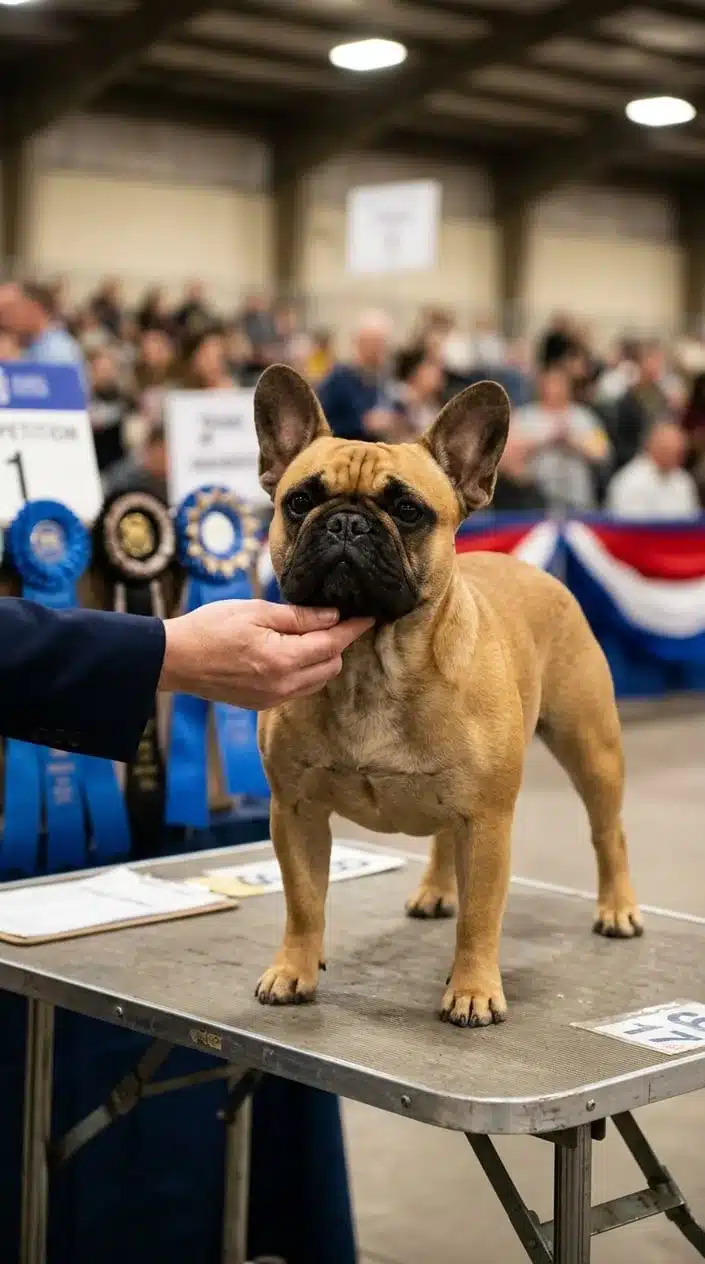
Yes. The American Kennel Club lists the black mask as a standard French Bulldog marking. The official breed standard accepts white, cream, fawn from light fawn to red fawn, and permitted combinations, together with recognized markings and patterns such as black masks, black shading, brindle, piebald, and white markings.
A recognized black mask does not make every accompanying coat color acceptable. The entire dog’s visible color, pattern, and pigmentation must still be evaluated under the current breed standard.
Partial Masks and Pied Frenchies
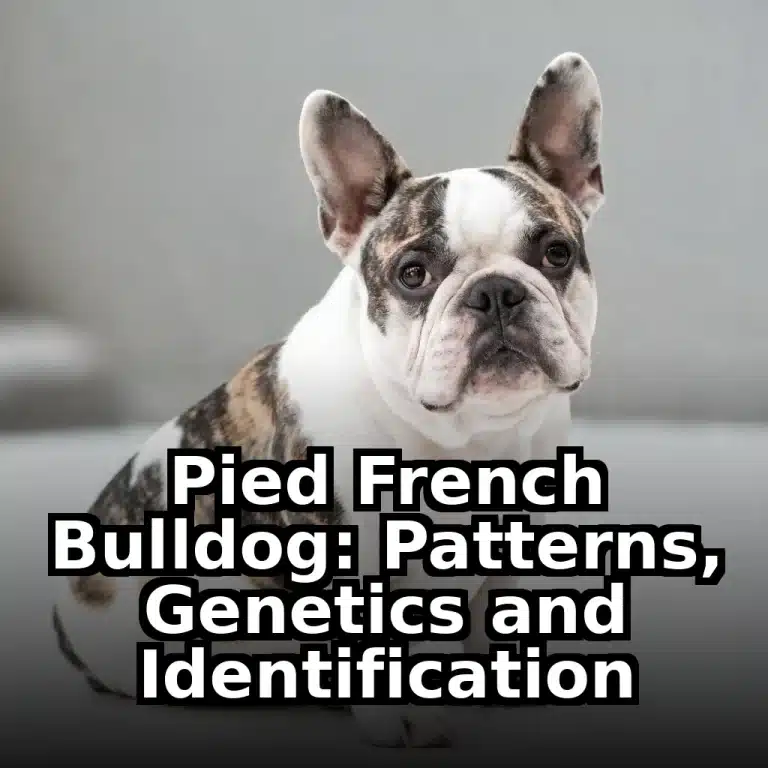
A mask does not have to cover the entire face to be valid. A fawn-and-white or white-and-fawn dog may show dark masking only inside the pigmented portion of its head, while a white blaze interrupts the middle.
This is especially relevant to a pied French Bulldog, where white spotting can conceal areas that might otherwise display dark hair.
Nose Pigment Is a Separate Feature
The breed standard generally calls for a black nose. It provides a limited exception for cream or fawn dogs without black masks, where a lighter-colored nose may be accepted but is not desirable.
This wording separates the nose leather from the hair mask. A maskless fawn can still have a black nose, and black nose leather does not turn the surrounding fawn hair into a mask.
A standard black mask is accepted, including partial expressions. Recognition of the marking does not override a disqualifying color elsewhere on the dog.
Black-Masked Fawn vs. Maskless Fawn French Bulldog
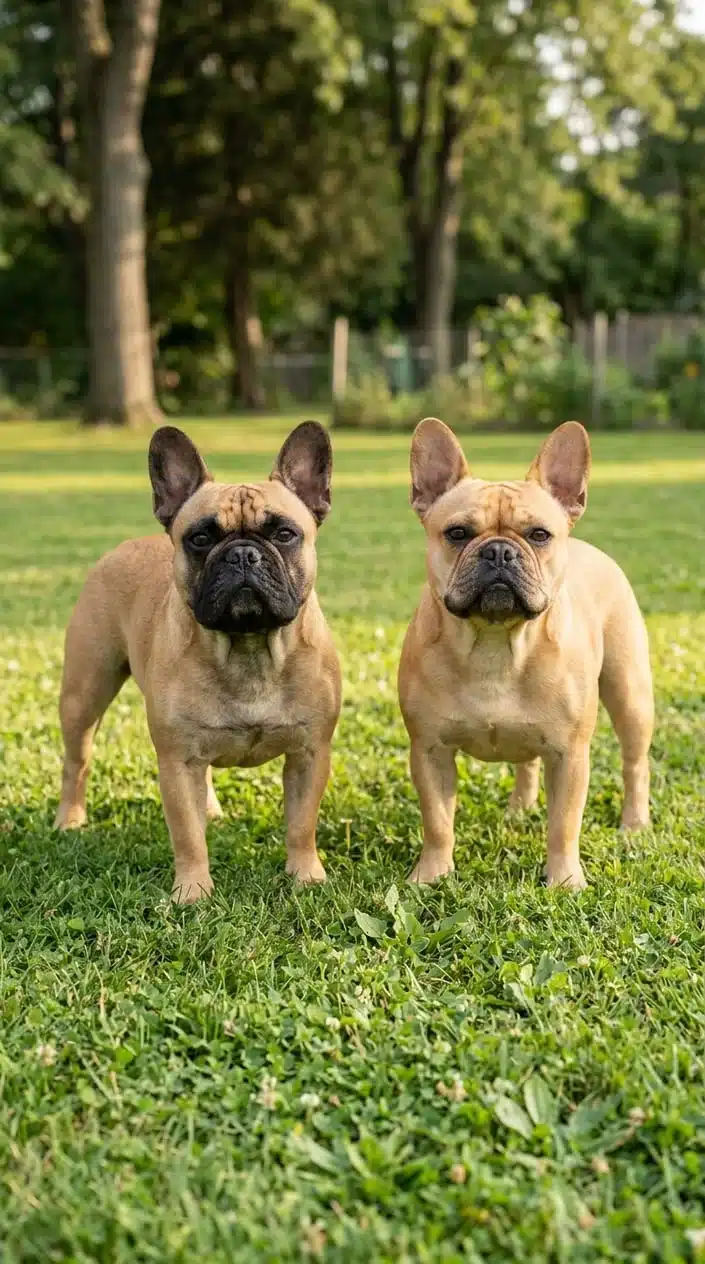
Both dogs can have the same warm base-coat range. The key difference is whether black hair forms a visible facial mask.
| Feature | Black-Masked Fawn | Maskless Fawn |
|---|---|---|
| Base coat | Light fawn through red fawn | Light fawn through red fawn |
| Muzzle hair | Clearly black or very dark | Fawn, cream, or lighter facial hair |
| Eye-area shading | May be visible | Usually limited or absent |
| Nose | Expected to be black | May also be black |
| Symmetry | May be even or uneven | Not relevant to mask status |
| AKC status | Accepted with an otherwise standard coat | Accepted with an otherwise standard coat |
Our Fawn French Bulldog guide explains the full shade range and helps distinguish pale fawn from cream.
Which French Bulldog Coats Can Show a Black Mask?
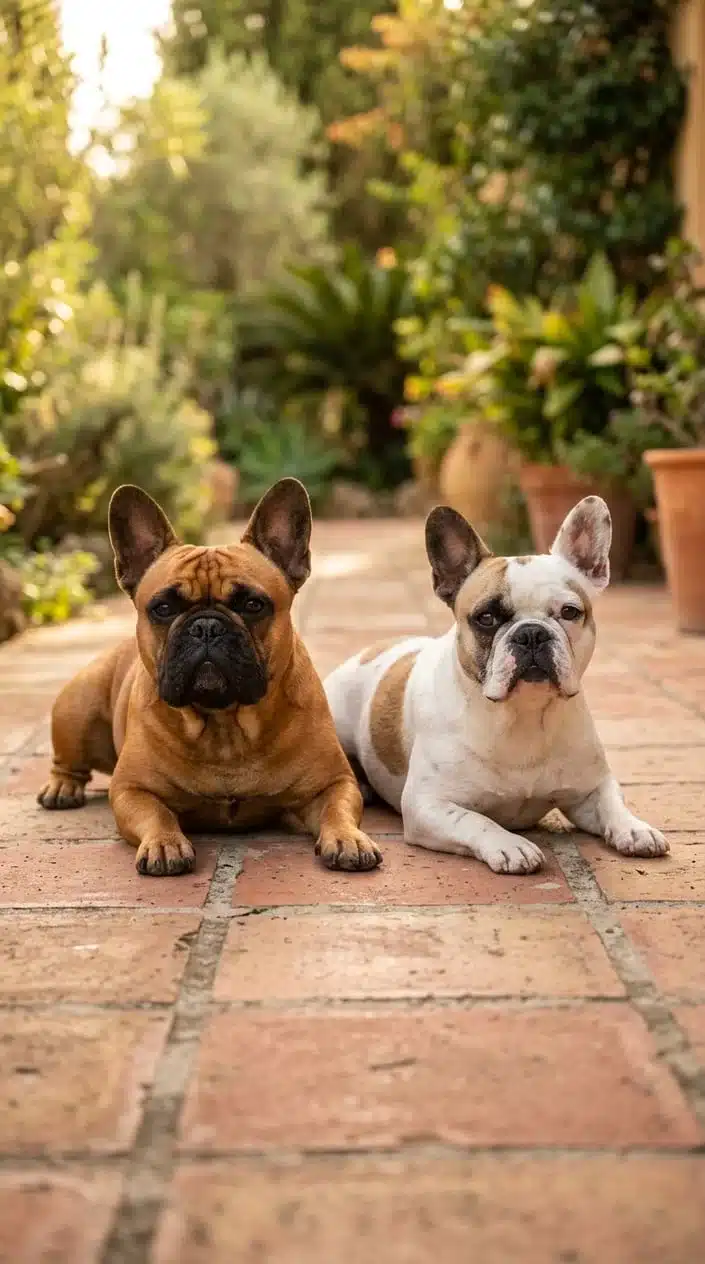
Light Fawn With a Black Mask
A light tan or honey coat creates strong contrast with a black muzzle. The mask can look especially sharp in indirect daylight, although bright exposure may wash out lighter hairs around its edge.
Red Fawn With a Black Mask
A deeper copper or reddish fawn coat can also carry a distinct black mask. “Red fawn” describes the intensity of the fawn coat, not a separate type of mask.
Pied With a Black Mask
A pied Frenchie may display a complete mask inside a large colored head patch or only a fragment where white crosses the face. An interrupted mask is not automatically a tricolor pattern; it may simply reflect the interaction between fawn pigment, masking, and white spotting.
Brindle With a Mask
A brindle French Bulldog can inherit mask-associated genetics, but heavy black striping may make the mask difficult to separate visually. Look for concentrated dark muzzle hair and a transition to identifiable stripes with fawn hairs elsewhere.
Cream and Hidden Mask Genetics
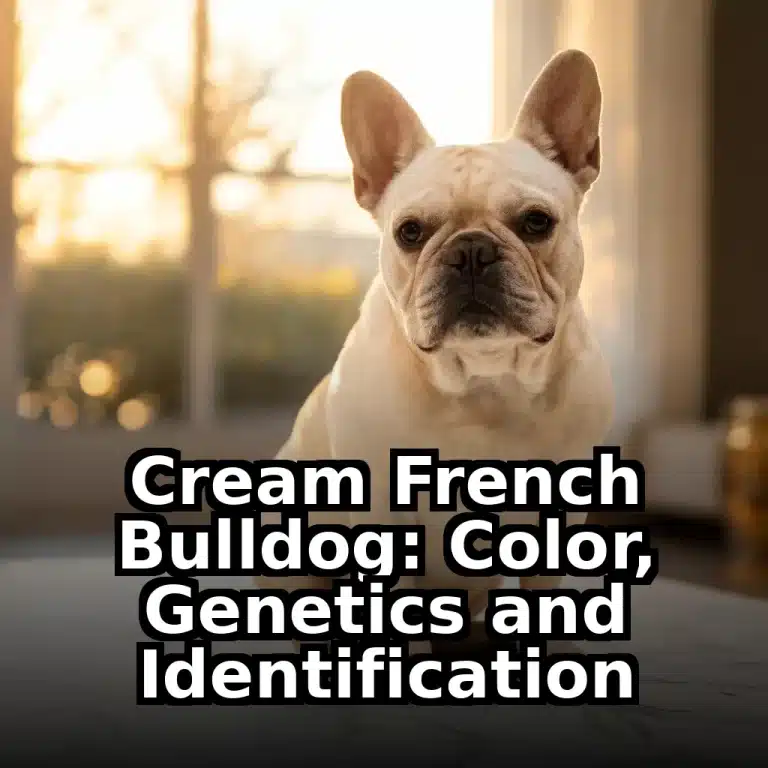
A cream French Bulldog may inherit a mask-associated variant without displaying a black mask because recessive red or cream expression limits visible dark pigment in the hair. This is a useful example of why inherited genotype and visible phenotype are not always identical.
White Spotting Can Interrupt the Mask
Extensive white can cover part or most of the facial area where a mask might otherwise be visible. Our White French Bulldog guide explains why a visually white dog may require closer evaluation for pied or extreme-white expression.
Black Mask vs. Similar Dark Facial Features
| Feature | How It Differs From a Mask |
|---|---|
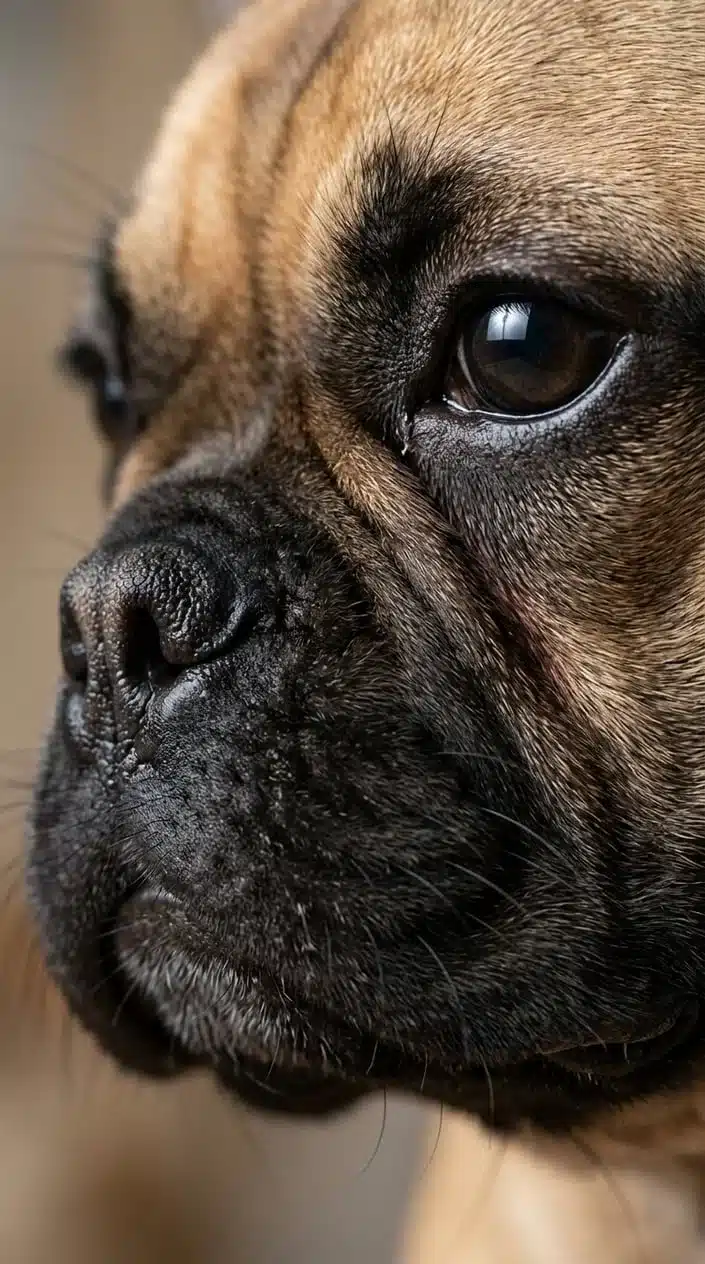
| Black nose | Pigment in the nose leather, not the surrounding hair. |
| Dark lips | Skin pigment along the mouth rather than a field of dark facial hair. |
| Black shading | Scattered dark hair that may continue over the head, ears, or body. |
| Brindle | Dark stripes across a fawn background instead of a face-centered marking. |
| Sable hairs | Dark-tipped or scattered hairs distributed through a fawn coat. |
| Fold shadows | Darkness created by depth, moisture, or lighting inside facial wrinkles. |
| Staining | Discoloration caused by saliva, tears, debris, or irritation. |
Black Mask vs. Black Shading
A mask is concentrated around the face, especially the muzzle. Black shading can appear on the ears, head, back, or other parts of a fawn coat and may accompany a mask without being part of it.
Black Mask vs. Brindling
Brindle forms recognizable dark stripes on a lighter fawn background. A mask appears more like a concentrated dark field, although a heavily brindled face can make the border uncertain.
Black Mask vs. Sable Shading
Sable commonly creates dark-tipped or scattered hairs over a fawn base rather than a defined muzzle-centered patch. A future sable-specific guide will address that pattern without forcing it into the black-mask definition.
Look closely at the hair over the muzzle in natural light. Black skin, dark lips, whisker follicles, or deep fold shadows alone do not confirm a melanistic mask.
Black Mask French Bulldog Genetics Explained
The melanistic mask is associated with a variant of the MC1R gene at the E locus, commonly written as Em. This variant allows dark eumelanin to appear in a face-centered pattern when the rest of the dog’s coat genetics permit it to be seen.
One inherited copy can be enough for mask expression. However, the E locus works within a larger color system, so it cannot predict the complete coat or guarantee a clearly visible mask by itself.
One Copy vs. Two Copies
| Example Result | Plain-English Meaning | Inheritance Note |
|---|---|---|
| Em/Em | Two copies of the mask-associated variant | The dog passes Em to every puppy, but visibility still depends on other genes. |
| Em/E | One mask-associated copy and one other dominant-extension copy | Each puppy has an approximate 50% chance of receiving Em. |
| Em/e | One mask-associated copy and one recessive-red copy | Each puppy has an approximate 50% chance of receiving Em. |
| e/e | Two recessive-red copies | Dark mask pigment is not visibly expressed in the hair. |
These are single-locus inheritance expectations, not promises about a litter’s appearance. Small litters may not match a theoretical percentage, and every puppy also inherits variants at other color and pattern loci.
Genotype vs. Phenotype
Genotype describes what a dog inherited. Phenotype describes what you can see. A DNA result may support mask inheritance, while brindle, white spotting, a dark coat, or recessive cream expression makes the phenotype unclear.
An E-locus result cannot classify the entire coat. It must be interpreted with the dog’s visible appearance and other color and pattern results.
Can a Frenchie Carry a Hidden Mask?
Yes, although “hidden mask” should be used carefully. It means the dog may have inherited mask-associated genetics while the visible coat prevents confident identification.
- A heavily brindled or very dark face can conceal the mask’s border.
- White spotting can remove pigment from part of the muzzle.
- Recessive cream expression can prevent dark mask hair from appearing.
- A small mask may blend into naturally dark muzzle features.
- Edited or poorly exposed photographs can erase subtle differences.
DNA testing can clarify inheritance when breeding or pedigree analysis makes it relevant. It does not replace visual evaluation or prove that the dog meets every part of the breed standard.
Do Black Masks Change as French Bulldog Puppies Grow?
The general pattern is often visible early, but the face changes shape as a puppy matures. A broad mask on a short puppy muzzle may look proportionally smaller when the head and cheeks develop.
Some surrounding shading may become less noticeable, while established dark muzzle hair usually remains recognizable. Lighting, coat condition, seasonal shedding, and camera exposure can also make the same mask look lighter or darker.
What Usually Remains Stable
- The basic location of established dark facial hair
- The approximate placement of white blazes and pied patches
- The difference between nose leather and surrounding hair
- The underlying fawn, red-fawn, brindle, or pied pattern
No breeder can guarantee the exact adult size, symmetry, or intensity of a young puppy’s mask. Sudden hair loss, redness, crusting, sores, odor, or progressive pigment loss is not a normal color change and deserves veterinary attention.
Puppy facial proportions and shading can change. Treat claims of a guaranteed “perfect adult mask” as marketing, not a reliable prediction.
How to Identify a Black Mask French Bulldog
- View the dog in indirect natural daylight.
- Identify the base coat as fawn, red fawn, brindle, pied, cream, or another appearance.
- Inspect the hair covering the muzzle instead of judging the nose alone.
- Check whether dark hair extends toward the cheeks, eyes, chin, or forehead.
- Separate the face-centered mask from general black shading on the ears or body.
- Look for brindle stripes or scattered sable-like hairs around the mask.
- Check whether a white blaze or pied area interrupts the facial pigment.
- Compare both sides because natural masks can be uneven.
- Review unedited puppy and current photographs under similar lighting.
- Use appropriately interpreted DNA results if inheritance matters, while recognizing their limits.
Indoor shadows and phone filters can make fawn hair look black. Soft daylight reveals hair color and the transition between a true mask, shading, and brindling more clearly.
Does a Black Mask Affect Health?
A standard black mask is a pigmentation marking, not a disease. It does not independently predict breathing ability, lifespan, intelligence, skin sensitivity, or overall health.
French Bulldogs still require careful attention to breed-related concerns involving breathing, the spine, joints, eyes, heart, skin folds, and heat tolerance. Those issues matter far more than the size or symmetry of a facial mask.
Color Testing Is Not Health Testing
A coat-color panel can help explain pigment inheritance. It does not evaluate airway structure, spinal abnormalities, kneecaps, hips, eyes, heart function, or the many other factors involved in producing a healthy dog.
Likewise, an accepted color does not prove responsible breeding. Buyers should request actual health-test documentation rather than accepting a color-DNA certificate as a substitute.
Coat testing answers coat questions. Responsible selection also requires breed-relevant health screening, veterinary records, and honest information about both parents.
Does a Black Mask Affect Personality?
There is no reliable basis for claiming that a masked Frenchie is more protective, affectionate, intelligent, stubborn, or trainable because of the marking. Personality is shaped by genetics beyond coat color, early development, socialization, training, health, and individual experience.
Choose a puppy for sound temperament and responsible upbringing, not a personality promised from facial pigment.
Are Black Mask French Bulldogs Rare or Expensive?
Black masks are established, recognized French Bulldog markings. A dark, large, symmetrical, or “perfect” mask may be visually appealing, but symmetry does not establish genetic rarity or better quality.
Price varies with location, breeder practices, pedigree, demand, and marketing. Paying more for a striking mask does not guarantee healthier structure, more predictable temperament, or better breeding decisions.
Choosing a Black-Masked French Bulldog Puppy Responsibly
- Ask for unedited photographs in indirect natural light.
- Request clear color and pattern information for both parents.
- Review relevant genetic results with an explanation of their limits.
- Request breed-relevant health-test documentation, not only color tests.
- Do not rely on promises about exact adult mask size or symmetry.
- Reject personality guarantees based on markings.
- Confirm that registration terminology matches the visible dog and pedigree records.
- Avoid pressure built around “rare mask” or limited-time pricing.
- Review written veterinary, vaccination, and health information.
- Choose transparency, structure, breathing, and temperament before cosmetic preference.
Be cautious when a seller calls a mask rare, guarantees its adult appearance, or presents coat-color DNA as complete health clearance. Ask for the underlying records.
Frequently Asked Questions
Is a Black Mask a French Bulldog Color or Marking?
It is a facial marking, not a standalone coat color. The underlying dog may be fawn, red fawn, brindle, or pied.
Are Black-Masked French Bulldogs AKC Recognized?
Yes, black mask is an accepted standard marking. The dog’s overall color, pattern, and pigmentation must also comply with the breed standard.
Do French Bulldog Black Masks Fade With Age?
The apparent size or intensity may change as facial proportions and surrounding shading develop. The established mask generally remains recognizable, but its exact adult appearance cannot be guaranteed.
Can a Maskless French Bulldog Produce Masked Puppies?
A visually maskless dog may have genetics that conceal a mask-associated variant, so DNA and the other parent’s genotype matter. Two dogs that truly lack the variant cannot pass it to a puppy.
Can a Cream French Bulldog Carry the Mask Variant?
Yes. Recessive cream expression can prevent a genetically possible mask from appearing visibly in the coat, which is why genotype and phenotype may differ.
Can a Pied French Bulldog Have a Black Mask?
Yes. It may appear inside a pigmented head patch or be partially interrupted by a white blaze or other pied spotting.
Is a Partial Black Mask Acceptable?
Yes. A recognized black mask does not have to be full, perfectly symmetrical, or cover the entire face.
Is a Black Nose the Same as a Black Mask?
No. A black nose is pigment in the nose leather, while a black mask consists of dark hair around the muzzle and possibly other parts of the face.
Can Brindle French Bulldogs Have Black Masks?
They can inherit mask-associated genetics, but heavy brindling may conceal the mask’s boundary. Visual classification can remain uncertain on a very dark brindle face.
Do Black Mask French Bulldogs Have Special Health Problems?
The standard black mask itself is not linked to a special personality or health condition. Normal French Bulldog health screening remains the important consideration.
Final Takeaway
A black mask French Bulldog has dark facial hair centered on the muzzle, but the marking can be full, partial, extended, uneven, hidden, or interrupted by white spotting. The reliable way to identify it is to separate hair color from nose and lip pigment, compare it with shading and brindling, and evaluate the dog in natural light.
The marking is AKC recognized, but it does not make every underlying coat acceptable or prove quality. Genetics can explain inheritance, while responsible health screening, temperament, structure, and breeder transparency should guide any puppy decision.