Blue French Bulldog: Color, Genetics, Health and AKC Status

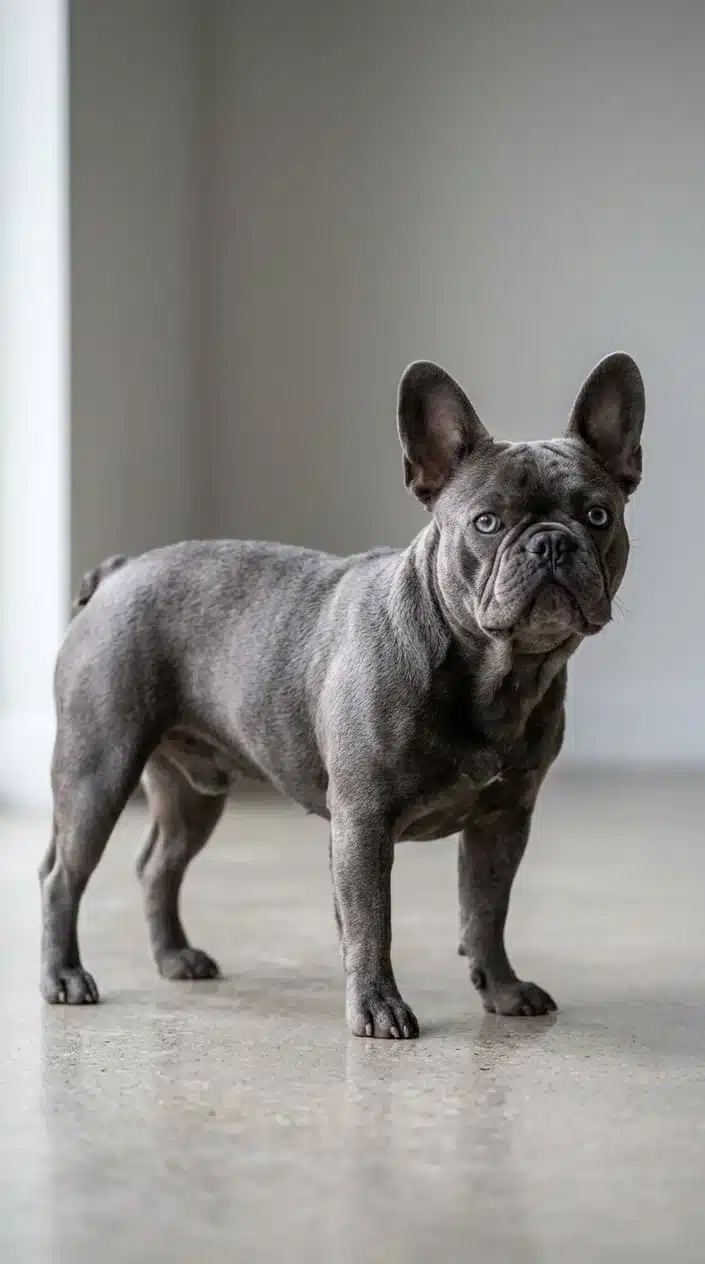
A Blue French Bulldog has a slate, charcoal, or steel-gray appearance because normally black pigment has been diluted. The word “blue” is a traditional coat-color term; it does not mean the dog produces genuinely blue pigment.
That sounds straightforward, but puppy listings often use “blue” for several different coats. Solid blue, blue fawn, blue brindle, lilac, Isabella, and blue pied are not interchangeable. Lighting and photo filters can make identification even harder.
This guide explains how to identify the color, what modern dilution testing can and cannot prove, how the American breed standard treats blue, and what owners should understand about Color Dilution Alopecia. For a broader overview, start with our complete French Bulldog colors guide.
What Is a Blue French Bulldog?
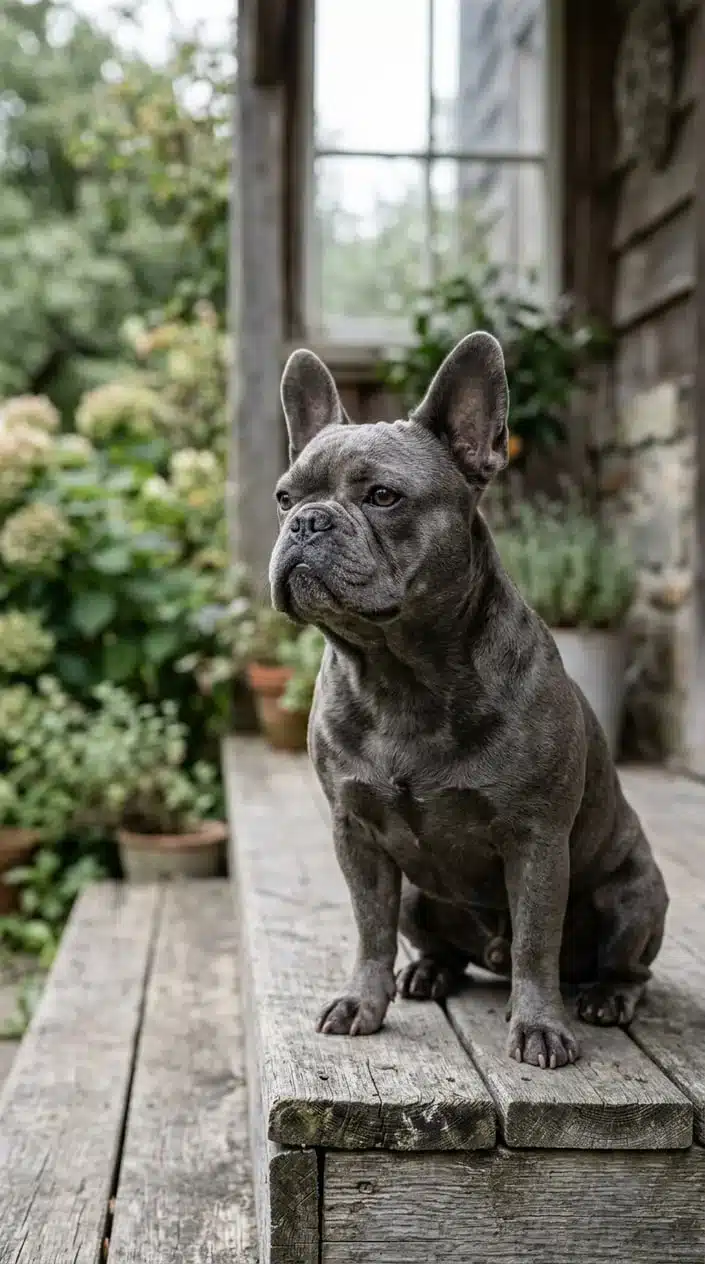
A Blue French Bulldog has black eumelanin diluted to a slate, charcoal, steel-gray, or blue-gray shade. The dilution usually also turns the nose, lips, eye rims, and paw pads gray or slate. Blue and blue fawn are disqualifying colors under the current AKC French Bulldog conformation standard.
Key identification points:
- Blue is diluted black pigment, not a separate naturally blue pigment.
- Visible dilution generally requires two applicable recessive variants at the D locus.
- Blue Fawn retains a fawn body, while Lilac or Isabella combines brown-based pigment with dilution.
- Use unfiltered daylight and the complete DNA report when exact color classification matters.
What Does a Blue French Bulldog Look Like?
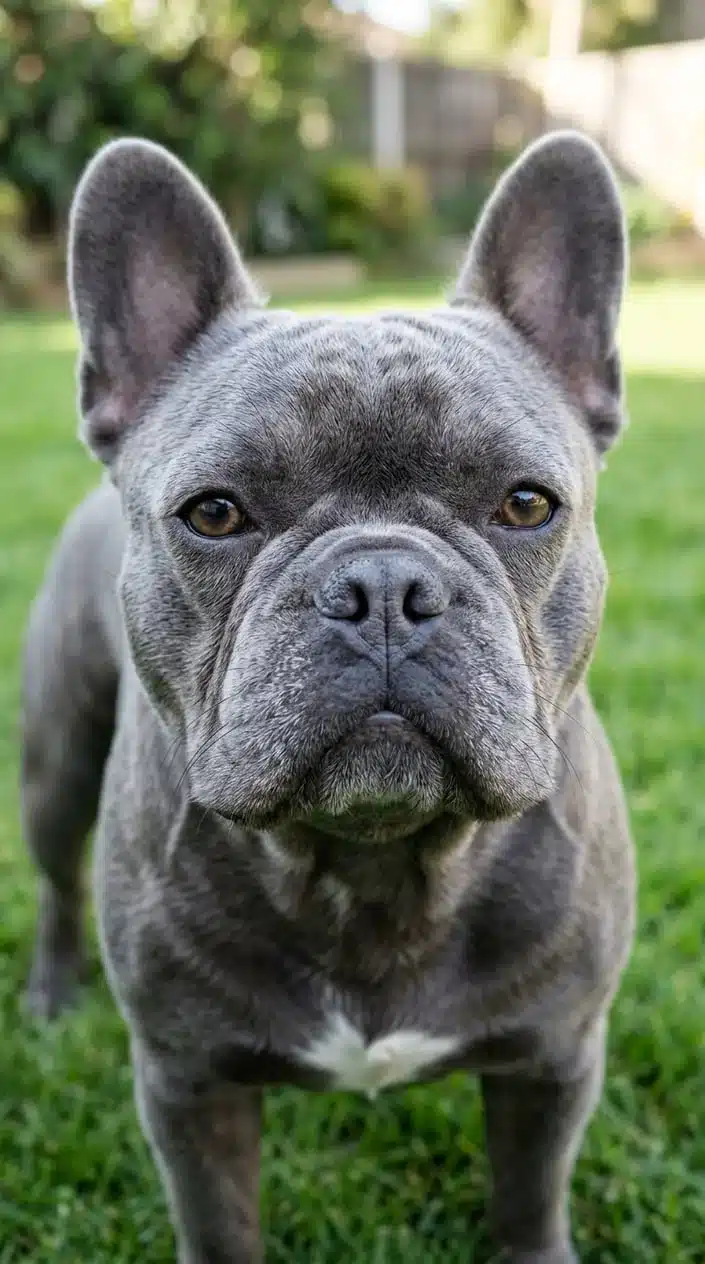
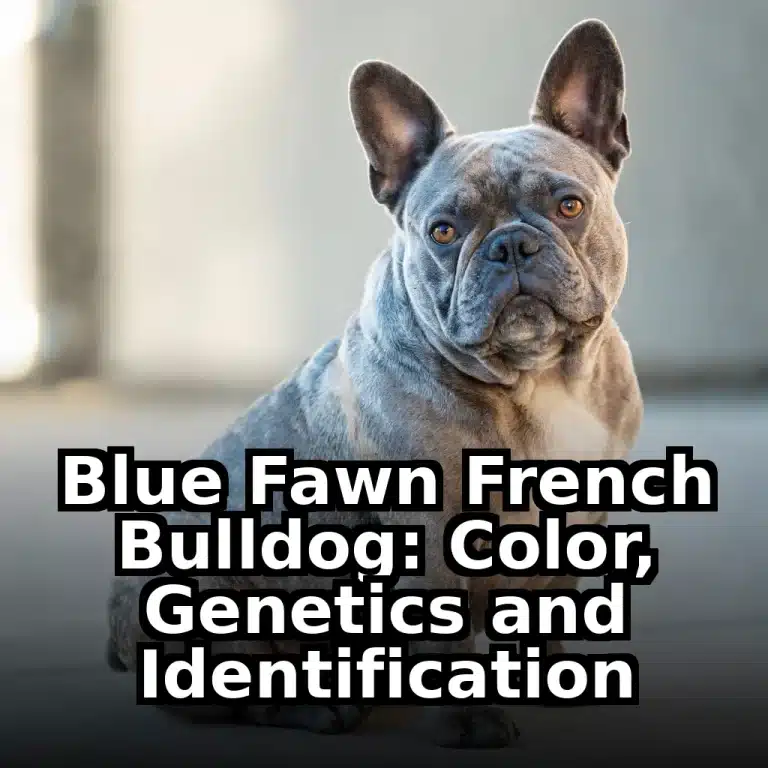
A solid blue French Bulldog usually has an even dark-gray coat with a cool slate cast. The shade may range from very dark charcoal to a noticeably lighter steel gray.
Color should never be judged from the body coat alone. Full-strength black pigment and brown-based diluted coats can both look gray in certain photographs.
Get Weekly Dog Care Tips Free
Join 10,000+ dog owners. Vet-approved advice every week
🔒 No spam. Unsubscribe anytime.
| Feature | Typical Blue Expression |
|---|---|
| Body coat | Slate, charcoal, steel gray, or blue-gray |
| Nose | Gray or slate rather than deep neutral black |
| Lips | Diluted gray pigmentation |
| Eye rims | Gray or slate pigment |
| Paw pads | Gray-toned pigment |
| Hair shafts | Diluted dark pigment rather than full black |
| Appearance indoors | May look nearly black |
| Appearance outdoors | Slate or gray cast is often easier to see |
Slate, Charcoal, and Steel-Gray Shades
There is no single required shade called blue. Hair density, underlying pattern, age, sun exposure, camera settings, and surrounding colors can change how the coat appears.
A dark blue Frenchie may look black indoors. A lighter one may be marketed as silver, mouse gray, or steel, even when the underlying pigment mechanism is the same.
Solid Blue With White Markings
A blue French Bulldog may have a small white chest patch, white toes, or more extensive white spotting. The white areas do not create the blue color; they are a separate pattern layered over it.
Inspect the nose, lips, eye rims, and paw pads in natural light. A gray-looking photograph by itself is not enough to confirm a blue coat.
Is Blue Really Gray?
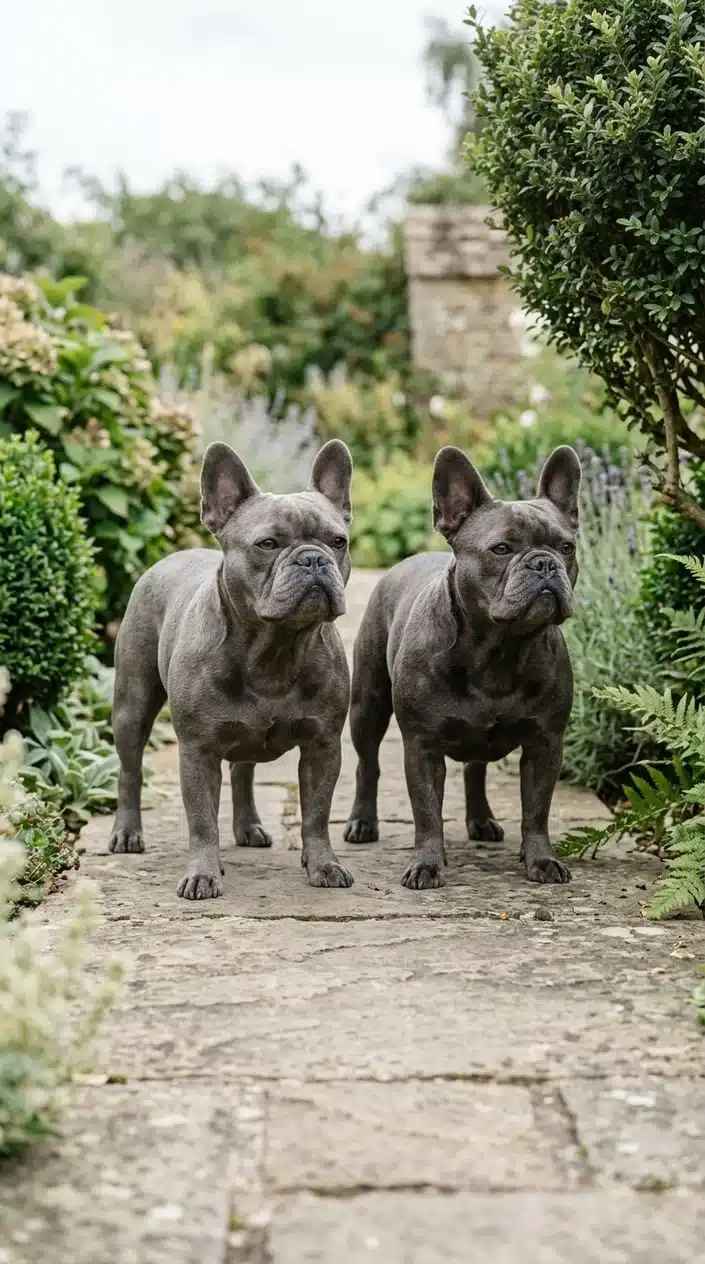
Visually, yes: most blue Frenchies look gray. “Blue” is the established dog-color term for black eumelanin that has been diluted to a slate or gray appearance.
The dilution changes how pigment is distributed within the hair shaft. It does not create a separate blue pigment, and it is not albinism.
Why Color Labels Vary
Breeders and owners may use blue, gray, grey, silver, charcoal, or mouse for overlapping appearances. These marketing labels are not reliable genetic classifications.
Two dogs with similar D-locus results can display different visible shades. Conversely, two gray-looking puppies may have different underlying pigment and pattern combinations.
Think of blue as a modification of black eumelanin. The dog’s other genes still determine whether that diluted pigment appears across the body, in brindle stripes, in a mask, or in another pattern.
Are Blue French Bulldogs AKC Recognized?
See our AKC French Bulldog Colors guide for the full distinction between registration choices and breed-standard acceptance.
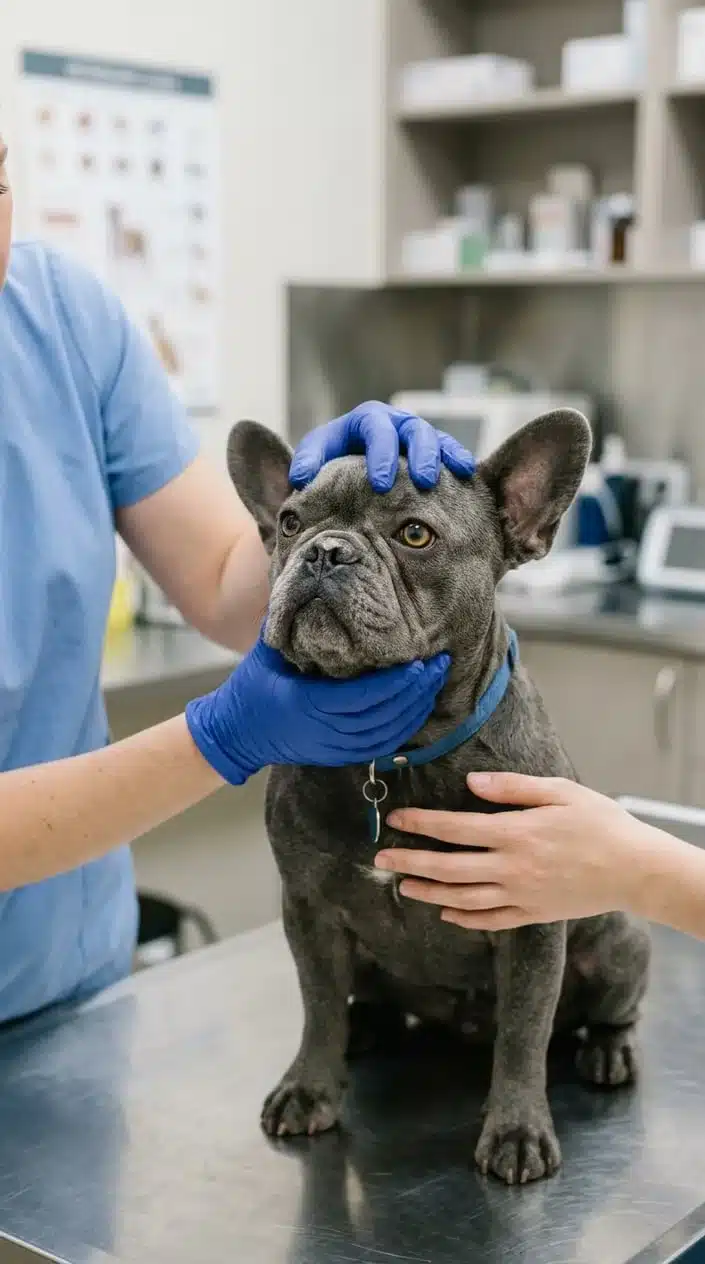
The current American French Bulldog breed standard explicitly lists blue and blue fawn among the disqualifying colors. Therefore, a visibly blue Frenchie does not meet the color requirements for AKC conformation competition.
This does not mean that the color alone proves a dog is mixed-breed. Purebred status, registration eligibility, registration terminology, and breed-standard acceptance are different questions.
Registration vs. Breed-Standard Acceptance
A dog may have AKC registration papers while displaying a color that is disqualifying in the show ring. Registration records ancestry; they do not certify that every visible trait meets the conformation standard.
Likewise, the color written on paperwork may not match a breeder’s sales label. “AKC registered” should never be interpreted as “AKC-approved blue.”
Blue and Green Eyes
The current standard also treats blue or green eyes, or traces of those colors, as disqualifying. A puppy’s pale eye color may darken with age, but no seller can guarantee that simply from a newborn photograph.
AKC papers do not make blue an accepted show color. Ask whether a claim concerns ancestry registration, the recorded color, or conformation eligibility.
Blue vs. Black French Bulldog
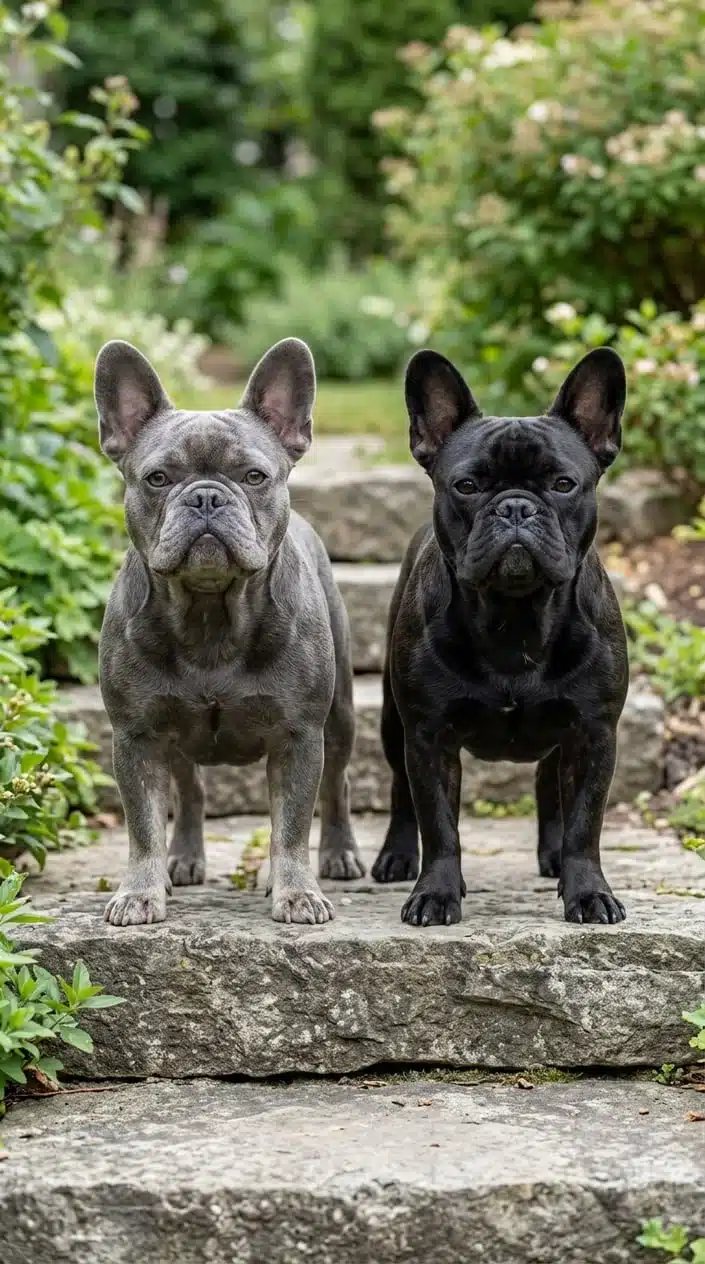
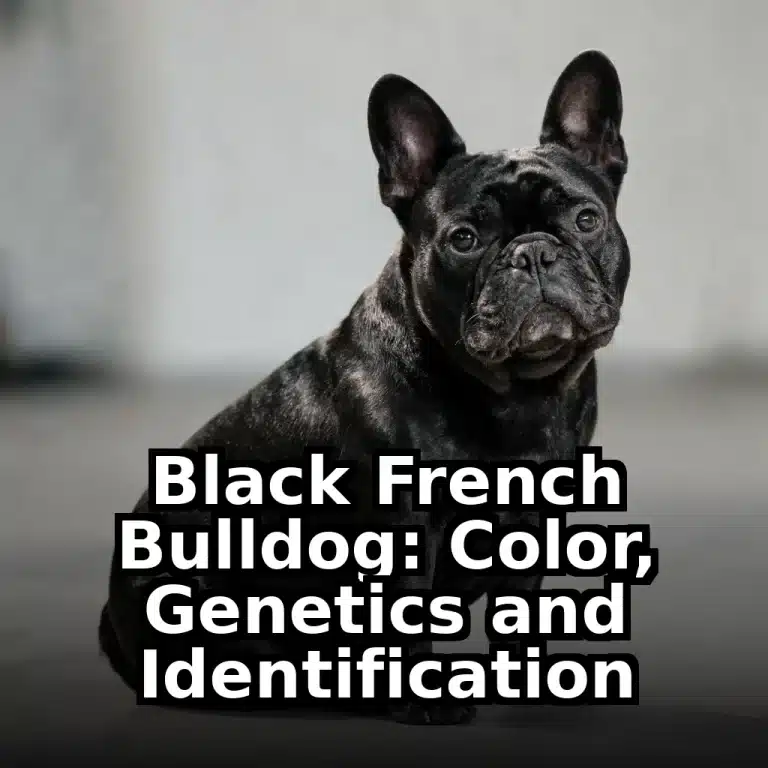
The simplest distinction is pigment strength. A black Frenchie has full-strength black eumelanin, while a blue Frenchie has diluted eumelanin.
| Feature | Blue French Bulldog | Black French Bulldog |
|---|---|---|
| Coat | Slate, charcoal, or blue-gray | Deep neutral black |
| Nose | Usually slate or gray | Black |
| Lips and eye rims | Diluted gray pigment | Black pigment |
| Paw pads | Gray-toned | Black |
| Genetic clue | Two applicable dilution variants are generally expected | Not visibly dilute |
| Lighting effect | May shift dramatically from dark to slate | Usually remains recognizably black |
| Breed-standard status | Blue is disqualifying | Solid black without a trace of brindle is disqualifying |
A dark blue dog can look black in indoor photographs. Compare unfiltered daylight images and examine hairless pigment rather than relying on one body shot.
Our Black French Bulldog guide explains how to separate genuine solid black from very dark brindle.
Blue vs. Similar French Bulldog Colors
| Color or Pattern | Main Identification Clue |
|---|---|
| Black | Full-strength black coat and pigment |
| Solid blue | Slate coat with diluted gray skin pigment |
| Blue fawn | Fawn body with diluted mask, shading, nose, or eye-rim pigment |
| Blue brindle | Gray diluted brindle striping over a fawn background |
| Lilac or Isabella | Brown-based eumelanin plus dilution, often giving a warmer taupe cast |
| Chocolate | Brown eumelanin without the same blue dilution appearance |
| Silver-gray | A descriptive label, not a dependable genetic category |
| Blue and tan | Blue base with organized tan points on the face, chest, and legs |
Blue vs. Lilac or Isabella
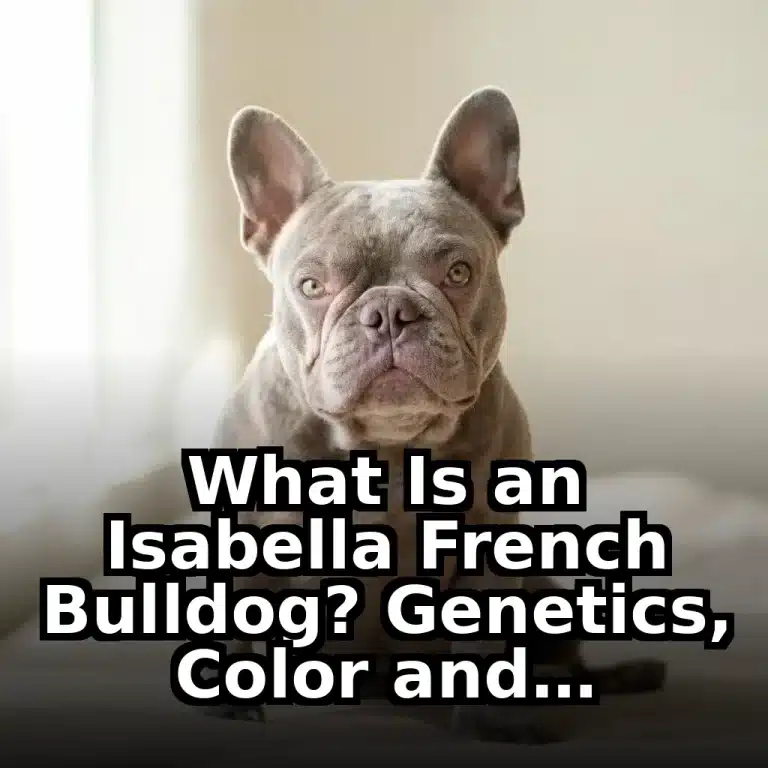
Blue is diluted black eumelanin. Lilac or Isabella generally describes brown eumelanin that is also diluted, so the coat and nose may have a warmer taupe, pinkish-gray, or brown-gray cast.
Shade alone is unreliable. Brown-locus and dilution testing may help when inheritance matters, but results must be interpreted alongside the visible coat.
Blue vs. Blue and Tan
A solid blue Frenchie lacks organized tan points. Blue and tan dogs have predictable lighter markings over the eyebrows, on the cheeks, chest, lower legs, and beneath the tail.
A deep black nose argues against visible blue dilution, while a brownish or pinkish-gray nose may point toward a brown-based dilute coat. Always compare the nose with the coat and pattern.
What Is a Blue Fawn French Bulldog?
A blue fawn French Bulldog has a fawn, tan, beige, or reddish body while its normally black eumelanin is diluted. The dilution may be most obvious in the nose, eye rims, lips, mask, hair tips, or shaded areas.
This means blue fawn does not require a solid gray body. The base is still fawn, which our Fawn French Bulldog guide explains in more detail.
Blue Fawn vs. Solid Blue
A solid blue dog displays diluted dark pigment across most of the coat. A blue fawn dog shows a fawn body with diluted dark features.
Blue Fawn vs. Sable
Sable describes dark-tipped or shaded hairs over a fawn-to-red base. A blue fawn may also display shading, but the dark pigment is diluted rather than black.
Use our Sable French Bulldog identification guide to separate true dark-tipped shading from lighting or a mask.
What Is a Blue Brindle French Bulldog?
Brindle is a pattern in which dark stripes appear over a fawn background. In a blue brindle Frenchie, dilution changes the normally black stripes to slate or gray.
Light brindling may show obvious gray stripes. Heavy blue brindling can make the dog look nearly solid slate until the coat is inspected in daylight.
Dilution does not erase the underlying pattern. The Brindle French Bulldog guide covers stripe distribution, reverse brindle, and traces of brindling.
Can a Blue French Bulldog Have White Markings?
Yes. A blue Frenchie may have a small white chest patch, white toes, or extensive white spotting. The blue pigment and white spotting are controlled by different parts of the coat-color system.
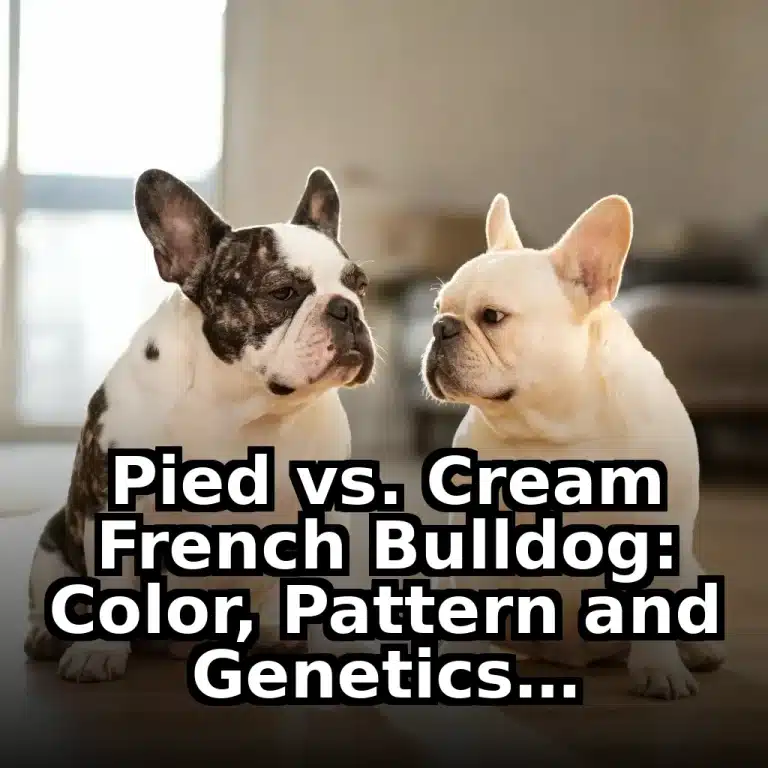
Blue Pied French Bulldogs
“Blue pied” commonly means a mostly white dog with blue-colored patches, but sellers use the term inconsistently. The patches could be solid blue, blue brindle, or even another pale color mislabeled as blue.
Inspect the colored patches closely. Our Pied French Bulldog guide explains why pied describes a white-spotting pattern rather than the pigment inside each patch.
When white covers almost the entire coat, the dog may be described as white or extreme pied. See the White French Bulldog guide for the important identification and health distinctions.
Blue French Bulldog Genetics Explained
Dog coats contain two main pigment types. Eumelanin produces black or brown-based pigment, while pheomelanin produces red-to-cream pigment.
The D locus involves the MLPH gene and modifies eumelanin. When a dog inherits two applicable recessive dilution variants, normally black pigment can appear blue or slate, while brown pigment can appear lilac or Isabella.
D/D, D/d, and Dilute Results
- D/D: No tested dilution variant in the pair, so the dog is not expected to express tested dilution.
- D/d: One tested dilution variant; the dog is generally a carrier without a visibly dilute coat.
- d/d or a qualifying compound result: Two applicable dilution variants; dilute pigmentation is expected if eumelanin is visible.
This shorthand is useful, but modern panels may test several known variants, including d1, d2, and d3. Laboratories may not all test the same set.
Dilution Does Not Create the Whole Pattern
The D locus modifies pigment that other genes permit to appear. MC1R, ASIP, the K locus, brown-related loci, and white-spotting genes help determine whether the result looks solid blue, blue fawn, blue brindle, blue and tan, blue pied, or another combination.
The dilution gene changes eumelanin; it does not independently create brindle, fawn, tan points, or white patches. Genotype must be interpreted as a system.
Can DNA Testing Confirm a Blue French Bulldog?
Our French Bulldog DNA color-test guide explains how to read the D locus alongside the other color loci.
A suitable DNA panel can support color classification and help predict inheritance. It cannot provide a complete verdict about shade, health, quality, or future coat condition.
| A Color Panel May Help Identify | It Cannot Reliably Determine |
|---|---|
| Tested D-locus variants | The exact shade of gray |
| Carrier or dilute results | How the coat will photograph |
| Tested brown or cocoa variants | Whether a seller’s label is honest |
| K-locus and ASIP results | Exact visible distribution of every marking |
| MC1R variants | Adult appearance from newborn photos |
| Tested white-spotting variants | Whether the dog will develop CDA |
| Potential coat-color inheritance | Overall health, temperament, or breeding quality |
| Known tested variants | Variants the laboratory did not include |
Ask which variants the laboratory tested and request the original report. A screenshot showing only a color prediction may omit important detail.
A D-locus result does not clear a dog for breathing, spine, joint, eye, heart, or skin disease. It also cannot guarantee that a dilute puppy will never develop CDA.
Do Blue French Bulldog Puppies Change Color?
The puppy’s genotype does not change, but the visible shade can. Adult hair texture, coat density, sun exposure, and body growth affect how light reflects from the coat.
A very dark puppy may become more obviously slate. Brindle stripes may become easier to see, and fawn areas can deepen or soften as the adult coat develops.
Do Their Eyes Stay Blue?
Many young puppies begin with pale blue-gray eyes that darken as pigment develops. A blue coat does not guarantee permanent blue eyes, and blue eyes do not prove the coat is blue.
Merle, white spotting, normal puppy development, and dilution should not be treated as the same mechanism. A cloudy or suddenly bluish adult eye needs prompt veterinary evaluation.
A growing puppy may be reclassified more accurately as blue fawn, blue brindle, lilac, or Isabella. Be cautious with guaranteed adult-color or permanent-eye-color claims.
How to Identify a Blue French Bulldog
- View the dog in indirect natural daylight.
- Use unfiltered photographs from more than one angle.
- Examine the full body coat rather than one dark area.
- Check whether the coat looks neutral black, slate gray, or brown-gray.
- Inspect the nose for black, slate, or brown-based pigment.
- Examine the lips and eye rims.
- Check the paw pads in good light.
- Look for a fawn or red underlying body color.
- Inspect the shoulders, sides, legs, and underside for brindle striping.
- Map all white markings and inspect pigment inside colored patches.
- Check for organized tan points over the eyes, cheeks, chest, and legs.
- Compare the dog with blue, lilac, Isabella, and black examples.
- Review photographs from different puppy ages.
- Use a suitable DNA color panel when inheritance matters.
- Do not infer health, temperament, or purebred status from color alone.
- Seek experienced evaluation when conformation classification matters.
These areas help confirm whether dark pigment is full-strength black, diluted slate, or brown-based. Check them together with the coat and underlying pattern.
Blue French Bulldogs and Color Dilution Alopecia
Color Dilution Alopecia, often shortened to CDA, is an inherited follicular disorder associated with dilute-colored hair. It can cause hair thinning, hair loss, scaling, plugged follicles, recurrent folliculitis, or secondary skin infections.
Affected puppies are often born with a normal-looking coat. Signs may emerge during puppyhood or later, and they usually concentrate in dilute-pigmented areas while white regions may be spared.
Do All Blue French Bulldogs Develop CDA?
No. Not every dilute dog develops clinical CDA, and a color DNA result cannot predict the condition with certainty.
However, that does not justify dismissing the risk. Ask about skin and coat history in parents and older relatives, and avoid sellers who claim a D-locus report guarantees lifelong protection from alopecia.
Hair Loss Is Not Automatically CDA
French Bulldogs can lose hair because of allergies, parasites, bacterial or yeast infection, hormonal disease, friction, immune-mediated disease, or other causes. A veterinarian must evaluate the pattern and rule out alternatives.
Diagnosis may involve history, skin examination, cytology, scrapings, fungal testing, bloodwork, or biopsy. Management depends on the diagnosis and may include treating secondary infection and supporting skin health under veterinary guidance.
Do not assume every thin patch on a blue Frenchie is CDA. Seek veterinary care for progressive hair loss, scaling, odor, redness, itching, sores, or recurrent infection.
Do Blue French Bulldogs Have Other Health Problems?
A blue coat does not cause every health concern seen in the breed. French Bulldogs of all colors may face brachycephalic airway disease, spinal problems, patellar issues, eye disorders, allergies, skin-fold disease, and cardiac concerns.
Responsible selection should include breed-relevant screening, a veterinary history, and careful evaluation of breathing and structure. Standard-colored parents can still produce health problems, while a nonstandard color does not provide a complete health diagnosis.
Merle-associated risks and concerns linked with extensive white spotting should be evaluated separately. Combining unrelated color mechanisms into one “rare-color health” claim leads to misinformation.
Does Blue Coloring Affect Personality?
No reliable evidence shows that dilution makes a Frenchie more affectionate, intelligent, calm, stubborn, protective, or playful. Those claims usually describe the breed generally or market an individual puppy.
Temperament is shaped more by ancestry, early development, health, socialization, training, and environment than by blue coat color.
Are Blue French Bulldogs Rare?
Blue requires recessive dilution inheritance, but recessive does not automatically mean extremely rare. Blue Frenchies are now widely marketed, and there is no dependable population database establishing a precise frequency.
Mislabeling also distorts rarity claims. Some advertised blue dogs are blue brindle, blue fawn, lilac, Isabella, or simply photographed under cool lighting.
Treat “rare blue” as a sales phrase unless the seller can explain the genetics and visible classification clearly. Rarity should never outweigh health, structure, and breeder transparency.
How Much Does a Blue French Bulldog Cost?
There is no stable national price that remains accurate. Cost varies with location, age, pedigree, health screening, veterinary care, training, breeder reputation, demand, and breeding rights.
A large color premium does not prove a puppy has verified genetics, responsible ancestry, or better health. Compare documentation and lifetime welfare—not just color labels and asking price.
Choosing a Blue French Bulldog Puppy Responsibly
- Request unedited photographs in natural daylight.
- Ask for close-ups of the coat, nose, lips, eye rims, and paw pads.
- Compare photographs taken at several ages.
- Ask the seller to identify the underlying pattern, not just say “blue.”
- Expect honest wording about AKC registration and show disqualification.
- Request the original D-locus laboratory report when genetics are claimed.
- Ask which brown, cocoa, merle, and other relevant variants were tested.
- Review breed-relevant health-test documentation for both parents.
- Ask about skin and coat history in parents and older relatives.
- Reject guarantees against CDA based only on color DNA.
- Do not accept promises that puppy eyes will remain blue.
- Ignore personality guarantees based on coat color.
- Do not let “rare” language create urgency.
- Request parent, pedigree, and veterinary records.
- Choose breathing, structure, health, and temperament over shade.
Be cautious if a seller calls blue “AKC approved,” guarantees no CDA from a color panel, refuses original health records, or pressures you to pay quickly because the puppy is rare.
Frequently Asked Questions
What Is a Blue French Bulldog?
It is a French Bulldog whose normally black eumelanin is diluted, producing a slate, charcoal, or gray appearance. Dilution commonly affects the coat, nose, lips, eye rims, and paw pads.
Is Blue Actually Gray?
Yes, blue usually looks gray or slate. “Blue” is the traditional canine color term for diluted black pigment, not a separate genuinely blue pigment.
Are Blue French Bulldogs AKC Recognized?
Blue and blue fawn are disqualifying colors under the current American breed standard. Registration eligibility and breed-standard acceptance are different, so AKC papers do not make blue an accepted show color.
Can a Blue Frenchie Be Purebred?
Yes, a nonstandard color does not by itself prove mixed ancestry. Purebred status and conformation color acceptance are separate questions.
What Does d/d Mean?
It commonly means the dog inherited two recessive dilution variants and is expected to express dilute eumelanin. Modern laboratories may test multiple variants, so the complete report matters.
Is Blue the Same as Lilac?
No. Blue is diluted black eumelanin, while lilac or Isabella generally involves brown-based eumelanin plus dilution. Coat shade, nose pigment, and DNA results help separate them.
What Is a Blue Fawn French Bulldog?
A blue fawn Frenchie has a fawn body with diluted eumelanin in areas such as the mask, nose, eye rims, shading, or hair tips. It is not the same as a solid blue body coat.
What Is a Blue Brindle French Bulldog?
For striping, dilution, and identification details, see the Blue Brindle French Bulldog guide.
It has a brindle pattern in which normally black stripes are diluted to slate or gray. Heavy blue brindling may look almost solid until inspected in daylight.
Can a Blue Frenchie Be Pied?
Yes. A pied Frenchie can have blue-colored patches on a broadly white coat. Inspect whether those patches are solid blue, blue brindle, or another color.
Do Blue Puppies Stay Blue?
Their genotype remains stable, but visible shade and pattern clarity can change with the adult coat. Some puppies are later identified more accurately as blue fawn, blue brindle, lilac, or Isabella.
Do Blue French Bulldog Eyes Stay Blue?
Not necessarily. Many puppies’ eyes darken as pigment develops, and blue coat color does not guarantee permanent blue eyes.
Do All Blue French Bulldogs Develop CDA?
No. Not every dilute dog develops Color Dilution Alopecia, but color DNA cannot guarantee that a puppy will remain unaffected.
Are Blue French Bulldogs Unhealthy?
Blue color alone does not diagnose overall health. Owners should consider potential CDA alongside the breed-wide breathing, spinal, joint, eye, cardiac, allergy, and skin concerns that require proper screening.
Are Blue French Bulldogs Rare?
Reliable population data are lacking, and blue is widely marketed. Genetic recessiveness does not automatically prove extreme rarity, especially when commercial color labels are inconsistent.
Final Takeaway
A Blue French Bulldog has diluted black eumelanin, so the coat and hairless pigment appear slate or gray rather than deep black. Correct identification requires more than a single photograph.
Blue, blue fawn, blue brindle, lilac, Isabella, and blue pied describe different combinations. DNA can support classification, but it cannot predict exact shade, permanent eye color, overall health, or future CDA.
Blue and blue fawn are disqualifying under the current American breed standard, even when a dog can be registered. When choosing a puppy, prioritize transparent records, breed-relevant health screening, sound structure, breathing, and temperament over rarity or color premiums.