How to Help a Malnourished Rescue Dog Gain Weight Safely

Bringing home a rescue dog with visible ribs and a sunken belly is heartbreaking. Your instinct is to feed them everything in sight — but that can cause serious harm.
Learning how to help a malnourished rescue dog gain weight safely is one of the most important things you can do in those first weeks. The right approach is slow, steady, and guided by a veterinarian.
This article walks you through the safest feeding strategy, red flags to watch for, and the mistakes that can set recovery back weeks.
How Do You Help a Malnourished Rescue Dog Gain Weight?
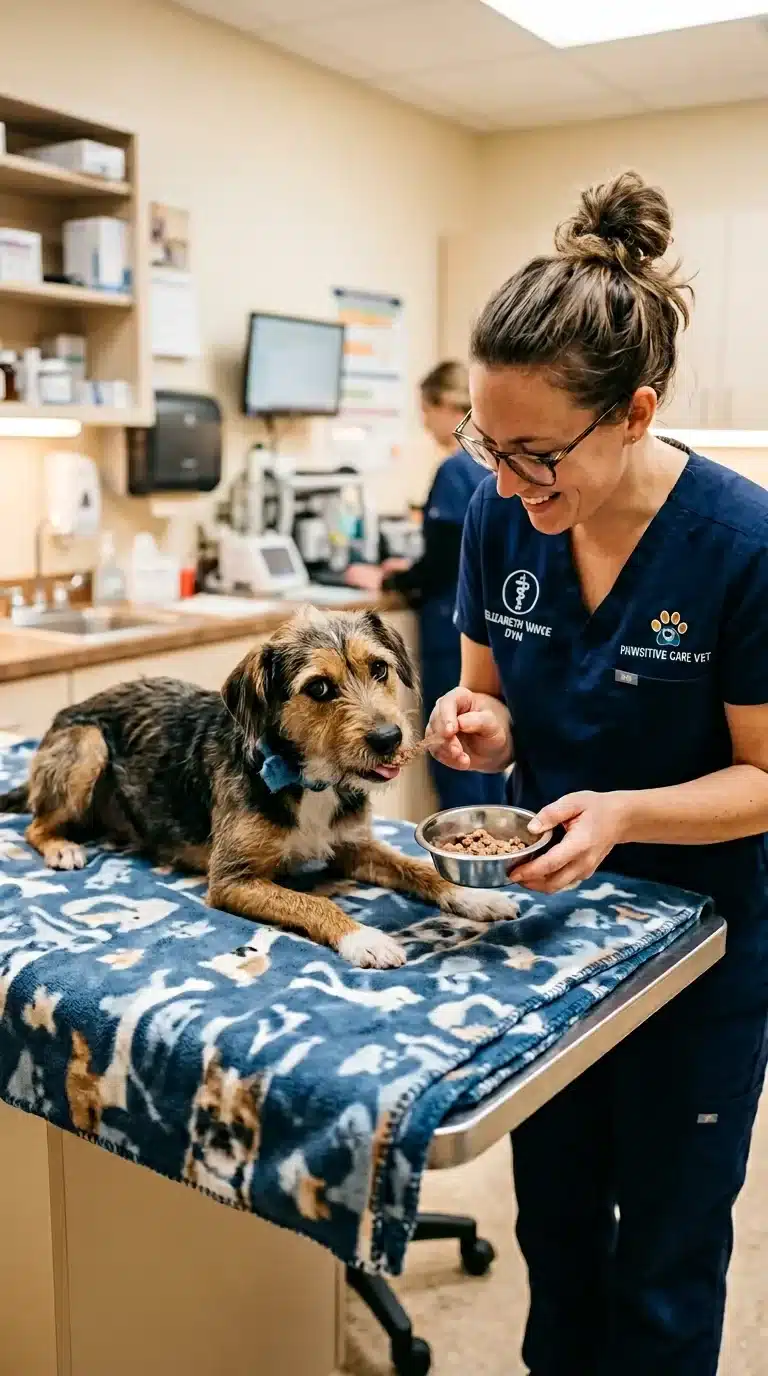
To help a malnourished rescue dog gain weight safely, start with small, frequent meals of a highly digestible, veterinarian-approved food. Gradually increase portions over several weeks rather than feeding large amounts immediately. Sudden overfeeding can cause a life-threatening condition called refeeding syndrome.
- Begin with 25–33% of normal daily calories on day one
- Increase food volume by no more than 10–25% every 3–4 days
- Feed 3–4 small meals daily instead of one large meal
- Choose a food with high digestibility — look for named protein as the first ingredient
- Weigh your dog weekly to track progress without guessing
- Get a full veterinary exam before starting any weight-gain plan
What Is Refeeding Syndrome and Why Does It Matter?
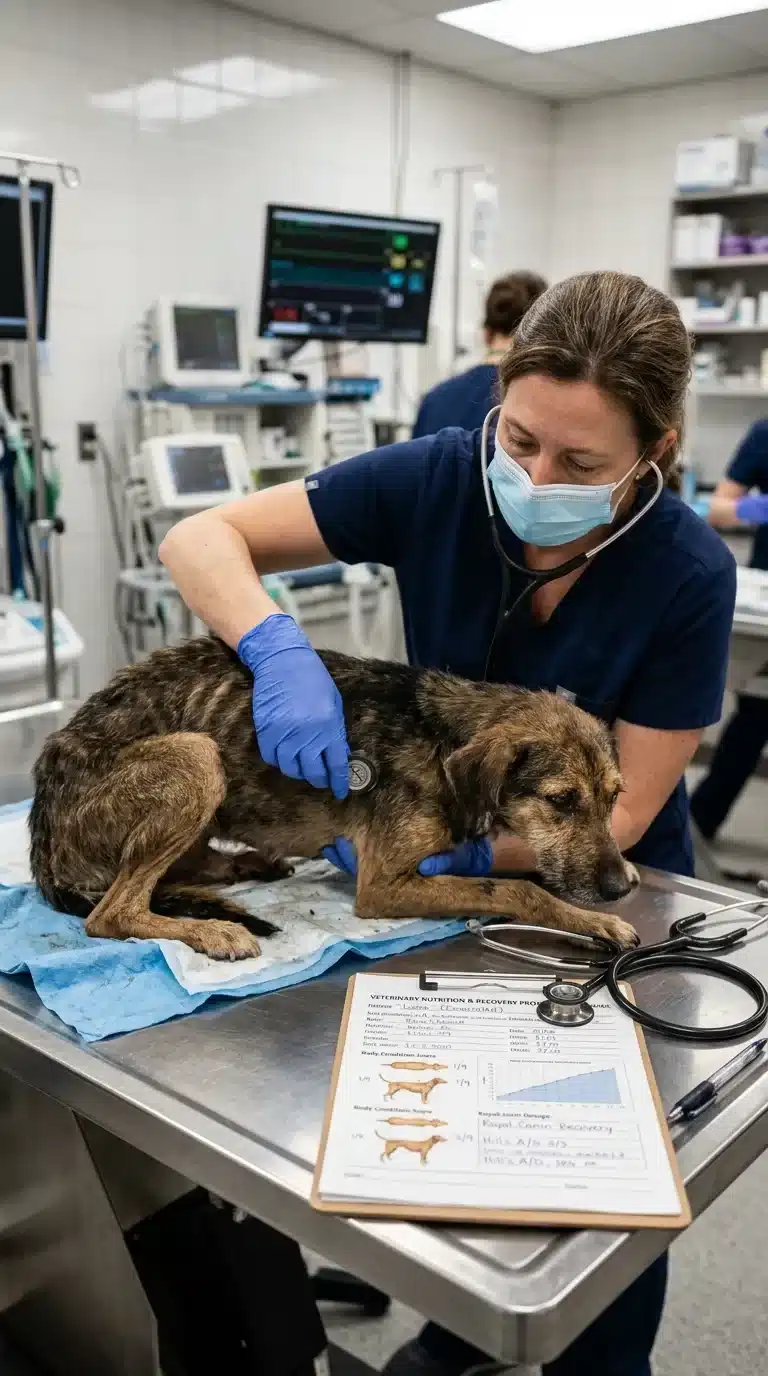
Refeeding syndrome is a dangerous metabolic shift that can occur when a starved body receives too many calories too quickly. It can cause heart failure, seizures, and death — even in dogs that appeared to be recovering well.
Get Weekly Dog Care Tips Free
Join 10,000+ dog owners. Vet-approved advice every week
🔒 No spam. Unsubscribe anytime.
When the body is starved, it depletes phosphate, potassium, and magnesium from cells. Rapid refeeding causes a sudden spike in insulin, which drives these electrolytes back into cells and drops blood levels to dangerous lows.
The Merck Veterinary Manual notes that refeeding syndrome is most likely to occur within the first 3–5 days of refeeding severely malnourished animals.
This is why a veterinary exam on day one is non-negotiable. Your vet can assess the severity of malnutrition and give you a calorie target that is safe for your specific dog.
BEFORE YOU SCROLL PAST
Readers Also Loved:
👉 How To Spot Early Signs Of Canine Dementia In Senior Dogs
Refeeding syndrome is preventable — slow and steady feeding is the single most effective protection against it.
Step-by-Step: The Safe Weight Gain Plan for Rescue Dogs

A structured refeeding plan takes four to six weeks for most moderately malnourished dogs. Severely malnourished dogs may need longer under direct veterinary supervision.
- Get a vet exam within 24–48 hours of adoption. Ask for bloodwork to check organ function and electrolyte levels. This baseline shapes every feeding decision that follows.
- Start with a highly digestible food. A sensitive-stomach dog food with named protein (chicken, turkey, or salmon) as the first ingredient puts less stress on a compromised gut.
- Feed 25–33% of the target daily calorie amount on days 1–3. Success here looks like: soft, formed stools and no vomiting.
- Increase by 10–25% every 3–4 days. If your dog develops diarrhea or vomiting, hold the current amount for an extra 3 days before increasing again.
- Switch to 3–4 small meals per day. Smaller meals reduce the metabolic shock of each feeding and are easier on a shrunken stomach.
- Weigh every 5–7 days. A healthy weight gain rate is roughly 1–2% of body weight per week. Faster than that signals overfeeding.
- Introduce a probiotic after week one. A veterinary-grade dog probiotic can help rebuild gut bacteria disrupted by starvation and support nutrient absorption.
If your dog shows signs of digestive trouble during recovery — such as persistent loose stools — the guide on what to do when your dog has diarrhea but is acting normal can help you decide when to call the vet.
What Food Is Best for a Malnourished Dog?
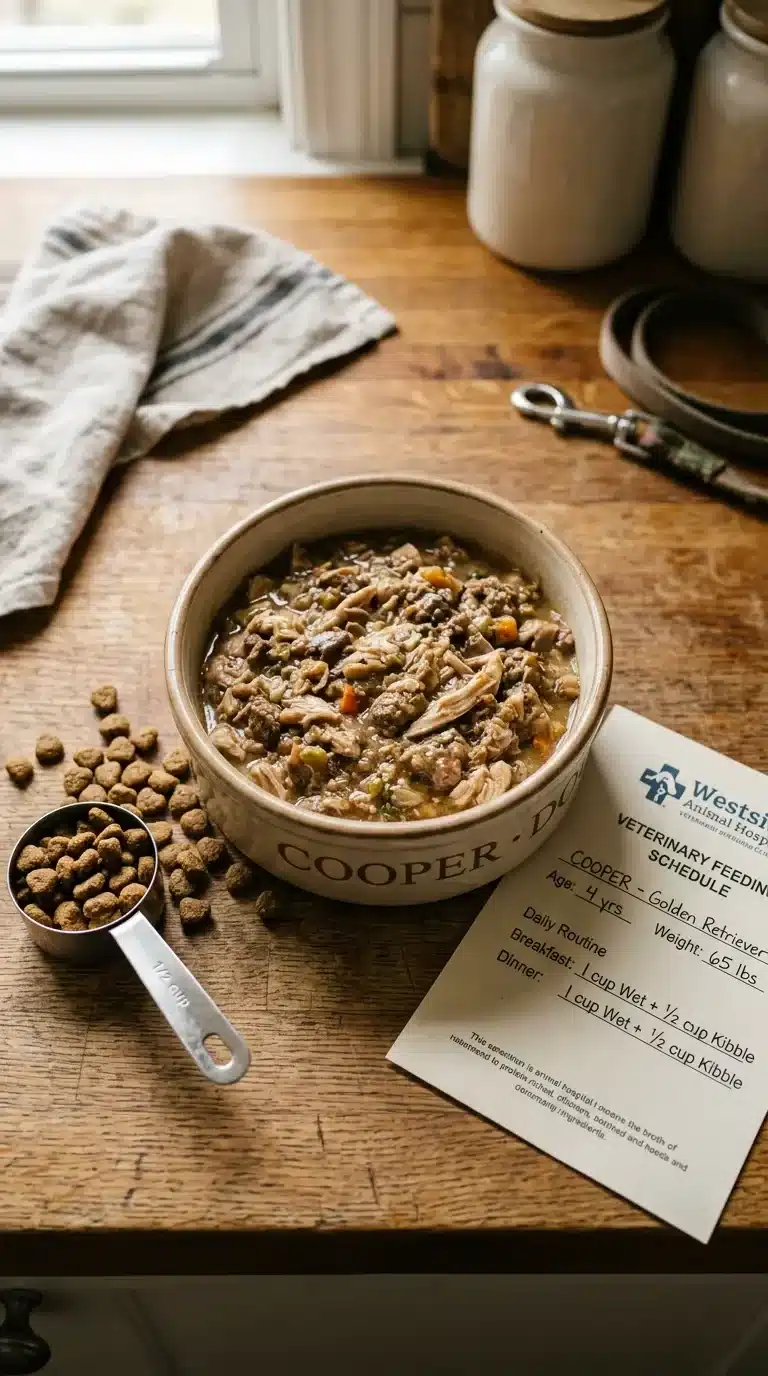
The best food for a malnourished dog is highly digestible, protein-rich, and moderate in fat. High fat content sounds appealing for weight gain, but it overwhelms a gut that has not processed food properly in weeks.
What to Look for on the Label
- Named animal protein (chicken, turkey, fish) listed first
- Crude protein of at least 25–30% on a dry matter basis
- Moderate fat — 12–18% dry matter is a good starting range
- No excessive fiber, which reduces calorie density
- AAFCO statement confirming it meets nutritional adequacy standards
Wet vs. Dry Food During Recovery
| Food Type | Pros for Recovery | Cons |
|---|---|---|
| Wet/canned food | Easier to eat, higher moisture, more palatable | More expensive, shorter shelf life once opened |
| Dry kibble | Calorie-dense, convenient, easy to portion | Harder to chew, lower moisture content |
| Wet + dry mix | Balances palatability and calorie density | Requires careful calorie tracking across both |
Many veterinarians recommend starting with wet food for the first one to two weeks, then gradually transitioning to a wet-dry mix as appetite stabilizes.
A high-protein wet dog food is often the easiest starting point because it encourages eating without putting heavy demands on a weakened digestive system.
Health Issues to Rule Out Before and During Recovery
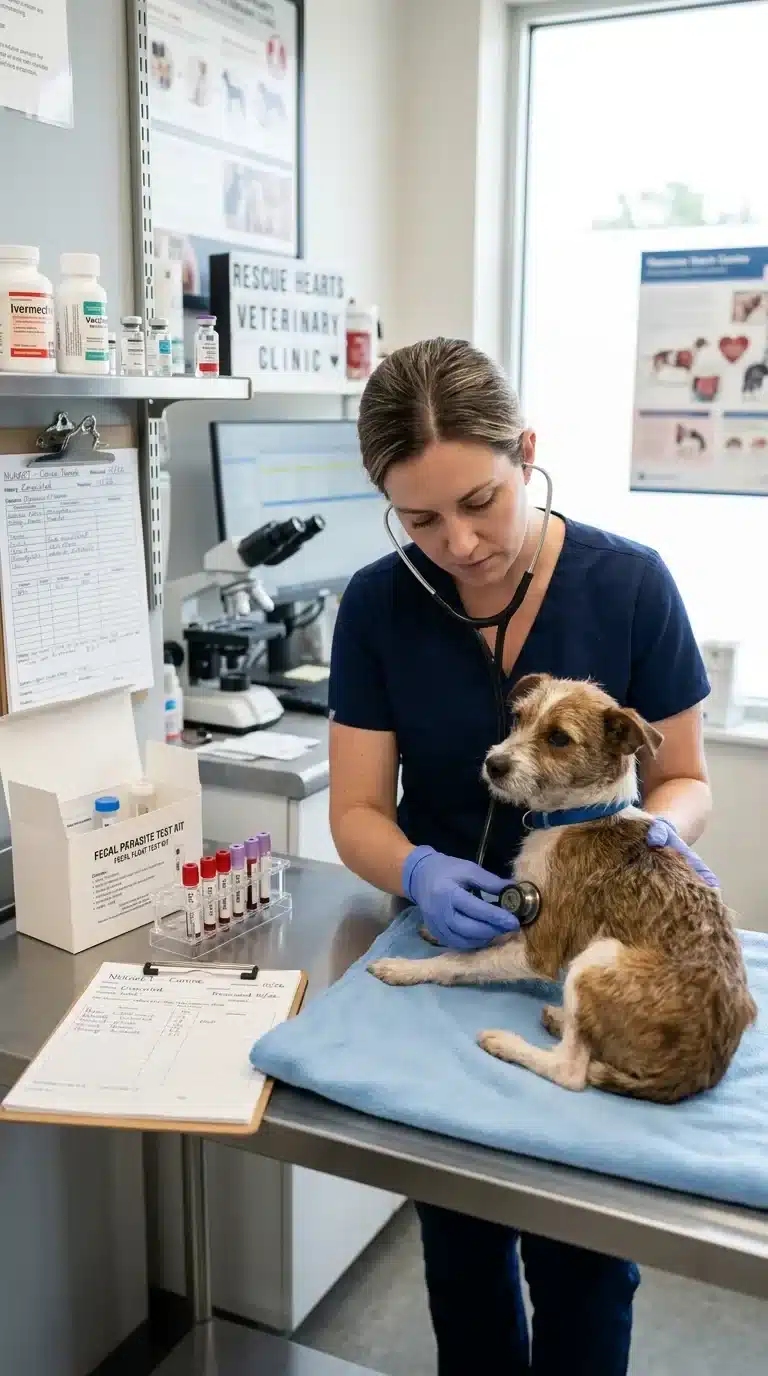
Malnutrition rarely exists alone. Many rescue dogs carry underlying conditions that slowed recovery or caused weight loss in the first place.
Common Conditions That Cause or Worsen Malnourishment
- Intestinal parasites — hookworms and roundworms steal nutrients directly from the gut; a fecal test catches these fast
- Dental disease — painful teeth make eating difficult; many rescue dogs cannot chew properly
- Hypothyroidism — slows metabolism and affects nutrient use; detectable with a simple blood panel
- Mange or skin infections — energy diverted to fighting skin disease slows weight gain; if you notice your dog losing hair in patches, get a skin scrape done alongside bloodwork
Vaccinations are also often overdue in rescue dogs. Talk to your vet about timing — starting a vaccine schedule too early can stress an already-taxed immune system. The comparison of DHPP vs. DHLPP vaccines and their timing is worth reviewing so you understand what your dog may need.
BEFORE YOU SCROLL PAST
Readers Also Loved:
👉 How To Care For Your Female Frenchie During Her First Heat
Watch for urinary changes too. A dog straining or crying when urinating could signal a kidney or urinary tract issue — something that can complicate refeeding if left untreated. The article on why dogs cry when peeing covers the most common causes.
Common Mistakes That Slow or Harm Recovery
Avoid these errors — each one can set your dog’s recovery back significantly.
- Feeding a full portion immediately. This is the leading cause of refeeding syndrome in rescue dogs. Start at one-third of the target amount and build up slowly.
- Choosing a high-fat food for fast weight gain. Fat-rich foods overwhelm a gut that has been in starvation mode. Digestibility matters more than calorie count in the first two weeks.
- Skipping the vet visit to save money. Bloodwork reveals organ damage and parasite loads that will derail any feeding plan if left untreated. The upfront cost prevents much larger vet bills later.
- Free-feeding (leaving food out all day). It makes portion tracking impossible and can lead to gorging, which stresses the gut. Scheduled meals give you control.
- Expecting fast results. Healthy weight restoration in a severely malnourished dog takes 8–12 weeks. Rushing it causes harm. Consistent, measured progress is the goal.
Monitoring Progress: What Does Safe Weight Gain Look Like?
Tracking your dog’s recovery gives you early warning if something is off. Body condition scoring (BCS) is the tool veterinarians use — it runs on a 1–9 scale, where 1 is emaciated and 5 is ideal.
Most rescue dogs arrive at a BCS of 1–2. The goal is to reach a BCS of 4–5 over 8–12 weeks, gaining no more than 1–2% of body weight per week.
The World Small Animal Veterinary Association (WSAVA) publishes a free body condition score chart at wsava.org — print it and use it at every weekly weigh-in.
Watch for these positive signs of recovery:
MOST POPULAR THIS WEEK
Readers Also Loved: 👇
👉 How To Stop Dogs From Scratching Ears Raw
- Consistent appetite without vomiting or diarrhea
- Gradual rib coverage — ribs become less visible but still slightly palpable
- Improved coat texture and shine
- Increased energy and interest in surroundings
- Normal, formed stools
If your dog develops a sudden limp or shows reluctance to move during recovery, that may signal a musculoskeletal issue worsened by prior neglect — the article on dogs limping on the front leg without crying covers what to look for.
For ongoing guidance on canine nutrition from a veterinary perspective, the WSAVA Global Nutrition Guidelines are a reliable reference used by veterinarians worldwide.
The American Society for the Prevention of Cruelty to Animals also provides general rescue dog care guidance at aspca.org.
Frequently Asked Questions About How to Help a Malnourished Rescue Dog Gain Weight Safely
How long does it take for a malnourished rescue dog to gain weight?
A malnourished rescue dog typically takes 8–12 weeks to reach a healthy weight when refed correctly. Severely starved dogs may take longer and require ongoing veterinary monitoring throughout the process.
Can I give my malnourished dog extra treats to help them gain weight faster?
Extra treats are not recommended during the refeeding phase because they make calorie tracking unreliable and can upset a sensitive digestive system. Wait until your dog reaches a stable BCS of 4 before introducing treats.
Should I feed a malnourished rescue dog puppy food for extra calories?
Puppy food is sometimes recommended by veterinarians for malnourished adult dogs because of its higher calorie and protein density. Only use this approach with veterinary guidance, as nutrient ratios differ significantly from adult formulas.
What if my rescue dog refuses to eat?
A rescue dog refusing food may be stressed, in pain, or dealing with an underlying illness. If refusal lasts more than 24–48 hours, contact your vet — dental pain and nausea from parasites are common culprits in newly adopted dogs.
Is it safe to add supplements to a malnourished dog’s food?
Adding supplements without veterinary guidance can create dangerous nutrient imbalances in an already-compromised system. Have bloodwork done first — supplementation should target confirmed deficiencies, not assumed ones.
When should I worry about my rescue dog’s slow weight gain?
If your dog gains less than 1% of body weight after two weeks of consistent feeding, schedule a vet visit to rule out parasites, malabsorption disorders, or other underlying conditions slowing recovery.
The Most Important Thing You Can Do Right Now
The single most effective step in helping a malnourished rescue dog gain weight safely is booking a veterinary appointment before changing anything about their diet.
Blood panels, a fecal test, and a body condition score give you a real starting point — not a guess. From there, a slow, structured refeeding plan does the rest.
If you adopted your dog recently and are still sorting out the transition, the guide on preparing a dog for rehoming has useful context on what the first weeks look like from a behavioral and physical standpoint.
Your dog survived something difficult. With patience and the right plan, a full recovery is absolutely within reach.