
French Bulldog Breathing Problems While Sleeping Guide

If you’ve ever watched your French Bulldog sleep and found yourself holding your breath along with them, you’re not alone. Many Frenchie owners lie awake at night listening to the snorts, wheezes, and gasps coming from their pup’s bed. It’s one of the most common concerns we hear from the French Bulldog community, and it can be genuinely scary the first time you witness it.
French Bulldogs are a brachycephalic breed, meaning they have a shortened skull and compressed airway. That adorable flat face comes with some real health trade-offs, especially when it comes to breathing during sleep. Understanding what’s normal and what’s a red flag can save your dog’s life — and save you a lot of sleepless nights worrying.
This guide covers everything you need to know about French Bulldog breathing problems, specifically what happens during sleep, how to spot warning signs, and what you can actually do to help. By the end, you’ll feel confident and prepared.
🛒 What Every Frenchie Owner Needs Right Now
Get Weekly Dog Care Tips Free
Join 10,000+ dog owners. Vet-approved advice every week
🔒 No spam. Unsubscribe anytime.
Why French Bulldogs Struggle to Breathe While Sleeping
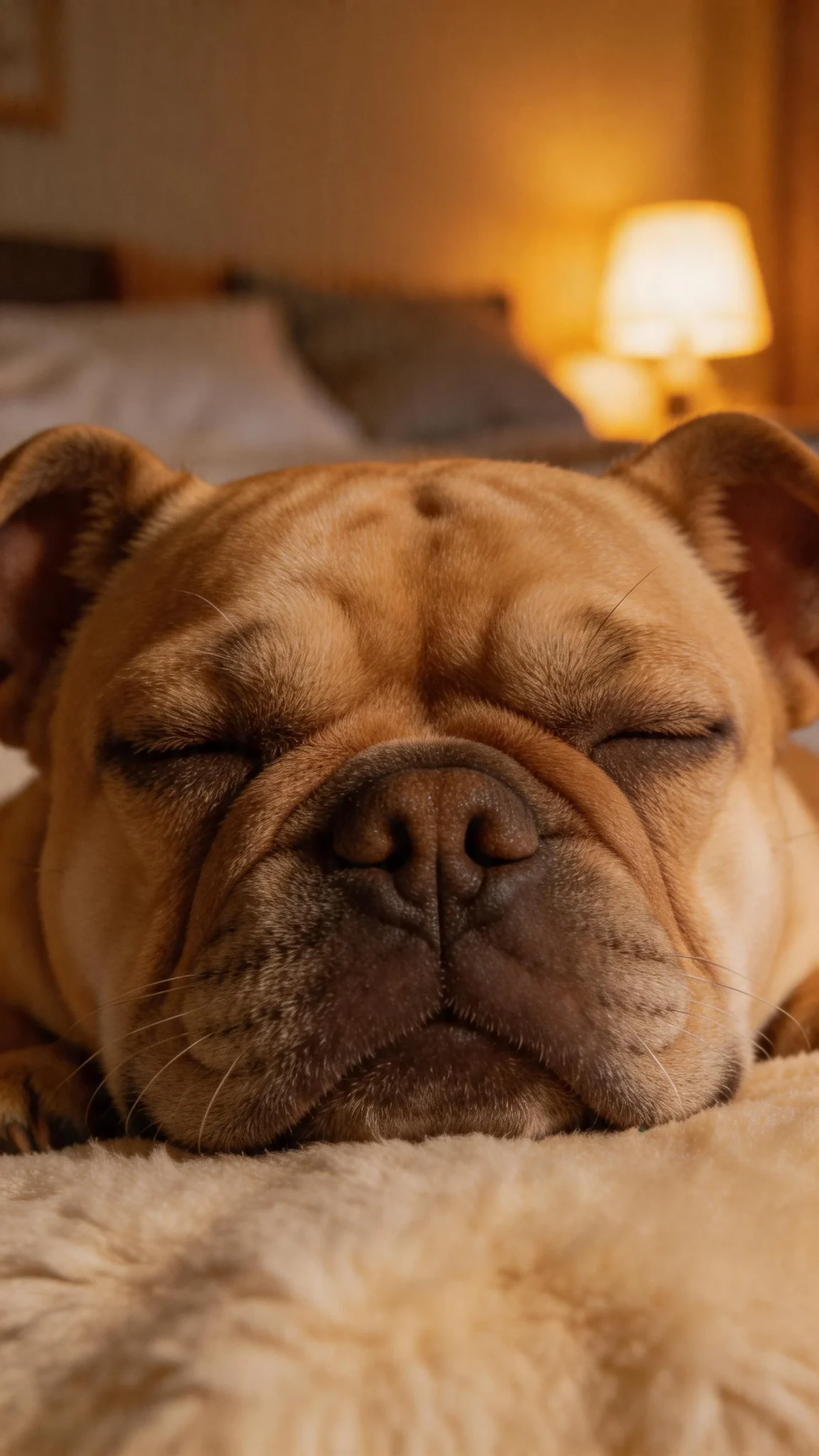
French Bulldogs commonly experience noisy, labored breathing during sleep due to their flat facial structure. This is a built-in characteristic of the breed, not something you caused. But knowing that doesn’t make it less stressful to witness.
Key facts every Frenchie owner should know:
- French Bulldogs have narrowed nostrils (stenotic nares), elongated soft palates, and narrowed tracheas — all of which restrict airflow
- Snoring and light snorting during sleep is considered normal for the breed
- Breathing that sounds like choking, gasping, or repeated reverse sneezing lasting more than 30 seconds needs attention
- Sleeping position directly affects how well your Frenchie breathes — on their back is the worst position for airflow
- Hot, humid weather significantly worsens nighttime breathing difficulties
- Obesity puts extra pressure on the airway and makes nighttime breathing harder
- Puppies and senior Frenchies tend to have more pronounced breathing issues during sleep
If your dog wakes up frequently, seems panicked after waking, or has blue-tinged gums, treat it as a veterinary emergency immediately.
Common Signs of Breathing Problems During Sleep

In our experience, most owners don’t realize there’s a difference between normal Frenchie snoring and actual breathing distress until something scary happens. Learning to tell the difference is one of the most useful things you can do as a Frenchie parent.
🛒 Vets Use For Their Own Frenchies
Normal Sleep Sounds for a French Bulldog
These sounds are typical and not a cause for panic:
- Soft to moderate snoring
- Occasional snorts when shifting position
- Light wheezing when deeply asleep
- Short reverse sneezes that resolve within 10–15 seconds
Warning Signs That Need Veterinary Attention
These signs go beyond typical Frenchie quirks and deserve a vet visit:
- Open-mouth breathing while sleeping — Frenchies should breathe through their nose at rest
- Extended gasping episodes lasting more than 30 seconds
- Repeated waking with distress, pawing at the face or neck
- Blue, gray, or pale gums — this is an emergency
- Labored chest movement where the ribs heave visibly with each breath
- Excessive drooling paired with respiratory sounds during sleep
A real-world example: One of our readers, a Frenchie owner from Texas, noticed her two-year-old male waking up three or four times a night in a panic. She had assumed it was just normal Frenchie behavior. When she finally recorded the episodes on her phone and showed her vet, it turned out he had a severely elongated soft palate that was partially blocking his airway when his muscles relaxed during deep sleep. After a corrective procedure, he slept through the night for the first time in his life.
What Causes Breathing Problems in French Bulldogs at Night
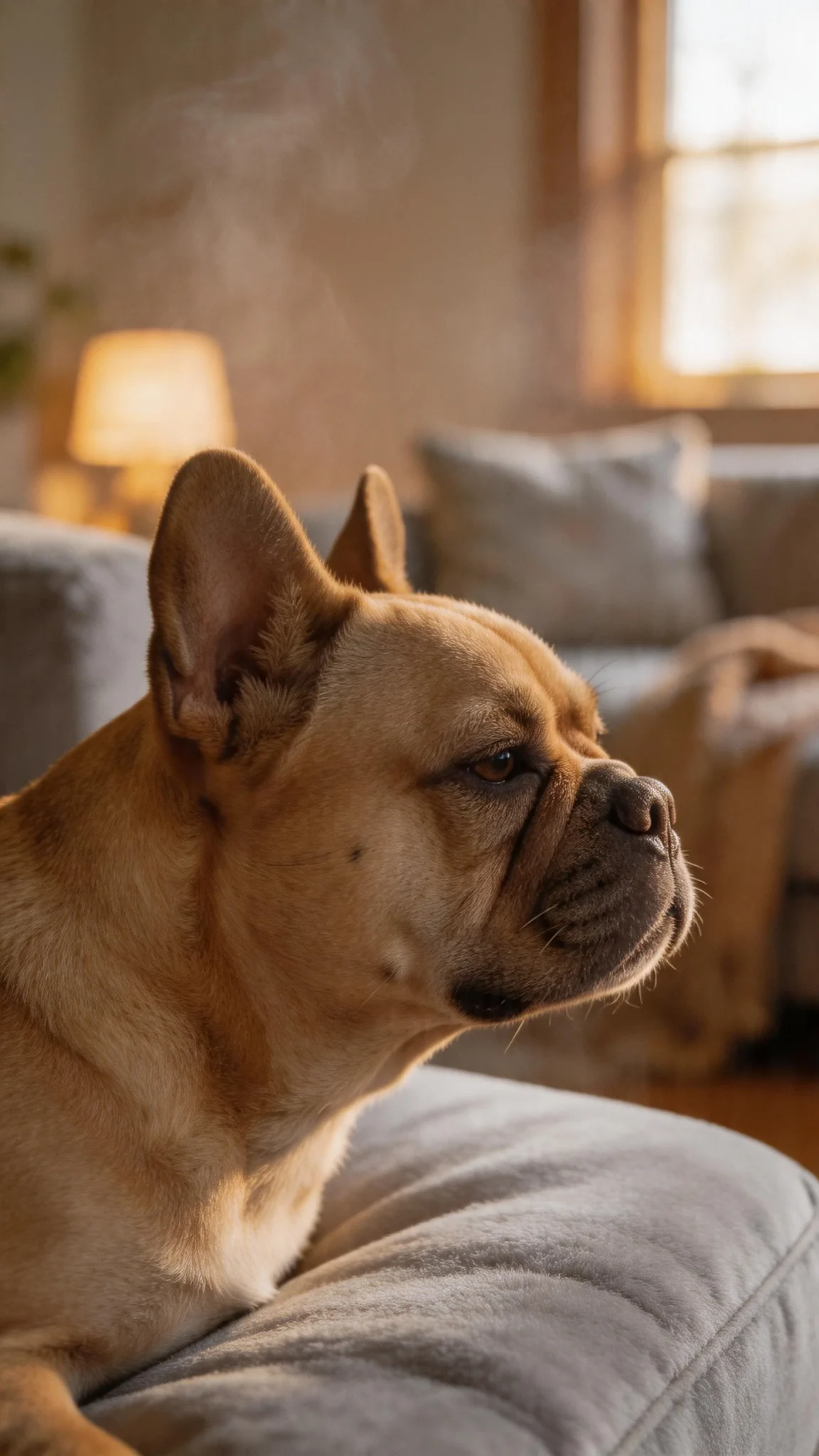
Nighttime breathing difficulties in Frenchies don’t come from one single cause. There are several overlapping factors, and understanding them helps you tackle the problem more effectively.
Brachycephalic Obstructive Airway Syndrome (BOAS)
BOAS is the umbrella term for the collection of airway abnormalities that flat-faced breeds experience. It includes stenotic nares (narrow nostrils), an elongated soft palate, a hypoplastic trachea, and everted laryngeal saccules. When your Frenchie relaxes into deep sleep, their throat muscles loosen and the already-narrow airway becomes even more restricted. This is why breathing problems are often worse at night than during the day.
Sleeping Position
When a Frenchie sleeps on their back, the soft palate can fall backward and partially block the airway. Many Frenchie owners find that encouraging their dog to sleep on their side or stomach reduces snoring and breathing episodes significantly. A supportive orthopedic dog bed with raised edges can help your Frenchie naturally curl into a side-sleeping position.
Weight and Body Condition
Even a small amount of excess weight puts added pressure on the airway in a brachycephalic dog. A Frenchie who is even 10% over their ideal body weight will breathe noticeably harder during sleep. What we have found works best is keeping your Frenchie lean through portion control and consistent low-impact exercise like short daily walks.
Allergies and Inflammation
Environmental allergens like dust mites, pollen, and mold can cause nasal inflammation that narrows the airway further. If you notice your Frenchie’s nighttime breathing gets worse during certain seasons, allergies could be playing a role. This often connects with other symptoms like paw licking and skin irritation, which are common signs of environmental allergies in the breed.
Room Temperature and Humidity
Frenchies are extremely sensitive to heat. A bedroom that’s too warm can make nighttime breathing significantly harder. Keeping your sleeping environment between 65°F and 72°F is ideal for a French Bulldog. Using a quiet air purifier for the bedroom can also reduce airborne allergens that irritate your dog’s already-sensitive airway.
How to Help Your French Bulldog Breathe Better While Sleeping
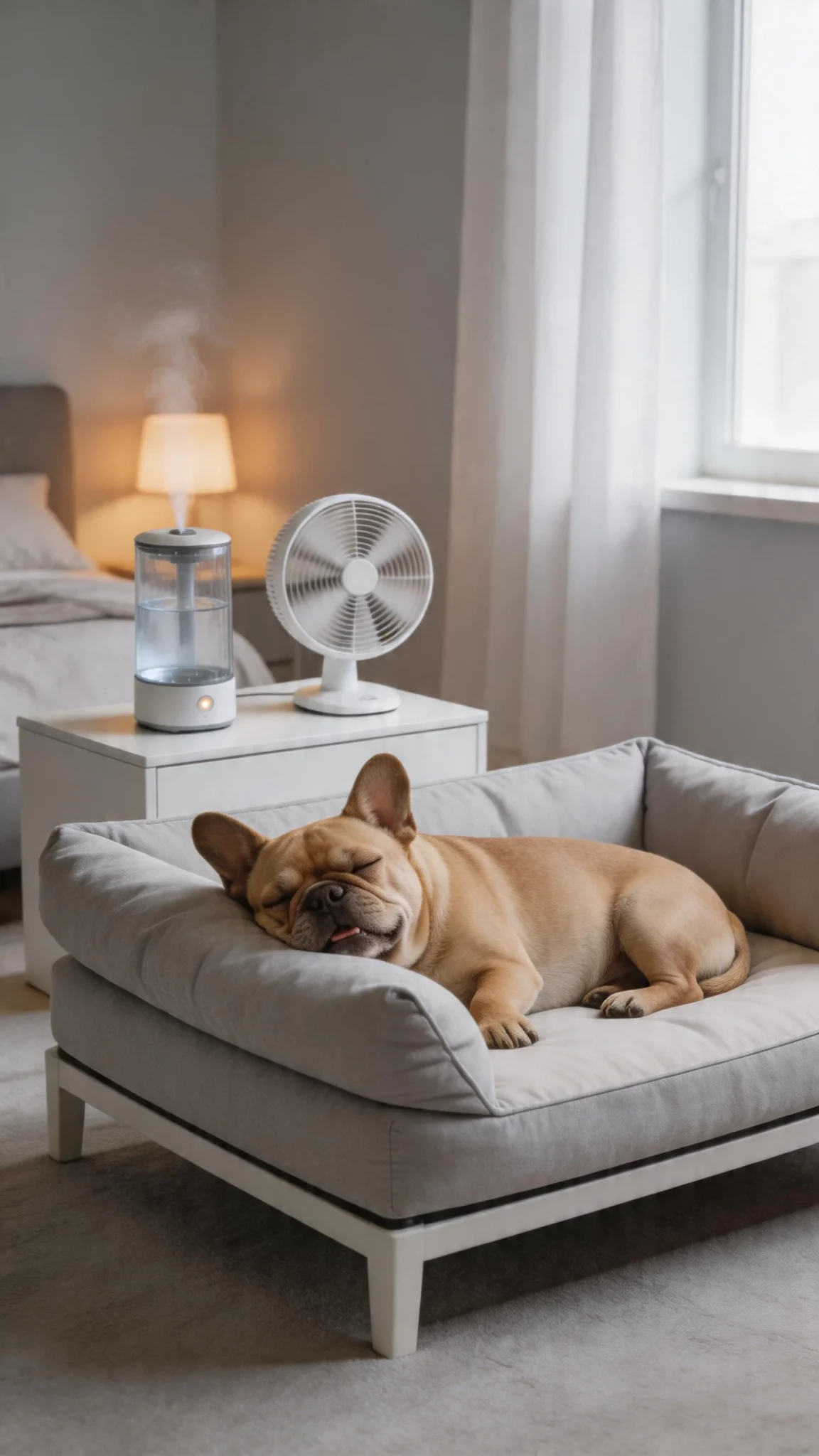
Many of our readers tell us they feel helpless when their Frenchie struggles at night. The good news is there are concrete steps you can take at home that make a real difference, and when those aren’t enough, there are medical options that can be life-changing.
Step-By-Step Home Management Plan
- Optimize the sleep environment. Keep the room cool (65–72°F), use an air purifier, and wash your dog’s bedding weekly with unscented detergent to reduce allergens.
- Choose the right bed. A bolster-style dog bed with a raised edge encourages side sleeping and provides head support, which can reduce airway compression during sleep.
- Elevate the head slightly. Placing a small, firm pillow under the front of the bed creates a gentle incline that helps keep the soft palate from collapsing backward. A 15–20 degree incline is enough to make a difference.
- Maintain a healthy weight. Work with your vet to set a target weight and stick to it. Even losing 5% of body weight can meaningfully improve breathing in overweight Frenchies.
- Clear the nostrils before bed. A simple saline nasal spray designed for dogs can gently clear any mucus buildup. Ask your vet for a recommendation on the right product and dosage.
- Avoid late-night feeding. A full stomach puts upward pressure on the diaphragm, making breathing harder. Feed your Frenchie at least two hours before bedtime.
- Record breathing episodes. Use your phone to record any concerning episodes during sleep. This footage is incredibly helpful for your vet to assess the severity of the issue.
When to Talk to Your Vet About Surgical Options

Home management helps a lot, but some Frenchies need medical intervention to breathe safely at night. This is not a failure on your part — it’s a reality of the breed’s anatomy.
The most common surgical procedures for BOAS include:
- Nares widening (stenotic nares correction) — a simple procedure that opens the nostrils and is often done during spay or neuter surgery. You can read more about the timing of that decision in our guide on when to neuter a male French Bulldog.
- Soft palate resection (staphylectomy) — shortening the elongated soft palate so it no longer blocks the airway during sleep
- Saccule removal — removing everted laryngeal saccules that further obstruct airflow
Research published in veterinary literature has shown that early surgical intervention in brachycephalic dogs (ideally before age two) leads to significantly better long-term outcomes compared to waiting until symptoms become severe. Many vets now recommend addressing these issues proactively rather than reactively.
🛒 Frenchie Owners Are Grabbing These Too
In our experience, owners who act early — even when the symptoms seem manageable — almost always report a dramatic improvement in their dog’s quality of life and energy levels after corrective procedures.
A pet pulse oximeter is a practical tool many Frenchie owners use at home to monitor their dog’s blood oxygen levels during sleep. Normal canine SpO2 is 95–100%. Consistent readings below 95% are worth discussing with your vet.
Mistakes to Avoid With a Frenchie Who Has Nighttime Breathing Issues
What we have found works best is learning from what other Frenchie owners have gotten wrong so you don’t have to make the same mistakes.
- Ignoring snoring because “it’s just a Frenchie thing.” Not all snoring is harmless. Severity matters.
- Using a collar instead of a harness. Any pressure on the throat can worsen breathing. Always use a no-pull harness for French Bulldogs day and night.
- Letting your Frenchie overheat. Even a slightly warm room can push a borderline breathing situation into a crisis.
- Waiting too long to see a vet. Many owners wait years before seeking help, during which time their dog’s airway worsens.
- Assuming weight doesn’t matter. Body condition has a direct impact on airway function in brachycephalic breeds.
Frequently Asked Questions About French Bulldog Breathing Problems While Sleeping Guide
Is It Normal for French Bulldogs to Snore Loudly While Sleeping?
Moderate snoring is completely normal for French Bulldogs due to their flat facial structure. However, snoring that sounds like choking, is paired with gasping episodes, or causes your dog to wake up in distress goes beyond normal and warrants a veterinary evaluation.
What Sleeping Position Is Safest for a French Bulldog With Breathing Problems?
Side sleeping is the best position for Frenchies with breathing difficulties. Sleeping on the back allows the soft palate to fall backward and obstruct the airway, which can worsen nighttime episodes. A bolster dog bed with raised sides naturally encourages side sleeping.
Can Allergies Cause a French Bulldog to Have Worse Breathing at Night?
Yes, environmental allergens like dust mites and pollen can inflame nasal passages and narrow the airway further. If you notice seasonal patterns in your Frenchie’s nighttime breathing, discuss allergy testing with your vet and consider an air purifier in the bedroom.
At What Age Do Breathing Problems in French Bulldogs Usually Get Worse?
Many French Bulldogs show increased breathing difficulty between ages one and three as tissue in the airway matures. Senior Frenchies over age seven may also experience worsening symptoms. Early surgical correction before age two tends to produce the best outcomes.
How Do I Know If My French Bulldog Needs Surgery for Breathing Problems?
Signs that surgery may be needed include frequent nighttime waking with distress, consistently labored breathing during rest, low blood oxygen readings, exercise intolerance, and repeated episodes lasting more than 30 seconds. Your vet can perform a full airway assessment, sometimes under light sedation, to determine the extent of the obstruction.
Can I Use a Humidifier to Help My French Bulldog Breathe Better at Night?
A humidifier can be helpful if the air in your home is very dry, as moisture helps keep nasal passages clear. However, high humidity in warm conditions can actually make breathing harder for Frenchies. Keep the room cool and use a humidifier only if the air feels excessively dry, and clean it regularly to prevent mold growth.
Final Thoughts on Helping Your Frenchie Sleep and Breathe Better
French Bulldog breathing problems during sleep are incredibly common, but that doesn’t mean you have to accept them as unavoidable. Understanding the difference between typical breed sounds and genuine distress signals puts you in a much stronger position to advocate for your dog’s health. Between smart home management, maintaining a healthy weight, and working closely with a vet who understands brachycephalic breeds, most Frenchies can sleep more comfortably and live fuller lives.
Your simple next step today: spend five minutes observing and recording your Frenchie’s breathing during their next nap. Note how often they wake up, whether they seem distressed, and how their gums look when they’re at rest. Take that recording to your next vet visit. It’s a small action that can open the door to the right treatment and give your Frenchie the restful, healthy sleep they deserve.


