
The Three Stages of Cushing’s Disease in Dogs Explained

Your dog is drinking water constantly, gaining weight around the belly, and losing patches of fur. You suspect something is wrong, but the symptoms seem vague and scattered. Understanding what are the three stages of Cushing’s disease in dogs can help you connect those dots and act faster.
Cushing’s disease — formally called hyperadrenocorticism — is one of the most common hormonal disorders in middle-aged and older dogs. It progresses through recognizable stages, and catching it early makes a real difference in your dog’s quality of life.
What Are the Three Stages of Cushing’s Disease in Dogs?
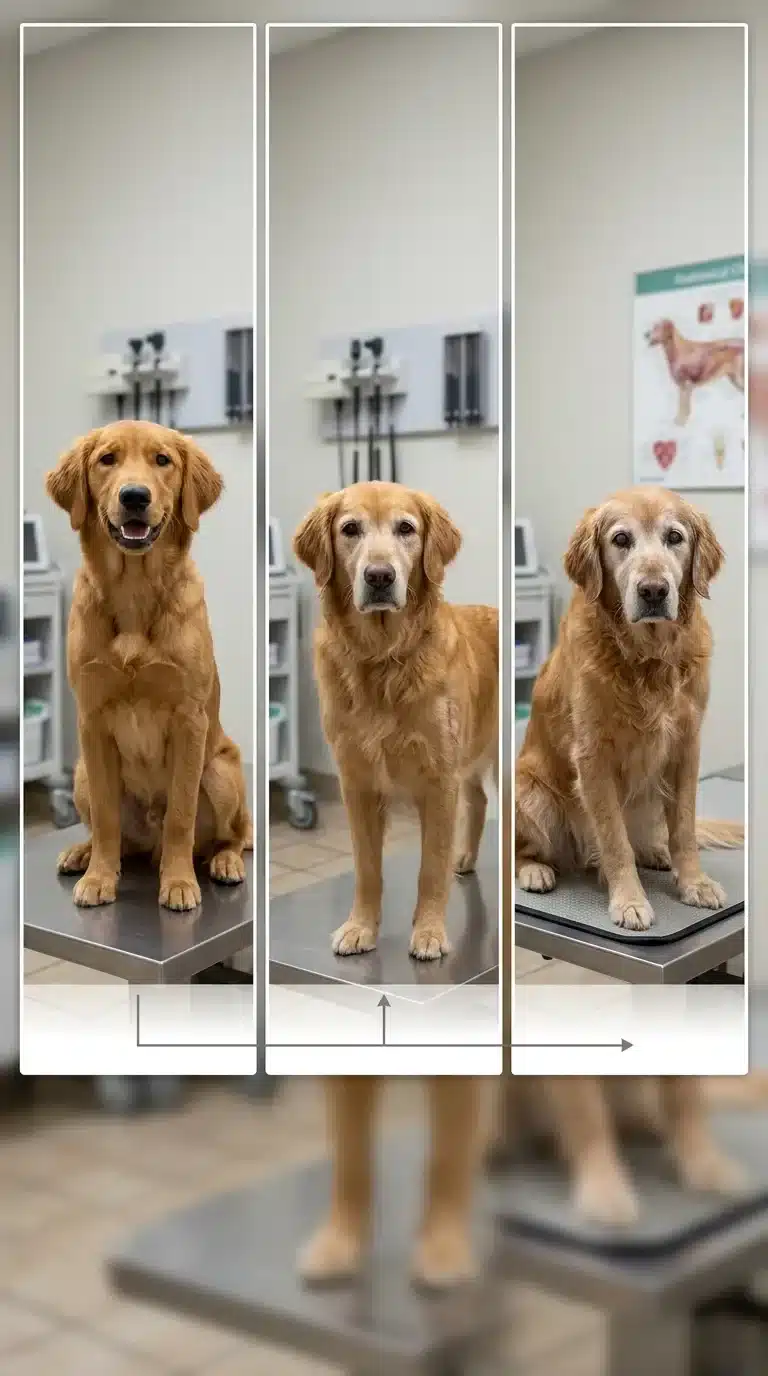
Cushing’s disease in dogs progresses through three general stages: early, middle, and advanced. Each stage reflects how long excess cortisol has been affecting the body, with symptoms becoming more visible and serious over time.
- Stage 1 (Early): Increased thirst, urination, and appetite — often mistaken for normal aging.
- Stage 2 (Middle): Visible physical changes including a pot-bellied appearance, muscle weakness, and hair loss.
- Stage 3 (Advanced): Serious complications such as skin infections, blood clots, high blood pressure, and organ stress.
- The disease is caused by excess cortisol from either a pituitary tumor (85% of cases) or an adrenal tumor.
- According to the Merck Veterinary Manual, hyperadrenocorticism most commonly affects dogs over 6 years old.
- Diagnosis typically requires blood tests, urine tests, and a low-dose dexamethasone suppression test.
Stage 1: Early Cushing’s Disease — The Subtle Warning Signs
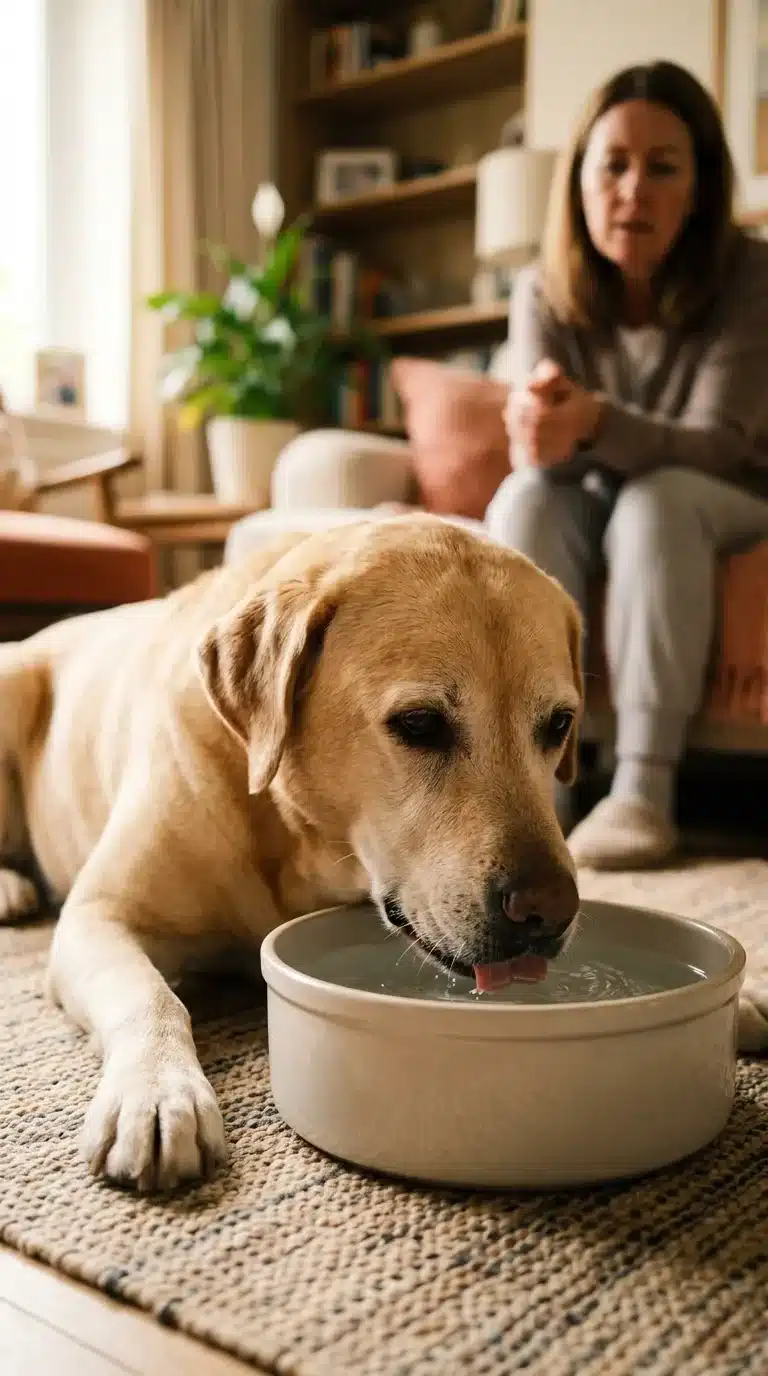
Early-stage Cushing’s disease is the hardest to catch because the signs mimic normal aging or mild behavioral changes. Your dog may seem fine overall, but a few specific patterns should raise a flag.
What You’ll Notice First
The earliest and most consistent signs are related to the kidneys and appetite. Excess cortisol signals the kidneys to produce more urine, which then drives your dog to drink more water — a cycle that looks deceptively ordinary.
Get Weekly Dog Care Tips Free
Join 10,000+ dog owners. Vet-approved advice every week
🔒 No spam. Unsubscribe anytime.
- Drinking noticeably more water than usual (polydipsia)
- Urinating more frequently, sometimes having accidents indoors
- Increased hunger, often begging or stealing food
- Mild restlessness or panting, especially at night
These symptoms alone won’t confirm Cushing’s, but they are early biological signals worth documenting. Keep a simple log of water intake and bathroom trips to share with your vet.
Early-stage Cushing’s is often dismissed as “just getting older” — but acting on these signs now leads to better treatment outcomes.
BEFORE YOU SCROLL PAST
Readers Also Loved:
👉 How To Spot Early Signs Of Canine Dementia In Senior Dogs
If your senior dog is also showing signs of cognitive changes, it’s worth reading about early signs of canine dementia in senior dogs, since the two conditions can overlap in older animals.
Stage 2: Middle-Stage Cushing’s — When the Body Shows It
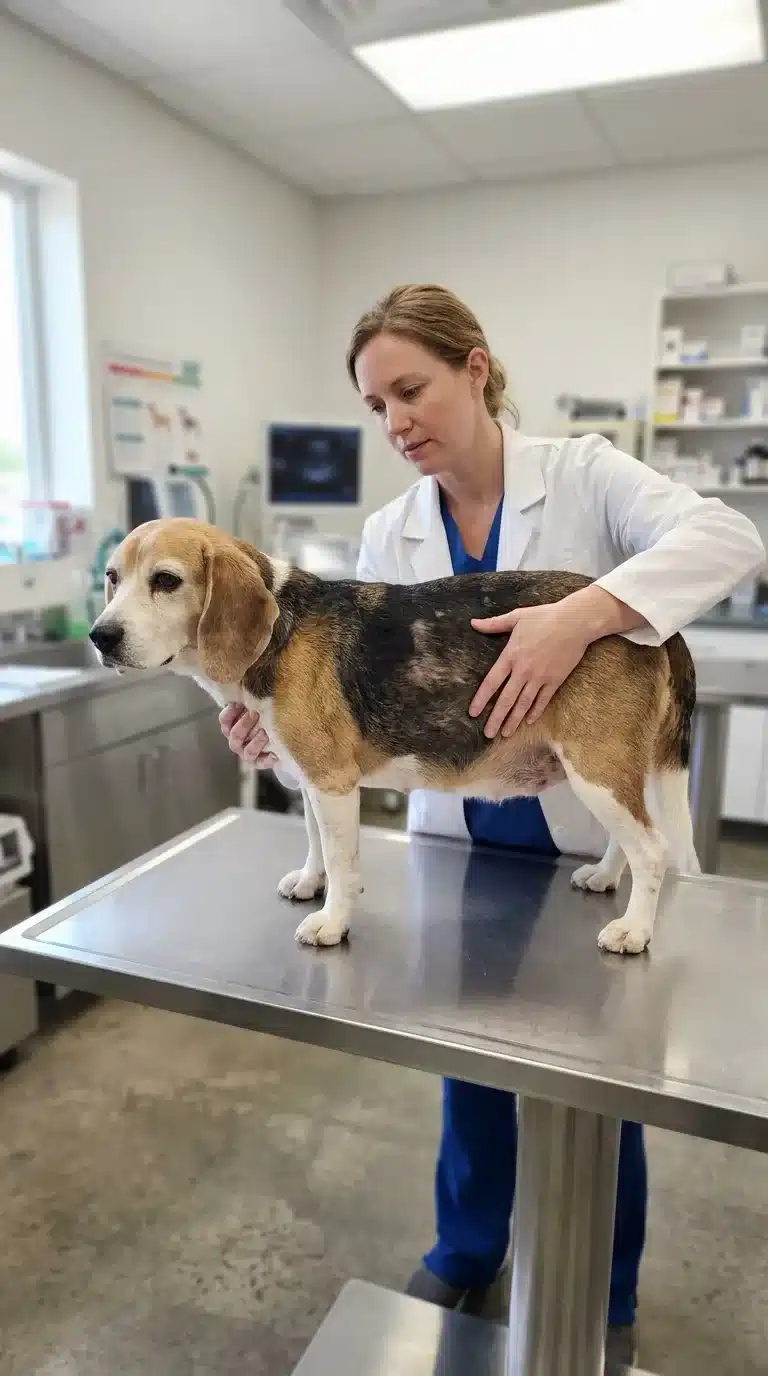
Middle-stage Cushing’s disease is when the physical changes become hard to ignore. Prolonged exposure to high cortisol starts breaking down muscle tissue, redistributing fat, and disrupting normal skin and coat function.
The Physical Changes
The most recognizable sign at this stage is a pot-bellied appearance. Cortisol causes fat to shift to the abdomen while simultaneously weakening the muscles that hold the belly in — a double effect that gives dogs that distinctive rounded look.
- Distended, sagging abdomen
- Muscle wasting, especially in the legs and hindquarters
- Symmetrical hair loss on the flanks, often without itching
- Thin, fragile skin that bruises easily
- Skin that appears darker or develops blackheads (comedones)
According to the American College of Veterinary Internal Medicine (ACVIM), skin and coat changes are present in approximately 90% of dogs with confirmed hyperadrenocorticism by mid-stage diagnosis.
Your dog may also seem less interested in walks or play. This isn’t just laziness — cortisol-driven muscle loss genuinely reduces stamina and makes movement uncomfortable.
Skin Problems and Secondary Infections
High cortisol suppresses the immune system, leaving the skin vulnerable. You may notice recurring bacterial skin infections (pyoderma) that clear up briefly with antibiotics but keep coming back.
A medicated dog shampoo can offer temporary relief from surface infections, but it won’t address the hormonal root cause. Treating the underlying disease is always the priority.
If your dog keeps getting skin infections without an obvious cause, Cushing’s disease should be on your vet’s differential diagnosis list.
Stage 3: Advanced Cushing’s Disease — Serious Complications
Advanced Cushing’s disease means cortisol has been elevated long enough to damage multiple body systems. This stage carries the highest risk of life-threatening complications and requires urgent veterinary management.
BEFORE YOU SCROLL PAST
Readers Also Loved:
👉 How To Care For Your Female Frenchie During Her First Heat
Organ and Cardiovascular Risks
Chronic excess cortisol raises blood pressure (hypertension) and increases the risk of blood clots — a condition called pulmonary thromboembolism, which can be fatal. The liver also enlarges significantly as it tries to process the hormonal overload.
- High blood pressure, which can damage the eyes and kidneys
- Blood clots in the lungs or legs
- Enlarged liver (hepatomegaly), often detectable on ultrasound
- Increased risk of urinary tract infections due to immune suppression
- Calcinosis cutis — calcium deposits forming hard, painful lumps under the skin
The Cornell University College of Veterinary Medicine notes that dogs with untreated hyperadrenocorticism are at significantly elevated risk for pulmonary thromboembolism, particularly after surgery or illness.
Neurological Signs in Pituitary-Dependent Cases
When a pituitary tumor is the cause, a small percentage of dogs develop a macroadenoma — a large tumor that presses on the brain. This can cause circling, head pressing, loss of coordination, and seizures.
Monitoring behavior changes carefully matters at this stage. Just as past trauma or mistreatment can influence a dog’s reactions, neurological pressure from a pituitary tumor can cause sudden behavioral shifts that seem emotional but are actually physical.
Advanced-stage Cushing’s is a medical emergency waiting to happen — if your dog is at this stage, same-week veterinary care is not optional.
MOST POPULAR THIS WEEK
Readers Also Loved: 👇
👉 How To Stop Dogs From Scratching Ears Raw
How Cushing’s Disease Is Diagnosed and Treated Across All Stages
Diagnosis requires more than a physical exam. Because symptoms overlap with diabetes, kidney disease, and hypothyroidism, vets use specific endocrine tests to confirm Cushing’s disease at any stage.
| Test | What It Measures | Best Used For |
|---|---|---|
| Low-Dose Dexamethasone Suppression (LDDS) | Whether cortisol is properly suppressed | Screening and confirming diagnosis |
| ACTH Stimulation Test | Adrenal response to synthetic hormone | Monitoring treatment response |
| Urine Cortisol:Creatinine Ratio | Cortisol levels in urine over time | Early screening at home (then confirmed by vet) |
| Abdominal Ultrasound | Adrenal gland size and shape | Distinguishing pituitary vs. adrenal cause |
Treatment depends on the cause. Pituitary-dependent Cushing’s is most often managed with trilostane (Vetoryl) or mitotane (Lysodren), both of which reduce cortisol production. Adrenal tumors may require surgery.
Dogs on long-term medication benefit from pill pocket treats for dogs to make daily medication easier to administer consistently.
You can find detailed clinical guidelines at the ACVIM Consensus Statements page, which includes endocrine disease protocols used by veterinary internists.
Common Mistakes Dog Owners Make With Cushing’s Disease
Recognizing the stages is only half the challenge. How you respond to the diagnosis matters just as much.
- Mistake 1: Assuming symptoms are just aging. Consequence: Disease advances undetected for months. Fix: Ask your vet to run a urine cortisol:creatinine ratio if you see the early signs listed above.
- Mistake 2: Stopping medication when symptoms improve. Consequence: Cortisol rebounds quickly and damage resumes. Fix: Always taper or stop medication only under vet supervision with follow-up bloodwork.
- Mistake 3: Missing the skin infection connection. Consequence: Repeated antibiotic courses without treating the cause. Fix: Request Cushing’s screening if your dog has had two or more unexplained skin infections in a year.
- Mistake 4: Skipping follow-up ACTH stimulation tests. Consequence: Over- or under-dosing medication, both of which are dangerous. Fix: Follow your vet’s schedule — typically 10–14 days after starting trilostane, then every 3–6 months.
Managing a dog with a chronic hormonal condition can be stressful. Keeping comfort items around — like a familiar calming plush toy — can help reduce anxiety for dogs who sense their owners’ stress during vet visits and medication routines.
Frequently Asked Questions About What Are the Three Stages of Cushing’s Disease in Dogs
Can a dog live a normal life with Cushing’s disease?
Yes, many dogs with Cushing’s disease live comfortably for years with proper treatment. Medication controls cortisol levels effectively, and most dogs show significant improvement in symptoms within the first few months of therapy.
How fast does Cushing’s disease progress in dogs?
Cushing’s disease in dogs typically progresses slowly over months to years. The rate depends on the tumor type and size, but most dogs are already in mid-stage before a diagnosis is made because early signs are easy to overlook.
Is Cushing’s disease painful for dogs?
Cushing’s disease is not typically painful in early and middle stages, but advanced complications — like calcinosis cutis, skin infections, and blood clots — can cause significant discomfort. Managing the condition early prevents most of the painful late-stage outcomes.
What breeds are most at risk for Cushing’s disease?
Poodles, Dachshunds, Beagles, Boston Terriers, and Boxers are among the breeds with higher reported rates of Cushing’s disease. However, any dog over six years old can develop it regardless of breed.
How do I know if my dog’s Cushing’s treatment is working?
Signs that treatment is working include reduced water intake, less frequent urination, improved energy, and gradual coat regrowth. Your vet will confirm this with a follow-up ACTH stimulation test, typically 10–14 days after starting medication.
Can Cushing’s disease in dogs be cured?
Adrenal-dependent Cushing’s caused by a benign tumor can sometimes be cured with surgical removal. Pituitary-dependent Cushing’s is generally managed long-term with medication rather than cured, though radiation therapy is an option at specialized centers.
The Bottom Line on Cushing’s Disease Stages in Dogs
The three stages of Cushing’s disease move from subtle hormonal imbalances to visible physical decline to serious, life-threatening complications. The earlier you catch it, the more treatment options you have and the better your dog feels day to day.
The single most useful action you can take today: if your middle-aged or senior dog is drinking more water than usual and urinating frequently, call your vet this week and specifically ask about a urine cortisol:creatinine screening test. It’s simple, non-invasive, and can start the diagnostic process before symptoms worsen.
Also consider reviewing how immune-modulating treatments work in dogs — understanding how different therapies affect the immune system helps you have more informed conversations with your vet about long-term care plans. Your dog is counting on you to notice what they can’t tell you.


