
Dog Losing Hair In Patches On Back — Causes And Treatment

{“title”:”Dog Losing Hair In Patches On Back — Causes And Treatment”,”content”:”
If you’ve noticed your dog losing hair in patches on their back, you’re probably worried — and rightfully so. Patchy hair loss isn’t just a cosmetic issue. It’s often your dog’s body signaling that something is off, whether that’s allergies, parasites, a hormonal imbalance, or a skin infection.
In our experience helping dog owners work through skin and coat problems, patchy back hair loss is one of the most common concerns we see. The good news is that most causes are treatable once you identify the root problem. The tricky part is that several different conditions look almost identical on the surface.
This article walks you through the most likely causes, what each one looks like, and what you can actually do about it — including when to call your vet and what to try at home first. Let’s get your dog’s coat back on track.
🛒 What Every Frenchie Owner Needs Right Now
Get Weekly Dog Care Tips Free
Join 10,000+ dog owners. Vet-approved advice every week
🔒 No spam. Unsubscribe anytime.
Why Dogs Lose Hair In Patches On Their Back
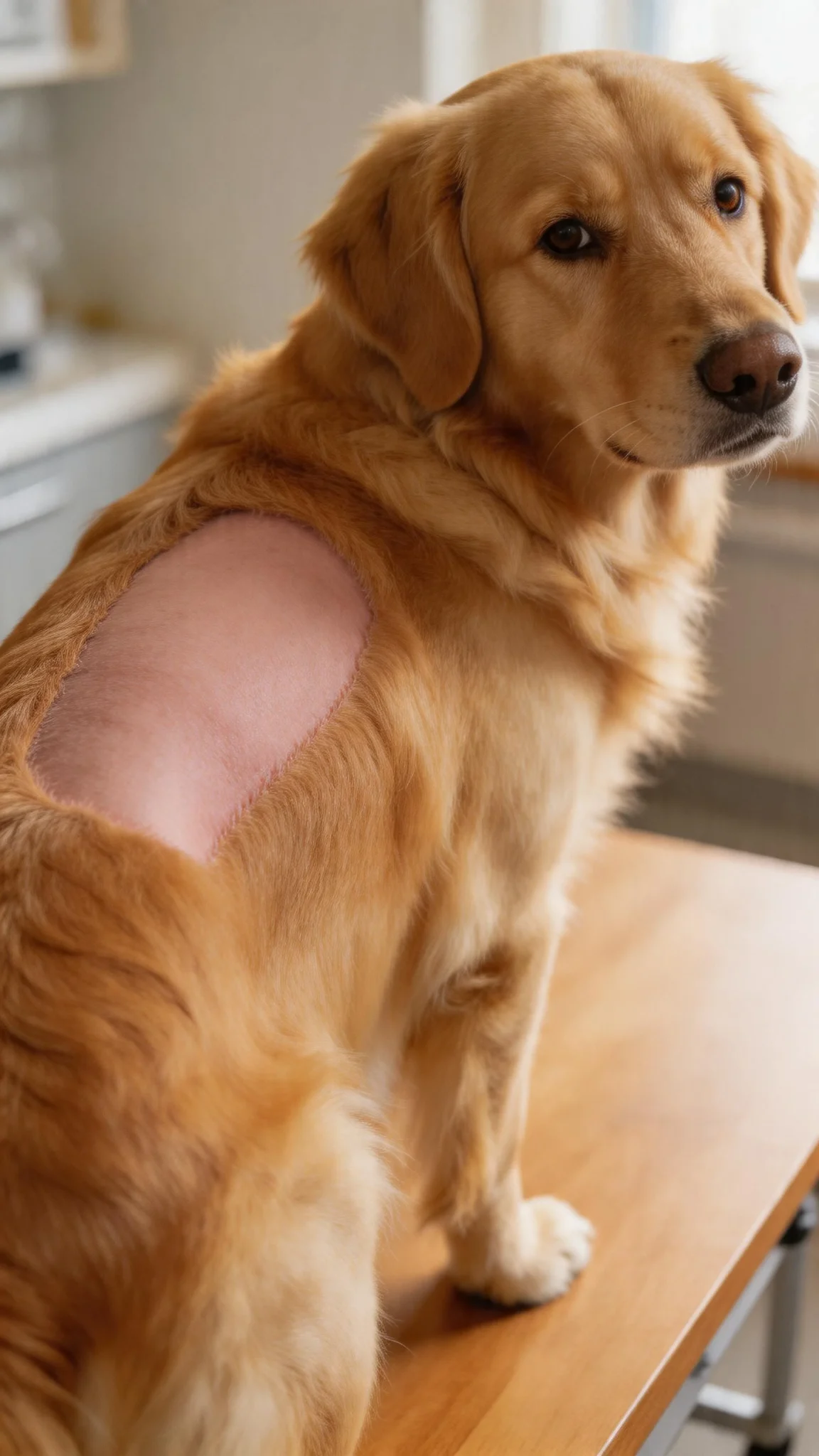
Patchy hair loss on a dog’s back is called alopecia. It can affect one small spot or spread across the entire topline. Here’s a fast breakdown to help you identify what’s going on:
- Allergies (environmental or food-related) are the most common cause of patchy hair loss in dogs
- Mange (caused by mites) creates circular, scaly patches, often with intense itching
- Ringworm is a fungal infection — not a worm — that causes round, bald patches
- Bacterial skin infections (pyoderma) cause pustules, crusting, and hair loss
- Hormonal disorders like hypothyroidism or Cushing’s disease cause symmetrical hair thinning across the back
- Flea allergy dermatitis often causes hair loss along the back near the tail base
- Stress or anxiety can trigger compulsive scratching or chewing that leads to bald spots
Safe first step: Check for fleas, ticks, or visible skin irritation before assuming a serious condition. Part your dog’s fur at the bald patch and look closely at the skin — is it red, scaly, oily, or normal-looking?
Common Causes Of Patchy Hair Loss On A Dog’s Back
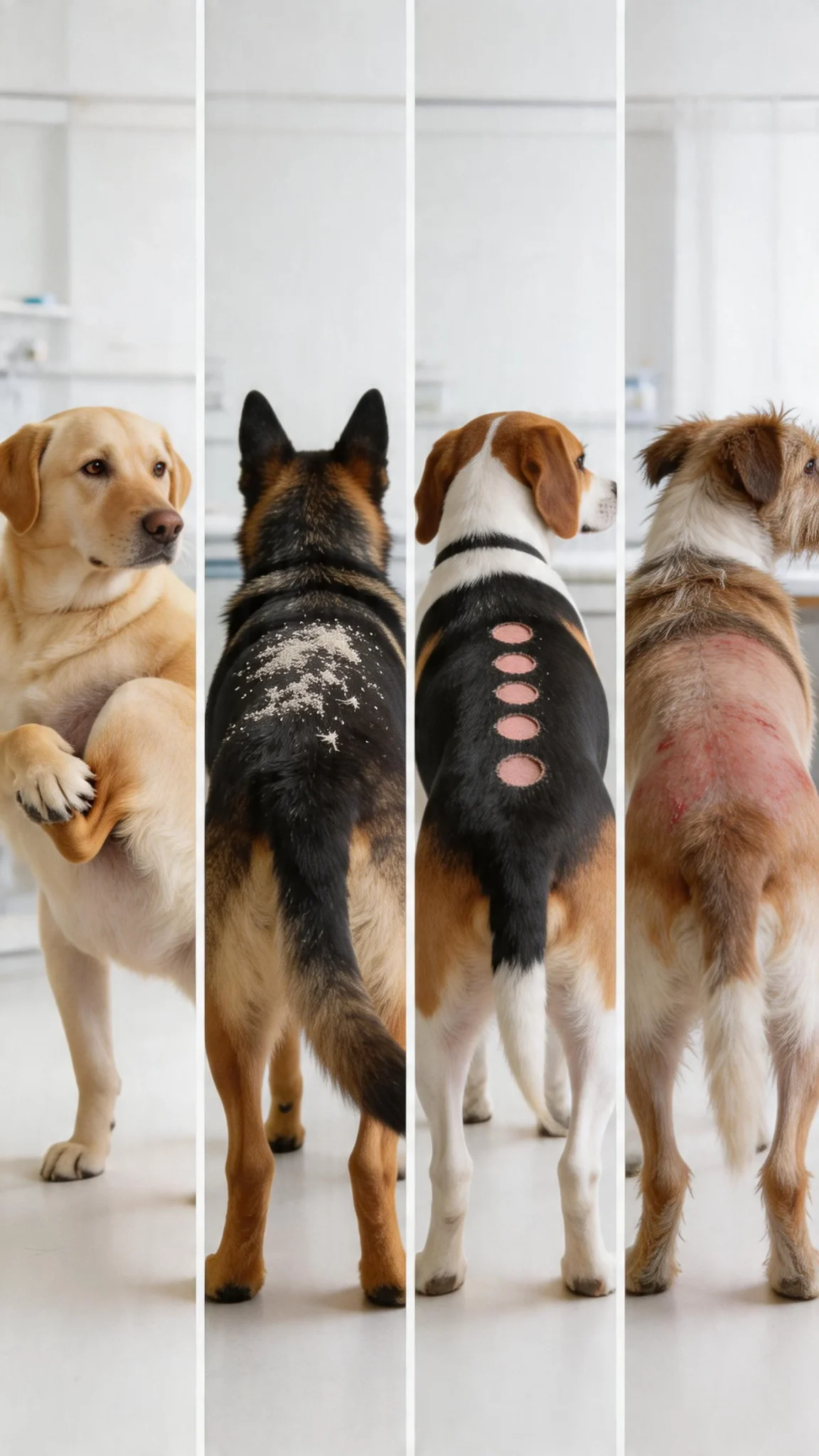
Allergies And Skin Sensitivity
Allergies are behind a huge number of hair loss cases we see in dogs. Environmental allergens like pollen, dust mites, and mold can cause your dog to scratch constantly, which eventually damages the hair follicles and leads to bald spots.
Food allergies are trickier because the reaction is often delayed. Common culprits include chicken, beef, dairy, and wheat. Many of our readers tell us they switched their dog’s protein source and saw significant improvement in skin and coat within 6 to 8 weeks.
🛒 Vets Use For Their Own Frenchies
Real-world example: A reader with a 4-year-old Labrador noticed a growing bald patch right in the middle of her dog’s back every spring. After an elimination diet ruled out food allergies, a vet confirmed environmental pollen allergy. Switching to a dog allergy supplement with omega-3 fatty acids alongside antihistamines made a real difference within two months.
If your dog also chews or licks their paws alongside the hair loss, allergies are very likely the cause. You can learn more in our guide on how to stop a dog from licking paws at night.
Mange — Demodectic And Sarcoptic
Mange is caused by mites living in or on your dog’s skin. There are two main types, and they behave very differently.
Demodectic mange is caused by Demodex mites. It typically shows up as small, circular bald patches, often starting on the face or back. It’s not contagious to humans or other dogs but signals a weakened immune system.
Sarcoptic mange (scabies) is highly contagious and causes intense itching, redness, crusting, and rapid hair loss. Dogs with sarcoptic mange are usually miserable — scratching around the clock.
A vet diagnoses mange through a skin scraping test. Treatment usually involves medicated dips, oral medications like ivermectin, or newer options like Bravecto or NexGard. Don’t try to treat mange at home without a diagnosis — the two types require different approaches.
Ringworm (Fungal Infection)
Despite the name, ringworm has nothing to do with worms. It’s a fungal infection called dermatophytosis that creates roughly circular bald patches with a scaly or crusty border. The skin inside the patch may look slightly red or irritated.
Ringworm is contagious — both to other pets and to humans. If you notice a round, balding patch on your dog’s back and someone in your household develops a similar ring-shaped rash, ringworm is a strong suspect.
Treatment involves antifungal shampoos, topical creams, or oral antifungal medication depending on severity. Antifungal dog shampoo used 2-3 times per week can help manage mild cases, but moderate to severe ringworm needs a vet prescription.
We’ve also seen ringworm confused with Malassezia in dogs, which is a yeast infection that produces similar skin changes — worth reading about if the patches look greasy or have a musty smell.
Bacterial Skin Infections (Pyoderma)
Pyoderma is a bacterial infection of the skin that’s surprisingly common in dogs, especially those with skin folds or underlying allergies. It causes pustules, red bumps, crusting, and eventually patchy hair loss as the infection spreads.
You’ll often see the skin under the bald patch looking inflamed, with a yellowish crust or small pimple-like lesions. It sometimes has a mild odor.
Treatment is straightforward but requires commitment: antibiotics (prescribed by a vet) for at least 3 to 4 weeks, plus medicated shampoos to clean the skin surface. In our experience, stopping antibiotics too early is the number one reason pyoderma keeps coming back.
🛒 Frenchie Owners Are Grabbing These Too
Hormonal Causes Of Hair Loss On A Dog’s Back
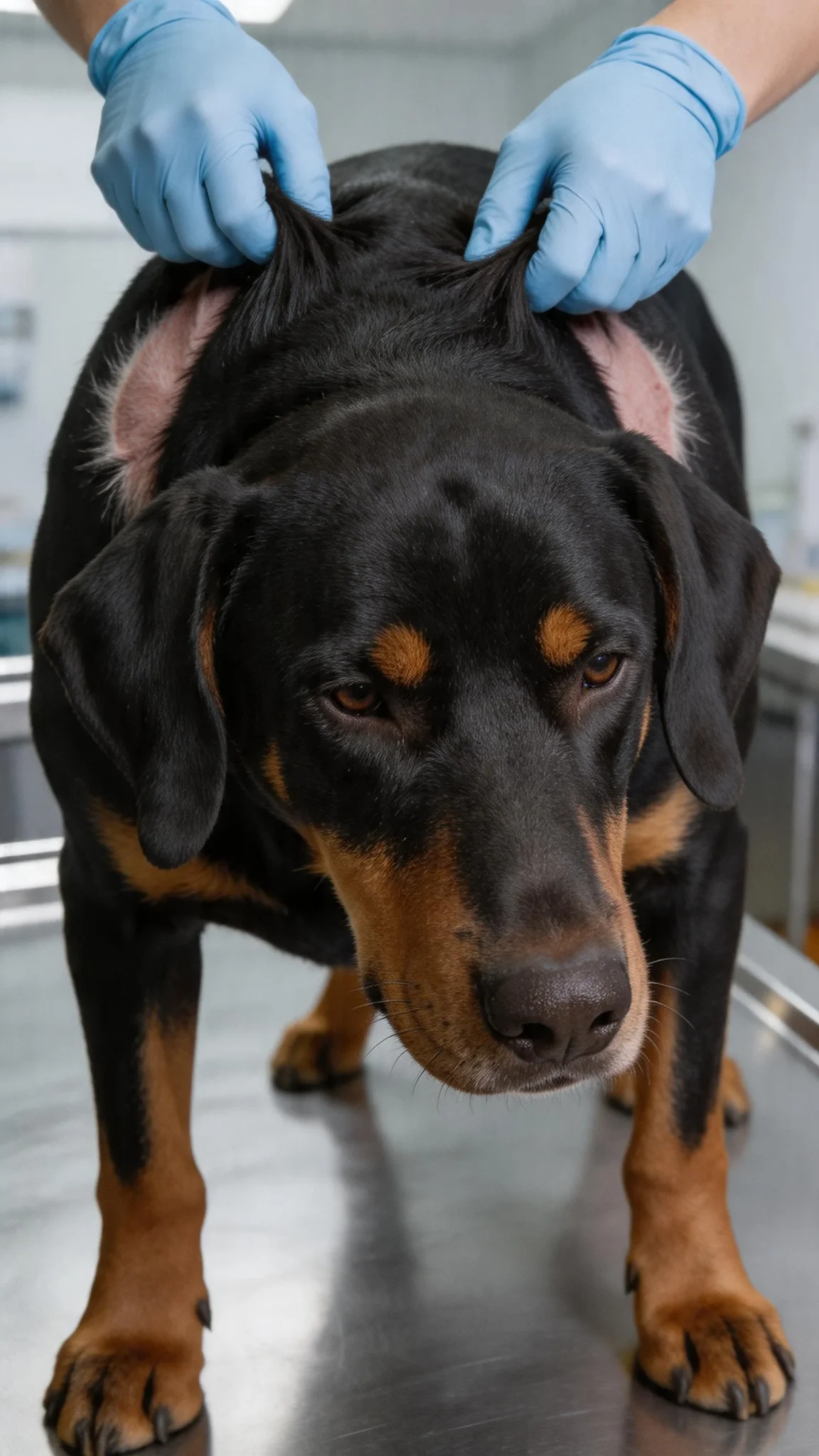
Hypothyroidism
Hypothyroidism is one of the most underdiagnosed causes of hair loss in middle-aged to older dogs. When the thyroid isn’t producing enough hormone, your dog’s metabolism slows — and one of the first visible signs is a dull, thinning coat with symmetrical hair loss along the back and sides.
Other signs include weight gain without increased eating, lethargy, cold intolerance, and a thickened or darkened skin texture. A simple blood test checks thyroid levels. Treatment is a daily thyroid hormone supplement, usually levothyroxine, which is affordable and highly effective.
Cushing’s Disease (Hyperadrenocorticism)
Cushing’s disease happens when the body produces too much cortisol. Hair loss is one of the classic signs — typically symmetrical thinning along the back and belly, with skin that looks thin, wrinkled, or darkened.
Other signs you might notice include a pot-bellied appearance, increased thirst and urination, and muscle weakness. This condition is more common in dogs over 6 years old. Diagnosis involves blood and urine tests, and treatment can include medication or in some cases surgery.
Real-world example: A 9-year-old Beagle came in with what looked like a classic allergy — patchy back hair loss, pot belly, and dark skin patches. The owner had been treating for allergies for months with no improvement. A cortisol test confirmed Cushing’s disease. Within 12 weeks of starting trilostane, the coat began to grow back noticeably.
Flea Allergy Dermatitis And Parasite-Related Hair Loss
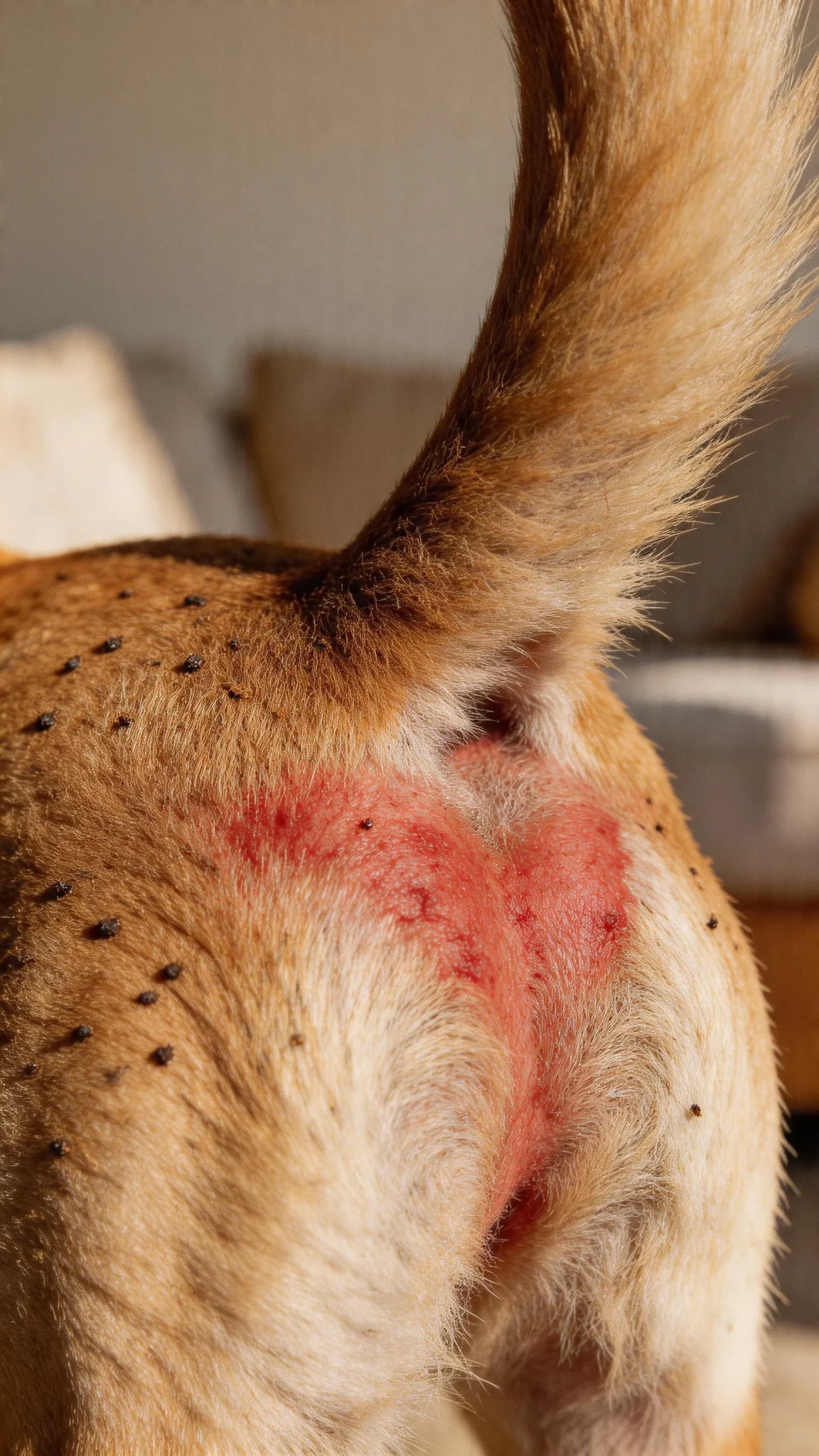
Flea allergy dermatitis (FAD) is one of the most common causes of hair loss specifically near the base of the tail and along the lower back. Your dog doesn’t even need a heavy flea infestation — a single flea bite can trigger a massive allergic reaction in sensitive dogs.
Check the base of the tail and lower back for tiny black specks (flea dirt), redness, scabbing, or broken hairs. The skin in these areas often looks raw from constant chewing and scratching.
Treatment starts with strict flea control — not just on your dog but in your entire home. Use a vet-recommended dog flea prevention treatment every month, vacuum furniture and carpets thoroughly, and wash bedding weekly in hot water.
Ticks can also contribute to skin irritation in some cases. If you’re unsure what you’re looking at in your dog’s fur, check out our guide on what a tick looks like on a dog to help identify any unwanted hitchhikers.
How To Treat Dog Hair Loss In Patches — Step By Step

- Examine the patch closely. Part the fur and look at the bare skin. Note whether it’s red, scaly, oily, crusty, or normal-colored. Take a photo to show your vet.
- Check for parasites. Look for fleas, flea dirt, or ticks along the back, around the tail, and in the armpits and groin. Use a fine-tooth flea comb.
- Note any other symptoms. Is your dog itching? Lethargic? Drinking more water? Gaining weight? These clues help narrow the diagnosis fast.
- Switch to a sensitive-skin shampoo. While you’re figuring things out, use a gentle hypoallergenic dog shampoo to reduce skin irritation. Bathe your dog once a week.
- Add omega-3 fatty acids to the diet. Fish oil supplements support skin barrier function and reduce inflammation. A standard dose for a medium-sized dog is about 1,000–2,000 mg of EPA/DHA daily, but check with your vet for your dog’s specific weight.
- Visit your vet for a proper diagnosis. Most causes of patchy hair loss require a professional skin scraping, fungal culture, or blood test to confirm. Guessing and treating the wrong condition wastes time and money.
- Follow through on the full treatment course. Whether it’s antibiotics, antifungals, or hormonal medication — complete the full course. Stopping early is the most common reason hair loss comes back.
Expert Insights On Dog Hair Loss
What we have found works best in practice is this: treat the cause, not just the symptom. Many dog owners spend months cycling through expensive shampoos and supplements when the real issue is an undiagnosed hormonal condition or a persistent environmental allergy. A single vet visit with the right tests can save you 6 months of frustration.
According to the American Kennel Club, skin conditions are among the top five reasons dogs visit the veterinarian each year in the United States. Allergies alone account for a significant portion of those visits, with flea allergy dermatitis being the single most common allergic skin condition in American dogs.
Veterinary dermatologists also emphasize that secondary infections often complicate the original cause. A dog with allergies scratches, breaks the skin barrier, and then develops a bacterial infection on top of the allergy. Treating only the infection without addressing the allergy means the cycle never ends.
If your dog’s skin issues seem to show up alongside other symptoms like paw chewing or licking, it’s worth exploring whether allergies are the broader issue — our article on why French Bulldogs lick their paws covers this in detail, and the allergy information applies to most breeds.
For immune support and coat recovery, a high-quality dog skin and coat supplement with biotin, zinc, and omega-3s can noticeably speed up regrowth once the underlying cause is under control.
Frequently Asked Questions About Dog Losing Hair In Patches On Back — Causes And Treatment
Is Patchy Hair Loss On A Dog’s Back An Emergency?
In most cases, it’s not an immediate emergency, but it does need attention. If the hair loss is spreading rapidly, the skin looks raw or infected, or your dog seems in pain or very distressed, see a vet within 24 to 48 hours. Slower-developing patches with no other symptoms can usually wait for a regular appointment.
Can Stress Cause A Dog To Lose Hair In Patches?
Yes, stress and anxiety can lead to compulsive licking, chewing, or scratching that damages hair follicles and creates bald spots. This is more common in high-strung breeds or dogs experiencing major life changes like a new home, a new pet, or loss of a companion. Addressing anxiety through enrichment, routine, and sometimes calming supplements or medication helps.
Will Dog Hair Grow Back After Patchy Hair Loss?
In most cases, yes — once the underlying cause is treated, hair does grow back. The timeline varies: allergies and infections may see regrowth in 4 to 8 weeks, while hormonal conditions like hypothyroidism may take 3 to 6 months for full coat recovery. Severe or long-standing cases may result in permanent follicle damage in the affected patches.
How Do I Know If My Dog Has Mange Or Ringworm?
Both create circular bald patches, which makes them easy to confuse visually. Mange patches often have more intense itching and may have a scabby or crusty texture with skin redness around them. Ringworm patches tend to have a clearer circular border with a scaly edge. A vet can confirm the difference with a skin scraping (for mange) or a fungal culture under a Wood’s lamp (for ringworm).
Can I Treat My Dog’s Hair Loss At Home Without A Vet?
You can start with gentle steps — a hypoallergenic shampoo, flea prevention, and omega-3 supplements — but most causes of patchy hair loss genuinely need a diagnosis to treat correctly. Using the wrong treatment (like antifungal shampoo on a bacterial infection) won’t help and may delay recovery. A vet visit is always worth it when hair loss is persistent or worsening.
Does Diet Affect Hair Loss In Dogs?
Absolutely. A poor-quality diet lacking in essential fatty acids, zinc, and biotin can weaken the coat and skin barrier over time. Sudden hair loss after a recent food change can also signal a food allergy. Feeding a complete, balanced diet from a


