Silver Standard Poodle: The Complete Owner’s Guide”,”content

If you’ve ever spotted a dog with a stunning silver coat that almost seems to shimmer in sunlight, chances are you were looking at a silver standard poodle. These dogs are genuinely eye-catching, and it’s no surprise that so many people fall in love with the color before they even know much about the breed.
What makes the silver standard poodle especially interesting is that the color itself is a bit of a mystery — puppies are often born very dark and only reveal their true silver coat over time. Add that to the poodle’s well-known intelligence and low-shedding coat, and you have a dog that’s both beautiful and genuinely wonderful to live with.
Whether you’re thinking about adding a silver standard poodle to your family, or you already have one and want to understand them better, this guide covers everything you need — from genetics and grooming to health, training, and what to expect day to day.
🛒 What Every Frenchie Owner Needs Right Now
Get Weekly Dog Care Tips Free
Join 10,000+ dog owners. Vet-approved advice every week
🔒 No spam. Unsubscribe anytime.
What Is a Silver Standard Poodle?
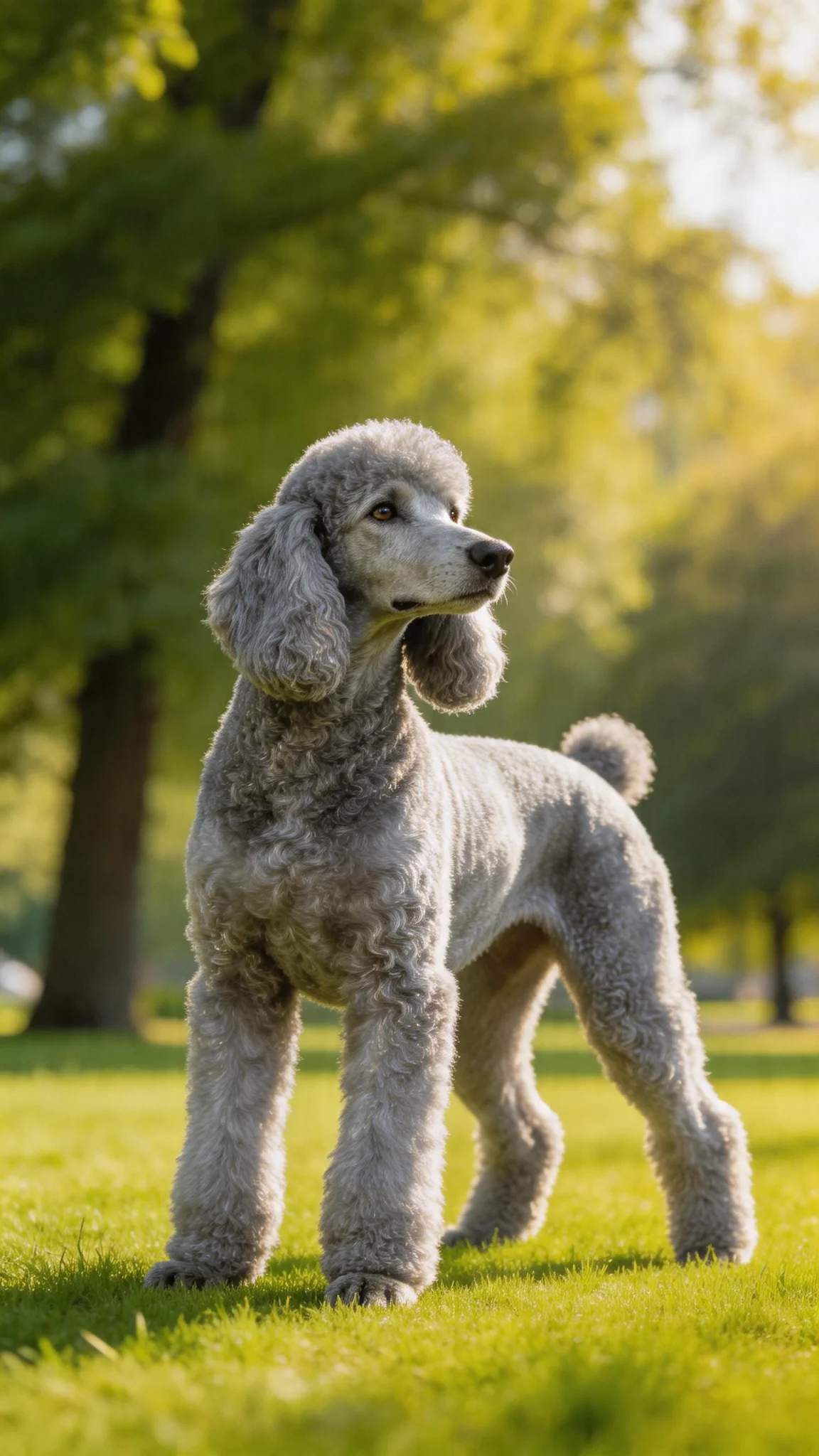
A silver standard poodle is a standard poodle whose coat is a solid silver color — ranging from a light pewter shade to a deeper, almost blue-gray tone. The color is recognized by the American Kennel Club (AKC) as an official poodle color.
Here are the key facts to know at a glance:
- Silver is a dilution of black — it comes from a recessive gene that dilutes the black pigment in the coat.
- Puppies are born very dark (often looking black or dark brown) and lighten to silver, usually by 2 years of age.
- Standard poodles stand over 15 inches tall at the shoulder and typically weigh between 40 and 70 pounds.
- The coat is low-shedding, making the breed a popular choice for people with mild dog allergies.
- Silver poodles are less common than black or white poodles, which can affect pricing from breeders.
- AKC registration requires solid color — a true silver standard poodle should have no other color patches.
- Life expectancy is 12 to 15 years, which is solid for a dog of this size.
If you’re looking for a reputable breeder, always ask to see the parents’ registration papers and health clearances before committing to a puppy.
Understanding Silver Poodle Coat Genetics

One of the most common surprises for new silver poodle owners is discovering that their “black” puppy is actually silver. In our experience, this confusion happens with nearly every first-time buyer who hasn’t been warned in advance.
🛒 Vets Use For Their Own Frenchies
The silver color comes from a gene called the Progressive Graying gene (G locus). A puppy that carries two copies of this gene will gradually lose pigment in the coat after birth. The process usually starts at the face and paws first — a classic sign that a dark poodle puppy will silver out.
How to Tell If a Puppy Will Turn Silver
Reputable breeders look for specific signs as early as 6 weeks old:
- Silver or lighter coloring around the muzzle, eyes, and feet
- A slightly “faded” look to the coat compared to a true black puppy
- At least one silver parent in the lineage
By 6 months, the silvering process is usually well underway. By 18–24 months, the coat is typically at its full silver shade. Some dogs continue to lighten slightly throughout their lives.
Silver vs. Blue Poodles
These two colors are often confused, even among experienced dog owners. Blue poodles are also diluted black, but they carry a different genetic combination and tend to stay a darker, slate-blue shade. Silver poodles are noticeably lighter. The easiest way to tell them apart: look at the skin. Silver poodles have lighter pigment on the nose and skin, while blue poodles tend to retain darker pigmentation.
Grooming a Silver Standard Poodle
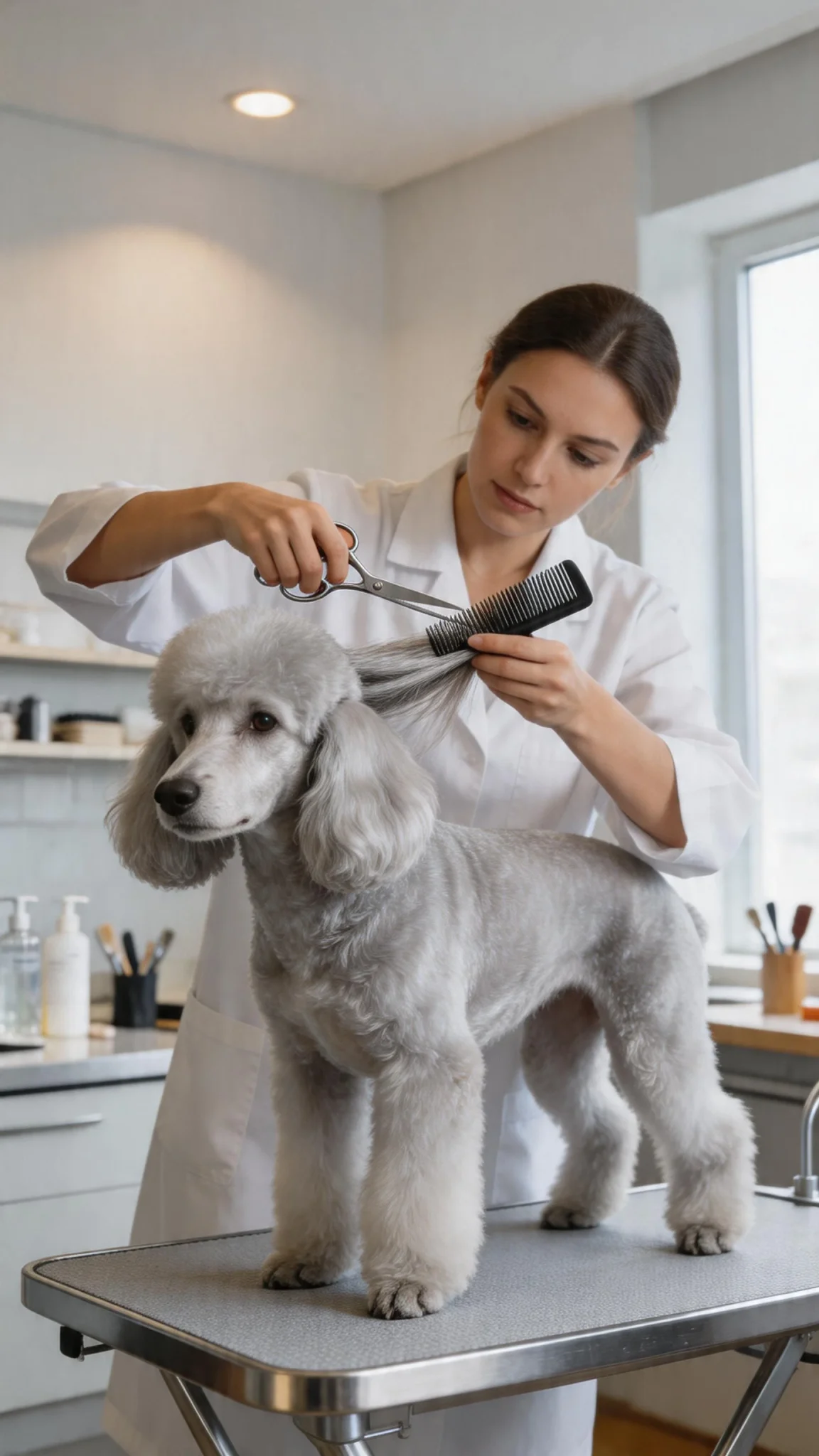
The silver coat is genuinely stunning — but it does require real commitment to keep it looking its best. What we’ve found works best for most owners is establishing a grooming routine early, ideally from puppyhood, so your dog is comfortable with the process.
Standard poodle coats grow continuously and will mat badly without regular brushing. For silver poodles specifically, matting can cause the coat to look dull and uneven, which takes away from that gorgeous shine.
Basic Grooming Schedule
- Brush 3–4 times per week using a slicker brush for poodles to prevent tangles and mats.
- Professional grooming every 6–8 weeks — your groomer can do a full clip, bath, ear cleaning, and nail trim.
- Brush teeth 2–3 times per week or use dog dental chews for large breeds daily to reduce plaque buildup.
- Clean ears weekly — poodles are prone to ear infections because of their floppy ears and hair growth inside the ear canal.
- Trim nails every 3–4 weeks to avoid overgrowth and discomfort.
A practical scenario: one of our readers told us her silver standard poodle developed a large mat behind his ear because she skipped brushing for two weeks during a busy stretch. The groomer had to shave the area, leaving a noticeable patch. It grew back beautifully, but it was a reminder that consistency really matters with this breed.
Popular Grooming Styles for Standard Poodles
- Continental clip — the classic show cut with pom-poms on the hips and ankles
- Sporting clip — a shorter, more practical cut that’s popular with active owners
- Lamb clip — uniform short length all over, easy to maintain at home between appointments
The lamb clip is especially flattering on silver poodles because the even coat length really shows off the color’s depth and sheen.
Health and Lifespan of Silver Standard Poodles

Standard poodles are generally a healthy breed, but they do have some breed-specific health concerns that every owner should know about. In our experience, owners who do their research before buying and stay on top of routine vet care tend to avoid most serious problems.
Common Health Issues to Watch For
- Bloat (GDV) — a life-threatening condition where the stomach twists. Deep-chested breeds like standard poodles are at higher risk. Feeding smaller meals twice a day and avoiding vigorous exercise right after eating reduces the risk significantly.
- Hip dysplasia — a joint condition that can cause pain and mobility issues. Ask breeders for OFA (Orthopedic Foundation for Animals) hip certifications.
- Addison’s disease — a hormonal condition that poodles are genetically predisposed to. Symptoms include lethargy, vomiting, and weakness.
- Progressive retinal atrophy (PRA) — a genetic eye condition that can lead to blindness. Good breeders screen for this.
- Sebaceous adenitis — a skin condition that can cause hair loss and scaling. Silver poodles are not more prone to this than other colors, but it’s worth knowing about.
A reputable breeder should be able to show you health clearances for hips, eyes, and genetic conditions. If a breeder can’t provide these, keep looking.
To keep joints healthy, many owners use a glucosamine supplement for large dogs starting around age 5 or 6 as a preventive measure.
Training and Exercise for Standard Poodles
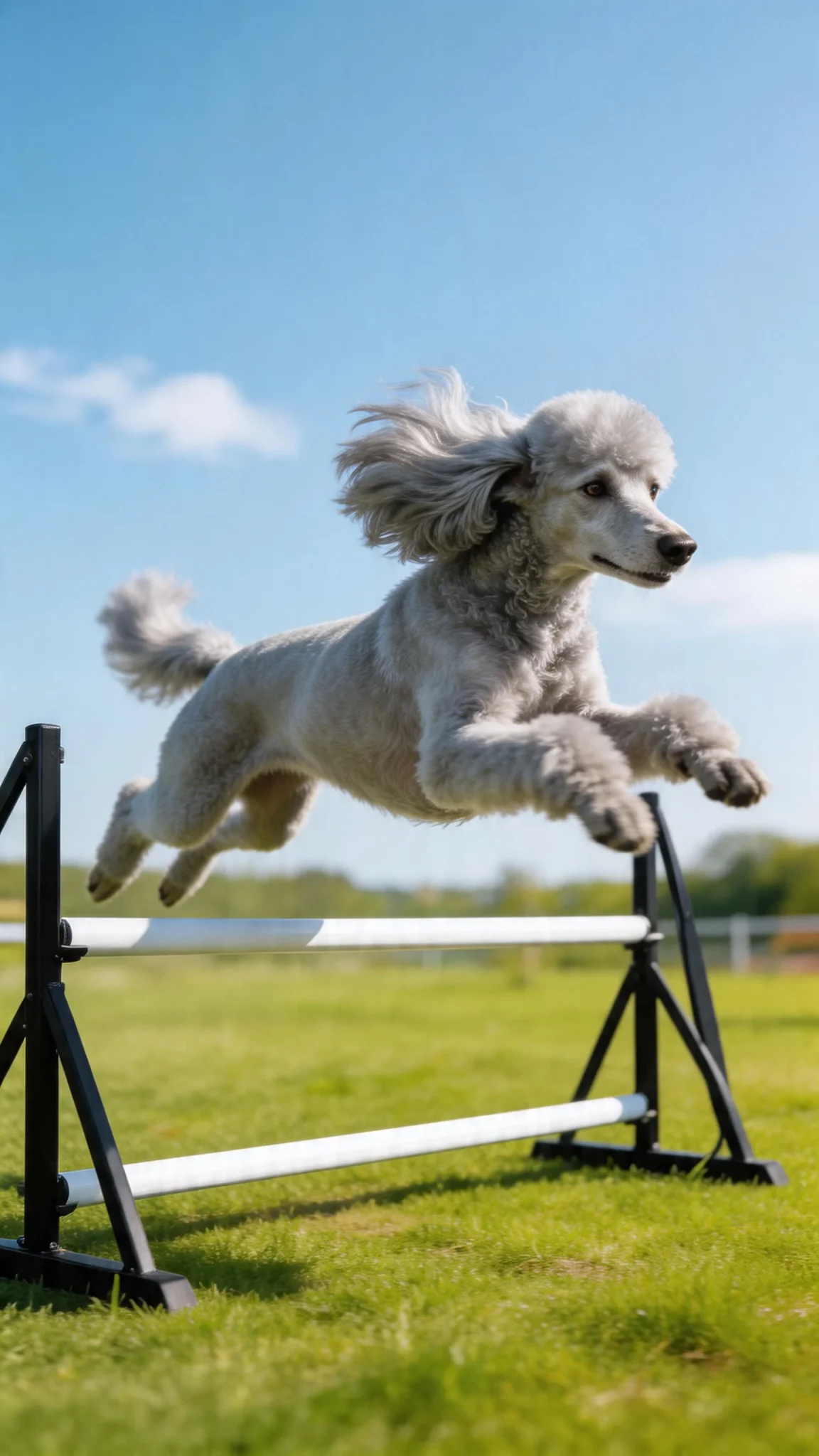
Standard poodles consistently rank among the top five most intelligent dog breeds. That’s not just a fun fact — it means they need mental stimulation just as much as physical exercise. Many of our readers tell us that a bored poodle becomes a destructive poodle, and that’s backed up by what we see again and again.
Exercise Needs
A healthy adult silver standard poodle needs at least 60 minutes of exercise per day. This can be split into two 30-minute sessions. They thrive with:
🛒 Frenchie Owners Are Grabbing These Too
- Brisk walks or jogging
- Fetch and retrieving games (they were originally bred as water retrievers)
- Swimming — most standard poodles love water
- Agility courses and canine sports
Training Tips That Actually Work
Poodles respond exceptionally well to positive reinforcement. What we have found works best is keeping training sessions short — around 10 to 15 minutes — and ending on a success. Use high-value treats and vary the rewards to keep the dog engaged.
- Start socialization before 12 weeks of age if possible
- Enroll in a puppy class — poodles genuinely enjoy the social environment
- Teach impulse control early (sit, stay, leave it) to manage their high energy
- Use puzzle toys like a interactive puzzle toy for large dogs on days when outdoor exercise is limited
A real-world example: a reader in Colorado adopted an 8-month-old silver standard poodle who had already developed some leash-pulling habits. Within three weeks of consistent loose-leash walking practice using a front-clip harness and high-value chicken treats, the dog was walking calmly on a 6-foot leash. Poodles are fast learners when the training is consistent.
Finding a Reputable Silver Standard Poodle Breeder
Because silver is a less common color, you may pay a premium — expect prices between $1,500 and $3,500 from a quality breeder, and sometimes higher for show-quality dogs. Be cautious of prices that seem too low, as this can signal a puppy mill or irresponsible backyard breeder.
A good breeder will:
- Provide OFA health certifications for hips, elbows, and eyes
- Allow you to visit and meet the puppy’s parents
- Ask you questions — a breeder who doesn’t screen buyers isn’t invested in where the puppies go
- Offer a health guarantee (typically 2 years for genetic conditions)
- Be knowledgeable about the progressive graying gene and able to explain why the puppy will turn silver
You can also search the AKC Marketplace and the Poodle Club of America’s breeder referral list for vetted breeders. If you’re interested in mixed breeds, check out information on French Bulldog Poodle mix breeders to compare what reputable crossbreed breeders look like — it gives you a good baseline for evaluating any dog breeder.
Expert Insights on Silver Standard Poodles
Veterinary dermatologists note that dilute-colored dogs — including silver poodles — can sometimes be more prone to a condition called Color Dilution Alopecia (CDA), which causes patchy hair loss. It’s not extremely common in silver poodles, but it’s worth mentioning to your vet if you notice any thinning or bald patches, especially along the back. Early diagnosis means easier management.
According to the Poodle Club of America, standard poodles are one of the most versatile working dogs in the AKC roster, excelling in obedience, agility, tracking, and service work. Their silver-coated counterparts are no different — the coat color has absolutely no impact on temperament, trainability, or working ability.
If you love the aesthetic of poodles and want a fun creative project, you might also enjoy exploring French Poodle Amigurumi pattern ideas — a lovely way to celebrate your love for the breed through crochet art.
Frequently Asked Questions About Silver Standard Poodles
Are Silver Standard Poodles Rare?
Silver is less common than black or white in standard poodles, making it one of the rarer recognized AKC colors. Because both parents need to carry the progressive graying gene to produce silver offspring, responsible breeders may have waiting lists. You can expect to pay a bit more for a silver puppy from a quality breeder.
Do Silver Standard Poodles Change Color Over Time?
Yes — this is one of the most well-known traits of silver poodles. Puppies are typically born black or very dark and gradually lighten to their full silver shade by around 18 to 24 months. The lightening usually starts at the muzzle and paws first, which is a great early indicator of the final color.
Are Silver Standard Poodles Good Family Dogs?
Absolutely. Standard poodles are known for being affectionate, patient, and highly adaptable to family life. They tend to do well with children and other pets when properly socialized. Their intelligence makes them easy to train, which is a big plus for families with kids who want to be involved in the dog’s care.
How Much Does a Silver Standard Poodle Cost?
From a reputable breeder, expect to pay between $1,500 and $3,500 for a silver standard poodle puppy. Show-quality dogs or puppies from champion lines can cost more. Adoption through a poodle rescue is a much more affordable option, typically $200 to $500, though silver adults are less commonly available through rescue.
What Do Silver Standard Poodles Eat?
They do best on a high-quality large-breed dry kibble or a balanced raw or fresh food diet. Adults typically eat 3 to 4 cups of food per day, split into two meals. Because of their risk for bloat, avoid feeding one large meal daily. Always choose a food with a named protein source (chicken, beef, salmon) as the first ingredient. A large breed dry dog food with high protein is a solid everyday option.
Do Silver Standard Poodles Shed?
Poodles are famously low-shedding, and silver standard poodles are no different. Their curly coat traps loose hair rather than letting it fall on your furniture. This makes them a popular choice for people with mild allergies. However, low-shedding does not mean no grooming — they need regular brushing and professional clipping to prevent matting.
Bringing It All Together
Silver standard poodles are truly one of the most impressive dogs you can share your life with. Their striking coat, high intelligence, gentle temperament, and long lifespan make them an excellent choice for active families, single owners, and everyone in between. Understanding the genetics behind the silver color, committing to regular grooming, staying on top of health screening, and giving your dog enough mental and physical stimulation are the four pillars of a happy life with this breed.
Your next step today? If you’re considering getting a silver standard poodle, spend some time researching breeders through the Poodle Club