
Why Your Frenchie’s Tail Pocket Keeps Getting Red and What Actually Helps

You lift your Frenchie’s tail during bath time and spot it again — redness, maybe a little smell, possibly some dark gunk tucked in the fold. It cleared up last month, so why is it back?
Understanding why your Frenchie’s tail pocket keeps getting red can save you repeated vet visits and a lot of discomfort for your dog. This is one of the most common skin issues in the breed, and it almost always comes down to the same handful of causes.
If your Frenchie is dealing with other recurring skin concerns, the guide on managing yeast breakouts and coat challenges offers useful context on how yeast behaves in skin folds across brachycephalic and similarly structured breeds.
Why Does a Frenchie’s Tail Pocket Get Red?
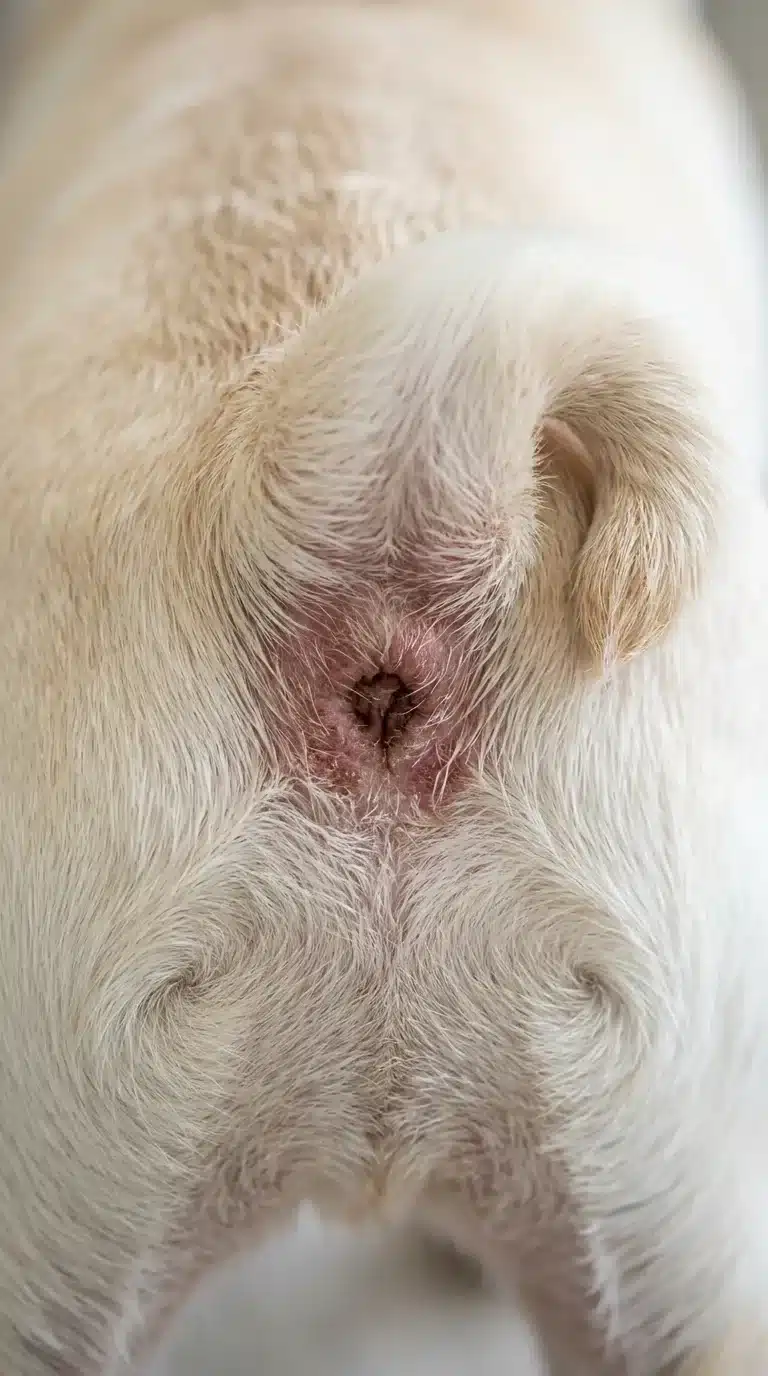
A French Bulldog’s tail pocket gets red because the tight skin fold traps moisture, dead skin cells, and bacteria — creating the perfect environment for infection. Yeast and bacterial overgrowth then cause inflammation, odor, and that distinctive redness.
- Moisture collects in the fold after bathing, rain, or sweating
- Dead skin cells build up when cleaning is infrequent
- Bacteria like Staphylococcus thrive in warm, damp skin folds
- Yeast (Malassezia) multiplies quickly without regular removal
- Friction from the tail pressing against skin worsens irritation
- Allergies can make skin more inflamed and easier to infect
What Is a Tail Pocket and Why Do Frenchies Have Them?
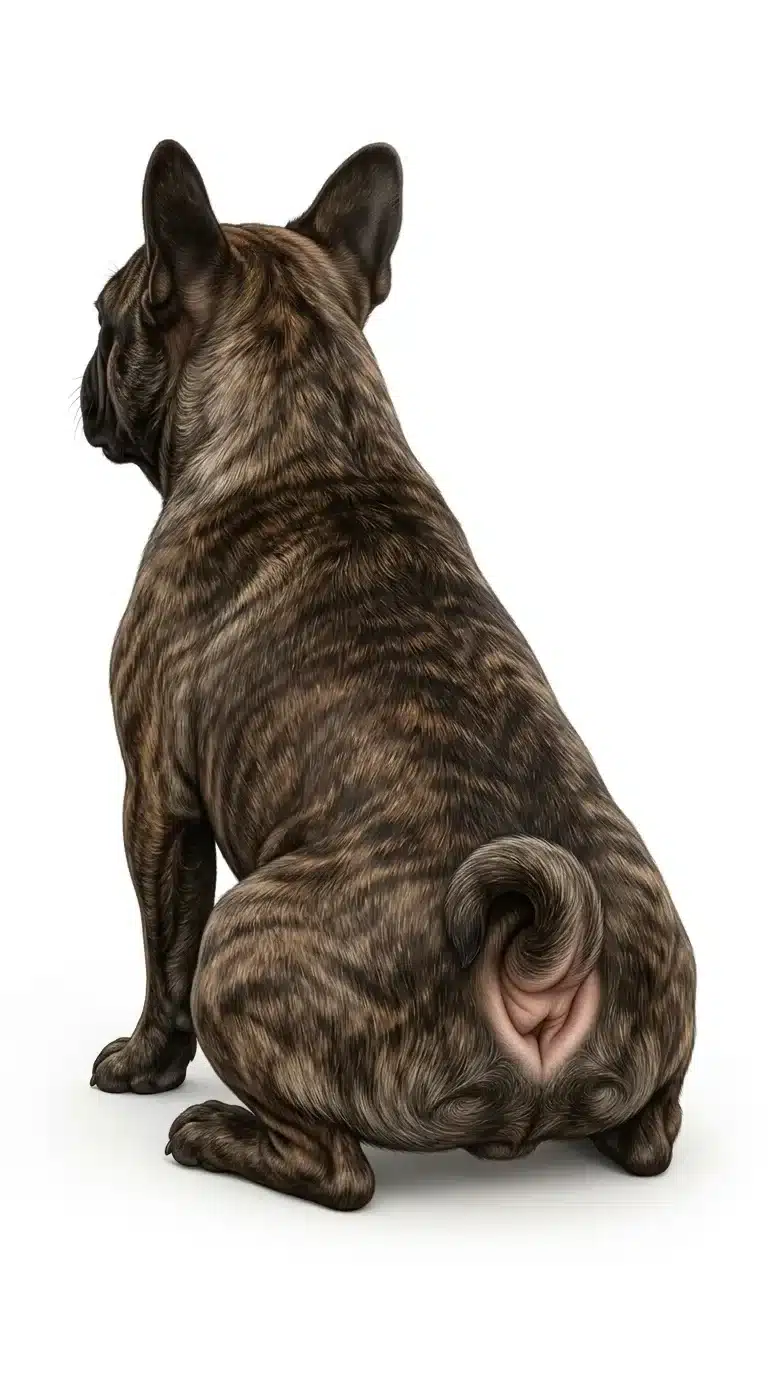
A tail pocket is a small indentation or fold of skin located just below or around the base of a French Bulldog’s screw tail. Not every Frenchie has one — but those with tighter, more inverted tails almost always do.
Get Weekly Dog Care Tips Free
Join 10,000+ dog owners. Vet-approved advice every week
🔒 No spam. Unsubscribe anytime.
The screw tail in French Bulldogs results from a vertebral malformation called hemivertebrae. According to the American College of Veterinary Surgeons, hemivertebrae are wedge-shaped vertebrae that cause the characteristic curled or kinked tail shape seen in brachycephalic breeds.
That tight curl creates the pocket — a hidden crease where skin folds against skin. The area gets zero airflow.
BEFORE YOU SCROLL PAST
Readers Also Loved:
👉 How To Spot Early Signs Of Canine Dementia In Senior Dogs
Zero airflow plus constant warmth equals a recurring infection risk, every single time.
How to Tell If Your Frenchie Has a Tail Pocket
Run a clean finger gently around the base of the tail. If you feel a noticeable indentation where the tail meets the body, that’s a tail pocket.
- Signs of an active pocket: redness, dark discharge, foul smell
- Healthy pocket: clean, dry, no odor
- No pocket: the tail base sits flush against the skin
Why the Redness Keeps Coming Back
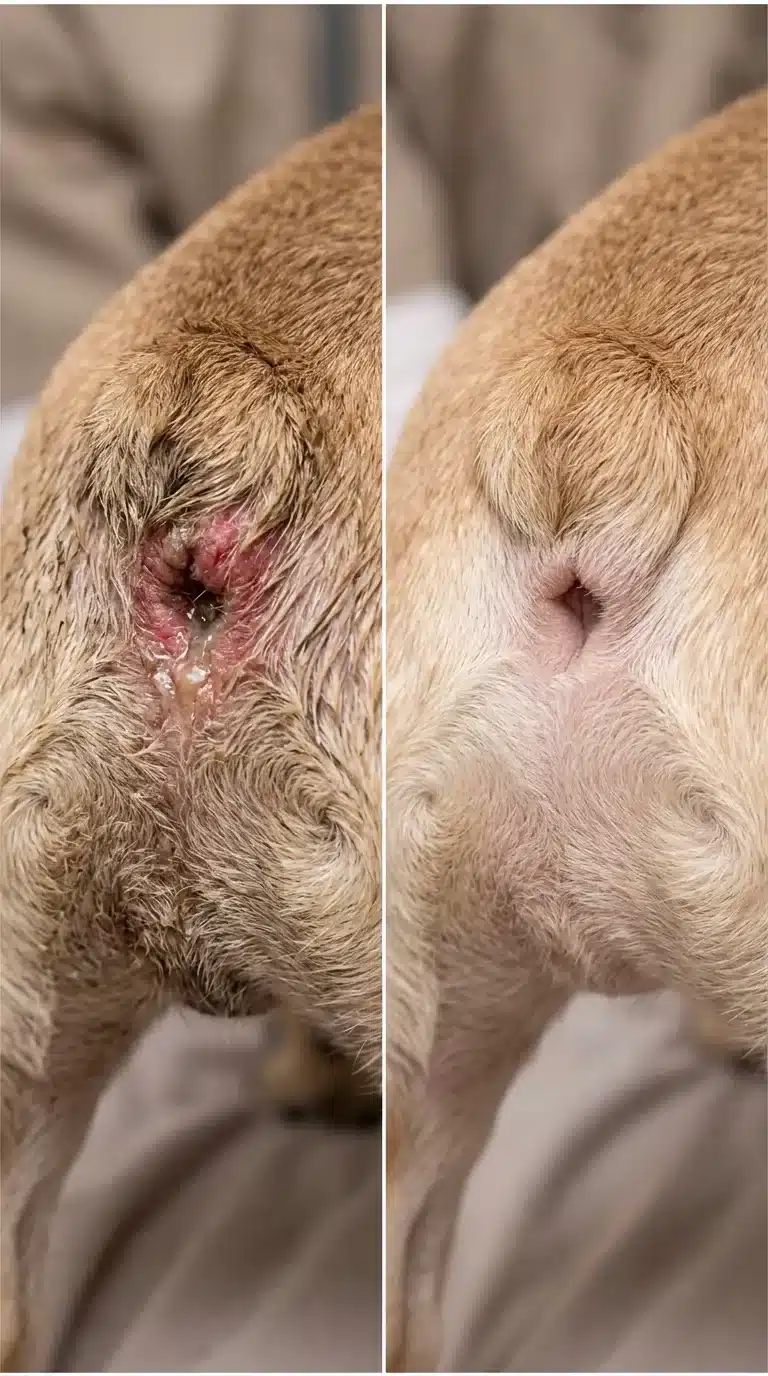
The redness returns because the underlying anatomy never changes. The fold is permanent, so unless you maintain a consistent cleaning routine, conditions for infection reset within days.
There are four main reasons the problem cycles back:
- Incomplete cleaning. Wiping the surface without reaching inside the fold leaves yeast and bacteria behind.
- Moisture left after cleaning. A damp pocket is worse than a dirty one — bacteria multiply faster in wet conditions.
- Infrequent maintenance. Cleaning once a week may not be enough for dogs with deep pockets.
- Underlying allergies. Food or environmental allergies keep skin inflamed, making it easier for secondary infections to take hold.
Allergies deserve specific attention. The Merck Veterinary Manual notes that atopic dermatitis — a common allergic skin condition in dogs — compromises the skin barrier and increases susceptibility to secondary bacterial and yeast infections in skin folds.
“Skin fold dermatitis in brachycephalic breeds is almost always a management problem first. The anatomy guarantees recurrence unless cleaning becomes a non-negotiable routine.” — General principle cited across veterinary dermatology literature on fold pyoderma
How to Clean a Frenchie Tail Pocket the Right Way
Cleaning the tail pocket correctly stops the cycle of redness. The key steps are reaching the full depth of the fold, using the right product, and — critically — drying it completely afterward.
- Gather your supplies. Use a dog-safe skin fold wipe or a cotton pad dampened with a vet-approved cleanser. Avoid alcohol-based wipes — they sting and dry out the skin barrier.
- Lift the tail gently. Use one hand to hold the tail up and away. This opens the pocket fully.
- Wipe in a single direction. Wipe from the inside of the fold outward. Never wipe back and forth — that reintroduces bacteria.
- Repeat with a fresh wipe. Continue until no discoloration appears on the wipe.
- Dry the area thoroughly. Use a dry cotton pad or a soft cloth to absorb every trace of moisture. This step is non-negotiable.
- Apply a barrier product if directed by your vet. A thin layer of veterinary skin barrier balm can protect skin between cleanings. Avoid zinc oxide products — they are toxic to dogs if licked.
Success for step 5 looks like: the skin is visibly dry to the touch, not just wiped. A damp pocket after cleaning will re-infect within 24–48 hours.
How Often Should You Clean It?
| Pocket Depth | Cleaning Frequency | Extra Notes |
|---|---|---|
| Shallow / mild | 2–3 times per week | Increase after swimming or baths |
| Moderate | Daily | Monitor for smell between cleanings |
| Deep / severe | Daily + vet check | May need medicated wipes or prescription treatment |
What Actually Helps When the Pocket Is Already Infected
When redness is already present, home cleaning alone may not be enough. Active infection — shown by yellow or brown discharge, strong odor, or skin that bleeds when wiped — needs veterinary attention.
BEFORE YOU SCROLL PAST
Readers Also Loved:
👉 How To Care For Your Female Frenchie During Her First Heat
Do not use human antiseptic products like hydrogen peroxide or Neosporin on a tail pocket without vet guidance.
A vet will typically do one or more of the following:
- Prescribe a topical antibiotic or antifungal cream for bacterial or yeast infections
- Recommend a medicated chlorhexidine wipe for daily maintenance
- Perform a skin cytology to identify whether bacteria, yeast, or both are present
- Discuss surgical correction (tail amputation) for severe or chronic cases
Surgical correction is a genuine option for dogs with recurring, painful infections. The procedure removes the inverted tail and eliminates the pocket entirely. It is considered a quality-of-life surgery when medical management keeps failing.
Diet and Allergies as a Root Cause
If your Frenchie’s tail pocket flares regularly even with good cleaning habits, allergies may be driving the inflammation from the inside out. Common culprits include chicken, beef, dairy, and environmental allergens like dust mites.
A veterinary-guided elimination diet trial — typically 8–12 weeks on a novel protein or hydrolyzed diet — can identify whether food is a factor. Resolving the allergy reduces baseline skin inflammation and makes the tail pocket far easier to manage.
MOST POPULAR THIS WEEK
Readers Also Loved: 👇
👉 How To Stop Dogs From Scratching Ears Raw
Common Mistakes That Make Things Worse
- Wiping without drying: Moisture left in the fold accelerates bacterial growth. Always finish with a dry wipe.
- Using baby wipes: Most baby wipes contain fragrance or preservatives that irritate dog skin. Use wipes formulated specifically for dogs.
- Cleaning only when it smells: By the time there’s an odor, infection is already established. Clean on a set schedule instead.
- Applying too much product: Thick creams or powders can block the fold and trap more debris. Use a thin, even layer only if a vet recommends it.
- Skipping the vet for recurring infections: Repeated infections without cytology testing mean treating blind — the wrong product for yeast won’t touch a bacterial infection, and vice versa.
Frequently Asked Questions About Why Your Frenchie’s Tail Pocket Keeps Getting Red and What Actually Helps
Is a red tail pocket always infected?
A red tail pocket is not always infected — redness can indicate mild irritation from friction or moisture without active infection. If there is discharge, odor, or bleeding, infection is likely and a vet visit is warranted.
Can I use coconut oil on my Frenchie’s tail pocket?
Coconut oil is not recommended for tail pockets because it can trap debris and promote yeast growth in a moist fold environment. A vet-approved barrier balm is a safer option if a product is needed.
How do I know if the infection is yeast or bacterial?
Yeast infections typically produce a musty or corn-chip smell and brown, waxy discharge. Bacterial infections often smell sharper and produce yellow or green discharge. A vet skin cytology test gives a definitive answer.
At what age do Frenchies develop tail pockets?
Frenchie tail pockets usually become noticeable between 6 months and 1 year of age as the dog’s adult body structure develops. Some puppies show signs earlier if their tail is deeply inverted from birth.
Does tail pocket surgery hurt the dog?
Tail pocket surgery, which involves removing the inverted tail, is performed under general anesthesia so the dog feels no pain during the procedure. Recovery typically takes 2–3 weeks and eliminates the recurring infection risk entirely.
Can a healthy diet reduce tail pocket infections?
A healthy, balanced diet supports the skin barrier and immune function, which can reduce the frequency of tail pocket infections. If allergies are involved, a vet-guided dietary change can make a significant difference in how often infections return.
Keep the Fold Clean and Stay Consistent
The single most important thing you can do for your Frenchie’s tail pocket is build a daily or near-daily cleaning habit before redness appears — not after. Consistent maintenance is what breaks the cycle.
Start today by checking the pocket, cleaning with a dog-safe wipe, and drying it completely. If the redness is already there or keeps returning despite regular care, book a vet appointment for a cytology test so treatment targets the right pathogen.
Caring for a Frenchie’s skin health extends beyond the tail pocket. If your dog is female and approaching maturity, understanding how to care for your female Frenchie during her first heat is another area where proactive attention makes a real difference. And if you’re ever considering breeding decisions, the guide on whether to breed a Frenchie in her first heat covers the health considerations worth knowing first.
Your Frenchie can’t tell you the fold is uncomfortable — but consistency and a proper grooming kit for skin fold care will make sure discomfort stays rare.


