How to Clean a Deep Tail Pocket on a French Bulldog at Home

Your French Bulldog’s tail pocket is one of the most overlooked spots on their body — and one of the most prone to infection. Dirt, moisture, and dead skin collect inside that small skin fold every single day.
Knowing how to clean a deep tail pocket on a French bulldog without a vet visit can save you time, money, and your dog a lot of discomfort. With the right tools and a consistent routine, this is completely manageable at home.
French Bulldogs also collect debris in their facial folds and ears, so if you already handle cleaning your French Bulldog’s ears safely, adding tail pocket care to that routine makes sense.
What Is a Tail Pocket and Why Does It Get Infected?
A tail pocket is a small indentation or skin fold located just beneath a French Bulldog’s screw tail. It traps moisture, fecal matter, and dead skin cells in a warm, dark environment — the ideal conditions for bacterial and yeast overgrowth.
Not every Frenchie has one. Tail pocket depth varies by the individual dog’s anatomy. Deep pockets are more common in dogs with tightly screwed tails.
- Bacteria and yeast thrive in warm, moist skin folds
- Fecal contamination is a primary driver of tail pocket infection
- Dogs with very tight screw tails are at highest anatomical risk
- Symptoms include redness, odor, discharge, and the dog scooting or biting at the area
Left untreated, a mildly dirty tail pocket can become a painful skin infection within days.
How Do You Clean a Deep Tail Pocket on a French Bulldog Without a Vet Visit?
Get Weekly Dog Care Tips Free
Join 10,000+ dog owners. Vet-approved advice every week
🔒 No spam. Unsubscribe anytime.
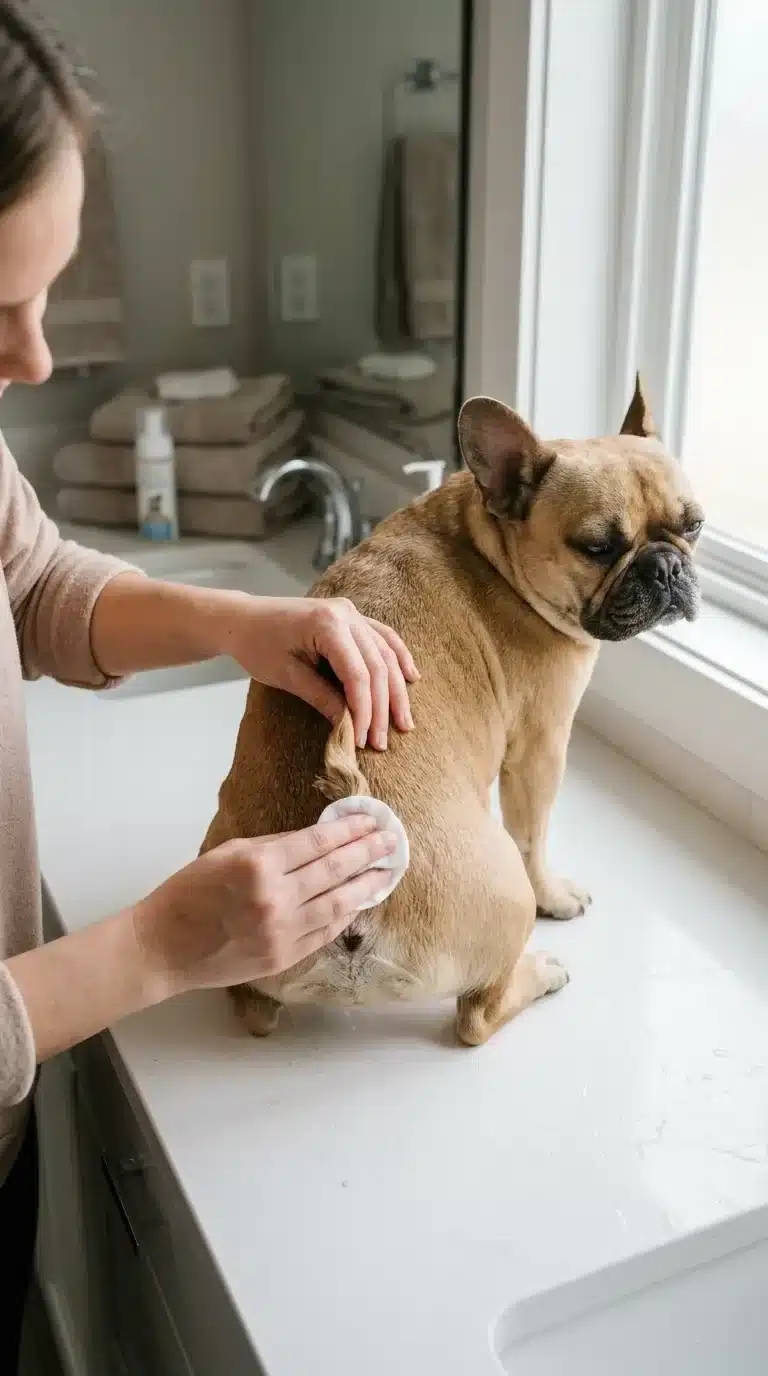
To clean a deep tail pocket on a French Bulldog without a vet visit, gently lift the tail, use a fragrance-free dog skin fold wipe or a cotton pad dampened with diluted chlorhexidine solution, and clean all surfaces inside the pocket. Dry the area thoroughly after cleaning. Repeat daily or every other day to prevent buildup.
BEFORE YOU SCROLL PAST
Readers Also Loved:
👉 How To Spot Early Signs Of Canine Dementia In Senior Dogs
- Use chlorhexidine 2% solution diluted to 0.05% with water for safe skin fold cleaning
- Cotton pads or soft gauze reach deeper than standard wipes
- Always dry the pocket completely — moisture left behind promotes reinfection
- Never use hydrogen peroxide or rubbing alcohol inside the pocket
- Coconut oil or a vet-approved barrier balm can protect skin after cleaning
What Supplies Do You Need Before You Start?
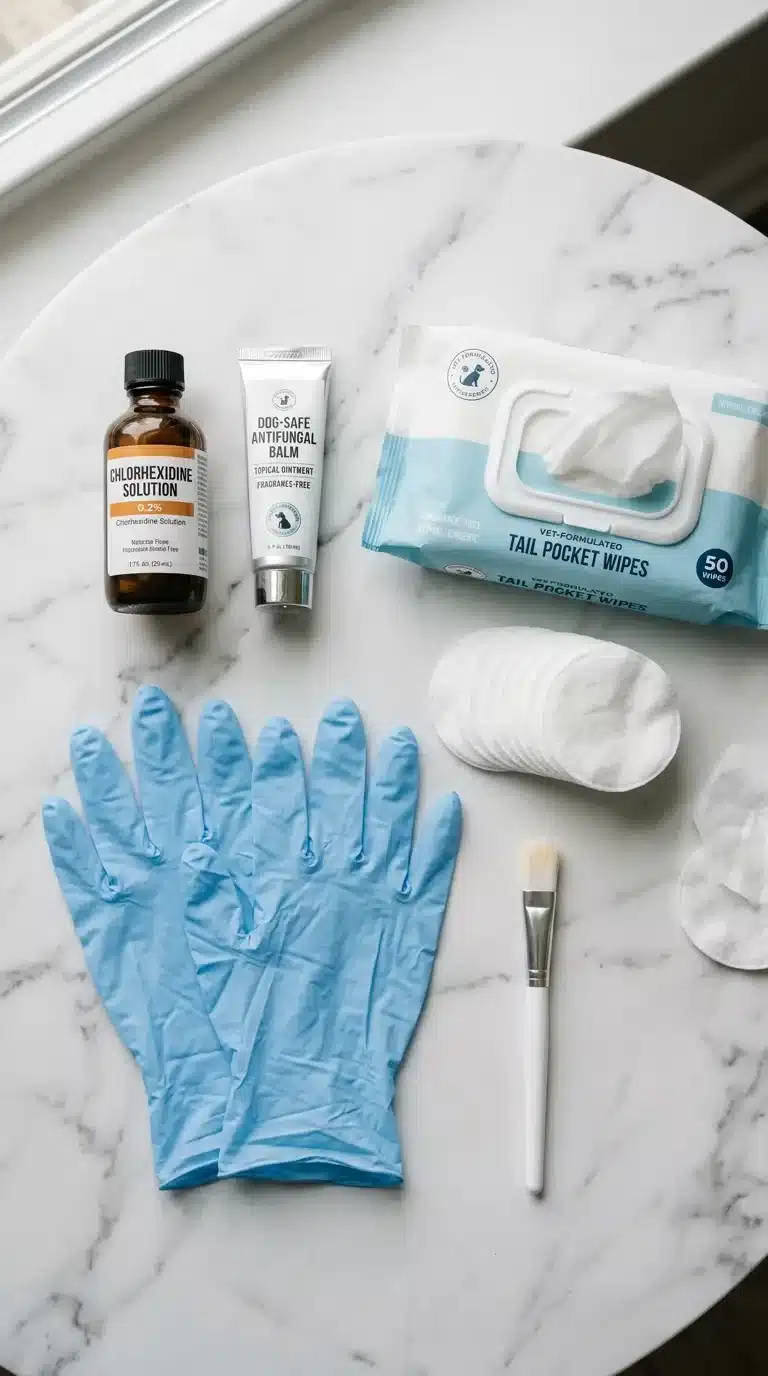
Gathering everything before you begin makes the process faster and less stressful for your dog. A squirming Frenchie mid-clean is harder to manage when you’re searching for supplies.
The Core Cleaning Kit
- Chlorhexidine solution (2%): Dilute with water before use; widely recommended by veterinary dermatologists for skin fold hygiene
- Cotton pads or gauze squares: Soft enough to avoid irritation, absorbent enough to lift debris
- Unscented dog skin fold wipes: Convenient for maintenance cleans between deeper sessions
- Small flashlight: Helps you see into deep pockets clearly
- Barrier balm or petroleum jelly: Protects the skin surface after cleaning
A pair of disposable grooming gloves keeps the process hygienic and protects your hands from any discharge or bacteria.
Skip any product containing alcohol, strong fragrance, or tea tree oil. These ingredients irritate already-sensitive skin folds and can worsen inflammation.
Step-by-Step: How to Clean the Tail Pocket at Home
Follow these steps in order. Skipping the drying step is the single most common reason infections return quickly after cleaning.
- Position your dog comfortably. Have your Frenchie stand or lie flat. A non-slip mat on a table or countertop works well. Reward calm behavior with a high-value treat to build positive associations.
- Locate the pocket. Gently lift the tail with one hand. Use a small flashlight to see the full depth of the fold. Note any redness, discharge color, or unusual smell — these details matter if you later need a vet.
- Dampen your cotton pad. Mix one part 2% chlorhexidine with 39 parts water to reach a safe 0.05% concentration. Saturate a cotton pad without making it dripping wet.
- Clean in gentle strokes. Wipe from the center of the pocket outward. Use a fresh pad for each pass. Continue until pads come away clean with no visible debris.
- Dry thoroughly. Use a dry cotton pad or soft gauze to absorb all remaining moisture. You can also use a cool setting on a small handheld fan for 30 seconds — never a hot dryer.
- Apply a thin barrier layer. A small amount of petroleum jelly or a dog-safe skin fold barrier balm helps keep moisture out between cleanings. Use sparingly — too much traps debris.
- Reward your dog. End every session positively. Consistent positive reinforcement makes future cleanings easier and reduces stress for both of you.
Success looks like: a clean, dry pocket with no odor, no discharge, and skin that is pink rather than red or raw.
How Often Should You Clean a French Bulldog Tail Pocket?
Cleaning frequency depends on your dog’s anatomy and how quickly buildup occurs. There is no single schedule that fits every Frenchie.
| Pocket Depth | Recommended Frequency | Notes |
|---|---|---|
| Shallow pocket | 2–3 times per week | Easier to self-clean; lower infection risk |
| Moderate pocket | Daily | Monitor for early signs of irritation |
| Deep pocket | Daily or twice daily | Higher infection risk; track any discharge |
| Active infection present | As directed by vet | Do not self-treat active infections alone |
Check the pocket every time you clean it for changes in odor, discharge color, or skin texture. Early detection prevents minor irritation from becoming a full skin infection.
French Bulldogs are also prone to other hygiene issues that benefit from a regular routine. If your dog is licking his paws excessively, that can signal broader skin sensitivity worth monitoring alongside tail pocket care.
BEFORE YOU SCROLL PAST
Readers Also Loved:
👉 How To Care For Your Female Frenchie During Her First Heat
Common Mistakes That Make Tail Pocket Problems Worse
These mistakes are easy to make — especially when you’re learning the routine for the first time.
- Skipping the drying step: Leaving any moisture in the pocket after cleaning creates the exact conditions that allow yeast and bacteria to grow back faster than before. Always dry completely.
- Using full-strength chlorhexidine: Undiluted 2% chlorhexidine is too concentrated for repeated skin fold use. It can cause chemical irritation that damages the skin barrier. Dilute to 0.05% every time.
- Cleaning too infrequently: Waiting until you can smell an odor means the infection is already established. Build cleaning into your dog’s daily routine before problems start.
- Using baby wipes or scented wipes: Many contain alcohol, preservatives, or fragrances that irritate sensitive skin. Use only wipes specifically formulated for dog skin folds.
- Ignoring early warning signs: Redness that doesn’t clear within 48 hours, green or yellow discharge, bleeding, or your dog showing pain during cleaning all require a vet visit — not more home treatment.
The American Veterinary Medical Association advises owners to recognize that skin fold dermatitis in brachycephalic breeds like French Bulldogs can escalate rapidly without proper hygiene management.
When Should You See a Vet Instead of Cleaning at Home?
Home cleaning handles routine maintenance. It does not replace veterinary care when an infection has already taken hold.
According to veterinary dermatology guidelines, skin fold infections (intertrigo) that involve pustules, ulceration, or signs of systemic illness — such as fever or lethargy — require prescription topical or systemic antibiotics, not home cleaning alone.
Watch for these signs that indicate a vet visit is needed:
- Yellow or green discharge with a strong odor
- Broken or ulcerated skin inside the pocket
- Your dog yelping or pulling away sharply during gentle cleaning
- Swelling or heat around the tail base
- No improvement after 3–4 days of consistent cleaning
French Bulldogs with very deep tail pockets that repeatedly become infected may be candidates for a surgical procedure called tail fold resection. A veterinarian can assess whether surgery would reduce long-term risk.
MOST POPULAR THIS WEEK
Readers Also Loved: 👇
👉 How To Stop Dogs From Scratching Ears Raw
Because Frenchies are a brachycephalic breed, any procedure involving anesthesia requires extra caution. Understanding French Bulldog breathing challenges helps you have a more informed conversation with your vet about surgical options if it ever comes to that.
Using chlorhexidine-based skin fold wipes as part of your daily maintenance routine is one of the most practical ways to stay ahead of infections between deeper cleaning sessions.
Frequently Asked Questions About How to Clean a Deep Tail Pocket on a French Bulldog Without a Vet Visit
Can I use baby wipes to clean my French Bulldog’s tail pocket?
Baby wipes are not recommended for cleaning a French Bulldog’s tail pocket. Most contain fragrances, preservatives, or alcohol that irritate sensitive skin folds and can trigger or worsen inflammation.
How do I know if my French Bulldog has a tail pocket infection?
Signs of a tail pocket infection include persistent odor, redness, discharge (especially yellow or green), and your dog scooting or biting near the tail base. These symptoms indicate bacteria or yeast have already taken hold.
Is chlorhexidine safe to use on a French Bulldog’s tail pocket?
Chlorhexidine is safe when diluted correctly to a 0.05% concentration for skin fold use. Full-strength 2% chlorhexidine should never be applied directly — always dilute it with water before use.
How long does it take for a tail pocket infection to clear up with home cleaning?
Mild irritation often improves within 3–5 days of consistent cleaning and drying. If there is no visible improvement after four days of proper home care, a vet visit is the right next step.
Do all French Bulldogs have tail pockets?
Not all French Bulldogs have tail pockets — it depends on their individual tail anatomy. Dogs with tightly screwed or corkscrew tails are most likely to have a deep pocket requiring regular cleaning.
Can I use coconut oil inside the tail pocket?
Coconut oil can be used sparingly as a skin barrier after the pocket is fully clean and dry. Applying it to a dirty or moist pocket can trap debris and promote bacterial growth rather than prevent it.
Keep It Simple, Keep It Consistent
The most effective approach to tail pocket care is a steady daily routine — clean, dry, protect. That three-step habit prevents the vast majority of infections before they need medical attention.
Start today by checking your Frenchie’s tail pocket after their next meal. Note its depth, any odor, and the skin color. That 60-second check gives you a clear baseline to work from.
If you already maintain a grooming routine — including regular ear cleaning for your French Bulldog — adding tail pocket care takes only a few extra minutes and makes a real difference in your dog’s comfort and skin health.