
Tail Pocket Infection vs Irritation in French Bulldogs

Your French Bulldog keeps scooting, licking near the base of the tail, or smells a little off — and you are not sure what is going on back there. Understanding the difference between tail pocket infection vs irritation in French Bulldogs can save your dog from unnecessary pain and save you from an avoidable vet visit.
This guide covers every sign to look for, how to care for a tail pocket at home, and the exact moments when a vet needs to step in. If you are new to Frenchie anatomy, it helps to first understand whether French Bulldogs have a tail and what makes their tail structure unique.
What Is the Difference Between a Tail Pocket Infection and Irritation in French Bulldogs?
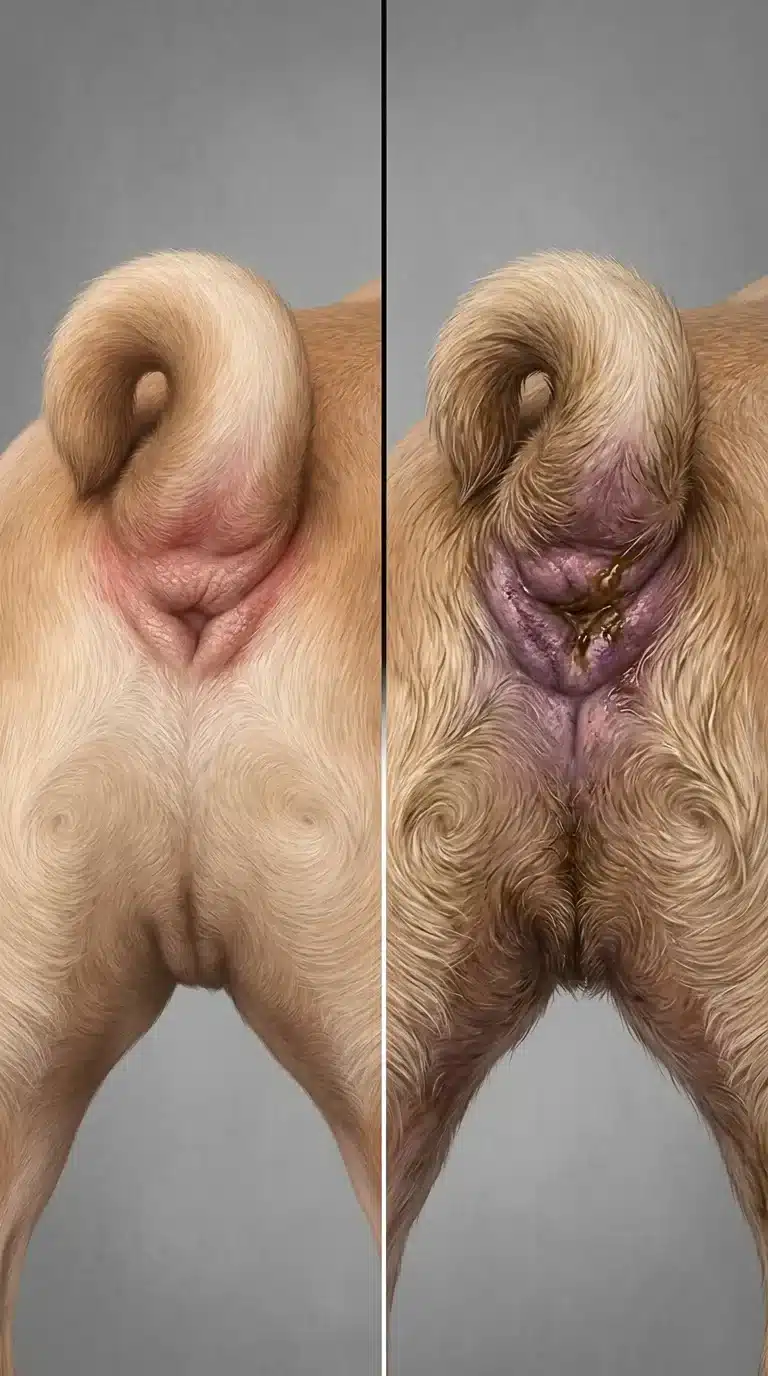
A tail pocket infection is caused by bacteria or yeast growing inside the skin fold beneath the tail, while irritation is surface-level inflammation without active microbial overgrowth. Irritation can become an infection within days if the fold stays moist and unwashed.
- Irritation: redness, mild odor, occasional scratching — no discharge present
- Infection: dark discharge, strong smell, visible swelling, or broken skin
- Infection often causes pain when the area is touched or cleaned
- Yeast infections produce a musty, corn-chip odor; bacterial infections smell more pungent
- Both conditions require cleaning, but infections usually need prescription treatment
Does Every French Bulldog Have a Tail Pocket?
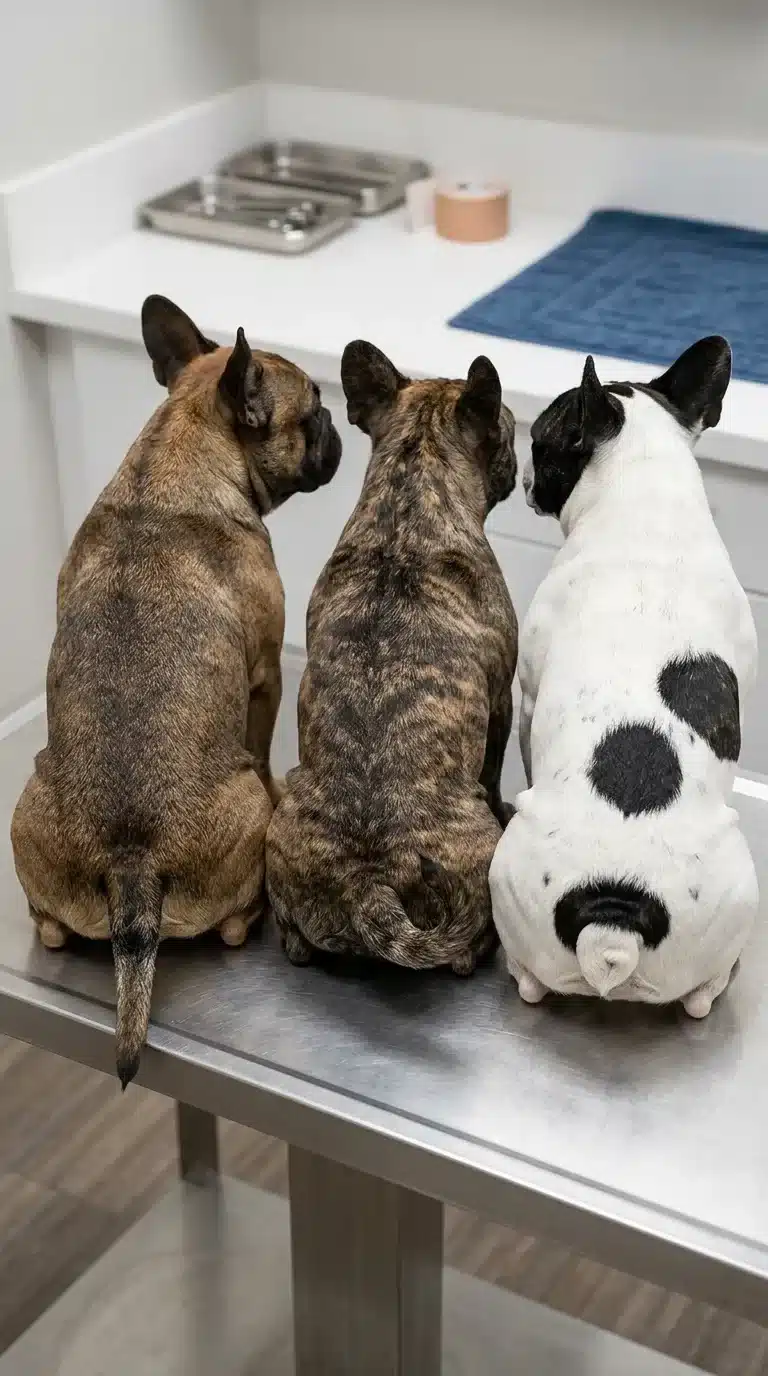
Not every French Bulldog has a tail pocket. The fold only appears in dogs with a screw or tight corkscrew tail, where the tail sits flush against the body and creates a hidden skin crease beneath it.
According to the American Veterinary Medical Association (AVMA), brachycephalic breeds — including French Bulldogs — are predisposed to skin fold dermatitis because of their compact body structure. The tail pocket is one of several fold-related problem zones in the breed.
Get Weekly Dog Care Tips Free
Join 10,000+ dog owners. Vet-approved advice every week
🔒 No spam. Unsubscribe anytime.
If your Frenchie has a straighter or stub tail, a pocket may not exist at all. Checking takes about ten seconds: lift the tail gently and look for a crease or indentation in the skin below it.
No visible crease means no pocket — and no pocket means this particular problem is off the table.
BEFORE YOU SCROLL PAST
Readers Also Loved:
👉 How To Spot Early Signs Of Canine Dementia In Senior Dogs
How to Tell If a Tail Pocket Is Irritated or Infected
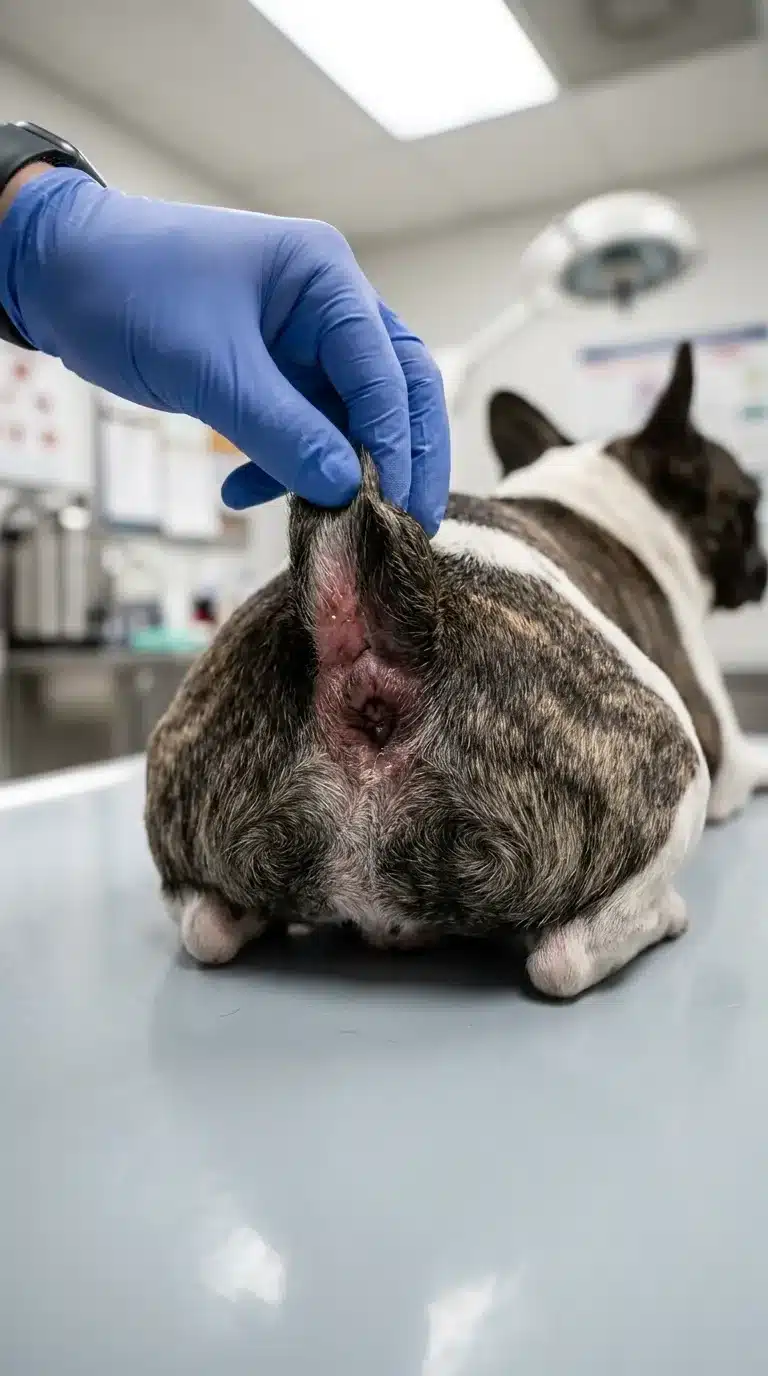
Signs of Irritation
Irritation is the earlier, milder stage. The skin inside the fold looks pink or lightly red but remains intact. There may be a faint odor after a day or two without cleaning.
- Mild redness inside the fold
- Slight smell that clears after cleaning
- Occasional licking or scooting — not constant
- No discharge or visible moisture buildup
Signs of Infection
An infection signals that bacteria or yeast have taken hold. The signs are noticeably more intense and do not clear with a single cleaning session.
- Dark brown, gray, or black discharge inside the fold
- Strong, persistent odor that returns within hours of cleaning
- Visible swelling or warmth around the tail base
- Your dog flinches, growls, or pulls away when the area is touched
- Broken skin, scabbing, or hair loss near the tail pocket
“Skin fold dermatitis in dogs progresses quickly from inflammation to secondary infection when the affected area stays warm and moist. Early intervention is the most effective strategy.” — Merck Veterinary Manual, Dermatology section
How to Clean and Care for a Tail Pocket at Home
Routine cleaning is the single best way to prevent irritation from becoming infection. Cleaning once or twice per week is standard for most Frenchies with tail pockets, though dogs prone to buildup may need daily attention.
- Gather your supplies. Use unscented hypoallergenic dog wipes or a cotton ball dampened with a veterinarian-approved skin fold cleanser. A skin fold cleaning wipe designed for bulldogs works well here.
- Lift the tail gently. Hold it with one hand and use the other to wipe inside the fold in one smooth motion. Do not scrub — friction irritates the skin further.
- Remove all discharge or debris. Use a fresh wipe for each pass until the wipe comes back clean. This may take two or three passes for dogs with heavier buildup.
- Dry the area thoroughly. Moisture trapped in the fold is the direct cause of both irritation and infection. A soft dry cloth or a small amount of cornstarch-free baby powder (vet-approved) helps absorb residual moisture.
- Apply a protective balm if recommended. A thin layer of dog-safe skin fold balm can create a barrier against friction and moisture between cleanings.
- Reward your dog. Keeping the experience positive makes future cleanings easier and less stressful for both of you.
Consistency matters more than technique — a quick clean every two days beats an intensive clean once a month.
French Bulldogs with sensitive skin or existing allergies may react to certain cleaning products. If your dog shows signs of environmental reactivity, the guide on identifying and treating environmental allergies in French Bulldogs covers ingredient sensitivities that are worth knowing before you choose a cleanser.
When to See a Vet for a Tail Pocket Problem
A vet visit is necessary when home cleaning does not resolve the issue within 48 to 72 hours, or when any signs of active infection appear. Infections require prescription treatment — over-the-counter products alone are rarely enough.
| Situation | Home Care | Vet Visit Needed |
|---|---|---|
| Mild redness, no odor | Yes | No |
| Faint odor that clears after cleaning | Yes | No |
| Discharge present | Clean while waiting | Yes |
| Strong odor returns within hours | Clean while waiting | Yes |
| Swelling, broken skin, or pain | Do not delay | Yes — urgent |
| Dog licking constantly or unable to sit comfortably | Do not delay | Yes — urgent |
A vet will likely prescribe a topical antibiotic or antifungal, and sometimes a short course of oral antibiotics for severe bacterial infections. In chronic or recurring cases, surgical correction of the tail pocket (tail fold resection) may be recommended.
BEFORE YOU SCROLL PAST
Readers Also Loved:
👉 How To Care For Your Female Frenchie During Her First Heat
Caring for a Frenchie with this kind of recurring issue does add to the overall effort the breed requires. The full picture on how much care French Bulldogs actually need is worth reading before assuming one cleaning routine solves everything.
Common Mistakes Owners Make with Tail Pocket Care
- Using human antiseptic products like hydrogen peroxide or rubbing alcohol. These damage skin tissue and worsen inflammation. Use only products labeled safe for dog skin folds.
- Cleaning without drying. Leaving moisture in the fold after cleaning creates the exact environment that bacteria and yeast thrive in. Always finish with a dry wipe or cloth.
- Waiting too long to see a vet. Irritation can escalate to a deep infection within a few days. If discharge appears, book an appointment the same day — not the same week.
- Skipping cleanings when the dog seems fine. The fold needs routine maintenance even when there are no visible symptoms. Buildup starts before odor or redness becomes obvious.
- Using a cotton swab to probe deep into the fold. This can push debris further in and scratch delicate skin. A flat wipe or cotton ball is safer and more effective.
Frequently Asked Questions About Tail Pocket Infection vs Irritation in French Bulldogs: Signs, Care, and When to See a Vet
How do I know if my French Bulldog’s tail pocket is infected or just irritated?
An infected tail pocket has discharge, a strong persistent odor, swelling, or causes pain when touched. Irritation looks like mild redness with a faint smell that clears after cleaning — no discharge present.
Can I treat a tail pocket infection at home without a vet?
Mild irritation responds well to regular cleaning and drying at home. A true infection — with discharge, strong odor, or broken skin — requires prescription medication from a vet and should not be treated with home remedies alone.
How often should I clean my French Bulldog’s tail pocket?
Most French Bulldogs with tail pockets need cleaning two to three times per week. Dogs prone to heavy buildup may need daily cleaning, especially in warm or humid weather when moisture accumulates faster.
What does a tail pocket infection smell like?
A bacterial tail pocket infection smells pungent and foul, similar to rotting material. A yeast infection smells musty or like corn chips. Either odor returning within hours of cleaning signals that an infection is present.
MOST POPULAR THIS WEEK
Readers Also Loved: 👇
👉 How To Stop Dogs From Scratching Ears Raw
Will a tail pocket infection go away on its own?
Tail pocket infections do not resolve on their own. Without treatment, the infection typically worsens and can spread to surrounding skin. A vet visit for prescription antifungal or antibiotic treatment is necessary once infection sets in.
Is tail pocket surgery ever necessary for French Bulldogs?
Tail pocket surgery — called tail fold resection — is recommended when infections recur repeatedly despite proper cleaning and medication. The procedure removes the skin fold entirely, eliminating the environment where bacteria and yeast thrive.
Final Thoughts
The gap between irritation and infection is narrow, and it closes fast. Catching the signs early and cleaning consistently is what keeps a minor skin fold issue from becoming a painful, expensive problem for your dog.
Start today by checking your Frenchie’s tail pocket — lift the tail, look for a crease, and wipe it clean if you find one. If discharge or strong odor is already present, call your vet this week rather than waiting to see if it clears. Good nutrition also supports skin health from the inside; choosing the best food for French Bulldogs with sensitive stomachs can reduce inflammatory responses that make skin folds more vulnerable.


