How to Clean and Treat an Irritated French Bulldog Tail Pocket at Home

Your French Bulldog is scooting, chewing at their rear, or giving off an unpleasant smell — and you suspect the tail pocket is the culprit. You are probably right.
Tail pockets are a common but often overlooked feature of the French Bulldog anatomy. Learning how to clean and treat an irritated French Bulldog tail pocket at home can save your dog from serious discomfort and prevent recurring infections.
This guide walks you through everything: spotting trouble early, cleaning safely, and knowing when to call the vet.
What Is a French Bulldog Tail Pocket and Why Does It Get Irritated?
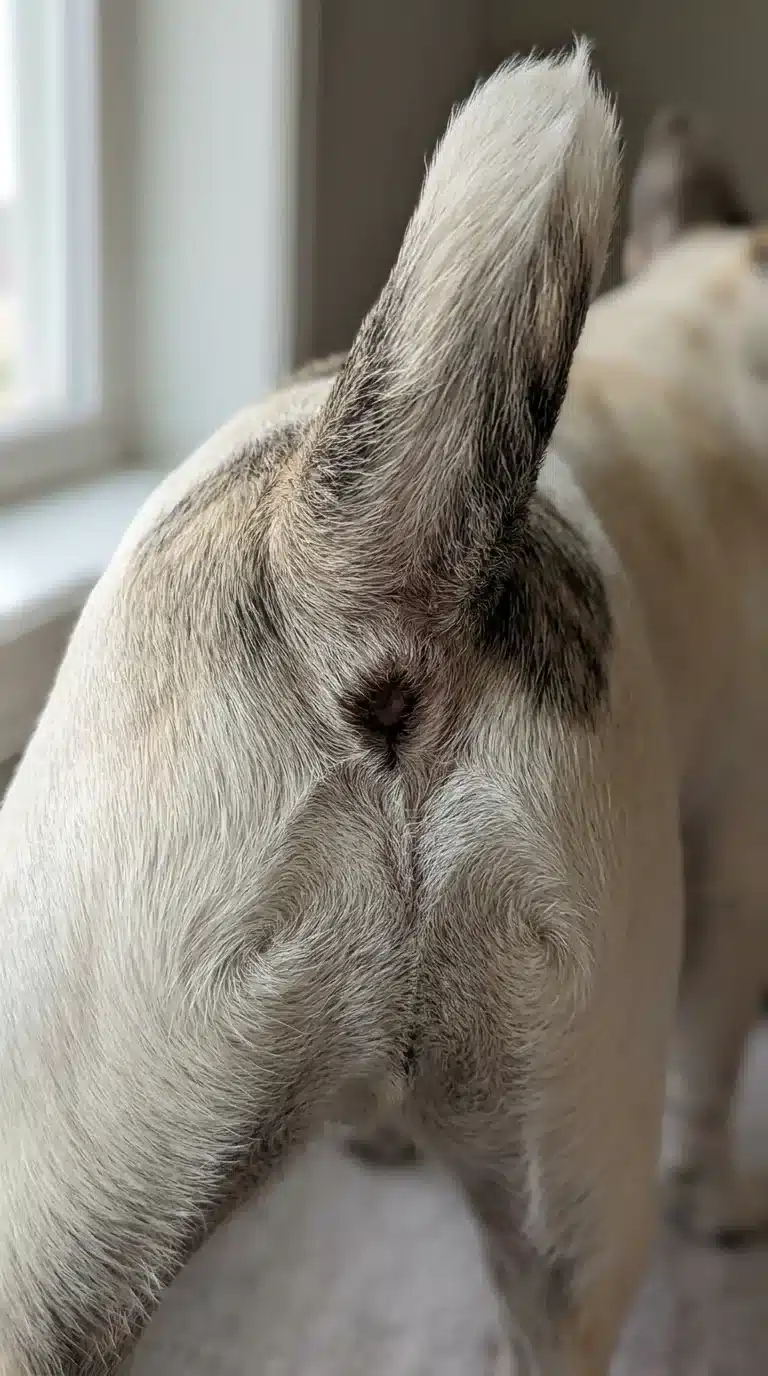
A tail pocket is a small skin fold located just beneath or around the base of a French Bulldog’s screw tail. It traps moisture, debris, and bacteria — creating the perfect environment for irritation and infection.
Not every Frenchie has a deep tail pocket. Some are barely noticeable, while others are pronounced enough to collect significant buildup within days.
- Moisture from bathing, rain, or humidity collects in the fold
- Dead skin cells, fecal matter, and oils accumulate quickly
- Yeast and bacteria thrive in warm, dark, damp skin folds
- Friction from the tail itself worsens existing inflammation
- Allergies can make the skin more prone to yeast overgrowth
If left uncleaned, a tail pocket can develop a full yeast or bacterial infection within days.
Get Weekly Dog Care Tips Free
Join 10,000+ dog owners. Vet-approved advice every week
🔒 No spam. Unsubscribe anytime.
French Bulldogs are prone to skin fold issues across their whole body. If your dog also struggles with environmental allergies in French Bulldogs, those allergies can make tail pocket flare-ups more frequent and harder to manage.
BEFORE YOU SCROLL PAST
Readers Also Loved:
👉 How To Spot Early Signs Of Canine Dementia In Senior Dogs
How Do You Clean an Irritated French Bulldog Tail Pocket at Home?
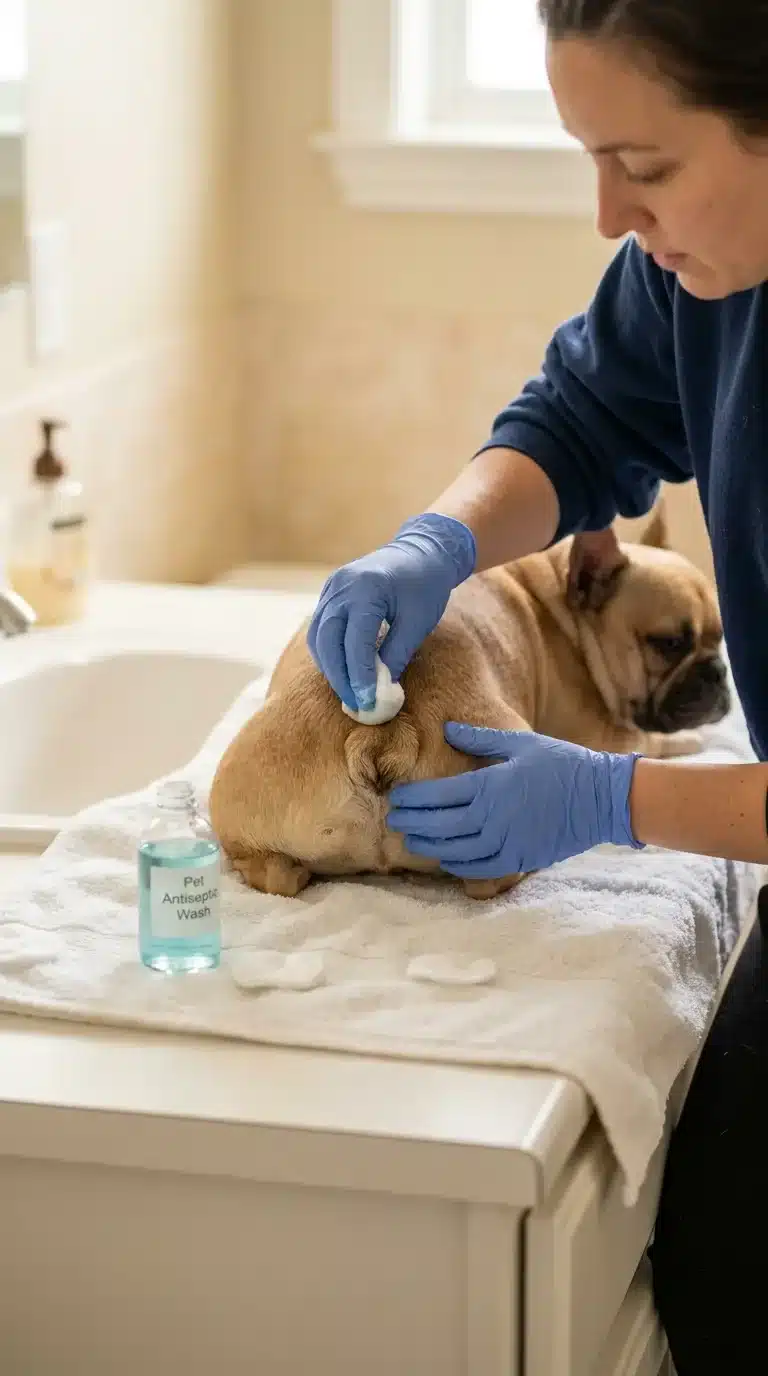
To clean an irritated French Bulldog tail pocket at home, gently lift the tail, wipe the fold with a fragrance-free, alcohol-free pet wipe or a cotton pad dampened with diluted chlorhexidine solution, then dry the area thoroughly. Clean the pocket every one to three days depending on severity. Never leave moisture behind — dampness accelerates bacterial and yeast growth.
- Use fragrance-free, pH-balanced wipes designed for dog skin folds
- Diluted chlorhexidine (0.05%–0.1%) is safe and effective for cleaning
- Dry with a clean cotton pad or soft cloth after every clean
- Apply a thin layer of pet-safe barrier balm after drying to protect skin
- Never use hydrogen peroxide — it damages healthy tissue
- Avoid baby wipes containing propylene glycol or fragrance
What Supplies Do You Need?
Having the right tools makes the process faster and less stressful for your dog. Keep these on hand before you start.
- Chlorhexidine dog skin fold wipes — the safest single-use option for irritated folds
- Sterile cotton pads or gauze for drying
- Pet-safe skin fold barrier balm to protect the area between cleanings
- Disposable gloves to protect your hands and prevent cross-contamination
Step-by-Step: How to Clean the Tail Pocket
- Position your dog — Have them stand or lie on their stomach. A helper to keep them still is useful for wiggly dogs.
- Lift the tail gently — Use one hand to lift the tail upward and expose the skin fold beneath. Do not force the tail if there is resistance.
- Inspect the pocket — Look for redness, dark discharge, white or yellow crust, or a foul smell. Note how deep the fold is.
- Wipe in one direction — Use a fresh wipe or dampened cotton pad. Wipe from the inside of the fold outward. Never scrub back and forth — this spreads bacteria.
- Repeat with clean pads — Use a new pad each pass until no visible debris transfers. Two to four passes is typical for a moderately dirty pocket.
- Dry completely — Press a dry cotton pad firmly into the fold and hold for five to ten seconds. Success looks like a clean, dry pad with no moisture transfer.
- Apply barrier balm — A thin layer of balm creates a protective barrier. Too much product traps moisture, so use sparingly.
How Do You Know If a Tail Pocket Infection Needs a Vet?
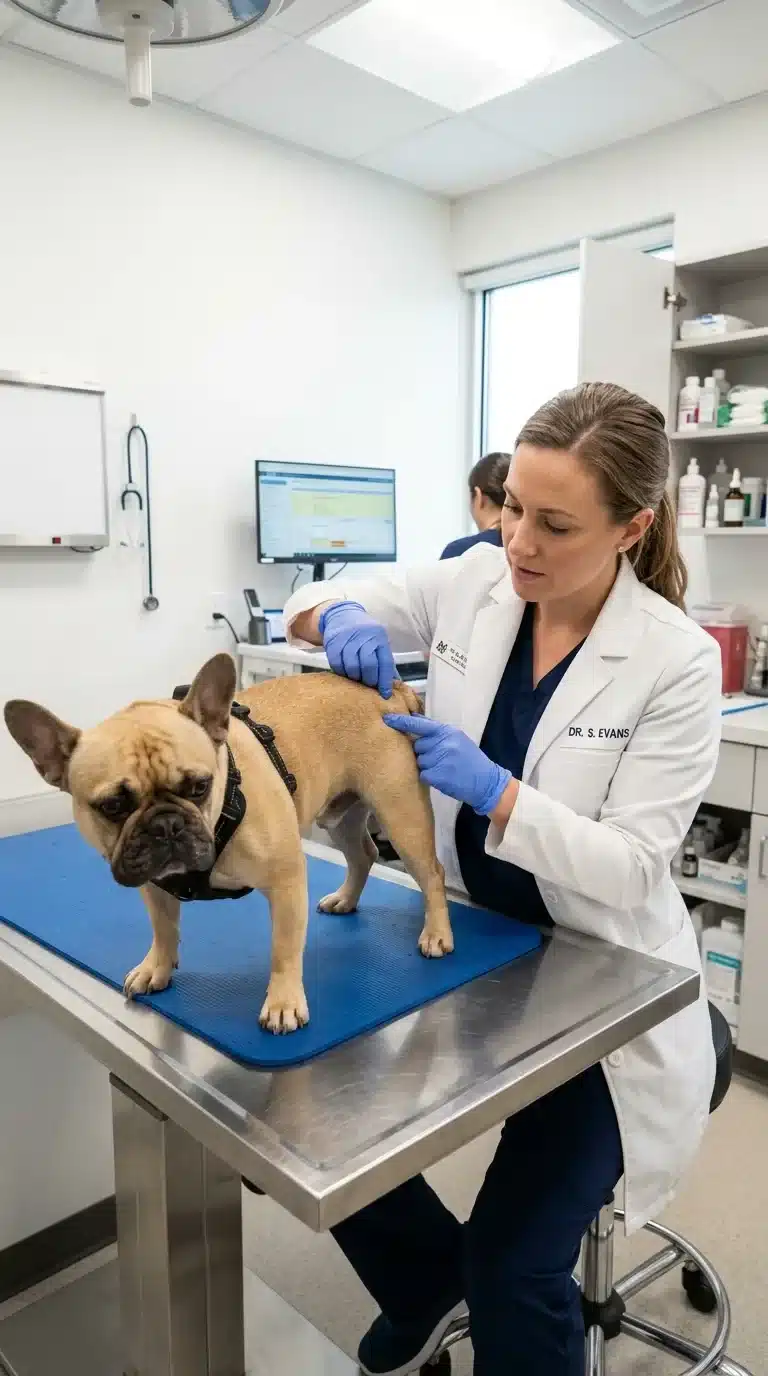
Some tail pocket irritation resolves with consistent home cleaning within five to seven days. Signs that a vet visit is necessary include swelling, bleeding, green or yellow discharge, or a dog that yelps when the area is touched.
A mild irritation looks pink and dry after cleaning. An infected pocket stays red, warm, and moist despite regular care.
“Skin fold dermatitis in brachycephalic breeds can progress from mild inflammation to deep pyoderma quickly. Early treatment is far more effective than waiting for obvious infection signs.” — General guidance from veterinary dermatology literature on brachycephalic skin fold management.
| Symptom | Home Treatment OK? | Vet Visit Needed? |
|---|---|---|
| Mild redness, no odor | Yes | No |
| Musty smell, minor discharge | Yes, monitor closely | If no improvement in 5 days |
| Yellow or green discharge | No | Yes — promptly |
| Swelling or bleeding | No | Yes — same day |
| Dog cries when area touched | No | Yes — same day |
The American Veterinary Medical Association (AVMA) recommends seeking professional care any time a skin infection shows signs of spreading or does not respond to topical care within one week.
How Often Should You Clean a French Bulldog Tail Pocket?
Healthy tail pockets with no irritation should be cleaned two to three times per week as routine maintenance. An actively irritated or infected pocket needs daily cleaning until symptoms resolve.
Frequency also depends on your dog’s individual anatomy. A deep, tight pocket traps more debris and needs more frequent attention than a shallow one.
BEFORE YOU SCROLL PAST
Readers Also Loved:
👉 How To Care For Your Female Frenchie During Her First Heat
- Shallow pocket, no symptoms — clean 2–3 times per week
- Moderate fold, no symptoms — clean every other day
- Any visible redness or odor — clean daily until resolved
- Post-bath — always clean and dry the pocket immediately after bathing
Consistency matters more than perfection — a quick daily wipe prevents most infections before they start.
The same logic applies to other skin folds on your Frenchie’s body. If you already have a routine for cleaning French Bulldog ears safely, adding the tail pocket to that session keeps care efficient and consistent. You can also find a detailed breakdown of how to clean French Bulldog ears if you want to combine these routines.
What Topical Treatments Work for an Irritated Tail Pocket?
For mild irritation, a pet-safe antifungal or antibacterial spray applied after cleaning can reduce yeast and bacterial load significantly. Look for products containing miconazole or chlorhexidine as active ingredients — both are well-documented in veterinary dermatology.
Do not use over-the-counter human antifungal creams without vet guidance. Many contain inactive ingredients that are irritating or toxic to dogs if licked.
Safe Topical Options
- Chlorhexidine spray (2–4%): Broad-spectrum antibacterial and antifungal, widely used in veterinary practice
- Miconazole-based spray: Effective specifically against Malassezia yeast, a common culprit in skin fold infections
- Zinc oxide-free barrier balm: Protects healed skin between cleanings — confirm the formula is zinc-free, as zinc is toxic to dogs
- Dog antifungal chlorhexidine spray — look for veterinary-formulated options at 2% concentration
If your dog is constantly licking or chewing near their rear end, the irritation may extend beyond the tail pocket. Persistent licking behavior — including why French Bulldogs lick their paws — often signals a systemic allergy response worth investigating.
MOST POPULAR THIS WEEK
Readers Also Loved: 👇
👉 How To Stop Dogs From Scratching Ears Raw
Common Mistakes When Treating a French Bulldog Tail Pocket
Avoiding these errors will protect your dog’s skin and prevent infections from getting worse.
- Leaving moisture in the fold: Moisture is the primary driver of yeast and bacterial growth. Always dry thoroughly after every clean. Use a dry cotton pad and press it firmly into the pocket.
- Using scented or alcohol-based wipes: These strip the skin’s natural barrier and cause further irritation. Switch to fragrance-free, alcohol-free pet wipes formulated for skin folds.
- Over-applying balm or cream: Too much product clogs the fold and traps humidity. A thin, barely-visible layer is all you need.
- Cleaning only when symptoms appear: By the time you notice redness or smell, the infection is already underway. Regular preventive cleaning is the only reliable solution.
- Skipping the vet when discharge appears: Yellow or green discharge signals bacterial infection requiring prescription antibiotics or antifungals — topical home care alone will not resolve it.
Frequently Asked Questions About How to Clean and Treat an Irritated French Bulldog Tail Pocket at Home
How do I know if my French Bulldog has a tail pocket?
To find a tail pocket, gently lift the base of your French Bulldog’s tail and look for a skin fold or indentation beneath it. If you feel a crease or pocket of skin, your dog has a tail pocket that needs regular cleaning.
Can I use baby wipes to clean my Frenchie’s tail pocket?
Most baby wipes contain fragrance or propylene glycol, which can irritate a dog’s sensitive skin folds. Use fragrance-free, alcohol-free pet wipes formulated specifically for dog skin folds instead.
How long does it take for an irritated tail pocket to heal?
A mildly irritated tail pocket typically improves within five to seven days of consistent daily cleaning and proper drying. Infected pockets with discharge require veterinary treatment and may take two to four weeks to fully resolve.
Is tail pocket surgery ever necessary for French Bulldogs?
Tail pocket surgery — called a tail fold resection — is recommended when chronic infections do not respond to medical management. A veterinarian can assess whether your dog’s anatomy makes recurring infections unavoidable without surgical intervention.
Can a dirty tail pocket affect my French Bulldog’s overall health?
Yes — an untreated infected tail pocket can spread to surrounding skin and, in severe cases, lead to systemic infection. Consistent cleaning prevents localized infections from escalating into more serious health problems.
Does diet affect French Bulldog tail pocket infections?
Diet can influence yeast overgrowth — high-carbohydrate or grain-heavy diets may contribute to chronic yeast issues in sensitive dogs. Discussing a dietary adjustment with your vet is worth considering if infections keep recurring despite regular cleaning.
Keep It Clean, Keep It Dry
The single most important rule for French Bulldog tail pocket care is this: clean it, dry it, and do it consistently. Moisture and debris are the enemy — remove them before they become a problem.
Start today by checking your dog’s tail pocket, gathering fragrance-free wipes and a barrier balm, and building the clean into your existing grooming routine. If you already maintain a schedule for French Bulldog ear care, add the tail pocket to the same session — it takes less than two minutes once you have the habit.
Your Frenchie cannot tell you when it hurts. Regular checks and preventive care are the most effective thing you can do for their comfort and long-term skin health.