
Free Labrador Retriever Amigurumi Crochet Pattern


The Labrador Retriever is one of the most beloved dog breeds in the world — and for good reason.
With their warm, soulful eyes, wide honest face, and loyal personality, Labs are the kind of dog that makes everyone smile.
This free amigurumi pattern lets you capture every bit of that Lab charm in crochet.
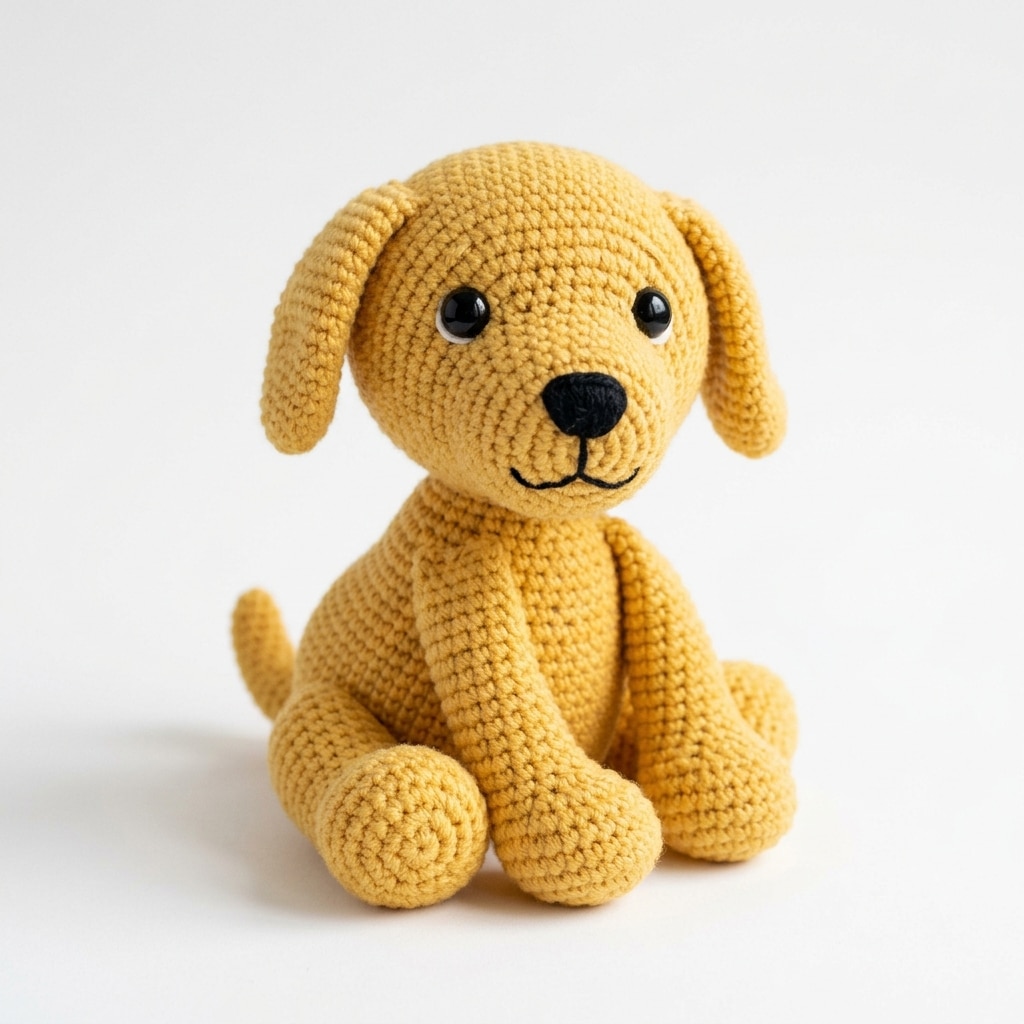
You’ll get a sturdy, huggable seated puppy with a round dome head, wide-set eyes, floppy ears, and those satisfyingly chunky little paws.
The pattern is beginner-friendly and uses single crochet only — no complicated stitches, no tricky techniques.
Let’s get started.
Want a different shape to try next?
Get Free Amigurumi Patterns Every Week!
Get new patterns, & tutorials free in your inbox
🔒 No spam. Unsubscribe anytime.
Pattern At A Glance
| Skill Level | Beginner – Intermediate |
| Finished Size | Approximately 7 inches tall seated |
| Yarn Weight | Worsted Weight (#4) |
| Hook Size | US G/6 (4.0mm) |
| Stitches Used | Single crochet, slip stitch |
| Techniques | Magic ring, invisible decrease, BLO, continuous rounds |
| Time to Complete | 8–12 hours |
| Stuffing | Polyester fiberfill |
| Safety Eyes | 12mm black safety eyes |
| Number of Pieces | 8 — Head, Muzzle, 2 Ears, Body, 2 Front Legs, 2 Back Legs, Tail |
| Yarn Colors Needed | 1 main coat color |
| Best For | Gift, keepsake, nursery decor, dog lover, pet memorial |
The breed this whole site is named after:
🐾 French Bulldog French Bulldog Crochet Pattern for Every Skill Level See this pattern →Materials You Will Need
Gather everything before you start — switching yarn mid-project creates visible differences in tension and stitch definition.
Yarn
- Main Coat Color — Approx. 200–240 yds — Lion Brand Pound of Love in “Honey” — this rich golden mustard captures the classic yellow Lab coat perfectly.
Tools & Notions
- US G/6 (4.0mm) crochet hook
- Polyester fiberfill
- Two 12mm black safety eyes
- Black embroidery floss (for nose and mouth)
- Tapestry needle
- Stitch markers (at least 2)
- Scissors
- Straight pins
🛒 Yarn Tip: For a chocolate Lab, swap to Lion Brand Pound of Love “Chocolate.” For a black Lab, use Lion Brand Wool-Ease “Black.” The entire pattern works identically — just the yarn color changes.
Abbreviations & Stitch Guide
This pattern uses US crochet terminology throughout.
| Abbreviation | Meaning |
|---|---|
| MR | Magic ring |
| ch | Chain |
| sl st | Slip stitch |
| sc | Single crochet |
| inc | Increase — 2 sc in the same stitch |
| dec | Invisible decrease |
| BLO | Back loop only |
| st(s) | Stitch(es) |
| rnd | Round |
| rep | Repeat |
| ( ) x# | Repeat the instructions in parentheses the stated number of times |
| [ ] | Total stitch count at end of round |
💡 Invisible Decrease: Insert your hook into the front loop of the next stitch, then the front loop of the stitch after that. Complete as a normal single crochet. This keeps decreases invisible on the outside — essential for smooth, rounded amigurumi shapes.
Gauge
4 stitches x 4 rows = 1 inch in single crochet using US G/6 (4.0mm) hook and worsted weight yarn.
For amigurumi, consistent firm tension matters more than matching gauge exactly.
Your fabric should be tight enough that no stuffing shows through when gently stretched.
WAIT — READ THIS FIRST
Most Popular This Week: 👇
👉 French Bulldog Crochet Tutorial
👉 Crochet Maltese Puppy Amigurumi Pattern
Pattern Notes — Read Before You Begin
- All pieces are worked separately and assembled at the end.
- All rounds are continuous — do not join with a slip stitch or chain at the start of each round unless stated.
- Place a stitch marker at the first stitch of each round and move it up every round — this prevents losing count.
- Count stitches at the end of every single round — catching a missed stitch early saves significant time.
- Begin stuffing pieces before the opening gets too small to fill properly.
Free Labrador Retriever Crochet Pattern — Full Instructions
All pieces worked separately and sewn together during assembly.
Love a loyal, alert breed?
🐕 German Shepherd German Shepherd Crochet Pattern Grab the pattern →Head

The Lab’s head is the most important piece — large, rounded, and slightly domed, it gives this breed its warm, expressive look.
Work extra firmly here; a soft head tilts forward under the weight of the ears.
Rnd 1: MR, 6 sc. [6]
Rnd 2: Inc x6. [12]
Rnd 3: (Sc, inc) x6. [18]
Rnd 4: (2 sc, inc) x6. [24]
Rnd 5: (3 sc, inc) x6. [30]
Rnd 6: (4 sc, inc) x6. [36]
Rnd 7: (5 sc, inc) x6. [42]
Rnd 8: (6 sc, inc) x6. [48]
Rnd 9–15: Sc around. [48] — 7 plain rounds
Rnd 16: (6 sc, dec) x6. [42]
Rnd 17: (5 sc, dec) x6. [36]
→ Insert 12mm safety eyes between Rnds 10–11, exactly 10 stitches apart. Attach muzzle before closing.
Rnd 18: (4 sc, dec) x6. [30]
Rnd 19: (3 sc, dec) x6. [24]
→ Begin stuffing firmly. Continue adding stuffing as the opening closes.
Rnd 20: (2 sc, dec) x6. [18]
Rnd 21: (Sc, dec) x6. [12]
Rnd 22: Dec x6. [6]
Fasten off leaving a 12-inch tail. Close the 6-stitch gap with a tapestry needle and set aside.
💡 Head Tip: Stuff the head harder than feels natural — it needs to support the weight of the ears and the neck connection without drooping forward.
Muzzle
The muzzle is worked in your main coat yarn — the same golden color as the head.
It’s a rounded oval dome that protrudes slightly from the face and anchors the nose and mouth embroidery.
Rnd 1: MR, 6 sc. [6]
Rnd 2: Inc x6. [12]
Rnd 3: (Sc, inc) x6. [18]
Rnd 4: (2 sc, inc) x6. [24]
Rnd 5: Sc around. [24]
Rnd 6: Sc around. [24]
→ Do not stuff. Flatten gently with your fingers into a slight dome shape before sewing.
Fasten off leaving a 14-inch tail for sewing.
💡 Muzzle Tip: Embroider the nose and mouth onto the muzzle piece BEFORE attaching it to the head — it’s much easier to work on a flat piece than on an assembled face.
Ears — Make 2
The Lab’s ears are worked flat in rows, giving them the natural soft drape and forward fold that makes this breed instantly recognizable.
Do not stuff — they should lie completely flat.
Ch 13.
Row 1: Sc in 2nd ch from hook, sc across. [12]
Row 2: Ch 1, turn. Sc across. [12]
Row 3: Ch 1, turn. Sc across. [12]
Row 4: Ch 1, turn. Sc across. [12]
Row 5: Ch 1, turn. Sc across. [12]
Row 6: Ch 1, turn. Sc across. [12]
Row 7: Ch 1, turn. Dec, sc 8, dec. [10]
Row 8: Ch 1, turn. Sc across. [10]
Row 9: Ch 1, turn. Dec, sc 6, dec. [8]
Row 10: Ch 1, turn. Sc across. [8]
Row 11: Ch 1, turn. Dec, sc 4, dec. [6]
Row 12: Ch 1, turn. Dec, sc 2, dec. [4]
Row 13: Ch 1, turn. Dec, dec. [2]
Fasten off leaving a 10-inch tail. Do not stuff.
💡 Ear Tip: When pinning the ears to the head, fold the top edge of each ear very slightly forward before sewing — this recreates the natural Lab ear fold at the skull. Lock the fold in place with a couple of extra stitches when sewing on.
One more tiny friend to make:
🐶 Yorkie This Yorkie Crochet Pattern Beginners Love Click to see →Body
The Lab body is a firm, overstuffed oval — wider at the middle, tapering toward the neck and base.
Labs are solid, muscular dogs and the body should feel almost hard when squeezed.
Rnd 1: MR, 6 sc. [6]
Rnd 2: Inc x6. [12]
Rnd 3: (Sc, inc) x6. [18]
Rnd 4: (2 sc, inc) x6. [24]
Rnd 5: (3 sc, inc) x6. [30]
Rnd 6: (4 sc, inc) x6. [36]
Rnd 7: (5 sc, inc) x6. [42]
Rnd 8–16: Sc around. [42] — 9 plain rounds
Rnd 17: (5 sc, dec) x6. [36]
Rnd 18: Sc around. [36]
Rnd 19: (4 sc, dec) x6. [30]
Rnd 20: Sc around. [30]
→ Stuff very firmly at this point — add more than feels necessary.
Rnd 21: (3 sc, dec) x6. [24]
Rnd 22: (2 sc, dec) x6. [18]
Rnd 23: (Sc, dec) x6. [12]
Rnd 24: Dec x6. [6]
Fasten off leaving a 12-inch tail. Close the gap and set aside.
💡 Body Tip: The finished body should resist a firm squeeze with almost no give. If it collapses even slightly, add more stuffing before closing.
Front Legs — Make 2
The front legs are worked from the paw upward — starting with a wider rounded base that narrows into the leg tube.
They should be stuffed lightly so they hang and drape naturally against the body.
Rnd 1: MR, 6 sc. [6]
Rnd 2: Inc x6. [12]
Rnd 3: (Sc, inc) x6. [18] — paw base
Rnd 4: Sc around. [18]
Rnd 5: (Sc, dec) x6. [12] — narrow to leg
Rnd 6–14: Sc around. [12] — 9 rounds of leg length
→ Stuff lightly — front legs should remain soft enough to drape naturally.
Rnd 15: Dec x6. [6]
Fasten off leaving a 12-inch tail. Close the gap.
💡 Front Leg Tip: Don’t overstuff the front legs — they should hang forward and slightly outward from the body, not stick out rigidly like tubes.
Back Legs — Make 2
The back legs are wider and rounder than the front legs, with a larger paw base that sits flat on the surface and keeps the seated pose stable.
Rnd 1: MR, 6 sc. [6]
Rnd 2: Inc x6. [12]
Rnd 3: (Sc, inc) x6. [18]
Rnd 4: (2 sc, inc) x6. [24] — wide paw base
Rnd 5: Sc around. [24]
Rnd 6: (2 sc, dec) x6. [18] — narrow to leg
Rnd 7–13: Sc around. [18] — 7 rounds of leg length
→ Stuff firmly throughout.
Rnd 14: (Sc, dec) x6. [12]
Rnd 15: Dec x6. [6]
Fasten off leaving a 12-inch tail.
💡 Back Leg Tip: Stuff the paw area more firmly than the upper leg — a dense paw keeps the piece stable when seated. Flatten the base of each paw slightly before sewing on.
Tail
The Lab tail is a short, gently tapered nub — just enough to give the back of the piece its characteristic silhouette.
Rnd 1: MR, 4 sc. [4]
Rnd 2: Inc x4. [8]
Rnd 3: Sc around. [8]
Rnd 4: Sc around. [8]
Rnd 5: Sc around. [8]
Rnd 6: (Sc, dec) x2, sc 2. [6]
Rnd 7: Sc around. [6]
→ Stuff lightly — the tail should be a small soft nub, not a stiff tube.
Fasten off leaving an 8-inch tail for sewing.
Another friendly face to try next:
🐶 Pug Pug Crochet Pattern Try this one →Face Details
All face embroidery is worked on the muzzle piece BEFORE it is attached to the head.
Nose: Using black embroidery floss, work a filled triangle of satin stitch at the top center of the muzzle. Make it wider than feels natural — at least 5–6 stitches across. A small nose reads as a different breed entirely.
Mouth: From the base center of the nose triangle, bring the floss down and angle outward at each side in a gentle inverted V shape — giving the Lab its characteristic soft, warm expression.
Eye highlight: Once safety eyes are locked in, add a single white highlight stitch at the upper-left of each eye for the warm, soulful look this breed is known for.
TRENDING RIGHT NOW
Readers Also Loved: 👇
👉 Amigurumi Poodle Puppy Crochet Free Patterns
👉 Golden Retriever Crochet Pattern Amigurumi
👉 Goldendoodle Crochet Pattern Free Cute Amigurumi Dog
Assembly — Putting Your Lab Together
Pin every piece before sewing a single stitch. Check from the front, both sides, and above before committing.
- Embroider the nose and mouth on the muzzle piece first.
- Sew the muzzle to the lower center of the face — the top edge just below the safety eyes, centered horizontally.
- Attach the head to the top center of the body, angling it very slightly forward for a natural puppy lean rather than a stiff upright pose.
- Pin both ears to the sides of the head, just behind and above the eye line. The wide attachment edge goes against the head — fold the top edge slightly forward before sewing for the Lab droop. Sew firmly through both fabric layers.
- Attach both front legs to the lower front sides of the body, angling slightly outward and forward.
- Attach both back legs to the lower rear sides of the body, angling outward so the paws sit flat and wide.
- Sew the tail to the lower center back of the body.
- Weave in all ends with at least two direction changes per tail. Pull-test every seam firmly.
📸 Photo Tip: Shoot the finished piece at eye level on a clean white surface. This angle shows the wide muzzle, warm eyes, and soft ear drape all at once — exactly the look that converts browsers into buyers on Etsy and Pinterest.
Labrador Retriever Color Guide
| Lab Variety | Yarn Recommendation |
|---|---|
| Yellow Lab — Golden | Lion Brand Pound of Love “Honey” |
| Yellow Lab — Pale Cream | Lion Brand Pound of Love “Blossom” or Red Heart Soft “Ivory” |
| Yellow Lab — Fox Red | Red Heart Super Saver “Carrot” or Lion Brand Wool-Ease “Pumpkin” |
| Black Lab | Lion Brand Wool-Ease “Black” or Red Heart Super Saver “Black” |
| Chocolate Lab | Lion Brand Pound of Love “Chocolate” or Caron Simply Soft “Chocolate” |
| Silver / Charcoal | Bernat Super Value “Pewter” or Red Heart Soft “Charcoal” |
🏆 Pinterest Winner: The golden yellow Lab is the most-saved Lab colorway on Pinterest by a wide margin. If you’re making one for your shop or blog, start here.
Beginner Tips for the Best Results
Most important step: Stuff the head extra firmly before closing — this is the single step beginners skip that causes the most problems.
Most common mistake: Placing the ears too far back on the head. They sit just behind and above the eye line, not at the very top or back of the skull.
Muzzle placement: Pin the muzzle higher than feels natural before sewing. Too low creates a sad, drooping expression.
Nose embroidery: Work it wider than feels right. A narrow nose reads as a different breed. At least 5 stitches across is the minimum for a recognizable Lab nose.
Ear attachment: Check the ear angle from directly in front before sewing — even a 2-stitch difference changes the entire expression of the finished piece.
Most rewarding moment: When the ears fall into that natural Lab droop after attachment — the whole piece suddenly looks exactly like a real puppy.
Sizing Options
| Size | Yarn & Hook | Finished Height |
|---|---|---|
| Mini keychain | Fingering weight #1 · US B/1 (2.25mm) | ~2.5 inches |
| Standard | Worsted weight #4 · US G/6 (4.0mm) | ~7 inches |
| Large cuddly | Super Bulky #6 · US K/10.5 (6.5mm) | ~14 inches |
For the mini version, simplify the muzzle to a flat circle and omit the tail. Attach a split ring keychain through the top of the head before closing.
Frequently Asked Questions
How long does this pattern take to complete?
Most crocheters finish the full piece in 8–12 hours across 2–3 sittings. The head and body together take roughly 4–5 hours. The legs and assembly take the rest.
Can I use DK weight yarn instead of worsted?
Yes — switch to a US E/4 (3.5mm) hook. Your finished Lab will be approximately 5 inches tall instead of 7.
My ears keep flopping the wrong direction after assembly — what do I do?
The fold direction matters. Fold the top edge of each ear forward (toward the muzzle) before sewing, not backward. Lock the fold with 2–3 extra stitches at the attachment point.
Can I substitute the magic ring with a chain start?
Yes — chain 2, work all starting stitches into the second chain from the hook, then pull the starting tail to close.
Can I sell finished items made from this pattern?
Yes. You may sell finished handmade items made from this pattern. Please do not copy or resell the written pattern instructions themselves.
How do I customize this for someone’s specific real-life Lab?
Match the yarn to the dog’s coat color in natural daylight at Joann or Michaels. For Labs with lighter chest patches, add a small oval of lighter yarn to the front chest during assembly.
Love a fluffy coat too?
🐕 Shih Tzu Fluffy Shih Tzu Crochet Pattern Explore pattern →Final Thoughts
The Labrador Retriever is one of the most satisfying amigurumi projects because the finished piece is immediately recognizable — even to people who don’t crochet.
The wide honest face, the chunky body, and that soft ear drape all come together into something that makes people stop and smile.
Take your time with the muzzle embroidery and the ear placement — those two steps are the difference between a generic dog plush and a piece that looks exactly like a Lab.
When your Lab is finished, share a photo on Pinterest with a clean white background — that single image style consistently drives saves and repins for handmade dog patterns.


