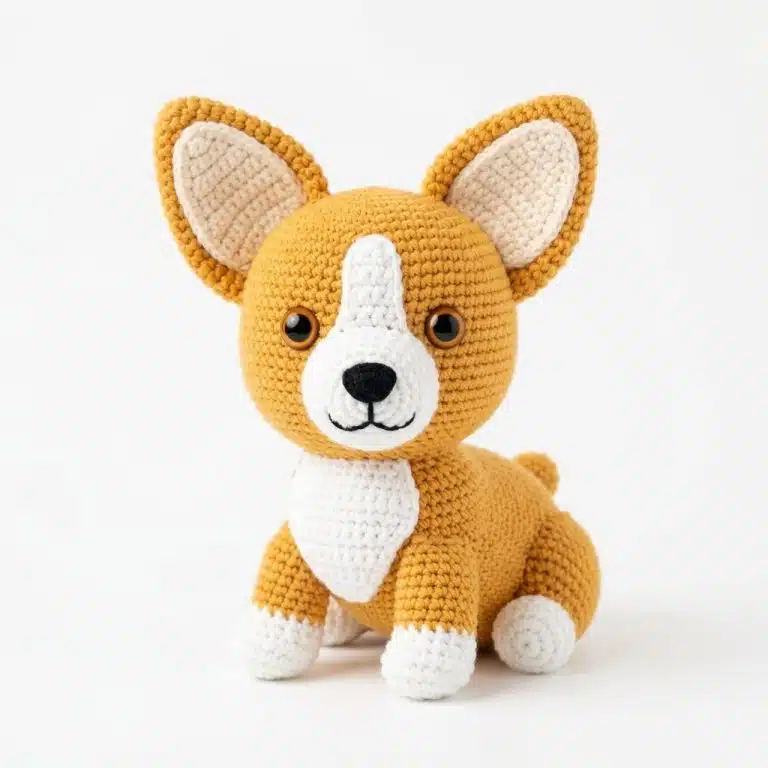
Shih Tzu Crochet Pattern Ideas for 5 Adorable and Creative Projects

Shih Tzu crochet patterns let crafters turn soft yarn into a small, detailed dog with charm and personality. They can choose from realistic designs, simple no-sew options, and detailed amigurumi styles created by skilled pattern makers. These patterns help bring the Shih Tzu’s round face, long coat, and compact body to life in yarn form.

This guide shows how different Shih Tzu crochet patterns fit various skill levels, styles, and project goals. It also covers helpful material choices and clear ways to customize each project. With the right pattern and tools, anyone can create a handmade Shih Tzu that feels personal and true to the breed.
Quick Tips Before You Start
Before jumping into your first Shih Tzu crochet project, a few simple tips can make the process easier and more enjoyable.
Choose soft yarn
Shih Tzus are fluffy dogs, so soft yarn works best.
Popular options include:
- Acrylic yarn
- Cotton yarn
- Plush velvet yarn
- Chenille yarn for extra softness
Recommended hook sizes
Get Free Amigurumi Patterns Every Week!
Get new patterns, & tutorials free in your inbox
🔒 No spam. Unsubscribe anytime.
Most amigurumi patterns use:
- 2.5 mm – 3.5 mm hooks for tight stitches
- 4 mm hooks for softer plush yarn
Understand skill levels
- Beginner: simple shapes and basic stitches
- Intermediate: more shaping and assembly
- Advanced: realistic details and color changes
Safety eyes vs embroidery
You can choose between:
- Plastic safety eyes (quick and realistic)
- Embroidered eyes (safer for baby toys)
Estimated project time
Depending on complexity:
- Small patterns: 2–3 hours
- Medium plush toys: 4–6 hours
- Detailed designs: 6–10 hours
In my experience, crochet animals are much more enjoyable when you take your time and focus on neat stitches rather than speed.
Mini Crochet Shih Tzu Tutorial
Here is a simple beginner mini pattern inspired by Shih Tzu crochet pattern ideas.
This example shows the general structure of a crochet dog.
Want a different shape to try next?
🐕 Dachshund This Dachshund Crochet Pattern Has a Fun Shape Free pattern →Materials
- Brown yarn
- White yarn
- 3 mm hook
- 8 mm safety eyes
- Polyester stuffing
- Yarn needle
Love a striking color contrast?
🐕 Husky Husky Crochet Pattern With Bold Markings See this pattern →Abbreviations
MR – Magic ring
sc – single crochet
inc – increase
dec – decrease
sl st – slip stitch
WAIT — READ THIS FIRST
Most Popular This Week: 👇
👉 French Bulldog Crochet Tutorial
👉 Sewing Patterns Cat Free Pdf Printables Printablee
👉 Shih Tzu Crochet Pattern Ideas
Another friendly face to try next:
🐕 Boxer Beginner-Friendly Boxer Crochet Pattern Grab the pattern →Head Pattern (Rounds)
Round 1
MR, 6 sc
Round 2
inc in each stitch (12)
Round 3
(sc, inc) repeat around (18)
Round 4–6
sc around (18)
Round 7
(sc, dec) repeat around (12)
Insert safety eyes between rounds 4–5.
Stuff the head lightly.
Body Pattern (Rounds)
Round 1
MR, 6 sc
Round 2
inc around (12)
Round 3–5
sc around
Round 6
(sc, dec) repeat (8)
Stuff lightly.
Assembly Instructions
- Sew the head onto the body
- Crochet two small ears
- Attach them to the sides of the head
- Embroider the nose and mouth
- Add a tiny tail
You now have a simple crochet Shih Tzu.
1) Crochet Dog Breeds Collection Shih Tzu Pattern by Birdsandcrickets

Birdsandcrickets offers a Shih Tzu pattern as part of a Crochet Dog Breeds Collection. The design focuses on a realistic look with careful shaping and detailed stitching. It comes as a digital PDF pattern.
The pattern includes step-by-step instructions and photo guidance. It suits intermediate crocheters who feel comfortable with amigurumi techniques. The finished piece captures the breed’s long ears, rounded face, and compact body.
The designer sells the pattern through an online shop and a crochet pattern library. It works well for dog lovers who want to create a handmade Shih Tzu plush.
2) Baby Shih Tzu No-Sew Crochet Pattern by Pei Ying Tee

Pei Ying Tee designed this baby Shih Tzu pattern for beginners who want a clear and simple project. The pattern uses a no-sew method, so makers do not need to attach separate pieces at the end. This approach saves time and keeps the shape neat.
The puppy works up quickly with basic stitches and careful shaping. The design focuses on soft features and balanced proportions.
Crafters can find the pattern on platforms like Ravelry and Etsy as a downloadable PDF.
One more tiny friend to make:
🐶 Chihuahua 5 Chihuahua Crochet Pattern Ideas to Try Click to see →3) 106 Shih Tzu Puppy Crochet Pattern by LittleOwlsHut

The 106 Shih Tzu Puppy pattern by LittleOwlsHut offers a detailed guide for making a small dog toy. It comes as a downloadable PDF and uses US crochet terms. The design suits experienced crocheters.
The pattern includes step-by-step instructions and many clear photos. Some versions also provide video links for extra help. The instructions explain materials, stuffing tips, and shaping methods.
The finished puppy has realistic features and a soft, rounded body. The designer also notes that makers can adjust colors and details to match their own dog.
4) Cooper the Shih Tzu Amigurumi Pattern on Scribd
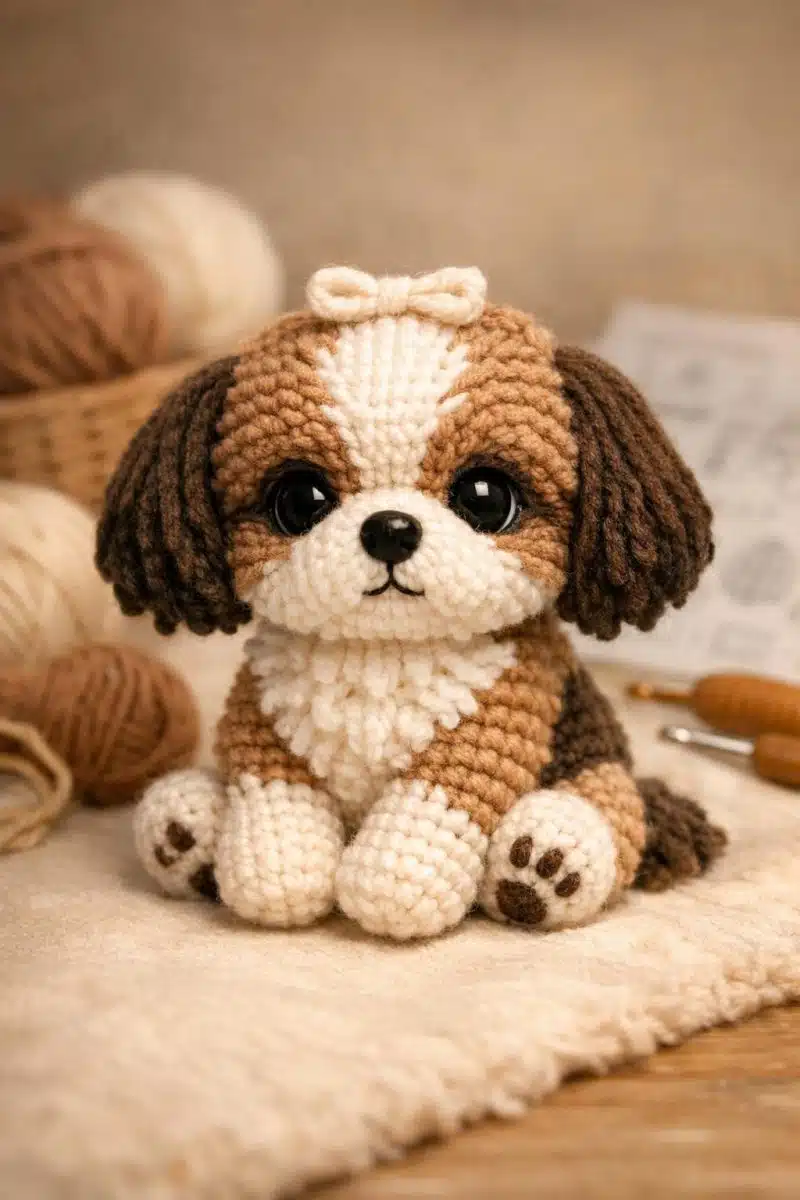
The Cooper the Shih Tzu pattern on Scribd gives clear steps for making a small dog toy. It lists needed materials, suggested sizes, and the skill level required.
The pattern explains how to crochet the head, ears, snout, collar, tail, and body. It breaks each part into rounds with stitch counts.
It also shows stitch patterns for the neck and legs. Diagrams support the written steps, which helps crocheters follow each round with accuracy.
TRENDING RIGHT NOW
Readers Also Loved: 👇
👉 Golden Retriever Crochet Pattern Amigurumi
👉 Goldendoodle Crochet Pattern Free Cute Amigurumi Dog
👉 French Poodle Amigurumi Patterns Ideas
👉 Amigurumi Corgi Crochet Pattern Ideas
Love a fluffy coat too?
🐶 Pomeranian Pomeranian Crochet Pattern With Extra Fluff Try this one →5) Kerri’s Ad-Free Shih Tzu Crochet Pattern on Ravelry

Kerri offers an ad-free Shih Tzu crochet pattern on Ravelry for a small fee. The paid version provides a clean, easy-to-read PDF without website ads. She also shares a free version on her website for those who prefer that option.
This pattern creates a detailed Shih Tzu appliqué. She uses 2-ply cotton yarn and a 1 mm hook, but crocheters can adjust the yarn and hook size as needed.
Kerri also provides a video tutorial on YouTube. The video helps visual learners follow each step with clear guidance.
Yarn and Material Recommendations

The right yarn and tools shape how realistic and durable a Shih Tzu crochet project looks. Fiber choice, hook size, and safe finishing details all affect the final result.
Best Yarn Types for Shih Tzu Patterns
Shih Tzu patterns look best with yarn that shows texture and holds shape. Most designers use worsted weight (medium #4) or DK weight (light #3) yarn for amigurumi dogs.
Acrylic yarn works well for beginners. It is affordable, easy to wash, and keeps its color. Cotton yarn creates a firmer shape and sharper stitch detail, which helps define the face and legs.
For a more realistic coat, some crafters use slightly fuzzy or brushed yarn. This adds softness but can hide stitches, so it suits experienced crocheters.
Common color choices include:
- Cream
- White
- Light brown
- Dark brown
- Black
Match all yarns to the same gauge. If one strand is thinner, the body may look uneven or loose.
Essential Crochet Tools
Small dog patterns often require tight stitches. Many Shih Tzu designs use a 1.75 mm to 3.5 mm hook, depending on yarn weight.
A smaller hook creates dense fabric. Dense fabric prevents stuffing from showing through.
Key tools include:
- Steel or aluminum crochet hooks
- Tapestry needle for sewing parts
- Sharp scissors
- Stitch markers
- Strong thread for shaping the face
- Polyester fiberfill stuffing
Use stitch markers to track rounds. Most amigurumi Shih Tzu patterns work in continuous spirals, not joined rounds.
A yarn needle with a blunt tip makes it easier to attach ears, muzzle pieces, and legs without splitting stitches.
Choosing Safe Materials for Kids and Pets
Safety matters when the toy is meant for a child or a pet. Avoid small plastic safety eyes if the toy will go to a child under three years old.
Instead, embroider the eyes with black cotton or acrylic yarn. Sew all parts tightly and knot ends securely inside the body.
Choose machine-washable yarn for easier cleaning. Acrylic and cotton blends handle frequent washing better than wool.
Use clean, non-toxic polyester stuffing. Do not use scented fillers or loose beads.
If the toy is for a pet, avoid long fuzzy yarn that can shed. Tight stitches and secure seams reduce the risk of pulling or chewing damage.
Tips for Customizing Shih Tzu Crochet Projects
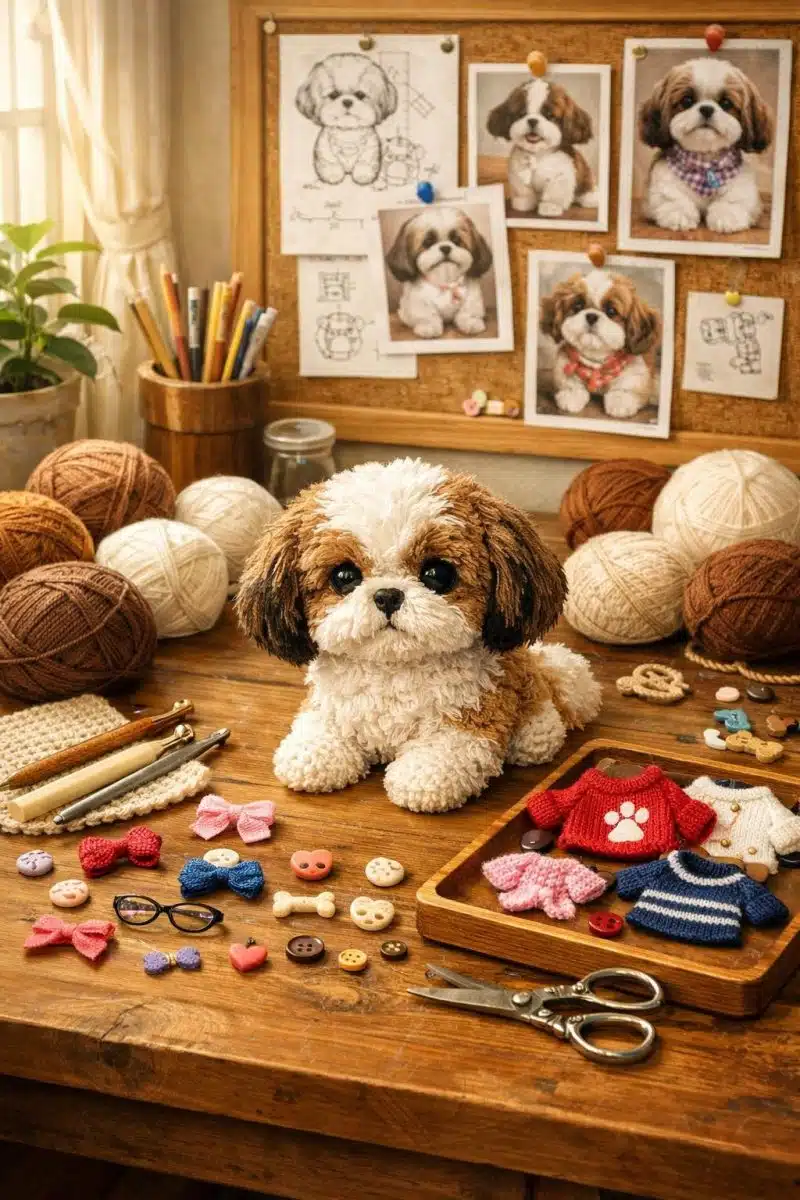
Thoughtful color choices, small details, and smart size changes can turn a basic pattern into a lifelike Shih Tzu. Careful adjustments help the finished piece look more realistic and personal.
Color Selection for Realistic Features
A real Shih Tzu often has a mix of two or three colors. Common shades include white, cream, brown, black, and gray. Crafters should study reference photos before choosing yarn.
They can use a simple color plan like this:
- Body base: white, cream, or light brown
- Ears: darker brown, black, or gray
- Muzzle: white or a lighter shade than the face
- Eye patches: black or dark brown
Changing yarn colors in rounds helps create natural markings. Many amigurumi dog patterns use basic color changes, which makes this step manageable for most crocheters.
For a more realistic look, they can brush acrylic yarn gently with a pet brush. This technique creates a soft, fur-like texture. They should test this on a scrap piece first to avoid damage.
Small details matter. A black embroidered nose and slightly glossy safety eyes give the face a clear Shih Tzu expression.
Adding Personal Touches with Accessories
Accessories give the crochet dog a unique personality. Many Shih Tzus wear bows, bandanas, or small collars.
A crocheter can add:
- A tiny bow sewn near one ear
- A crochet collar with a small charm
- A mini sweater in simple rows
- A name tag made from felt
They should keep accessories light so they do not pull on the stitches. Sewing pieces on securely prevents loose parts, which is important if the toy is for a child.
Embroidery also adds character. They can stitch eyelashes, eyebrows, or a small mouth line. Simple thread details often look cleaner than bulky yarn features.
Personal touches should match the dog’s style. A realistic Shih Tzu may need subtle details, while a cute desk-size plush can handle brighter colors and bold extras.
Love a two-tone coat?
🐶 Yorkie This Yorkie Crochet Pattern Has Two-Tone Charm Explore pattern →Adjusting Patterns for Size Variations
Most Shih Tzu crochet patterns list a finished size, often around 6 inches tall. Crafters can change the size without rewriting the entire pattern.
They can adjust size by:
- Changing yarn weight – thicker yarn makes a larger dog.
- Using a larger hook – this increases overall size.
- Using thinner yarn and a smaller hook – this creates a mini version.
They should keep the same stitch counts to maintain shape. Changing hook size too much can leave gaps, so they must check tension as they work.
If resizing for display, they can add extra stuffing to keep the body firm. For a pocket-sized version, they should use tight stitches and small safety eyes to keep proportions balanced.
Careful adjustments help maintain the round head, short muzzle, and sturdy legs that define the Shih Tzu shape.