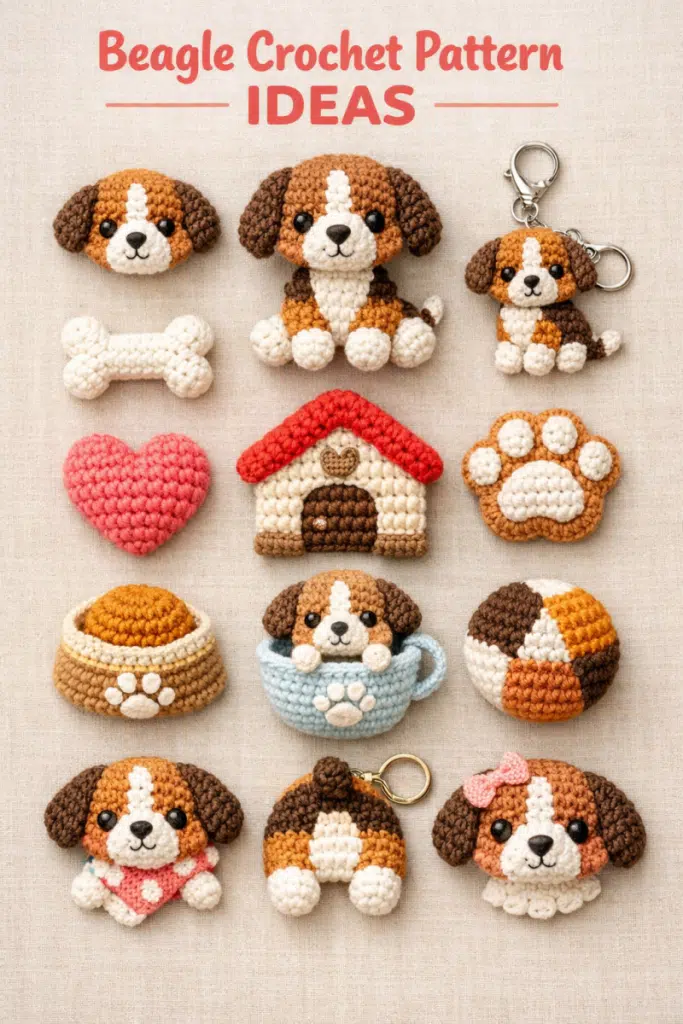
Beagle Crochet Pattern Ideas – Beginner Amigurumi Beagle Dog

Want a different shape to try next?
🐕 Dachshund This Dachshund Crochet Pattern Has Serious Charm Free pattern →Materials
• Worsted weight cotton or acrylic yarn
- Brown (main body color)
- White (muzzle and belly)
- Black (ears and nose)
• Crochet hook: 3.0 mm – 3.5 mm
• Polyester fiberfill stuffing
• 6 mm safety eyes (or black yarn for embroidered eyes)
• Yarn needle
• Stitch marker
Get Free Amigurumi Patterns Every Week!
Get new patterns, & tutorials free in your inbox
🔒 No spam. Unsubscribe anytime.
• Scissors
• Optional: small keychain ring if making a mini keychain version
The breed this whole site is named after:
🐾 French Bulldog 4 French Bulldog Crochet Pattern Ideas to Love See this pattern →Abbreviations
MR – Magic Ring
SC – Single Crochet
INC – Increase (2 SC in the same stitch)
DEC – Decrease (single crochet two stitches together)
CH – Chain
SL ST – Slip Stitch
ST – Stitch
RND – Round
Crochet Pattern Instructions
Head (Brown)
Round 1: 6 SC in MR (6)
Round 2: INC in each stitch around (12)
Round 3: (SC, INC) repeat around (18)
Round 4: (2 SC, INC) repeat around (24)
Round 5–8: SC in each stitch around (24)
Insert safety eyes between Round 5–6 about 5 stitches apart.
Round 9: (2 SC, DEC) repeat around (18)
Round 10: (SC, DEC) repeat around (12)
Stuff the head lightly.
Round 11: DEC around (6)
Fasten off and close the opening.
WAIT — READ THIS FIRST
Most Popular This Week: 👇
👉 French Bulldog Crochet Tutorial
👉 Crochet Maltese Puppy Amigurumi Pattern
👉 Yorkie Crochet Pattern For Beginners Free
Another friendly face to try next:
🐕 Boxer This Boxer Crochet Pattern Never Disappoints Grab the pattern →Body (Brown)
Round 1: 6 SC in MR (6)
Round 2: INC in each stitch around (12)
Round 3: (SC, INC) repeat around (18)
Round 4–7: SC around (18)
Stuff the body lightly.
Round 8: (SC, DEC) repeat around (12)
Fasten off leaving a tail for sewing.
Ears (Make 2 – Black)
Round 1: 6 SC in MR (6)
Round 2: (SC, INC) repeat around (9)
Round 3–6: SC around (9)
Flatten the ear slightly and fasten off leaving a tail for sewing.
Muzzle (White)
Round 1: 6 SC in MR (6)
Round 2: (SC, INC) repeat around (9)
Round 3: SC around (9)
Fasten off leaving a long tail for sewing.
Tail (White)
Round 1: 5 SC in MR (5)
Round 2–4: SC around (5)
Fasten off leaving a sewing tail.
Beagle Crochet Pattern Ideas: 5 Creative Projects to Make
Beagle crochet patterns let makers turn a favorite dog breed into soft, handmade projects. They can create floppy ears, sweet faces, and classic color markings with simple stitches and clear steps. These ideas range from small stuffed toys to detailed amigurumi designs.
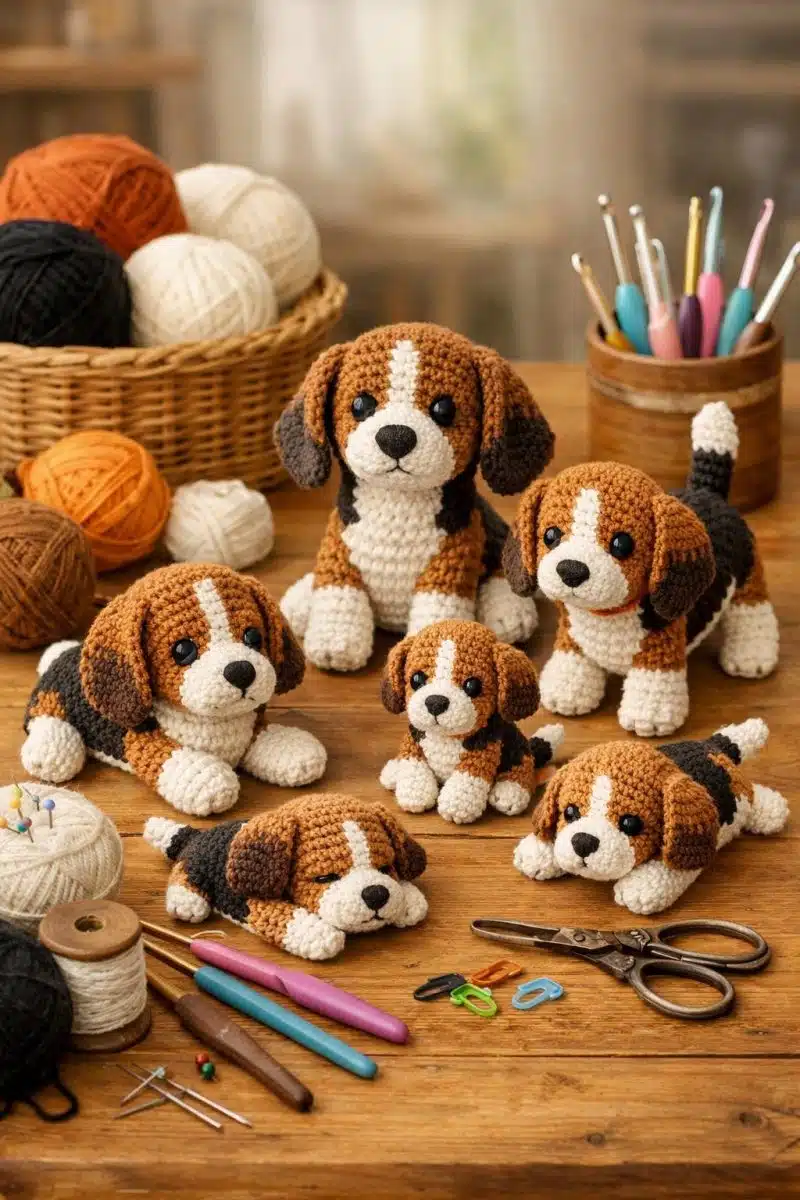
This guide shows how they can choose patterns, materials, and simple techniques to crochet a beagle that fits their skill level and style. It covers beginner-friendly options, more detailed designs with texture, and ways to adjust features like collars, colors, and size. With the right approach, they can shape a beagle that looks charming and true to the breed.
1) Amigurumi Beagle Crochet Pattern with floppy ears and red collar

An amigurumi beagle with floppy ears and a red collar makes a classic crochet project. It captures the breed’s long ears, short legs, and gentle face in a small plush form.
The pattern usually works in continuous rounds to shape the head and body. Makers crochet the ears separately and stitch them in place so they hang low on each side.
Designers often use brown, black, and white yarn for the coat. A simple red collar adds contrast and helps define the neck.
2) Free Beagle Puppy Amigurumi Pattern for beginners
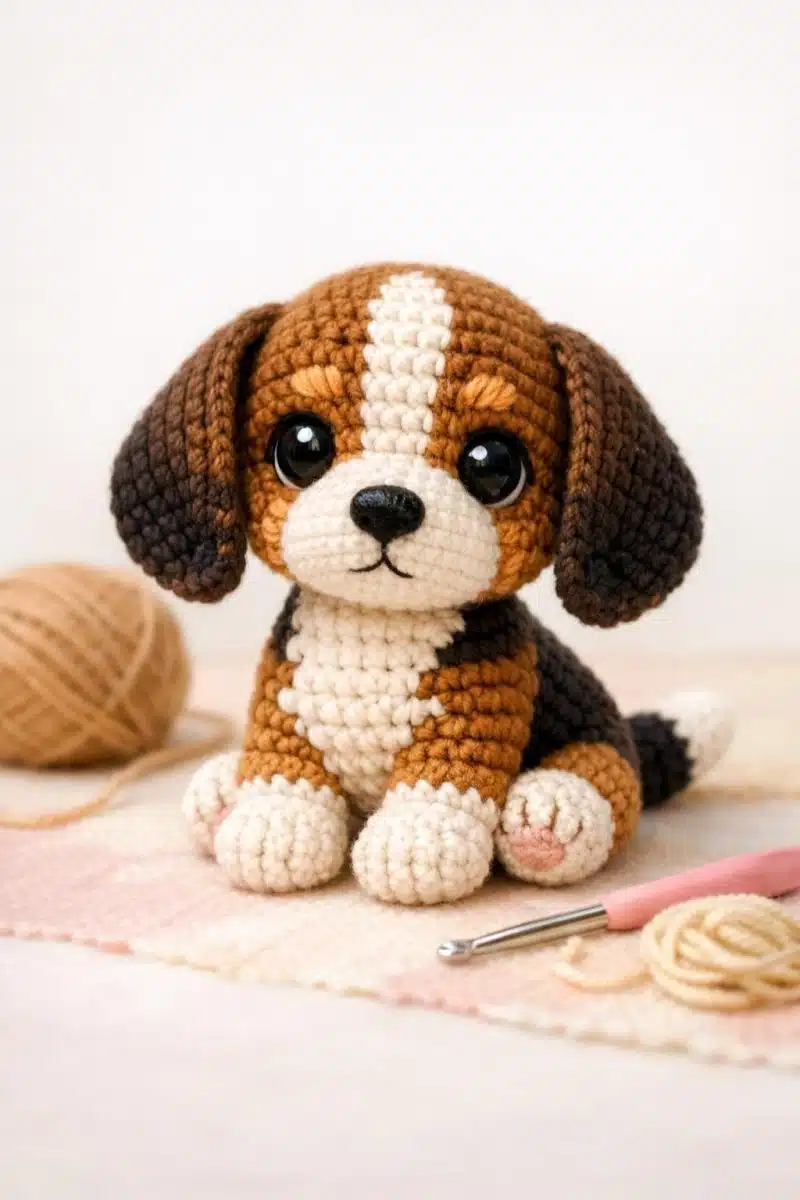
A free Beagle puppy amigurumi pattern gives beginners a simple way to start crocheting small animals. Many online patterns guide them step by step, from the head and body to the floppy ears and tail.
Most designs use basic stitches like single crochet, increases, and decreases. They often work in rounds to shape the puppy’s head and body. Clear instructions help new crocheters keep the shape even and neat.
The finished beagle usually features long ears and a tri-color coat. It makes a thoughtful handmade gift or a small display piece for dog lovers.
TRENDING RIGHT NOW
Readers Also Loved: 👇
👉 Amigurumi Poodle Puppy Crochet Free Patterns
👉 Golden Retriever Crochet Pattern Amigurumi
👉 Goldendoodle Crochet Pattern Free Cute Amigurumi Dog
One more tiny friend to make:
🐶 Chihuahua This Chihuahua Crochet Pattern Has Big Personality Click to see →3) Detailed pdf Beagle Amigurumi Pattern with bobble stitches
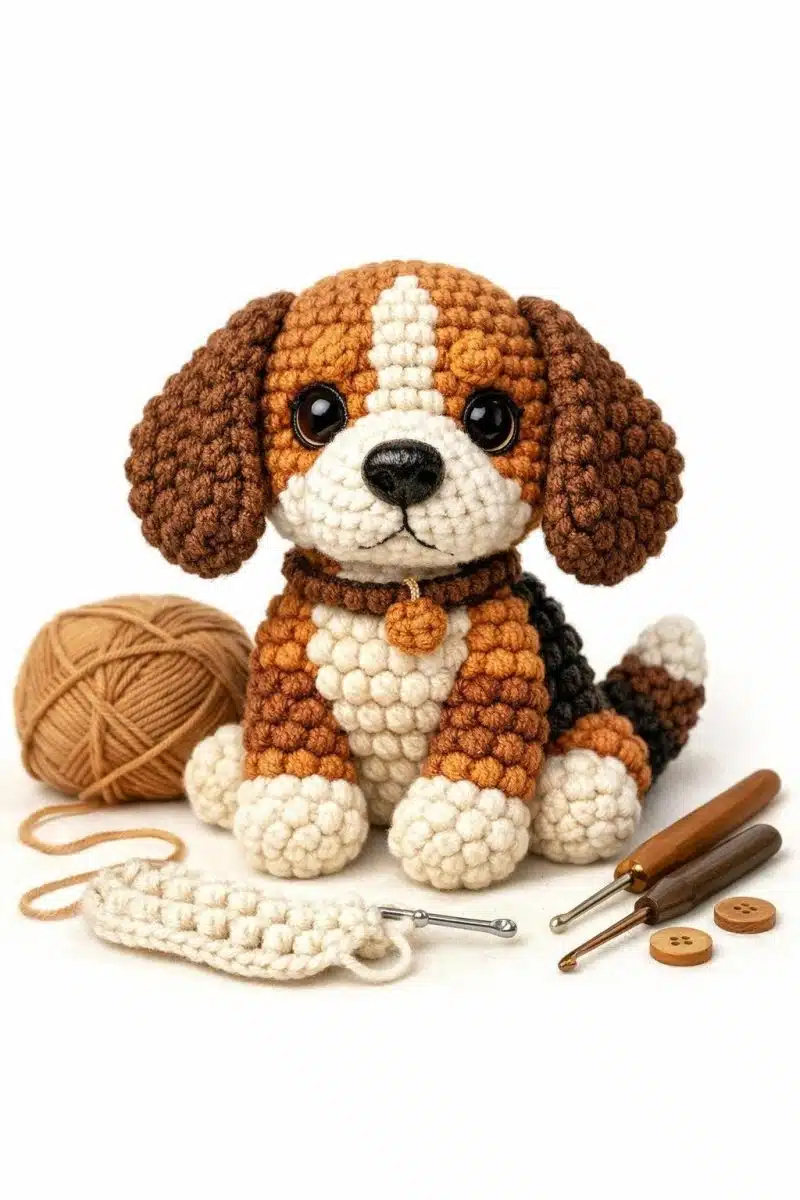
A detailed PDF Beagle amigurumi pattern guides the maker through each part of the dog. It often includes clear photos, a supply list, and stitch notes. Most patterns use US crochet terms and basic stitches.
The design usually builds the head and body in separate pieces. The maker then adds ears, legs, tail, and muzzle. Bobble stitches shape the paws and add texture to the feet.
Many PDFs also explain how to attach pieces neatly. They show where to place color changes for the classic brown, black, and white coat.
4) Easy Beagle Crochet Pattern for a small stuffed dog toy

An easy beagle crochet pattern works well for a small stuffed dog toy. Most patterns use medium weight yarn, a 4 mm hook, safety eyes, stuffing, and basic tools like a needle and scissors.
Designers often build the toy in the round. They start at the nose or head and move down to the body. This method keeps the shape firm and neat.
Simple details bring the beagle to life. Floppy ears, a white chest, and a small collar add clear features without complex steps. Beginners can follow step-by-step guides with basic stitches like single crochet and increases.
5) Step-by-step Beagle Puppy Crochet Pattern with photos

A step-by-step Beagle puppy crochet pattern guides the maker through each part of the dog. It usually starts with the muzzle and head, then moves to the ears, body, legs, and tail. Clear photos show stitch placement and color changes.
Most patterns use basic amigurumi skills such as single crochet, increases, and decreases. The photos help the maker shape the snout and attach the floppy ears in the right spot.
Detailed images also show how to join parts neatly. This support helps beginners follow the process with confidence and steady results.
Choosing the Right Materials for Beagle Crochet Projects
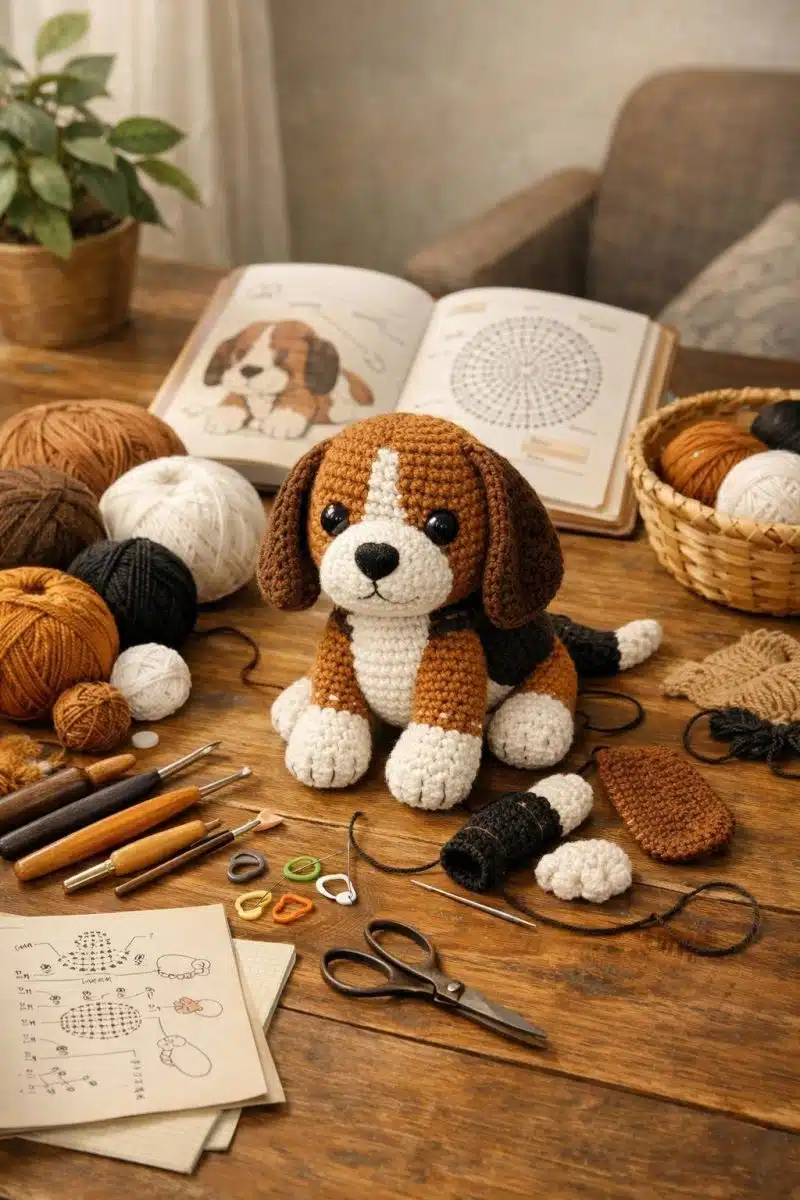
The right materials shape how the beagle looks, feels, and holds up over time. Yarn type, hook size, and basic tools all affect stitch detail, firmness, and safety.
Recommended Yarn Types
Most beagle crochet patterns use brown, white, and black yarn to match the classic coat. Some designs also add a small amount of red for a collar.
For amigurumi beagles, worsted weight cotton or acrylic yarn works best. Cotton holds its shape well and shows stitch detail clearly. Acrylic feels softer and costs less, which helps when making gifts or practice pieces.
Many patterns suggest smooth yarn instead of fuzzy yarn. Smooth yarn makes it easier to see stitches when shaping the muzzle, ears, and legs. It also helps when sewing parts together.
Blanket yarn creates a larger, softer beagle. However, it hides small details like toes and facial shaping. Beginners often find medium-weight yarn easier to control.
Choose yarn that is easy to wash and does not shed. Toys for children need durable fibers that handle regular use.
Best Hook Sizes
Hook size should match the yarn weight, but amigurumi usually requires a smaller hook than the yarn label suggests. This creates tight stitches and prevents stuffing from showing.
For worsted weight yarn, a 3.0 mm to 4.0 mm hook works well. Many crocheters prefer 3.5 mm for firm stitches with clear shaping.
For lighter DK yarn, a 2.5 mm to 3.0 mm hook keeps the fabric dense. For bulky or blanket yarn, a 5.0 mm to 6.5 mm hook is common.
Use this quick guide:
| Yarn Weight | Common Hook Size | Result |
|---|---|---|
| DK (Light) | 2.5–3.0 mm | Small, detailed beagle |
| Worsted (Medium) | 3.0–4.0 mm | Standard amigurumi size |
| Bulky/Blanket | 5.0–6.5 mm | Larger, soft plush beagle |
Always test a small swatch in the round. The stitches should feel firm, not loose.
Love a squishy, wrinkled face?
🐶 Pug Pug Crochet Pattern Try this one →Essential Tools and Accessories
A few basic tools improve accuracy and speed. Most beagle patterns work in continuous rounds, so a stitch marker is necessary to track the first stitch of each round.
Use polyfill stuffing to shape the head, body, and muzzle. Add small amounts at a time to avoid lumps. Firm stuffing helps the beagle sit upright.
Safety eyes in 6 mm to 12 mm sizes suit most small plush toys. For babies or toddlers, embroider the eyes instead of using plastic pieces.
Other helpful tools include:
- Tapestry needle for sewing parts
- Sharp scissors for clean yarn cuts
- Pins to position ears and legs before sewing
- Black and brown embroidery thread for facial details
These tools support clean assembly and balanced shaping.
Tips for Customizing Your Beagle Crochet Patterns

Custom details turn a basic beagle pattern into a toy that looks more lifelike or more playful. Smart color choices, small design changes, and careful resizing all shape the final result.
Color Selection Strategies
Most beagles use a tri-color mix: black, brown, and white. Some also appear in lemon and white. Choosing the right shades makes the toy look closer to a real dog.
Use this simple guide:
| Body Part | Common Color |
|---|---|
| Back | Black |
| Head & Ears | Brown |
| Muzzle | White |
| Chest | White |
| Tail Tip | White |
Select solid, matte yarn for a natural look. Avoid shiny yarn unless the design is meant to look cartoon-like.
He or she can also adjust contrast. A darker brown gives strong definition between the head and muzzle. A softer tan creates a gentle look. Always keep the white areas clean and bright so the face stands out in photos.
Ready for something with a bit more texture?
🐶 Schnauzer This Schnauzer Crochet Pattern Has Extra Texture Explore pattern →Adding Unique Details
Small details change the personality of the beagle. Many patterns include floppy ears, a white blaze on the face, and a round nose. Adding or adjusting these features makes the toy unique.
They can embroider:
- Eyebrows for expression
- A stitched smile or neutral mouth
- Spots on the back or legs
- A name tag on a small collar
Felt pieces can create sharp markings, but embroidery blends more smoothly with the stitches. Safety eyes give a polished look. Embroidered eyes work better for baby-safe toys.
A simple red collar adds contrast. A tiny bone charm or stitched initials can turn the toy into a personal gift.
Scaling Patterns for Different Project Sizes
Changing yarn weight and hook size adjusts the final size without rewriting the pattern. Thicker yarn and a larger hook create a bigger beagle. Thinner yarn makes a small, pocket-sized version.
For example:
- Worsted weight yarn → Medium plush toy
- DK yarn → Smaller, detailed toy
- Bulky yarn → Large, soft plush
He or she should keep stitches tight to prevent stuffing from showing. When scaling up, use more stuffing to support the neck and legs. When scaling down, reduce facial details to avoid crowding.
Always check proportions after resizing. The head should stay slightly larger than the body to keep the classic amigurumi look.