
German Shepherd Crochet Pattern Ideas: 5 Realistic and Adorable Designs to Try

German Shepherd crochet patterns let crafters turn yarn into a loyal and detailed handmade dog.
They can create small amigurumi pups, realistic standing figures, or simple beginner-friendly projects that capture the breed’s strong shape and alert ears.
These patterns suit dog lovers who enjoy both cute and lifelike designs.
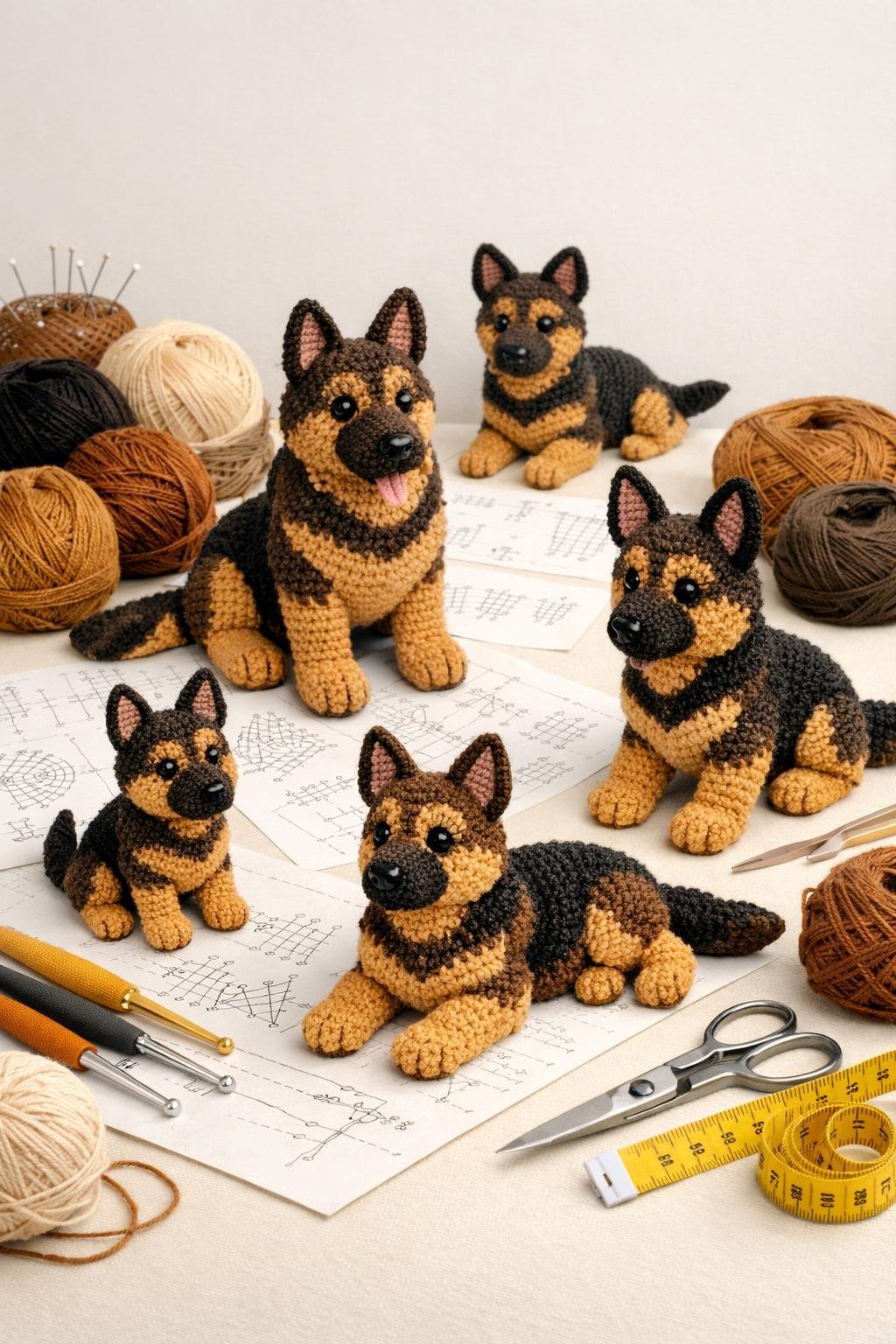
This guide shows how different German Shepherd crochet patterns fit various skill levels, styles, and customization goals.
It explores free options, detailed character designs, and collections with many choices, while also explaining how to adjust colors, size, and features for a personal touch.
Want a different shape to try next?
🐕 Dachshund Beginner-Friendly Dachshund Crochet Pattern Free pattern →German Shepherd Crochet Pattern Ideas – Beginner Amigurumi Dog

Love a striking color contrast?
Get Free Amigurumi Patterns Every Week!
Get new patterns, & tutorials free in your inbox
🔒 No spam. Unsubscribe anytime.
Materials
• Worsted weight yarn (brown, black, tan, and small amount of cream)
• Crochet hook: 3.0 mm – 3.5 mm
• Polyester fiberfill stuffing
• 6–8 mm safety eyes
• Yarn needle
• Stitch marker
• Scissors
• Optional: keychain ring if making a small keychain plush
WAIT — READ THIS FIRST
Most Popular This Week: 👇
👉 French Bulldog Crochet Tutorial
👉 Crochet Maltese Puppy Amigurumi Pattern
👉 Yorkie Crochet Pattern For Beginners Free
Abbreviations
MR – Magic Ring
SC – Single Crochet
INC – Increase (2 SC in the same stitch)
DEC – Decrease (single crochet two stitches together)
CH – Chain
SL ST – Slip Stitch
ST – Stitch
RND – Round
Crochet Pattern Instructions
Another friendly face to try next:
🐕 Boxer 5 Boxer Crochet Pattern Ideas to Try Grab the pattern →Head
Using brown yarn
Round 1: 6 SC in MR (6)
Round 2: INC in each stitch around (12)
Round 3: (SC, INC) repeat around (18)
Round 4: (2 SC, INC) repeat around (24)
Round 5–8: SC in each stitch around (24)
Insert safety eyes between rounds 6–7, about 6 stitches apart.
Round 9: (2 SC, DEC) repeat around (18)
Round 10: (SC, DEC) repeat around (12)
Lightly stuff the head.
Round 11: DEC around (6)
Fasten off and close.
Body
Using brown yarn
Round 1: 6 SC in MR (6)
Round 2: INC in each stitch around (12)
Round 3: (SC, INC) repeat around (18)
Round 4–7: SC around (18)
Round 8: (SC, DEC) repeat around (12)
Stuff the body.
Round 9: DEC around (6)
Fasten off leaving a long tail for sewing.
Ears (Make 2)
Using black yarn
Round 1: 4 SC in MR (4)
Round 2: (SC, INC) repeat around (6)
Round 3–4: SC around (6)
Flatten slightly and fasten off leaving tail.
Love a classic tri-color coat?
🐕 Beagle This Beagle Crochet Pattern Has a Sweet Face Click to see →Legs (Make 4)
Using tan yarn
Round 1: 6 SC in MR (6)
Round 2–4: SC around (6)
Fasten off leaving a tail for sewing.
Tail
Using brown yarn
Round 1: 4 SC in MR (4)
Round 2–6: SC around (4)
Fasten off.
Assembly Instructions
- Stuff the head and body firmly.
- Sew the head securely to the body.
- Attach the four legs evenly to the bottom of the body.
- Sew the ears onto the top sides of the head.
- Attach the tail to the back of the body.
- Using black yarn, stitch a small triangular nose on the front of the face.
Optional: Attach a small keychain ring to the top of the head if making a keychain.
Helpful Tips
1. Use a stitch marker
Amigurumi is worked in continuous rounds, so marking the first stitch helps avoid mistakes.
2. Keep stitches tight
Use a slightly smaller hook to prevent stuffing from showing through the stitches.
3. Stuff gradually
Add stuffing little by little to keep the shape smooth and even.
1) Amigurumi German Shepherd Free Pattern with signature black-and-tan coat
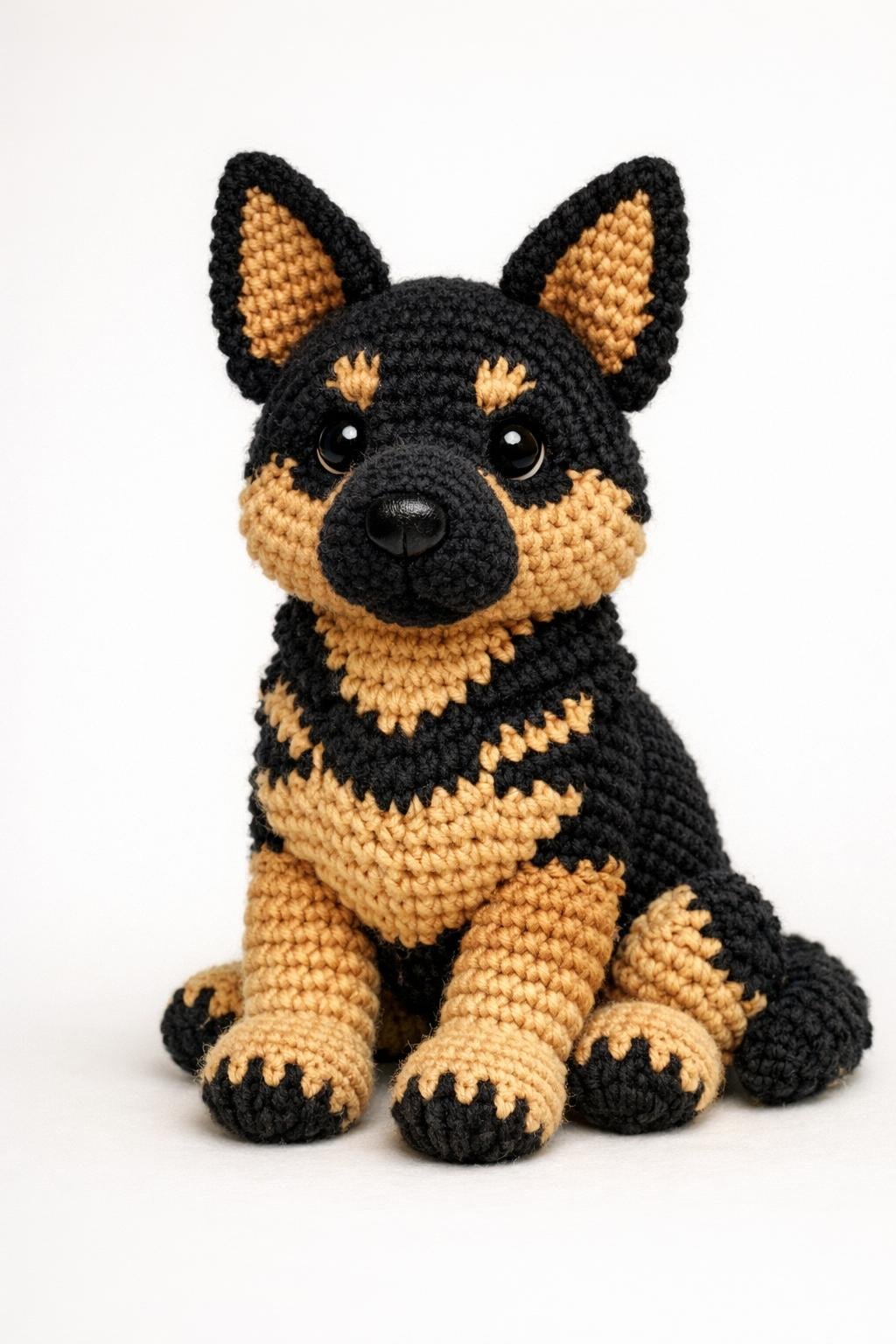
This free amigurumi German Shepherd pattern shows how to create the breed’s classic black-and-tan coat. It uses simple color changes to shape the dark saddle and lighter legs, chest, and face. The result looks true to the real dog.
Most patterns use basic stitches like single crochet in the round. Makers shape the body with steady increases and decreases from head to tail.
The finished dog often stands about 4 inches tall. It works well as a small gift, keychain, or shelf display.
2) Doerak Crochet German Shepherd Pattern for detailed canine amigurumi
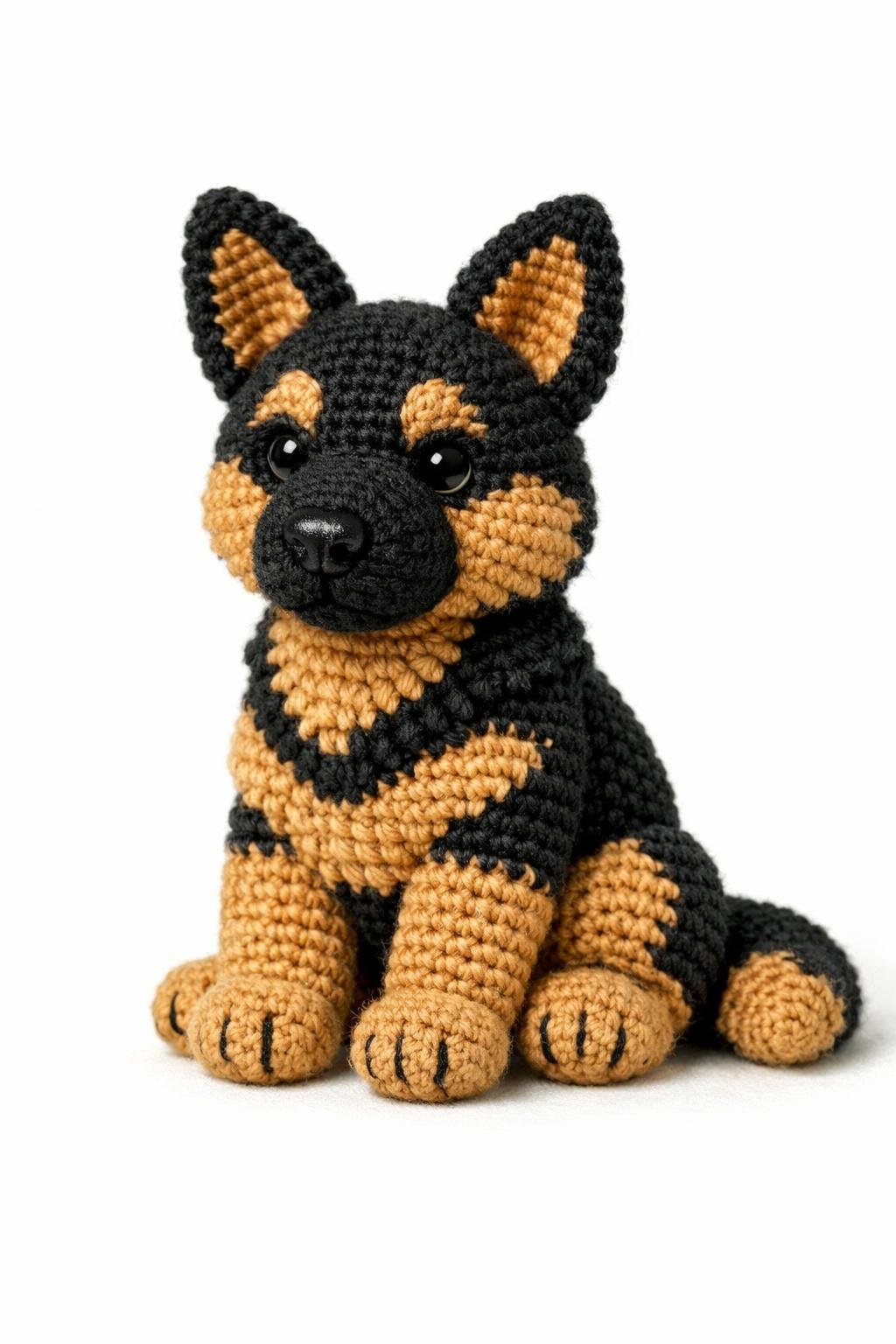
The Doerak Crochet German Shepherd pattern helps makers create a realistic puppy with clear structure and shape. The designer presents it as a detailed PDF written in standard American crochet terms.
The pattern lists needed tools, yarn colors, and materials. It uses clear, color-coded steps and includes photos to guide assembly.
Crafters work each part separately and then sew the pieces together. Gauge does not play a key role, which gives some flexibility. This design suits crocheters who want a lifelike German Shepherd with defined ears, muzzle, and coat markings.
TRENDING RIGHT NOW
Readers Also Loved: 👇
👉 Amigurumi Poodle Puppy Crochet Free Patterns
👉 Golden Retriever Crochet Pattern Amigurumi
👉 Goldendoodle Crochet Pattern Free Cute Amigurumi Dog
One more tiny friend to make:
🐶 Chihuahua Tiny Chihuahua Crochet Pattern for Beginners Try this one →3) 40 German Shepherd Crochet Patterns collection for varied skill levels
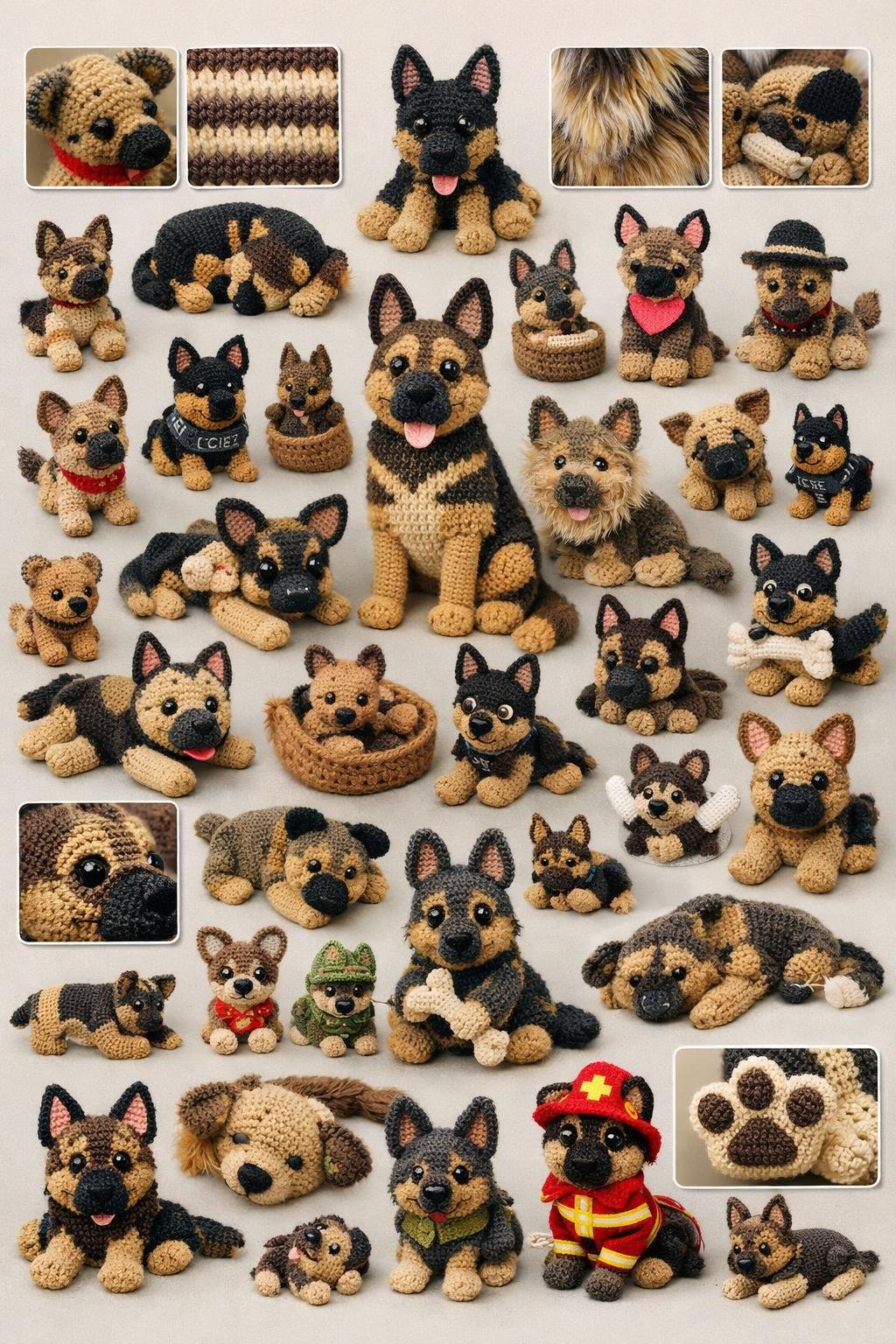
A collection of 40 German Shepherd crochet patterns gives crafters many options. It includes simple toys for beginners and detailed amigurumi dogs for advanced makers.
Some patterns focus on small, cute plush dogs with basic shapes. These work well for those who know basic stitches and want a quick project.
Other designs show realistic features like pointed ears, black and tan coats, and alert poses. A few free patterns are also available online, which helps beginners practice before trying more complex projects.
This wide range lets crocheters choose a pattern that fits their skill level and goals.
4) Crochet German Shepherd Rex pattern focusing on detailed ears and limbs
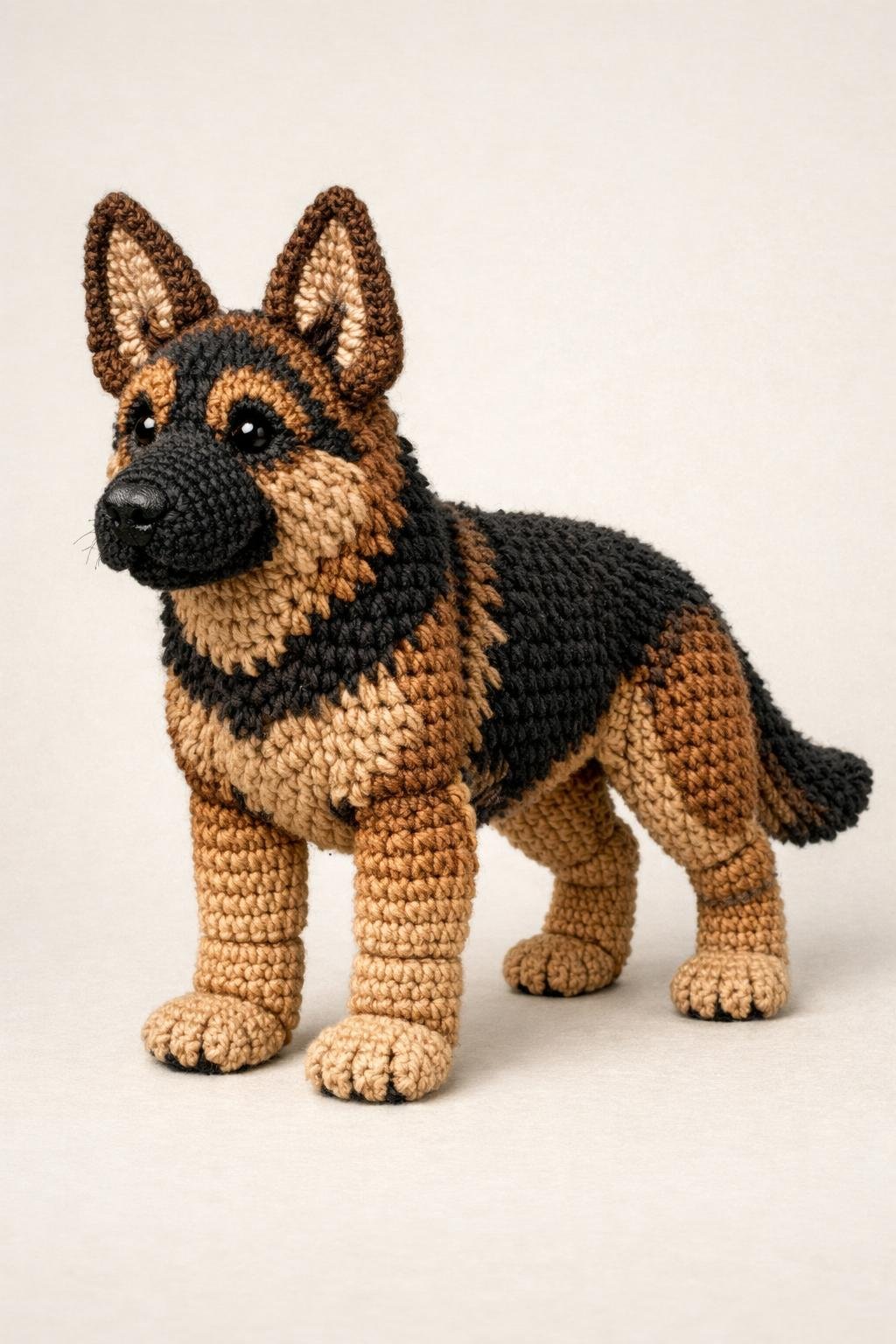
The Crochet German Shepherd Rex pattern gives close attention to the ears and limbs. The designer often starts with the smaller parts, such as the arms, legs, and tail. This order helps control shape and size early in the project.
The ears play a key role in the dog’s alert look. Many makers crochet the ears before the head. This step helps them place the eyes with better accuracy.
The legs use careful increases and decreases to shape strong, steady limbs. Clear row counts and stitch details guide each step. The result is a balanced dog with firm ears and well-shaped legs.
5) German Shepherd Dog pattern from AllFreeCrochet measuring about 10 cm
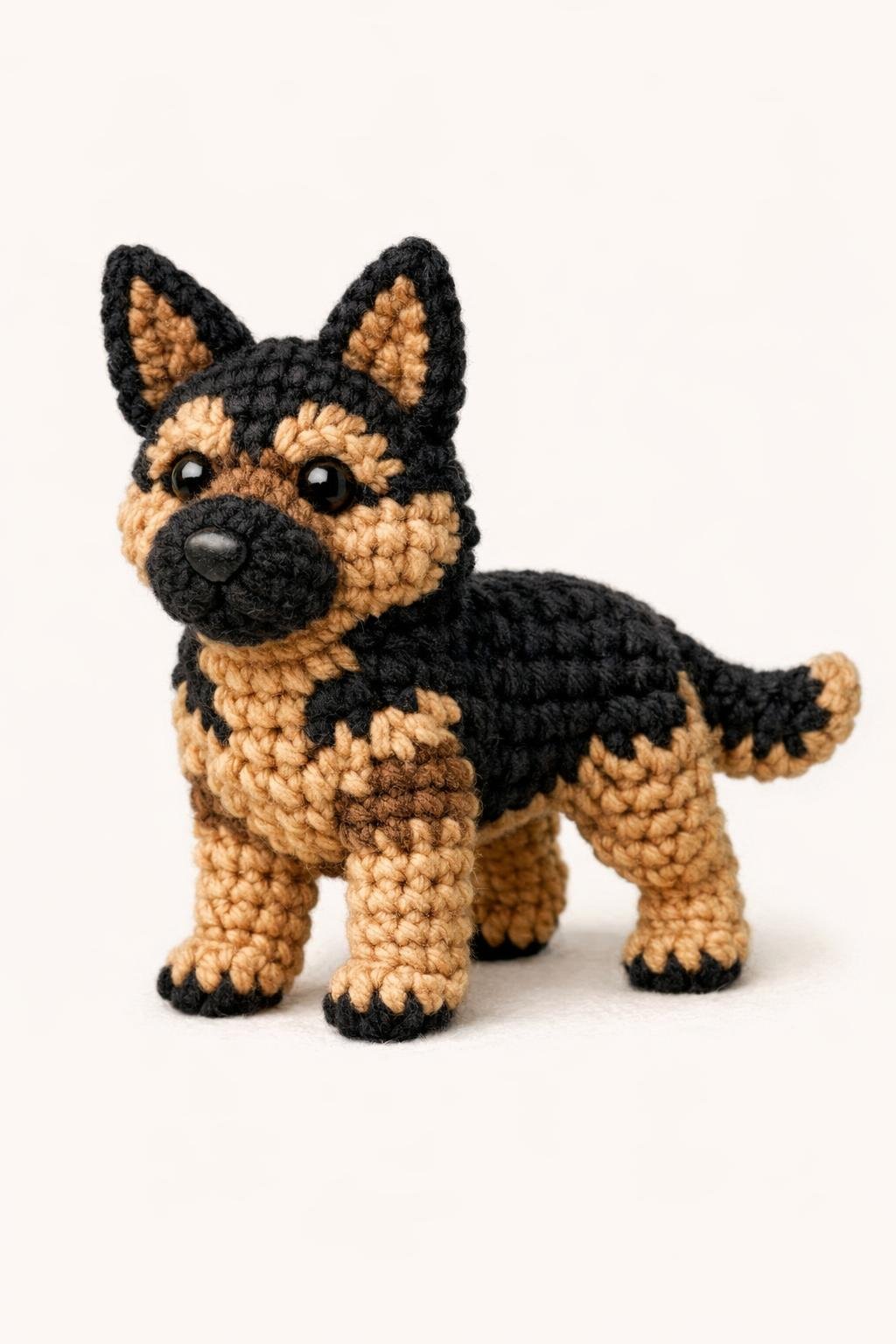
This German Shepherd pattern from AllFreeCrochet creates a small dog about 10 cm tall. The compact size makes it suitable for display, gifts, or small toy collections.
The design uses light DK yarn in brown and black. A 3 mm hook, 6 mm safety eyes, stuffing, a stitch marker, and a yarn needle complete the basic supply list.
The pattern focuses on simple shaping to form the upright ears and strong body. It suits crocheters who feel comfortable with small parts and basic amigurumi methods.
Understanding German Shepherd Crochet Patterns
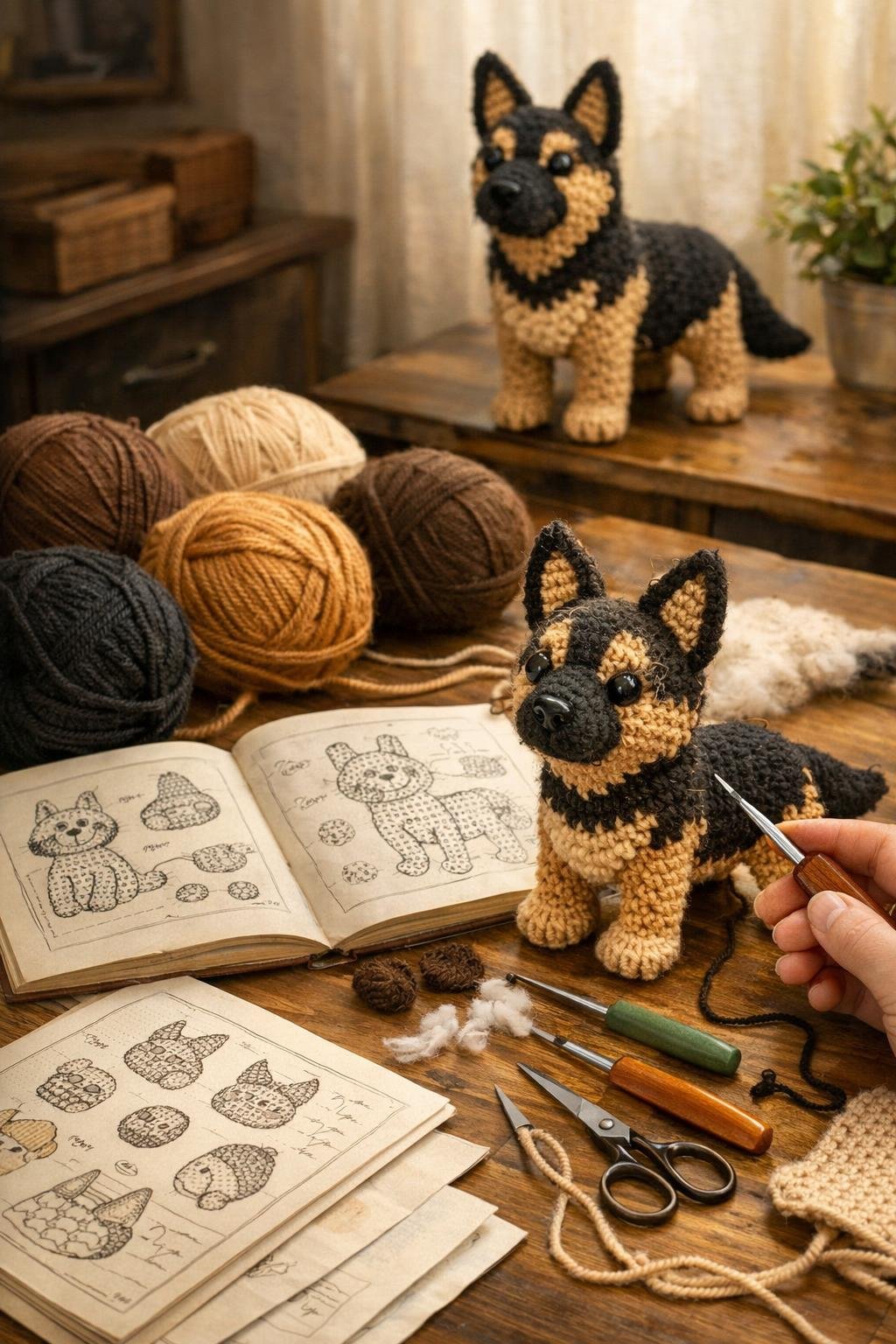
A clear pattern helps the maker shape the dog’s body, ears, and coat with accuracy. Success depends on proper tools, careful reading of symbols, and smart color choices that match the breed’s black-and-tan markings.
Choosing the Right Yarn and Hook
Most German Shepherd crochet patterns use worsted weight yarn for structure and detail. This weight works well for amigurumi dogs that stand 10 to 17 inches tall. It holds shape without sagging.
A smaller hook than the yarn label suggests creates tight stitches. Tight stitches prevent stuffing from showing through. Many patterns recommend a hook between 3.0 mm and 4.0 mm for firm fabric.
Acrylic yarn works well for beginners because it is affordable and easy to wash. Cotton yarn creates sharper stitch definition, which helps with detailed areas like the snout and ears.
He or she should also check the pattern for:
- Specific yarn brands or color numbers
- Safety eye size (often 10–14 mm)
- Stuffing type
- Tapestry needle for assembly
Using the listed materials helps the finished dog match the pattern photos.
Reading Crochet Pattern Symbols
German Shepherd crochet patterns often use US crochet terms, though some include UK terms or charts. The maker should confirm the terminology before starting. A single difference, such as “single crochet” in US terms versus UK terms, changes the result.
Common abbreviations include:
- sc – single crochet
- inc – increase
- dec – decrease
- ch – chain
- sl st – slip stitch
Many amigurumi patterns work in continuous rounds. The maker should use a stitch marker to track the first stitch of each round. This step keeps the head and body even.
Some patterns also include photo guides or row-by-row charts. Visual aids help shape complex parts like curved back legs or pointed ears. Careful counting prevents uneven limbs or misplaced facial features.
Selecting Color Palettes for Realistic Results
A realistic German Shepherd uses a black and tan color layout. The back, muzzle, and saddle area usually appear black. The legs, chest, and inner ears often show tan or light brown.
Instead of using just two flat colors, the maker can choose:
- Dark brown instead of pure black for softer contrast
- Medium tan for the body
- Cream for small accents
Blending close shades creates depth. It helps the dog look less flat and more natural.
Some patterns list exact yarn color numbers. Following these numbers improves accuracy. When choosing independently, the maker should compare yarn shades in natural light to avoid tones that look too red or too gray.
Careful color placement defines the breed’s alert expression and strong features.
Tips for Customizing Your Project
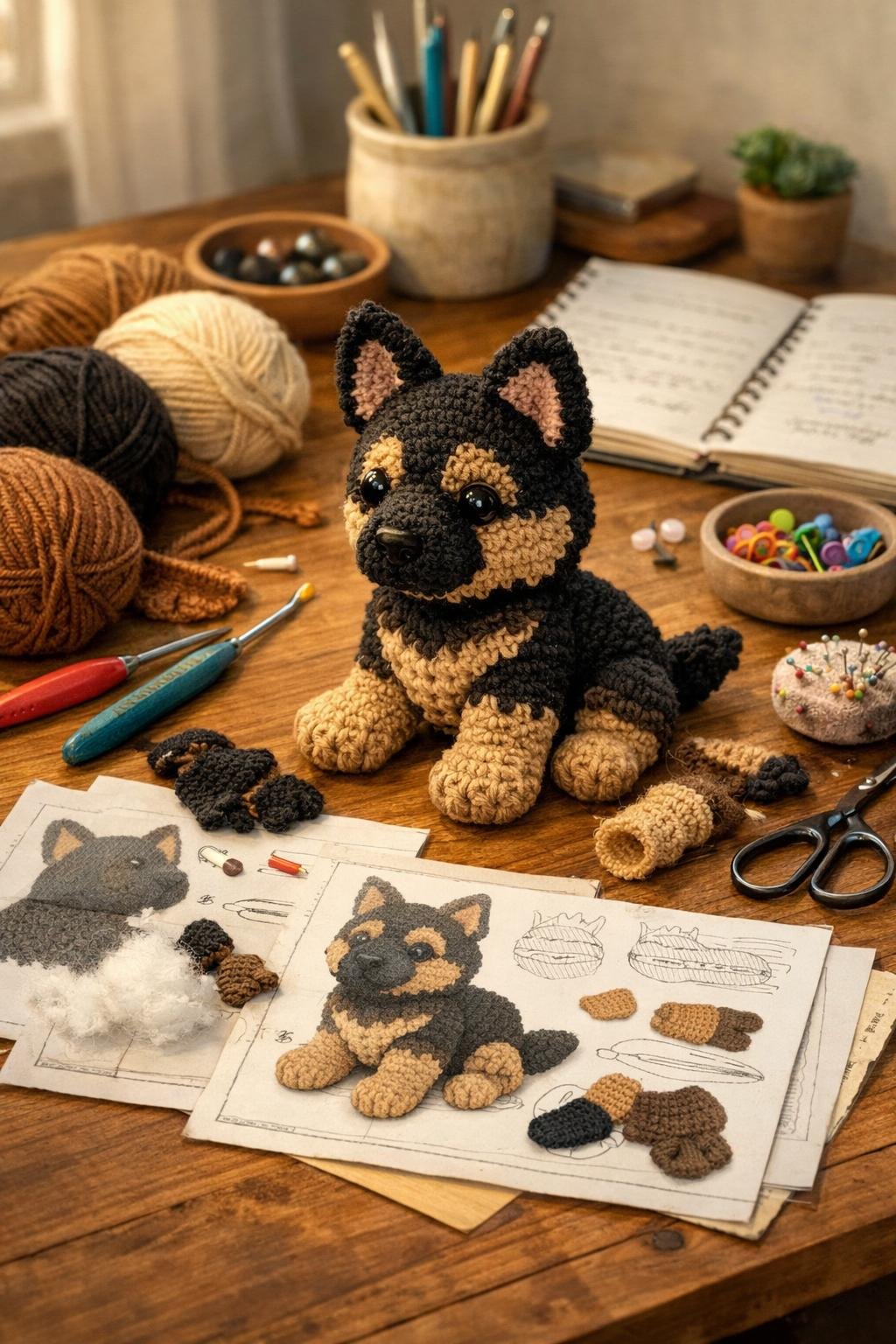
Thoughtful changes can turn a basic pattern into a German Shepherd that looks specific and personal. Small updates to color, size, and details make the project more useful as a toy, gift, or display piece.
Incorporating Unique Features and Markings
Color placement defines the German Shepherd’s look. Most patterns use tan and black yarn, but makers can adjust the shade to match a real dog. They can deepen the saddle area with dark brown or soften it with light gray for an older dog.
A simple way to plan markings is to sketch the face and body before stitching. This helps with eye patches, darker muzzles, or lighter chests.
Common areas to customize:
- Face mask shape
- Ear tips
- Chest patch
- Paw color
- Tail tip
Some patterns allow extra details like a police vest, service dog badge, or small collar. Makers can sew these pieces separately and attach them after stuffing.
They should embroider the eyes and nose carefully. Small changes in stitch angle can shift the dog’s expression from alert to calm.
Love a fluffy coat too?
🐶 Pomeranian 6 Pomeranian Crochet Pattern Ideas to Try Explore pattern →Adjusting Pattern Size for Different Purposes
Changing the finished size does not require a new pattern. Makers can control size by adjusting yarn weight and hook size.
| Goal | Yarn Type | Hook Size | Result |
|---|---|---|---|
| Small keychain | Sport or DK | 2.5–3.0 mm | Compact and firm |
| Medium toy | Worsted | 3.5–4.0 mm | Standard plush size |
| Large display | Bulky | 5.0 mm+ | Bigger and softer |
They should keep stitches tight for amigurumi. Tight stitches prevent gaps and hold stuffing in place.
If they scale up the project, they may need stronger stuffing support. Adding extra stuffing or a simple wire frame helps the dog sit upright.
Before changing size, they should test one sample piece, such as the head. This ensures the new yarn and hook create the shape they expect.


