How to Find Ethical Dog Breeders: A Complete Guide

Bringing a dog home is one of the biggest commitments you will make. The breeder you choose shapes your dog’s health, temperament, and the first eight weeks of its life — weeks that matter enormously. Knowing how to find ethical dog breeders protects you from heartbreak, unexpected vet bills, and unknowingly funding cruel breeding operations.
Not every breeder who posts cute puppy photos online is operating responsibly. The difference between an ethical breeder and a puppy mill can be hard to spot at first glance — but the signs are there if you know where to look.
What Makes a Dog Breeder Ethical?

An ethical dog breeder prioritizes the health, temperament, and welfare of their dogs above profit. They health-test breeding pairs, raise puppies in a home environment, and maintain lifelong relationships with puppy buyers.
- Health tests both parents for breed-specific genetic conditions before breeding
- Raises litters inside the home, not in outdoor kennels or cages
- Limits females to a responsible number of litters in a lifetime
- Interviews buyers and asks questions — not just about payment
- Provides a written health guarantee and a return-to-breeder contract
- Stays available after the sale for the dog’s entire life
The single clearest sign of an ethical breeder: they ask you as many questions as you ask them.
Where to Start Your Search for a Responsible Breeder
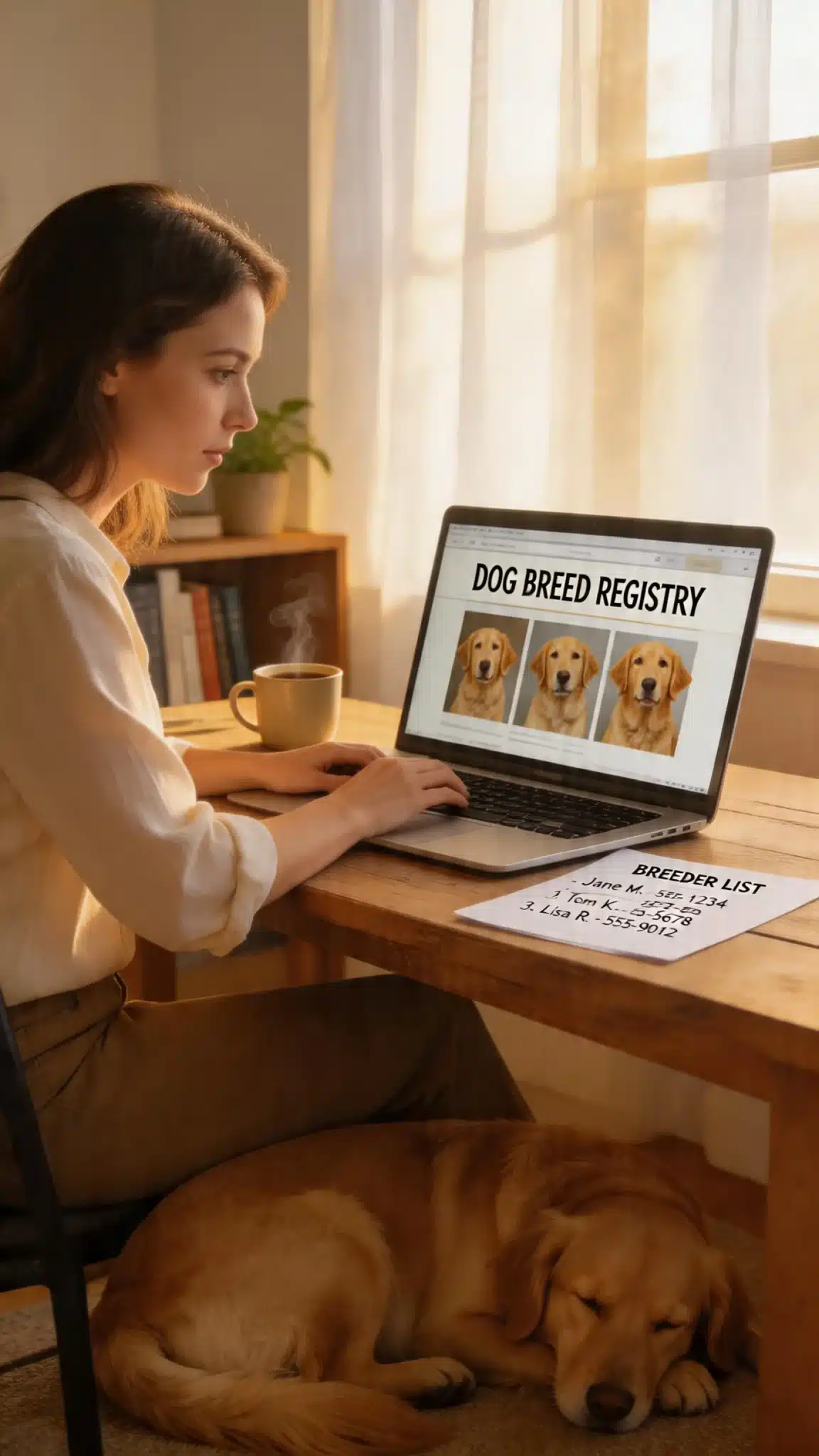
The best starting points for finding a responsible breeder are national breed clubs and registry databases, not online classifieds or social media ads. The American Kennel Club (AKC) maintains a Breeder of Merit program that recognizes breeders who meet documented health and title standards.
Get Weekly Dog Care Tips Free
Join 10,000+ dog owners. Vet-approved advice every week
🔒 No spam. Unsubscribe anytime.
Breed-specific parent clubs affiliated with the AKC or the United Kennel Club (UKC) often maintain their own referral lists. These breeders have agreed to follow the club’s code of ethics, which typically includes mandatory health testing.
- AKC Marketplace: Filter for Bred with H.E.A.R.T. breeders who meet health, education, and testing standards
- National breed club websites: Most publish breeder referral directories
- Dog shows and field trials: Exhibitors are almost always active, health-focused breeders
- Veterinarian referrals: Local vets often know reputable breeders in your area
For example, if you are considering a French Bulldog, checking out French Bulldog breeders in Georgia through a breed-specific directory gives you a shortlist of breeders who have already been vetted by a community of breed enthusiasts.
BEFORE YOU SCROLL PAST
Readers Also Loved:
👉 How To Spot Early Signs Of Canine Dementia In Senior Dogs
How to Vet a Breeder: Questions to Ask and Red Flags to Watch

Once you have a list of candidates, direct conversation reveals everything. Ethical breeders welcome questions and respond with specific, transparent answers — not sales pressure.
Questions Worth Asking Every Breeder
- What health tests have both parents completed? — Look for OFA (Orthopedic Foundation for Animals) certifications, CAER eye exams, or breed-specific panels. Results should be publicly searchable on the OFA website.
- Can I visit the litter and meet at least one parent? — A refusal to allow visits is a significant warning sign.
- How many litters do you breed per year? — High-volume breeders producing 10+ litters annually across multiple breeds warrant extra scrutiny.
- What happens if I can no longer keep the dog? — Ethical breeders take dogs back at any age, no questions asked.
- What socialization has the litter received? — Early neurological stimulation and exposure to household sounds, people, and handling matter deeply for temperament.
Red Flags That Signal an Irresponsible Breeder
- Puppies available immediately with no waiting list
- Multiple breeds always available at the same time
- No interest in where the puppy is going or who you are
- Reluctance to share health test documentation
- Pressure to pay a deposit before answering your questions
“A good breeder will turn you down before they turn a puppy over to the wrong home.” — American Kennel Club breeder education guidelines
Understanding Health Testing: What Ethical Breeders Actually Do
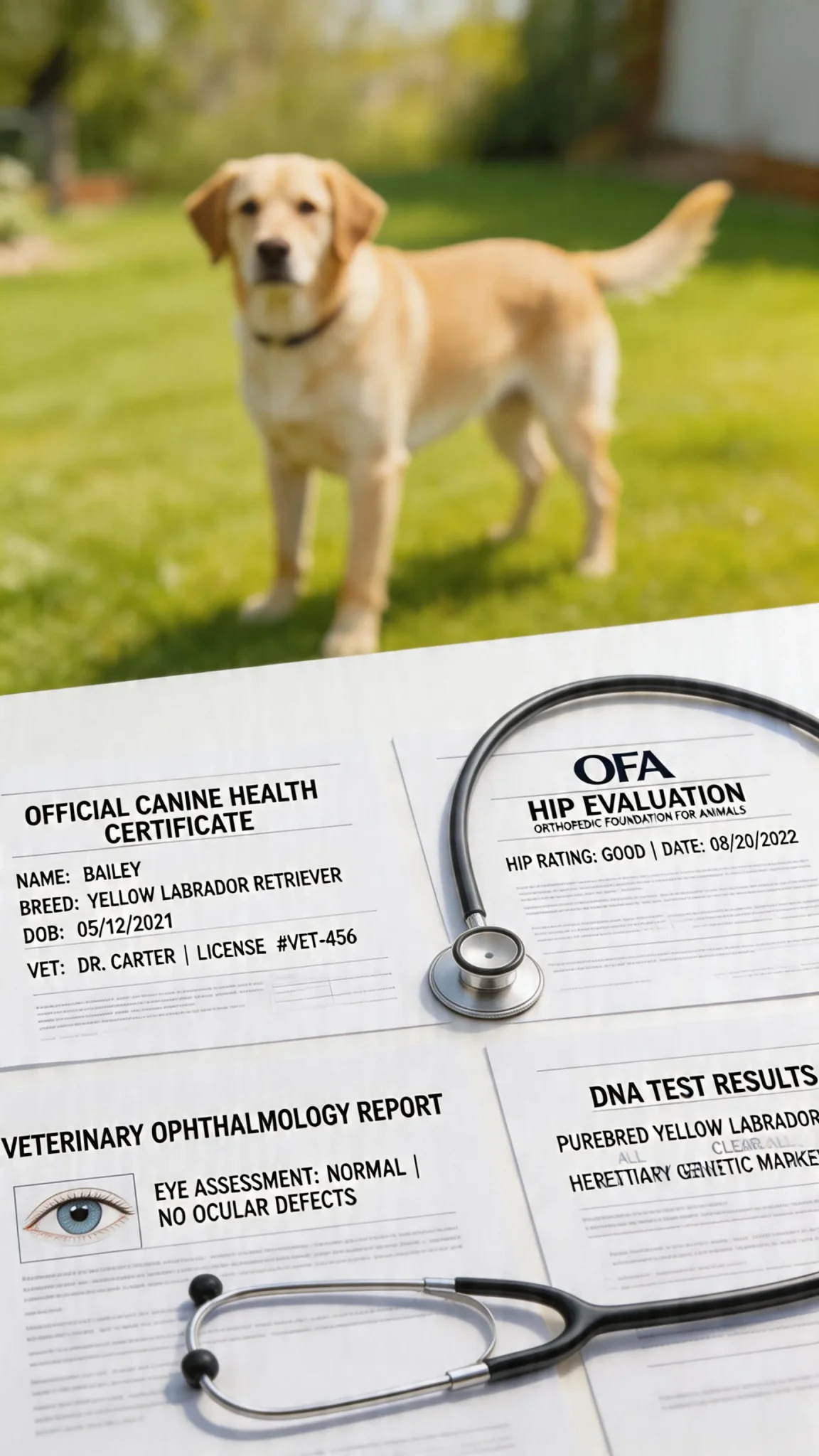
Health testing is the backbone of responsible breeding. Ethical breeders screen their dogs for heritable conditions specific to the breed before any pairing takes place — not after problems appear in puppies.
The OFA maintains a public database called the Canine Health Information Center (CHIC), where you can look up any registered dog’s health clearances by name or registration number. If a breeder’s dogs are not listed, ask why.
| Breed Category | Common Tests Required | Where to Verify |
|---|---|---|
| Large/Giant breeds (Labs, Goldens) | Hip and elbow dysplasia, cardiac exam, eye exam | OFA.org / CHIC database |
| Brachycephalic breeds (French Bulldogs, Bulldogs) | BOAS assessment, patella, spine, cardiac | OFA.org / breed club registry |
| Herding breeds (Border Collies, Aussies) | MDR1 gene, hip dysplasia, eye exam, epilepsy panel | OFA.org / PennHIP |
| Toy breeds (Poodles, Cavaliers) | Cardiac, patella, eye, DNA panels | OFA.org / CHIC |
Understanding what vaccines your new puppy needs after bringing them home is equally important. Knowing the difference between DHPP and DHLPP vaccines helps you confirm that a breeder’s vaccination records match your vet’s recommendations.
If a breeder cannot show you documented health clearances on both parents, move on.
What to Expect When You Visit a Breeder

A breeder visit is your most powerful screening tool. Ethical breeders run clean, well-organized homes or small facilities where dogs live as part of the family — not rows of cages in a barn.
Pay attention to the mother’s condition. A dam who looks thin, anxious, or is kept separate from her puppies after the first few weeks signals a problem. Puppies should be curious, playful, and comfortable around humans by the time they are ready to go home at 8 weeks.
- Smell the environment — it should be clean, not heavily masked with chemicals
- Watch how the dogs interact with the breeder — relaxed and trusting is what you want
- Ask to see where the puppies sleep, eat, and play
- Check that puppies have been exposed to different textures, sounds, and people
If you are also researching how to prepare a dog for a new home environment, the guide on how to prepare your dog for rehoming covers the transition steps that reduce stress for both dog and owner.
BEFORE YOU SCROLL PAST
Readers Also Loved:
👉 How To Care For Your Female Frenchie During Her First Heat
Common Mistakes to Avoid When Choosing a Breeder
Even well-meaning buyers make avoidable errors. Here are the most common ones and how to sidestep them.
- Skipping the waiting list: Ethical breeders often have waitlists of 6–18 months. Choosing a breeder with puppies always available usually means choosing a high-volume operation. Fix: plan ahead and join a reputable waitlist.
- Judging by website quality alone: A polished website does not equal ethical practices. Fix: verify health tests on OFA.org independently of anything the breeder tells you.
- Accepting verbal health guarantees: Promises made in conversation are unenforceable. Fix: get the health guarantee, return policy, and contract in writing before paying any deposit.
- Ignoring instincts during a visit: If something feels off — the dogs seem fearful, the space is chaotic, the breeder is evasive — trust that reaction. Fix: walk away and keep looking.
- Conflating AKC registration with quality: AKC papers confirm parentage, not health. A puppy mill can produce AKC-registered dogs. Fix: look for health test documentation beyond registration papers.
Dogs from poorly screened litters can develop expensive health problems later. Knowing how to recognize signs like hair loss in patches on a dog’s back or unexplained front leg limping helps catch inherited conditions early — but prevention through ethical breeding is always better.
If you are also involved in breeding and need guidance on selecting quality stock, the process of finding a healthy stud dog for your breeding program follows many of the same health-first principles.
Helpful Products for New Puppy Owners
Once you have found a responsible breeder and your puppy’s homecoming date is set, a few practical items make the transition smoother. An adjustable puppy crate and training kit helps with safe confinement during the settling-in period. A quality puppy socialization toy set builds on the early enrichment ethical breeders start in the whelping box. For keeping health records organized, a pet health record organizer stores vaccination certificates, contracts, and OFA documentation in one place. A reliable custom engraved dog ID tag is one of the first things to order once you know your puppy’s name.
Frequently Asked Questions About How to Find Ethical Dog Breeders
How much should I expect to pay for a puppy from an ethical breeder?
Puppies from ethical breeders typically cost between $1,500 and $4,000+ depending on breed and region, with some rare or specialized breeds running higher. That price reflects health testing, quality nutrition, veterinary care, and socialization — not profit padding. Unusually low prices often signal corners being cut on health or welfare.
MOST POPULAR THIS WEEK
Readers Also Loved: 👇
👉 How To Stop Dogs From Scratching Ears Raw
Is buying from a pet store ever acceptable?
Buying from a pet store is generally not recommended for finding ethically bred dogs. Most pet store puppies come from high-volume commercial breeders. Several U.S. states, including California, Maryland, and Illinois, have passed laws banning pet stores from selling commercially bred puppies and kittens. Reputable breeders do not sell through pet stores.
What is the difference between a backyard breeder and an ethical breeder?
A backyard breeder typically breeds without health testing, breed knowledge, or a structured socialization plan — often as a side income. An ethical breeder completes documented health screenings, participates in their breed’s community, and breeds with the goal of improving the breed. The distinction lies in accountability and documented standards, not in facility size.
How do I verify a breeder’s health testing claims?
Verifying a breeder’s health testing is straightforward using the OFA’s public database at ofa.org. Search the parent dog’s registered name or AKC number to see all filed health clearances. CHIC numbers indicate a dog has met a breed’s minimum recommended testing panel. Never rely solely on the breeder’s word or printed certificates.
Should I avoid breeders who sell puppies without meeting me in person?
Yes — breeders who ship puppies to buyers they have never screened raise legitimate concerns. Ethical breeders want to know where their puppies are going and often require a phone call, video chat, or in-person meeting before approving a buyer. A breeder willing to sell to anyone with a credit card is prioritizing sales over placement.
Can I find ethical breeders on social media?
Finding ethical breeders on social media is possible but requires extra scrutiny. Social media platforms do not verify breeder claims, and attractive posts are not evidence of ethical practices. Use social media to discover breeders, then verify health tests on OFA.org, ask for references from past buyers, and always visit before committing.
What should a puppy contract include?
A puppy contract from an ethical breeder should include a health guarantee covering genetic conditions for at least two years, a return-to-breeder clause requiring the buyer to return the dog rather than rehome independently, vaccination and deworming records, and spay/neuter expectations if applicable. Get every agreement in writing before any money changes hands.
Finding the Right Breeder Is Worth the Wait
The most important takeaway here: patience pays. Skipping the research to get a puppy faster almost always costs more — financially and emotionally — in the long run.
Start today by visiting your breed’s national parent club website and searching the OFA’s CHIC database for health-tested breeding dogs in your area. Then reach out, ask the hard questions, and take your time.
The right breeder will welcome your thoroughness. That, more than anything else, is the sign you have found someone worth trusting.