French Bulldog Exercise Limits: What Every Owner Should Know

Your French Bulldog wants to play, but you are not sure how much is too much. That tension is real — and getting it wrong can land your dog in serious trouble. Understanding French Bulldog exercise limits: what every owner should know is one of the most practical things you can do for your dog’s long-term health.
Frenchies look sturdy, but their flat faces and compact airways make them far more vulnerable to overexertion than most breeds. Knowing where the line is — and how to spot when you have crossed it — keeps your dog happy, healthy, and breathing easy.
How Much Exercise Does a French Bulldog Need Each Day?
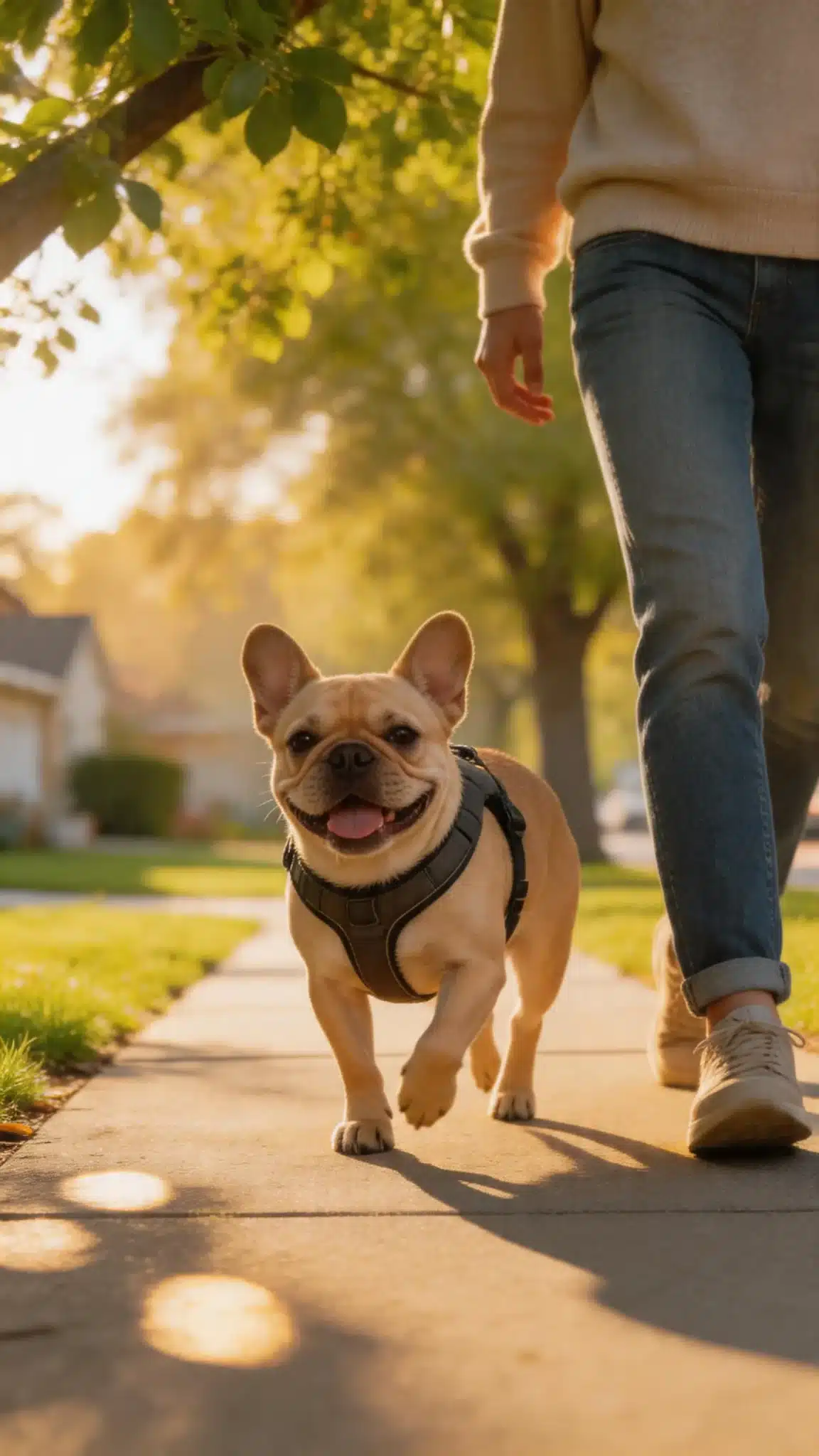
French Bulldogs need approximately 20–30 minutes of moderate exercise per day, split into two shorter sessions. Their brachycephalic (flat-faced) anatomy limits oxygen intake, which means they tire and overheat faster than longer-snouted breeds.
- Adult Frenchies: two 15-minute walks daily is a solid baseline
- Puppies under 3 months: limit activity to free indoor play only
- Seniors (8+ years): reduce to 10–15 minutes per outing
- High-heat days: cut all outdoor exercise by at least half
- Post-meal: wait 30 minutes before any physical activity
For a deeper look at daily routines, the guide on how much exercise a French Bulldog needs breaks down schedules by age and season.
Why French Bulldogs Have Strict Exercise Limits
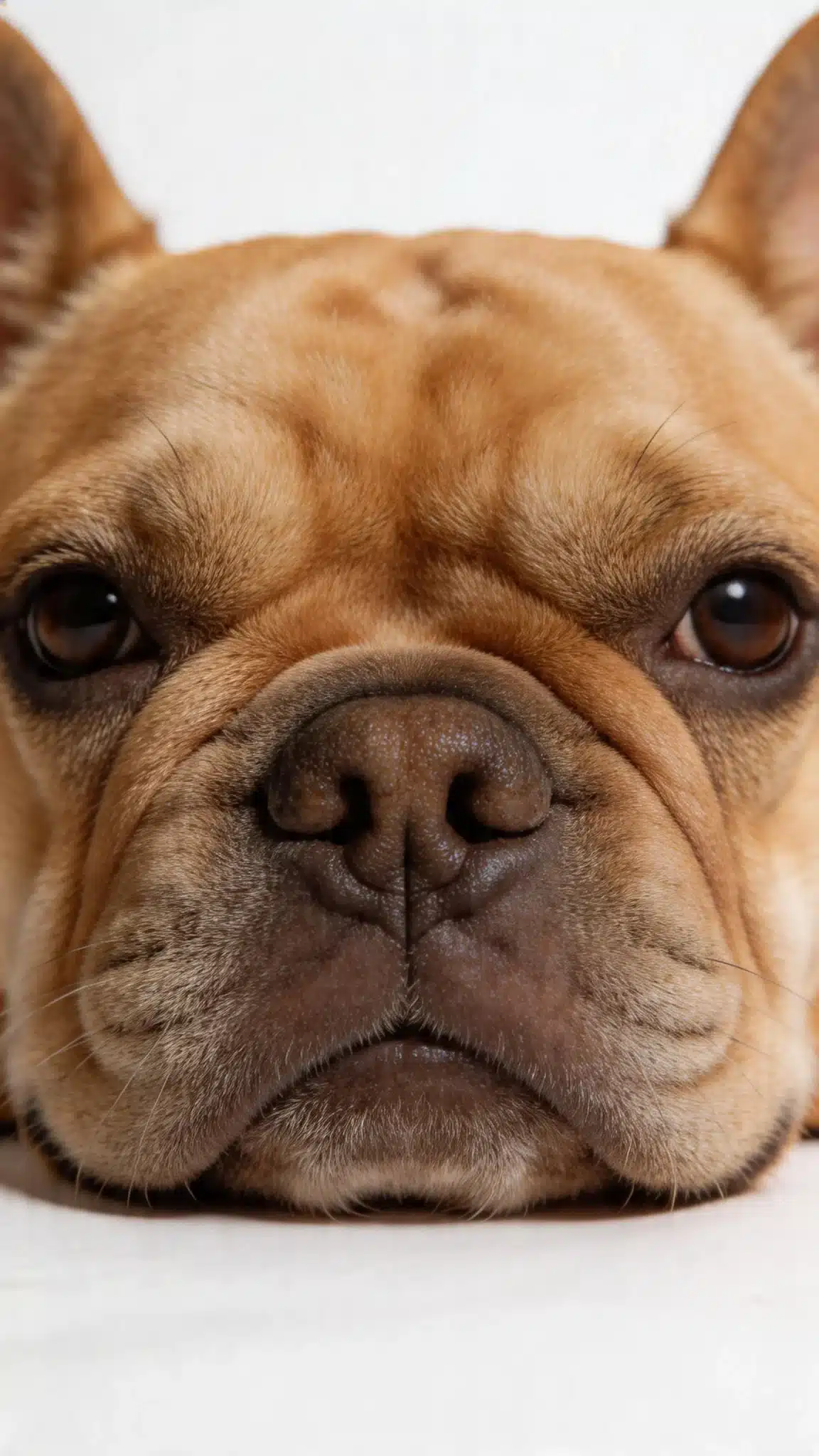
French Bulldogs are a brachycephalic breed, meaning their skull shape compresses the nasal passages, soft palate, and trachea. This anatomy is the core reason their exercise limits differ so sharply from other dogs of a similar size.
Get Weekly Dog Care Tips Free
Join 10,000+ dog owners. Vet-approved advice every week
🔒 No spam. Unsubscribe anytime.
Brachycephalic Obstructive Airway Syndrome (BOAS) affects a significant proportion of flat-faced breeds and directly reduces exercise tolerance, according to the British Veterinary Association.
When a Frenchie exerts itself, it cannot move air efficiently enough to cool down through panting. Heat builds up inside the body faster than it can escape, pushing the dog toward heat stroke even on mild days.
The Role of Body Weight
Excess weight compounds the problem significantly. An overweight Frenchie puts extra strain on an already-compromised airway and on joints that were not designed for heavy loads. The American Kennel Club breed standard places healthy adult French Bulldogs under 28 pounds — anything above that warrants a conversation with your vet.
BEFORE YOU SCROLL PAST
Readers Also Loved:
👉 How To Spot Early Signs Of Canine Dementia In Senior Dogs
A cooling mat for dogs can help your Frenchie recover quickly after walks, especially during warmer months.
Breathing Problems at Rest and During Activity
Some Frenchies show labored breathing even when resting — a sign the underlying airway issue is advanced. If your dog already snores heavily or struggles overnight, review the guide on French Bulldog breathing problems while sleeping before pushing any exercise routine harder.
Exercise Limits by Age: A Practical Guide
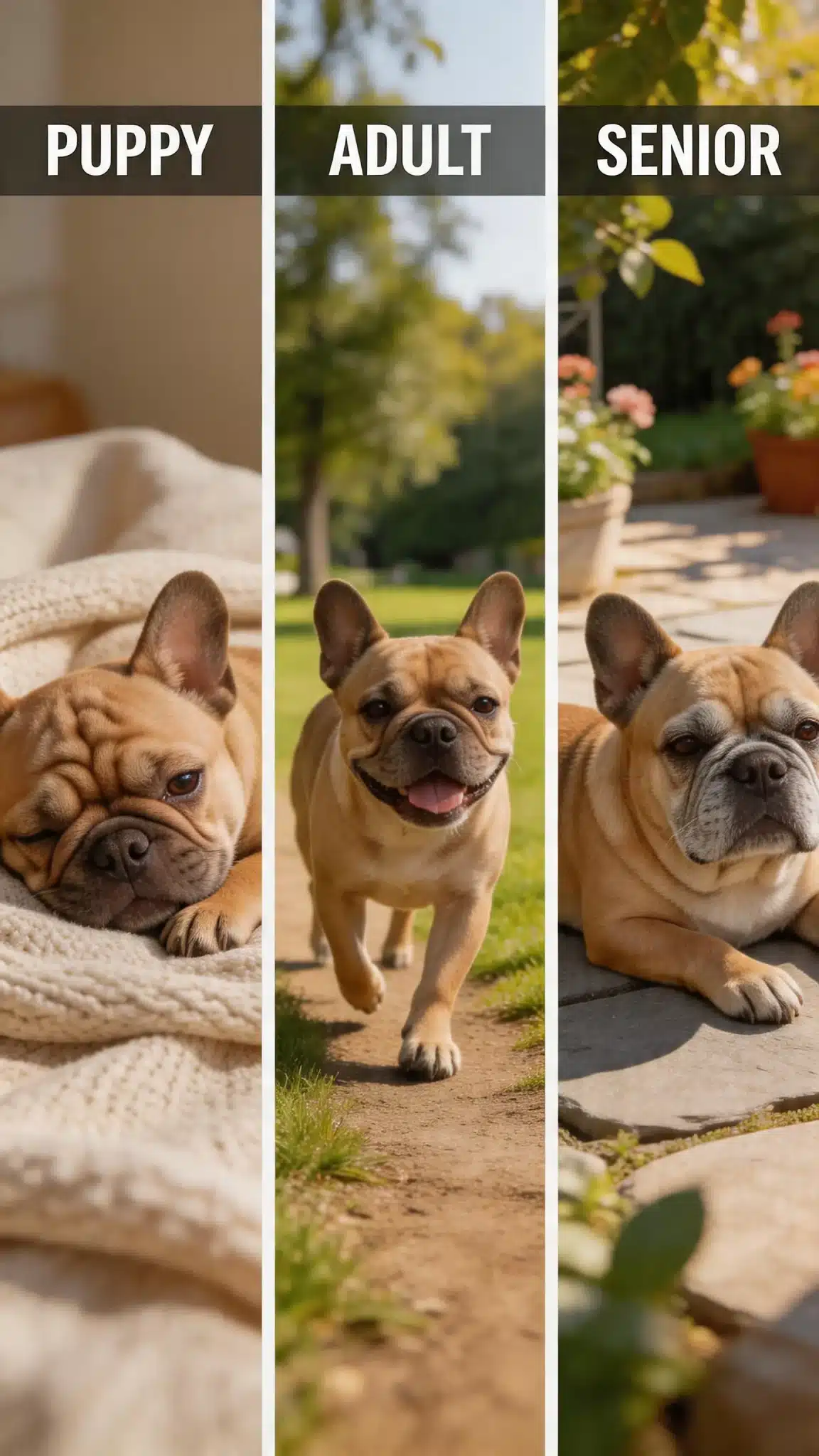
A French Bulldog’s safe exercise window changes at every life stage. Using a one-size-fits-all approach is one of the most common mistakes owners make.
| Life Stage | Age Range | Recommended Daily Exercise | Key Caution |
|---|---|---|---|
| Puppy | 0–6 months | 5 min per month of age, twice daily | No forced runs; joints still forming |
| Adolescent | 6–12 months | Up to 20 minutes, twice daily | Watch for rapid overheating |
| Adult | 1–7 years | 20–30 minutes total per day | Split sessions; avoid midday heat |
| Senior | 8+ years | 10–15 minutes per outing | Monitor joints and breathing closely |
The five-minute rule for puppies — five minutes of exercise per month of age — is widely referenced by veterinary sources including the UK’s People’s Dispensary for Sick Animals (PDSA). It protects developing growth plates from stress fractures.
Never measure a Frenchie puppy’s fitness against an adult dog’s energy level.
Warning Signs Your French Bulldog Has Hit Its Exercise Limit
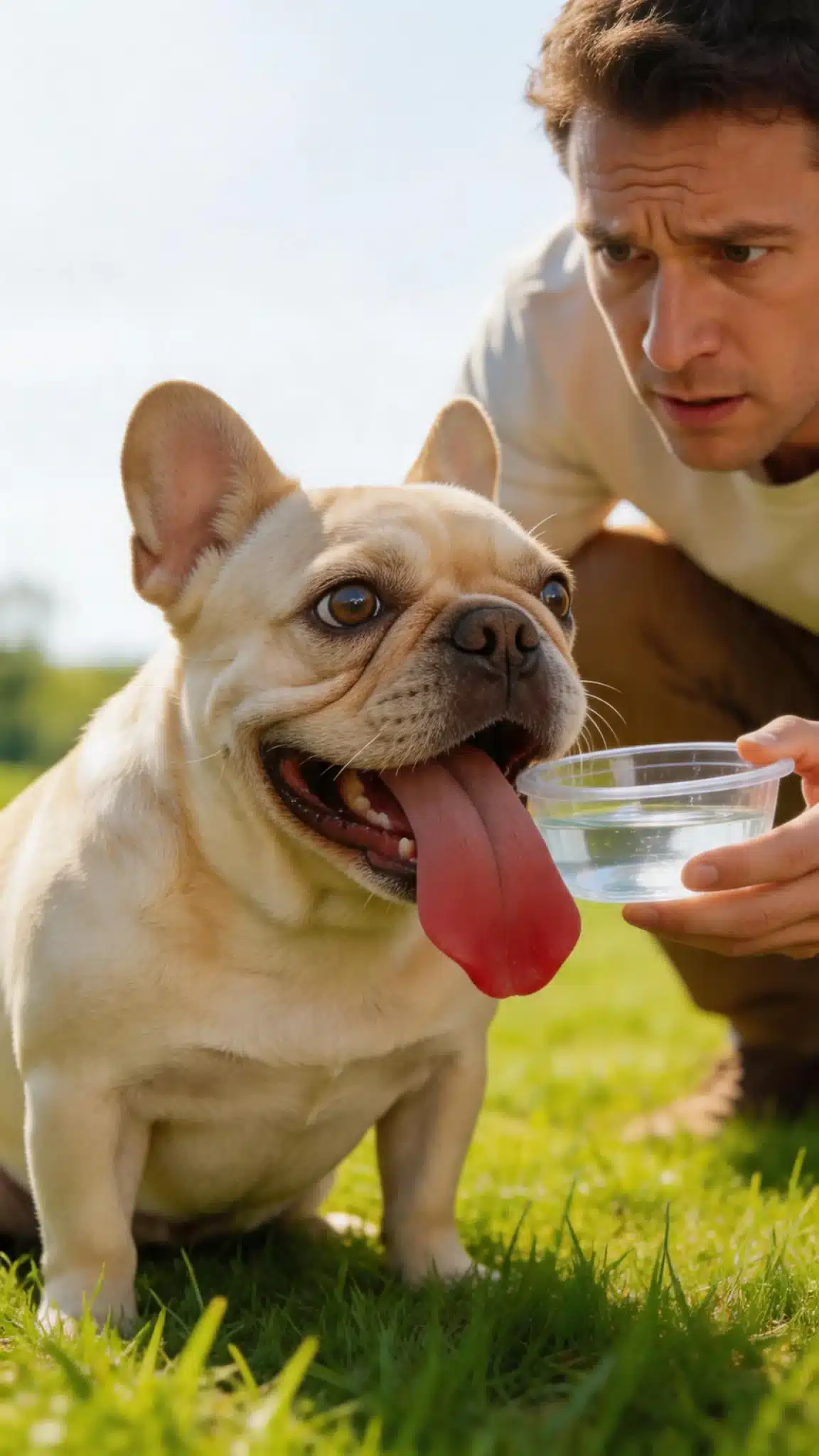
French Bulldogs cannot tell you when they are done, and they will often push past their limit out of excitement. Learning the warning signs is a skill that can genuinely save your dog’s life.
- Excessive, noisy panting — louder or raspier than their normal breathing
- Blue or pale gums — a medical emergency; stop activity and call a vet immediately
- Stumbling or sudden slowing — legs giving way signals oxygen debt
- Excessive drooling or foaming — the body’s last-ditch cooling attempt
- Refusing to walk further — a Frenchie sitting down mid-walk is a clear signal, not stubbornness
If you see more than one of these signs together, move your dog to shade or air conditioning immediately and offer small sips of cool (not ice cold) water. Contact your veterinarian if symptoms do not ease within five minutes.
Keeping a portable dog water bottle on every walk gives you an immediate way to help your Frenchie cool down on the go.
BEFORE YOU SCROLL PAST
Readers Also Loved:
👉 How To Care For Your Female Frenchie During Her First Heat
How to Exercise a French Bulldog Safely
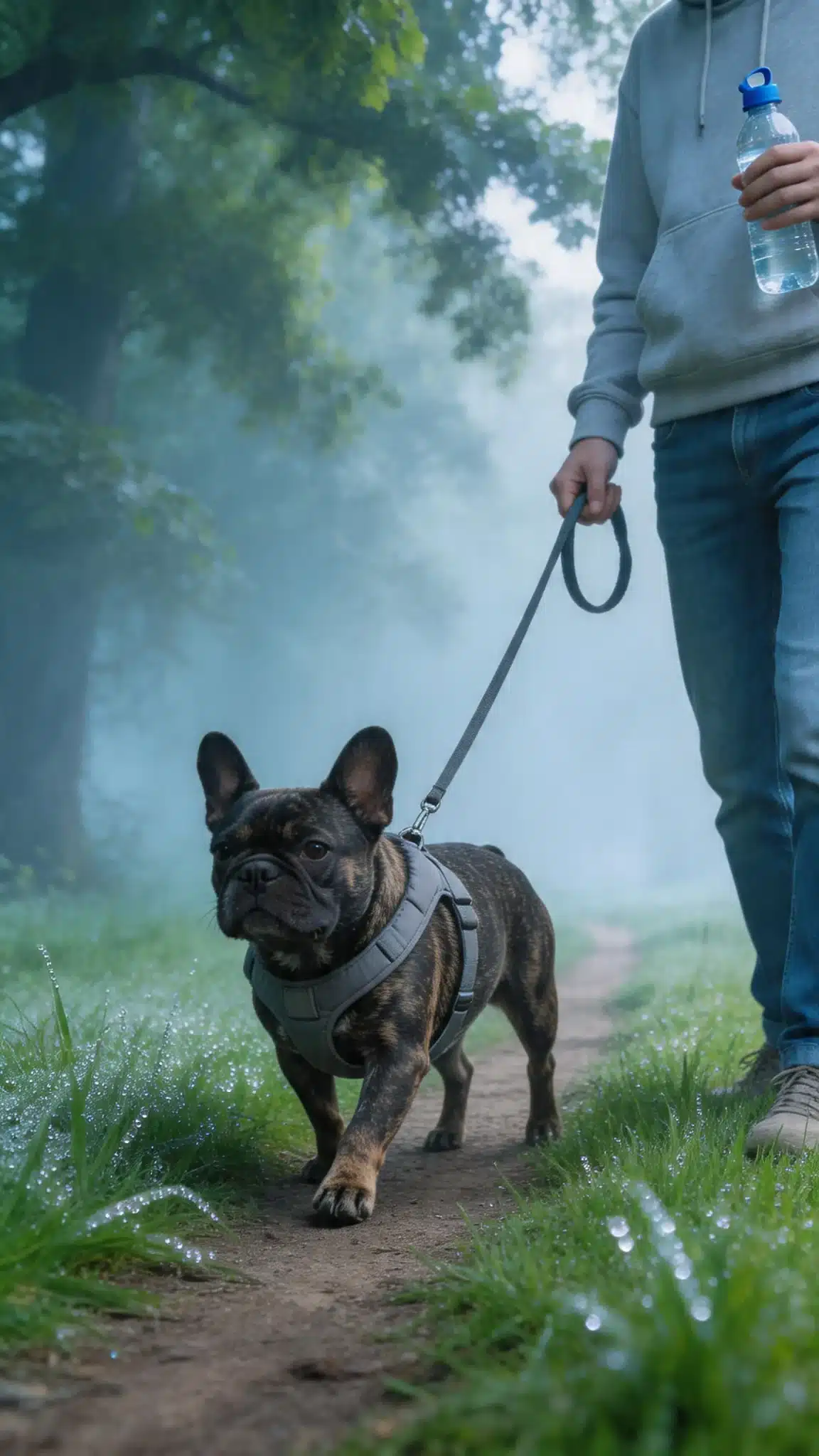
Safe exercise for a French Bulldog means low-intensity, controlled activity in a cool environment. The goal is gentle stimulation — not cardio training.
- Walk in the early morning or evening — pavement below 77°F (25°C) is the target; test with the back of your hand for seven seconds.
- Keep sessions short and split — two 10–15 minute walks beat one 30-minute march every time.
- Choose flat, shaded routes — hills spike effort levels quickly in brachycephalic dogs.
- Build rest breaks into the walk — pause every five minutes on warm days and watch for heavy panting before continuing.
- Use a harness, not a collar — a collar adds pressure directly to the trachea; a no-pull harness for French Bulldogs distributes pressure safely across the chest.
- Monitor recovery time — your dog should return to a normal breathing rate within 10 minutes of stopping. Longer than that signals the session was too intense.
Consistency matters more than intensity. Regular short walks keep a Frenchie’s weight stable and joints mobile without stressing their airway.
Because neutering can affect energy levels and weight gain, understanding when to neuter a male French Bulldog is worth factoring into your long-term exercise planning.
Common Exercise Mistakes French Bulldog Owners Make
Even well-meaning owners make predictable errors that put their Frenchies at risk. Here are the most frequent ones — and what to do instead.
- Mistake: Walking during peak heat (10 a.m.–4 p.m.) — Heat stroke can develop in minutes. Shift all walks to early morning or after sunset during summer.
- Mistake: Letting a Frenchie set the pace — Frenchies will run until they collapse from excitement. You need to be the one who stops the session, not your dog.
- Mistake: Swimming without supervision — Frenchies are poor swimmers due to their heavy front end. Never leave one unattended near water, even shallow pools.
- Mistake: Assuming indoor play has no limits — Vigorous indoor fetch or chasing on hard floors can overheat a Frenchie just as quickly as outdoor exercise. The same warning signs apply.
- Mistake: Skipping exercise entirely — Under-exercised Frenchies gain weight fast, which worsens airway restriction and joint stress. Some daily movement is always better than none.
Skin and paw health often suffers in dogs that are over-walked on hot or rough pavement. If your dog starts licking or chewing their feet after walks, the article on why French Bulldogs lick their paws covers the most common causes and fixes.
MOST POPULAR THIS WEEK
Readers Also Loved: 👇
👉 How To Stop Dogs From Scratching Ears Raw
For overall hygiene between exercise sessions, learning how to clean French Bulldog ears safely is another simple routine that keeps your dog comfortable.
For authoritative guidance on brachycephalic health, the British Veterinary Association’s brachycephalic breed resources provide evidence-based recommendations. The American Kennel Club’s French Bulldog breed page also outlines standard care expectations.
Frequently Asked Questions About French Bulldog Exercise Limits: What Every Owner Should Know
Can French Bulldogs go on long hikes?
French Bulldogs are not suited for long hikes due to their restricted airways and low heat tolerance. Even a 45-minute trail walk in moderate temperatures can push a Frenchie past its safe limit.
Is swimming good exercise for a French Bulldog?
Swimming can be good low-impact exercise, but French Bulldogs are naturally poor swimmers and must wear a life vest and be supervised at all times. Never leave a Frenchie unattended near water.
How do I know if my Frenchie is getting enough exercise?
A well-exercised French Bulldog maintains a healthy weight, sleeps soundly, and shows calm but alert behavior at home. If your dog is restless indoors or gaining weight, a vet check and adjusted routine are the right next steps.
Do French Bulldogs need exercise in winter?
French Bulldogs still need daily exercise in winter, though cold air can also irritate their airways. Keep winter walks short, avoid icy surfaces, and consider a dog coat if temperatures drop below 45°F (7°C).
At what temperature is it too hot to walk a French Bulldog?
Most vets advise avoiding outdoor walks when air temperature exceeds 75°F (24°C) for French Bulldogs. Pavement temperature is the bigger danger — asphalt can reach 125°F (52°C) on an 80°F day.
Can puppies and senior Frenchies exercise together?
Puppies and seniors have very different exercise limits and should not be used as each other’s benchmark. A puppy’s session length and a senior’s pace rarely align safely — separate, age-appropriate outings are the better approach.
Keeping Your French Bulldog Active and Safe for the Long Haul
The single most important takeaway from everything above: short, consistent, and cool is always the right formula for French Bulldog exercise. Twenty minutes split across two calm walks, in shade, during the coolest part of the day, does more for your dog than any intense session ever will.
Start today by checking the time and temperature of your next planned walk. If it is after 10 a.m. and the thermometer is climbing, reschedule it for evening. That one habit change protects your Frenchie more than almost anything else you can do.
Your dog is counting on you to know when enough is enough — and now you do.