How to Find a Healthy Toy Poodle Stud for Your Breeding

Finding a healthy toy poodle stud is one of the most important decisions you will make for your breeding program. The stud dog shapes the health, temperament, and conformation of an entire litter.
A poorly chosen stud can pass genetic diseases to puppies that struggle for years. Choosing wisely protects both your female and her future offspring.
This article walks you through every step — from health testing to breeder vetting — so you find the right stud with confidence. You will also learn the red flags to avoid and the questions every serious breeder asks.
🛒 What Every Frenchie Owner Needs Right Now
Get Weekly Dog Care Tips Free
Join 10,000+ dog owners. Vet-approved advice every week
🔒 No spam. Unsubscribe anytime.
How to Find a Healthy Toy Poodle Stud: The Short Answer
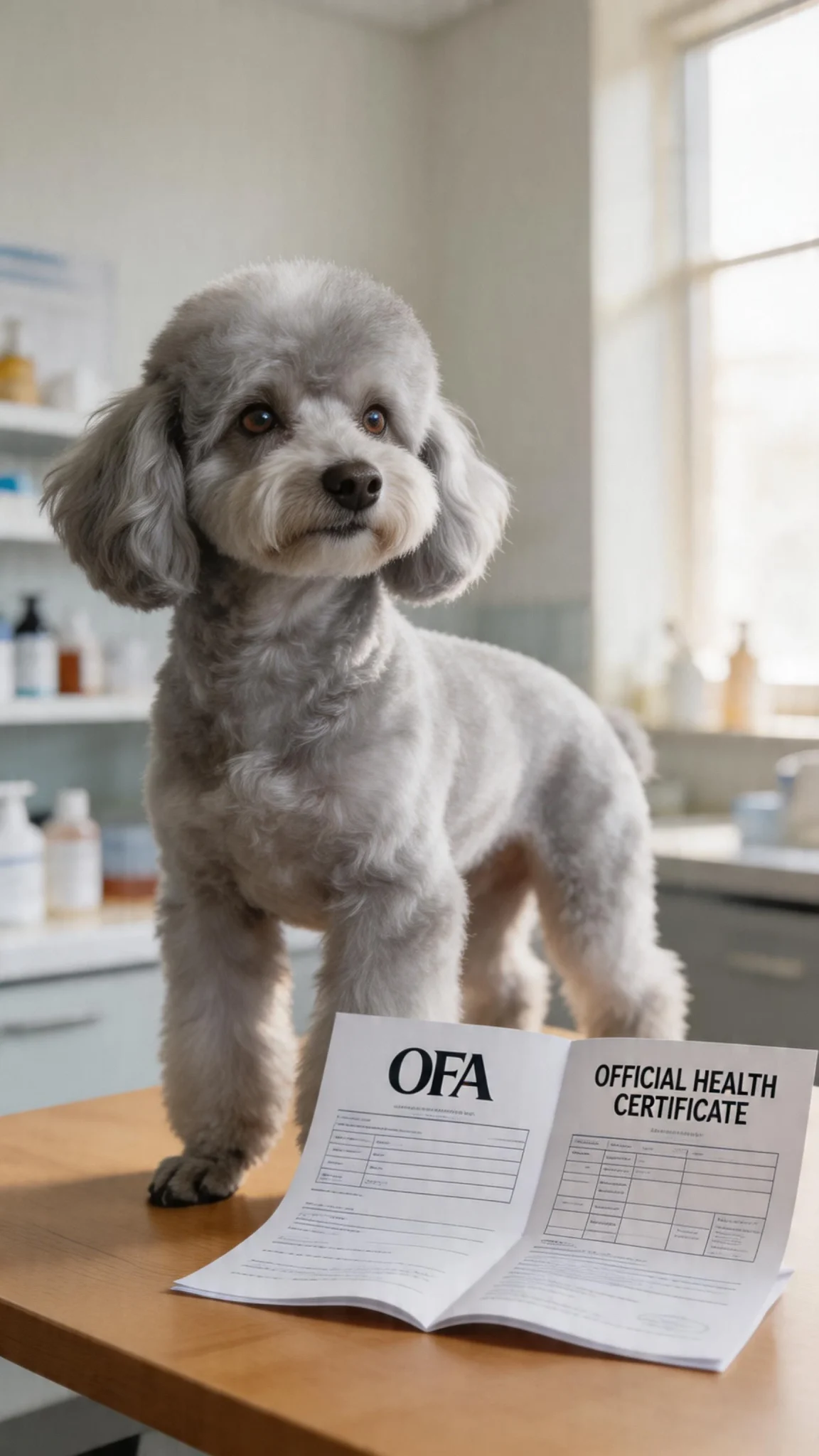
You find a healthy toy poodle stud by focusing on verified health clearances, proven genetics, and a reputable breeder network. Never choose a stud based on looks alone.
- Request OFA health clearances for hips, eyes, and patellas
- Confirm the stud has a clean DNA panel for PRA and von Willebrand disease
- Check AKC registration and a complete three-generation pedigree
- Visit the stud in person and assess his temperament directly
- Ask for references from at least two previous litters
- Research the stud owner’s reputation through breed club directories
- Confirm the stud weighs under 6 pounds if you need a true toy size
Why Health Testing a Toy Poodle Stud Matters So Much
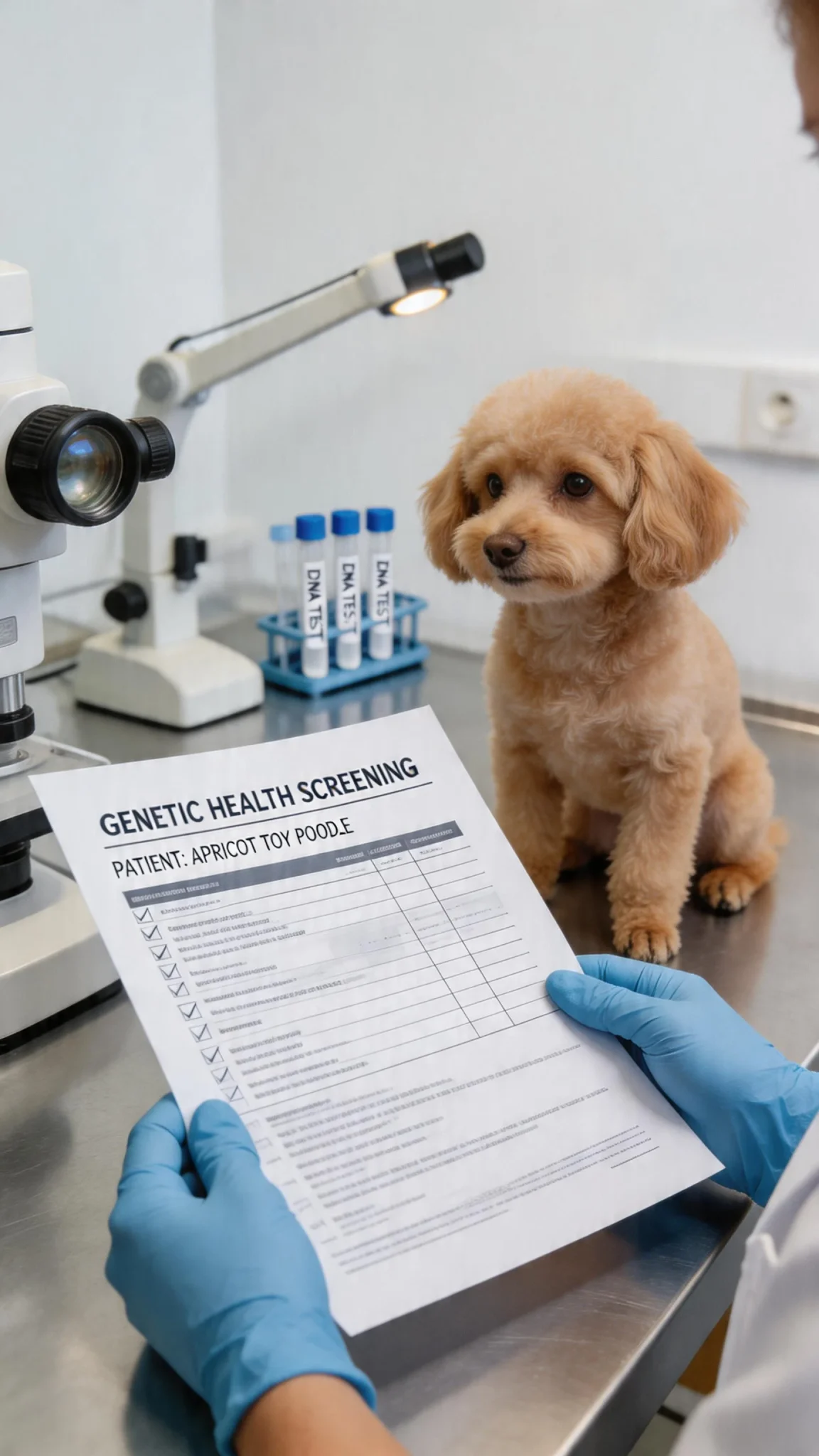
Toy poodles carry specific genetic risks that make health testing non-negotiable before any breeding. Progressive Retinal Atrophy, or PRA, is one of the most common inherited conditions in the breed and causes blindness in affected dogs.
In our experience, breeders who skip health testing often face heartbreaking outcomes by the time puppies reach 18 months old. A single untested stud can silently spread a recessive gene through dozens of litters.
The Orthopedic Foundation for Animals, known as OFA, maintains a public database where you can verify clearances for any registered dog. Simply search the stud’s registered name at ofa.org to confirm his hip, patella, and eye results.
🛒 Vets Use For Their Own Frenchies
One breeder in Texas, Sarah M., shared that her 2022 litter produced three puppies with luxating patellas after she skipped the OFA patella check on her stud. That single decision cost her over $9,000 in buyer refunds and veterinary consultations.
Just as the process of finding a reputable French Bulldog breeder requires verified health documentation, finding a toy poodle stud demands the same standard of proof.
Key Health Tests to Require
- OFA patella evaluation — luxating patellas affect nearly 1 in 4 toy poodles
- OFA CAER eye exam — screens for PRA and other inherited eye conditions
- DNA test for PRA-prcd mutation — a simple cheek swab confirms carrier or clear status
- DNA panel for von Willebrand disease Type 1 — a bleeding disorder found in poodles
- Cardiac evaluation by a board-certified cardiologist — recommended annually for studs over 3 years
Where to Find Reputable Toy Poodle Stud Owners

The Poodle Club of America maintains a breeder referral list that connects you with members who follow a strict code of ethics. This is your most reliable starting point because members agree to health testing standards before joining.
What we have found works best is starting your search at least three to four months before your female’s next heat cycle. Rushing the process leads to poor decisions and missed health checks.
You can also find quality stud listings on the AKC Marketplace, where registered breeders post verified dogs. Filter specifically for toy poodles and look for listings that mention OFA clearances directly in the description.
Online communities like the Toy Poodle Breeders USA Facebook group connect you with experienced breeders who openly share stud recommendations. Many members will personally vouch for studs they have used successfully.
If you enjoy researching poodle breeds deeply, you might also appreciate this complete toy Goldendoodle guide covering size, price, and lifespan, which shows how poodle genetics carry through crossbreeds too.
How to Evaluate a Toy Poodle Stud in Person
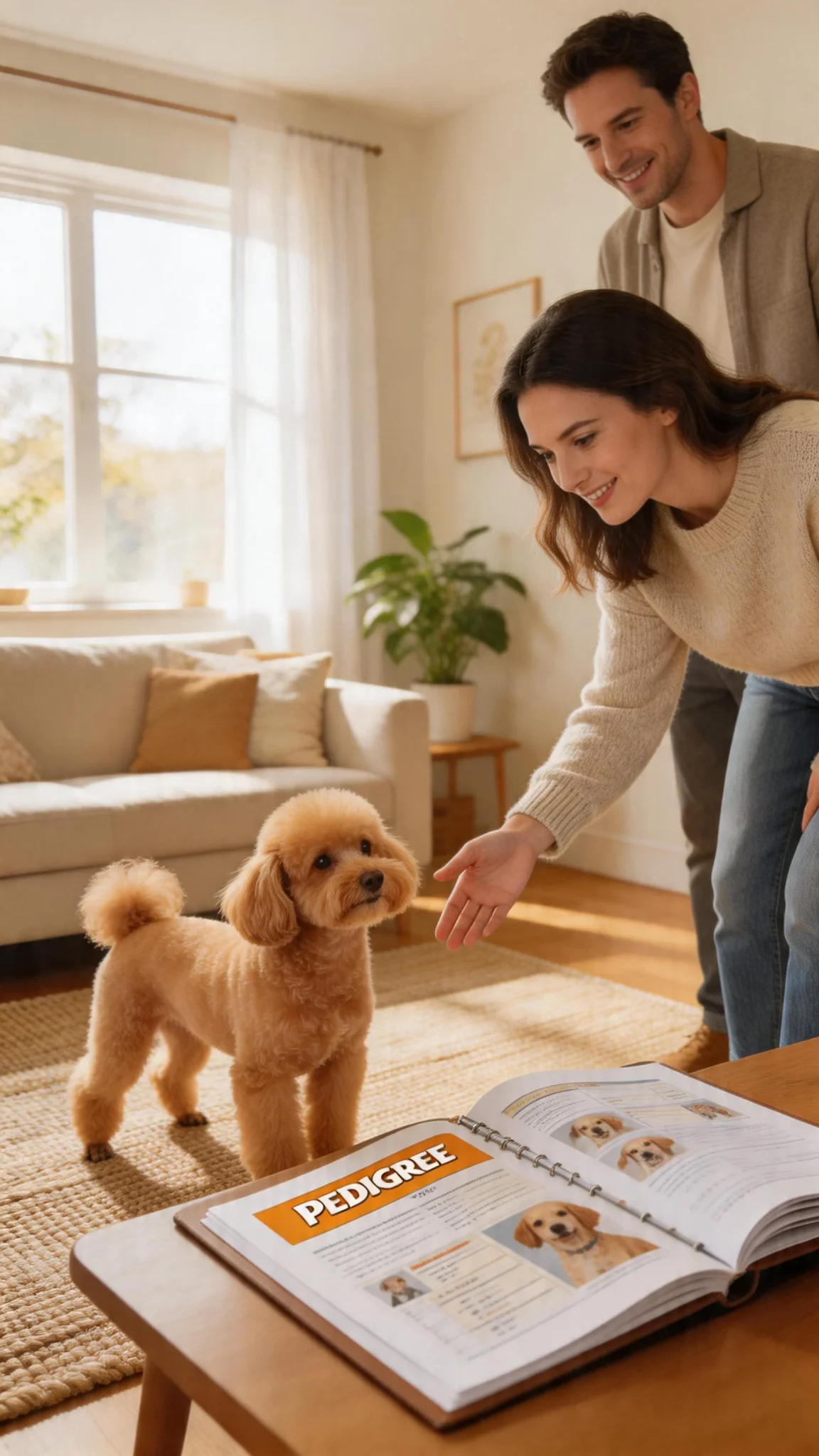
Once you identify a candidate, schedule a visit to see the stud in his home environment. You want to observe his energy level, coat quality, and how he interacts with people he has never met before.
A healthy toy poodle stud should weigh between 4 and 6 pounds with clear, bright eyes and no discharge. His coat should be dense and clean without dry patches or signs of skin irritation.
Watch specifically for any signs of limping, bunny-hopping on the rear legs, or reluctance to jump — all of these suggest patella problems. We have seen this consistently dismissed by stud owners who call it “just a habit,” but it rarely is.
Questions to Ask the Stud Owner Directly
- How many litters has this stud produced, and can I contact previous dam owners?
- What health conditions appeared in prior litters from this stud?
- Does the stud owner offer a contract with health guarantees?
- Is the stud current on all vaccinations and parasite prevention?
- What are the stud fee terms — live puppy guarantee or single breeding fee?
Bring a dog health record organizer to your visit so you can keep all documentation in one place from day one.
Step-by-Step Process to Choose Your Toy Poodle Stud
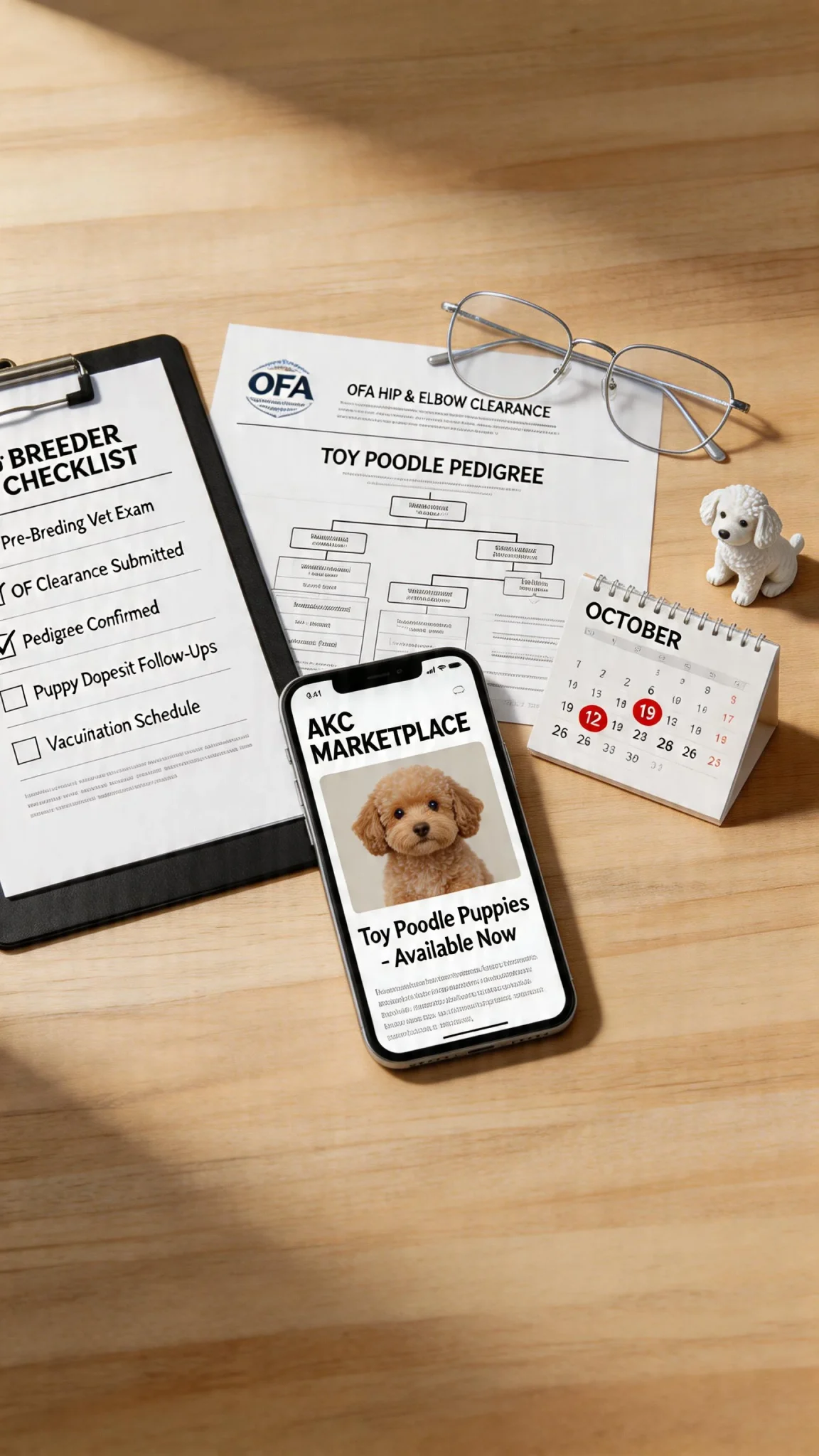
- Start your search four months before your female’s expected heat cycle so you have enough time to vet candidates properly without rushing.
- Create a shortlist of three to five studs from AKC Marketplace, the Poodle Club of America breeder referral, and trusted breed groups online.
- Request full health documentation from each stud owner — OFA results, DNA panels, vaccination records, and AKC registration papers.
- Verify every health clearance independently at ofa.org using the stud’s registered name before moving forward.
- Schedule in-person visits for your top two candidates and bring a checklist covering temperament, conformation, coat, and movement.
- Contact at least two breeders who have used the stud previously and ask specific questions about litter health outcomes.
- Review and sign a clear stud contract that outlines fees, breeding terms, and what happens if the breeding does not result in a live litter.
Keep your female’s health equally strong during this process — a high-quality small breed prenatal supplement supports her health from pre-breeding through whelping.
Expert Insights on Finding a Quality Stud
Dr. Jerold Bell, a veterinary geneticist at Tufts University, emphasizes that responsible breeders must test both parents — not just the stud — to meaningfully reduce the risk of heritable disease in each litter.
🛒 Frenchie Owners Are Grabbing These Too
The Poodle Club of America’s Health and Research Committee reports that PRA-prcd affects approximately 1.4% of tested toy poodles, but carrier rates run significantly higher, making DNA testing every stud essential.
Many of our readers tell us they feel overwhelmed by health testing requirements at first, but find the process straightforward once they use the OFA search tool directly. The database is free and takes under two minutes to search.
Certified Master Breeder and long-time Poodle Club member Janet Hastings advises new breeders to never accept a stud owner’s word alone — always pull the records yourself from the official OFA database before committing.
A quality canine DNA health testing kit is also useful if a stud owner claims testing was done but cannot produce official paperwork to verify it.
Frequently Asked Questions About How to Find a Healthy Toy Poodle Stud
What Is the Average Stud Fee for a Toy Poodle?
Toy poodle stud fees in the USA typically range from $500 to $1,500 depending on the stud’s show record, health clearances, and lineage. Champion-titled studs with full health testing often command fees at the higher end of that range.
How Old Should a Toy Poodle Stud Be Before Breeding?
Most reputable breeders wait until a toy poodle stud is at least 18 months old so all health clearances can be completed accurately. Breeding too early increases the risk of passing on undetected genetic conditions.
Can I Find a Toy Poodle Stud Without Using a Breeder?
You can find private stud owners outside formal breeder networks, but the risk of incomplete health testing rises significantly without accountability. Always require the same full documentation regardless of where you find the stud.
What Is a Live Puppy Guarantee in a Stud Contract?
A live puppy guarantee means the stud owner agrees to a repeat breeding at no charge if the first breeding produces no live puppies. Always confirm this clause is written into your stud contract before signing.
Should I Use a Local Stud or Is Shipped Genetic Material an Option?
Chilled or frozen canine genetic material shipping is a widely accepted practice in toy poodle breeding across the USA, especially when the best genetic match lives far away. Work with your veterinarian to coordinate proper timing for an intrauterine insemination procedure.
How Do I Know if a Toy Poodle Stud Has Good Temperament?
Observe the stud interacting with strangers during your in-person visit and ask the owner about his daily behavior around children and other dogs. A sound toy poodle stud should be curious, friendly, and easy to handle without anxiety or aggression.
Finding Your Perfect Toy Poodle Stud Starts Today
Building on what we covered about health testing and breeder vetting, the clearest path forward is to start your search early, demand documentation, and verify everything independently. A healthy stud produces healthy puppies — and healthy puppies build your reputation as a responsible breeder.
Start today by visiting ofa.org and the Poodle Club of America’s breeder referral page to build your initial candidate list. You have everything you need to make a confident, well-informed choice for your breeding program.
While you prepare for your female’s upcoming litter, treat her well with simple homemade nutrition like these 3-ingredient sweet potato dog cookies that make a wholesome everyday snack. And if you love all things poodle, check out these charming amigurumi poodle puppy crochet patterns as a fun creative project between litters.