French Bulldog Allergies: Symptoms, Causes, Testing, Treatment and Prevention

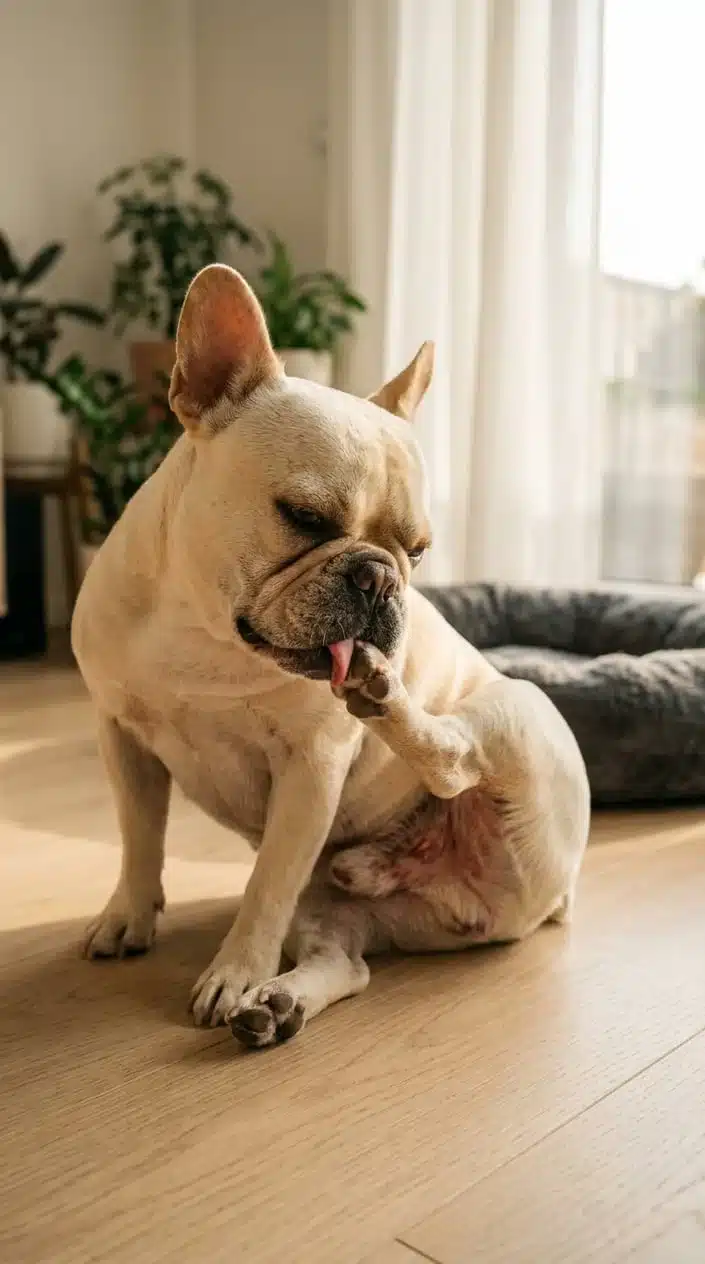
French Bulldogs are known for their affectionate personalities, expressive faces, and sensitive skin. Unfortunately, itching, paw licking, ear trouble, rashes, and recurring skin infections are common concerns for many Frenchie owners.
The difficult part is identifying what is actually causing the problem. Food allergies, environmental allergies, fleas, mites, contact irritation, and secondary infections can produce similar symptoms.
This guide will help you recognize possible allergy patterns, understand reliable testing methods, and work with your veterinarian on a safe long-term treatment plan.
Common French Bulldog allergy symptoms include paw licking, itchy ears, face rubbing, red skin, belly rashes, hair loss, and recurring skin infections.
- Seasonal symptoms often suggest environmental triggers, while year-round itching may involve food or indoor allergens.
- Symptoms alone cannot confirm the allergy type; infections and parasites can look similar.
- Breathing difficulty, collapse, hives, or sudden facial swelling requires urgent veterinary care.
Are French Bulldogs Prone to Allergies?
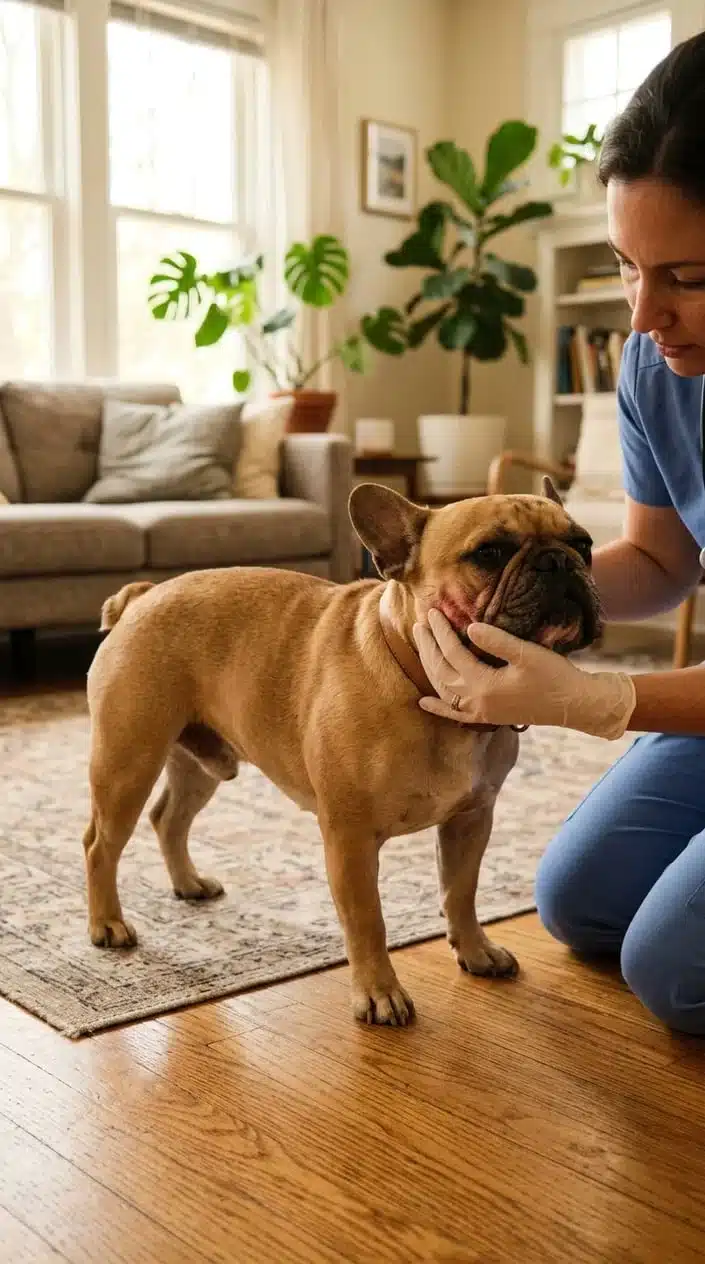
French Bulldogs can be particularly vulnerable to recurring skin problems. Their genetics, sensitive skin, compact paws, facial folds, tail pockets, and tendency to develop skin-barrier inflammation may all contribute.
The Merck Veterinary Manual also lists French Bulldogs among breeds that appear overrepresented in reports of canine food allergy.
However, being a French Bulldog does not mean every itch is an allergy. Fleas, mites, infections, injuries, excessive moisture, harsh grooming products, and other medical conditions can look very similar.
Get Weekly Dog Care Tips Free
Join 10,000+ dog owners. Vet-approved advice every week
🔒 No spam. Unsubscribe anytime.
Some Frenchies also have more than one condition at the same time. For example, a dog may have environmental allergies along with a secondary yeast infection between the toes.
Common Types of French Bulldog Allergies
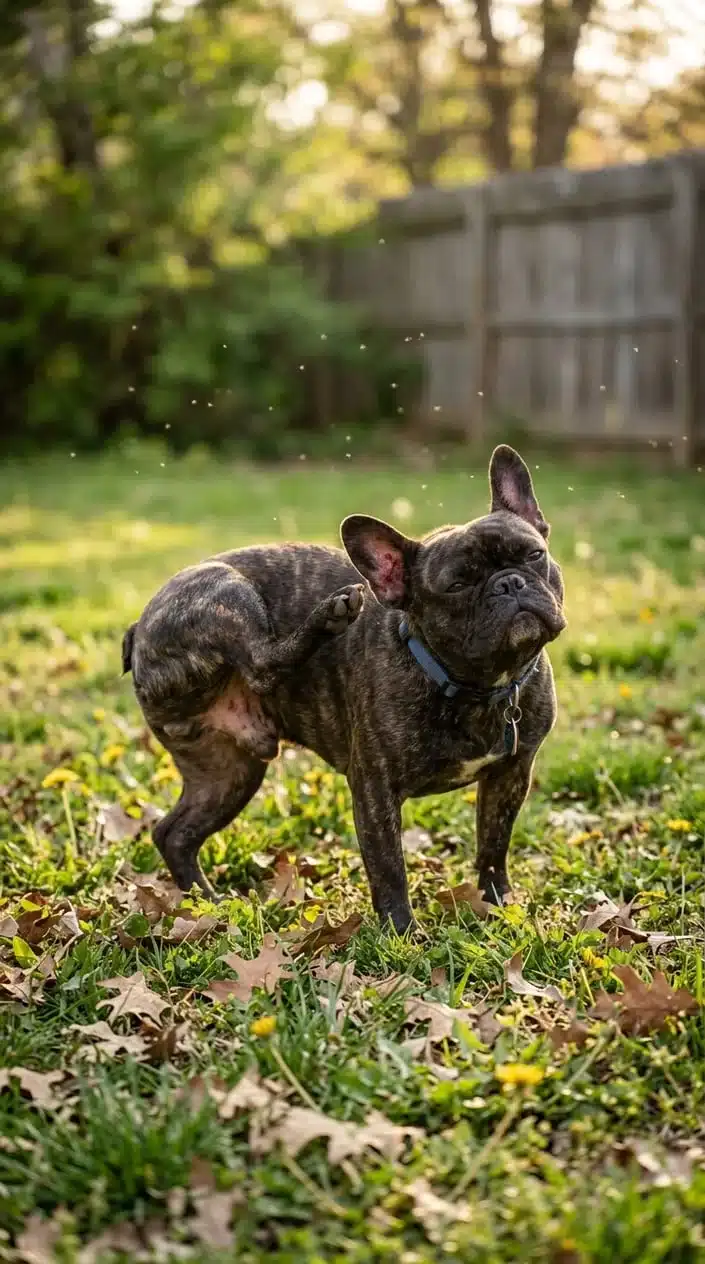
The word “allergy” is often used for several different problems. Understanding the main categories can help you have a more useful conversation with your veterinarian.
Environmental Allergies
Environmental allergen-associated atopic dermatitis may involve reactions to tree, weed, and grass pollen; mold spores; dust mites; indoor allergens; and other substances in the dog’s surroundings.
Symptoms may be seasonal at first and become more persistent over time. Paws, ears, the face, armpits, groin, and belly are commonly affected areas. Our guide to environmental allergies in French Bulldogs explains how these common triggers can affect a Frenchie and what may help reduce exposure.
Food Allergies
A food allergy is an immune reaction to something in the diet, usually a protein the dog has eaten before. Possible triggers can include beef, dairy, chicken, wheat, lamb, or other ingredients.
However, you cannot identify a food allergy by seeing chicken or grain on an ingredient label. Commonly eaten ingredients may appear frequently in allergy reports partly because more dogs have been exposed to them.
Food allergy symptoms are usually nonseasonal and can include persistent itching, paw licking, recurrent ear inflammation, face rubbing, repeated skin infections, vomiting, diarrhea, gas, or frequent bowel movements.
Food allergies are different from food intolerance. An intolerance can cause digestive problems without involving an allergic immune response.
Flea Allergy Dermatitis
A dog with flea allergy dermatitis reacts to proteins in flea saliva. A highly sensitive Frenchie may develop significant itching after very limited flea exposure.
Commonly affected areas include the lower back, tail base, thighs, and abdomen. You may not always see live fleas because dogs can remove them while licking and chewing.
Consistent veterinarian-recommended flea control for every pet in the household may be part of the diagnostic and treatment plan.
Contact Allergies and Irritation
The paws, belly, or muzzle may become irritated after direct contact with grass, plants, floor cleaners, laundry products, carpet treatments, lawn chemicals, road salt, shampoos, grooming products, plastics, rubber, or fabrics.
True allergic contact dermatitis is not the same as ordinary irritation, but both can cause redness and discomfort. The location and timing of the reaction may provide useful clues.
Acute Allergic Reactions
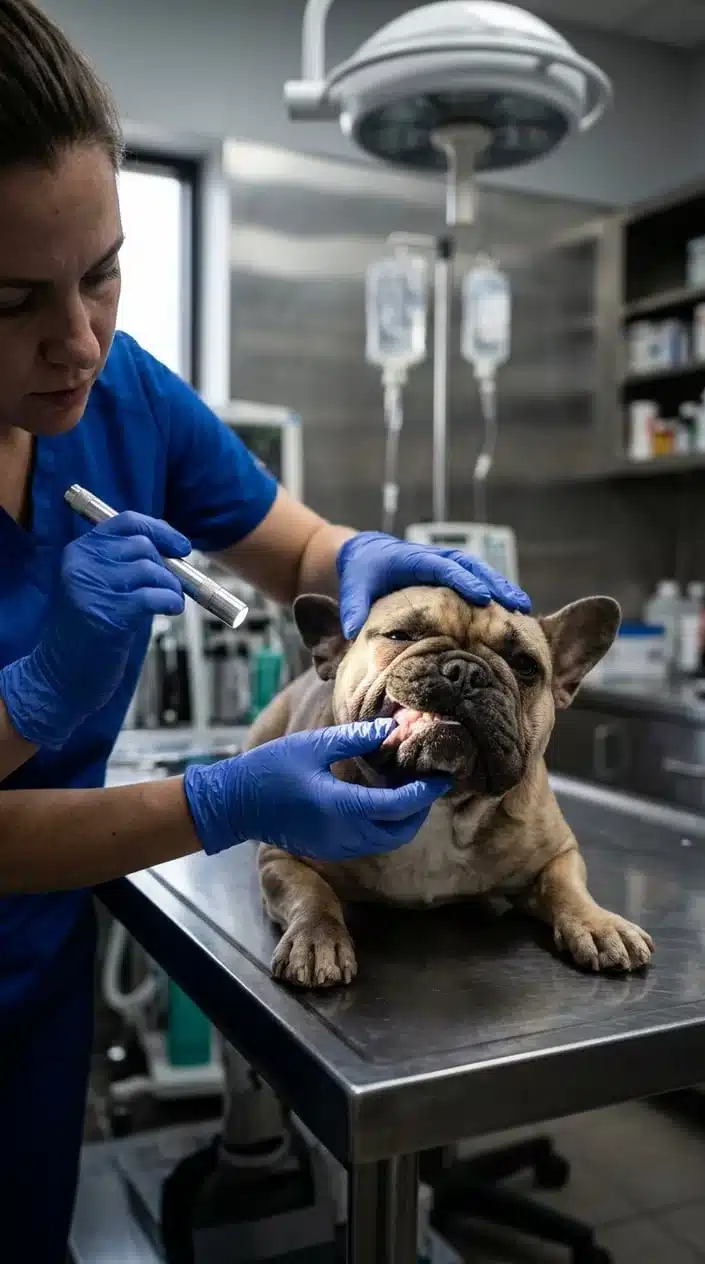
Insect stings, medications, vaccines, foods, and other exposures can occasionally cause a sudden reaction. Signs may include facial or muzzle swelling, hives, sudden vomiting or diarrhea, weakness, collapse, pale gums, or breathing difficulty.
These reactions are different from chronic skin allergies and may require immediate treatment.
Seek urgent veterinary care if your French Bulldog develops breathing difficulty, collapse, severe weakness, pale gums, repeated vomiting, or rapidly worsening facial swelling.
Because French Bulldogs already have shortened airways, swelling around the face or throat deserves particular caution. Do not wait for a severe reaction to resolve on its own.
French Bulldog Allergy Symptoms by Body Area
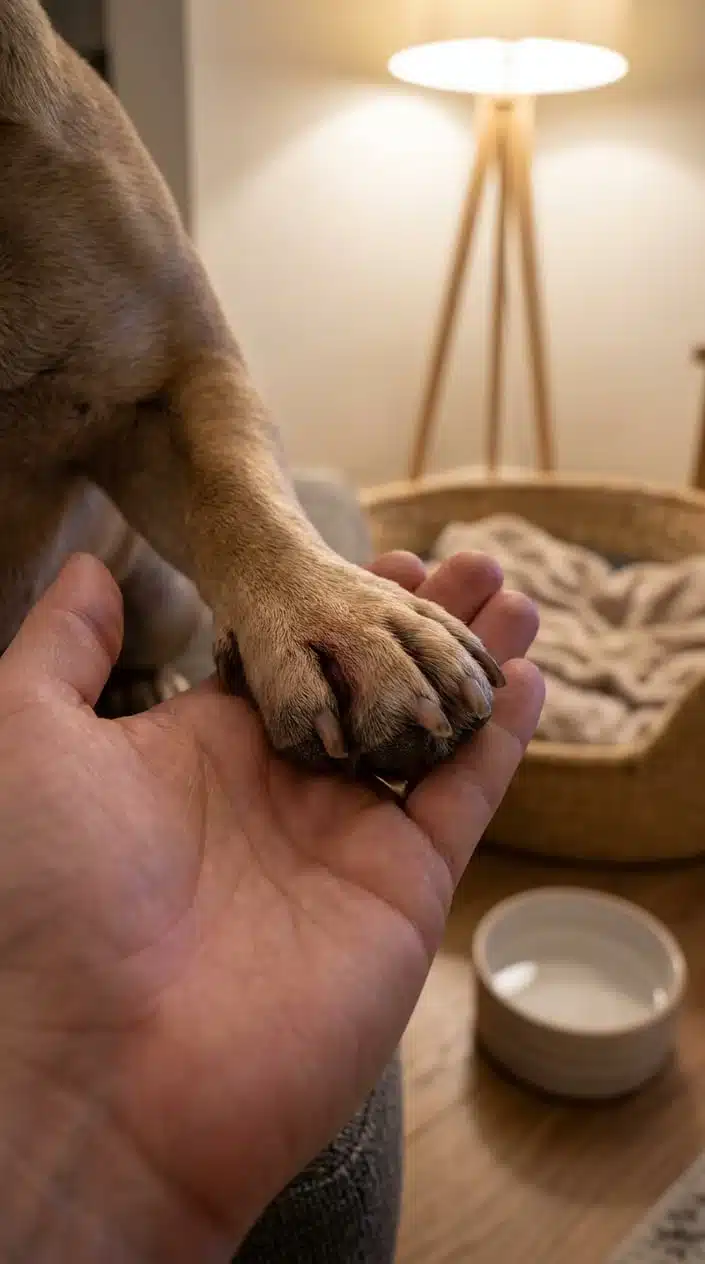
Where your Frenchie itches can provide clues, but it cannot confirm the cause. Allergies, infections, parasites, injuries, and other conditions frequently overlap.
| Body Area | Signs You May Notice | Possible Connections |
|---|---|---|
| Paws | Licking, chewing, brown staining, redness, swelling, or moisture between the toes | Environmental allergy, food allergy, contact irritation, infection, foreign material, or interdigital inflammation |
| Ears | Scratching, head shaking, redness, odor, discharge, or pain | Allergy-associated inflammation, yeast, bacteria, mites, or a foreign body |
| Face and muzzle | Rubbing, redness, hair loss, bumps, or facial swelling | Environmental allergy, food allergy, contact reaction, infection, or an acute allergic response |
| Wrinkles | Moisture, odor, redness, dark debris, or tenderness | Fold irritation, trapped moisture, yeast, or bacterial overgrowth |
| Belly and groin | Rash, bumps, itching, darkened skin, or hair loss | Environmental exposure, contact irritation, atopy, parasites, or infection |
| Tail pocket | Odor, redness, discharge, moisture, or discomfort | Fold dermatitis or secondary infection |
| Digestive system | Vomiting, diarrhea, gas, soft stools, or frequent bowel movements | Adverse food reaction or another digestive condition |
| Whole body | Widespread itching, hives, swelling, or sudden weakness | Acute reaction or generalized skin disease |
Symptoms overlap, so this table should not be used as a home diagnosis.
What Different Symptom Patterns May Mean
The timing and distribution of your Frenchie’s symptoms are often as important as the symptoms themselves.
Seasonal vs. Year-Round Symptoms
| Pattern | What It May Suggest |
|---|---|
| Worse during spring, summer, or fall | Pollen, grass, mold, or another seasonal environmental trigger |
| Worse after walks or grass exposure | Environmental allergy, contact irritation, plant material, or lawn products |
| Present throughout the year | Food allergy, dust mites, indoor allergens, chronic infection, or another ongoing condition |
| Sudden after using a new product | Contact irritation or a contact reaction |
| Sudden after a sting, medication, vaccine, or food | Acute allergic reaction |
| Returns soon after treatment ends | An uncontrolled underlying trigger, secondary infection, or incomplete diagnosis |
Seasonality is a clue—not proof. A Frenchie can have environmental allergies throughout the year, especially when indoor allergens are involved. A dog can also have both food and environmental allergies.
Paw Licking
Repeated paw licking can result from environmental allergens, food reactions, contact irritation, yeast, bacteria, pain, or something lodged between the toes. If several paws are affected or the licking continues throughout the day, review the common causes of frequent French Bulldog paw licking.
Licking one paw suddenly is more suggestive of a local problem, such as a torn nail, sting, foreign object, cut, or painful lump. Painful swelling or lumps between the toes may involve French Bulldog interdigital cysts.
If the licking mainly occurs while your Frenchie is resting or trying to sleep, our guide to paw licking at night explains possible physical and behavioral patterns to discuss with your veterinarian.
Before trying a home remedy, check for swelling, damaged nails, wounds, trapped debris, moisture, and signs of infection. Learn how to stop French Bulldog paw licking safely without masking a problem that may need veterinary care.
Recurring Ear Trouble
Allergies can inflame the ear canal and change its normal environment. Yeast or bacteria may then multiply and create a secondary infection.
Signs can include head shaking, ear scratching, redness, strong odor, brown or yellow discharge, and sensitivity when the ear is touched.
Repeatedly cleaning a painful ear without knowing the cause can make matters worse. A veterinarian may need to examine the canal and eardrum and perform cytology. When the ears are healthy and only need routine maintenance, use the correct method for cleaning French Bulldog ears safely rather than inserting cotton swabs or overcleaning the canal.
Wrinkle and Tail-Pocket Irritation
Frenchie skin folds can trap warmth, moisture, skin oils, and debris. Allergic inflammation may make these areas even more vulnerable to irritation and infection.
Inspect the folds regularly without aggressively scrubbing them. Consistent French Bulldog wrinkle care helps remove trapped debris while avoiding the irritation caused by harsh or excessive cleaning.
The tail pocket needs the same attention, but redness or odor is not always a simple hygiene issue. Knowing the difference between tail-pocket infection and irritation can help you recognize when veterinary treatment may be needed. Arrange an examination if you notice swelling, discharge, bleeding, marked odor, or pain.
Allergy vs. Yeast Infection: What Is the Difference?
An allergy and an infection are not the same thing, but they often occur together.
Allergic inflammation weakens the skin barrier and makes the dog itch. Scratching and licking then damage the skin and add moisture. This can allow normal skin organisms, including yeast and bacteria, to overgrow.
- An allergy or another condition causes inflammation.
- The Frenchie scratches, rubs, or licks the area.
- The skin barrier becomes damaged.
- Moisture, yeast, or bacteria worsen the irritation.
- The increased discomfort causes more licking and scratching.
Treating the infection may provide temporary relief. However, it may return if the underlying allergy or other trigger is not controlled.
A corn-chip smell does not automatically prove that a dog has a yeast infection. Some degree of corn-chip smell in dog paws can come from normal skin microorganisms, while odor accompanied by redness, moisture, discharge, swelling, pain, or persistent licking is more concerning.
| Feature | Allergy | Secondary Infection | Contact Irritation |
|---|---|---|---|
| Typical pattern | Recurring or chronic itching | May appear during an allergy flare or after skin damage | Often follows exposure to a particular substance |
| Common signs | Paw licking, ear itching, face rubbing, or belly redness | Odor, discharge, moist skin, crusting, tenderness, or worsening redness | Redness or discomfort mainly where contact occurred |
| How it is assessed | History, examination, exclusion of other causes, and targeted trials | Cytology and examination; culture in selected cases | Exposure history, distribution, examination, and response to avoidance |
| Main treatment goal | Control triggers and inflammation | Treat the identified organism and underlying cause | Remove the irritant and treat damaged skin as directed |
Food Allergy vs. Environmental Allergy
Food and environmental allergies can look almost identical. Both may cause paw licking, ear inflammation, face rubbing, red skin, and secondary infections.
| Feature | Food Allergy | Environmental Allergy |
|---|---|---|
| Timing | Usually nonseasonal | May be seasonal or year-round |
| Skin symptoms | Itchy paws, ears, face, belly, or generalized itching | Often affects paws, ears, face, armpits, belly, and groin |
| Digestive symptoms | May occur, but are not always present | Less directly associated, although unrelated digestive issues can coexist |
| Reliable diagnostic approach | Strict elimination diet followed by a controlled food challenge | Clinical diagnosis after excluding competing causes; testing may guide immunotherapy |
| Long-term control | Avoid the confirmed food trigger | Reduce exposure, control symptoms, support the skin, and consider immunotherapy |
A seasonal pattern can support suspicion of environmental allergy, but it does not rule out food allergy. Your Frenchie may also have both.
How Veterinarians Diagnose French Bulldog Allergies
There is no single test that instantly explains every itchy French Bulldog. Diagnosis is normally a step-by-step process.
1. Review the History
Your veterinarian may ask about the age when symptoms started, seasonal patterns, affected areas, current and previous diets, treats, chews, supplements, flavored medications, flea prevention, previous treatments, infections, environmental changes, and digestive symptoms. Photos and a simple symptom diary can be extremely useful.
2. Examine the Whole Dog
The examination may include the paws, ears, skin folds, tail pocket, belly, groin, coat, nails, and other affected areas. A veterinarian may also look for pain, foreign material, parasites, or non-allergic diseases.
3. Check for Secondary Infection
Skin or ear cytology allows the veterinarian to examine collected material under a microscope. It can help identify yeast, bacteria, inflammatory cells, and other changes that may affect treatment. Some recurrent or severe bacterial infections may require culture and sensitivity testing.
4. Rule Out Parasites and Other Conditions
Depending on the symptoms, testing or treatment trials may be needed for fleas, sarcoptic mange, Demodex mites, other parasites, hormonal disorders, autoimmune disease, fungal disease, skin tumors, foreign objects, or orthopedic pain.
This is why starting allergy medication without an examination may delay the correct diagnosis.
5. Conduct a Food-Elimination Trial When Appropriate
A controlled elimination diet is the reference method for investigating food allergy. Your veterinarian may recommend a therapeutic hydrolyzed diet or an appropriate novel-protein diet.
During the trial, your Frenchie must receive only the approved food. Even small extras can interfere with the result, including table scraps, unapproved treats, flavored chews, another pet’s food, flavored toothpaste, some flavored medications, and supplements containing animal proteins.
If symptoms improve, the previous food is normally reintroduced in a controlled challenge. A return of symptoms helps confirm that food contributed to the problem.
6. Evaluate Environmental Atopic Dermatitis
Environmental atopy is usually considered after parasites, infection, food allergy, and other competing explanations have been addressed. Intradermal skin testing or allergen-specific blood testing may then help select allergens for immunotherapy.
What Allergy Tests Actually Work?
Different tests answer different questions. A test intended for environmental immunotherapy should not be used to diagnose food allergy.
| Suspected Problem | Useful Diagnostic Approach |
|---|---|
| Food allergy | Strict elimination diet followed by a controlled food challenge |
| Environmental atopy | Clinical workup; intradermal or blood testing may help select allergens for immunotherapy |
| Yeast or bacterial infection | Skin or ear cytology; culture in selected cases |
| Mites | Skin scrapings, hair samples, tape preparations, or other veterinary testing |
| Flea allergy | History, examination, exposure pattern, and response to effective flea control |
| Contact irritation | Exposure history, symptom distribution, avoidance, and veterinary examination |
Environmental allergy testing does not simply prove that an itchy Frenchie has allergies. It is most useful after atopic dermatitis is suspected and the veterinarian is considering allergen-specific immunotherapy.
French Bulldog Allergy Treatment
Treatment depends on the cause, severity, affected body areas, and presence of infection. Many Frenchies require a combination of approaches.
Treat Active Infections
Yeast and bacterial infections should be treated according to examination and test results. Treatment might include appropriately selected medicated shampoos or wipes, ear medication, topical treatment, oral antifungal medication, or antibiotics.
Do not stop prescribed treatment early simply because the skin looks better. Follow the recheck and treatment schedule provided by your veterinarian.
Control Itching and Inflammation
A veterinarian may consider oclacitinib, lokivetmab injections, corticosteroids, cyclosporine, antihistamines in selected situations, or topical anti-inflammatory medication. These options have different benefits, limitations, monitoring needs, and costs.
Do not give Benadryl or another human medication without veterinary guidance. Combination products and incorrect doses can be dangerous.
Manage Confirmed Food Allergy
Once a food trigger has been confirmed, long-term management means avoiding it consistently across main food, treats, chews, supplements, flavored medication, dental products, training rewards, and access to other pets’ bowls.
If chicken has been properly identified as a trigger, choosing an appropriate food for a French Bulldog with a chicken allergy requires checking the main diet, treats, chews, supplements, and flavored medications for hidden chicken ingredients. Your veterinarian can help confirm that the replacement diet is complete and suitable.
Reduce Environmental Exposure
It may be impossible to avoid pollen, dust mites, or mold completely. Helpful steps may include rinsing paws after outdoor exposure, drying between the toes, washing bedding regularly, vacuuming resting areas, addressing indoor dampness, using veterinarian-approved skin products, following a suitable bathing schedule, and maintaining parasite prevention.
Cleaning can reduce surface allergens, but it does not cure atopic dermatitis.
Support the Skin Barrier
Some Frenchies benefit from veterinarian-recommended shampoos, conditioners, mousses, sprays, or fatty-acid supplements. The correct product depends on whether the skin is dry, infected, greasy, damaged, or inflamed.
Consider Allergen-Specific Immunotherapy
Allergen-specific immunotherapy exposes the dog to carefully selected environmental allergens through injections or oral drops. The goal is to change the immune response over time.
It is not an immediate itch treatment. Improvement may take months, and some dogs still need additional medication. However, it may provide useful long-term control for appropriately selected patients.
A Safe At-Home Allergy Routine
Daily care can help reduce irritation and identify flare-ups earlier. It should support veterinary treatment rather than replace it.
- Check the paws, ears, wrinkles, belly, and tail pocket regularly.
- Note whether symptoms are seasonal, year-round, or linked to a specific exposure.
- Rinse dirty or irritated paws with lukewarm water after walks when appropriate.
- Dry carefully between every toe and inside skin folds.
- Wash bedding using a mild, fragrance-free product.
- Keep veterinarian-recommended flea prevention current.
- Record food, treats, medications, and flare-ups in a symptom diary.
- Use only products approved for your dog’s specific skin condition.
- Schedule a recheck when symptoms return repeatedly.
Inspect the Paws
Check the top and underside of each paw. Gently separate the toes and look for cuts, splinters, swelling, redness, moisture, discharge, torn nails, painful lumps, and brown saliva staining. Sudden licking of only one paw deserves closer attention because it may involve injury rather than allergy.
Monitor the Ears
Look at the visible part of the ear without inserting cotton swabs or objects into the canal. Contact your veterinarian if you notice pain, odor, discharge, swelling, repeated head shaking, or a sudden head tilt.
Keep Folds Clean and Dry
Clean your Frenchie’s folds according to your veterinarian’s recommendations and dry them thoroughly. Excessive cleaning can also irritate the skin, so more is not always better.
Keep a Flare Diary
Record when symptoms started, the weather or season, recent walks, foods, treats, chews, grooming products, flea prevention, medications, affected body areas, photos, and the response to treatment. Patterns that seem random may become clearer after several weeks.
What Not to Do
Well-intended home treatment can complicate the diagnosis or worsen irritated skin.
- Do not randomly switch foods every few weeks.
- Do not assume chicken is responsible without a controlled trial.
- Do not start a grain-free diet as an allergy test.
- Do not use human antifungal or steroid creams without guidance.
- Do not apply vinegar, alcohol, peroxide, or essential oils to inflamed skin.
- Do not wrap moist, swollen, or infected paws.
- Do not repeatedly clean a painful ear.
- Do not use leftover antibiotics or ear medication.
- Do not stop prescribed medication early.
- Do not rely on odor alone to diagnose yeast.
- Do not use hair or saliva food-allergy tests as a substitute for a diet trial.
Food changes made without a plan can make a later elimination trial more difficult because the dog may already have been exposed to several novel proteins.
How to Prevent Allergy Flare-Ups
Follow a Long-Term Veterinary Plan
Canine atopic dermatitis is generally managed rather than permanently cured. Your plan may need to change with the season, your Frenchie’s age, and the severity of symptoms.
Treat Infections Early
Contact your veterinarian when itching is accompanied by odor, discharge, crusting, painful skin, or rapidly spreading redness. Early treatment can help interrupt the itch–infection cycle.
Avoid Confirmed Triggers
Do not eliminate foods or restrict your Frenchie’s environment based only on suspicion. Once a trigger has been properly identified, consistent avoidance becomes more useful.
Maintain Routine Skin and Ear Checks
A short weekly examination can help you notice redness, moisture, lumps, odor, or discharge before the problem becomes severe.
Reassess Recurring Problems
Repeated ear infections, paw inflammation, or fold infections indicate that the underlying cause may not be controlled. Recurrence should trigger reassessment—not endless reuse of the previous treatment.
When to Call a Veterinarian
Arrange an examination when your Frenchie has persistent or intense itching, repeated paw licking, open sores, hair loss, strong odor, ear pain or discharge, recurrent infections, swelling between the toes, limping, widespread redness, digestive symptoms with chronic itching, symptoms that return after treatment, or sleep disrupted by scratching.
Seek urgent care for breathing difficulty, collapse, pale gums, rapidly spreading facial swelling, severe weakness, uncontrolled bleeding, or an inability to bear weight.
Call your veterinarian promptly for painful ears, pus, open sores, foul odor, severe swelling, or rapidly worsening skin inflammation.
When to See a Veterinary Dermatologist
Your regular veterinarian can manage many allergy cases. A referral to a board-certified veterinary dermatologist may be valuable when symptoms are severe or difficult to control, infections keep returning, diet or medication plans have failed, the diagnosis remains uncertain, ear canals are becoming narrowed, medication causes significant side effects, environmental testing and immunotherapy are being considered, or quality of life remains poor.
Common French Bulldog Allergy Myths
“Most French Bulldogs Are Allergic to Chicken”
Chicken can cause food allergy in some dogs, but there is no reason to assume it is the cause of every itchy Frenchie. Diagnosis requires a properly controlled elimination-and-challenge trial.
“Grain-Free Food Will Fix the Allergy”
Switching to grain-free food is not an allergy test. Dogs can react to proteins, and a grain-free product may contain the same protein previously eaten.
“A Blood Test Can Find Every Food Allergy”
Blood, saliva, hair, and many commercial food tests cannot reliably confirm a canine food allergy. A strict elimination diet followed by a food challenge remains the reference approach.
“Corn-Chip Paws Always Mean Yeast”
Paw odor alone is not diagnostic. Yeast becomes more concerning when odor appears with redness, moisture, discharge, swelling, pain, or persistent licking.
“Treating the Infection Solves the Allergy”
Medication may clear the current infection, but the problem can return if an underlying allergy, parasite, moisture issue, or skin-fold problem remains uncontrolled.
“Natural Products Cannot Hurt a Dog”
Essential oils, concentrated plant products, human creams, and homemade mixtures can irritate damaged skin or cause problems when licked. Use products recommended for your Frenchie’s specific condition.
Frequently Asked Questions
What Are the Most Common Signs of Allergies in French Bulldogs?
Common signs include paw licking, ear scratching, head shaking, face rubbing, red belly skin, rashes, hair loss, and recurring yeast or bacterial infections. Some food-allergic dogs also develop vomiting, diarrhea, gas, or frequent stools.
How Can I Tell Whether My Frenchie Has Food or Environmental Allergies?
Symptoms alone usually cannot distinguish them. Environmental allergies may be seasonal, while food allergies are generally nonseasonal, but overlap is common. A strict elimination-and-challenge diet is used to investigate food allergy.
Is Chicken a Common French Bulldog Allergy?
Chicken is a possible food allergen, but it should not be blamed automatically. Only a controlled diet trial can show whether chicken is relevant to an individual Frenchie.
Can French Bulldog Allergies Be Cured?
Environmental atopic dermatitis is usually managed rather than permanently cured. A confirmed food allergy can be controlled by consistently avoiding the trigger.
Why Does My French Bulldog Keep Getting Ear Infections?
Allergy can create inflammation inside the ear canal, making secondary yeast or bacterial infection more likely. Mites, moisture, foreign material, and other conditions can also cause ear trouble.
Should I Change My Frenchie’s Food When They Start Itching?
Do not start repeated food changes without a plan. Ask your veterinarian whether a controlled elimination diet is appropriate.
Can I Give My French Bulldog Benadryl for Allergies?
Only give it after speaking with your veterinarian. The correct product and dose depend on your dog’s weight, health, other medications, and symptoms.
How Long Does a Food-Elimination Trial Take?
Veterinary diet trials commonly require several weeks of strict feeding. Your veterinarian will determine the appropriate duration and when to perform the controlled food challenge.
Can Allergies Make My French Bulldog’s Paws Smell?
Allergic inflammation and licking can create warm, moist conditions that encourage microbial overgrowth. However, odor by itself cannot diagnose yeast or bacteria.
What Can I Safely Do During a Mild Flare?
Prevent licking when it causes injury, gently remove obvious surface debris, dry affected areas, and contact your veterinarian for product-specific advice. Do not apply human creams, essential oils, peroxide, alcohol, or vinegar to inflamed skin.
Bottom Line
French Bulldog allergies can affect the paws, ears, face, belly, wrinkles, and tail pocket. However, the same symptoms can also come from infection, parasites, contact irritation, injuries, and other medical conditions.
The most effective approach is to identify the pattern, treat active infection, rule out competing causes, and use the right diagnostic method. Food allergy requires a controlled elimination-and-challenge diet, while environmental testing is mainly used to guide immunotherapy after atopic dermatitis is suspected.
Do not treat every itchy Frenchie by randomly changing food or applying a home remedy. Allergies, infections, and irritation often occur together, and each requires a different plan.
Early veterinary assessment can relieve discomfort, prevent repeated infections, and help you build a safer long-term management routine.
This article provides general educational information and is not a substitute for examination, diagnosis, or treatment by a veterinarian.