
French Bulldog Interdigital Cysts: Causes, Symptoms and Treatment

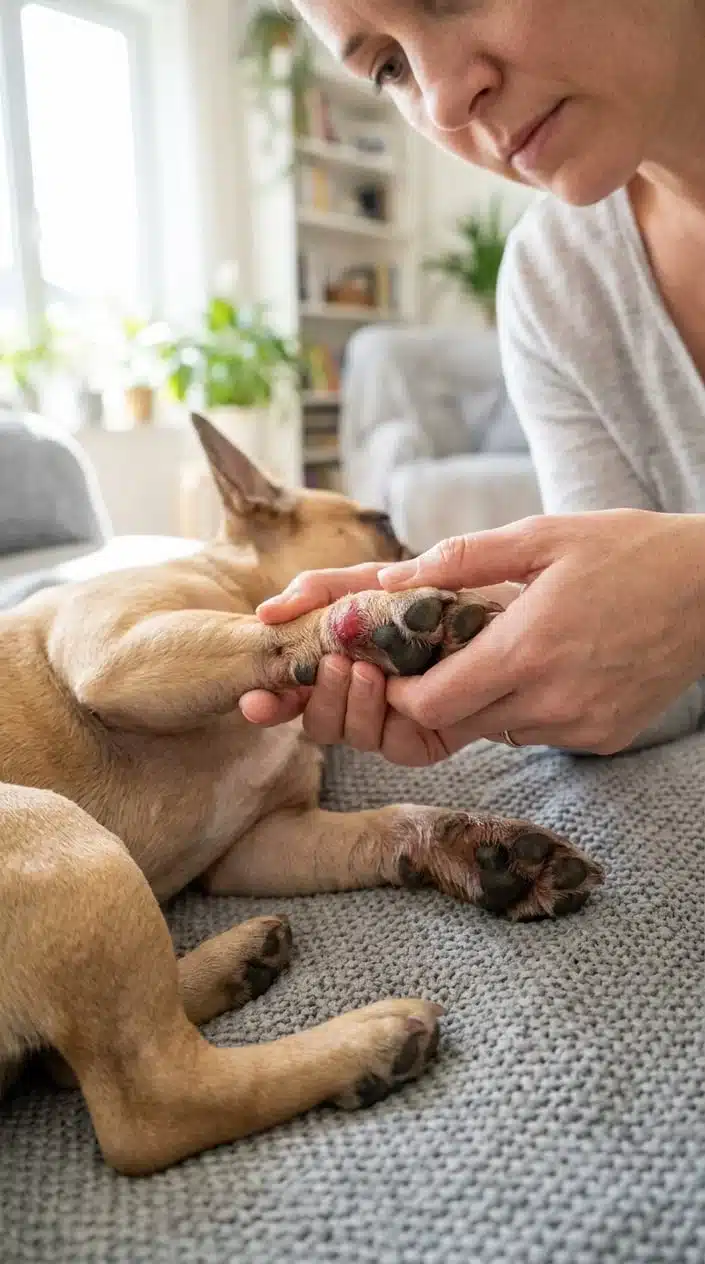
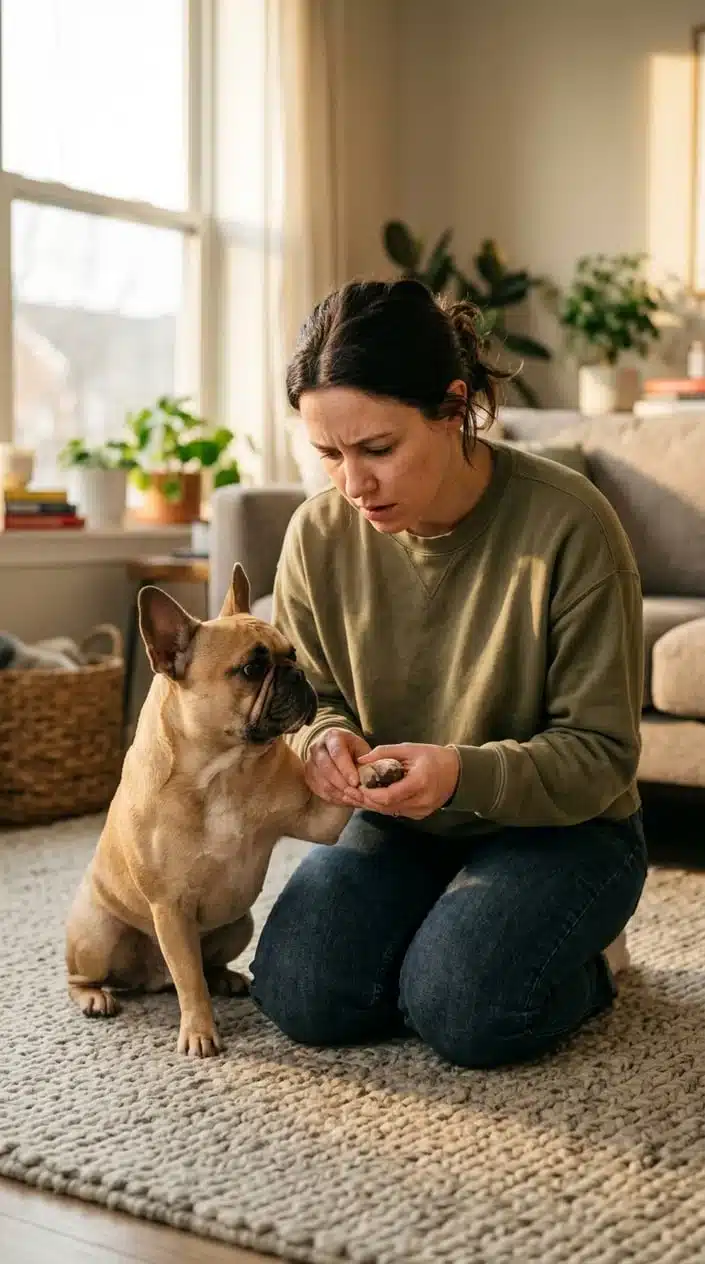
You notice a red bump between your French Bulldog’s toes. Your Frenchie keeps licking the paw, pulls away when you touch it, or has started limping. Although owners commonly call these bumps “interdigital cysts,” many are not true cysts.
They are often painful inflammatory nodules called interdigital furuncles. Treatment depends on why the lesion developed, so repeatedly cleaning the bump or applying home remedies may not prevent it from returning.
Quick Answer
French Bulldog interdigital cysts are painful red or purple bumps that form between the toes. Most are inflamed or ruptured hair follicles rather than true cysts. Allergies, paw licking, friction, bacterial infection, yeast, mites, foreign objects and excess paw pressure can contribute. Do not squeeze or pop the bump. A painful, draining, recurring or infected lesion should be examined by a veterinarian.
What Is an Interdigital Cyst in a French Bulldog?
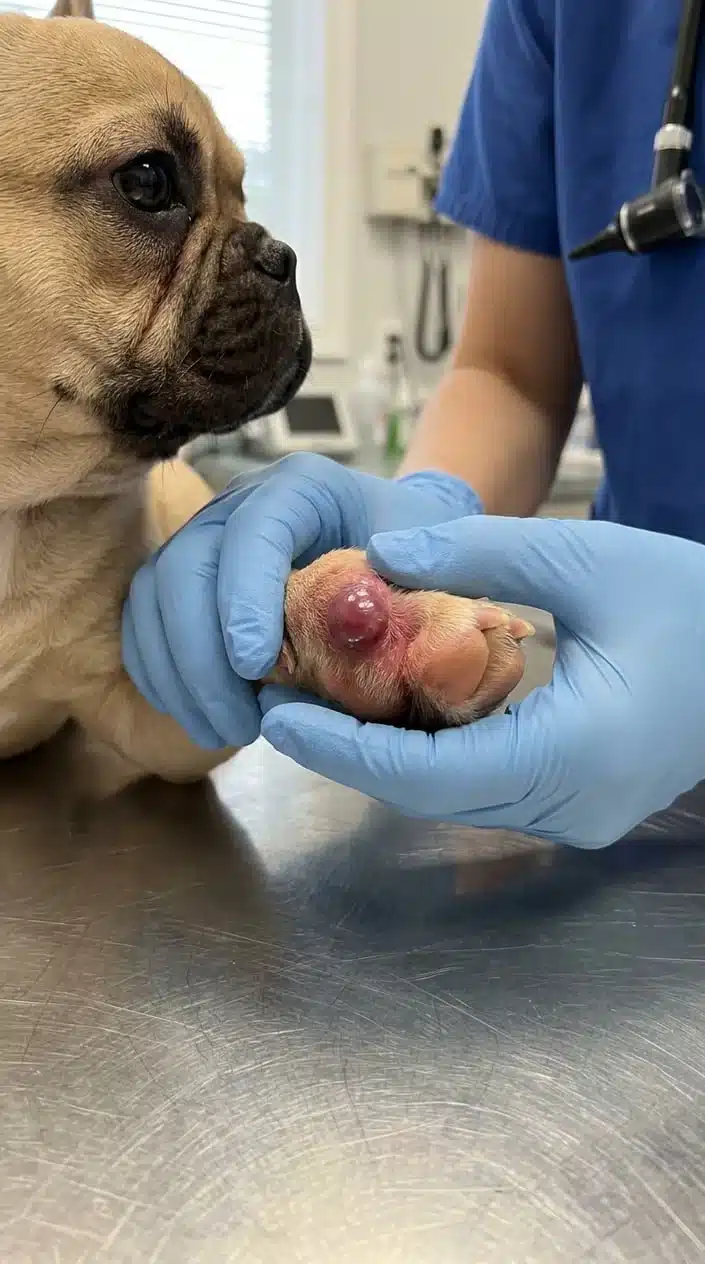
An interdigital cyst is a raised, inflamed lesion found in the webbed skin between a dog’s toes. It may begin as a small red bump and develop into a shiny, swollen nodule that causes licking, chewing or limping.
The condition can affect one paw or several paws. Some French Bulldogs develop one isolated lesion, while others experience recurring clusters.
Why “Interdigital Furuncle” Is the More Accurate Term
Despite the familiar name, most interdigital cysts are not hollow sacs filled with fluid.
Free French Bulldog Care Tips Every Week!
Health, feeding, training and Frenchie secrets — straight to your inbox, completely free!
🔒 No spam. Unsubscribe anytime.
The Merck Veterinary Manual explains that these lesions are usually areas of deep inflammation and are almost never truly cystic. Veterinarians may call the condition interdigital furunculosis, pododermatitis or deep bacterial pyoderma, depending on the findings.
Hair follicles between the toes can become damaged or plugged. When a follicle ruptures, hair and keratin enter the surrounding tissue. The body treats that material like a foreign object, causing inflammation that can persist even when an infection is treated.
Where These Bumps Usually Appear
Interdigital furuncles form in the webbed skin between the toes. They are often visible on the top of the paw but can also develop underneath, between or near the paw pads.
Always examine both sides of the affected paw. A lesion beneath the paw may be difficult to see until swelling, drainage or limping develops.
What Do French Bulldog Interdigital Cysts Look Like?
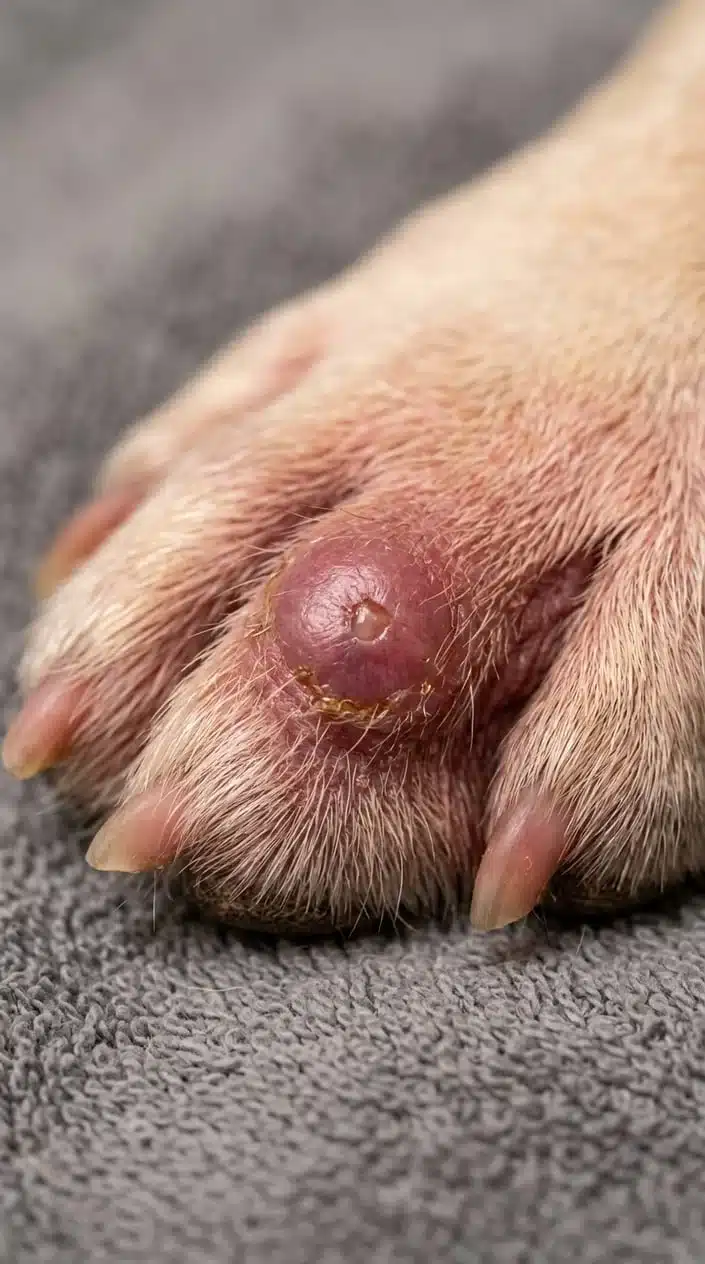
A typical lesion may appear as:
- A red, pink or reddish-purple bump
- A shiny, hairless nodule between the toes
- Swollen or thickened webbed skin
- A soft bump that feels fluid-filled
- A firm, painful lump
- An open or ulcerated sore
- A draining tract that releases clear, bloody or cream-colored material
Appearance alone cannot confirm the diagnosis. Foreign bodies, infections, abscesses and some skin growths can look similar.
Early Signs
The first clue may be behavior rather than a visible bump. Watch for:
- Repeated licking or chewing of one paw
- Redness between the toes
- Mild swelling
- Sensitivity when the paw is handled
- Holding the paw up
- A change in walking
- Damp or discolored fur caused by licking
Check between every toe rather than examining only the place your Frenchie is licking.
Signs of Infection or Rupture
A secondary infection may cause:
- Increasing swelling or warmth
- Yellow, white or cream-colored discharge
- Blood or bloody fluid
- An unpleasant odor
- An open sore
- Crusting around the lesion
- Worsening pain or limping
- Redness spreading across the paw
A ruptured lesion is not necessarily healing. The opening can allow additional contamination while deeper inflammation remains.
One Isolated Bump vs. Multiple Recurring Bumps
One sudden bump on a single paw may be associated with localized trauma or a foreign object, such as a splinter or grass awn. It still needs veterinary attention if it is painful, persistent or draining.
Several bumps affecting multiple paws—or lesions that disappear and return—suggest an ongoing trigger. Possibilities include allergies, mites, paw conformation, excessive licking or recurrent bacterial or yeast overgrowth.
Why Are French Bulldogs Prone to Interdigital Cysts?
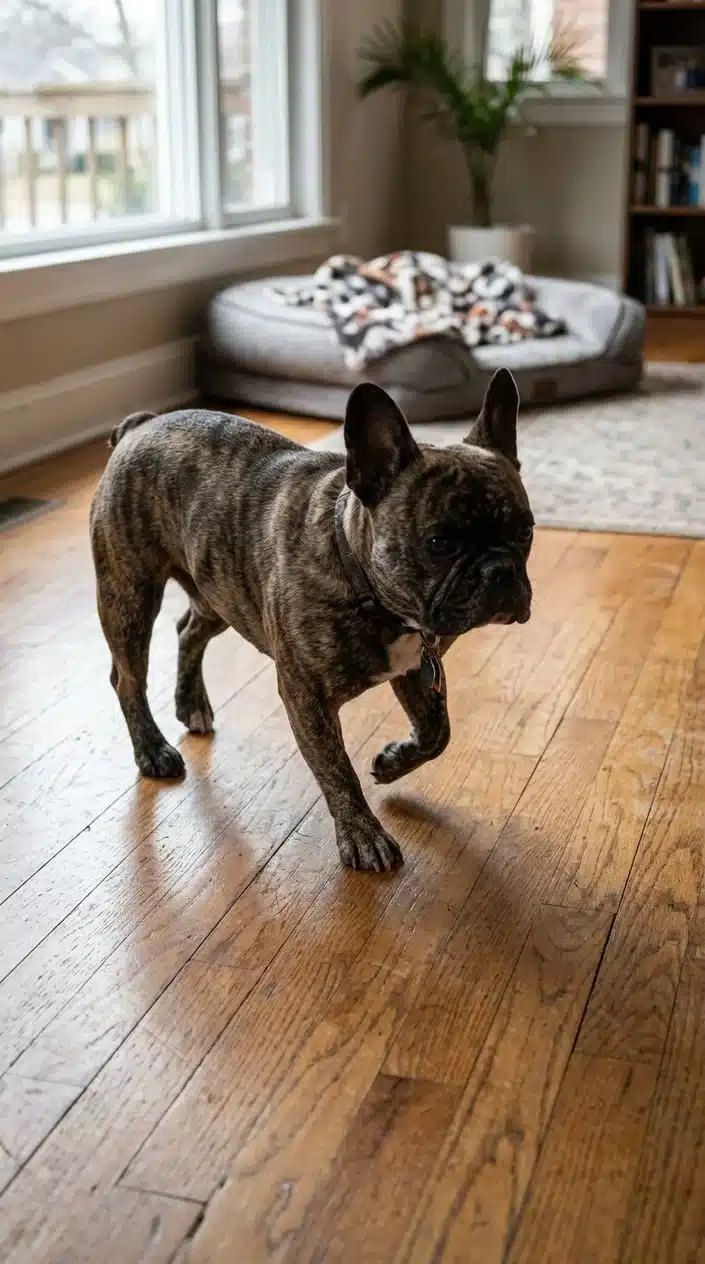
Any dog can develop interdigital furunculosis. Bulldogs and other short-coated, stocky breeds can have physical and dermatologic risk factors that make follicular trauma and paw inflammation more likely.
Short, Bristly Hair and Ruptured Hair Follicles
Short, stiff hairs grow within the webbed skin of the paw. Walking can push these hairs backward into their follicles, especially when the skin experiences repeated pressure or friction.
If a follicle becomes damaged and ruptures, keratin and hair fragments can enter the surrounding tissue. That material can sustain inflammation and make a lesion difficult to resolve.
Paw Webbing, Friction and Body Structure
Prominent webbing and wider paws may place more pressure on the haired skin between the pads. Repeated rubbing can irritate the follicles.
A Frenchie with an unusual gait, painful joint or spinal condition may distribute weight unevenly. This can place additional pressure on one part of the paw.
Allergies and Repeated Paw Licking
Environmental and food-related allergies can inflame the paws and cause intense itching. Licking provides temporary relief but adds moisture, friction and physical trauma.
This creates a cycle:
- Allergies make the paw itchy.
- The dog licks or chews it.
- Licking damages the skin and follicles.
- The damaged area becomes more inflamed.
- Increased inflammation causes more licking.
If your dog has irritated ears, belly rashes or itching elsewhere, read our guide to managing severe skin allergies and infections in dogs.
Bacterial and Yeast Infections
Bacteria can produce a deep infection after the skin barrier and follicles are damaged. Yeast—particularly Malassezia—may also be present alongside the inflammation.
An odor, greasy skin or brown discoloration can suggest microbial overgrowth, but appearance and smell cannot determine the organism or select the correct treatment. Cytology or culture may be needed.
Foreign Bodies, Grass Awns and Paw Trauma
Thorns, splinters, plant material and grass awns can enter the skin and create a painful lump. A foreign-body lesion often affects one paw and may appear suddenly after an outdoor walk.
Grass awns can migrate into tissue and are not always visible from the surface. Do not dig deeply into a swollen paw with tweezers.
Demodex Mites and Less Common Causes
Demodex mites can contribute to interdigital inflammation, especially when lesions recur or respond poorly to routine treatment. Skin scrapings, hair testing or other veterinary diagnostics may be required.
Less-common possibilities include:
- Hormonal conditions
- Deep fungal infections
- Immune-related disease
- Abnormal skin growths
- Tumors
A persistent or unusual lump should not automatically be treated as a cyst.
Excess Weight, Gait Changes and Orthopedic Pain
Extra body weight increases pressure on the paws. Arthritis, joint pain, spinal problems and conformational differences can also change how a dog bears weight.
Reducing excess weight and investigating lameness may be part of long-term management when mechanical pressure contributes to recurring lesions.
Interdigital Cyst Symptoms and What Owners Should Do
| What You Notice | What It Could Mean | Recommended Action |
|---|---|---|
| Mild redness with occasional licking | Early irritation or inflammation | Check the entire paw and arrange veterinary advice if it persists |
| One sudden bump on one paw | Local trauma or foreign body | Schedule a prompt veterinary examination |
| Several recurring bumps | Allergy, mites, conformation or chronic inflammation | Ask your veterinarian to investigate the underlying trigger |
| Heat, odor, pus or increasing swelling | Secondary infection may be present | Veterinary examination is needed |
| Limping or obvious pain | Significant inflammation or a deeper lesion | Seek prompt veterinary care |
| Heavy bleeding, rapid swelling or severe pain | Rupture, deep infection or another type of mass | Seek urgent veterinary assessment |
When to Contact Your Veterinarian
Arrange an examination if:
- The bump is painful
- Your Frenchie is limping
- Licking is constant
- The lesion is growing
- Blood or pus is present
- The paw smells unpleasant
- The same bump keeps returning
- Several paws are affected
- The lesion has not improved
- You are unsure whether it is a cyst, foreign body or growth
Early evaluation may prevent a small lesion from progressing into deeper inflammation, infection and scarring.
When a Paw Problem May Be Urgent
Seek urgent veterinary assistance when your dog cannot bear weight, appears severely distressed, has rapidly spreading swelling, experiences uncontrolled bleeding or shows signs of systemic illness.
Lethargy, loss of appetite, fever-like behavior or redness moving up the leg can indicate a more serious problem.
Warning
A rapidly swelling paw, severe pain, inability to walk, uncontrolled bleeding or spreading redness needs urgent veterinary attention. Do not wait for a home remedy to work when your French Bulldog appears unwell.
What Else Can Look Like an Interdigital Cyst?
| Possible Condition | Typical Clue | How It Is Confirmed |
|---|---|---|
| Interdigital furuncle | Painful red or purple nodule, sometimes draining | Paw examination, cytology and other tests |
| Foreign body | Sudden solitary lesion, often on one paw | Examination, exploration or imaging |
| Bacterial pododermatitis | Redness, swelling, pain and discharge | Cytology and bacterial culture |
| Yeast overgrowth | Itching, odor, greasy skin or discoloration | Cytology |
| Lick-related lesion | Thickened skin associated with repeated licking | History and examination |
| Abscess | Painful swelling containing infected material | Examination and sampling |
| Demodectic mange | Recurrent inflammation or hair loss | Skin scraping or hair testing |
| Skin growth or tumor | Persistent, firm, unusual or enlarging mass | Fine-needle sample or biopsy |
Do not rely on an online photograph to distinguish these conditions. An image can help a veterinarian understand the progression, but it cannot replace examination and testing.
How Veterinarians Diagnose French Bulldog Interdigital Cysts
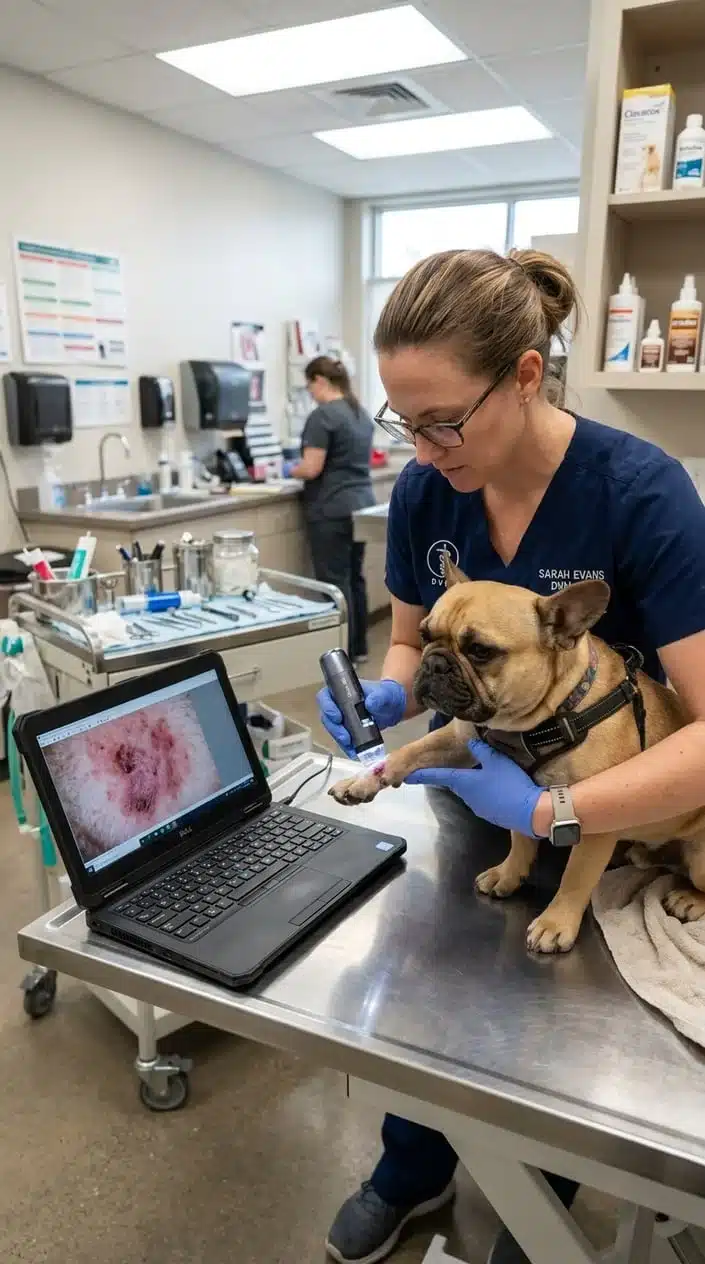
Your veterinarian will examine the lesion, the rest of the paw and your Frenchie’s gait. They may also check the ears, belly and other areas for evidence of allergic or infectious skin disease.
Useful details to provide include:
- When the lesion first appeared
- Whether it has happened before
- Which paws are affected
- Whether the problem is seasonal
- Recent walks through long grass
- Changes in food or treats
- Previous medications
- Whether other areas are itchy
Cytology, Skin Scraping and Hair Tests
Cytology examines material from the lesion under a microscope. It can reveal inflammatory cells, bacteria or yeast.
Skin scrapings or hair testing may be used to look for Demodex mites. A hair trichogram can also help a veterinarian evaluate follicular damage.
Bacterial Culture and Susceptibility Testing
Recurring, deep or previously treated infections may require a bacterial culture. This identifies the organism and helps determine which antimicrobial is most likely to work.
Culture-guided treatment is especially important when systemic antibiotics are being considered or when resistant bacteria may be present.
Allergy and Elimination-Diet Evaluation
If allergies are suspected, the investigation may include a detailed history, parasite control, environmental-allergy assessment or a veterinarian-supervised elimination-diet trial.
Randomly changing foods for a few days cannot diagnose a food allergy. A proper elimination trial requires a carefully selected diet, strict compliance and enough time to evaluate the response.
Biopsy, Bloodwork and Imaging
A biopsy may be recommended for unusual, firm, persistent or recurring lesions. Bloodwork may help investigate an underlying hormonal or systemic condition.
Imaging or surgical exploration may be necessary when a deep foreign object is suspected.
Important
Treating only the visible bump may provide temporary improvement without preventing recurrence. Repeated lesions warrant investigation for allergies, infection, mites, embedded hair or plant material, abnormal weight bearing and other underlying causes.
How Are French Bulldog Interdigital Cysts Treated?
There is no single treatment that works for every lesion. The plan must address inflammation, any secondary infection and the original trigger.
According to VCA Animal Hospitals, allergy-related paw inflammation is a common contributor, while friction, excess weight and abnormal paw pressure can also increase risk.
Treating Inflammation and Secondary Infection
Depending on the examination and test results, treatment may include:
- Veterinarian-prescribed topical antimicrobial products
- Medicated paw washes or shampoos
- Anti-inflammatory medication
- Systemic antibiotics for a confirmed or serious infection
- Antifungal treatment when yeast is involved
- Pain relief
- A cone or another method to prevent licking
Deep infections may require several weeks of treatment. Complete every prescribed course unless your veterinarian changes the plan.
Allergy and Itch Management
When allergies drive the licking and inflammation, long-term control may involve:
- Consistent flea prevention
- Environmental-allergy management
- A veterinarian-supervised elimination diet
- Prescription itch control
- Medicated bathing
- Treatment of concurrent ear or skin infections
Medication that reduces itching may break the lick-and-trauma cycle, but it does not automatically treat a deep paw infection.
Removing Foreign Bodies and Treating Mites
A foreign body must be located and removed. Mites require an appropriate antiparasitic treatment selected by a veterinarian.
Antibiotics alone will not solve the problem if plant material, embedded hair or another physical trigger remains within the tissue.
Weight, Walking Surfaces and Paw Protection
Weight management can decrease excess pressure on the feet. Avoiding rough concrete, wire flooring and other traumatic surfaces may help dogs whose lesions are driven by repeated friction.
Temporary paw protection may be recommended in selected cases, but boots must fit properly. Trapped moisture and rubbing can worsen an already irritated paw.
When Laser Treatment or Surgery May Be Considered
Chronic, scarred or treatment-resistant lesions may require a surgical procedure or carbon-dioxide laser treatment. These options are generally reserved for cases that do not respond to appropriate medical and preventive care.
Recovery may require bandage changes, careful wound management and activity restrictions.
Can You Treat an Interdigital Cyst at Home?
Home care should support—not replace—a veterinary diagnosis.
Before your appointment, you can:
- Prevent licking with a properly fitted recovery collar
- Keep the paw clean and dry
- Avoid rough or contaminated walking surfaces
- Photograph the top and underside of the paw
- Record when the lesion changes, drains or returns
- Follow only cleaning instructions approved by your veterinarian
Epsom Salt Soaks: Possible Benefits and Limitations
An Epsom salt soak may help gently clean a paw or provide temporary comfort when a veterinarian approves it. It does not remove a deep foreign body, diagnose an infection or correct an underlying allergy.
Avoid soaking an actively bleeding or deep open wound unless your veterinarian directs you to do so. Dry the paw carefully afterward because prolonged moisture can irritate the webbed skin.
Chlorhexidine and Medicated Paw Products
Veterinarians may recommend a chlorhexidine-based wash, sometimes combined with an antifungal ingredient. The appropriate product, concentration and frequency depend on the condition of the skin.
Do not assume that every chlorhexidine product is suitable for an open lesion. Ask your veterinarian before applying it to raw or draining tissue.
What Not to Put on an Open or Draining Lesion
Avoid applying:
- Undiluted essential oils
- Hydrogen peroxide
- Rubbing alcohol
- Human acne products
- Human pain-relief creams
- Leftover prescription medication
- Harsh disinfectants
- Powders that can cake inside the wound
Some human topical products are unsafe when swallowed, and French Bulldogs commonly lick treated paws.
Why You Should Never Pop or Cut the Bump
Squeezing the lesion can increase pain, rupture tissue and push inflammatory material deeper into the paw. Cutting it at home creates a wound and can introduce additional bacteria.
Don’t Do This
Do not pop, squeeze, lance or cut an interdigital bump. It may not be a true cyst, and attempting to drain it can worsen inflammation, spread infection or delay diagnosis of a foreign body or skin growth.
How Long Does an Interdigital Cyst Take to Heal?
Healing time depends on the depth of inflammation and the underlying cause. A mild, localized lesion may improve sooner, while deep or multifocal infections may require four to six weeks of treatment—or longer.
Pain and swelling may improve before the deeper inflammation has resolved. Stopping treatment early can contribute to relapse.
Why Some French Bulldogs Keep Getting Them
Recurrence can happen when:
- Allergies remain uncontrolled
- The dog continues licking the paws
- Infection was not fully treated
- The treatment did not target the correct organism
- Embedded hair or keratin remains in the tissue
- Demodex mites were not identified
- Paw structure continues to create friction
- The dog is overweight
- An orthopedic problem changes weight distribution
- A foreign object remains present
Keep a dated record of flare-ups. Note affected paws, seasons, walking locations, food changes and other itchy areas. Patterns can help your veterinarian identify the trigger.
How to Help Prevent Recurring Paw Cysts
Not every case can be prevented, but these steps can reduce avoidable irritation:
- Examine between the toes several times a week.
- Check paws after walking through long grass or rough ground.
- Rinse away environmental debris when appropriate.
- Dry carefully between every toe.
- Keep nails at a healthy length.
- Prevent persistent licking.
- Maintain consistent parasite prevention.
- Address allergies and infections promptly.
- Keep your Frenchie at a healthy body weight.
- Discuss recurring limping or gait changes with your veterinarian.
Pro Tip
Take clear photographs whenever a bump appears, including the top and underside of the paw. Record which paw is affected and what your Frenchie was doing before the flare-up. This history can reveal seasonal, environmental or activity-related patterns.
Frequently Asked Questions
Will a French Bulldog Interdigital Cyst Go Away on Its Own?
A small lesion may temporarily shrink, but a painful, recurring or draining bump should be examined. Improvement does not mean that an infection, allergy, foreign body or follicular reaction has resolved.
What Should I Do If the Cyst Bursts?
Prevent licking and contact your veterinarian. Do not squeeze the lesion. If advised, gently clean the surrounding area and keep it dry until your Frenchie can be examined.
Are Interdigital Cysts Contagious?
Interdigital furunculosis is generally not contagious to other pets or people. However, the underlying cause and any organism present should be identified by a veterinarian.
Can Food Allergies Cause Interdigital Cysts?
Food-related allergies can inflame the paws and encourage licking, which may contribute to follicular damage. They are one possible trigger, not the only explanation for a bump between the toes.
Does My French Bulldog Need Antibiotics?
Not every lesion requires systemic antibiotics. The decision depends on lesion depth, infection severity, number of affected sites and diagnostic findings. Recurring or deep infections may require culture-guided medication.
When Should an Interdigital Bump Be Biopsied?
A veterinarian may recommend biopsy when a bump is persistent, unusual, firm, enlarging or unresponsive to appropriate treatment. Biopsy can help distinguish chronic inflammation from other skin diseases or growths.
Final Takeaway
French Bulldog interdigital cysts are usually painful areas of deep follicular inflammation rather than true cysts. Allergies, licking, infection, embedded hair, foreign objects, mites, weight and paw mechanics may all contribute.
Do not pop or drain the bump yourself. Veterinary diagnosis is especially important when the lesion is painful, draining, recurring or causing limping. The best long-term result comes from treating both the active paw lesion and the reason it developed.

![How Long Do French Bulldogs Live [Find Out]](https://onlyfrenchbulldog.com/wp-content/uploads/2024/06/how-long-do-french-bulldogs-live-find-out_3140-768x550.jpg.webp)

![How Much Do French Bulldogs Cost [Unraveled]](https://onlyfrenchbulldog.com/wp-content/uploads/2024/06/how-much-do-french-bulldogs-cost-unraveled_3142-768x550.jpg.webp)

