
Soft Homemade Treats for French Bulldogs: 5 Easy Recipes for Puppies, Seniors and Sensitive Stomachs

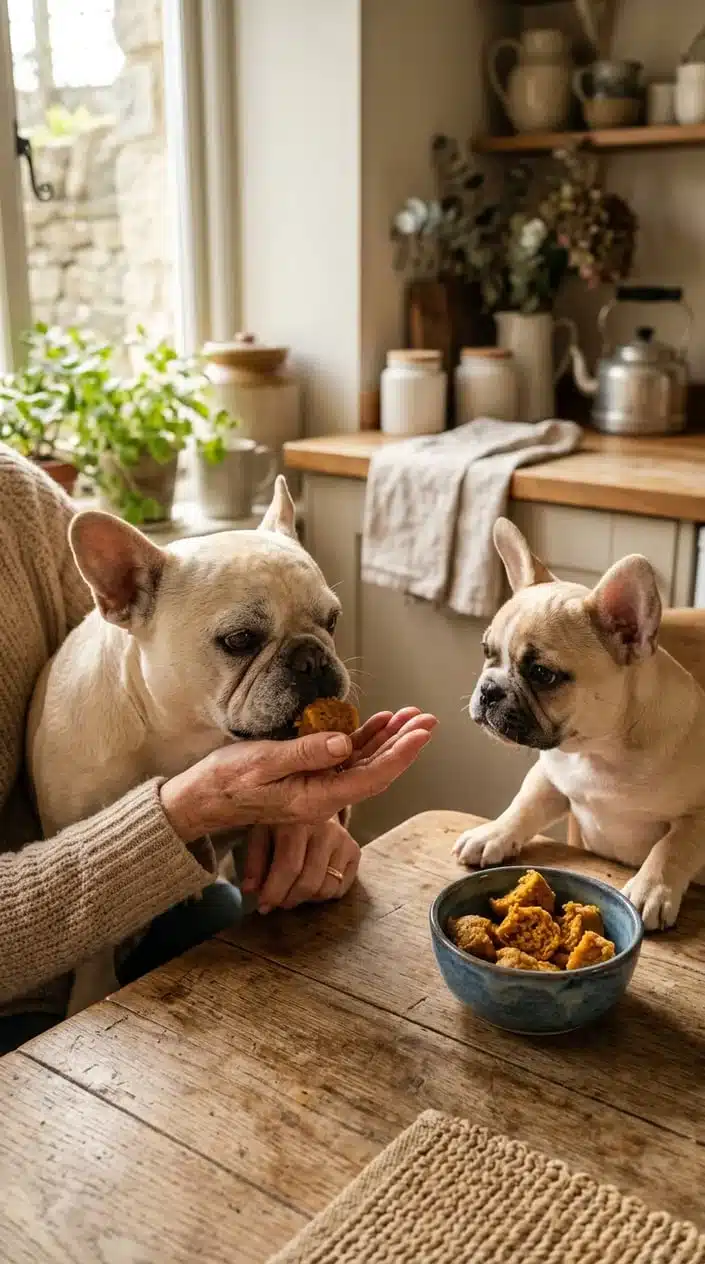
Crunchy biscuits are not right for every Frenchie. A teething puppy may need tiny rewards that are easy to chew, while an older dog with worn or missing teeth may prefer a tender bite. Soft treats can also be easier to divide into small portions for training.
The five recipes below use simple ingredients and make small, moist treats. You will also find estimated calories, storage instructions, substitutions, and guidance for choosing the best recipe for your French Bulldog.
Soft homemade French Bulldog treats can be made with pumpkin, oats, banana, sweet potato, lean turkey, or blueberries. Choose ingredients your dog already tolerates, keep each piece small, and refrigerate moist treats promptly.
- Start with one small piece and watch for vomiting, diarrhea, itching, or ear and paw flare-ups.
- Treats should provide no more than 10% of daily calories; less may be appropriate for puppies and dogs managing their weight.
- Soft treats do not treat dental disease or digestive disorders. Ask your veterinarian about pain, difficulty chewing, repeated vomiting, diarrhea, or a prescribed diet.
Which Soft Treat Recipe Should You Choose?
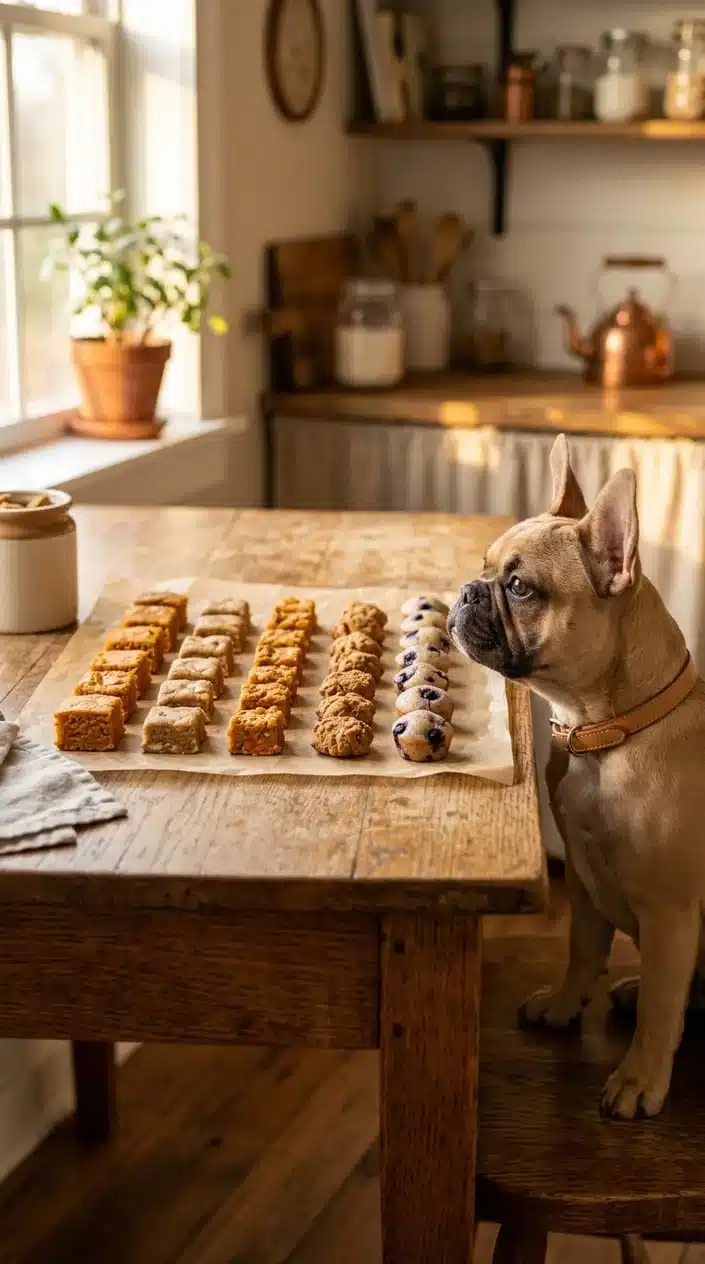
Each recipe has a different texture and ingredient profile. “Sensitive stomach” is not one diagnosis, so the simplest recipe is not automatically safe for every dog.
| Recipe | Best Fit | Texture | Important Caution |
|---|---|---|---|
| Pumpkin-Oat Pillow Bites | First-time bakers and dogs that tolerate oats and egg | Soft and cakey | Use plain pumpkin, not pie filling |
| Banana–Peanut Butter Training Squares | Puppies and reward-based training | Soft, flexible mini squares | Peanut butter must be xylitol-free |
| Sweet Potato and Carrot Mini Bites | Peanut-free households | Tender and moist | Introduce fiber gradually |
| Turkey and Rice Soft Nuggets | Dogs that prefer a savory treat | Very soft and meaty | Cook turkey thoroughly and refrigerate promptly |
| Blueberry-Banana Mini Muffins | Seniors and dogs needing an easy-to-break treat | Light and spongy | Not suitable for dogs that react to egg or oats |
If your Frenchie has a confirmed food allergy, use only ingredients that your veterinarian has approved. Our guide to French Bulldog food allergies explains why guessing the trigger or repeatedly changing proteins can make the problem harder to investigate.
Before You Start: Frenchie Treat Safety

French Bulldogs are compact dogs, so a human-cookie-sized treat can deliver far more calories than expected. Cut each batch into pieces no larger than a pea or small blueberry for training. A larger snack can be broken into several tiny servings.
The World Small Animal Veterinary Association and VCA advise keeping treats to no more than 10% of a dog’s daily calories. VCA notes that aiming closer to 5% can provide an extra margin because treats are not complete and balanced food.
Get Free Dog Treat Recipes + Top Product Picks!
Get FREE Healthy homemade treat recipes every week!
🔒 No spam. Unsubscribe anytime.
Never use chocolate, grapes, raisins, onions, garlic, macadamia nuts, alcohol, raw yeast dough, or products sweetened with xylitol. Check peanut butter, yogurt, applesauce, and packaged purées for added sweeteners and unsafe ingredients.
If your dog eats a potentially toxic food, contact your veterinarian or a pet poison-control service immediately rather than waiting for symptoms.
Follow these rules for every recipe:
- Use plain, unseasoned ingredients.
- Choose canned pumpkin labeled 100% pumpkin, not pumpkin-pie filling.
- Grind rolled oats into flour in a blender if you do not have oat flour.
- Remove apple seeds, cores, pits, bones, and tough skins where applicable.
- Do not add salt, sugar, butter, frosting, nutmeg, or “sugar-free” sweeteners.
- Let baked treats cool fully before serving.
- Introduce only one new recipe at a time.
- Count treats given by every family member.
Homemade treats are snacks, not a replacement for a complete puppy or adult diet. Puppies have particular growth requirements, and seniors with kidney, liver, pancreatic, heart, or weight problems may need individualized restrictions.
Recipe 1: Soft Pumpkin-Oat Pillow Bites
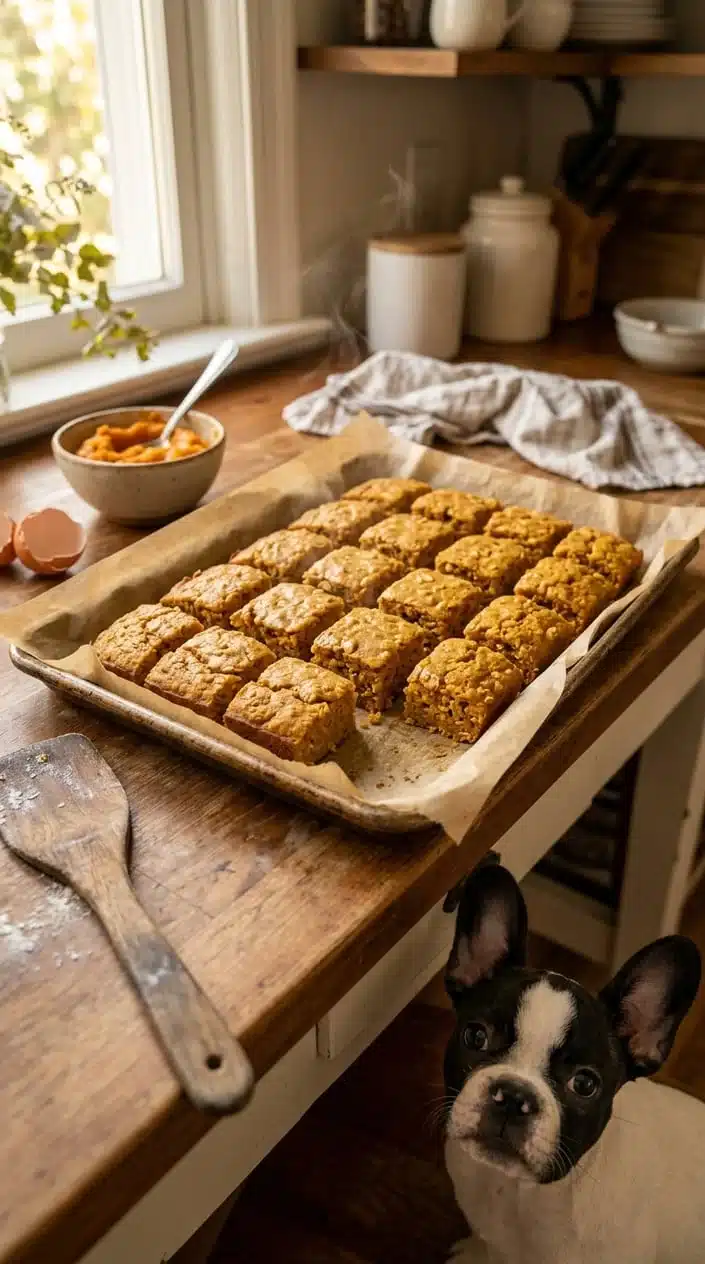
These mild, cakey bites are the easiest place to start when your Frenchie already eats pumpkin, oats, and egg without trouble. They remain softer than a rolled biscuit because the batter is baked in a shallow layer and removed before it becomes crisp.
Ingredients
- 1 cup oat flour
- 3/4 cup plain pumpkin purée
- 1 large egg
- 1–3 tablespoons water, only if needed
Instructions
- Preheat the oven to 325°F (165°C).
- Line an 8-inch square pan with parchment paper.
- Mix the oat flour, pumpkin, and egg into a thick batter.
- Add water one tablespoon at a time only if the mixture is too stiff to spread.
- Spread the batter about 1/2 inch thick.
- Bake for 18–22 minutes, until the top is set but the center still feels springy.
- Cool completely, then cut into approximately 40 small squares.
Yield, Calories and Storage
- Yield: About 40 small bites
- Estimated calories: About 13–14 kcal per bite
- Refrigerator: Up to 5 days in a sealed container
- Freezer: Up to 2 months
For training, cut each square into two or four smaller rewards. If pumpkin already features in your Frenchie’s diet, you can find more variations in our pumpkin dog-treat recipe guide.
Recipe 2: Banana–Peanut Butter Training Squares
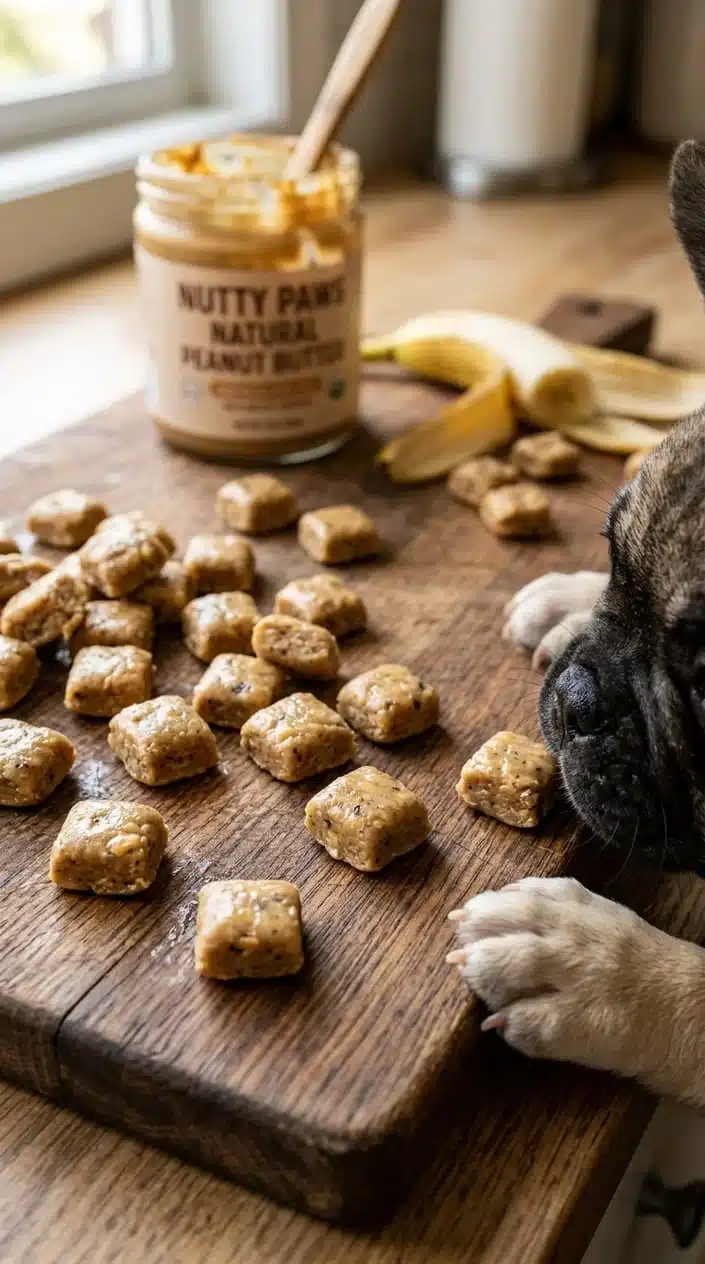
This recipe produces a flexible sheet that is easy to cut into tiny rewards. The smell can make it useful for short puppy-training sessions, but peanut butter is calorie-dense, so the pieces should stay very small.
Ingredients
- 1 ripe medium banana, mashed
- 2 tablespoons smooth, unsalted, xylitol-free peanut butter
- 1 large egg
- 1 cup oat flour
- 2–4 tablespoons water
Instructions
- Preheat the oven to 300°F (150°C).
- Line a baking sheet or shallow pan with parchment paper.
- Stir the banana, peanut butter, and egg until combined.
- Mix in the oat flour.
- Add enough water to make a thick, spreadable batter.
- Spread it to about 1/4 inch thick.
- Bake for 15–18 minutes, until set but still pliable.
- Cool, then cut into approximately 60 pea-sized squares.
Yield, Calories and Storage
- Yield: About 60 tiny training squares
- Estimated calories: About 13 kcal per square
- Refrigerator: Up to 5 days
- Freezer: Up to 2 months
Read the full ingredient label every time you buy peanut butter. Xylitol, sometimes called birch sugar, is dangerous to dogs. Choose a product containing only peanuts or peanuts and a small amount of salt, and skip this recipe if your Frenchie does not tolerate peanuts.
For a young puppy, your veterinarian may recommend using pieces of the puppy’s regular food for most training and reserving homemade treats for occasional high-value rewards. This helps protect the nutritional balance of a growth diet.
Recipe 3: Sweet Potato and Carrot Mini Bites
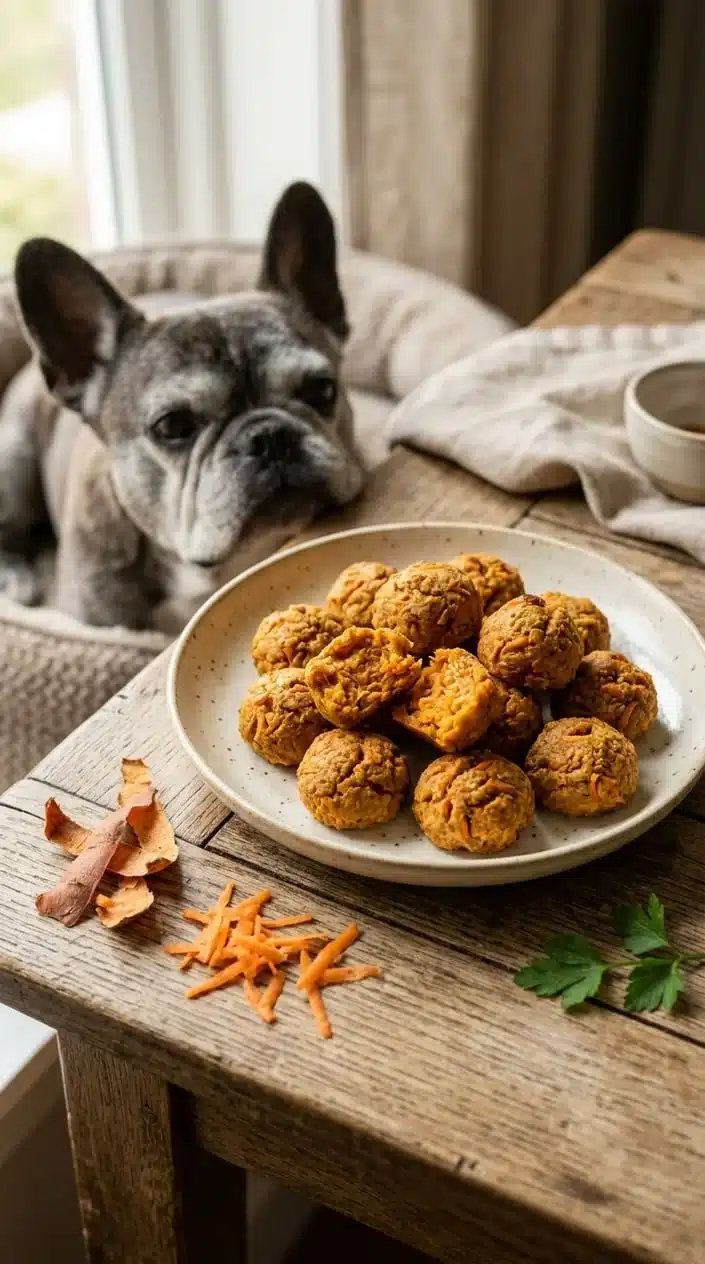
These peanut-free bites have a tender center and natural orange color. They may suit a dog that already tolerates sweet potato, carrot, rice, and egg.
Ingredients
- 1 cup cooked, mashed sweet potato, cooled
- 1/2 cup finely grated carrot
- 1 large egg
- 3/4 cup brown-rice flour
- 1–3 tablespoons water, if needed
Instructions
- Preheat the oven to 325°F (165°C).
- Line a baking sheet with parchment paper.
- Mix the sweet potato, carrot, and egg.
- Stir in the rice flour to form a soft dough.
- Add a little water if the dough feels dry.
- Scoop level teaspoons and flatten each mound gently.
- Bake for 16–20 minutes, until set but not hard.
- Cool fully before serving.
Yield, Calories and Storage
- Yield: About 40 mini bites
- Estimated calories: About 17–19 kcal per bite
- Refrigerator: Up to 5 days
- Freezer: Up to 2 months
Fiber-rich ingredients can loosen the stool when introduced too quickly. Begin with half of one small bite, especially if your Frenchie has a history of gas or digestive upset.
Recipe 4: Turkey and Rice Soft Nuggets
These savory nuggets contain no chicken, peanut butter, or dairy, but that does not make them universally allergy-safe. Turkey itself can be a trigger for an individual dog, and this recipe should not be added during a veterinary elimination diet unless the veterinarian approves every ingredient.
Ingredients
- 8 ounces lean ground turkey
- 1 cup cooked plain white rice, cooled
- 1 large egg
- 2 tablespoons oat flour or rice flour
Instructions
- Preheat the oven to 350°F (175°C).
- Line a rimmed baking sheet with parchment paper.
- Mix the raw turkey, cooked rice, egg, and flour thoroughly.
- Form approximately 40 small, flat nuggets.
- Bake for 15–18 minutes, turning once, until the turkey is cooked through.
- Confirm the center has reached 165°F (74°C) with a food thermometer.
- Cool promptly and refrigerate within two hours.
Yield, Calories and Storage
- Yield: About 40 small nuggets
- Estimated calories: About 15–16 kcal per nugget
- Refrigerator: Up to 3 days
- Freezer: Up to 2 months
Break one nugget into several pieces rather than handing over the whole serving. Discard meat treats left at room temperature for more than two hours, or sooner in very warm conditions.
Recipe 5: Blueberry-Banana Mini Muffins
These tiny muffins are soft enough to crumble between your fingers. They are convenient for seniors that can still swallow comfortably but struggle with hard biscuits.
Ingredients
- 1 ripe medium banana, mashed
- 1 large egg
- 1 cup oat flour
- 1/2 cup fresh or frozen blueberries
- 1/4 cup water
Instructions
- Preheat the oven to 325°F (165°C).
- Lightly grease a silicone mini-muffin pan or use paper liners.
- Mix the banana, egg, oat flour, and water.
- Fold in the blueberries, crushing large berries so they do not create oversized pockets.
- Fill each cavity no more than two-thirds full.
- Bake for 14–18 minutes, until the tops spring back gently.
- Cool completely and cut each muffin into Frenchie-size portions.
Yield, Calories and Storage
- Yield: About 24 mini muffins
- Estimated calories: About 25–27 kcal per mini muffin
- Recommended serving form: Quarter each muffin into roughly 6–7 kcal pieces
- Refrigerator: Up to 4 days
- Freezer: Up to 2 months
A treat that feels soft to your fingers can still be difficult for a dog with oral pain or impaired swallowing. Crumble the muffin into tiny pieces or moisten it with warm water. Arrange a veterinary dental examination if your Frenchie drops food, chews on one side, paws at the mouth, drools, has bad breath, or suddenly refuses hard food.
How Many Homemade Treats Can a French Bulldog Have?
There is no single safe number because calorie needs change with body weight, age, activity, neuter status, body condition, and medical history. Start with your veterinarian’s daily calorie target, then keep all treats and extras within the chosen allowance.
| If One Piece Contains | Calories From 2 Pieces | Calories From 4 Pieces |
|---|---|---|
| 5 kcal | 10 kcal | 20 kcal |
| 10 kcal | 20 kcal | 40 kcal |
| 15 kcal | 30 kcal | 60 kcal |
| 20 kcal | 40 kcal | 80 kcal |
The calorie figures in these recipes are estimates based on typical ingredients. Brands, ingredient weights, batch thickness, and final yield can change the result. Weighing the full batch and cutting equal pieces improves consistency.
Cut treats into very small pieces before a training session. Dogs respond to the number and timing of rewards, so several pea-sized pieces can be more useful than one large biscuit without adding extra calories.
How to Adjust the Texture
For a softer result:
- Keep the dough 1/4–1/2 inch thick.
- Bake only until the center is set.
- Use puréed fruit or vegetables to retain moisture.
- Store baked treats in the refrigerator after cooling.
- Thaw frozen pieces in the refrigerator before serving.
- Add a teaspoon of warm water to crumble a treat into a soft mash.
Do not undercook recipes containing egg or raw meat to make them softer. Safe cooking matters more than texture. If a batch becomes hard, crumble a small amount over regular food rather than giving a large piece to a dog with dental problems.
Substitutions: What You Can and Cannot Swap
Ingredient swaps change the moisture, calories, texture, and allergen profile. Make one change at a time.
| Original Ingredient | Possible Substitute | What Changes |
|---|---|---|
| Oat flour | Brown-rice flour | The bite may be slightly denser or drier |
| Pumpkin | Plain mashed sweet potato | Usually sweeter and more calorie-dense |
| Peanut butter | Additional pumpkin | Less fat and aroma; batter may need more flour |
| Turkey | A veterinarian-approved lean protein | Cooking time and calories may change |
| Blueberries | Finely diced, seedless apple | Remove the core and seeds; texture becomes firmer |
Do not assume “grain-free,” “chicken-free,” or “limited ingredient” means allergy-safe. A dog can react to many dietary proteins. If your Frenchie is itchy, has recurring ear trouble, or develops repeated paw or skin problems, read the broader guide to French Bulldog allergies and speak with your veterinarian before building a long list of food restrictions.
Homemade Treats and Sensitive Stomachs
A sensitive stomach can describe gas, soft stool, vomiting, food intolerance, dietary indiscretion, parasites, pancreatitis, or another medical problem. No homemade recipe can diagnose the cause.
Use this cautious approach:
- Choose a recipe made only with foods your dog already tolerates.
- Offer half of one small piece.
- Give no other new foods that day.
- Monitor appetite, stool, vomiting, gas, itching, ears, and paws for 24–48 hours.
- Stop the new treat if symptoms appear.
- Contact your veterinarian for repeated or significant symptoms.
If your Frenchie is completing an elimination diet, even a small homemade treat can invalidate the trial. Use only the prescribed food or a treat specifically approved by the veterinarian managing the trial.
Storage and Food-Safety Guide
Soft treats contain more moisture than crunchy biscuits, so they spoil faster. Do not store them in a decorative jar on the counter for days.
| Treat Type | Refrigerator | Freezer | Discard When |
|---|---|---|---|
| Fruit or vegetable baked treats | 4–5 days | Up to 2 months | Moldy, slimy, sour-smelling, or unusually wet |
| Meat-based treats | Up to 3 days | Up to 2 months | Left warm too long or changed in odor or texture |
| Thawed treats | Use within 2–3 days | Do not repeatedly thaw and refreeze | Temperature history is uncertain |
Cool treats before sealing them so condensation does not collect in the container. Freeze pieces in a single layer, then transfer them to a labeled freezer bag with the recipe name and date.
When Homemade Soft Treats Are Not the Answer
Arrange a veterinary examination if your Frenchie:
- Suddenly stops eating crunchy food
- Drops food or chews on only one side
- Has bleeding gums, broken teeth, facial swelling, or bad breath
- Coughs, gags, or struggles to swallow
- Vomits repeatedly
- Has persistent diarrhea or blood in the stool
- Develops facial swelling, hives, weakness, or breathing difficulty
- Has recurring itching, ear infections, or paw inflammation
- Needs a therapeutic diet for pancreatitis, kidney disease, diabetes, bladder stones, or another condition
Soft food can hide dental pain without treating the infected tooth, damaged gum, or oral mass causing it. A sudden preference for soft treats deserves attention.
Frequently Asked Questions
Are Soft Homemade Treats Safe for French Bulldog Puppies?
They can be used occasionally after the puppy is weaned and eating a complete growth diet, provided every ingredient is safe and tolerated. Keep pieces tiny, supervise chewing, and ask your veterinarian how treats fit into the puppy’s daily calories.
What Is the Best Flour for Soft Dog Treats?
Oat flour and brown-rice flour both work in soft recipes. The best choice is one your dog already tolerates; a flour is not automatically safer because it is gluten-free or grain-free.
Can a French Bulldog With No Teeth Eat These Treats?
Possibly, but soften and crumble the treat into very small pieces and confirm your dog swallows normally. Dogs with no teeth can still have painful oral disease, and coughing, gagging, food dropping, or reluctance to eat requires veterinary assessment.
Can I Leave Soft Dog Treats at Room Temperature?
Only briefly while serving or cooling. Their moisture makes them more perishable than dry biscuits, so refrigerate them in a sealed container and use the shorter storage time given with each recipe.
Are These Recipes Hypoallergenic?
No recipe is universally hypoallergenic. Oats, eggs, turkey, peanut butter, and other ingredients can be unsuitable for an individual dog. Use only tolerated ingredients and follow veterinary instructions if food allergy is suspected.
Can I Use Baby Food Instead of Pumpkin or Sweet Potato?
Only if the label lists dog-safe ingredients and contains no onion, garlic, xylitol, unsafe seasoning, or added sweetener. A plain single-ingredient purée is the safer choice.
How Do I Keep Homemade Dog Treats Soft?
Bake them as a thicker sheet or mini muffin, remove them when fully cooked but still springy, and refrigerate them after cooling. Do not undercook egg or meat, and do not extend room-temperature storage to preserve softness.
Can These Treats Help a French Bulldog’s Sensitive Stomach?
They may provide a simple snack for a dog that tolerates the ingredients, but they do not treat the cause of digestive signs. Persistent vomiting, diarrhea, appetite loss, weight loss, pain, or lethargy needs veterinary care.
Bottom Line
The best soft homemade treat is not the one with the trendiest ingredient. It is the one your Frenchie can chew comfortably, digest normally, and eat in an appropriately small portion.
Begin with one recipe containing familiar ingredients, cut the batch into tiny pieces, refrigerate it promptly, and count every reward toward the day’s calories. When dental pain, allergies, or digestive disease may be involved, get veterinary guidance before changing the diet.
For more recipe ideas, explore our broader collection of homemade dog treats.
This article provides general educational information and is not a substitute for veterinary diagnosis or individualized nutrition advice. Calorie values are estimates and will vary by ingredient brand, measurements, and batch yield.


