Types of Dog Belly Rashes: Causes, Signs, and Care

You flip your dog onto their back for a belly rub and notice something looks off — red patches, bumps, or irritated skin where it should be smooth and pink. Belly rashes are one of the most common skin issues dogs face, and knowing the types of dog belly rashes can help you act quickly instead of guessing. The belly is especially vulnerable because the skin there is thin, sparsely haired, and in constant contact with the ground.
Not every rash is serious, but some signal infections or conditions that need prompt veterinary attention. This guide breaks down the main types, what each one looks like, and what you should do next.
What Are the Main Types of Dog Belly Rashes?
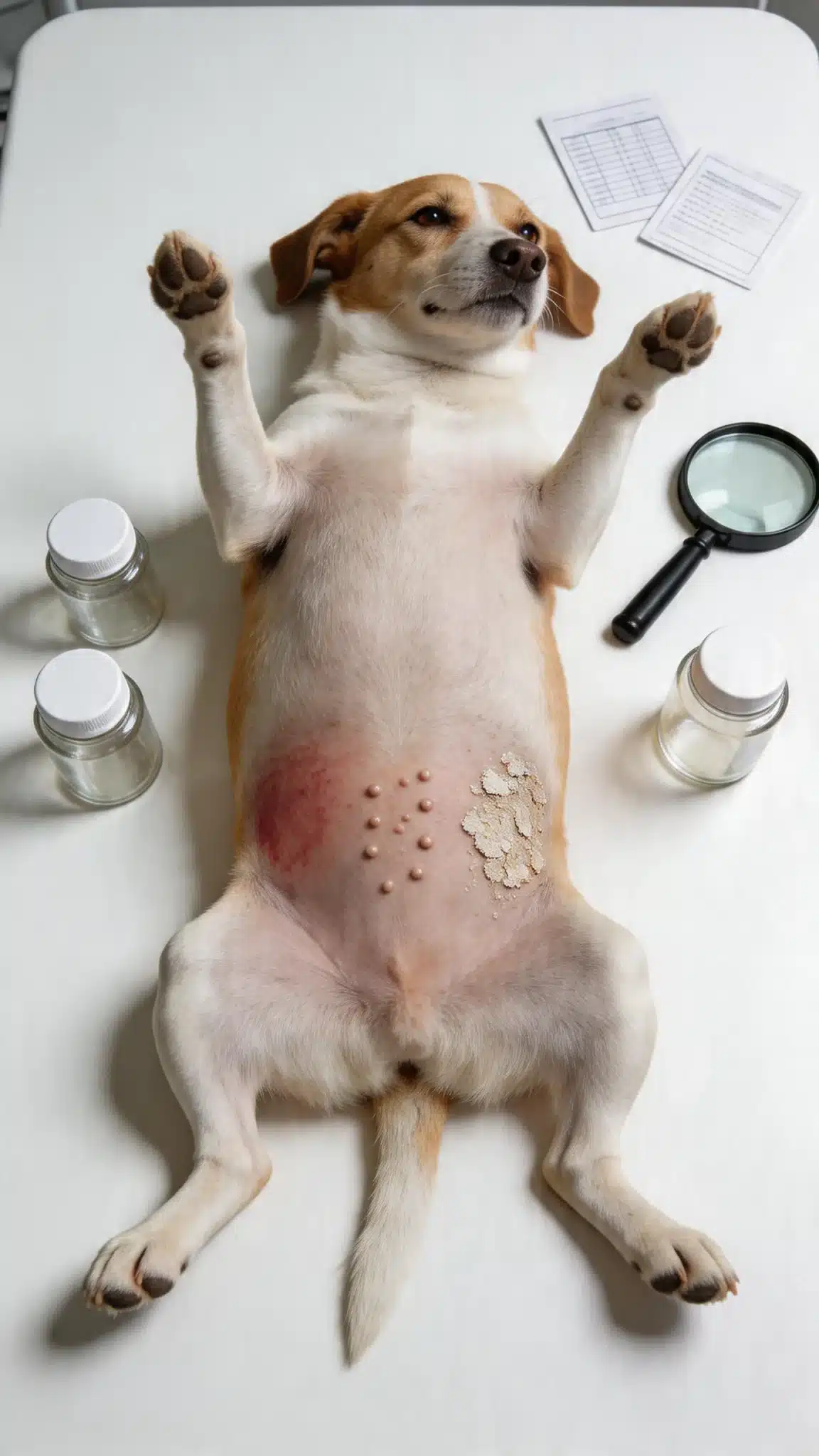
Dog belly rashes fall into several distinct categories based on their cause: allergic reactions, bacterial or fungal infections, parasites, contact irritation, and hormonal conditions. Identifying the type matters because each requires a different treatment approach — what clears up a contact rash can actually worsen a fungal infection.
- Allergic dermatitis: red, itchy skin triggered by food, pollen, or environmental allergens
- Bacterial folliculitis: pustules or crusted spots caused by a staph skin infection
- Ringworm: circular, scaly patches from a fungal (not worm) infection
- Mange: intense itching and hair loss caused by mites burrowing into skin
- Contact dermatitis: localized redness from direct exposure to an irritant
- Heat rash: small red bumps from trapped moisture and friction in warm weather
Allergic Dermatitis: The Most Common Belly Rash in Dogs

Allergic dermatitis is the leading cause of belly rashes in dogs, according to the American Kennel Club (AKC). It happens when the immune system overreacts to an allergen — whether that’s a food ingredient, grass pollen, mold, or a cleaning product on your floor.
Food vs. Environmental Allergies
Food allergies typically cause year-round itching, while environmental allergies often follow seasonal patterns. The belly, paws, and ears are the first areas to show signs in both cases.
| Feature | Food Allergy | Environmental Allergy |
|---|---|---|
| Timing | Year-round | Seasonal or ongoing |
| Common triggers | Beef, chicken, dairy, wheat | Grass, pollen, dust mites, mold |
| Primary signs | Itching, rash, GI upset | Itching, rash, watery eyes |
| Diagnosis | Elimination diet trial | Intradermal or blood allergy test |
The belly often shows redness and small raised bumps. If your dog is also losing hair in other areas, the condition may be more widespread — dog losing hair in patches on the back can share triggers with belly rash flare-ups.
Allergic belly rashes rarely resolve on their own without identifying and removing the trigger.
BEFORE YOU SCROLL PAST
Readers Also Loved:
👉 How To Spot Early Signs Of Canine Dementia In Senior Dogs
Bacterial and Fungal Skin Infections on the Belly
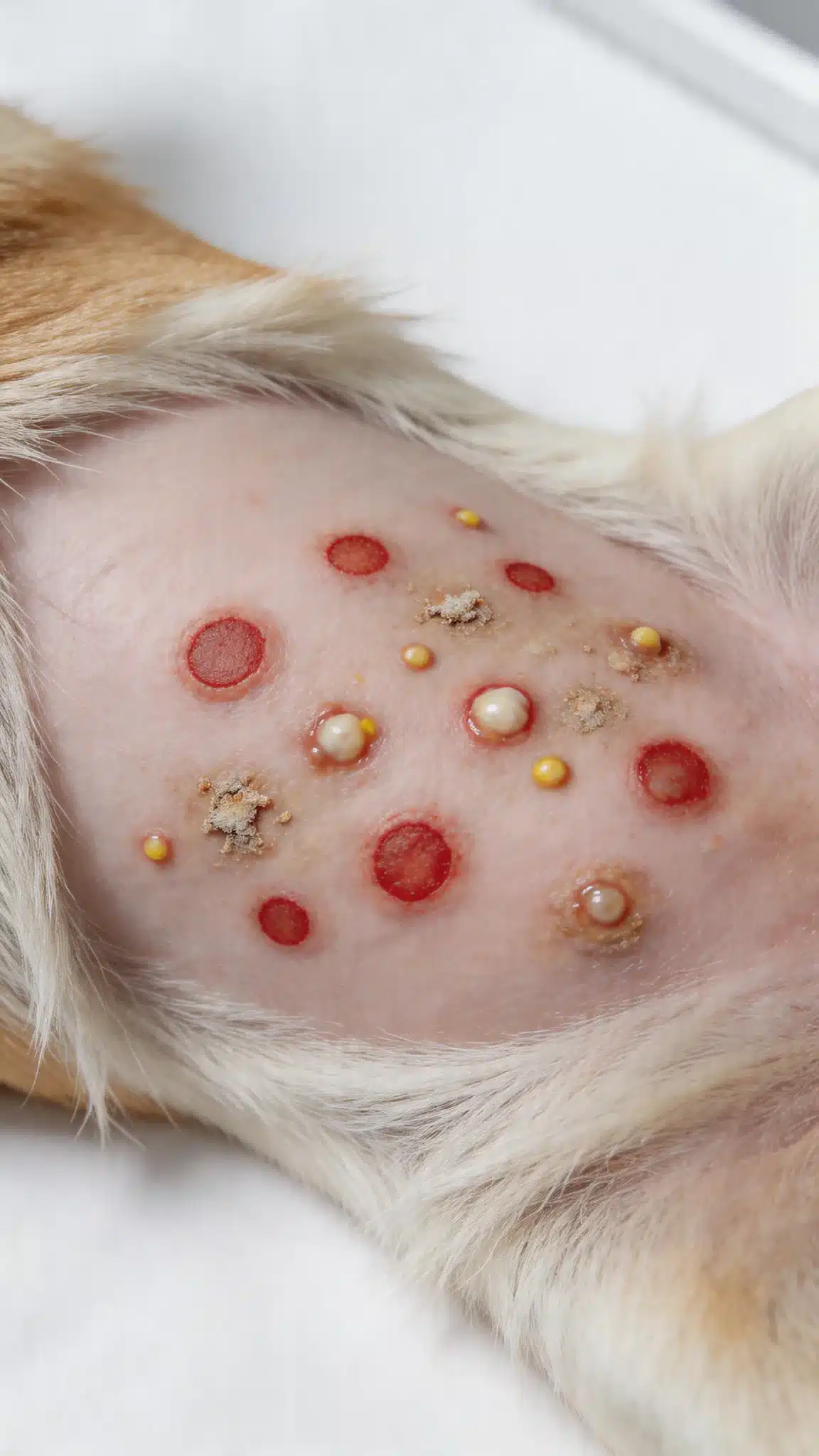
Bacterial and fungal infections produce some of the most visually distinct belly rashes in dogs. Catching them early prevents spread and reduces the risk of secondary complications like deep skin infections.
Bacterial Folliculitis
Bacterial folliculitis is a staph (Staphylococcus pseudintermedius) infection of the hair follicles. The AKC and the Merck Veterinary Manual both list it as one of the most frequently diagnosed skin infections in dogs.
- Appears as small pus-filled bumps or red papules on the belly
- Crusting and circular patches of hair loss develop as it progresses
- Treated with veterinary-prescribed oral or topical antibiotics
- Often secondary to an underlying condition like allergies or hypothyroidism
Using an antibacterial dog shampoo alongside prescribed medication can speed recovery and reduce reinfection risk.
Ringworm (Dermatophytosis)
Despite the name, ringworm is a fungal infection caused by dermatophytes, not a worm. It creates circular, scaly, red-bordered patches on the belly and can spread to humans and other pets in the household.
Diagnosis is confirmed with a fungal culture or Wood’s lamp examination at your vet’s office. Treatment typically involves antifungal medication — both topical and oral — for several weeks.
Yeast Dermatitis
Yeast overgrowth (Malassezia pachydermatis) loves warm, moist skin folds and the inner belly. It causes a greasy-feeling rash, a distinctive musty odor, and intense itching. Antifungal shampoos and oral medication prescribed by a vet are the standard treatment.
Mange: Mite-Caused Belly Rashes in Dogs
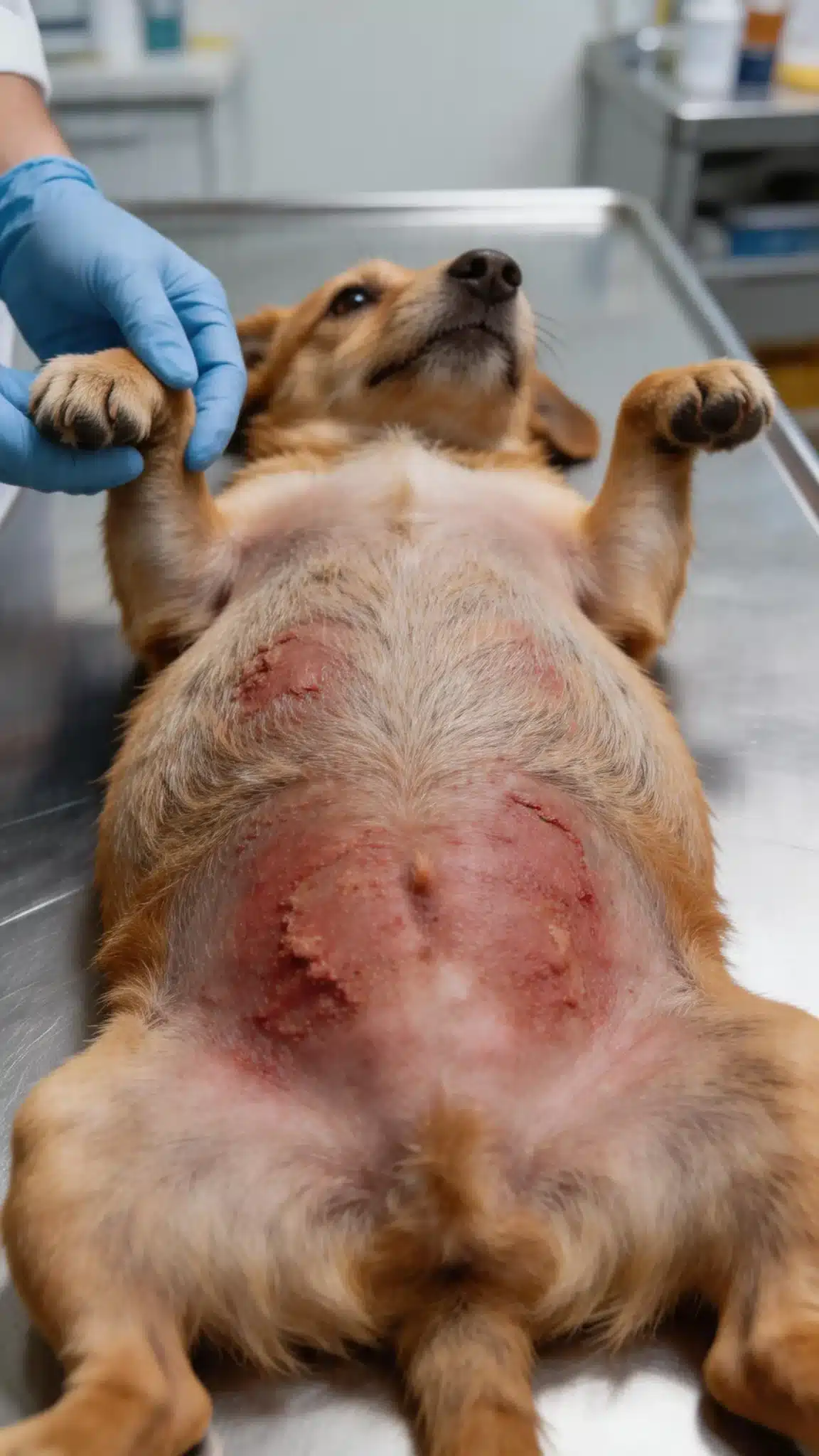
Mange is a skin condition caused by microscopic mites and produces some of the most severe belly rashes a dog can develop. Two types affect dogs most often: sarcoptic mange and demodectic mange, and they behave very differently.
| Type | Cause | Contagious to Humans? | Key Sign |
|---|---|---|---|
| Sarcoptic mange | Sarcoptes scabiei mites | Yes (temporarily) | Intense scratching, crusty edges |
| Demodectic mange | Demodex canis mites | No | Hair loss patches, less itching |
Sarcoptic mange spreads rapidly and causes extreme itching on the belly, armpits, and ear edges. Demodectic mange is linked to immune suppression and tends to appear in puppies or immunocompromised dogs.
BEFORE YOU SCROLL PAST
Readers Also Loved:
👉 How To Care For Your Female Frenchie During Her First Heat
Both types of mange require veterinary diagnosis — over-the-counter mite treatments are rarely effective and can delay real care.
Because mange weakens the immune system and stresses dogs significantly, keeping up with core vaccinations matters. If you are unsure which vaccines your dog needs, reviewing the differences in DHPP vs. DHLPP dog vaccines can help you have an informed conversation with your vet.
Contact Dermatitis and Heat Rash: Situational Belly Rashes

Contact dermatitis and heat rash are triggered by external conditions rather than infections or immune responses. They are often the easiest types to resolve once you identify and remove the cause.
Contact Dermatitis
Contact dermatitis appears when your dog’s belly skin reacts to something it touches directly — lawn chemicals, certain grass species, cleaning products, or synthetic fabrics. The rash stays confined to the exposed area, which is a useful clue.
- Red, inflamed skin that mirrors the shape of the contact area
- May include small blisters or oozing in severe cases
- Resolves within days once the irritant is removed
- Rinsing the belly with cool water after outdoor time helps prevent flare-ups
Heat Rash
Heat rash develops when moisture and heat get trapped against the skin, especially in dogs with skin folds or thick builds. Flat-faced breeds like French Bulldogs and English Bulldogs are particularly prone to heat rash on the belly and chest.
MOST POPULAR THIS WEEK
Readers Also Loved: 👇
👉 How To Stop Dogs From Scratching Ears Raw
Applying a dog cooling mat during warm months reduces prolonged heat exposure on the skin. Keep the belly area dry and clean, especially after walks.
How to Check Your Dog’s Belly Rash at Home
A home check will not replace a vet diagnosis, but it helps you gather the right information before your appointment. Work through these steps in good lighting.
- Lay your dog on their back or side in a calm, well-lit spot. Gently part the fur along the belly to see the skin surface clearly.
- Note the appearance — record whether you see redness, bumps, pustules, crusting, circular patches, or hair loss. Photos taken close-up are useful for your vet.
- Check for odor — a musty or yeasty smell suggests a fungal infection, while a sour or foul odor points toward bacteria.
- Assess the itch level — observe how often your dog scratches or licks the area. Severe, relentless scratching is more consistent with sarcoptic mange or allergies.
- Look for spread — check whether the rash is isolated or appearing on the paws, ears, or armpits as well. Multiple sites suggest a systemic or allergic cause.
- Review recent exposures — note any new foods, detergents, yard treatments, or environments your dog encountered in the past two weeks.
If your dog is also showing other symptoms alongside the rash — like crying when urinating — those signs need separate attention; why dogs cry when peeing can sometimes relate to underlying infections that also affect the skin.
Common Mistakes Dog Owners Make With Belly Rashes
- Applying human hydrocortisone cream without vet guidance: Low-dose human topicals can be harmful if licked or used long-term. Ask your vet for a dog-safe formulation instead.
- Waiting too long to seek care for spreading rashes: A rash that grows, develops pustules, or causes significant scratching within 48 hours needs same-week veterinary attention — delay risks deeper infection.
- Treating a fungal rash like a bacterial one: Antibiotics do not touch fungal infections. Using them alone can make yeast or ringworm worse by disrupting competing bacteria.
- Bathing too frequently with harsh shampoos: Over-washing strips protective skin oils, worsening irritation. Use a gentle oatmeal dog shampoo and follow your vet’s bathing schedule.
- Assuming the rash is “just allergies” without testing: Self-diagnosing skips the root cause. A rash misidentified as allergic may be mange or ringworm, which require targeted treatment.
For broader context on how skin symptoms sometimes connect to internal health issues, diarrhea in dogs acting normally is another sign that can accompany food allergies causing skin rashes.
Trusted Resources on Dog Skin Conditions
The Merck Veterinary Manual’s dog skin disorders section provides peer-reviewed guidance on diagnosing and treating the full range of canine dermatological conditions. It is regularly updated by board-certified veterinary dermatologists and is a reliable reference for both pet owners and clinicians.
Frequently Asked Questions About Types of Dog Belly Rashes
What does a normal dog belly rash look like?
A mild belly rash typically appears as small red bumps, pink discoloration, or slight swelling on the skin. It differs from normal skin by its color change, texture, and the dog’s tendency to scratch or lick the area.
Can a dog belly rash go away on its own?
Some minor contact rashes or heat rashes resolve within a few days once the trigger is removed. Bacterial, fungal, or mite-caused rashes will not clear without treatment and typically worsen over time.
How do I tell the difference between mange and allergies on a dog’s belly?
Mange usually causes intense, relentless scratching and progresses to crusty, thickened skin, while allergies tend to cause generalized redness and seasonal patterns. A vet skin scrape test definitively differentiates the two conditions.
Is a dog belly rash contagious to humans or other pets?
Sarcoptic mange and ringworm are both transmissible to humans and other animals in the household. Allergic dermatitis, bacterial folliculitis, and heat rash are not contagious to people or other pets.
What home remedy is safe for a dog belly rash?
Rinsing the belly with cool water and keeping the area clean and dry is safe for mild contact or heat rashes. Avoid applying human creams, essential oils, or hydrogen peroxide without explicit veterinary guidance.
When should I take my dog to the vet for a belly rash?
Take your dog to a vet if the rash spreads rapidly, develops pustules or open sores, causes severe scratching, or does not improve within 48 hours. Hair loss alongside a rash also warrants prompt veterinary evaluation.
Final Thoughts
The single most important step after spotting a belly rash is identifying its type — because treatment is entirely different depending on the cause. A contact rash needs the irritant removed, a bacterial infection needs antibiotics, and mange needs antiparasitic treatment.
Today, take a clear photo of the rash in good lighting and book a vet appointment if the rash is spreading, smells unusual, or is causing your dog significant discomfort. Early action almost always means a faster, simpler recovery.
If your dog is dealing with other unexplained health concerns alongside the rash, limping in dogs without obvious pain is another symptom that can sometimes connect to systemic inflammatory conditions worth discussing with your vet.