
French Bulldog Colors & Genetics: The Complete Guide to Every Coat, Pattern, and Rarity

French Bulldogs carry more coat color variety than almost any other breed their size, and the terminology around it has gotten genuinely confusing.
Breeders market colors with names like “lilac,” “Isabella,” “platinum,” and “new shade,” while buyers struggle to figure out what any of it actually means or whether a $10,000 price tag is justified.
The key thing to know is that every French Bulldog color is the direct result of specific genes interacting at specific locations in the dog’s DNA, and once you understand the handful of loci involved, most of the mystery disappears.

This guide breaks down Frenchie colors from the genetics up: what AKC recognizes and what it does not, how the main color genes actually work, what each color looks like and why it happens, and which color-linked health concerns are real versus overstated.
The goal is to give prospective buyers and current owners enough working knowledge to evaluate breeder claims without needing a biology degree.
Color names in this breed get used loosely. “Blue” is not blue, “lilac” is not purple, and “Isabella” is not a single agreed-upon thing depending on who is selling.
Understanding the genetics behind each label makes it much easier to spot misleading listings and ask the right questions before putting money down.
Get Weekly Dog Care Tips Free
Join 10,000+ dog owners. Vet-approved advice every week
🔒 No spam. Unsubscribe anytime.
What AKC Actually Recognizes

The American Kennel Club recognizes a defined set of standard French Bulldog colors for conformation showing. These are the colors written into the official breed standard, and a dog outside these colors cannot compete in the breed ring at AKC events.
The recognized standard colors are:
- Brindle
- Brindle and white
- Cream
- Fawn
- Fawn and white
- Fawn brindle
- Fawn brindle and white
- White
- White and brindle
Pied (piebald) is the recognized white-spotting pattern that applies across those base colors. It is not a separate color but a distribution pattern.
Colors like blue, chocolate, lilac, merle, Isabella, and solid black are not recognized by the AKC. That does not make them illegal or unhealthy by default, but it does mean they fall outside the breed standard. A dog with those colors cannot earn an AKC conformation championship.
The distinction matters for buyers because some breeders present non-standard colors as superior or more exclusive. From the AKC’s perspective, they are simply outside the standard. Whether that matters to a buyer depends entirely on whether they plan to show the dog. For a companion animal, AKC color recognition has no bearing on the dog’s quality or temperament.
What buyers should watch for is whether a breeder is transparent about color status, health testing, and genetics, rather than leading with rarity claims as the primary selling point.
The Genetics, Plainly Explained

Every French Bulldog color comes from a set of genetic loci, each controlling a different aspect of pigment production or distribution. The main loci involved are the A-locus (agouti), B-locus, D-locus, E-locus, K-locus, M-locus, and S-locus, and understanding what each one does makes every color name make sense.
D-Locus (Dilution Gene)
The D-locus controls whether a dog’s pigment is expressed at full intensity or diluted. The gene involved is MLPH (melanophilin), which affects how pigment granules are distributed in the hair shaft.
A dog with two copies of the recessive dilute allele (d/d) produces diluted pigment. Black becomes blue-gray. Chocolate becomes a softer, washed-out brown. Any dog showing a diluted color carries the genotype d/d. A dog with D/d is a carrier but shows full-intensity color. Only d/d dogs visually express dilution.
This is the gene behind blue French Bulldogs and is also part of the combination that creates lilac.
B-Locus (Chocolate Gene)
The B-locus involves the TYRP1 gene, which affects eumelanin (black pigment) production. Dogs with two recessive alleles (b/b) convert what would be black pigment into chocolate brown. Their nose leather and eye rims also shift from black to brown or liver.
There are multiple variants at the B-locus (labeled ba, bc, bd, etc.), and all recessive combinations result in chocolate. This locus is also part of what creates lilac and Isabella when combined with dilution.
How Lilac Happens
Lilac requires two recessive loci to both be homozygous: the dog must be d/d (dilute) and b/b (chocolate). Dilution acting on already-brown pigment produces the silvery, lavender-toned coat that gives lilac its name. Lilac dogs typically have pale greenish or yellowish eyes and pinkish-gray nose leather. It is not a merle-related color. It is purely a double-recessive dilution outcome.
Merle Is Different
Merle is driven by the M-locus, which involves a SINE insertion in the PMEL gene. Unlike the recessive loci above, merle is a dominant pattern. One copy of the merle allele (M/m) produces the mottled, patchy coat effect. Two copies (M/M) produce a double merle, which is associated with severe health risks including blindness and deafness. Merle is a pattern modifier, not a base color, so it can appear on top of blue, chocolate, lilac, or fawn backgrounds.
Standard Colors (AKC-Recognized)
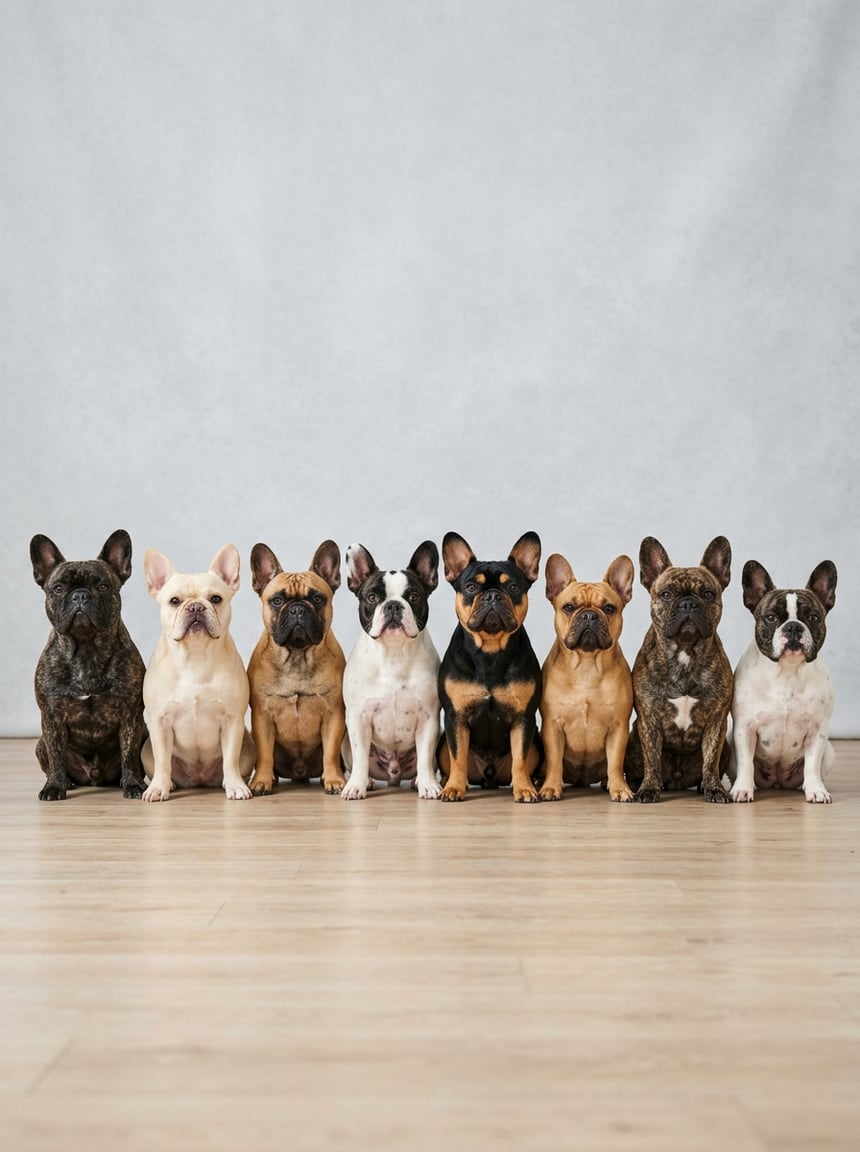
Standard French Bulldog colors are the ones the AKC breed standard explicitly permits for conformation showing. These include cream, fawn, brindle, white, and their pied (piebald) combinations. A standard-colored Frenchie is not “less” than a rare-colored one in any meaningful sense for a companion buyer, and these colors carry the lowest risk of color-linked health complications.
Fawn
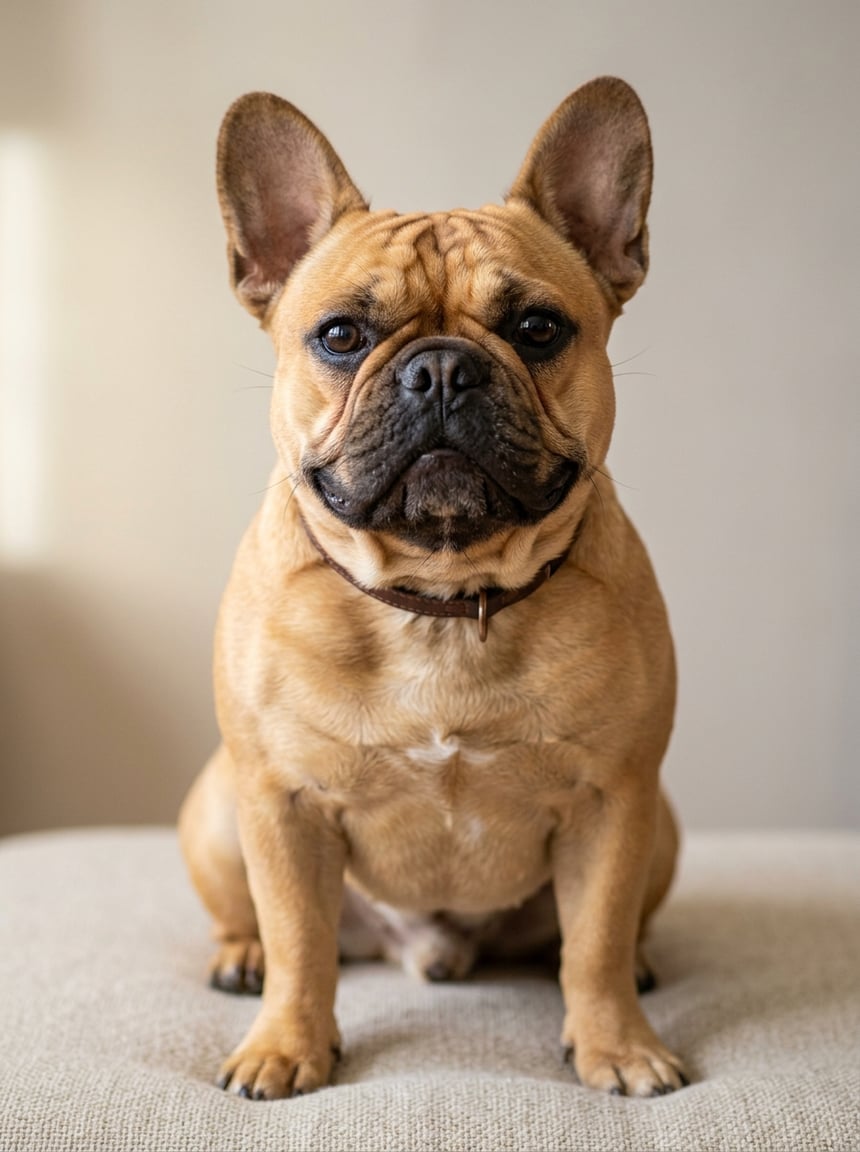
Fawn French Bulldogs range from a pale champagne color to a warm, reddish-gold tan. The shade can vary quite a bit within the label, which is why some buyers confuse lighter fawns with cream.
Genetically, the fawn color is produced by the Ay allele at the A-locus (agouti). This allele causes the dog to produce phaeomelanin, the pigment responsible for red and yellow tones, rather than eumelanin (black pigment). The K-locus also plays a role: fawn only shows when the dog is ky/ky at the K-locus, meaning dominant black is absent and the A-locus expression is allowed.
Fawn Frenchies often have a black mask (eumelanin expression on the muzzle), which is common in the breed and not a separate color classification. The mask is controlled by the E-locus, specifically the Em allele. Fawn is one of the most common and classic French Bulldog looks, and it sits firmly within AKC breed standard expectations.
Cream

Cream French Bulldogs look like a pale, warm eggshell white, and they are frequently mistaken for very light fawns. The visual similarity is real, but the genetics are completely different.
A true cream Frenchie carries two copies of the recessive e allele at the E-locus (e/e). This genotype essentially switches off eumelanin production in the coat altogether. What shows through is very dilute phaeomelanin, producing that soft ivory tone. Unlike fawn dogs, cream Frenchies will not have a black mask because the E-locus recessive prevents black pigment from being expressed in the coat.
Nose leather and eye rims on a true cream will be dark (black), which helps differentiate cream from pale fawn or platinum. The easiest way to confirm is a DNA test: a true cream will come back e/e at the E-locus. Cream is an AKC-recognized color and one of the most straightforward to verify genetically.
White

White French Bulldogs are recognized by the AKC, but “white” in this breed usually comes from one of two genetic sources: extreme white piebald (heavy S-locus expression) or, less commonly, the e/e genotype that also produces cream.
Most white Frenchies are essentially high-white pied dogs where the white spotting has covered nearly the entire body. The S-locus, controlled by the MITF gene, determines how much white is present. A dog with heavy white from piebald can appear fully white without actually being genetically “white” in the classic sense.
The health concern specific to white Frenchies is the link between extensive white patterning and deafness. When white covers the head and surrounds the ears, it can disrupt melanocyte function in the inner ear, which can lead to unilateral or bilateral deafness. A BAER test (brainstem auditory evoked response) is recommended for predominantly white French Bulldogs. This is not unique to the breed, but it is a real risk worth knowing before purchasing.
Brindle

Brindle is one of the most classic French Bulldog looks and one of the most genetically dominant colors in the breed. It presents as a base fawn coat with black striping layered over it, ranging from light tiger brindle (fawn-heavy) to dark or “reverse” brindle (black-heavy with faint fawn showing through).
The brindle pattern comes from the Kbr allele at the K-locus, controlled by the CBD103 gene. Brindle is dominant over the A-locus expression. A dog with even one copy of Kbr (Kbr/ky) will show brindle. Because of this dominance, breeding with a brindle Frenchie frequently produces brindle offspring.
Dogs written as Kb/K at the K-locus are dominant black and will not show brindle. Dogs that are ky/ky show whatever the A-locus dictates (fawn, sable, tan points, or recessive black). Brindle sits in the middle and is the reason the breed has historically been so heavily patterned. It is AKC-recognized across multiple combinations (brindle, brindle and white, white and brindle, fawn brindle).
Piebald (Pied)
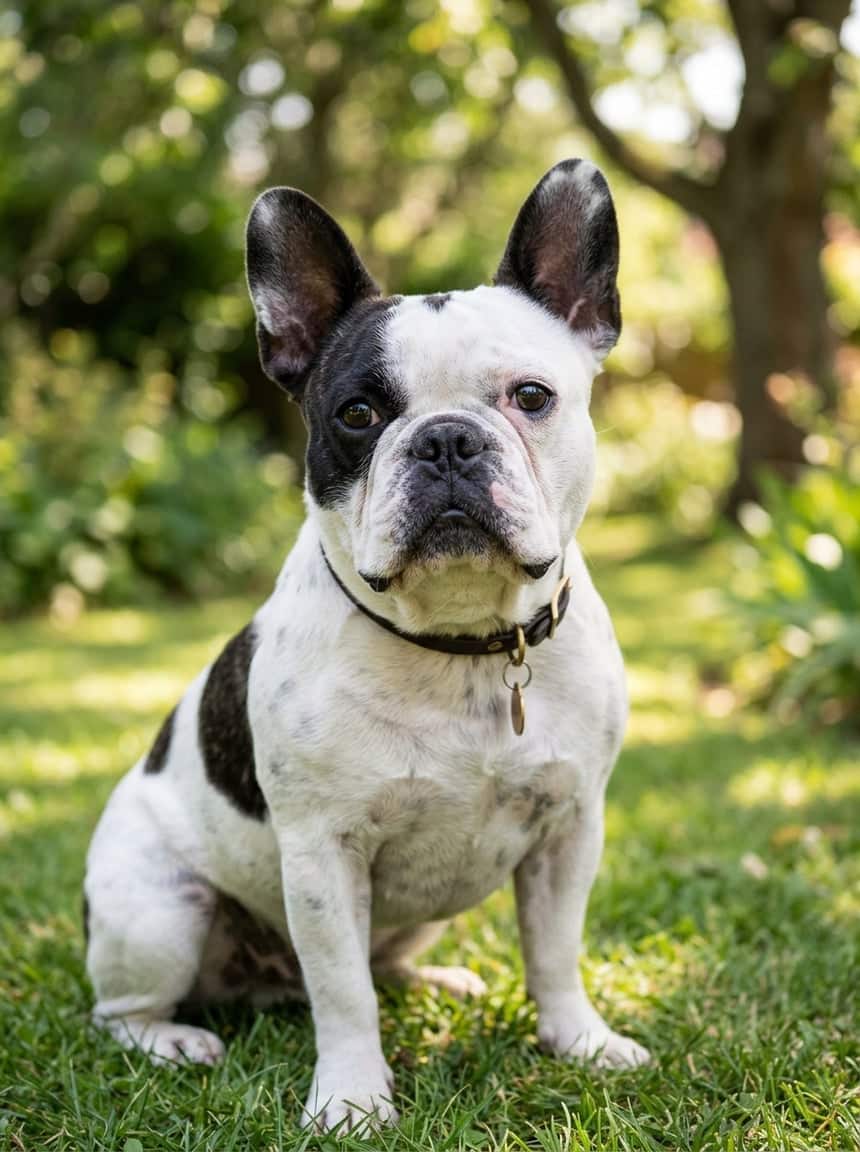
Piebald, called “pied” in French Bulldog terminology, is a white-spotting pattern rather than a base color. A pied Frenchie has irregular patches of color against a white background, or white patches against a base color, depending on how much white is present.
The pied pattern is controlled by the S-locus, specifically the MITF gene. It is a recessive trait, meaning a dog must carry two copies of the pied allele (sp/sp) to show the pattern. A dog with only one copy (S/sp) is a carrier and will not show visible white spotting in most cases.
The amount of white varies significantly. Some pied dogs have just a few white patches; others are almost entirely white with small colored markings. Pied can appear on any base color, so there are fawn pied, brindle pied, blue pied, lilac pied, and many other combinations. The pattern itself is AKC-recognized. As noted in the white section, heavily pied dogs with white covering the head may benefit from BAER hearing testing.
Non-Standard & Rare Colors
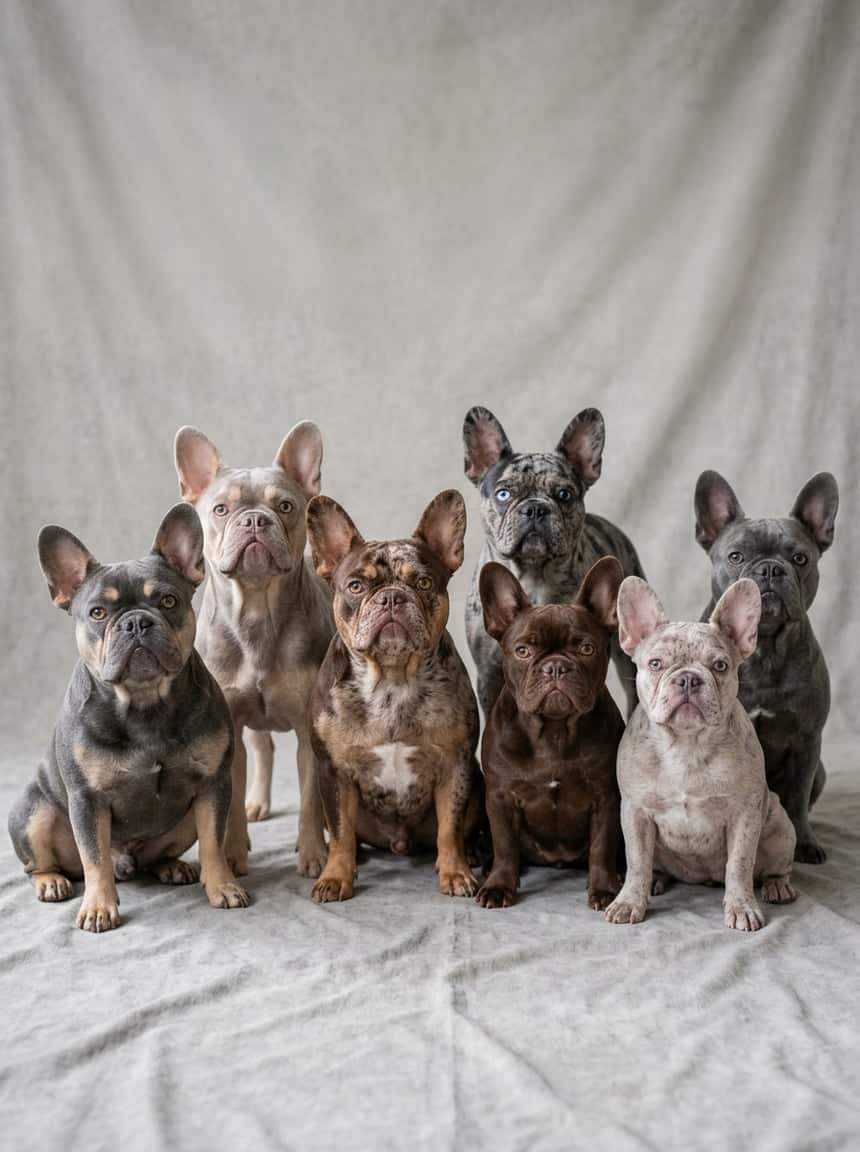
Non-standard colors in French Bulldogs are real colors with real genetic explanations. They fall outside AKC breed standard recognition, which means they cannot compete in conformation shows, but they do occur in the breed. The main ones are blue, chocolate (liver), lilac, Isabella, rojo chocolate, solid black, and platinum.
Many of these colors require specific recessive gene combinations in both parents, which is why they are less common. Rarity drives pricing significantly upward in this segment, sometimes to extreme levels. Buyers evaluating listings for rare colors should ask for DNA panel results to confirm the color is what the breeder claims it is.
The term “rare” itself gets overused. Blue Frenchies, for example, are common enough in certain breeding circles that the market has normalized them. True rarity usually involves multiple compounding recessive loci, as with Isabella or new-shade Isabella. Price should reflect genetic verification and health testing, not just coat color alone.
Blue
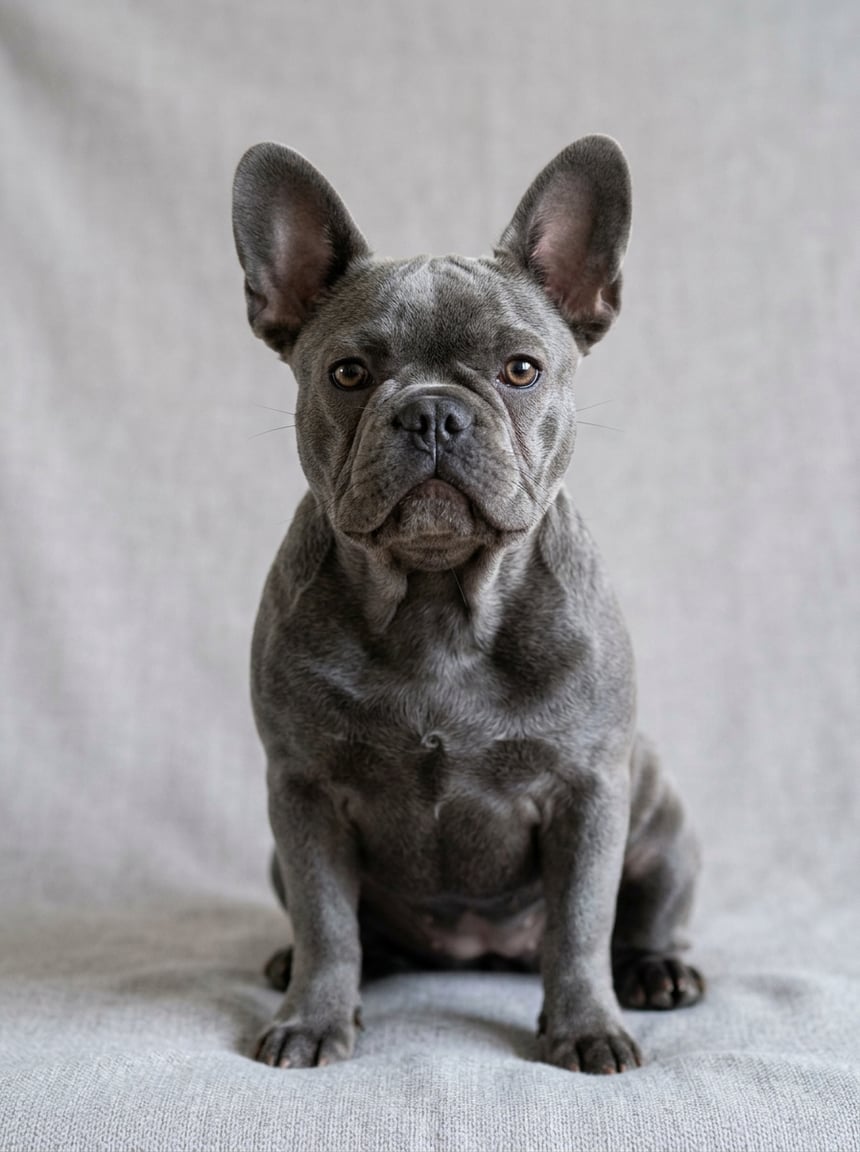
Blue French Bulldogs are not actually blue. The coat appears as a cool gray, sometimes with a slight silvery or steely sheen, particularly in certain lighting. The “blue” label comes from the visual effect of diluted black pigment.
Genetically, a blue Frenchie is d/d at the D-locus. The dilution gene prevents eumelanin granules from distributing evenly in the hair shaft, producing that gray appearance. The dog’s nose leather and eye rims also dilute from black to a grayish or pewter tone. Eye color is often lighter than standard, ranging from amber to light brown or even grayish.
The primary health concern linked to blue (and other dilute-colored dogs) is color dilution alopecia (CDA), a condition caused by abnormal pigment granule clumping in the hair follicles that can lead to patchy hair loss and skin problems. Not all d/d dogs develop CDA, but the risk is elevated compared to non-dilute Frenchies. DNA testing can confirm the d/d genotype, which any reputable breeder of blue Frenchies should be able to provide.
Lilac
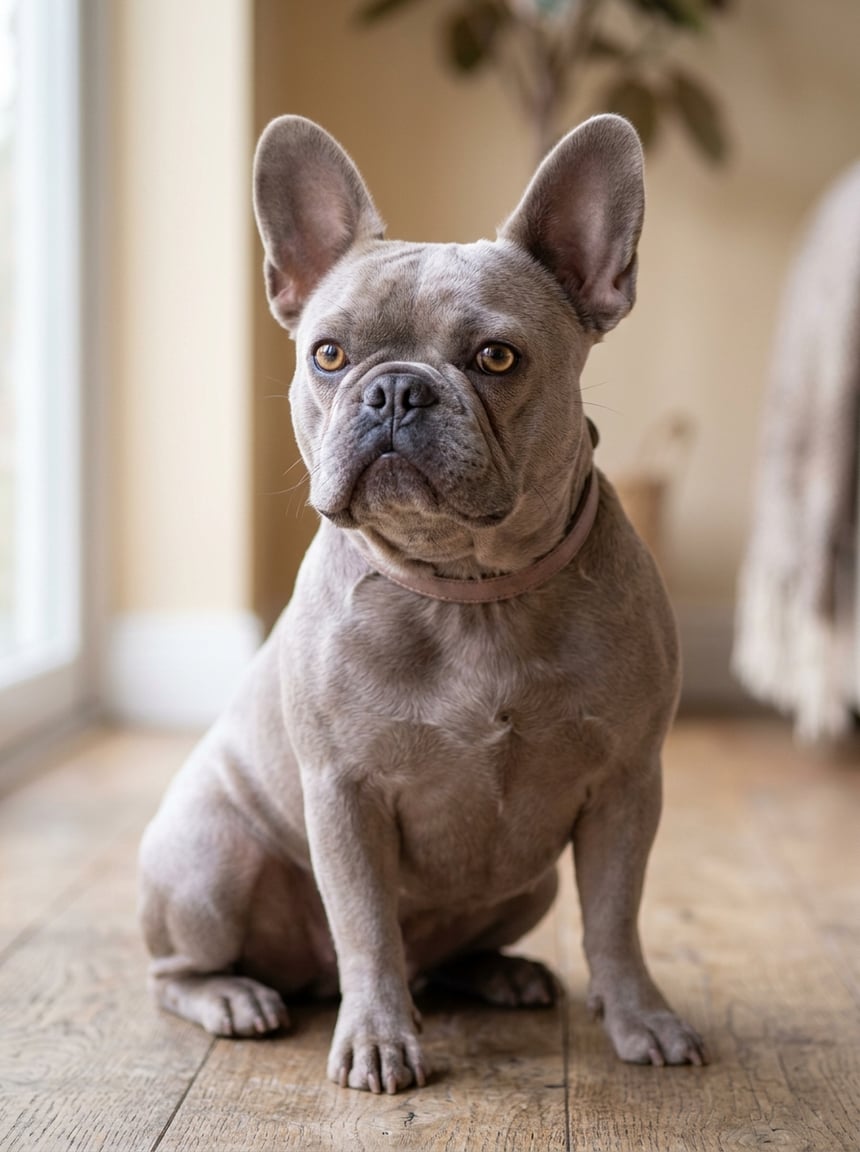
Lilac is one of the most talked-about rare colors, and also one of the most misrepresented. A true lilac Frenchie requires two specific homozygous recessive loci: d/d (dilute) and b/b (chocolate). Dilution acting on brown pigment instead of black produces the cool, silvery coat with a faint lavender or pink-gray cast.
Lilac Frenchies have distinctly pale nose leather (often pinkish or lavender-gray), lighter eye color than standard (frequently green, blue, or amber), and a coat that can look warmer in puppyhood and cool down as the adult coat comes in. The color reads very differently from blue (which is diluted black) once you know what to look for.
Because lilac requires two recessive gene combinations, both parents must carry at minimum one copy of each (b/+ and d/+) to have any chance of producing lilac offspring. A dog that is only d/d without b/b will be blue, not lilac. DNA verification should show both loci confirmed to call a dog genuinely lilac.
Isabella

Isabella is where terminology starts getting inconsistent across breeders. In general use, Isabella refers to a French Bulldog that has a warm, brownish-lilac tone, often described as a dusty beige or muted coffee color. It is distinct from standard lilac in having a warmer, less silvery quality.
Genetically, what breeders call Isabella typically involves the d/d dilution combined with a specific variant of the B-locus, sometimes referred to as the “cocoa” locus (co/co). Some breeders use “new shade Isabella” to describe dogs carrying both the testable chocolate locus and the cocoa locus simultaneously, producing a deeper, richer warm brown. The exact genetic definition varies between breeders and testing labs, which is why DNA results are especially important for this color.
Isabella Frenchies are among the most expensive in the breed. Some puppies marketed as Isabella sell in the range of $15,000 to $30,000, though pricing is not standardized. Without DNA panel confirmation, buyers cannot verify whether the color is genuinely Isabella or simply a marketing label applied to a lighter lilac or chocolate dog.
Chocolate (Liver)

Chocolate French Bulldogs have a rich brown coat resulting from the b/b genotype at the B-locus. The TYRP1 gene mutation shifts eumelanin production so that black pigment is converted to brown. Nose leather, eye rims, and paw pads all shift to a brownish or liver tone as well.
Eye color in chocolate Frenchies is typically lighter than in black-pigmented dogs, often a warm amber or light brown. This is a useful visual indicator alongside nose color when evaluating a dog in person.
There are multiple allelic variants at the B-locus (labeled ba, bc, bd, and others), and all homozygous recessive combinations produce chocolate. DNA testing is the only way to confirm which specific variants are present, which matters for breeders trying to predict offspring color accurately. Chocolate is a non-standard color, not recognized by the AKC for showing, but it is genetically straightforward and well-documented.
Rojo Chocolate
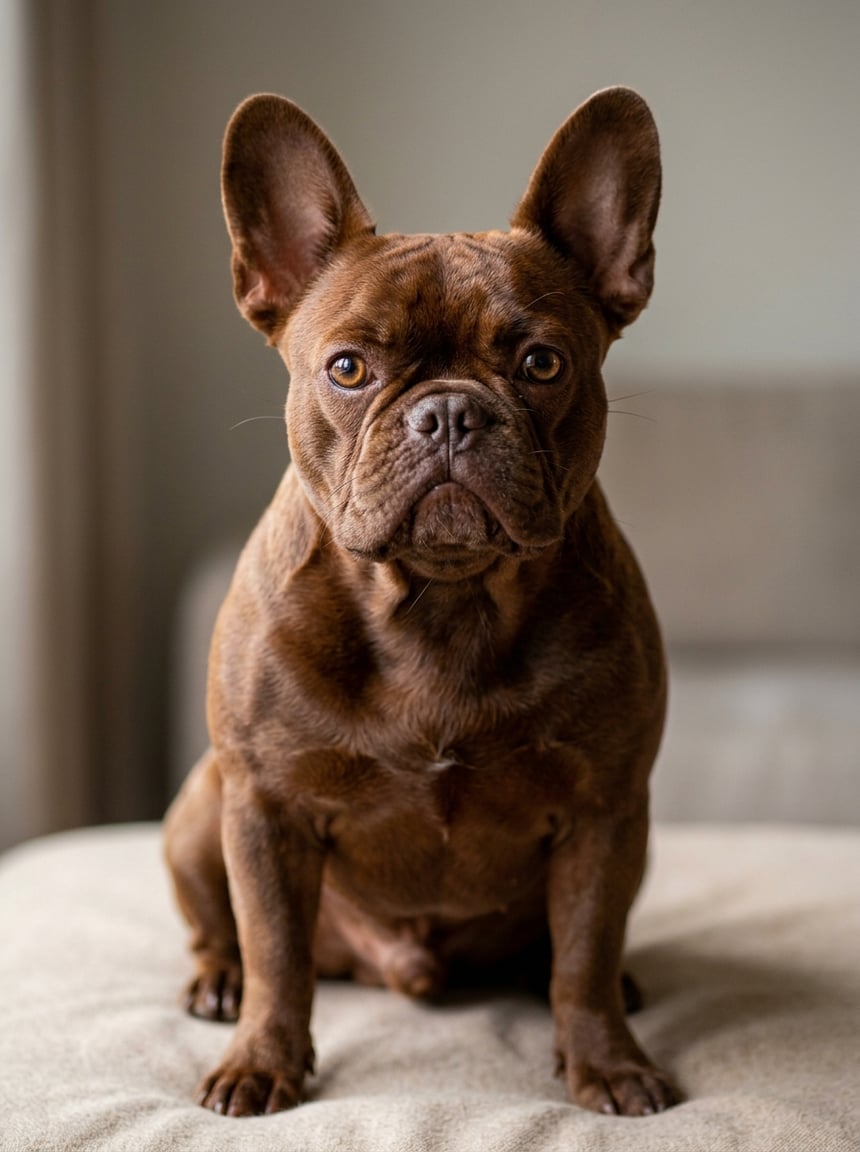
Rojo Chocolate is a term used for French Bulldogs carrying what breeders call “testable chocolate,” a specific B-locus variant that can be confirmed on standard DNA panels offered by labs like Animal Genetics. The coat presents as a warm, reddish-brown that can look almost rust-toned in good light, which is where the “rojo” (Spanish for red) name comes from.
These dogs differ from standard chocolate Frenchies in both the variant they carry and the warm reddish tone their coat produces. A dog labeled Rojo should test positive for the testable chocolate variant, and breeders should be able to share those results. The “new shade Isabella” or “new shade rojo” terms sometimes appear in listings to describe dogs that combine testable chocolate with other rare loci for a deeper, more complex tone.
This is a niche label within an already non-standard segment, and buyers should ask for specific DNA panel results rather than accepting the name at face value.
Solid Black

Solid black French Bulldogs do exist, but they are less common than buyers might expect, partly because true recessive black requires a specific genotype that is easy to confuse with dark brindle.
A genuinely solid black Frenchie carries the a/a genotype at the A-locus (both alleles are recessive black), combined with ky/ky at the K-locus (no dominant black influence). This allows recessive black from the A-locus to express. The coat shows as solid black with no fawn or brindle striping at all.
The confusion arises because very dark brindle dogs can appear black in low light or in photos. A DNA test is the only reliable way to confirm whether a dog is genetically solid black or just a very heavily brindled dog. Solid black is not an AKC-recognized standard color and is considered non-standard in the breed.
Patterns Beyond Base Color
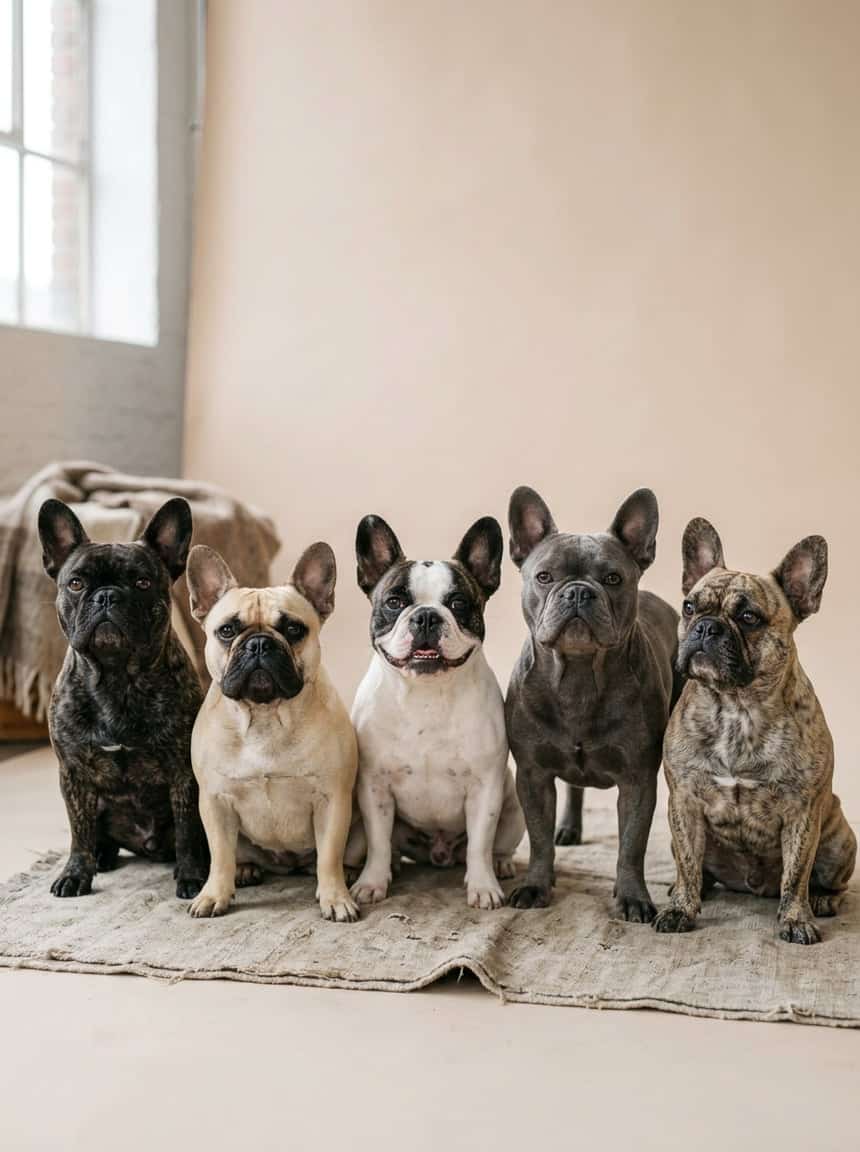
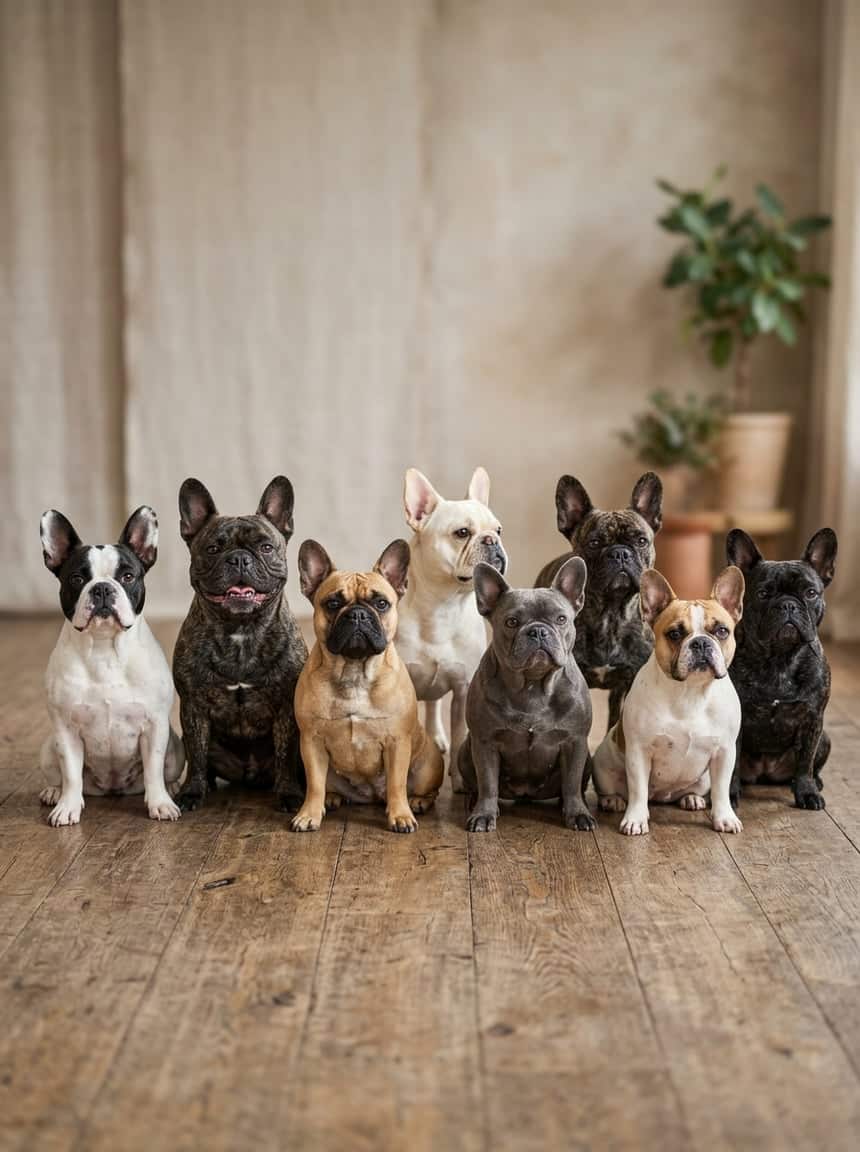
Beyond base colors, French Bulldogs can carry distinct patterns that modify how color is distributed across the coat. Sable, tan points, trindle, merle, and harlequin merle each have separate genetic mechanisms and produce recognizably different visual effects from base color alone.
Pied Combinations
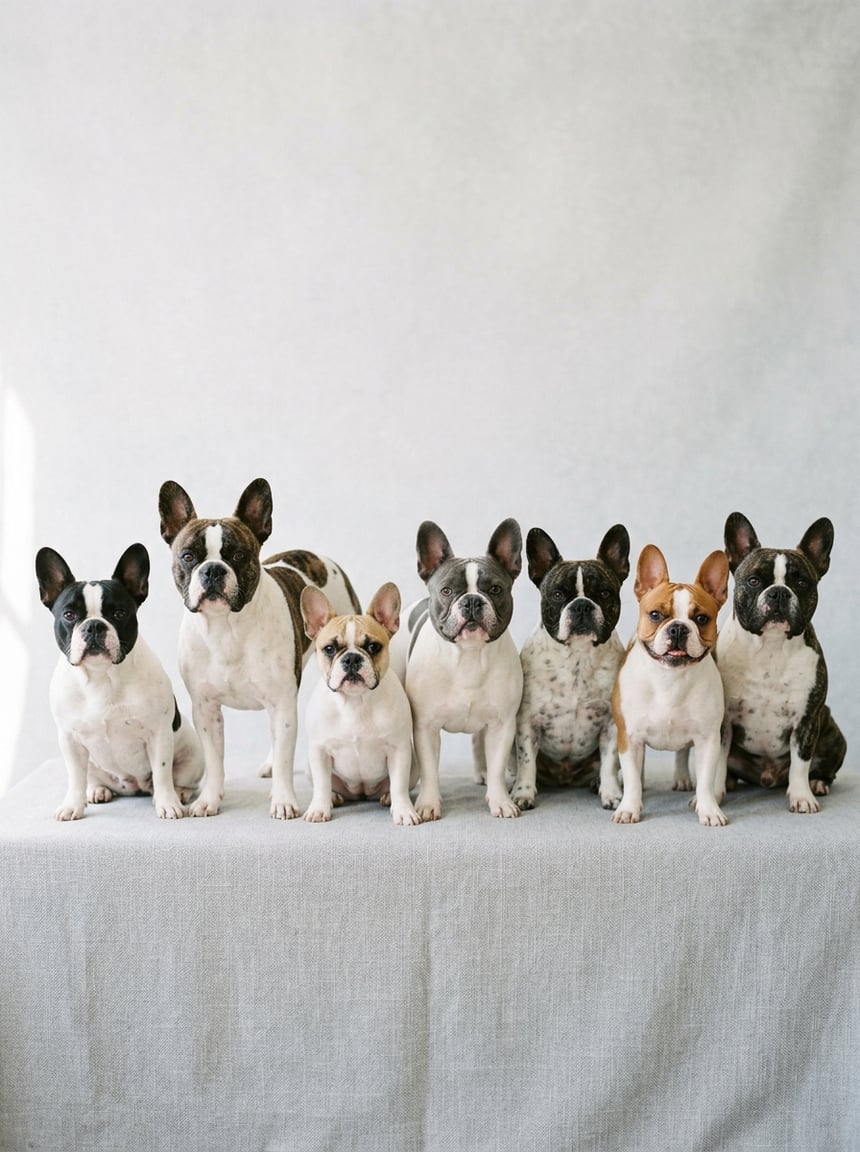
Pied, as a pattern, can layer over virtually any base color in French Bulldogs, producing a wide range of two-tone combinations. Blue pied, chocolate pied, lilac pied, brindle pied, and fawn pied are all possible when a dog carries both the sp/sp piebald genotype and the relevant base color loci.
The distribution of white on pied dogs is variable and cannot be precisely predicted from the genotype alone. Two sp/sp dogs from the same litter can have very different amounts of white. The colored patches retain whatever pattern or pigment the base color dictates, so a lilac pied dog has lilac patches against a white background, and a brindle pied dog has brindle-patterned patches against white.
For show purposes, only pied combinations built on AKC-recognized base colors (fawn, brindle, white) are eligible. Exotic pied combinations (blue pied, lilac pied) are non-standard.
Sable
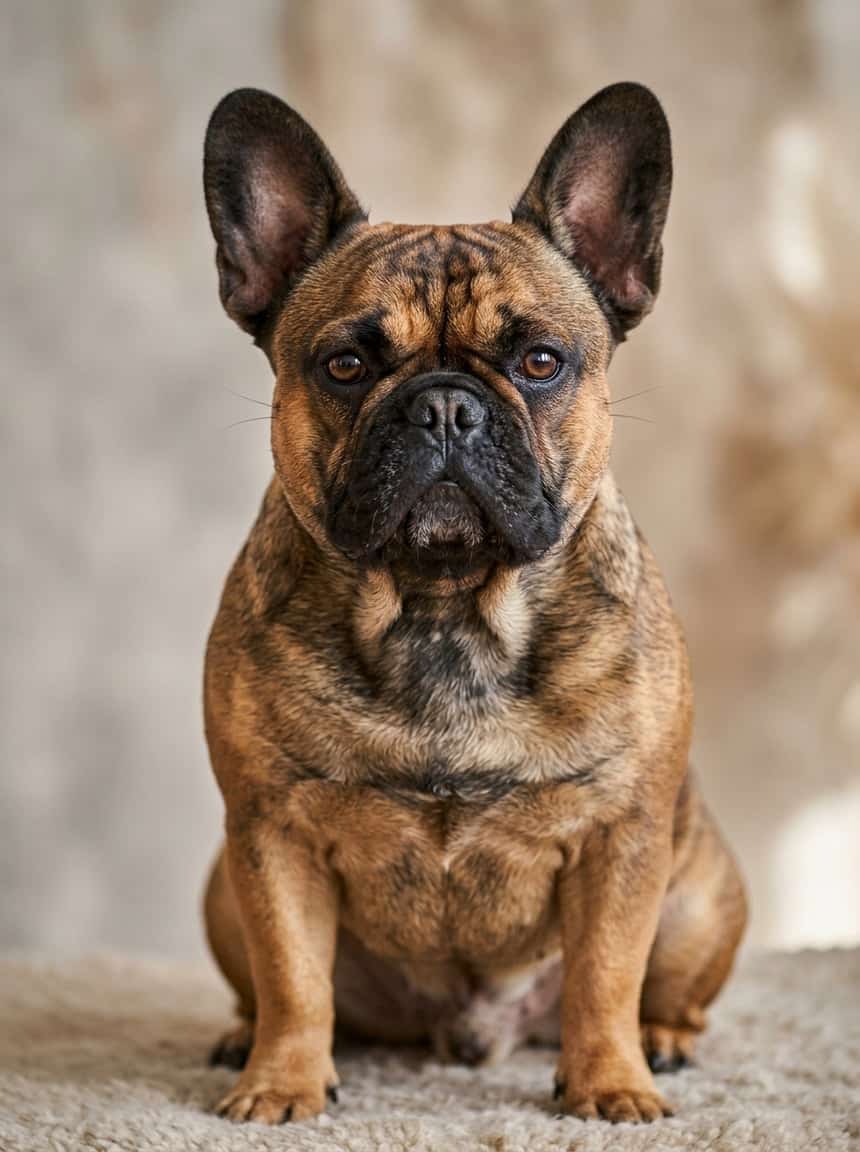
Sable French Bulldogs are sometimes misread as dark fawn or light brindle, but the pattern is genetically distinct. Sable occurs when a dog carries both Ay and At at the A-locus, producing a fawn base with black-tipped hairs on the back and sometimes the head. The tipping gives the coat a slightly shaded or sooty appearance, darker across the topline than on the sides and chest.
Visually, a sable Frenchie can look like a fawn dog with a dark overlay, or like a softer version of brindle without the distinct striping. The key genetic difference from brindle is that sable is an A-locus pattern expressed when the K-locus is ky/ky, while brindle is a K-locus pattern. Sable can combine with dilute loci (producing lilac sable, for example) or with other patterns. It is considered non-standard by the AKC.
Tan Points
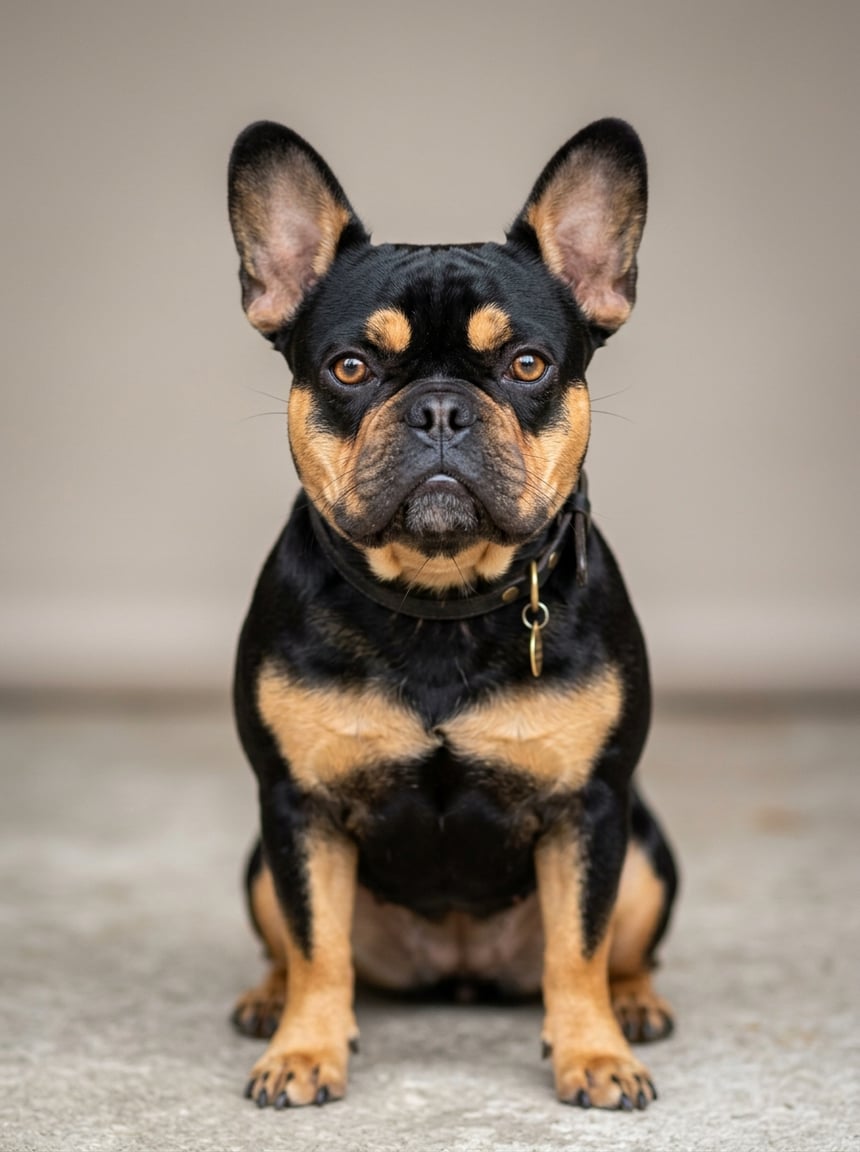
Tan points, often called “tri color” in Frenchie circles, produce the same pattern seen in Dobermans and Rottweilers: a dark base coat with specific tan markings on the cheeks, eyebrows, chest, paws, and under the tail. In French Bulldogs, this pattern is driven by the At allele at the A-locus.
For tan points to show, the dog must be At/At or At/a at the A-locus and must also be ky/ky at the K-locus. If the K-locus has a dominant black (Kb) or brindle (Kbr) allele, the tan point pattern is suppressed and the dog appears solid or brindle.
Tan points appear on any base color, which is why listings might advertise blue and tan, chocolate and tan, or lilac and tan. The tan is always phaeomelanin (yellow/red pigment) regardless of what the base color is. Tan points are a non-standard pattern in the AKC breed standard.
Trindle
Trindle is not an official genetics term, but it is a widely used descriptor in the French Bulldog world. It refers to a dog that carries both the brindle K-locus allele and tan points at the A-locus.
The result is a dog that shows tan point markings, but the tan areas are brindled rather than solid tan.
This happens when the Kbr allele at the K-locus partially expresses in the phaeomelanin (tan) zones. Instead of clean tan markings on the cheeks, eyebrows, or paws, those areas have visible brindle striping.
The base coat is typically dark (black or blue or chocolate), and the brindled tan markings appear in the spots where tan points would normally be.
Trindle Frenchies are popular with buyers who want the tan point look with added texture. They are non-standard and often command a price premium in the rare-color market.
Merle

Merle is a dominant pattern that creates irregular patches of diluted color on a darker base coat.
One copy of the merle allele (M/m) is enough to produce the pattern. The PMEL gene is involved, and the merle variant disrupts pigment expression in an unpredictable, mottled way.
Merle can appear on any base color in French Bulldogs. Blue merle has blue-gray patches on a gray background. Chocolate merle has brown tones.
Lilac merle combines the double-recessive dilution with the merle pattern. The visual result is a marbled, patchy coat that reads very differently from solid-color dogs.
The critical health concern with merle is double merle (M/M). Breeding two merle dogs together produces a 25% chance of double merle offspring.
Double merle dogs often have severe ocular and auditory defects, including blindness and deafness.
Any responsible merle breeding program will never pair two merle dogs. Merle is non-standard and controversial within the breed.
Harlequin Merle
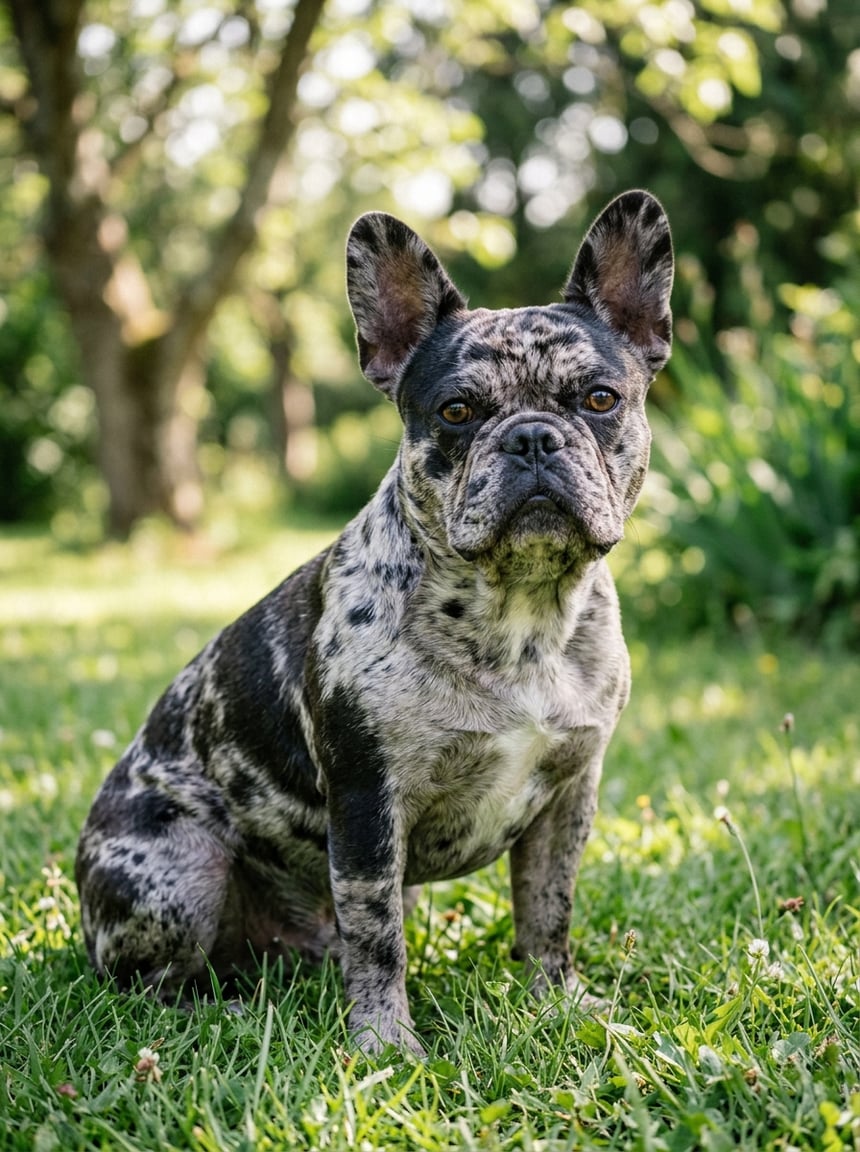
Harlequin merle in French Bulldogs produces a coat with a white or very pale background and distinct colored patches, creating a high-contrast spotted or marbled effect. The term is borrowed from Great Dane genetics, where harlequin has a precise genetic definition, but in Frenchies it is used more loosely to describe high-white merle combinations.
The visual effect requires merle (M/m) combined with significant white spotting, usually from the S-locus piebald gene or other modifying genes that increase white in the coat. The result can look dramatic: clearly defined colored patches on a predominantly white body, as opposed to the more blended, mottled look of standard merle.
Harlequin merle Frenchies are among the most visually striking and most expensive in the breed. They are also among the most health-sensitive, given the double-stacking of white spotting and merle genes. BAER hearing testing and thorough eye exams are strongly recommended for dogs with this pattern.
Health Considerations By Color

Color-linked health concerns in French Bulldogs are real but specific. They do not apply evenly across all colors, and they are sometimes overstated for standard colors while being understated for genuinely high-risk combinations.
Color Dilution Alopecia (CDA): CDA is the most discussed color-linked condition in Frenchies. It affects dogs with the d/d dilution genotype (blue, lilac, Isabella) and is caused by abnormal clumping of pigment granules in hair follicles. Symptoms include patchy hair loss, flaky skin, and recurring skin infections. Not every dilute dog develops CDA, but the risk is elevated, and there is no cure. Management focuses on skin care and preventing secondary infections.
Deafness: Deafness risk is elevated in heavily white dogs, particularly those with white covering the head and ears. This applies to high-white pied dogs and merle dogs with significant white. The mechanism involves reduced melanocytes in the inner ear during development. BAER testing is the standard way to screen.
Blindness and Ocular Defects: Double merle dogs (M/M) are at high risk for micro-ophthalmia, missing pupils, cataracts, and other severe eye conditions. Even single-copy merle dogs occasionally show subtle ocular anomalies. Any merle Frenchie should have an ophthalmology exam.
Standard Colors: Fawn, cream, brindle, and pied Frenchies on a non-dilute base do not carry elevated color-linked health risks beyond the breed’s general predispositions (BOAS, skin folds, spinal issues). Color-linked risks are genuinely a rare-color concern, not a breed-wide one.
Rarity And Pricing: The Short Version

French Bulldog pricing is tied directly to coat color in the current market. Standard colors (fawn, brindle, cream, pied) typically range from roughly $2,000 to $5,000 from health-tested breeders. Non-standard and rare colors drive prices substantially higher.
A general pricing picture looks like this:
| Color | Approximate Price Range |
|---|---|
| Standard (fawn, brindle, cream) | $2,000 to $5,000 |
| Blue | $4,000 to $7,000 |
| Chocolate | $4,000 to $7,000 |
| Lilac | $6,000 to $10,000 |
| Isabella | $8,000 to $20,000+ |
| Merle | $6,000 to $15,000 |
| Harlequin merle | $10,000 to $30,000+ |
These ranges are not fixed. They shift with breeder reputation, health testing, geographic market, and how heavily social media has driven demand for a specific combination at any given time.
Buyers should treat price as one signal, not the only one. A high price does not guarantee DNA verification, health testing, or responsible breeding practices. Before paying a premium for a rare color, it is worth asking for the full DNA panel, health test certificates on the parents, and documentation of the specific loci that justify the color name being used.
Rarity alone does not equal quality. A well-bred fawn Frenchie from health-tested parents is a better purchase than an unverified “Isabella” puppy from a breeder who cannot produce DNA results.
Frequently Asked Questions

What are the standard and non-standard coat colors in French Bulldogs?
The AKC recognizes brindle, cream, fawn, and white as standard colors, along with combinations of those with pied patterning. Non-standard colors include blue, chocolate, lilac, Isabella, merle, solid black, and rojo chocolate. Non-standard dogs cannot compete in AKC conformation shows but are otherwise legitimate dogs.
How do the main coat color genes (A, B, D, E, K, and S) affect French Bulldog color outcomes?
Each locus controls a different aspect of pigment production or distribution. The K-locus determines brindle or dominant black; the A-locus controls fawn, sable, tan points, and recessive black; the E-locus affects whether black pigment appears in the coat at all; the B-locus shifts black to chocolate; the D-locus dilutes any color; and the S-locus controls white spotting. The combination of genotypes across all loci produces the final coat color.
What colors should be avoided in French Bulldogs due to health risks or breeding ethics?
Double merle pairings (merle-to-merle) should always be avoided because they produce a high percentage of puppies with severe blindness and deafness. Heavily white dogs benefit from BAER hearing screening before breeding. Dilute dogs (d/d) carry elevated CDA risk, which breeders should disclose to buyers.
How accurate are French Bulldog DNA color tests, and what results should breeders look for?
DNA color panels from reputable labs like Animal Genetics or UC Davis are highly accurate for the loci they test. Breeders should look for results at the A, B, Co (cocoa), D, E, K, M, and S loci. The panel confirms which alleles are present and whether a dog is a carrier or expresser of a specific color trait. No test is useful if it does not cover the loci relevant to the claimed color.
How does the dilution gene influence blue and lilac French Bulldogs, and what health concerns are associated with it?
The D-locus dilution gene (d/d) reduces pigment granule distribution in the hair shaft, turning black coats gray-blue and chocolate coats into lilac or Isabella tones. The primary health concern is color dilution alopecia, a skin and coat condition that causes hair loss and recurring skin infections in some dilute dogs. Not all d/d dogs develop CDA, but prospective buyers of blue or lilac Frenchies should be aware of the risk.
How can a color genetics chart or calculator be used to predict French Bulldog puppy colors from two parents?
A color genetics calculator takes the known genotypes of both parents at each relevant locus and calculates the probability of each offspring genotype. For example, two dogs that are each D/d (carriers of dilution) have a 25% chance of producing a d/d (dilute) puppy. Calculators are useful planning tools, but they require confirmed DNA results for both parents to produce accurate predictions. Estimates based on visual color without DNA testing are unreliable.


