What Color Is a Blue Merle Fluffy French Bulldog?

A blue merle fluffy French Bulldog is a grey-and-black patchwork dog with a soft, medium-length coat — a striking combination of two rare genetic traits in one breed. The base color is a diluted grey-blue, broken up by irregular dark patches, swirls, and speckles created by the merle gene.
If you are trying to identify what color is a blue merle fluffy French Bulldog, you are likely looking at a dog that seems to shift between silver, slate, and charcoal depending on the light. This guide breaks down every visual detail you need to know.
What Color Is a Blue Merle Fluffy French Bulldog?
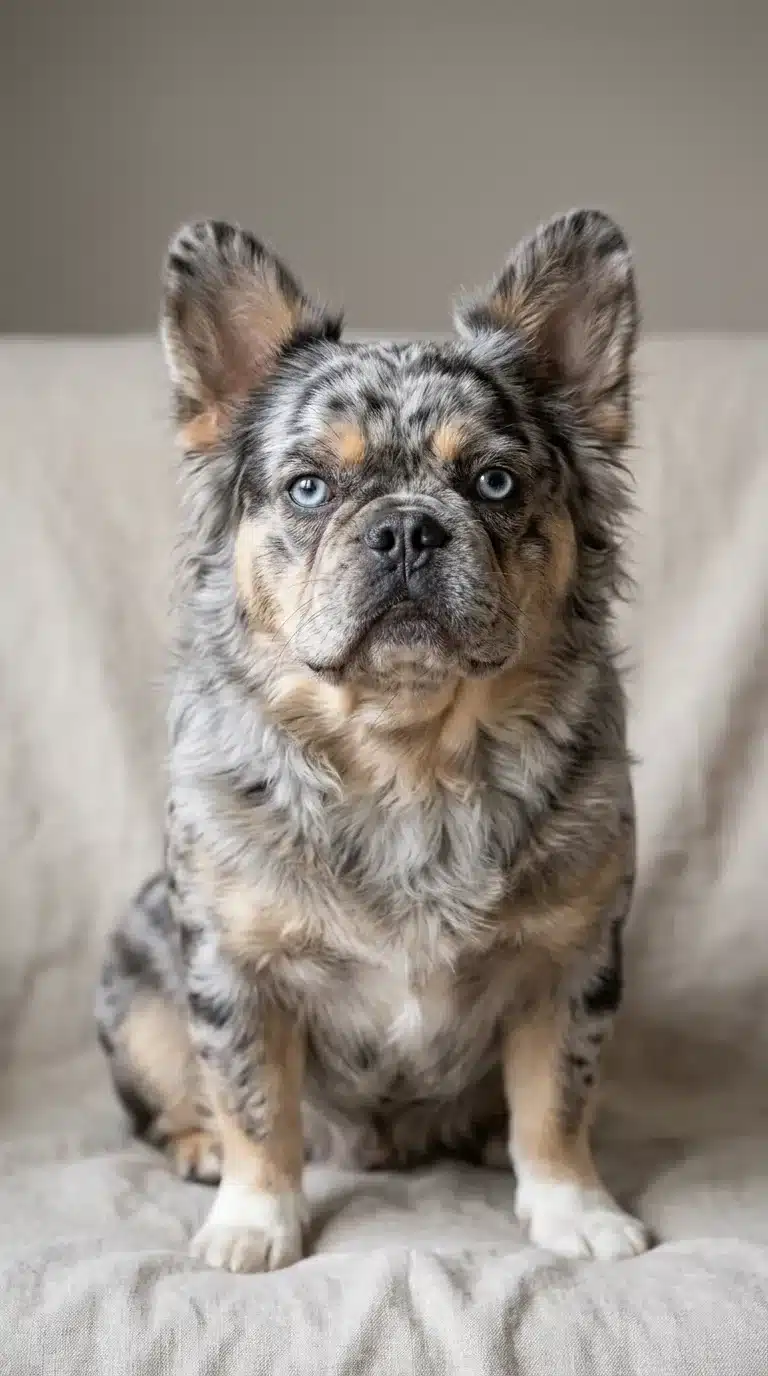
A blue merle fluffy French Bulldog displays a grey-blue base coat with irregular dark patches, merle marbling, and occasional tan or white points — all covered in a longer, silkier coat than a standard Frenchie. Eye color is often blue, green, or heterochromatic (two different colors).
- Base coat: diluted grey to slate-blue, caused by the d (dilution) gene
- Pattern: random dark patches and swirls from the M (merle) gene
- Coat texture: medium-length, soft, and wavy — the fluffy gene (L4 variant)
- Eye color: blue, green, amber, or one of each in 30–40% of merle dogs
- Nose color: typically grey, blue, or butterfly (mottled pink and grey)
- Tan points: copper or cream markings may appear above the eyes, on the chest, and on the legs
Blue Merle Fluffy French Bulldog at a Glance
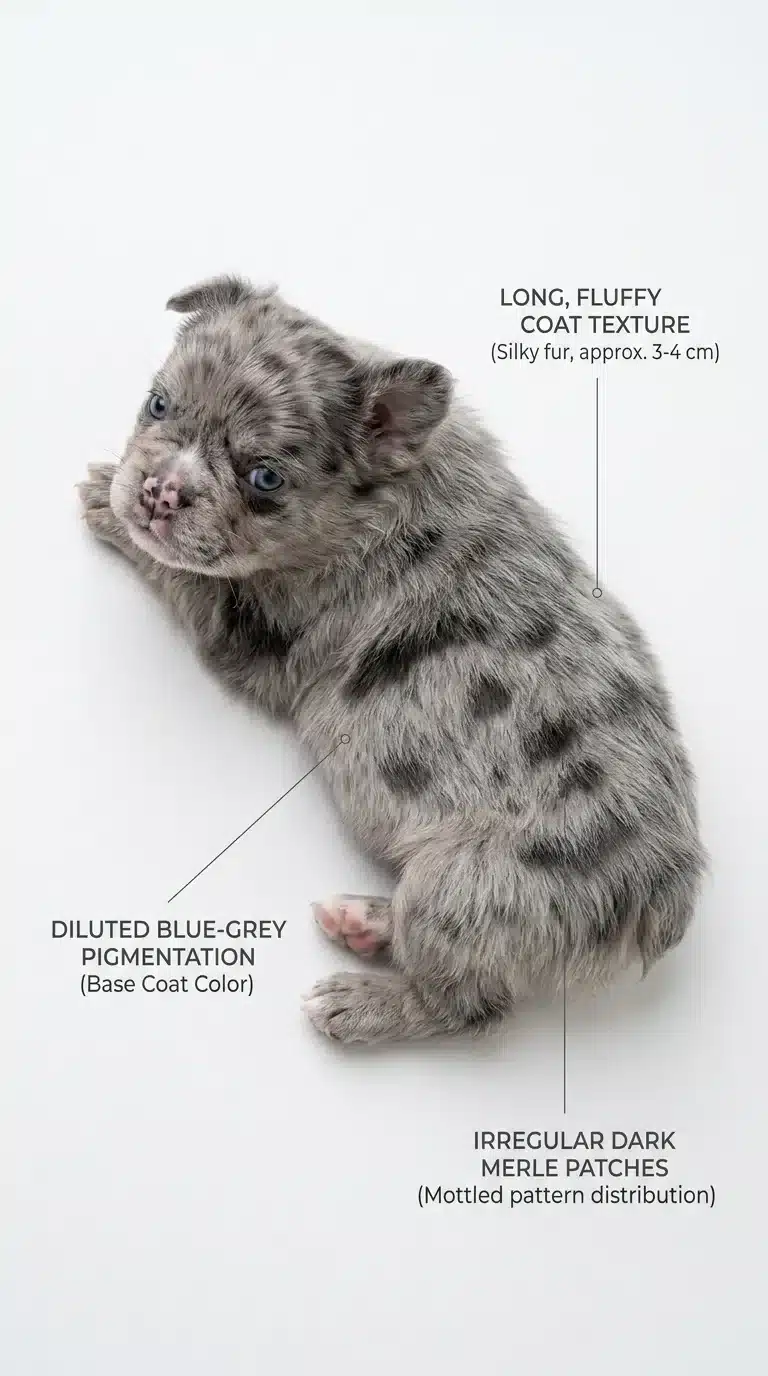
- Coat gene: The L4 fibroblast growth factor 5 (FGF5) mutation produces the long, fluffy coat.
- Color gene: Two copies of the d allele dilute black pigment to grey-blue.
- Pattern gene: A single copy of the dominant M allele creates the merle marbling.
- Double merle risk: Two copies of M (Mm × Mm) produces a 25% chance of a double merle puppy with serious eye and hearing defects.
- Coat length: Fluffy Frenchies carry two copies of the L4 variant — coat measures roughly 1.5–3 inches (3.8–7.6 cm) at full length.
- Rarity and cost: Blue merle fluffy Frenchies are among the rarest color combinations; prices typically range from $6,000 to $15,000+ USD.
How to Identify the Blue Merle Color Pattern
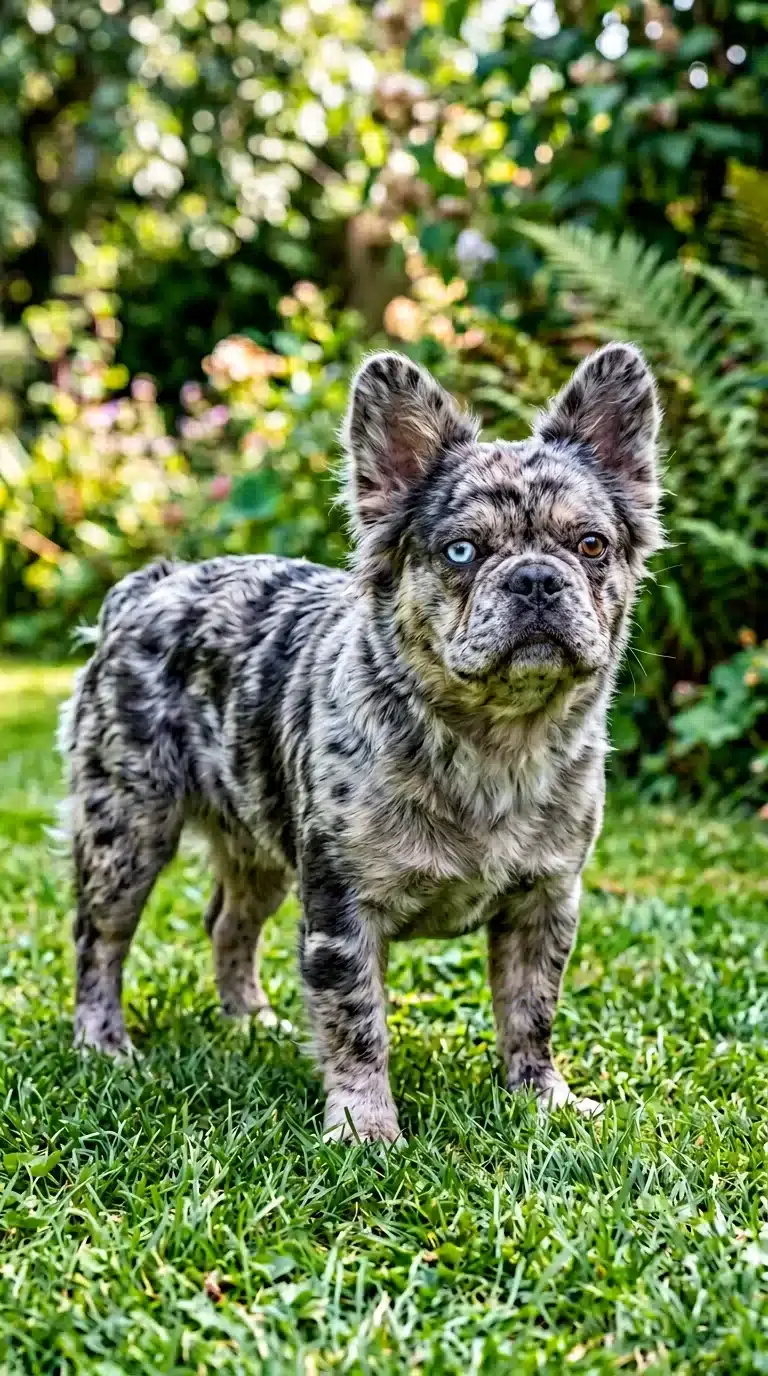
The blue merle pattern is created by the merle gene interrupting areas of pigment, leaving irregular lighter zones against the grey-blue base. No two blue merle Frenchies look exactly alike — the patches are always unique, much like a fingerprint.
Get Weekly Dog Care Tips Free
Join 10,000+ dog owners. Vet-approved advice every week
🔒 No spam. Unsubscribe anytime.
Look for these three features at the same time. If all three are present, you are almost certainly looking at a blue merle.
- Irregular patching: Asymmetrical dark-grey or charcoal patches, not uniform stripes
- Diluted base: The background coat reads as grey or slate, never true black or brown
- Merle marbling: Flecks and swirls of darker pigment mixed into lighter areas, giving a marbled or dappled look
Tan points (copper or rust markings) can appear on approximately 50–60% of blue merle French Bulldogs that also carry the at gene, creating the blue merle and tan variant.
Tip: Check the muzzle and legs first — tan points show up most clearly in those spots.
BEFORE YOU SCROLL PAST
Readers Also Loved:
👉 How To Spot Early Signs Of Canine Dementia In Senior Dogs
How the Fluffy Coat Changes What You See
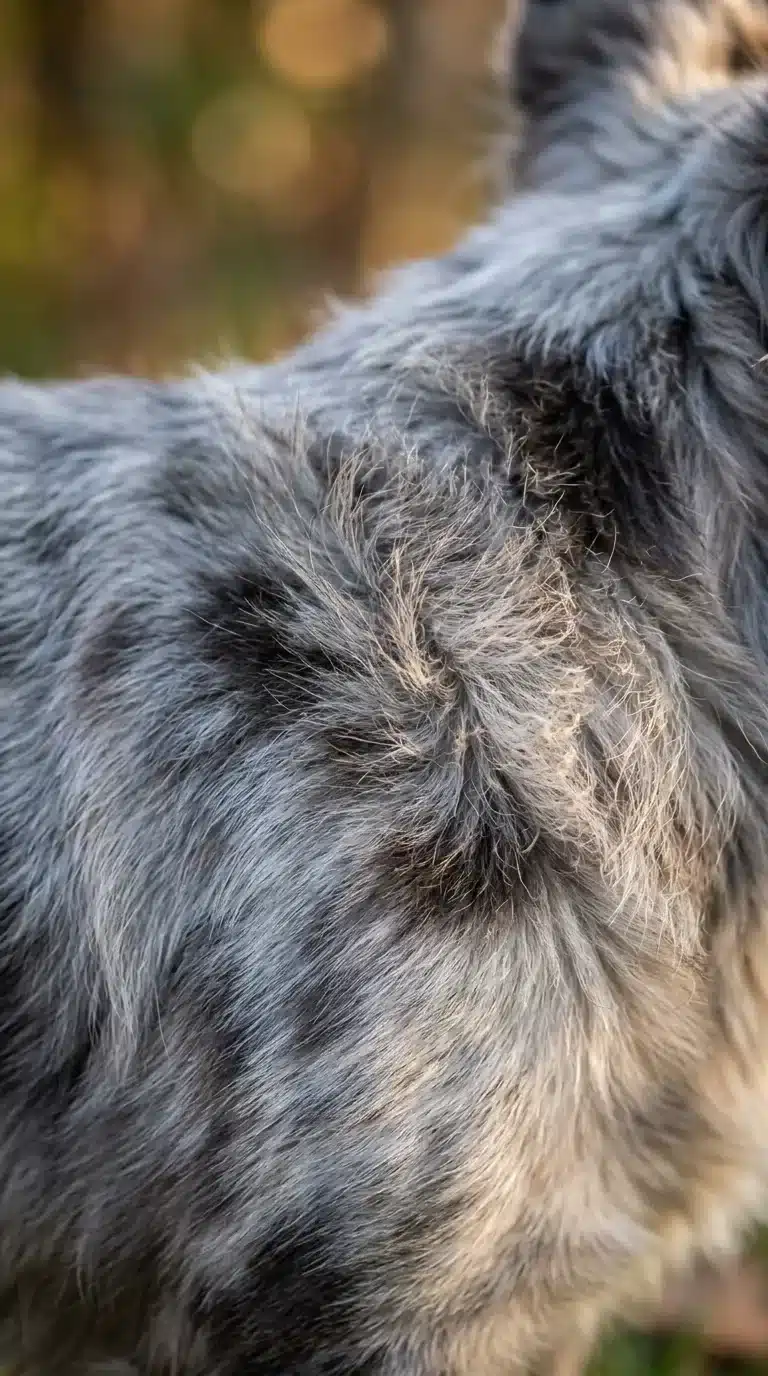
The fluffy coat does more than add softness — it visually affects how the merle pattern appears. Longer fur blends the edges of dark patches together, making the marbling look more diffused and painterly compared to a short-coated merle Frenchie.
The L4 FGF5 gene mutation responsible for the fluffy coat is recessive, meaning a puppy needs two copies to express it. According to the American Kennel Club’s breed genetics resources, this trait is separate from coat color genes entirely — a dog can be fluffy without being merle, and vice versa.
On a fluffy dog, use these clues to separate base color from pattern:
- Part the fur with your fingers to see the skin-level color more clearly
- Look at the ears and top of the head — fur is shorter there, showing the pattern more sharply
- Compare chest and back coloring — the back carries the most concentrated merle patterning
A wide-tooth grooming comb helps part the coat for a clearer look at the underlying pigmentation pattern.
Blue Merle vs. Other Merle French Bulldog Colors — How to Tell Them Apart
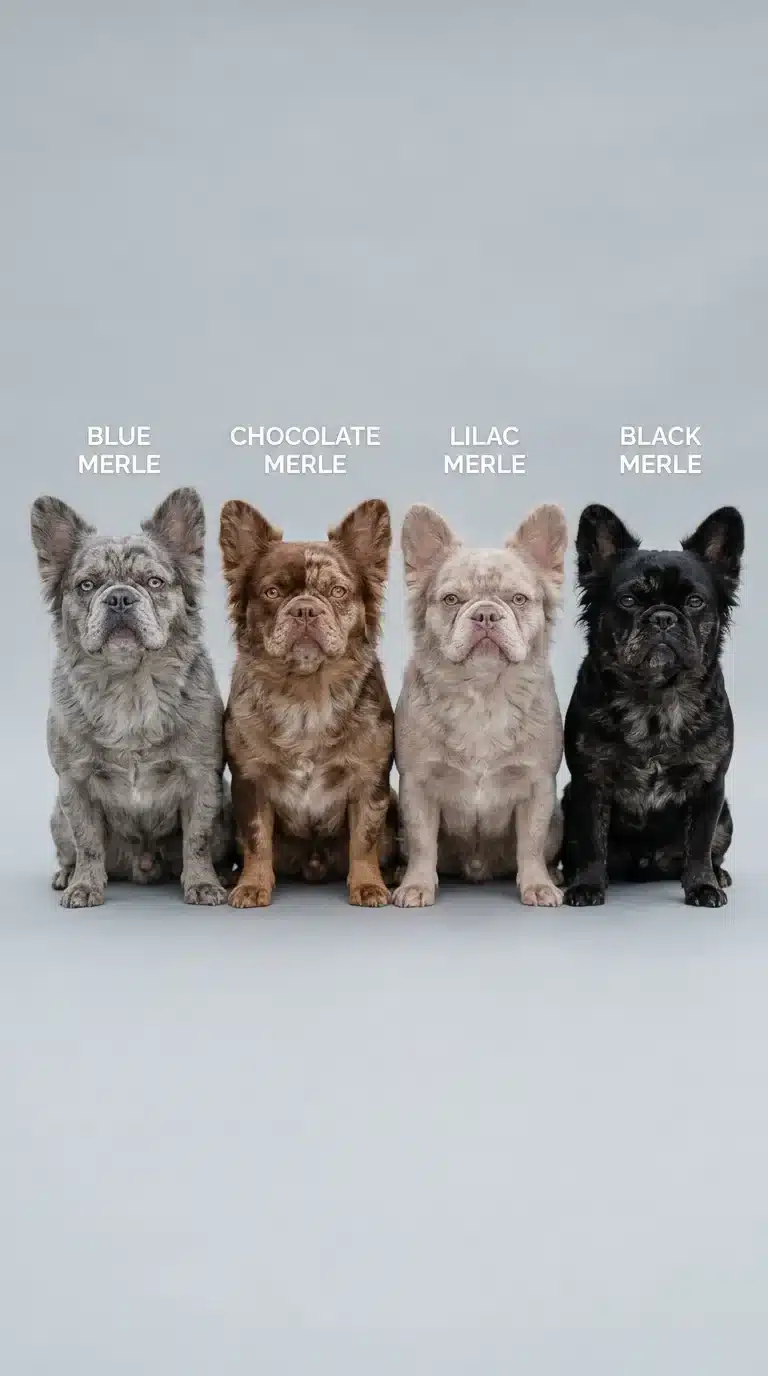
Blue merle is often confused with chocolate merle, lilac merle, and standard black merle. The key difference is the underlying base pigment before the merle gene acts on it.
| Color | Base Tone | Eye Color | Nose Color |
|---|---|---|---|
| Blue Merle | Grey-blue (diluted black) | Blue, green, or mixed | Grey or butterfly |
| Chocolate Merle | Warm brown | Green or hazel | Brown or pink |
| Lilac Merle | Pale silvery-purple | Pale blue or grey | Light lavender-pink |
| Black Merle | True black (no dilution) | Brown or blue | Black or butterfly |
The single most reliable way to confirm blue merle versus lilac merle is nose pigment. A blue merle nose reads as medium grey. A lilac merle nose is noticeably lighter — closer to pale taupe or lavender-pink.
If color identification matters for registration or breeding, a DNA color panel from a lab such as Embark Veterinary provides a genetic confirmation within 2–3 weeks.
How to Identify a Blue Merle Fluffy French Bulldog — Step by Step
- Check the base coat color. Look for a grey or slate-blue tone — not brown, not black. This confirms the dilution gene is present.
- Examine the pattern. Merle patches are irregular and asymmetrical. If the dark markings are uniform or stripe-like, it may be brindle instead.
- Look at the eyes. Blue, green, or heterochromatic (two different colors) eyes strongly indicate merle genetics. Brown eyes alone do not rule it out.
- Check the nose leather. A grey or mottled butterfly nose points to blue merle. A solid black nose suggests no dilution gene.
- Assess coat length. Run your hand along the back and ears. Fluffy Frenchies have noticeably longer, softer fur — typically 1.5–3 inches (3.8–7.6 cm) vs. under 0.5 inches (1.3 cm) on a standard coat.
- Request a DNA test. Visual identification is a strong starting point, but a genetic test is the only way to confirm all three genes — dilution (dd), merle (Mm), and long coat (L4L4).
Common Mistakes When Identifying a Blue Merle Fluffy Frenchie
- Mistaking brindle for merle: Brindle markings run in roughly parallel streaks; merle patches are random and blob-like. Confusing the two leads to incorrect breeding decisions.
- Assuming all fluffy Frenchies are rare colors: A fluffy French Bulldog can be fawn, cream, or brindle. The fluffy coat is a separate trait from the blue merle coloring.
- Overlooking the double merle risk: Breeding two merle dogs together creates a 25% chance of a double merle puppy. The American Veterinary Medical Association (AVMA) warns that double merles have significantly elevated rates of blindness and deafness.
- Trusting photos alone: Camera white balance and lighting can make a blue merle look lilac or even chocolate in photos. Always view the dog in natural daylight or request a genetic test.
If you are researching breeders, check out reputable blue merle French Bulldog breeders who health-test their breeding pairs for merle-on-merle combinations before purchasing.
Wondering about pricing? The cost of a merle French Bulldog varies widely based on pattern clarity, coat type, and breeder reputation.
BEFORE YOU SCROLL PAST
Readers Also Loved:
👉 How To Care For Your Female Frenchie During Her First Heat
A dog DNA color testing kit is the most accurate tool for confirming blue merle genetics at home before committing to a purchase.
Frequently Asked Questions About What Color Is a Blue Merle Fluffy French Bulldog and How to Identify It
Is blue merle a recognized AKC color for French Bulldogs?
No. The American Kennel Club does not recognize merle as a standard French Bulldog color. Blue merle Frenchies can be registered but cannot compete in conformation shows under AKC breed standards.
Can a blue merle Frenchie have brown eyes?
Yes, though it is uncommon. The merle gene influences but does not guarantee blue eyes — roughly 60–70% of single merle Frenchies have at least one blue or green eye.
How is a blue merle different from a blue French Bulldog?
A blue French Bulldog has a solid grey-blue coat with no patching. A blue merle French Bulldog has that same grey-blue base broken up by irregular dark swirls and patches from the merle gene.
Are fluffy blue merle French Bulldogs healthy?
Single-copy merle dogs (Mm) are generally healthy. The main risks come from double merle pairings and the standard Frenchie health issues like brachycephalic airway concerns, which the AVMA documents affect the majority of flat-faced breeds.
What does a blue merle fluffy Frenchie puppy look like at birth?
Puppies are born with their merle pattern visible, though colors deepen over the first 8–12 weeks. The fluffy coat becomes clearly apparent by 6–8 weeks of age as the longer fur fills in.
MOST POPULAR THIS WEEK
Readers Also Loved: 👇
👉 How To Stop Dogs From Scratching Ears Raw
How do I find a reputable blue merle fluffy French Bulldog breeder?
Look for breeders who DNA test both parents for the merle gene to avoid double merle pairings. Trusted blue French Bulldog breeders will share genetic test results freely before any deposit.
Wrapping Up
A blue merle fluffy French Bulldog combines three distinct genetic traits: the dd dilution gene for grey-blue color, the M merle gene for irregular patching, and the L4L4 variant for a longer coat. Together, they create one of the most visually striking dogs in the breed.
The single most reliable identification method is checking all four markers at once — base coat tone, patch pattern, nose leather, and eye color. When any of those are ambiguous, a DNA color panel from a service like Embark Veterinary settles the question in 2–3 weeks.
If you are budgeting for one of these dogs, review what to expect from fluffy French Bulldog pricing and the cost of a blue French Bulldog before you start your search. Once you bring one home, you might also enjoy browsing blue French Bulldog girl names to find the perfect match for that coat.
A quality slicker brush keeps a fluffy merle coat tangle-free and lets the pattern show through at its best.
Sources
This article references guidance from the following authorities:
- American Kennel Club (AKC) — French Bulldog breed standards and color genetics
- American Veterinary Medical Association (AVMA) — Double merle health risks and brachycephalic breed health documentation
- Embark Veterinary — Canine DNA color panel testing and FGF5 gene research