Best Shampoos for American Bullies with Sensitive Skin

American Bullies have short, tight coats that look low-maintenance — but their skin tells a different story. Many carry a genetic predisposition to allergies, dryness, and hot spots that flare up fast. Picking the wrong shampoo makes things worse, not better.
The good news: the right formula calms irritation, restores the skin barrier, and keeps your Bully comfortable between baths. This guide breaks down the best shampoos for American Bullies with sensitive skin, what ingredients actually work, and exactly how to use them.
If your Bully scratches constantly after bath time, the shampoo is often the first thing worth changing. You can also explore natural oils for dog skin and ears as a complementary treatment between washes.
What Are the Best Shampoos for American Bullies with Sensitive Skin?
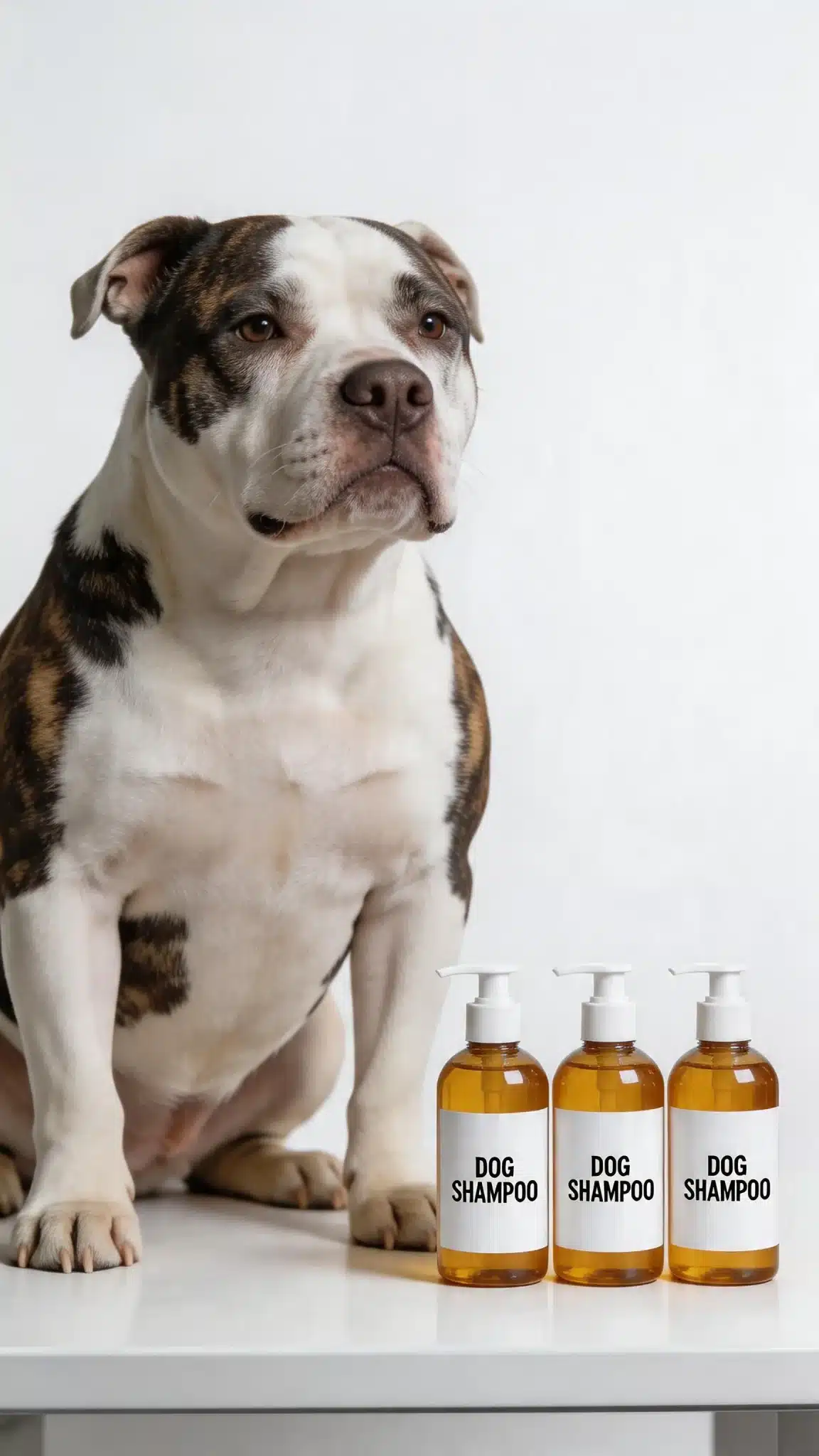
The best shampoos for American Bullies with sensitive skin are pH-balanced, soap-free formulas containing soothing ingredients like colloidal oatmeal, aloe vera, or ceramides. They clean effectively without stripping the skin’s natural oils or triggering allergic reactions.
- Look for a canine-specific pH range of 6.5–7.5 — human shampoos run too acidic
- Colloidal oatmeal reduces itch and inflammation backed by decades of dermatology use
- Fragrance-free and dye-free formulas cut the most common irritant triggers
- Medicated options with 2% chlorhexidine address bacterial or fungal skin issues
- Hypoallergenic labels should also be sulfate-free and paraben-free
- Veterinary-recommended brands include Veterinary Formula Clinical Care, Burt’s Bees for Dogs, and Douxo S3 Calm
Why American Bullies Are Prone to Skin Problems
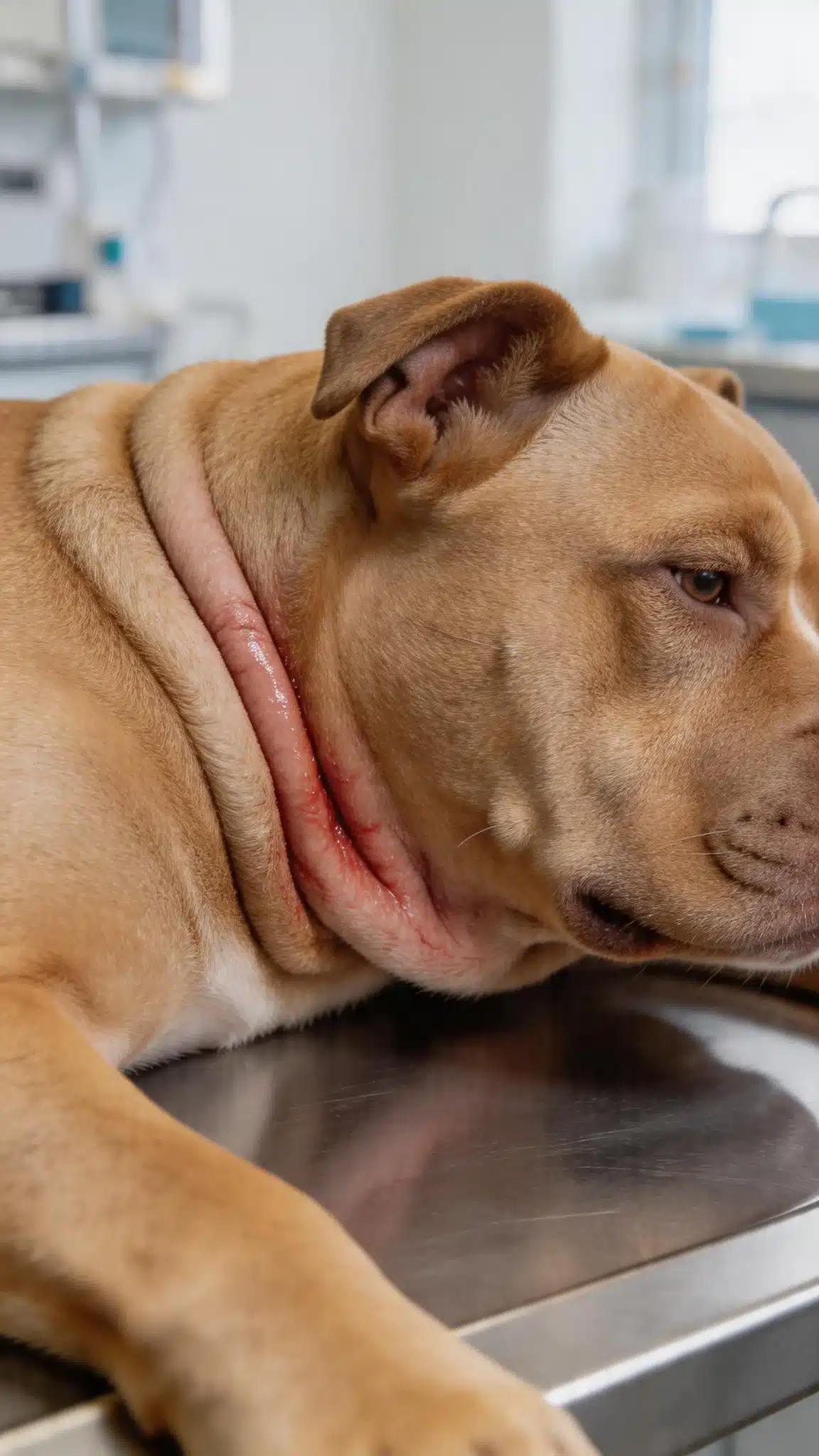
American Bullies are more susceptible to skin conditions than many other breeds because of their genetics and physical structure. Their skin folds trap moisture, and their lineage — rooted in American Pit Bull Terriers and American Staffordshire Terriers — carries a higher rate of environmental and food allergies.
According to the American College of Veterinary Dermatology, atopic dermatitis affects roughly 10–15% of the general dog population, with bully-type breeds appearing at higher rates in dermatology caseloads.
Sensitive skin in Bullies often shows up as redness between the toes, recurring ear infections, and patchy hair loss — not just scratching.
BEFORE YOU SCROLL PAST
Readers Also Loved:
👉 How To Spot Early Signs Of Canine Dementia In Senior Dogs
Skin fold dermatitis is another common issue. Folds around the face and tail pocket stay warm and damp, creating the perfect environment for yeast and bacteria. A shampoo with antifungal or antibacterial properties handles both cleaning and prevention in one step.
Diet also plays a role. If you suspect food is driving the skin issues, reviewing food options for dogs with sensitive stomachs alongside your vet visit can help isolate the trigger.
Key Ingredients to Look for (and Avoid)
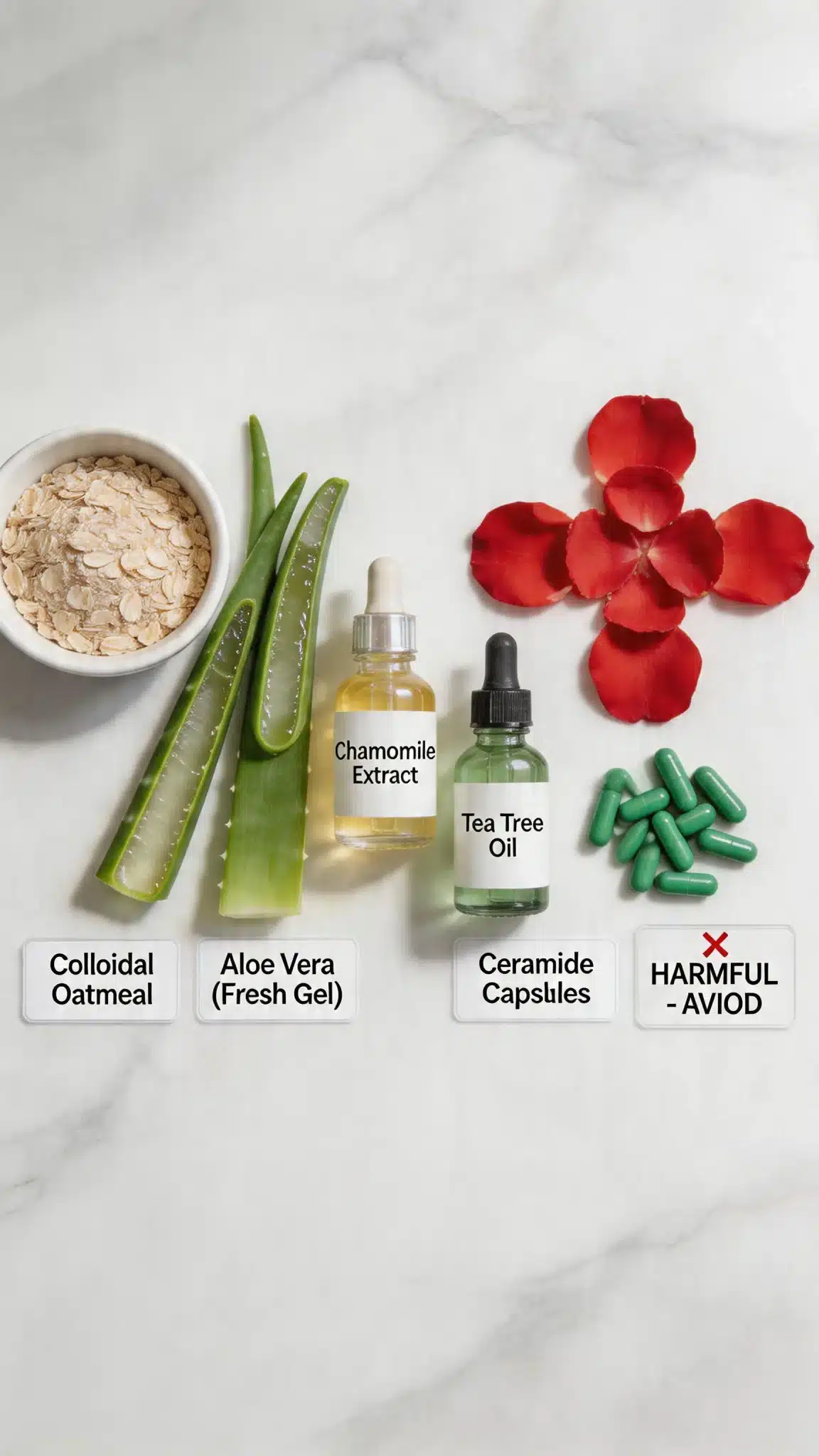
Choosing a shampoo based on its ingredient list is more reliable than choosing by brand name or price point alone. Some active ingredients have strong clinical backing; others are common irritants hiding behind natural-sounding labels.
Ingredients That Help
- Colloidal oatmeal: Clinically shown to reduce pruritus (itching) and support the skin barrier — the FDA classifies it as a skin protectant
- Aloe vera: Soothes inflamed skin and adds light moisture without heaviness
- Ceramides: Lipid molecules that repair the skin barrier, particularly useful for chronically dry or allergy-prone skin
- Chlorhexidine gluconate (2–4%): Broad-spectrum antimicrobial; standard in veterinary dermatology for bacterial and yeast control
- Phytosphingosine: A skin-identical lipid used in Douxo S3 products, shown in clinical studies to reduce skin inflammation in dogs
Ingredients to Avoid
- Artificial fragrances: One of the top contact allergen categories in dogs, per veterinary dermatology literature
- Sulfates (SLS/SLES): Strip natural oils and worsen dry, reactive skin
- Parabens: Preservatives linked to skin sensitization in some dogs
- Propylene glycol: Can cause irritation in dogs with already compromised skin barriers
- Tea tree oil: Toxic to dogs in concentrated forms — avoid any shampoo listing it as a primary ingredient
Top Shampoo Picks for Sensitive-Skinned Bullies
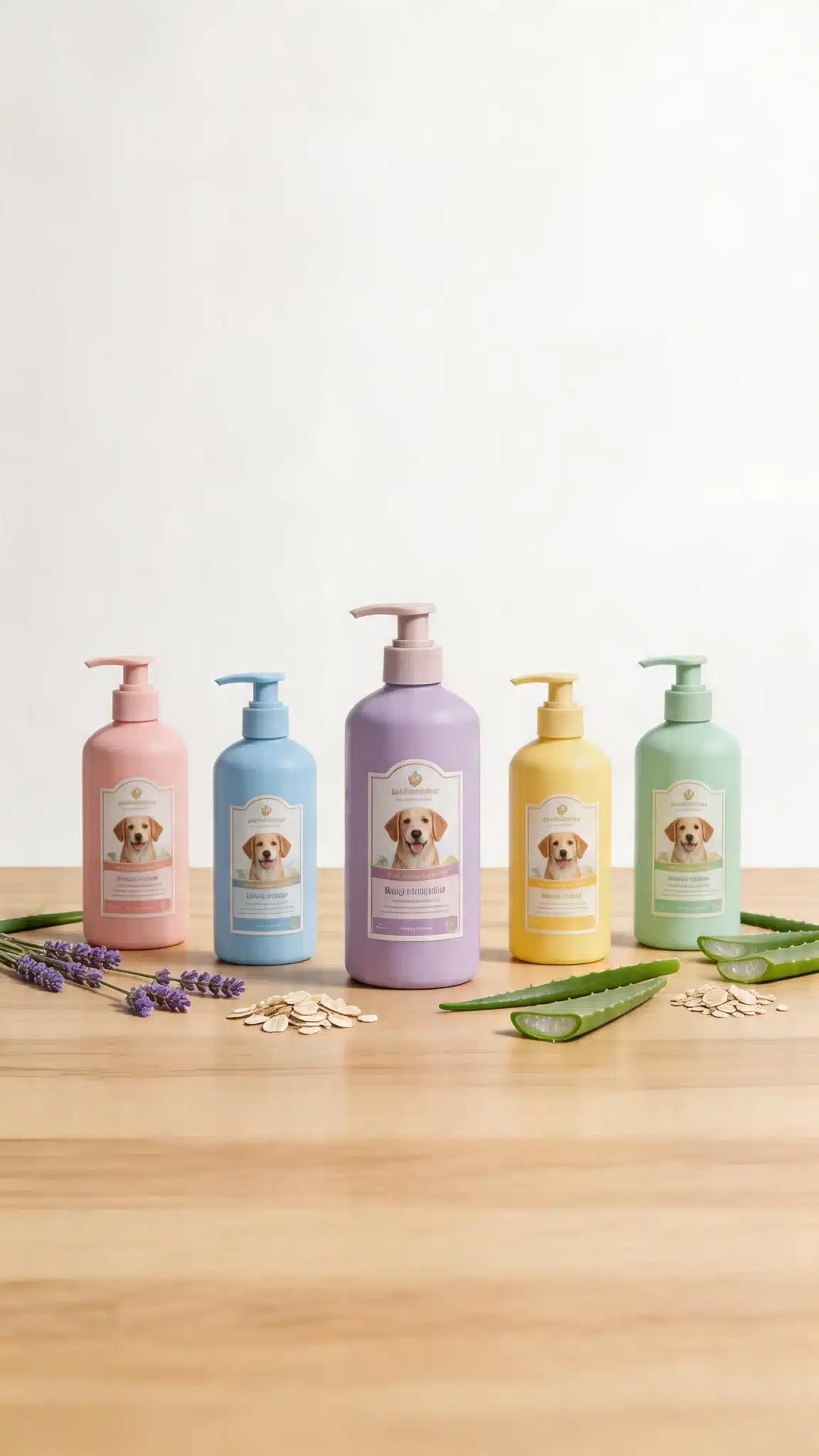
These products have consistent veterinary recommendations, verifiable ingredient profiles, and strong track records in bully-breed communities. Always confirm with your vet if your dog has an active skin condition before switching products.
| Shampoo | Best For | Key Ingredient | Formula Type |
|---|---|---|---|
| Veterinary Formula Clinical Care | Bacterial/yeast skin issues | Chlorhexidine + Ketoconazole | Medicated |
| Douxo S3 Calm | Atopic, allergy-prone skin | Phytosphingosine + Niacinamide | Non-medicated, vet-grade |
| Burt’s Bees Hypoallergenic Dog Shampoo | Mild everyday sensitivity | Shea butter + Honey | Natural, fragrance-free |
| Zymox Enzymatic Shampoo | Chronic itching, hot spots | LP3 Enzyme System | Enzyme-based, antibiotic-free |
Douxo S3 Calm is the most widely cited brand in veterinary dermatology publications for managing canine atopic skin.
How to Bathe an American Bully with Sensitive Skin
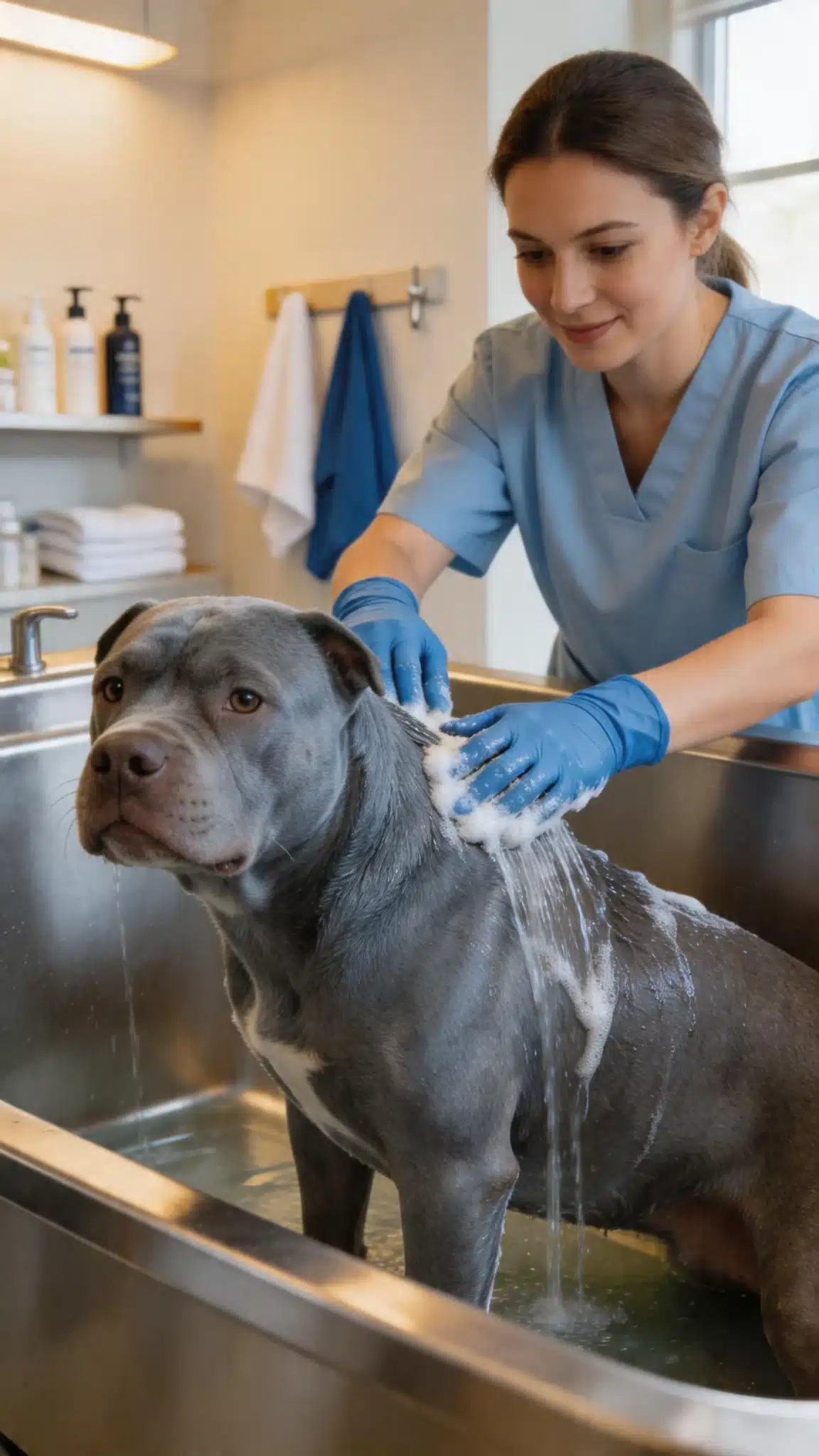
Bathing technique matters as much as the shampoo itself. Using the right product incorrectly — too hot, too frequent, or rinsed poorly — can still cause or extend flare-ups.
- Wet the coat thoroughly with lukewarm water — hot water opens pores and increases skin sensitivity; test water temperature on your wrist first.
- Dilute the shampoo before applying — mix roughly 1 part shampoo with 5 parts water in a squeeze bottle; this improves even coverage and reduces the chance of leaving residue.
- Massage gently in the direction of hair growth — avoid scrubbing against the grain, which irritates already inflamed skin.
- Pay extra attention to skin folds — use a soft cloth or your fingers to work diluted shampoo into face folds, armpits, and the tail pocket area.
- Rinse for at least 3 minutes longer than you think necessary — shampoo residue left in folds is a leading cause of post-bath itching; success looks like water running completely clear with no suds.
- Pat dry, never rub — use a microfiber towel and dry folds completely; residual moisture in skin folds causes yeast growth within 24–48 hours.
Bathing frequency for sensitive-skinned Bullies depends on the underlying issue. Every 2–4 weeks works for general maintenance; medicated shampoos prescribed by a vet may call for weekly use during active flare-ups.
Common Mistakes That Make Sensitive Skin Worse
Even well-meaning owners repeat the same errors that extend their dog’s discomfort. Knowing what not to do is just as useful as knowing what to buy.
BEFORE YOU SCROLL PAST
Readers Also Loved:
👉 How To Care For Your Female Frenchie During Her First Heat
- Using human shampoo in a pinch: Human skin pH averages 4.5–5.5; dog skin needs 6.5–7.5. Human shampoo disrupts the acid mantle and invites bacterial growth. Fix: always keep a dog-specific backup bottle.
- Bathing too frequently: Over-washing strips sebum, the natural oil that protects the skin barrier. For most sensitive Bullies, more than once a week does more harm than good. Fix: spot-clean with a damp cloth between baths.
- Skipping the contact time on medicated shampoos: Chlorhexidine and antifungal shampoos need 5–10 minutes of skin contact to work. Rinsing immediately defeats the purpose. Fix: set a timer during the lather phase.
- Ignoring the tail pocket and face folds during drying: Leaving moisture in folds after bathing is one of the fastest ways to trigger skin fold dermatitis. Fix: use a dry cotton ball or small microfiber cloth in every fold after towel drying.
- Switching shampoos too often: Changing products every few weeks prevents you from knowing what’s actually working. Fix: give any new shampoo at least 4–6 weeks before evaluating results.
For broader skin management, natural alternatives to Cytopoint and Apoquel cover options worth discussing with your vet when itching is severe.
Frequently Asked Questions About Best Shampoos for American Bullies with Sensitive Skin
How often should I bathe an American Bully with sensitive skin?
Most American Bullies with sensitive skin do well with a bath every 2–4 weeks. More frequent bathing strips the natural oils that protect their skin barrier. If a vet prescribes a medicated shampoo for an active infection, the schedule may temporarily increase to weekly.
Can I use oatmeal shampoo on my American Bully every week?
Oatmeal shampoo is gentle, but weekly bathing is still too frequent for most sensitive-skinned Bullies. Oatmeal shampoo works best every 2–3 weeks for maintenance. Between baths, use a hypoallergenic dog wipe to clean folds and paws without over-drying the skin.
What is the difference between medicated and regular dog shampoo?
Medicated dog shampoos contain active pharmaceutical ingredients — typically chlorhexidine, ketoconazole, or salicylic acid — to treat bacterial, fungal, or scaling conditions. Regular shampoos clean and soothe but do not treat infections. Your vet can confirm which type your American Bully actually needs.
Is Douxo S3 safe for American Bullies?
Douxo S3 Calm is considered safe for American Bullies and is widely used in veterinary dermatology practices. It is soap-free, fragrance-free, and designed for atopic and sensitive skin. The Calm line’s key ingredient, phytosphingosine, has been studied specifically for canine inflammatory skin conditions.
MOST POPULAR THIS WEEK
Readers Also Loved: 👇
👉 How To Stop Dogs From Scratching Ears Raw
Why does my American Bully itch more after a bath?
Post-bath itching in American Bullies is usually caused by shampoo residue left on the skin, water temperature that was too warm, or a reaction to a fragrance or preservative in the formula. Switching to a fragrance-free, sulfate-free shampoo and rinsing more thoroughly resolves most cases.
Can diet affect my Bully’s skin even if I use the right shampoo?
Yes — diet significantly affects skin health. Food allergies to proteins like chicken, beef, or dairy can cause or worsen skin inflammation that no shampoo alone will fix. A veterinary elimination diet trial lasting 8–12 weeks is the standard method for identifying food triggers. See also Apoquel vs Cytopoint for Bullies for medical management options.
Are natural or organic shampoos better for sensitive Bullies?
Not always. “Natural” and “organic” labels are not regulated in pet care products and do not guarantee that a shampoo is safer or gentler. Essential oils marketed as natural — like tea tree or eucalyptus — can be toxic to dogs. Always evaluate the ingredient list rather than the marketing label.
Choosing the Right Shampoo Starts with the Skin, Not the Label
The single most important takeaway: match the shampoo to your Bully’s specific skin issue. A dog with yeast overgrowth needs a different formula than one with simple dryness, and neither responds well to a generic “sensitive skin” label that is mostly marketing.
Start by identifying the symptom — redness, odor, flaking, recurring hot spots — and work backward to the right ingredient. When in doubt, a board-certified veterinary dermatologist can run allergy testing and give you a precise recommendation in one appointment.
One concrete action you can take today: check your current shampoo’s ingredient list for artificial fragrance, sulfates, or tea tree oil. If any appear, it is worth making a switch. Caring for your Bully’s skin well from the outside — paired with good nutrition and regular vet checkups — makes a real, visible difference over time. You might also find it helpful to review things not to do with an American Bully to avoid other common care mistakes that affect skin health.