Is It Bad If I Let My Dog Sleep in My Bed Every Night?

Your dog gives you those eyes at bedtime, and before you know it, they have claimed half the mattress. Millions of dog owners share their beds with their pets — and many quietly wonder whether they should stop.
So, is it bad if I let my dog sleep in my bed every night? The honest answer is: it depends on your dog, your health, and your household setup. There is no single rule that applies to every owner.
This article covers the real health risks, the genuine benefits, and the situations where a bed ban makes clear sense — so you can make a confident, informed call.
Is It Bad If I Let My Dog Sleep in My Bed Every Night?
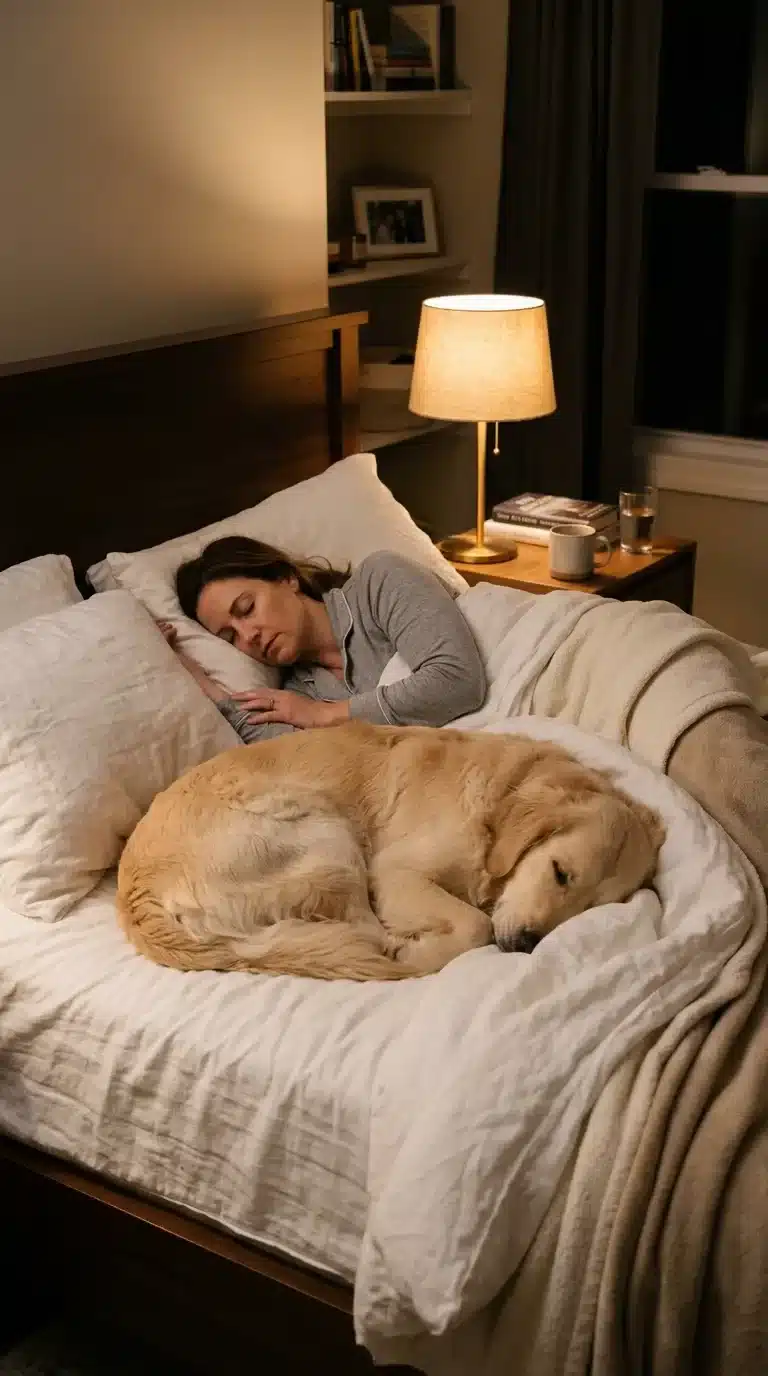
Letting your dog sleep in your bed every night is not automatically harmful for most healthy adults with healthy dogs. Research shows it can strengthen the human-animal bond and even improve feelings of security. However, it does carry real risks around sleep disruption, allergens, and hygiene that are worth understanding before deciding.
- Healthy adults with healthy, vaccinated dogs face minimal medical risk.
- People with allergies or asthma face a higher risk of symptom flare-ups.
- Some dogs may develop resource-guarding behavior around the bed over time.
- Sleep disruption is the most consistently reported downside in studies.
- Puppies and dogs with incomplete vaccine schedules introduce more pathogen risk.
- The AKC and AVMA both say co-sleeping is a personal choice, not a health emergency.
What Does the Research Actually Say About Co-Sleeping With Dogs?

Science has produced genuinely mixed findings on dog co-sleeping, and headlines often cherry-pick one side. Looking at the full body of evidence gives a more useful picture.
A 2017 study published in the Mayo Clinic Proceedings by Dr. Lois Krahn and colleagues tracked 40 adults using activity trackers for both owners and their dogs over seven nights. Owners who kept their dog in the bedroom — but not on the bed — maintained a sleep efficiency of about 83%. Owners who let dogs sleep on the bed scored slightly lower, around 80%, though both figures stayed above the clinically acceptable threshold of 80%.
“Most people can tolerate a dog in the bedroom without significant sleep disruption — but a dog on the bed is a different matter for light sleepers.” — Dr. Lois Krahn, Mayo Clinic, 2017
A separate 2015 Centers for Disease Control and Prevention (CDC) report on zoonotic disease transmission noted that while pet-to-human pathogen transfer is rare in healthy households, it is not zero. The report specifically flagged close contact sleeping as a higher-risk behavior than daytime petting.
BEFORE YOU SCROLL PAST
Readers Also Loved:
👉 How To Spot Early Signs Of Canine Dementia In Senior Dogs
Bottom line: co-sleeping is low-risk for most people, but “low risk” is not “no risk.”
Health Risks You Should Know Before Sharing Your Bed
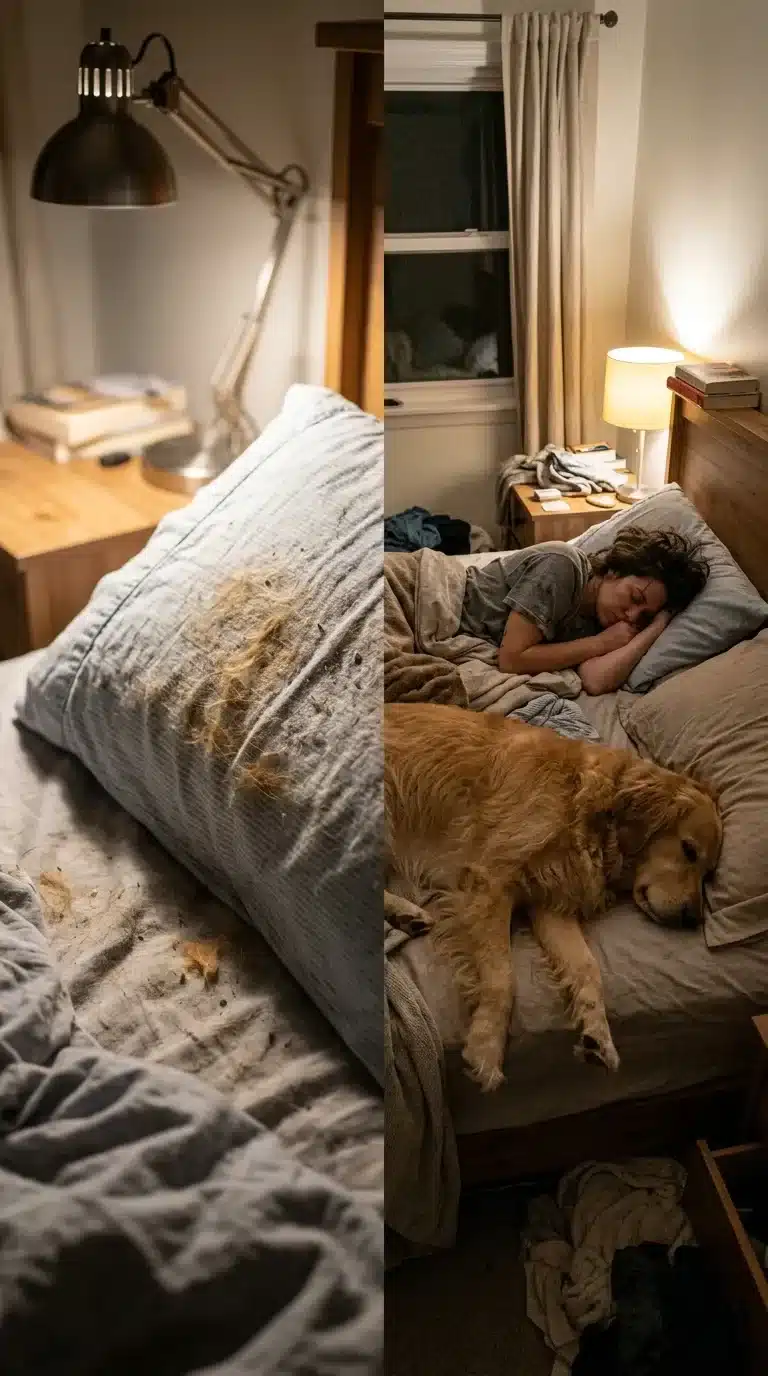
The health conversation around dog co-sleeping covers two main areas: what your dog might pass to you, and how the sleeping arrangement affects your rest.
Zoonotic Disease and Parasite Risk
Zoonotic diseases are illnesses that transfer between animals and humans. The CDC identifies several pathogens dogs can carry, including Campylobacter, Salmonella, and in rare cases, Capnocytophaga bacteria. Risk is low for immunocompetent adults, but meaningful for anyone who is immunocompromised, pregnant, elderly, or very young.
- Dogs that go outdoors can carry ticks that transmit Lyme disease or Rocky Mountain Spotted Fever.
- Fleas can jump from dog to bedding to human skin during the night.
- Intestinal parasites like roundworms can be transmitted through microscopic fecal residue on fur.
- Keeping your dog up to date on core vaccines and deworming schedules significantly reduces these risks.
Allergens and Respiratory Impact
Dog dander, saliva, and urine proteins are the primary allergen sources, not fur itself. The American Academy of Allergy, Asthma and Immunology notes that bedroom exposure is particularly problematic because you spend 7–9 hours breathing the air in that space.
If you or a partner already experience allergy symptoms, allowing a dog on the bed concentrates dander directly on your pillow and sheets. A allergen-barrier mattress cover can reduce dander penetration into the mattress, though it does not eliminate surface exposure.
Sleep Quality
Dogs are polyphasic sleepers — they wake, shift position, and resettle multiple times per night. Even if you do not fully wake, these micro-arousals can reduce your time in deep sleep stages. Light sleepers tend to notice this far more than heavy sleepers.
Real Benefits of Letting Your Dog Sleep With You

The risks get more press, but co-sleeping with a dog carries documented benefits that explain why so many people keep doing it despite the warnings.
- Reduced anxiety: A 2018 study in the journal Anthrozoös found that women reported lower anxiety and higher sleep quality with a dog versus a human partner.
- Warmth and comfort: Physical warmth from a dog’s body temperature (averaging 101–102.5°F) can reduce the time it takes to fall asleep in cold environments.
- Sense of security: Survey data from the American Pet Products Association (APPA) consistently shows that owners report feeling safer with a dog in the bedroom.
- Bonding: Shared rest time reinforces the dog-owner bond, which the AVMA recognizes as a core component of animal welfare.
For many owners, especially those living alone, the psychological benefits of co-sleeping outweigh the manageable risks.
BEFORE YOU SCROLL PAST
Readers Also Loved:
👉 How To Care For Your Female Frenchie During Her First Heat
When You Should Definitely Reconsider Co-Sleeping
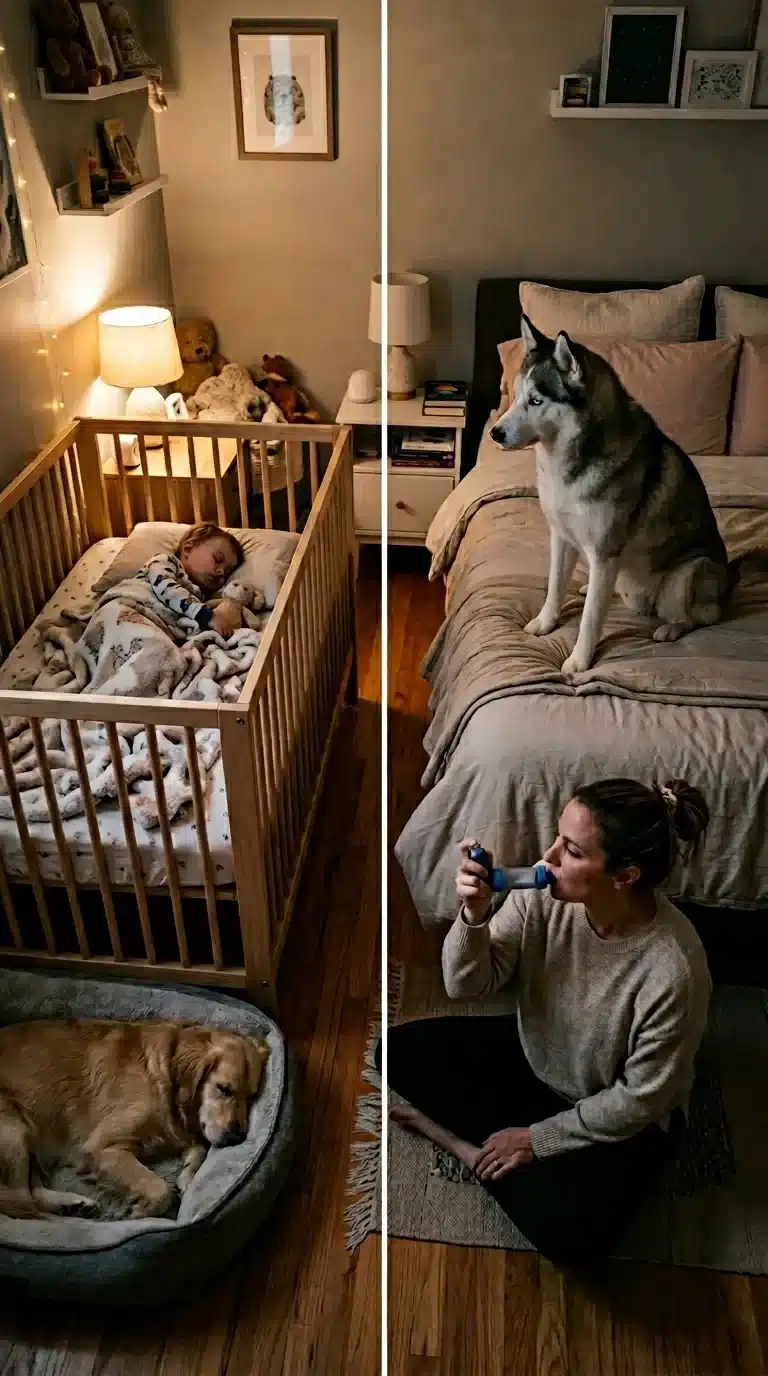
There are specific situations where letting your dog sleep in your bed every night moves from a personal preference to a genuine concern worth addressing.
| Situation | Risk Level | Recommended Action |
|---|---|---|
| You or a household member is immunocompromised | High | Move dog to floor bed in same room |
| Dog is unvaccinated or overdue on parasite prevention | High | Update health protocols first |
| You have diagnosed allergies or asthma | Medium–High | Keep dog off bed; use air purifier |
| Dog shows resource-guarding on the bed | Medium | Consult a certified trainer (CCPDT) |
| Infant or toddler sleeps in the same bed | High | Separate sleeping spaces entirely |
| Dog has active skin issues or unexplained hair loss | Medium | Vet check before resuming co-sleeping |
Resource-guarding — where a dog growls or snaps when you try to move them on the bed — is a behavioral red flag that needs professional attention, not accommodation. The CCPDT (Certification Council for Professional Dog Trainers) maintains a trainer directory if you need qualified help.
How to Make Co-Sleeping Safer If You Want to Continue
If you decide to keep sharing your bed, a few practical steps reduce the main risks significantly without requiring you to banish your dog entirely.
- Keep vaccinations and parasite prevention current. Monthly heartworm, flea, and tick prevention is the single biggest risk reducer. Confirm your schedule with your vet based on your geographic region.
- Wipe paws before bedtime. A quick wipe with a damp cloth removes outdoor contaminants, pesticides, and fecal traces before they transfer to your sheets.
- Wash bedding weekly in hot water (at least 130°F). The AAHA recommends hot washing as the most effective way to reduce allergens, bacteria, and mite populations in pet-shared bedding.
- Use a dedicated washable dog blanket on your bed. Confining your dog to one area with their own blanket limits dander spread across the full mattress surface.
- Run an air purifier with a HEPA filter in the bedroom. A HEPA air purifier rated for your room’s square footage can cut airborne dander by up to 99.97% according to EPA filtration standards.
- Schedule annual vet wellness exams. Many pathogens dogs carry show no outward symptoms. Regular vet checks catch subclinical issues early.
If your dog is also dealing with nighttime restlessness — such as licking paws repeatedly through the night — that disruption will compound your sleep issues significantly and should be addressed separately.
Common Mistakes Dog Owners Make About Bed-Sharing
- Assuming a healthy-looking dog is parasite-free. Many parasites are invisible to the naked eye. Regular fecal testing and preventatives — not visual checks — are what actually protect you.
- Letting a puppy with an incomplete vaccine schedule sleep in the bed. Puppies under 16 weeks have not completed their core series; waiting until the schedule is current is the safer call.
- Ignoring early resource-guarding behavior. A dog that growls once on the bed will likely escalate without intervention. Early training correction is far easier than reversing an entrenched pattern.
- Blaming the dog for poor sleep without tracking the data. Many owners assume the dog disrupts sleep without evidence. A simple sleep tracker worn for two weeks — one with the dog, one without — gives you real data instead of guesswork.
- Skipping vet care because the dog “seems fine.” Dogs with intermittent digestive issues or subtle limping may be carrying underlying conditions that warrant a vet check before bed-sharing continues.
For additional evidence-based guidance on human-animal bonding and co-sleeping, the AVMA’s Human-Animal Bond resources offer peer-reviewed summaries without commercial bias.
MOST POPULAR THIS WEEK
Readers Also Loved: 👇
👉 How To Stop Dogs From Scratching Ears Raw
Frequently Asked Questions About Is It Bad If I Let My Dog Sleep in My Bed Every Night?
Does letting my dog sleep in my bed cause behavioral problems?
Letting your dog sleep in your bed does not automatically cause behavioral problems in most dogs. The risk arises specifically if your dog shows any resource-guarding tendencies — growling or snapping when moved — which signals a need for training intervention.
Will my dog become too dependent if they sleep with me every night?
Sleeping with you every night can contribute to separation anxiety in dogs that are already prone to it, but it does not create dependency in dogs that are otherwise confident and well-socialized. Observe your dog’s behavior when left alone during the day as your key indicator.
Is it safe for a large dog to sleep in my bed?
It is physically safe for a large dog to sleep in your bed as long as neither party is at risk of injury. The main practical issue is space — larger dogs cause more movement disturbance, which means more sleep disruption for lighter sleepers.
Can my dog make me sick by sleeping in my bed?
A healthy, vaccinated, parasite-free dog poses very low disease transmission risk during co-sleeping. The CDC acknowledges zoonotic transfer is possible but rare in healthy households where dogs receive routine preventative veterinary care.
What age should I stop letting my dog sleep in my bed?
There is no specific age cutoff for co-sleeping with a dog. Senior dogs who develop incontinence or pain-related restlessness may be better served by a comfortable orthopedic dog bed nearby rather than sharing your mattress.
Should I let a new dog sleep in my bed right away?
Letting a new dog sleep in your bed immediately is not recommended. Dogs — especially rescues — need 2–4 weeks to decompress and establish routine before adding the intimacy and potential resource associations of bed-sharing.
The Final Word on Sharing Your Bed With Your Dog
For most healthy adults with healthy, vaccinated dogs, letting your dog sleep in your bed every night is a low-risk personal choice — not a veterinary emergency. The real considerations are your sleep quality, your health status, and your dog’s behavior, not some blanket rule against it.
The one concrete action you can take today: book a vet wellness visit if your dog is overdue, confirm their parasite prevention is current, and start washing your bedding weekly in hot water. Those three steps remove the majority of the actual risk — and let you enjoy the company guilt-free.