Rescue Puppy Won’t Potty Outside: What to Do

You just brought home a rescue puppy, and instead of going outside, they squat the moment you step back in. It is frustrating, confusing, and — if you have carpet — genuinely alarming. If your rescue puppy won’t potty outside, you are dealing with something very common in shelter dogs, and it is fixable.
Rescue puppies often come from environments where outdoor potty access was limited or nonexistent. They have learned to eliminate wherever they stand, and that habit does not vanish overnight.
This guide breaks down exactly why this happens and gives you a clear plan to change the behavior — starting today.
Why Won’t a Rescue Puppy Potty Outside?
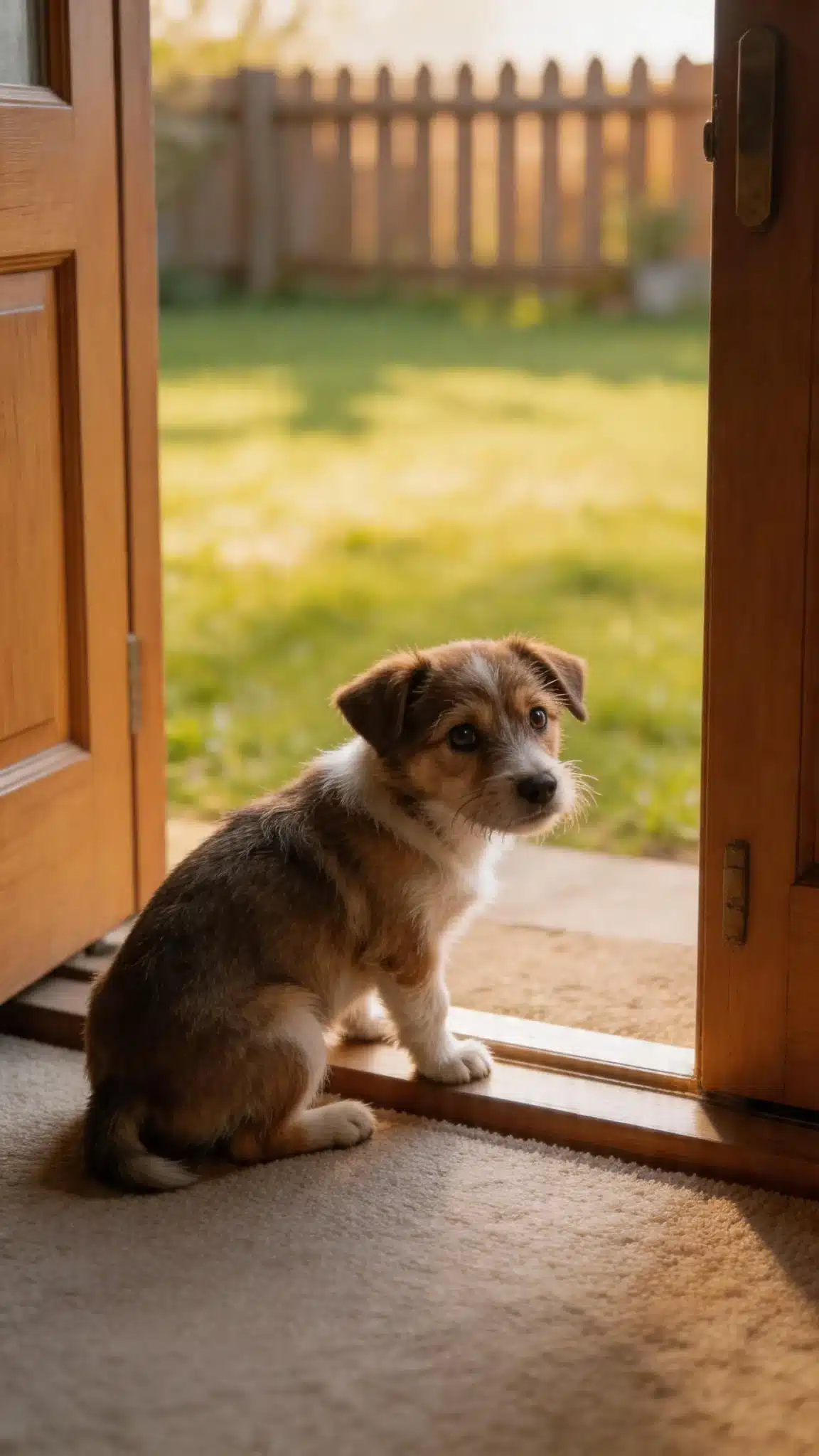
A rescue puppy won’t potty outside primarily because outdoor environments feel unfamiliar or frightening, and the puppy has no established routine linking “outside” with elimination. Shelter life, kennels, or neglected homes often condition puppies to go anywhere — including indoors — without any reinforcement for going outside.
Understanding the root cause helps you choose the right fix faster.
- Puppies from kennels often toilet on concrete or grating — grass feels strange underfoot.
- Fear of open spaces, traffic noise, or unfamiliar smells can suppress the urge temporarily.
- No previous owner ever rewarded outdoor elimination, so the puppy has no positive association.
- Some rescues were punished for accidents indoors, making them hide elimination entirely.
- Medical issues — UTIs, parasites, or gastrointestinal problems — can also disrupt normal potty patterns.
Rule out a health problem first: a vet visit within the first week of adoption is non-negotiable.
If your puppy seems to strain, shows blood in urine or stool, or vomits alongside potty irregularities, read about puppy vomiting yellow foam and bloody diarrhea — some symptoms need immediate veterinary attention.
BEFORE YOU SCROLL PAST
Readers Also Loved:
👉 How To Spot Early Signs Of Canine Dementia In Senior Dogs
How Do You Get a Rescue Puppy to Go to the Bathroom Outside?
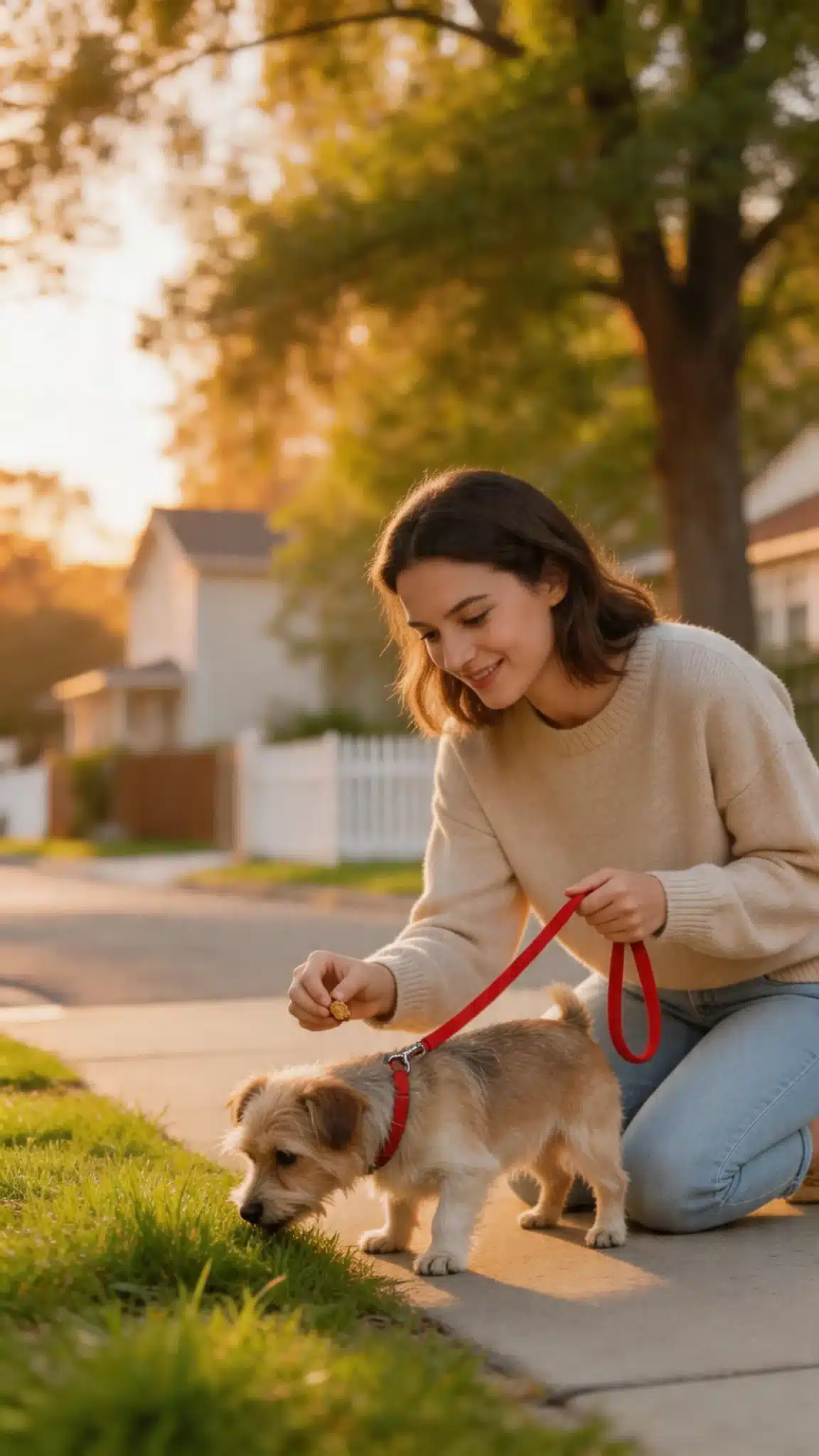
Getting a rescue puppy to go to the bathroom outside requires treating them like a puppy who has never been house-trained before — because, behaviorally, they haven’t. Consistent timing, a designated spot, and immediate positive reinforcement are the three pillars of success.
Follow this step-by-step process:
- Choose one potty spot outdoors and always take the puppy there first. The scent cue from previous visits encourages elimination.
- Go out on a strict schedule — first thing in the morning, after every meal, after naps, after play, and before bed. For young puppies, that can mean every 1–2 hours.
- Use a leash every time so the puppy cannot wander and get distracted. Stand still and give them 3–5 minutes.
- Stay quiet while waiting. Talking or playing delays the urge. Your presence is enough.
- The moment they finish, praise warmly and offer a small treat immediately — within 3 seconds of completion. Delayed rewards do not connect to the behavior.
- Come straight back inside. This teaches the puppy that going outside means “potty, then back to safety” — not prolonged exposure to a scary environment.
A consistent daily schedule is the fastest path to success. If you have a French Bulldog or a breed-specific puppy, a structured French Bulldog puppy schedule covering sleep, potty, and meals shows how tightly timed routines accelerate house-training.
How to Handle Fear-Based Potty Refusal Outside
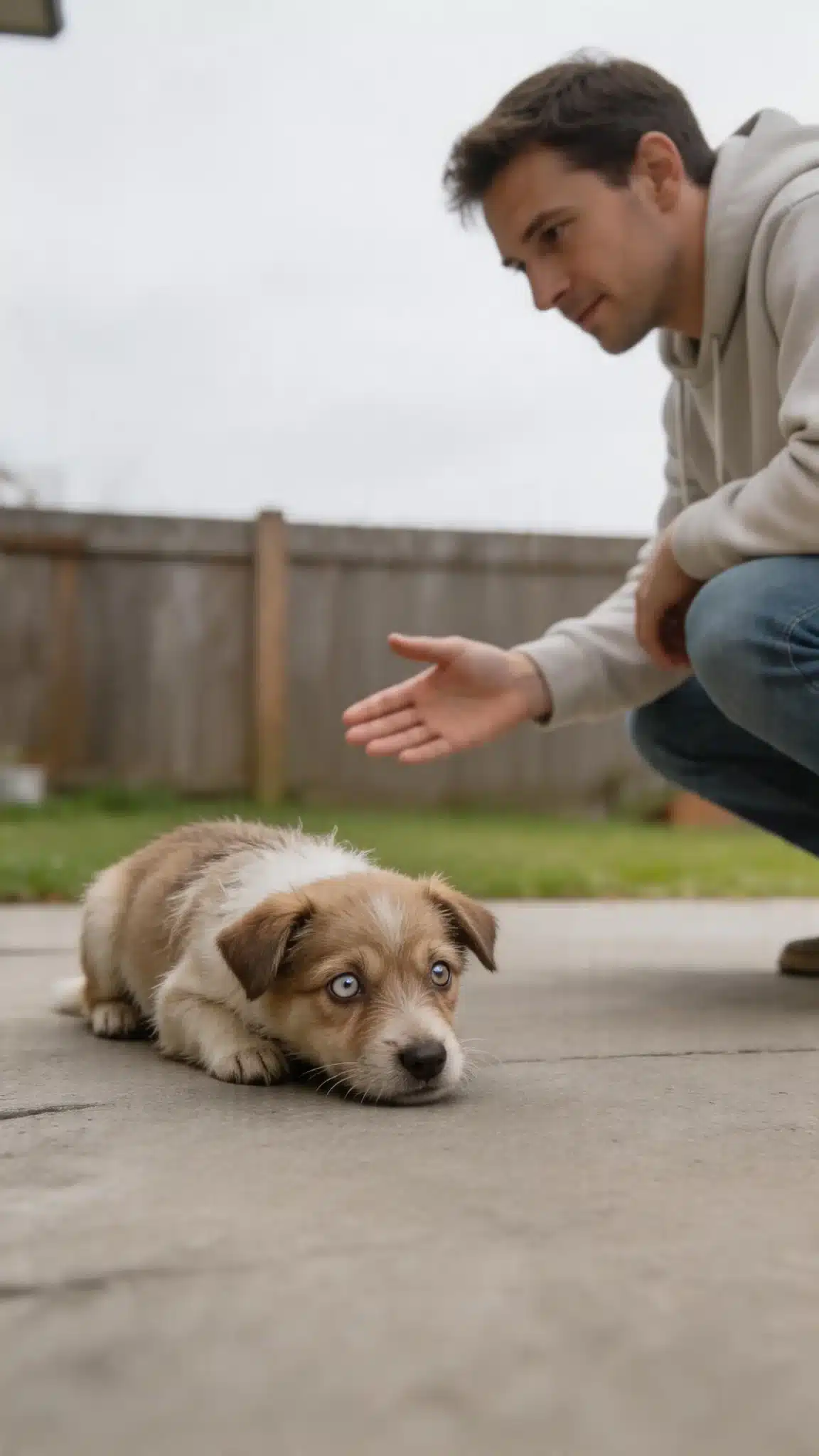
Some rescue puppies refuse to eliminate outdoors specifically because they are afraid — not stubborn. Fear-based potty refusal looks different from simple inexperience: the puppy freezes, shakes, tries to pull back toward the door, or waits until they are inside to finally go.
Identifying Fear vs. Inexperience
| Sign | Fear-Based | Inexperience-Based |
|---|---|---|
| Body language outside | Tucked tail, trembling, scanning | Curious, distracted, sniffing |
| Where they go | Immediately inside after re-entry | Random spots, indoors or out |
| Response to treats outside | Too anxious to take food | Accepts treats, just unfocused |
| Progress speed | Slow — weeks to months | Faster — days to weeks |
Reducing Fear Step by Step
For fear-based refusal, desensitization comes before potty training. Spend several short sessions outdoors each day doing nothing except letting the puppy sniff and observe — no pressure to eliminate at all.
Pair every outdoor moment with high-value treats like small pieces of cooked chicken. The goal is to change the emotional response to “outside” before worrying about where they go.
A dog training treat pouch worn on your waist keeps rewards accessible for split-second timing.
According to the American Veterinary Society of Animal Behavior (AVSAB), positive reinforcement — specifically reward-based methods — is the most effective and humane approach for fear-related behavior modification in dogs.
BEFORE YOU SCROLL PAST
Readers Also Loved:
👉 How To Care For Your Female Frenchie During Her First Heat
Crate Training Accelerates Outdoor Potty Success
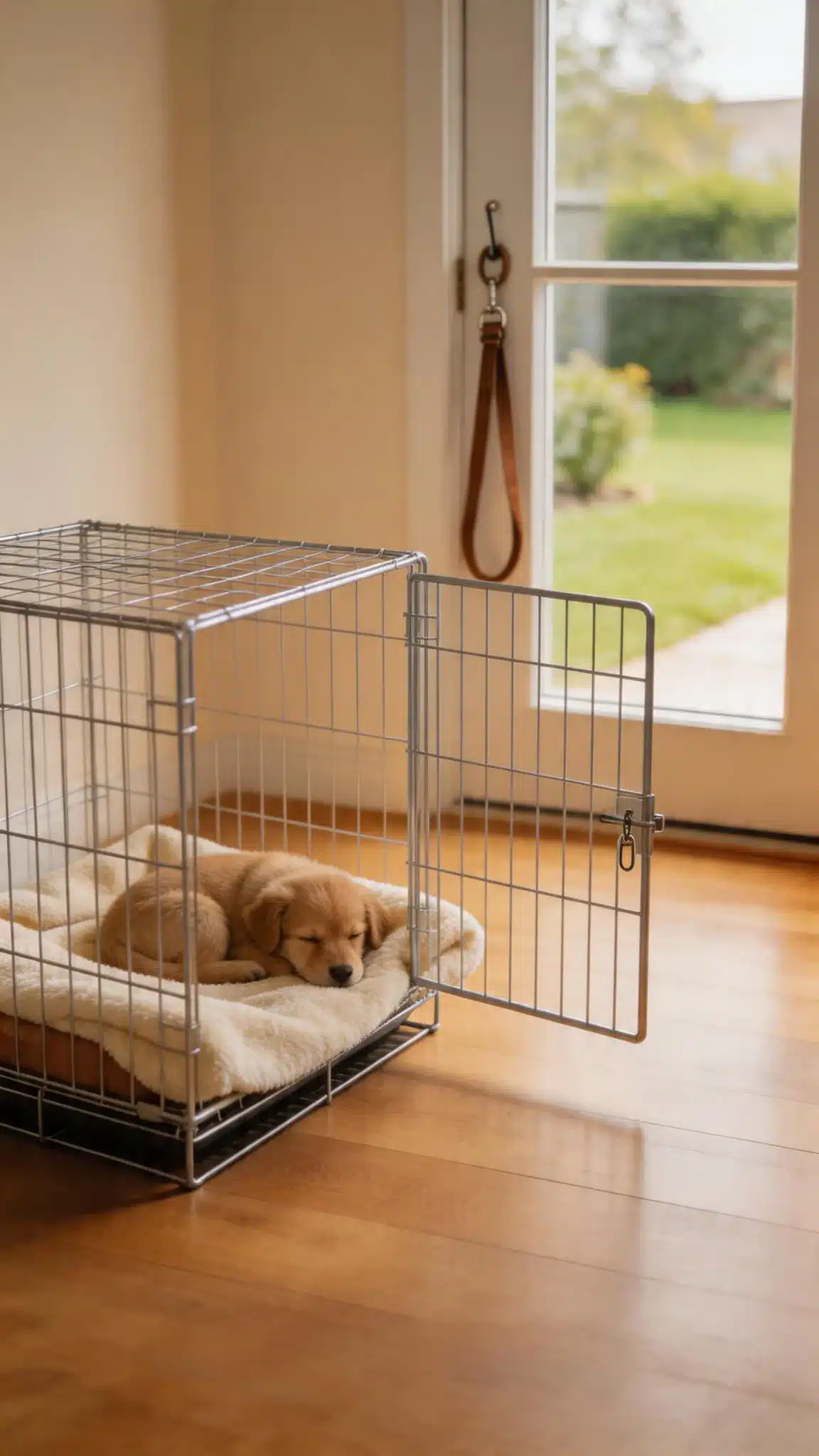
Crate training works for rescue puppies because dogs naturally avoid soiling their sleeping space — a hardwired denning instinct. When a puppy is crated between outdoor trips, the urge to eliminate builds up, making them far more likely to go the moment they reach the potty spot outside.
“Crate training, when done humanely, is one of the most effective tools for preventing indoor accidents during the house-training period.” — American Kennel Club (AKC) Canine Health Foundation guidance on puppy development.
Keep crate time age-appropriate. The general guideline: puppies can hold their bladder for roughly one hour per month of age, up to a maximum of four to five hours during the day.
- Line the crate with a washable puppy crate pad — not puppy pads, which teach indoor elimination.
- Never use the crate as punishment; the puppy needs to feel safe inside it.
- Feed meals inside the crate to build a positive association quickly.
- Cover three sides with a blanket to create a den-like feel that calms anxious rescues.
Crate training also reduces destructive behavior during the adjustment period — a common challenge covered in resources on stopping French Bulldog puppy biting fast, which uses similar impulse-control principles.
When Indoor Accidents Happen: Cleaning and What Not to Do
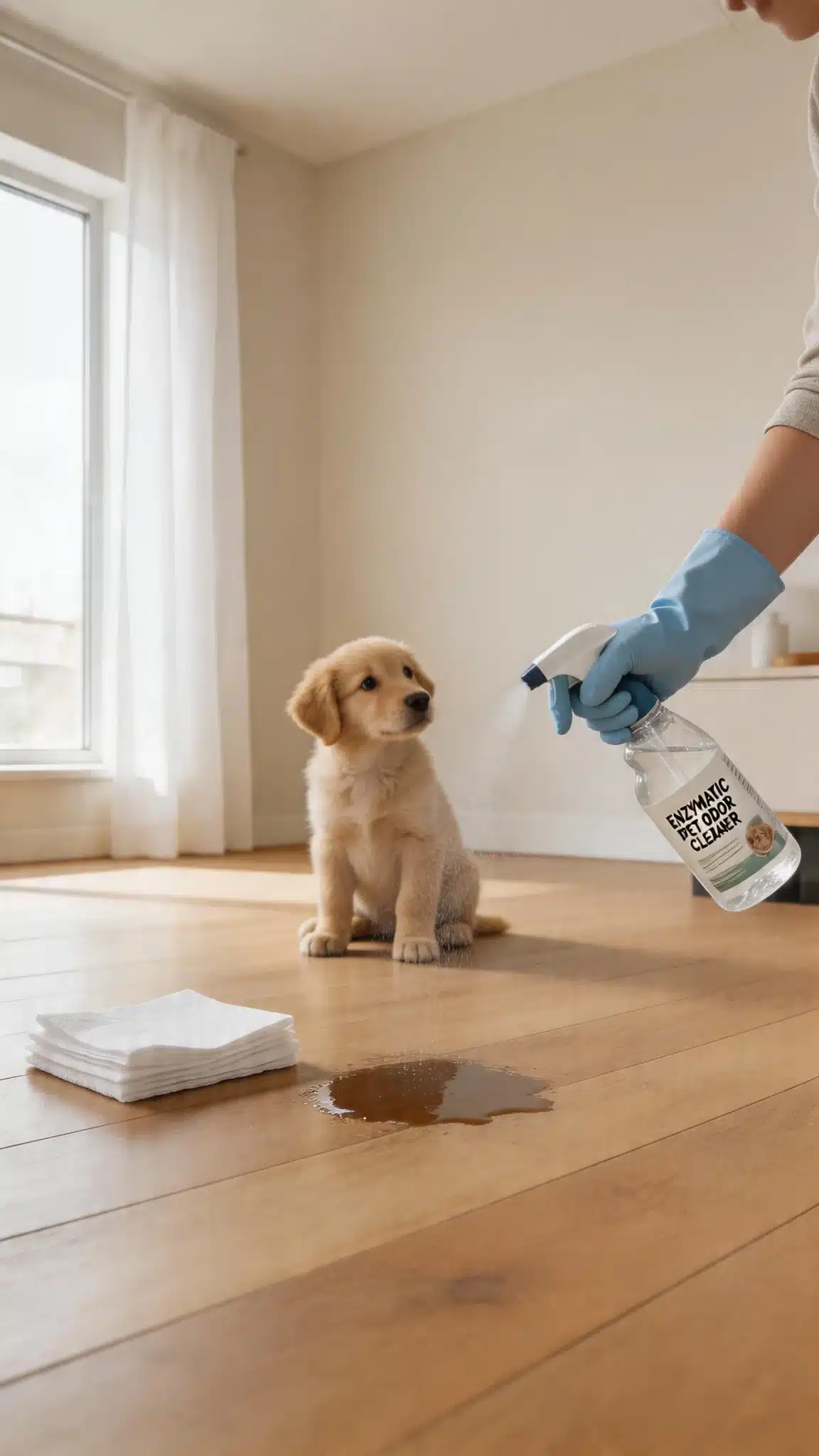
Indoor accidents will happen — especially in the first two to four weeks with a rescue puppy. How you respond to them directly affects how quickly the behavior changes.
MOST POPULAR THIS WEEK
Readers Also Loved: 👇
👉 How To Stop Dogs From Scratching Ears Raw
Clean Thoroughly Every Time
Dogs are drawn back to spots where they smell previous elimination. Standard household cleaners do not break down uric acid crystals in urine. Use an enzyme-based cleaner for dog urine — these break down the odor at the molecular level, removing the scent trigger entirely.
Soak the area, let the cleaner sit for 10 minutes, then blot dry. Do not scrub — scrubbing spreads the uric acid deeper into carpet fibers.
What Not to Do After an Accident
- Do not scold after the fact. Puppies do not connect punishment to something that happened even 30 seconds ago. Scolding only increases anxiety.
- Do not rub their nose in it. This is counterproductive and damages trust — the foundation of all training.
- Do not restrict water. Limiting hydration does not reduce accidents and causes health problems.
If you catch the puppy mid-accident, calmly interrupt with a neutral sound, then immediately take them outside to the potty spot.
Common Mistakes That Slow Down Potty Training
These errors are easy to make — especially in the first few weeks of rescue adjustment.
- Using puppy pads indoors: Pads teach puppies that indoors is an acceptable potty zone. This directly contradicts the “outside only” goal. Phase them out unless you live in a high-rise with no yard access.
- Going outside for too long: Marathon outdoor sessions cause the puppy to relax, lose focus, and hold their bladder — then release it indoors. Keep trips short and purposeful: 3–5 minutes max at the potty spot.
- Rewarding after re-entry: Treats given once you are back inside do not reinforce outdoor elimination. The reward must happen outside, immediately after they finish.
- Skipping overnight trips: Young puppies cannot hold their bladder through an 8-hour night. Set an alarm for a 3 a.m. trip during the first few weeks — it drastically cuts morning accidents.
- Giving unsupervised indoor access too soon: Freedom inside the house should be earned gradually. Until the puppy has two to three accident-free weeks, limit them to one or two rooms.
For further reading on puppy development and breed-specific traits that affect trainability, the French Bulldog brindle puppy characteristics, history, and care guide covers how temperament influences training timelines.
The ASPCA’s house-training guidance also provides a solid framework for rescue dogs of all ages, with specific notes on adult dogs who need re-training.
Frequently Asked Questions About Rescue Puppy Won’t Potty Outside: What to Do
How long does it take for a rescue puppy to learn to potty outside?
Most rescue puppies show significant improvement within two to four weeks of consistent outdoor training. Fear-based cases can take two to three months, especially if the puppy has a history of neglect or confinement.
Should I use puppy pads while training a rescue puppy to go outside?
Puppy pads are generally not recommended when the goal is outdoor elimination, because they teach the puppy that going indoors is acceptable. Skip them unless outdoor access is genuinely impossible.
My rescue puppy goes right after coming back inside — why?
This usually means the outdoor environment is still too stimulating or frightening for the puppy to relax enough to eliminate. Shorten the outdoor trip, stay calm, and use high-value treats to reduce anxiety at the potty spot.
Is it harder to potty train older rescue puppies?
Older rescue puppies can have more ingrained habits, but they also have better bladder control than very young puppies. With consistent positive reinforcement, older puppies often train faster once they understand what is expected.
What if my rescue puppy only goes in one specific indoor spot?
A puppy returning to one spot has developed a location preference for elimination there. Clean that area thoroughly with an enzyme cleaner, then block access to it or feed the puppy in that spot — dogs rarely eliminate where they eat.
Can a rescue puppy’s potty problems be medical rather than behavioral?
Yes — UTIs, intestinal parasites, and gastrointestinal infections can all cause increased urgency or inability to hold elimination. A vet check in the first week of adoption rules out medical causes before you commit to a behavioral plan.
The One Thing That Changes Everything
Building on everything covered in this guide — the schedule, the crate, the fear work, the clean-up routine — the single most effective shift is treating every outdoor trip as a training event, not a chore. The puppy is learning from scratch, and your consistent, calm presence is the signal they need.
Start today: pick your puppy’s designated potty spot, set an alarm for the next outdoor trip, and have high-value treats in your pocket before you open the door. Small, repeated actions stack into lasting habits faster than any single training session ever will.
You adopted a dog who needed a second chance. A few weeks of consistent effort gives them the foundation to thrive — and gives you the clean floors you were hoping for.