Best Training Treats for Puppies With Sensitive Stomachs

Your puppy is sharp, eager to learn, and ready to train — but every reward treat sends their stomach into chaos. Loose stools, gas, and vomiting after training sessions are exhausting for both of you. Finding the best training treats for puppies with sensitive stomachs means balancing digestibility, motivation, and ingredient quality all at once.
Not every puppy’s gut is built the same. Flat-faced breeds like French Bulldogs are especially prone to digestive upset, and even mixed-breed pups can react badly to common treat fillers. If your pup struggles with food sensitivities, the right treat choice genuinely changes training outcomes — and daily comfort.
If you have a French Bulldog specifically, the guide to the best treats for French Bulldog puppies covers breed-specific needs in detail.
What Are the Best Training Treats for Puppies With Sensitive Stomachs?
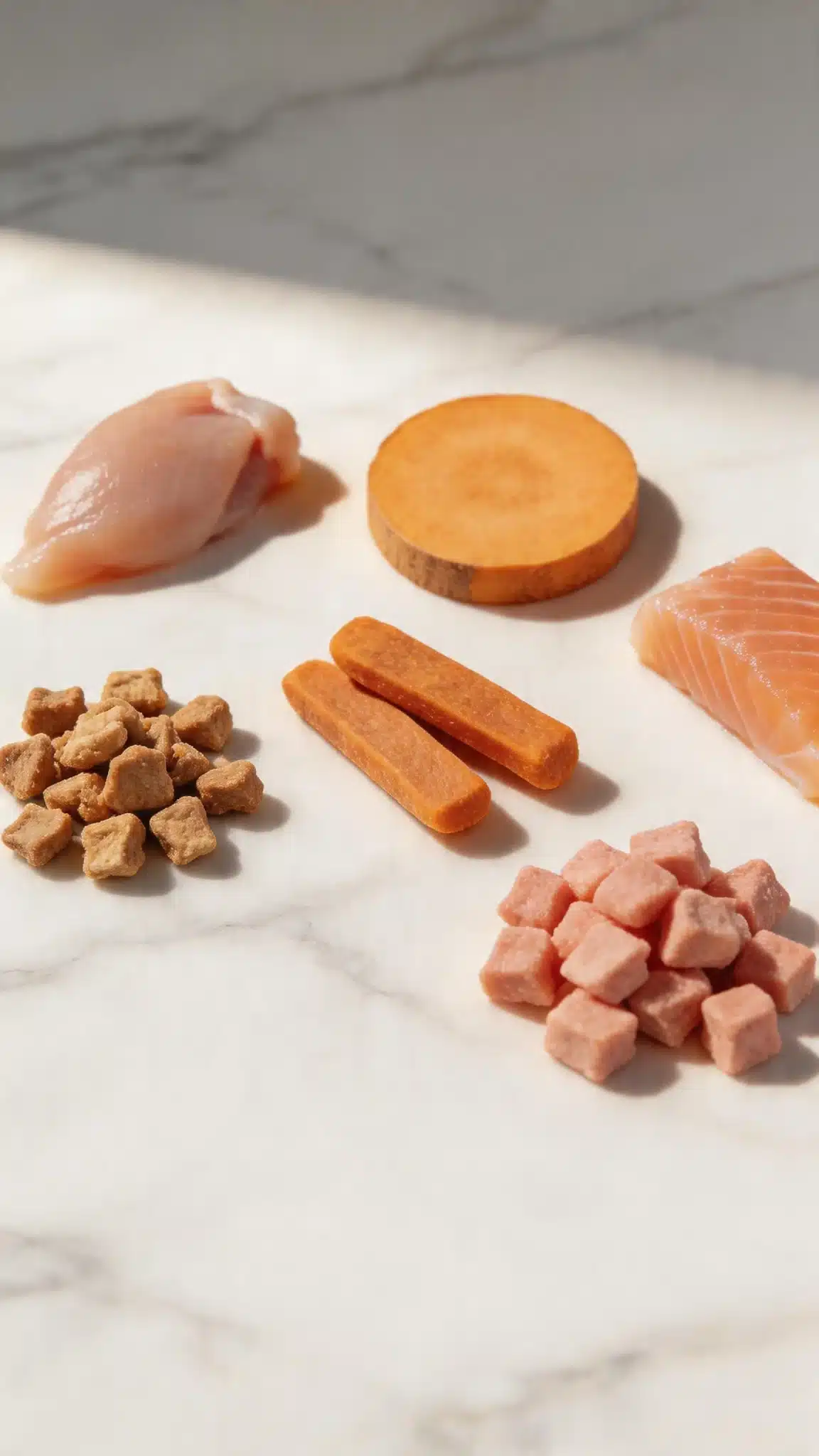
The best training treats for puppies with sensitive stomachs are small, soft, single-ingredient or limited-ingredient treats made without common allergens like wheat, soy, corn, or artificial additives. Look for options featuring a novel or easily digestible protein — such as chicken, turkey, salmon, or rabbit — paired with a short ingredient list of five items or fewer.
- Choose treats smaller than a pea — high treat volume during training demands low calories per piece.
- Limited-ingredient treats reduce the chance of triggering an unknown food sensitivity.
- Novel proteins (rabbit, venison, salmon) are less likely to cause reactions than beef or chicken in sensitive pups.
- Soft texture digests faster than crunchy biscuits, easing the digestive load.
- Avoid artificial preservatives like BHA, BHT, and ethoxyquin — these can worsen gut inflammation.
- Single-ingredient freeze-dried treats offer the cleanest option when sensitivity is severe.
Why Do Some Puppies Have Sensitive Stomachs?

Puppy digestive systems are still developing in the first six to twelve months of life, making them more vulnerable to ingredient sensitivities than adult dogs. According to the American Kennel Club, food sensitivities in dogs most commonly involve proteins — particularly beef, dairy, wheat, and chicken — rather than grains alone.
There is an important difference between a food allergy and a food sensitivity. A true allergy triggers an immune response, while a sensitivity causes digestive discomfort without the immune system being involved. Both can cause vomiting, loose stools, or excess gas after eating certain treats.
“The most common food allergens identified in dogs are beef, dairy, chicken, wheat, lamb, soy, corn, and eggs,” — Veterinary Dermatology, Olivry et al., 2007, a widely cited meta-analysis of canine food hypersensitivity cases.
Breed also matters significantly. Brachycephalic breeds, puppies switching foods frequently, and those on antibiotics are at higher risk for digestive upset. Working with your veterinarian to identify specific triggers will always outperform guessing.
BEFORE YOU SCROLL PAST
Readers Also Loved:
👉 How To Spot Early Signs Of Canine Dementia In Senior Dogs
What Ingredients to Avoid in Puppy Training Treats
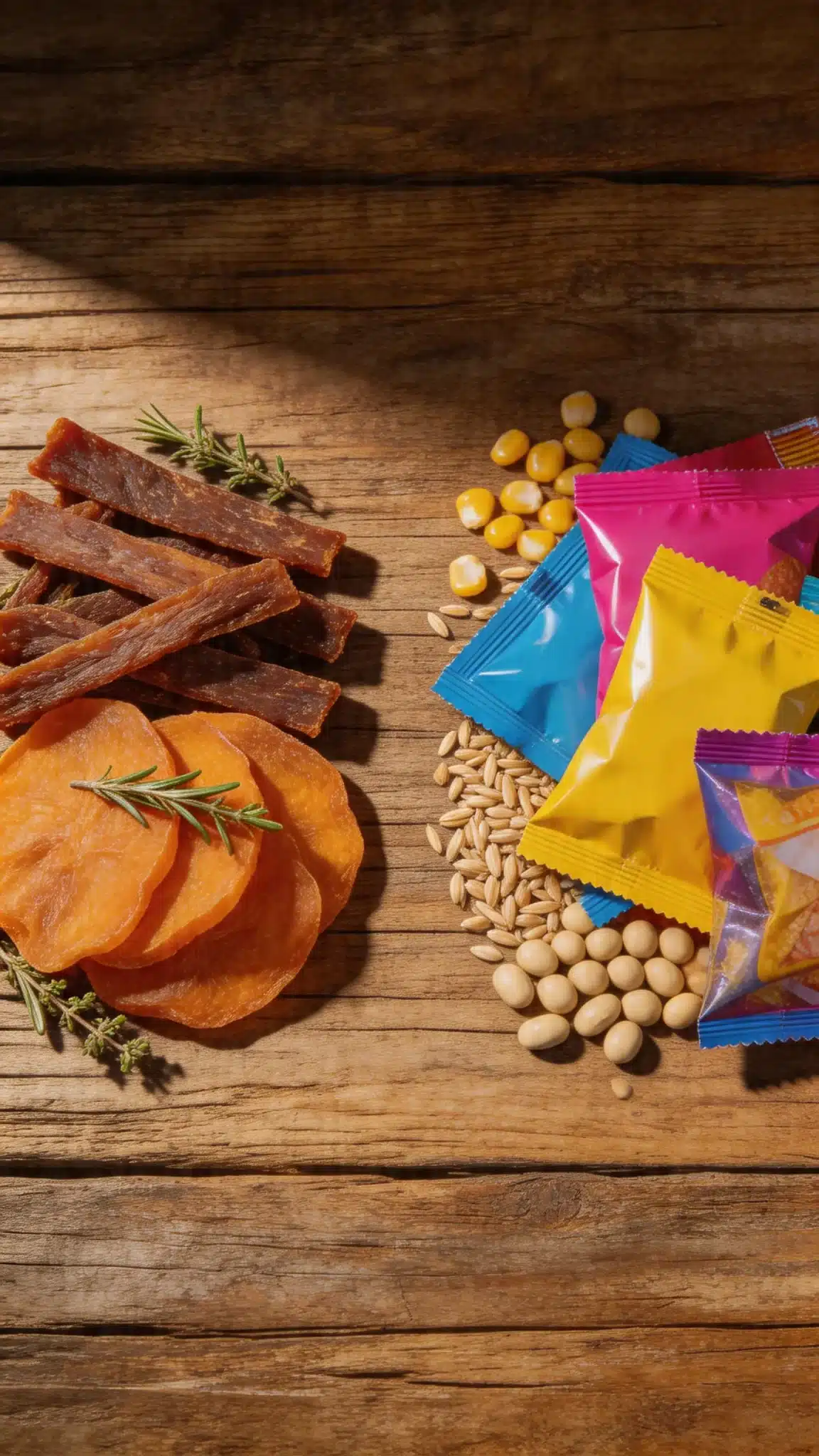
Certain ingredients show up repeatedly in low-quality training treats and are directly linked to digestive distress in sensitive puppies. Knowing what to skip saves you from expensive trial-and-error cycles.
Common Problem Ingredients
- Wheat and gluten: A top sensitivity trigger in dogs prone to loose stools.
- Soy: Ferments in the gut and contributes to gas and bloating.
- Artificial colors and flavors: No nutritional value and a documented irritant for sensitive guts.
- High fat content: Treats over 10% fat can trigger pancreatitis risk in young dogs.
- Dairy: Many puppies lack sufficient lactase to digest dairy without discomfort.
- Propylene glycol: A preservative found in some soft treats that disrupts gut bacteria balance.
What the Label Should Show
A clean treat label lists a named protein first — “chicken” rather than “poultry by-product.” The ingredient list should be short enough to read in under ten seconds. If you cannot identify most ingredients by sight, the treat is likely too processed for a sensitive stomach.
Fewer ingredients almost always means a lower risk of digestive reaction in sensitive puppies.
Best Treat Types for Training Puppies With Sensitive Stomachs
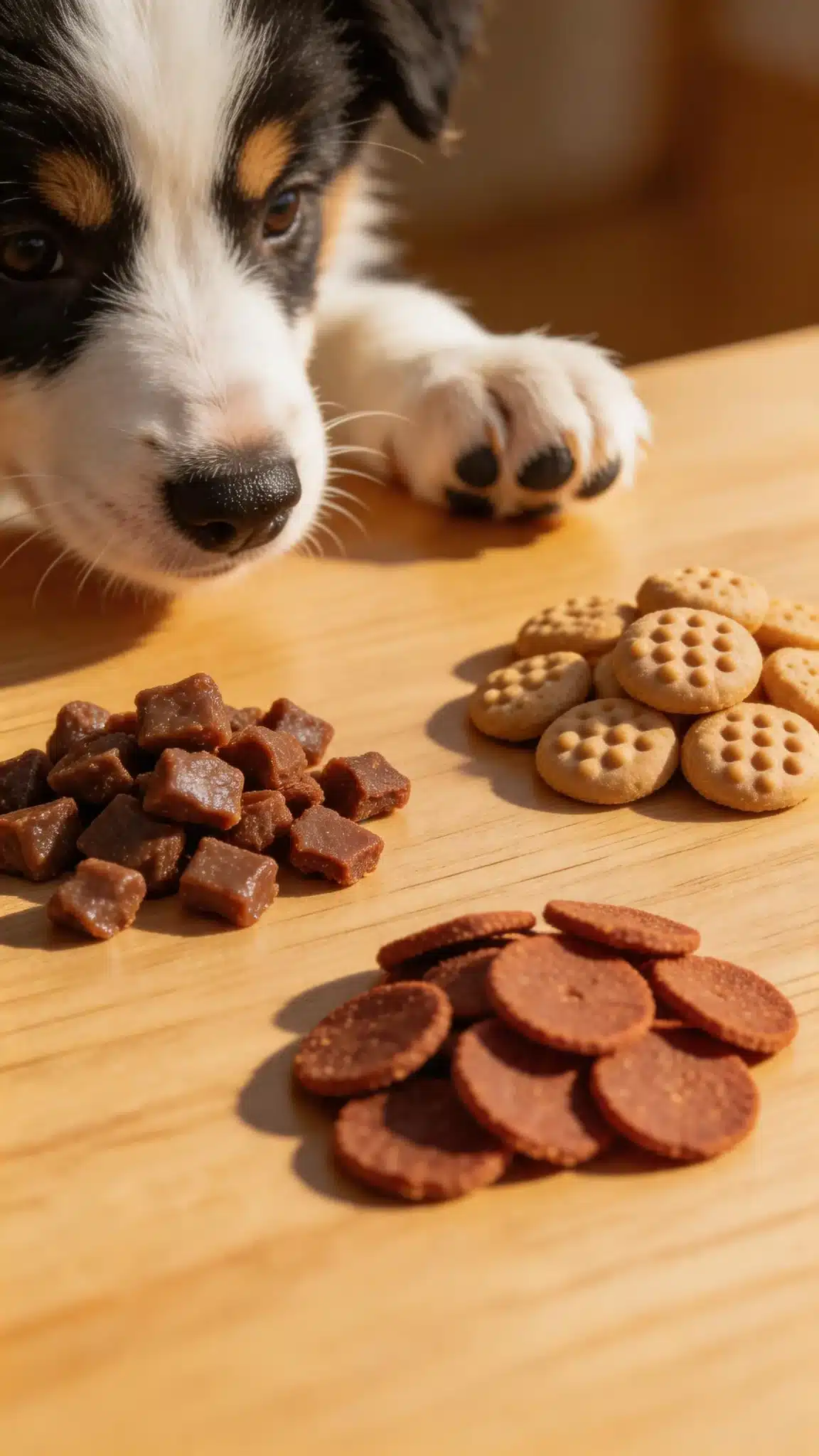
The physical format of a treat affects digestibility as much as the ingredient list does. Soft, moist treats digest faster than hard biscuits and are easier to break into tiny training-sized pieces.
Freeze-Dried Single-Ingredient Treats
Freeze-dried treats — made from one ingredient like chicken liver, salmon, or beef heart — retain nutrition without additives or preservatives. They are shelf-stable and easy to crumble into tiny pieces for high-repetition training sessions. Freeze-dried single-ingredient puppy treats are widely considered the gold standard for sensitive dogs by veterinary nutritionists.
Soft Limited-Ingredient Treats
Soft treats with five or fewer ingredients offer a middle ground between convenience and digestibility. Look for options built around a single protein and a simple binder like sweet potato or pea flour. Many owners find limited-ingredient soft training treats hold their puppy’s focus better than crunchy options during fast-paced sessions.
Homemade Treats
Homemade treats give complete control over every ingredient. Simple recipes using cooked chicken breast, plain canned pumpkin, or boiled sweet potato work well for most sensitive puppies. For a DIY starting point, these peanut butter oatmeal no-bake dog treats can be adapted for grain-free or lower-fat versions.
| Treat Type | Best For | Digestibility | Training Use |
|---|---|---|---|
| Freeze-dried single-ingredient | Severe sensitivities | Excellent | High — crumbles easily |
| Soft limited-ingredient | Moderate sensitivities | Good | Excellent — pliable texture |
| Homemade treats | Known trigger avoidance | Excellent | Good — prep time required |
| Hard biscuits | Healthy pups only | Fair | Lower — harder to portion |
How to Introduce New Training Treats Without Upsetting Your Puppy’s Stomach

Introducing a new treat too quickly is one of the most common causes of training-day digestive upset, even when the treat itself is gentle. A slow introduction approach helps you catch any reaction early without derailing training progress.
BEFORE YOU SCROLL PAST
Readers Also Loved:
👉 How To Care For Your Female Frenchie During Her First Heat
- Start with one new treat type at a time. Introducing multiple new treats simultaneously makes it impossible to identify which one caused a reaction.
- Offer 2–3 pieces on day one. Watch for loose stools, vomiting, or excessive gas over the next 24 hours before continuing.
- Gradually increase quantity over five to seven days. Success looks like firm stools and no sign of discomfort during or after training.
- Keep a simple log. Note the treat brand, quantity, and any digestive changes. This data becomes useful if you need to consult a vet.
- Limit treats to 10% of daily calorie intake. The American Kennel Club recommends treats make up no more than 10% of a puppy’s daily calories to avoid nutritional imbalance.
Slow introductions protect your training routine — a sick puppy cannot focus, and missed sessions slow progress.
Common Mistakes When Choosing Treats for Sensitive Puppies
Even well-meaning owners make choices that worsen their puppy’s digestive issues. These mistakes are easy to fix once identified.
- Choosing “natural” without checking the label: “Natural” is not a regulated term on pet food labels in the US. The ingredient list is the only reliable guide. Fix: Read every ingredient, not just the front-of-bag marketing.
- Using too many treat types at once: Rotating five different treats during one session overloads a sensitive gut with varied proteins and fillers. Fix: Stick to one treat type per training session until your puppy’s tolerance is established.
- Ignoring treat size during high-repetition training: Feeding full-size treats across 50 training repetitions adds up to a significant calorie and fat load. Fix: Break treats into pieces no larger than a pea — or use small soft puppy training treats designed for bite-sized portions.
- Switching treats abruptly when the current one causes issues: Jumping straight to a new treat without a transition can stack digestive insults. Fix: Allow two to three days of bland food before introducing a replacement treat.
- Overlooking diet-wide context: A gentle treat cannot compensate for a main diet that already stresses the gut. If your dog’s food is causing issues too, the guide to the best food for French Bulldogs with sensitive stomachs addresses the full diet picture.
Frequently Asked Questions About Best Training Treats for Puppies With Sensitive Stomachs
Can I use vegetables as training treats for a puppy with a sensitive stomach?
Yes, plain vegetables like small pieces of cooked carrot, plain pumpkin, or cucumber are gentle on sensitive stomachs and low in calories. Always confirm a vegetable is dog-safe before offering it.
How many training treats per day is safe for a sensitive-stomach puppy?
Training treats should account for no more than 10% of your puppy’s total daily calorie intake, according to the American Kennel Club. For most small-breed puppies, that equals roughly 20–30 pea-sized treats per day.
Are grain-free treats always better for puppies with sensitive stomachs?
Grain-free treats are not automatically better — the sensitivity trigger is usually a specific protein, not grains. The FDA has also noted an investigated link between grain-free diets and dilated cardiomyopathy in dogs, making veterinary guidance advisable before going fully grain-free.
MOST POPULAR THIS WEEK
Readers Also Loved: 👇
👉 How To Stop Dogs From Scratching Ears Raw
What is a novel protein treat, and why does it help sensitive puppies?
A novel protein treat uses a protein source your puppy has never eaten before, such as rabbit, venison, or duck. Because the immune system has no prior exposure, it is less likely to react to that ingredient.
Should I see a vet before changing my puppy’s training treats?
If your puppy shows chronic loose stools, vomiting, or signs of skin irritation alongside digestive upset, a veterinary visit before changing treats is the right first step. A vet can rule out parasites, infections, or allergies that treats alone cannot fix.
Do soft treats cause more dental issues than hard treats for puppies?
Soft treats used in moderation during training do not significantly increase dental disease risk when paired with regular brushing or dental chews. The American Veterinary Dental College recommends daily teeth brushing as the primary dental care tool regardless of treat type.
Choosing the Right Treat Makes Training Sustainable
The single most important step is reading the ingredient label before buying, not after your puppy shows symptoms. A treat with five or fewer recognizable ingredients and a named single protein will serve most sensitive puppies far better than a heavily marketed product with a long additive list.
Start today by checking the label on whatever treat is already in your training bag. If it lists wheat, soy, artificial colors, or unnamed by-products in the first five ingredients, it is worth replacing with a cleaner option. Your puppy’s comfort during training directly affects how fast they learn — a settled stomach keeps focus sharp.
For puppies who may also benefit from skin and coat support alongside digestive health, exploring the best natural oils for dog skin and ears can round out a gentle, whole-body care approach.