French Bulldog IVDD: Signs Every Owner Should Know

Your French Bulldog was fine yesterday. Today, he yelps when you pick him up, walks with a wobble, or refuses to jump onto the couch. Something is clearly wrong — and French Bulldog IVDD: Signs Every Owner Should Know is exactly the knowledge that can save your dog’s mobility, or even his life.
Intervertebral disc disease (IVDD) is one of the most serious health conditions affecting French Bulldogs. Frenchies are a chondrodystrophic breed, meaning their spinal anatomy puts them at significantly higher risk than most other dogs.
Knowing what to look for — and acting fast — is the difference between full recovery and permanent paralysis. This guide breaks down every warning sign, what each stage means, and what to do next.
What Are the Signs of IVDD in French Bulldogs?
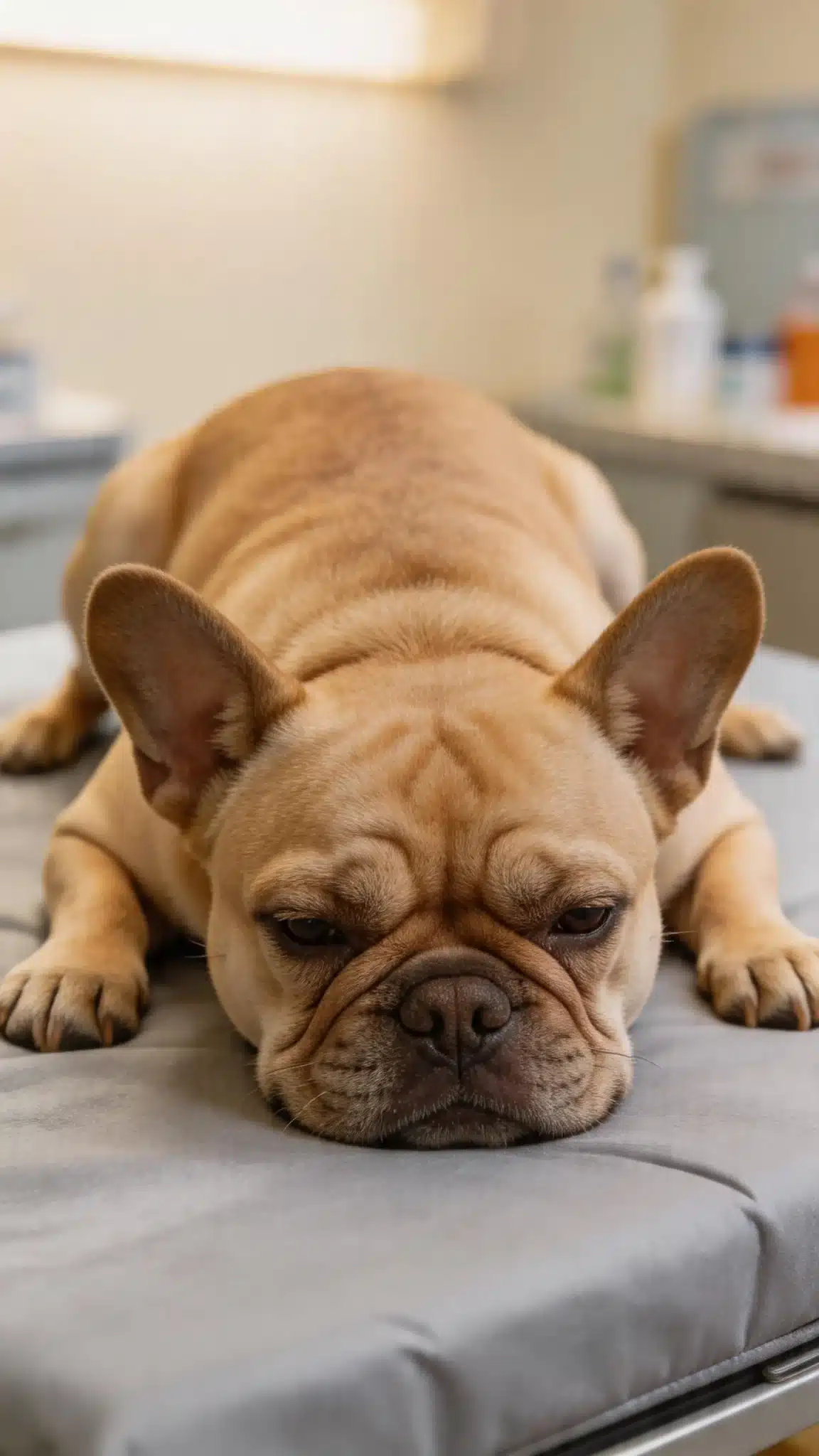
IVDD in French Bulldogs causes symptoms that range from mild back pain to complete hind-limb paralysis, depending on which disc has herniated and how severely. The most common early signs are yelping when touched, a hunched posture, and reluctance to move normally.
- Sudden yelping or crying when touched along the back or neck
- Hunched spine or lowered head posture held stiffly
- Wobbling, stumbling, or crossing of the hind legs when walking
- Dragging one or both back legs across the floor
- Loss of bladder or bowel control
- Refusing to jump, climb stairs, or be picked up
Any loss of limb function or bladder control is a veterinary emergency — get to a clinic within hours, not days.
Why French Bulldogs Are So Vulnerable to IVDD
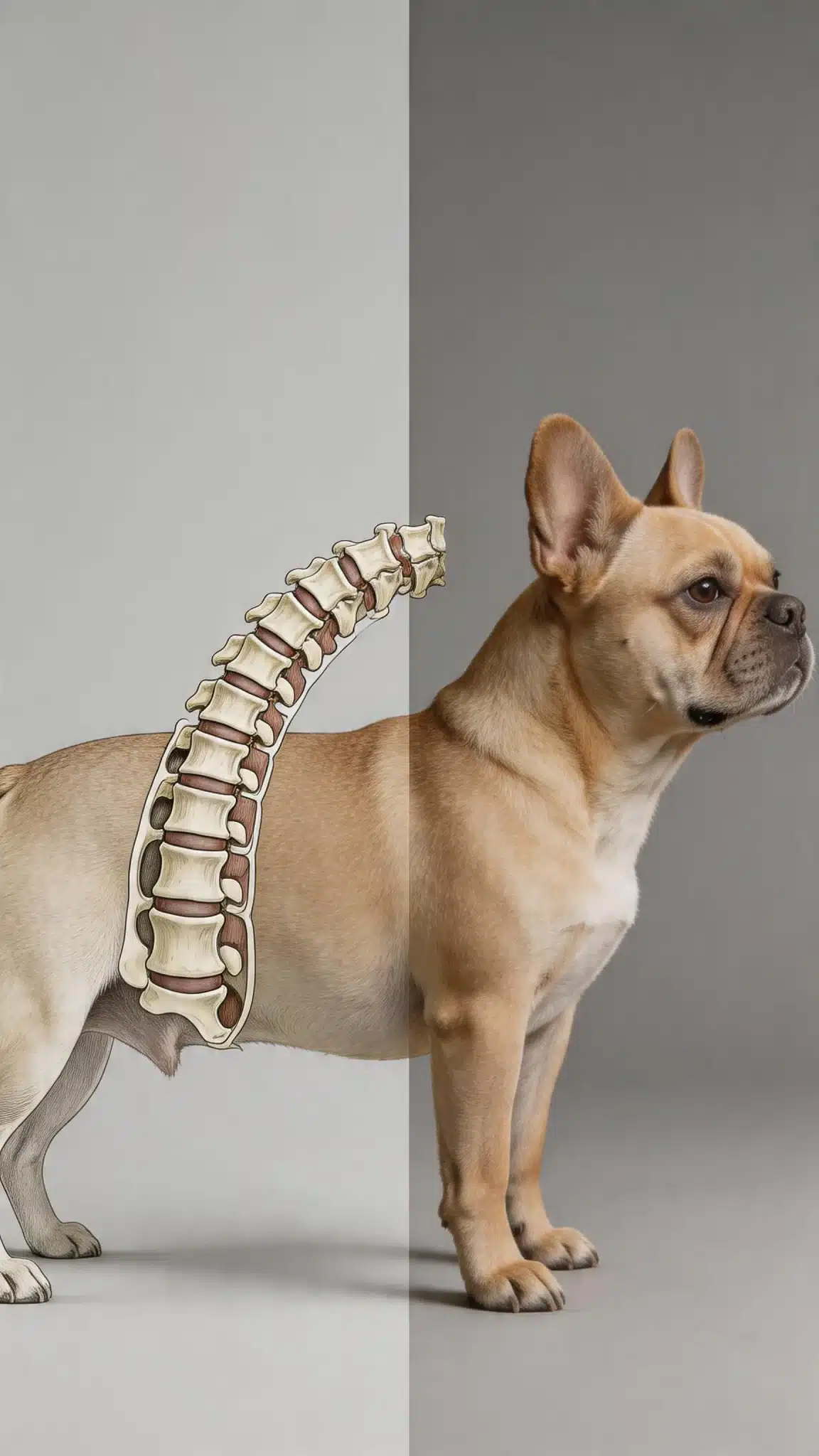
French Bulldogs develop IVDD at high rates because of their chondrodystrophic genetics, which cause the intervertebral discs to age and calcify far faster than in non-brachycephalic breeds. Research published in The Veterinary Journal (2013) identified chondrodystrophic breeds — including French Bulldogs — as having a dramatically elevated lifetime risk of disc herniation compared to longer-spined breeds.
The spine is made up of vertebrae cushioned by discs filled with a gel-like nucleus. In Frenchies, those discs harden prematurely, losing their shock-absorbing ability.
BEFORE YOU SCROLL PAST
Readers Also Loved:
👉 How To Spot Early Signs Of Canine Dementia In Senior Dogs
When a disc herniates, it pushes material into the spinal canal. That material compresses the spinal cord, cutting off nerve signals to the legs, bladder, and bowel.
The Role of Body Shape
The compact, low-to-the-ground build that makes Frenchies so appealing also concentrates mechanical stress on certain disc spaces. The thoracolumbar junction — where the mid-back meets the lower back — bears the most load and is the most common site of herniation in this breed.
Frenchies also carry a gene variant called the FGF4 retrogene, associated with chondrodystrophy, which is nearly universal in the breed. This is not a flaw in any individual dog; it is a breed-wide structural reality every owner should understand.
If your Frenchie already shows breathing problems while sleeping, that brachycephalic anatomy is the same root cause driving spinal vulnerability — both conditions stem from the breed’s compact skeletal structure.
The Four Grades of IVDD: What Each Stage Looks Like
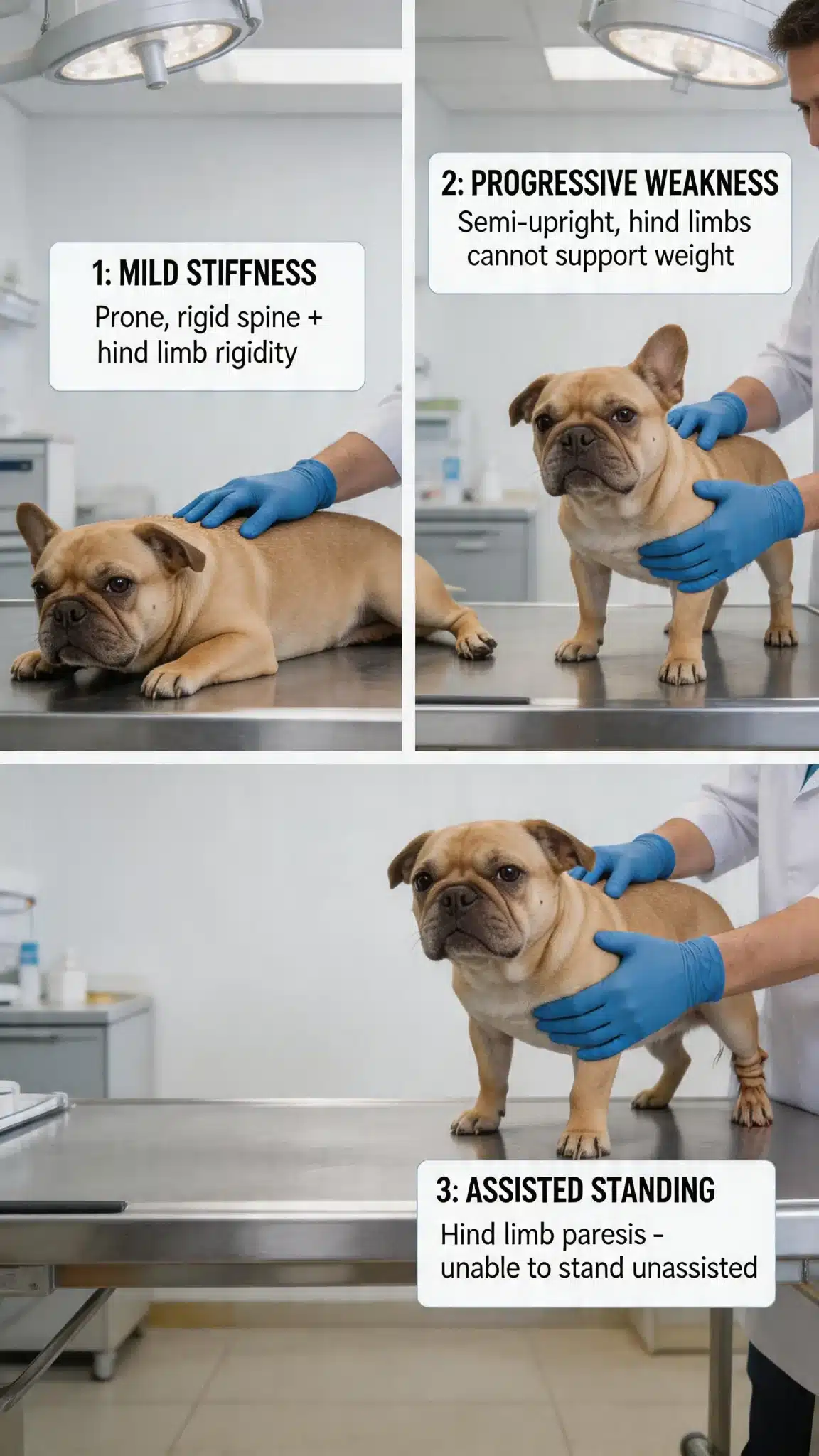
Veterinary neurologists grade IVDD on a scale of I to IV (sometimes I to V), and the grade directly determines which treatment is recommended. Understanding the grades helps you describe your dog’s symptoms accurately to your vet.
| Grade | Symptoms You’ll See | Typical Treatment |
|---|---|---|
| Grade I | Pain only, normal walking | Rest, anti-inflammatories |
| Grade II | Pain plus wobbly or weak gait | Rest, medication, possible surgery |
| Grade III | Can’t support weight, knuckles paws | Surgery strongly recommended |
| Grade IV | Complete paralysis, no deep pain felt | Emergency surgery within 24–48 hrs |
Deep pain perception — your vet’s ability to provoke a conscious response by squeezing a toe firmly — is the single most important prognostic test. Dogs that retain deep pain have significantly better surgical outcomes.
A Grade IV dog that loses deep pain perception for more than 48 hours has a much lower chance of recovering full function, even with surgery.
Early Warning Signs Most Owners Miss
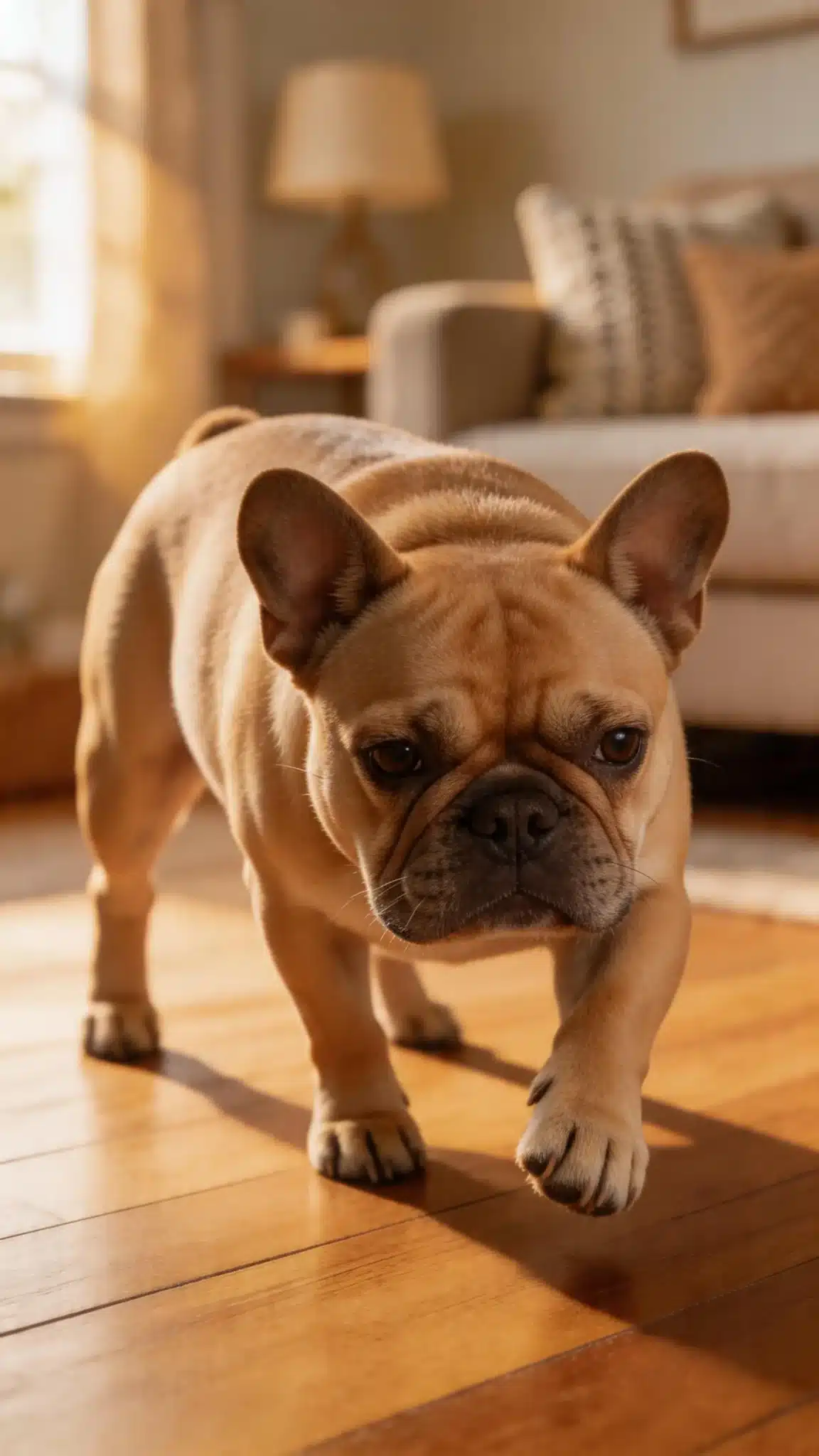
The earliest signs of French Bulldog IVDD are subtle enough to be mistaken for normal soreness or a bad mood. Catching them at Grade I gives your dog the best possible outcome with the least invasive treatment.
BEFORE YOU SCROLL PAST
Readers Also Loved:
👉 How To Care For Your Female Frenchie During Her First Heat
Behavioral Shifts to Watch
- Reluctance to be touched on the back — flinching, turning to look, or snapping when stroked along the spine
- Changes in posture during rest — sitting in an unusually stiff or hunched position
- Reduced enthusiasm for play — a normally energetic dog who suddenly slows down
- Altered walking style — a slight bunny-hop with the hind legs rather than a normal alternating stride
Physical Signs to Check at Home
Run your fingertips gently along your Frenchie’s spine from the base of the skull to the tail. If your dog tenses, yelps, or turns its head at any point, that’s a pressure-pain response worth reporting to your vet immediately.
Also watch how your dog places its paws. Knuckling — where the paw curls under and the dog walks on its knuckles — is a neurological sign, not a minor issue. Fit your dog with a rear support harness only as an interim aid while you get to the vet, not as a long-term substitute for diagnosis.
If your Frenchie is also licking his paws excessively, check whether the behavior targets one specific paw — localized licking can sometimes signal nerve discomfort rather than a skin problem.
What to Do When You Suspect IVDD

If you notice any combination of the signs above, the first step is strict crate rest — immediately. Stop all jumping, stair-climbing, running, and rough play while you arrange an urgent vet visit.
- Restrict movement now. Place your dog in a small, secure dog crate to prevent further disc damage before diagnosis.
- Call your vet or emergency animal clinic. Describe the symptoms in detail, including when they started and whether they are worsening.
- Do not give human pain medication. NSAIDs like ibuprofen are toxic to dogs and can mask symptoms your vet needs to assess.
- Support the body, not just the legs. When carrying your dog, support the chest and hindquarters simultaneously to keep the spine neutral.
- Request neurological imaging. MRI is the gold standard for locating the herniated disc; X-rays can show calcification but cannot confirm compression.
The American College of Veterinary Surgeons (ACVS) recommends that dogs showing progressive neurological deficits undergo surgical decompression as soon as possible for the best recovery odds.
MOST POPULAR THIS WEEK
Readers Also Loved: 👇
👉 How To Stop Dogs From Scratching Ears Raw
Common Mistakes That Delay Recovery
Even well-meaning owners can accidentally worsen an IVDD episode. These are the most frequent errors — and how to avoid them.
- Waiting to see if it gets better on its own. IVDD rarely self-resolves once neurological signs appear. Every hour of cord compression increases the risk of permanent damage. Call the vet today, not next week.
- Continuing normal activity during “mild” pain episodes. A dog that seems fine after a brief yelp may have a Grade I herniation. Unrestricted activity can push it to Grade III within hours. Rest is non-negotiable.
- Relying on steroids without a diagnosis. Corticosteroids are sometimes prescribed for IVDD, but giving them without imaging can complicate surgical planning and mask deterioration. Always get a proper diagnosis first.
- Using a collar instead of a harness. Neck pressure from a standard collar can aggravate cervical disc disease. Switch to a well-fitted step-in harness for all walks.
- Skipping post-surgery rehab. Surgical decompression is often not the end of treatment. Canine physiotherapy and hydrotherapy are recognized by the American Association of Rehabilitation Veterinarians as key to restoring function after spinal surgery.
Frequently Asked Questions About French Bulldog IVDD: Signs Every Owner Should Know
Can a French Bulldog recover from IVDD without surgery?
A French Bulldog with Grade I or Grade II IVDD can recover without surgery through strict crate rest and anti-inflammatory medication. Grade III and above generally require surgical decompression for the best chance of walking again.
How quickly does IVDD progress in French Bulldogs?
IVDD can progress from mild pain to full paralysis within 24 to 48 hours in severe cases. Any worsening of symptoms overnight is a reason to go to an emergency clinic immediately, not wait for a regular appointment.
At what age do French Bulldogs usually develop IVDD?
French Bulldogs most commonly develop IVDD between three and seven years of age, though cases in dogs as young as two have been documented. Early-onset cases tend to be more severe due to aggressive disc degeneration.
Is IVDD painful for French Bulldogs?
Yes, IVDD is painful, particularly at Grade I and Grade II, when the dog is still neurologically functional but the disc is actively inflamed or herniated. Pain management is a standard part of both surgical and conservative treatment plans.
Can IVDD in French Bulldogs come back after treatment?
IVDD can recur at the same disc site or at a different disc level because the underlying chondrodystrophic condition affects the entire spine. Lifelong weight management, ramp use, and avoiding high-impact activities reduce — but cannot eliminate — recurrence risk.
Should I use a dog wheelchair if my Frenchie is paralyzed?
A dog wheelchair can significantly improve quality of life for a paralyzed French Bulldog while awaiting surgery or during recovery. It is a supportive tool, not a treatment — always combine it with veterinary guidance and active rehabilitation.
What Every Frenchie Owner Should Do Starting Today
French Bulldog IVDD moves fast, and the window for the best possible outcome is measured in hours, not weeks. The single most important action you can take right now is to install ramps or steps anywhere your Frenchie currently jumps — onto the sofa, the bed, into the car.
Eliminating repetitive spinal impact is the most evidence-backed preventive step available to owners of chondrodystrophic breeds. Pair that with routine weight monitoring, since excess body weight directly increases disc load.
Stay alert to the early signs covered in this guide. If something feels off with your dog’s movement, posture, or pain response, call your vet that same day — not because every wobble is a crisis, but because the ones that matter move fast. Your Frenchie is counting on you to know the difference. You now do.
For more on keeping your Frenchie healthy overall, the guide on how to clean French Bulldog ears safely is a practical next step in your routine care checklist.