French Bulldog Aggressive? (Real Reasons And Fix)

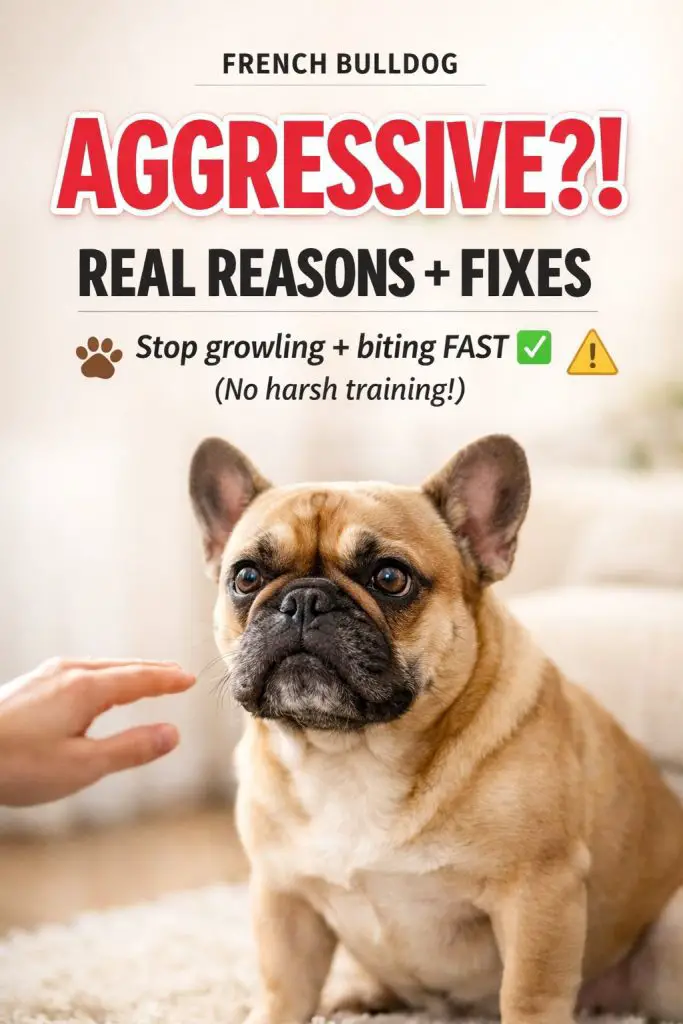
If your French Bulldog is acting aggressive, I totally get why you’re worried. One minute they’re your adorable little couch potato, and the next they’re growling, snapping, barking like crazy, or even trying to bite. It can feel confusing and honestly kind of scary—especially when you don’t know what “triggered” it. And if you’re thinking, “Wait… are Frenchies aggressive dogs?” you’re not alone.
I’ve been around French Bulldogs and other small companion breeds long enough to know that aggression is rarely “random.” In my opinion, most aggressive behavior has a real reason behind it, even if it doesn’t make sense at first. I think a lot of owners blame themselves too quickly, but the truth is: sometimes it’s pain, fear, poor boundaries, or even accidental training. In this article, I’ll walk you through what’s really going on and exactly how to start fixing it.
The good news? Most French Bulldog aggression can be improved with the right plan and a little patience. This guide will help you identify the cause, stop common mistakes that make aggression worse, and build safer behavior—so you can enjoy your dog again without constantly feeling on edge.
Are French Bulldogs Naturally Aggressive?
Let’s clear this up fast: French Bulldogs are not “naturally aggressive” dogs.
Frenchies are typically affectionate, goofy, and clingy (the classic “shadow dog”). They were bred to be companions, not guard dogs. So if your Frenchie is acting aggressive, it usually means one of two things:
- They feel unsafe or threatened
- They’re dealing with an issue that makes them react defensively
Aggression in French Bulldogs is often more accurately described as reactivity, fear behavior, or overstimulation. But regardless of the label, it still needs to be taken seriously—because growling and snapping can escalate if it’s ignored.
What “Aggressive” Behavior Looks Like in a French Bulldog
Sometimes owners say “aggressive,” but the behavior might be something else. Here are common signs that your Frenchie is trending toward aggression:
- Growling when touched or approached
- Snapping (air bite with no contact)
- Biting (even light bites count)
- Lunging at people or dogs on walks
- Resource guarding food, toys, or spots
- Territorial barking at doors/windows
- Stiff body language, hard staring, raised hackles
- Sudden mood shifts from calm to reactive
Important: Growling is not “bad.” It’s a warning signal. If you punish the growl, the dog often skips it next time and goes straight to biting.
The Biggest Mistake People Make (That Makes Aggression Worse)
Before we jump into reasons and fixes, let me say this clearly:
Punishing aggression without understanding it usually makes it worse.
Yelling, alpha rolling, leash jerks, or “showing dominance” can increase fear and teach your dog that you are unpredictable. That creates more tension, not less.
What actually works better?
✅ Calm structure
✅ Clear boundaries
✅ Positive reinforcement
✅ Controlled exposure to triggers
✅ Professional help when needed
FYI: That doesn’t mean “let your dog do whatever they want.” It means we correct smartly, not emotionally.
Real Reasons Your French Bulldog Is Aggressive (And What Each One Looks Like)
Frenchie aggression usually comes from a few common roots. Let’s break them down in a way that actually makes sense.
Pain or Discomfort (The #1 Hidden Trigger)
If a normally sweet French Bulldog becomes aggressive “out of nowhere,” pain is one of the first things to suspect.
French Bulldogs are prone to issues like:
- IVDD (spine/back pain)
- Hip/joint pain
- Ear infections
- Dental pain
- Skin allergies and irritation
- Digestive pain or bloating
Signs your Frenchie might be in pain:
- Snapping when picked up
- Growling when touched near the back or neck
- Avoiding stairs or jumping
- Sudden crankiness
- Licking paws constantly (allergies)
- Head shaking or ear scratching
Fix:
Book a vet check ASAP, especially if the behavior is new. If pain is the cause, training alone won’t fix it—you need treatment first.
Fear-Based Aggression (They’re Not “Mean,” They’re Scared)
Fear aggression happens when your dog feels trapped, cornered, or overwhelmed. Frenchies are small, and people tend to invade their space constantly—hugging, picking them up, leaning over them.
Fear signs include:
- Tail tucked
- Lip licking
- Whale eye (white of the eye showing)
- Freezing before reacting
- Barking then backing away
Common fear triggers:
- Strangers reaching fast
- Loud kids
- Men with hats/beards
- Being cornered on a couch
- Unexpected touch while sleeping
Fix:
Stop forcing interaction. Instead, build trust through controlled exposure and rewards (I’ll show you how below).
Resource Guarding (Food, Toys, Beds, Even You)
Some French Bulldogs become aggressive when they feel they must protect something valuable.
They might guard:
- Food bowl
- Chews/bones
- Toys
- A specific couch spot
- Your lap (yes, you!)
Signs of resource guarding:
- Growling when you approach
- Eating faster when you come near
- Stiff body over the item
- Snapping if you reach for it
Fix:
Don’t “test” your dog by stealing items. That turns it into a battle. Instead, train trades and teach that humans approaching means good things happen.
Overstimulation and “Zoomie Aggression”
Frenchies can get wild fast. Sometimes aggression isn’t anger—it’s over-arousal.
This usually looks like:
- Jumping + barking
- Mouthy biting during play
- Grabbing clothes
- Ignoring commands completely
It often happens:
- During high-energy play
- When kids run around
- When the dog is overtired
- After too much excitement (guests, park, etc.)
Fix:
Create a “calm down” routine and limit intense play sessions. More structure = fewer explosions.
Leash Reactivity (The “Tough Guy” Walk Problem)
Leash aggression is one of the most common reasons people say their French Bulldog is aggressive.
But what’s really happening?
Your dog can’t greet, can’t escape, and feels frustrated or fearful—so they bark and lunge.
Signs:
- Calm at home but chaotic on walks
- Barking at dogs across the street
- Lunging toward people/dogs
- Growling while pulling
Fix:
You need distance training + focus building. Leash reactivity can improve a lot with consistency.
Poor Socialization (Or Bad Past Experiences)
If your Frenchie didn’t get safe exposure to people, dogs, sounds, and environments early, they may react defensively later.
Also, one bad event can stick:
- Getting attacked by another dog
- Being chased by kids
- Rough handling at the groomer/vet
Fix:
Rebuild confidence slowly. Don’t throw them into crowded places hoping they “get used to it.”
Sleep Startle (Don’t Touch Them When They’re Asleep)
Some French Bulldogs react aggressively if touched while sleeping deeply. This is called sleep startle and it’s more common than people realize.
You’ll notice:
- Snapping when woken up
- Growling when moved off furniture
- Acting confused after reacting
Fix:
Don’t startle them. Call their name gently before touching. Give them a quiet sleep area where no one disturbs them.
Hormones + Teenage Behavior (Yes, Frenchies Have Attitudes)
Adolescent dogs (around 6–18 months) can go through phases:
- More guarding
- Testing boundaries
- Frustration reactions
- Impulse problems
Not always “aggression,” but it can look like it.
Fix:
Train more, not less. Keep routines consistent and reward calm behavior like it’s your job.
How to Fix French Bulldog Aggression (Step-by-Step)
Now let’s get to the good part—the real fixes you can start today.
Step 1: Identify the Pattern (This Changes Everything)
Before you correct anything, figure out when the aggression happens.
Ask yourself:
- Who was there?
- What happened right before the growl?
- Was your dog cornered?
- Was food or a toy involved?
- Was your dog tired or overstimulated?
- Were they touched or picked up?
Quick trigger tracker list:
- Food / chew time
- Couch / bed time
- Walks near other dogs
- Visitors entering home
- Child running near dog
- Dog being hugged or grabbed
- Grooming or nail trimming
Once you know the trigger, you can stop accidental “setup moments.”
Step 2: Stop These Common Habits Immediately
These habits accidentally teach your dog aggression works:
- Reaching into the bowl while they eat
- Taking toys without trading
- Allowing rough play that leads to biting
- Letting strangers pet your dog without permission
- Forcing greetings with other dogs
- Yelling when they growl (this removes warnings)
Your new rule:
Don’t punish warnings. Manage the situation and train calmer alternatives.
Step 3: Build Calm Structure at Home (Frenchies NEED This)
A lot of French Bulldog aggression improves when life becomes predictable.
Daily structure includes:
- Set meal times
- Calm leash walks (even short ones)
- Training for 5–10 minutes/day
- Quiet nap breaks
- Less chaos, less free-for-all
Simple calm routine idea:
- Morning potty + short walk
- Breakfast + chill time
- Training session (5 minutes)
- Play (controlled)
- Nap or crate break
- Evening walk + dinner + calm
IMO, most “aggressive” Frenchies are actually overstimulated and under-structured.
Step 4: Teach These Core Skills (They Prevent Aggression)
You don’t need fancy tricks. You need safety skills.
Focus on training:
“Leave it”
Stops fixation and guarding moments.
“Drop it”
Prevents battles over items.
“Place” (go to bed/mat)
Gives your dog an off-switch.
“Touch” (nose target)
Redirects focus during triggers.
“Look at me”
Helps with leash reactivity.
Train with tiny treats and keep sessions short. Frenchies get bored fast.
Step 5: Fix Resource Guarding the Safe Way
If your dog guards food or toys, do this:
- Don’t take the item away
- Walk by and toss a high-value treat
- Repeat until your dog relaxes when you approach
- Practice trades: “Give toy → get treat → toy comes back”
Trading script (simple):
- Offer treat
- Say “drop it”
- Dog drops item
- Reward
- Give item back (sometimes)
This teaches: humans coming near = good news, not theft.
Step 6: Handle Leash Aggression with Distance Training
If your Frenchie goes nuts on walks, start with distance, not confrontation.
Here’s the basic method:
- Stay far enough away that your dog can still listen
- The moment they SEE a dog/person, give a treat
- Keep moving calmly
- If they react, increase distance again
This is called counterconditioning, and it works because you’re changing their emotional response.
Golden rule:
If your dog is barking and lunging, they’re over threshold. You’re too close.
Step 7: Teach Visitors and Family the “Frenchie Rules”
Aggression often happens because humans ignore dog boundaries.
Tell everyone in the home:
- Don’t hug the dog
- Don’t grab the dog suddenly
- Don’t disturb sleeping
- Don’t approach while eating
- Let the dog come to you
If guests visit, use this plan:
- Put your dog on leash or behind a baby gate
- Give a chew or lick mat
- Let them observe safely
- Reward calm behavior
This prevents the “door chaos” that triggers snapping.
When You NEED Professional Help (And It’s Not a Failure)
Sometimes home training isn’t enough, and that’s okay.
Get professional support if:
- Your Frenchie has bitten more than once
- The bites break skin
- Aggression is getting worse
- Your dog guards you from your family
- You suspect pain but tests are unclear
Look for:
✅ Certified dog trainer (positive reinforcement)
✅ Veterinary behaviorist (especially serious cases)
Early help can prevent long-term problems.
Safety Tips While You Work on It
While you train, use simple management so no one gets hurt.
- Use a harness, not a choke collar
- Use a baby gate for separation
- Avoid dog parks (too unpredictable)
- Feed in a quiet space
- Give your dog a safe “no-touch” nap zone
- Supervise kids 100% of the time
One important reminder:
Aggression is a behavior problem, not a “bad dog” problem.
What NOT to Do (Even if Someone Tells You To)
Let’s save you from advice that backfires:
- Don’t alpha roll your Frenchie
- Don’t hit, slap, or scream
- Don’t stare your dog down
- Don’t corner them during a reaction
- Don’t force dog-to-dog greetings
- Don’t punish growling
These methods often increase fear and create more serious biting later.
How Long Does It Take to Fix French Bulldog Aggression?
This depends on the cause.
A realistic expectation:
- Mild leash reactivity: 2–6 weeks improvement
- Resource guarding: 4–8 weeks with consistency
- Fear aggression: 1–3 months or longer
- Pain-related aggression: improves once treated
The key is consistency. A few minutes daily beats random “big training days.”
Final Thoughts: You’re Not Alone (And Your Frenchie Can Improve)
If your French Bulldog is aggressive, please don’t panic. It doesn’t automatically mean your dog is dangerous forever—or that you failed as an owner.
Most Frenchies react because they’re:
- scared
- hurting
- overstimulated
- guarding something important
- lacking training structure
With the right approach, you can absolutely build a calmer, safer, happier French Bulldog. Start small, stay consistent, and celebrate tiny wins. Those tiny wins stack up fast.
Frequently Asked Questions
1) Why is my French Bulldog suddenly aggressive?
Sudden aggression often points to pain, discomfort, or a new fear trigger. Common medical causes include back pain, ear infections, dental problems, or allergies. If the behavior is new or intense, a vet check should be your first step.
2) Can French Bulldog aggression be cured completely?
Many cases can be greatly improved or resolved, especially when the cause is identified early. Some dogs may always need management around certain triggers, but with training and structure, most Frenchies become much calmer and safer.
3) Should I punish my French Bulldog for growling?
No. Growling is a warning, and punishing it can make the dog skip warnings and bite without signal. Instead, calmly remove the trigger, give space, and work on training to change the emotional response.
4) How do I stop my French Bulldog from biting during play?
Play biting usually comes from overstimulation and poor boundaries. Keep play sessions short, use toys instead of hands, stop play immediately when teeth touch skin, and reward calm behavior. Teaching “drop it” and “place” also helps a lot.
5) Is leash aggression the same as being aggressive at home?
Not always. Leash aggression is often reactivity caused by frustration or fear, not true “dominance.” Many French Bulldogs are sweet indoors but reactive outside. Distance training and positive reinforcement can significantly reduce leash reactions over time.