How To Crochet A Dog Bandana: Step-By-Step Guide For Beginners

A crocheted dog bandana adds comfort and style without much time or cost. It works for dogs of many sizes and fits everyday wear. The project suits beginners and offers room for simple design changes.
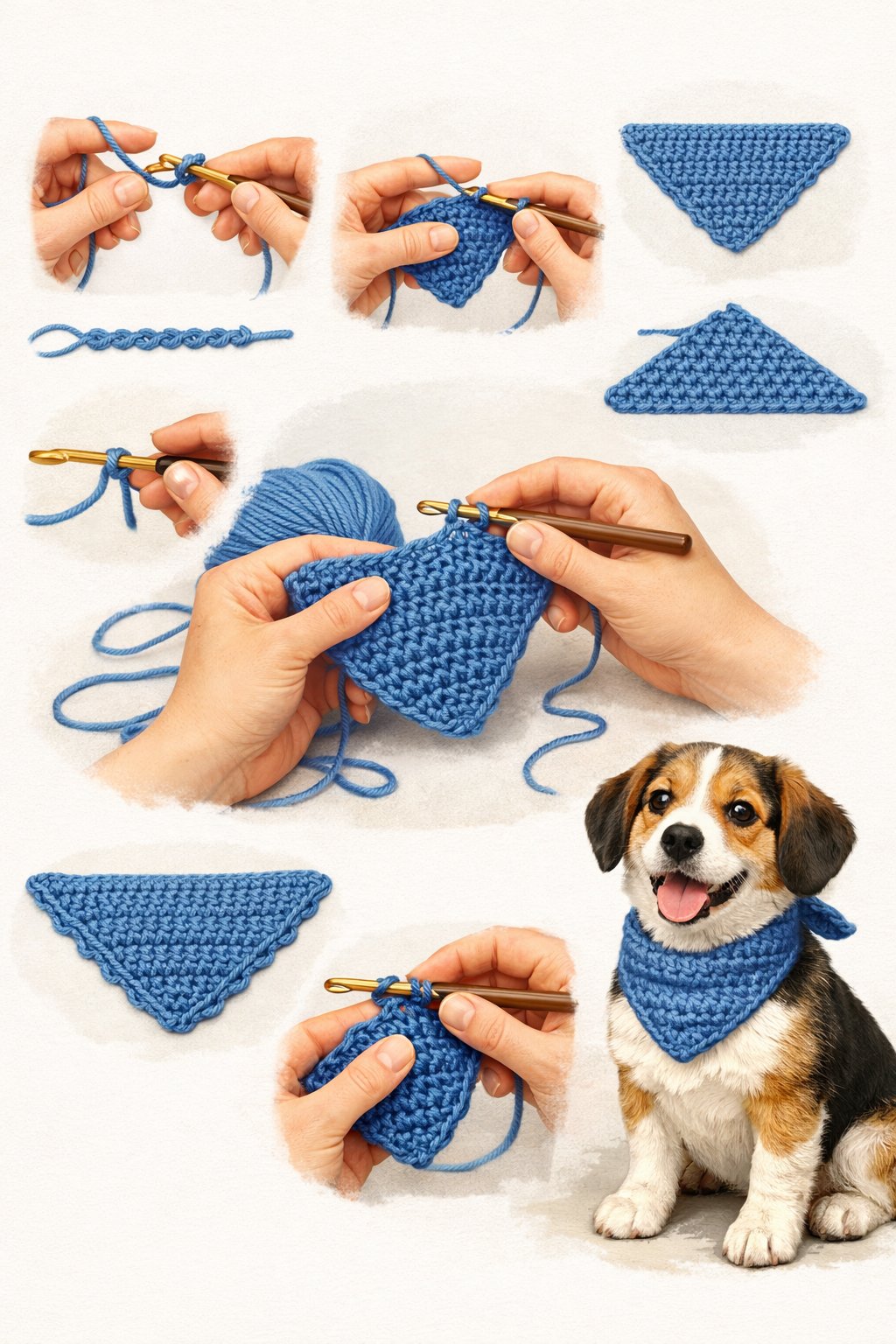
They crochet a dog bandana by shaping a small triangle with basic stitches, adjusting the size to the dog’s neck, and adding a tie or collar opening. The process uses common yarn and a standard hook. Clear steps make it easy to follow from start to finish.
This guide covers choosing a pattern, picking tools, and working each stitch with care. It also explains how to change size, improve fit, and add clean edges. Simple care tips help the bandana last through regular use.
how to crochet a dog bandana
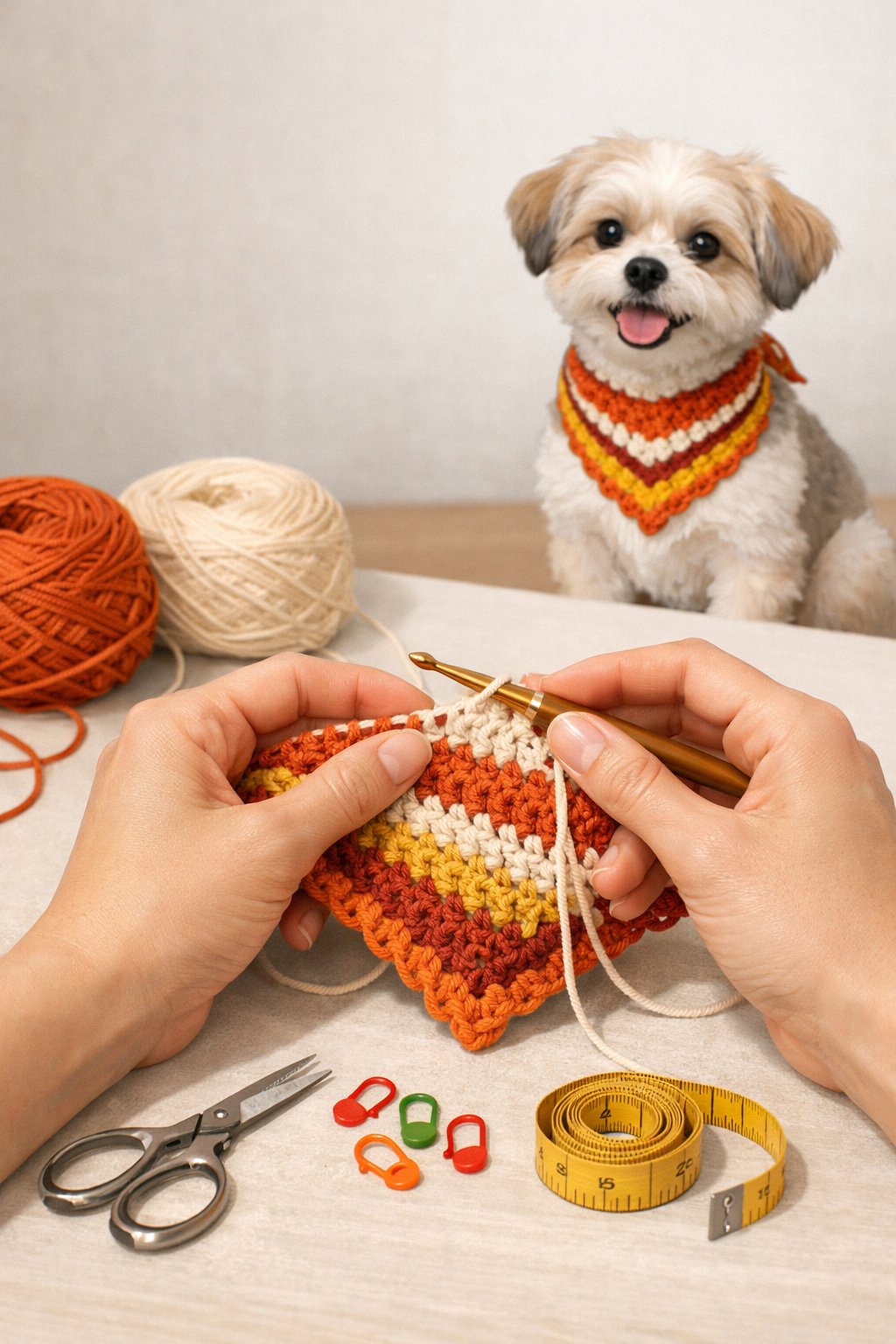
A dog bandana uses a simple triangle shape and basic stitches. Many patterns work well for beginners and finish fast. Most use worsted-weight yarn and a hook that matches the yarn label.
Start by making a slip knot and chaining a small number of stitches. The crocheter works from the tip of the triangle and adds stitches each row. This method creates a clean triangle that grows evenly.
Basic steps
- Chain to begin, then crochet into the chain.
- Increase stitches at each row edge to form a triangle.
- Stop when the bandana fits the dog’s neck width.
- Add short ties or a collar opening at the top.
Many patterns use single crochet or double crochet. Some use a simple repeat stitch, which keeps the work even and easy to count. The crocheter should keep edges straight by counting stitches each row.
Sizing guide
| Dog Size | Neck Width (approx.) |
|---|---|
| Small | 8–12 inches |
| Medium | 12–18 inches |
| Large | 18–24 inches |
After finishing the triangle, the crocheter fastens off and weaves in loose ends. Soft yarn works best to avoid rubbing the dog’s neck. The bandana should fit snug but never tight.
Crochet Dog Bandana Pattern – Easy & Cute!
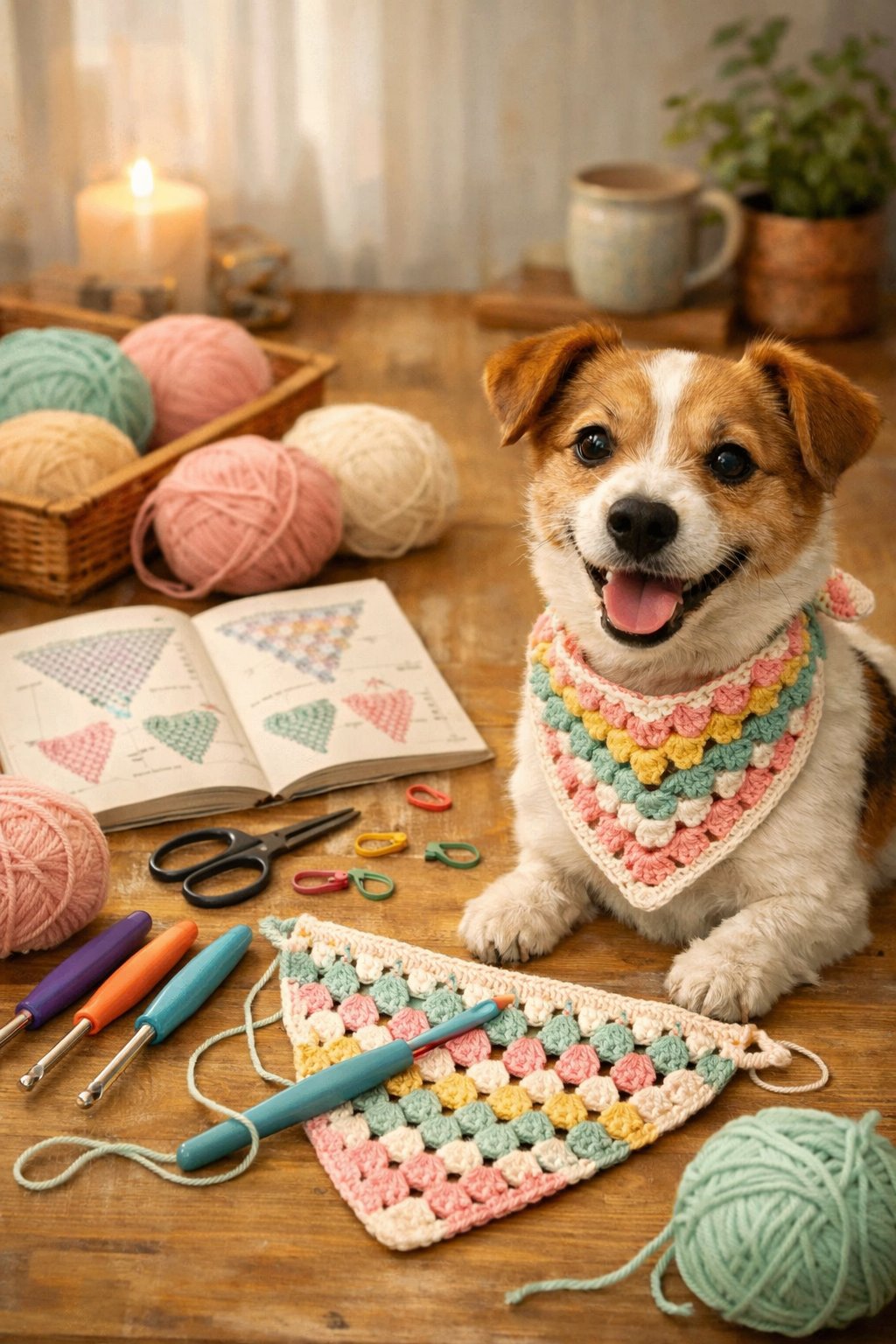
This easy crochet dog bandana pattern works well for beginners and quick projects. It uses simple stitches and clear shaping. Many makers finish one in a single evening.
The pattern usually starts at the tip of the bandana and grows wider with each row. Increases form a clean triangle that sits flat on the dog’s chest. Most versions tie around the neck or slide onto a collar.
Common stitches used
- Single crochet
- Half double crochet
- Double crochet
These stitches keep the fabric soft and flexible. They also make size changes easy.
Basic supplies
| Item | Notes |
|---|---|
| Yarn | Light to medium weight works best |
| Hook | Match the yarn label |
| Scissors | Sharp and small |
| Measuring tape | Helps with sizing |
Sizing matters for comfort. Makers often measure the dog’s collar and adjust the final row to match that length. Many patterns offer multiple sizes, from small dogs to large breeds.
Color choices add personality. Solid colors look clean, while stripes or simple color blocks add interest. Bright yarn works well for photos, but neutral tones suit daily wear.
This pattern stays practical and decorative. It creates a neat shape without extra bulk, so dogs can wear it during walks or events.
Free Dog Bandana Crochet Pattern
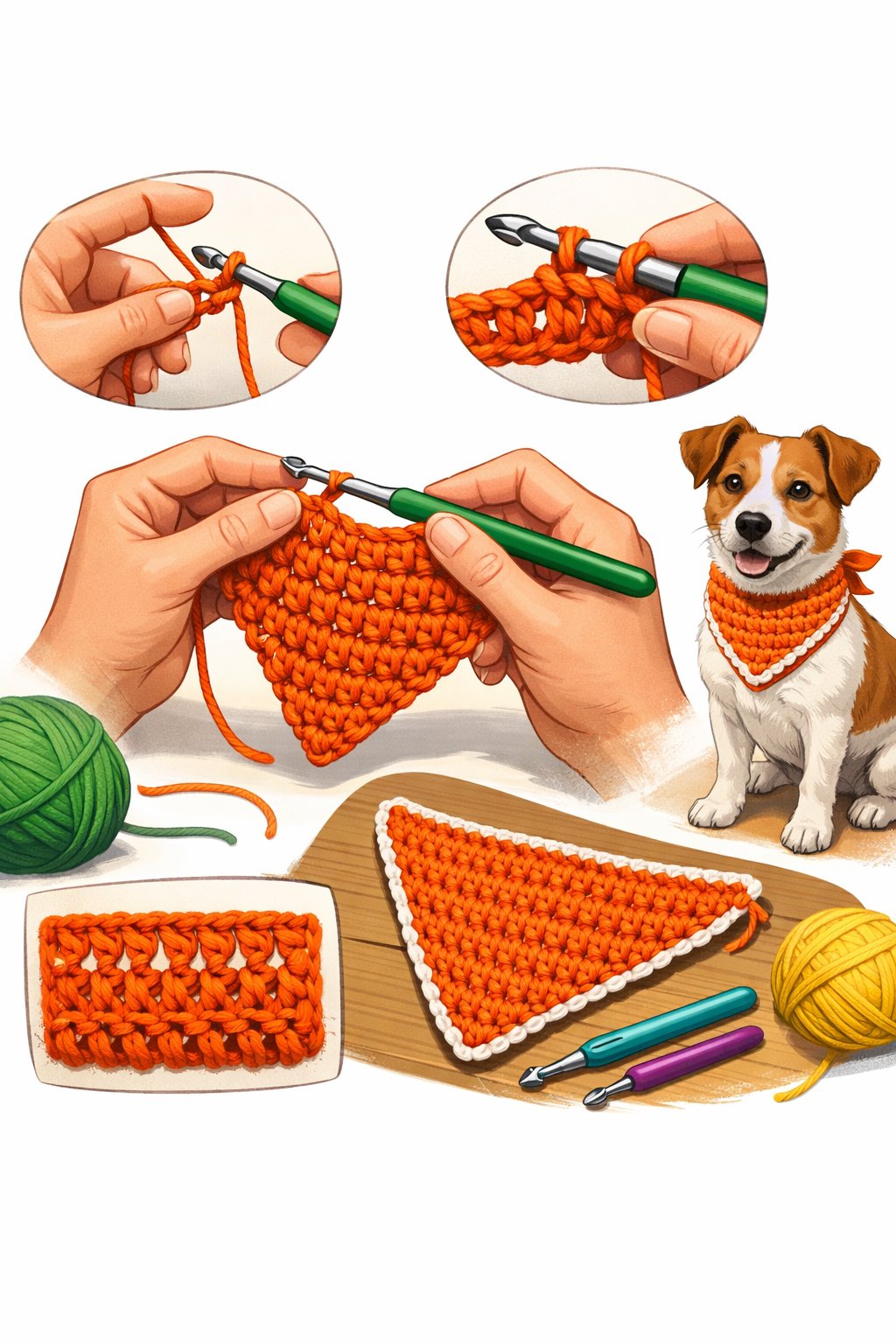
This free pattern creates a simple triangle bandana that slides onto a collar. It works for dogs and cats and finishes fast. The design uses basic stitches and clear sizing.
Materials
- Worsted weight yarn (#4)
- 5.0 mm (H) hook
- Scissors
- Tape measure
Stitches
- ch (chain), sc (single crochet), dc (double crochet)
Sizes
| Size | Collar Width | Bandana Width |
|---|---|---|
| Small | up to 1 in | 7–9 in |
| Medium | up to 1.5 in | 10–12 in |
| Large | up to 2 in | 13–15 in |
Pattern
- Ch 2. Work 2 dc in the second ch from the hook. Turn.
- Ch 2, 2 dc in the first stitch, dc across, 2 dc in the last stitch. Turn.
- Repeat Row 2 until the bandana reaches the target width for the size.
- Ch 1. Sc evenly along the top edge.
- Create a collar sleeve: ch to match the collar width, skip the same number of stitches, sc to the end.
- Fasten off and weave in ends.
The maker can swap dc for moss stitch or sc for a firmer look. Solid colors show clean lines, while stripes add contrast. Adjust rows to fit the pet’s chest without pulling.
Choosing Your Crochet Dog Bandana Pattern
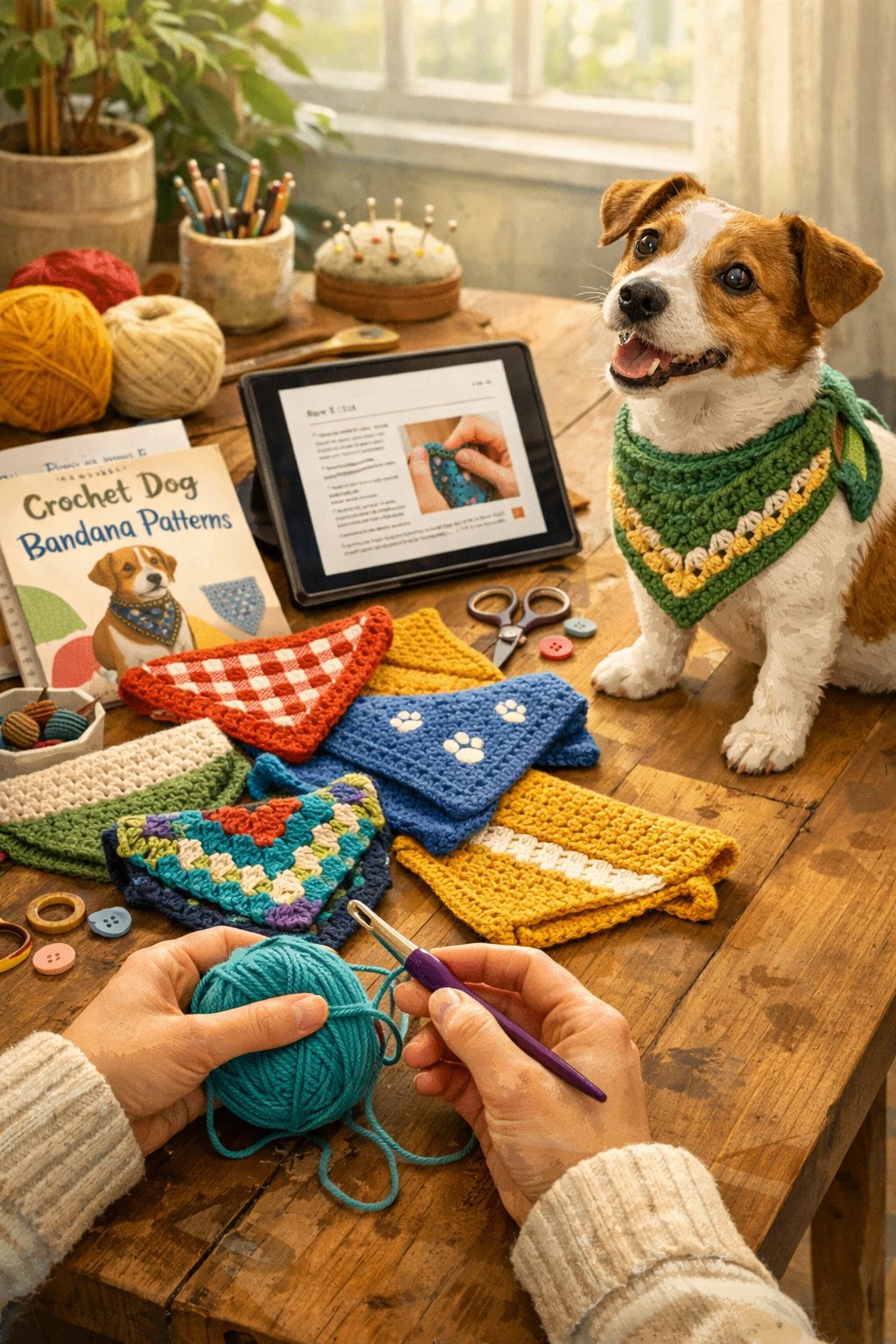
A good crochet dog bandana pattern matches the dog’s size, comfort needs, and the maker’s skill level. Style, shape, and construction all affect how the bandana looks and how easy it is to wear and clean.
Popular Bandana Styles
Most dog bandana patterns use a triangle shape because it sits flat on the chest and ties easily. Some designs slide onto a collar, which helps keep the bandana in place during walks. These styles work well for active dogs.
Pattern themes also matter. A plaid crochet dog bandana uses color changes for a classic look. A tuxedo dog bandana adds contrast edging for formal events. The lumina crochet dog bandana style often features clean lines and simple stitches for everyday use.
Many makers choose a free crochet pattern when testing a new style. Free crochet patterns often include common sizes and clear stitch counts. This makes it easier to adjust the fit.
Skill Levels and Pattern Complexity
Skill level should guide the pattern choice. An easy crochet dog bandana usually uses single or double crochet and simple increases. These patterns suit beginners and work up fast.
Intermediate patterns may include texture stitches, mesh, or colorwork. These add detail but require steady tension and stitch control. Some dog bandana crochet pattern designs also include i-cord ties or shaped edges.
The table below shows how complexity affects choice:
| Skill Level | Features | Best For |
|---|---|---|
| Beginner | Basic stitches, simple shape | First projects |
| Intermediate | Color changes, texture | Style variety |
| Advanced | Shaping, custom sizing | Precise fit |
Choosing the right crochet dog bandana pattern helps ensure a clean finish and a comfortable result.
Essential Materials and Tools
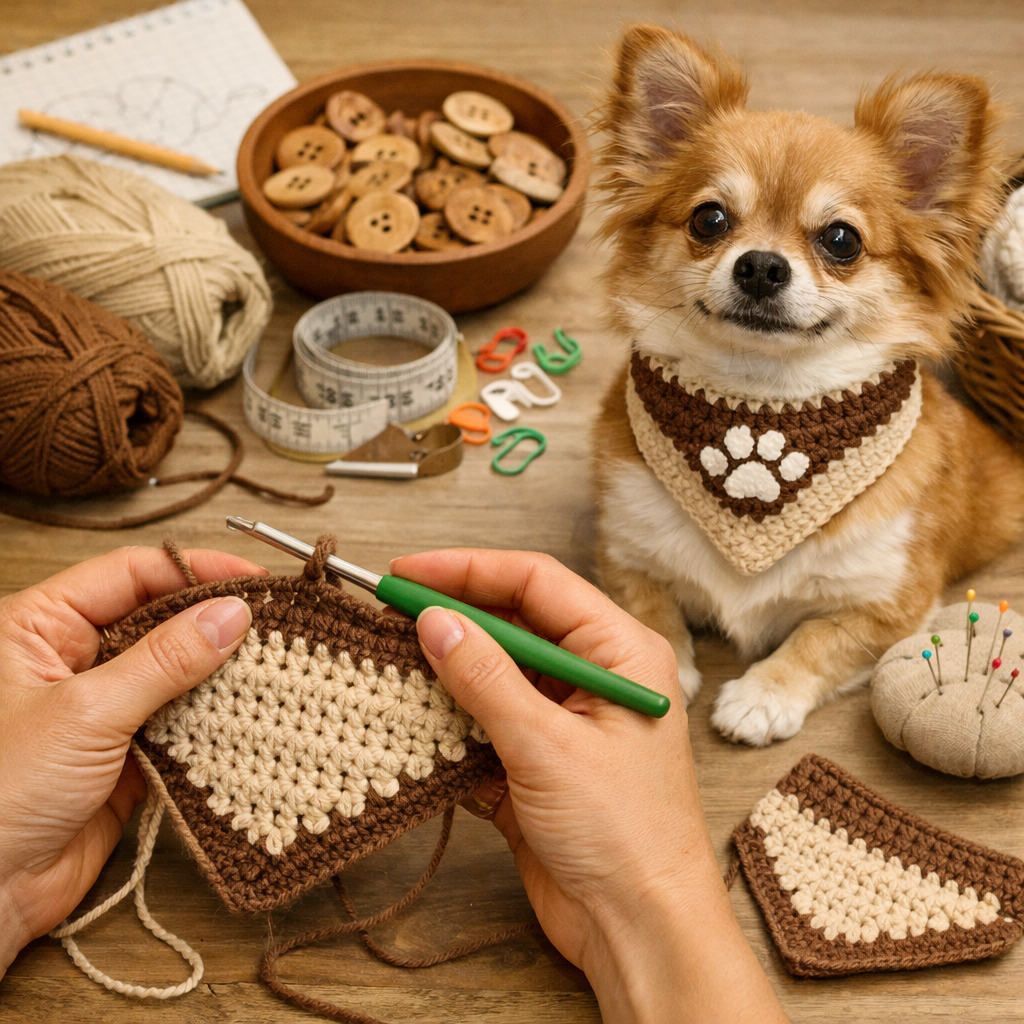
A well-made dog bandana depends on the right yarn and hook. Comfort, fit, and easy care matter more than looks alone. Simple tools also help keep the finished bandana neat and secure.
Recommended Yarns and Yarn Weights
Most dog bandanas work best with light to medium yarns. These yarns drape well and stay comfortable around a dog’s neck. Cotton and cotton blends hold shape, breathe well, and wash easily.
Acrylic yarn also works and costs less. It feels soft and comes in many colors. It may hold more heat, so it suits cooler weather better.
Common yarn weights
- DK (Weight 3): Light, flexible, good for small dogs
- Worsted (Weight 4): Most common, fits many sizes
- Bulky (Weight 5): Use with care; works for large dogs or stiff styles
Some crafters use Bernat Home Dec for large bandanas or display pieces. It creates a firm fabric but may feel too heavy for daily wear.
Avoid scratchy or fuzzy yarns. Dogs move and rub the fabric often.
Best Crochet Hook Sizes
Hook size affects stitch size and comfort. Most patterns pair yarn weight with a matching hook.
| Yarn Weight | Hook Size (US) | Metric |
|---|---|---|
| DK (3) | G–H | 4.0–5.0 mm |
| Worsted (4) | H–I | 5.0–5.5 mm |
| Bulky (5) | K | 6.5 mm |
A slightly larger hook creates a softer bandana. Tighter stitches may feel stiff.
Other helpful tools include scissors, a measuring tape, and a tapestry needle. The tapestry needle weaves in ends and secures corners cleanly.
How to Crochet a Dog Bandana: Step-by-Step Process

This process explains how a crochet dog bandana takes shape from the first row to the final tie points. It focuses on construction choices and clear shaping steps that help create a clean triangle that fits well.
Understanding Construction Methods
Most patterns use a triangle worked from the tip upward. This method lets the maker stop when the bandana matches the dog’s neck size. It also keeps the shape even on both sides.
Many start with a foundation single crochet instead of a long chain. This creates a stretchier edge and saves time. Others use a simple chain and work back across it.
Common methods include:
| Method | Why It Works |
|---|---|
| Tip-up triangle | Easy size control |
| Collar slide-on | Stays secure on walks |
| Ties or i-cords | Fits many neck sizes |
An easy crochet pattern often uses basic stitches like single or double crochet. This keeps the fabric soft and flexible, which matters for comfort.
Working Triangle and Shaping Techniques
Shaping controls how the triangle grows. Most patterns increase at both edges of each row. This keeps the sides straight and the point centered.
A common increase adds two stitches per row, one at each edge. The maker checks width often by laying the bandana against the dog’s collar. This avoids guesswork.
Many designs repeat the same row after the first few setup rows. That repeat builds size fast and reduces mistakes. Stitch markers help track edges and increases.
To finish, the maker adds short straps or cords at the corners. These attach directly to the triangle and complete the crochet dog bandana without extra sewing.
Customizing Size, Fit, and Design
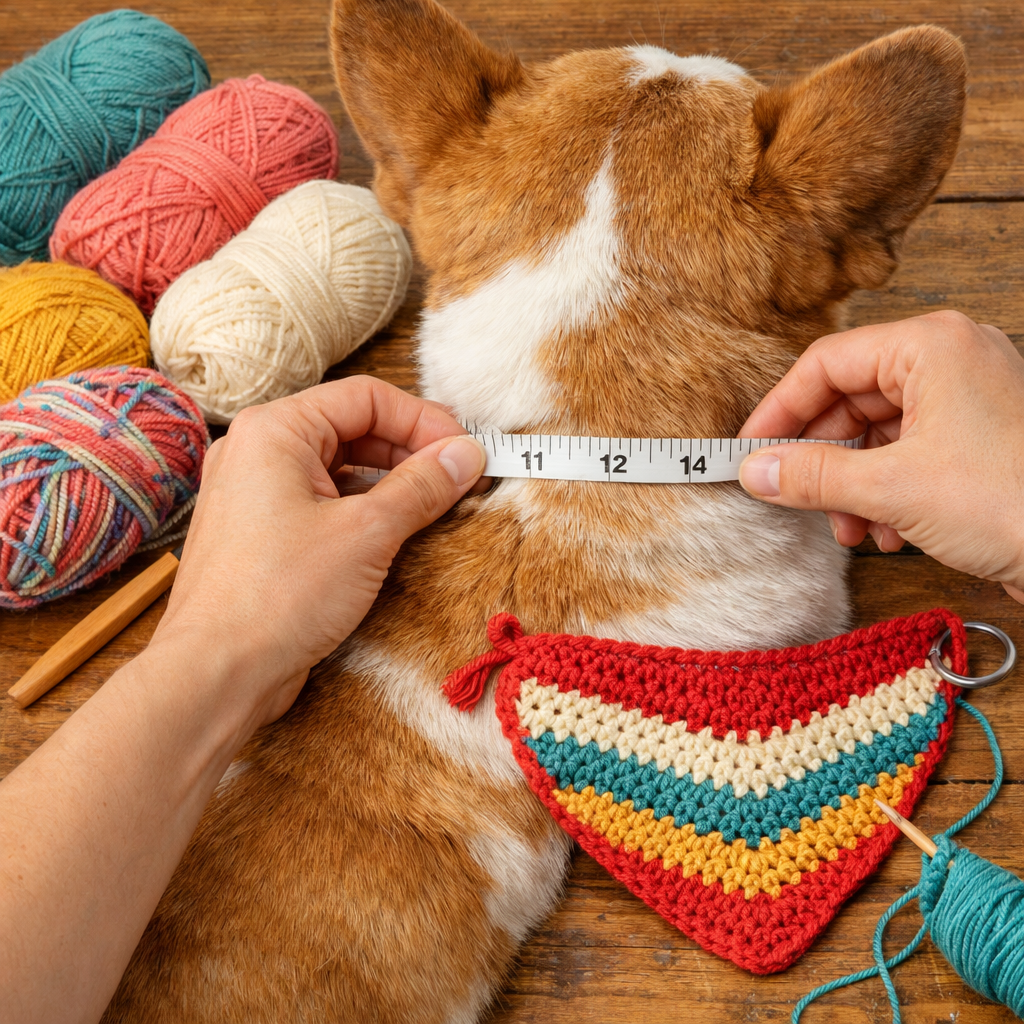
A good fit keeps the bandana safe and comfortable. Simple design choices also help match the bandana to the dog’s size, coat, and daily use.
Adjusting for Dog Neck Measurements
They should measure the dog’s neck before starting any dog bandana crochet pattern. Use a soft tape and measure where the collar sits. Add 1–2 inches for comfort and movement.
Most dog bandana patterns use a triangle shape. They can change size by adding or removing rows. More rows make a wider triangle and longer edge.
Common size guide
| Dog size | Neck size | Triangle width |
|---|---|---|
| Small | 8–12 in | 10–12 in |
| Medium | 13–18 in | 14–16 in |
| Large | 19–24 in | 18–20 in |
They can also adjust the tie method. Ties work well for growing dogs. Collar‑slide styles stay in place and suit active dogs.
Color Schemes, Stitches, and Embellishments
Color choice affects both style and function. Light colors suit summer and show dirt faster. Dark colors hide wear and work well for daily use.
Simple stitches keep the bandana flexible. Many dog bandana patterns use single crochet, double crochet, or granny clusters. Mesh or moss stitch adds airflow for warm weather.
They should keep embellishments minimal. Small borders, like a single crochet edge or picot trim, add detail without weight. Avoid buttons or beads. These can pose a safety risk.
Yarn choice matters as much as design. Soft worsted yarn works for most dog bandana crochet pattern projects. Washable yarn helps with frequent cleaning.
Finishing Touches and Care Instructions
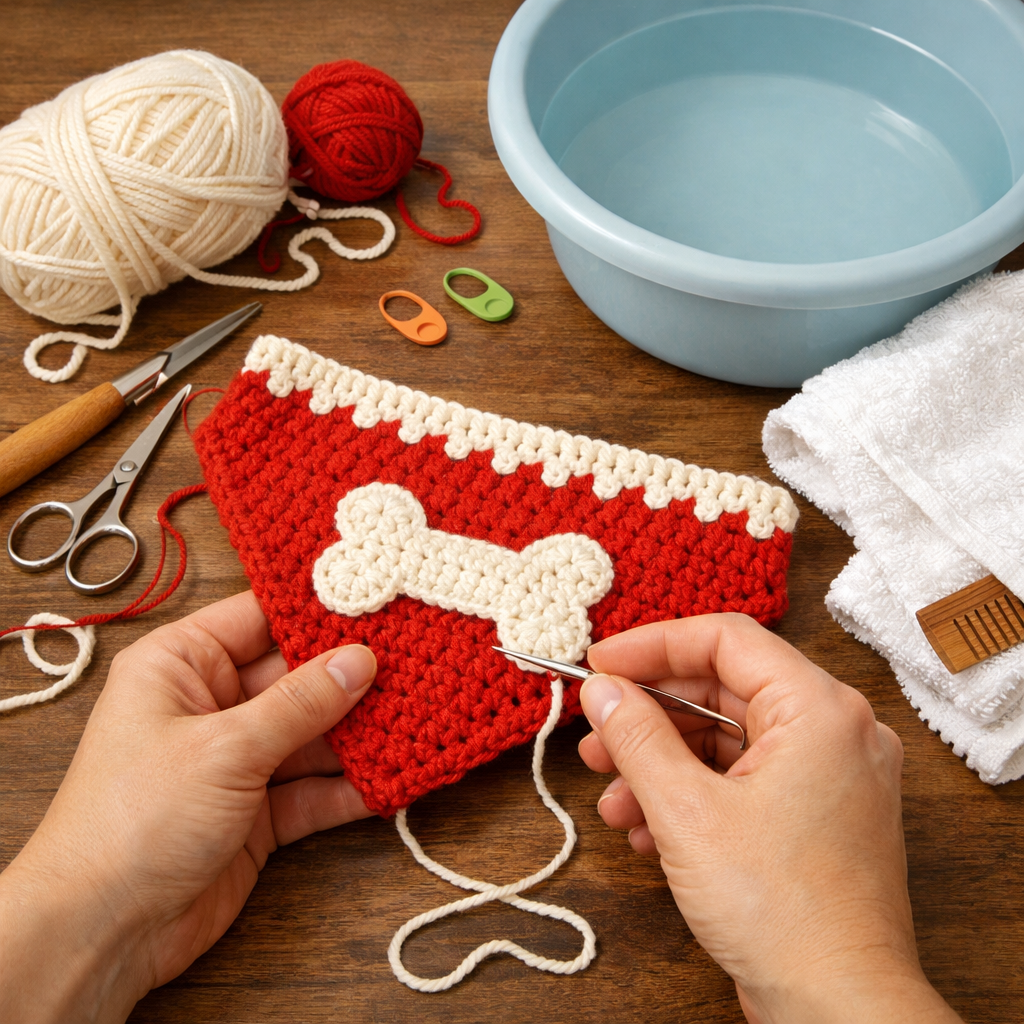
Clean edges and proper care help a dog bandana keep its shape and stay comfortable. Small steps at the end of the project also improve safety and wear over time.
### Blocking, Weaving Ends, and Final Assembly
After the last stitch, they should block the bandana to smooth the fabric and set the shape. Lightly wet the piece, then lay it flat on a towel. Pin the edges into a neat triangle and let it dry fully.
They should weave in loose ends using a tapestry needle. Run the yarn through several stitches on the back side, then trim close to the fabric. This step prevents unraveling and keeps the bandana flat.
For bandanas with ties or button loops, they should check the fit before final trimming. The bandana should sit flat without pulling at the neck.
Final checks before use:
- No loose ends or knots
- Smooth edges with no curling
- Secure ties or collar openings
### Proper Care and Washing Tips
Care depends on yarn type, but most dog bandanas need gentle handling. Cotton yarn works well because it handles frequent washing and stays breathable.
They should hand wash the bandana in cool water with mild soap. Gently squeeze out water without twisting. Lay it flat to dry to prevent stretching.
For machine washing, they should place the bandana in a mesh bag. Use a gentle cycle and cold water.
Basic care guide:
| Yarn Type | Wash Method | Dry Method |
|---|---|---|
| Cotton | Hand or gentle machine | Lay flat |
| Acrylic | Gentle machine | Lay flat |
They should inspect the bandana often. Remove it if stitches loosen or edges wear down.