
11 Things Not to Do With a French Bulldog

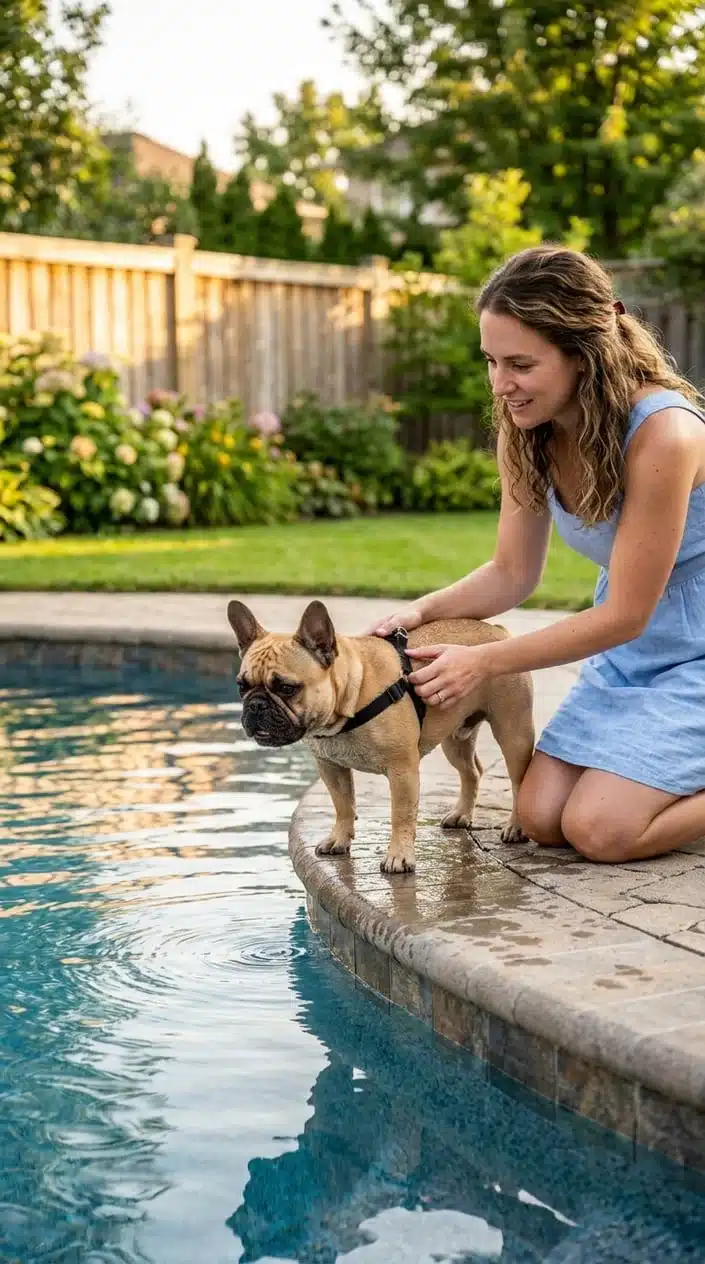
French Bulldogs are affectionate, playful companions, but their compact bodies and flat faces require more careful management than many owners expect. A choice that seems harmless for another dog—such as a long summer walk or unsupervised time near a pool—can be dangerous for a Frenchie.
This guide explains 11 things not to do with a French Bulldog, why each mistake matters, and what to do instead. It is designed to help you protect your Frenchie’s breathing, spine, skin, weight, confidence, and overall quality of life.
Quick Answer
Never overfeed a French Bulldog, leave them alone for excessive periods, ignore breathing or pain symptoms, overexercise them, use physical punishment, allow overheating, walk them on a collar that pressures the airway, encourage repeated high jumps, neglect skin folds, or permit unsupervised swimming. Their body structure makes these everyday mistakes unusually risky.
Why French Bulldogs Need Extra Care

French Bulldogs are brachycephalic, meaning they have shortened skulls and muzzles. Some develop brachycephalic obstructive airway syndrome (BOAS), which can cause noisy breathing, exercise intolerance, disturbed sleep, gagging, overheating, or collapse. The Royal Veterinary College explains that short-muzzled dogs have an increased risk of serious airway problems.
Frenchies can also be vulnerable to skin-fold disease, weight gain, spinal problems, eye injuries, and heat-related illness. These risks do not mean every French Bulldog is unhealthy, but they do make prevention and early veterinary care especially important.
1. Don’t Overfeed Your French Bulldog
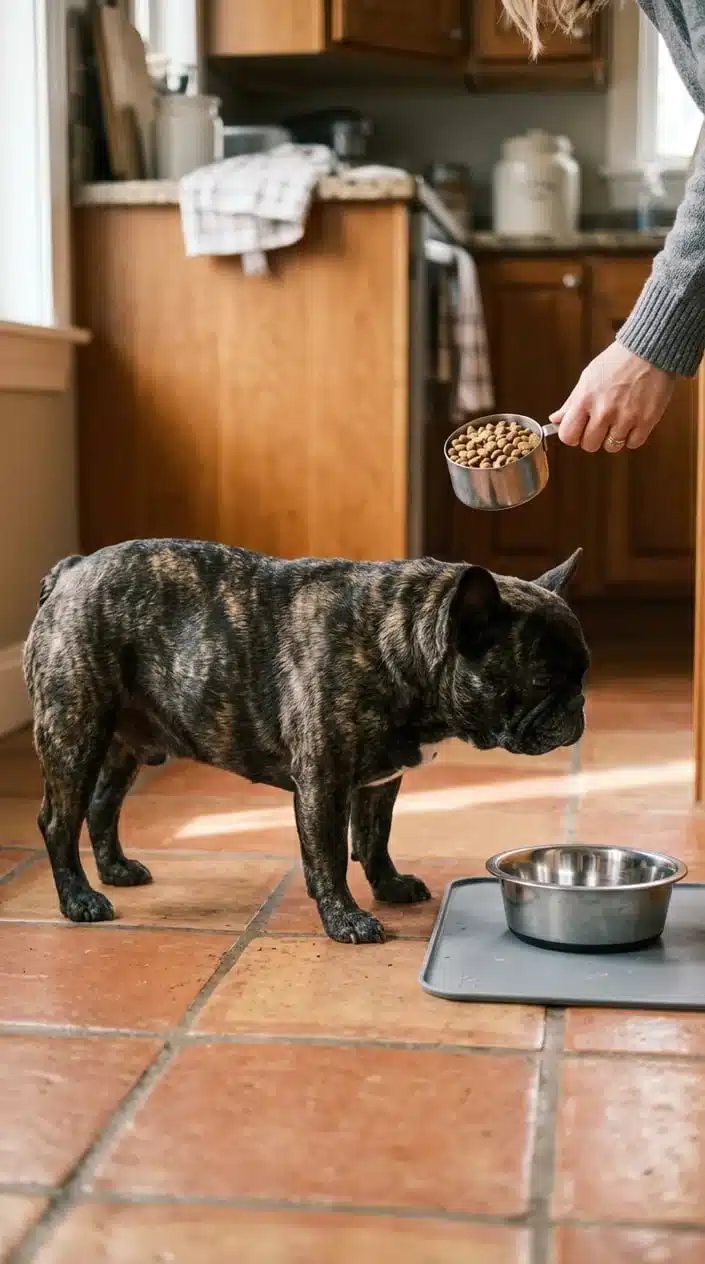
Extra weight places more demand on a Frenchie’s airway, joints, and spine. It can also reduce heat tolerance and make ordinary activity more tiring.
Free French Bulldog Care Tips Every Week!
Health, feeding, training and Frenchie secrets — straight to your inbox, completely free!
🔒 No spam. Unsubscribe anytime.
Avoid using a universal cup measurement from the internet. Calorie needs vary with age, body condition, activity, health, and the energy density of the food. Use the feeding guide as a starting point, measure portions accurately, include treats in the daily total, and ask your veterinarian to assess body condition.
You should normally be able to feel the ribs beneath a light layer of tissue and see a waist from above. If the ribs are difficult to feel or the waist has disappeared, arrange a weight and nutrition review rather than starting a crash diet.
Common Mistake
Table scraps, dental chews, training treats, and food-stuffed toys all count as calories. Small extras can become a large part of a Frenchie’s daily intake.
2. Don’t Leave Them Alone for Too Long

French Bulldogs were bred for companionship and often form strong attachments to their families. Long, sudden periods alone can contribute to boredom, distress, house-soiling, barking, destructive behavior, or separation-related anxiety.
There is no single safe time limit for every dog. A calm adult that has been gradually trained may cope better than a puppy, newly adopted dog, senior, or Frenchie already showing anxiety.
Build alone time in small steps. Provide a comfortable temperature-controlled area, fresh water, a safe enrichment activity, and an appropriate toilet break. If your dog pants, drools, vocalizes continuously, tries to escape, or destroys doors when alone, speak with your veterinarian or a qualified reward-based behavior professional.
3. Don’t Ignore Changes in Breathing, Movement, or Behavior
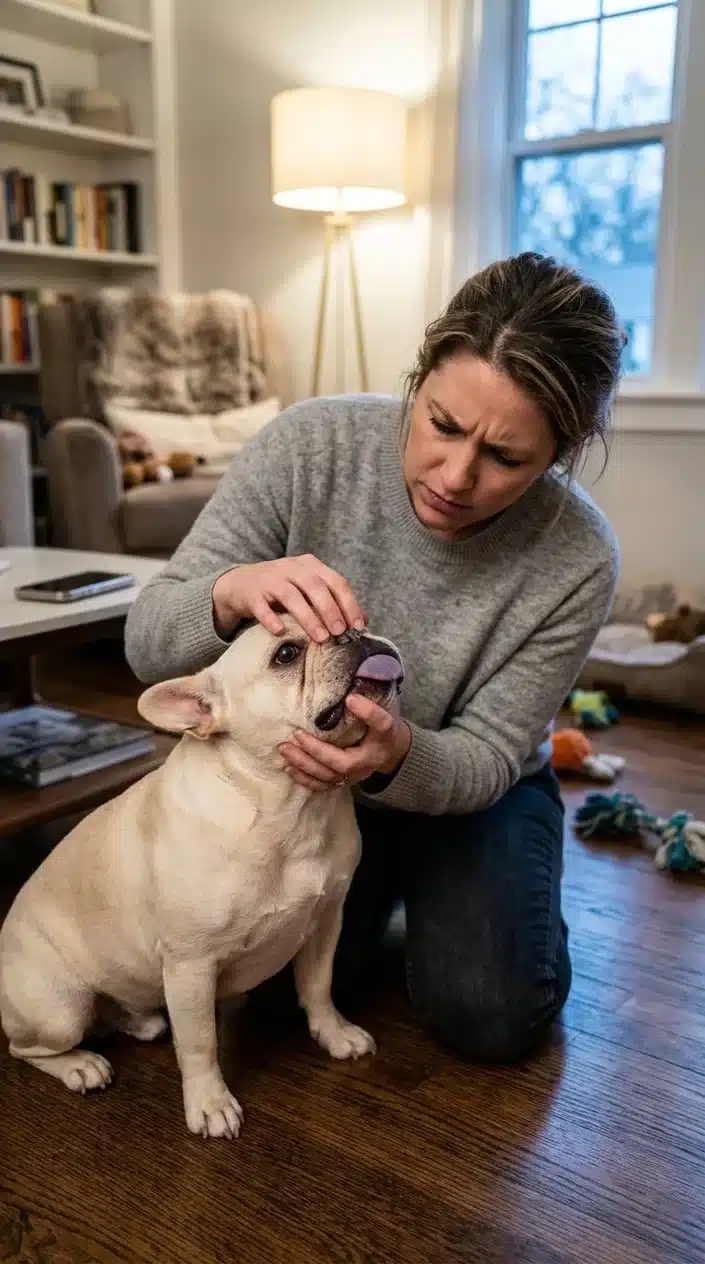
Snorting does not automatically mean a French Bulldog is comfortable. Persistent noisy breathing, sleep disruption, gagging, repeated regurgitation, exercise intolerance, blue or gray gums, or collapse warrants veterinary attention.
Also take sudden back pain, reluctance to jump, a hunched posture, weakness, dragging paws, or loss of bladder control seriously. French Bulldogs can develop spinal disease, and early assessment matters. Review our guide to French Bulldog IVDD signs so you know what requires prompt action.
Changes in appetite, sleep, tolerance of touch, or personality may be signs of pain rather than stubbornness. Do not mask symptoms with human medication; several common human pain relievers are dangerous to dogs.
When to Call the Vet
Contact a veterinarian promptly for worsening breathing, repeated vomiting or regurgitation, significant pain, sudden weakness, inability to walk normally, or a major behavior change. Blue or pale gums, collapse, severe breathing distress, or paralysis requires emergency care.
4. Don’t Overexercise Them
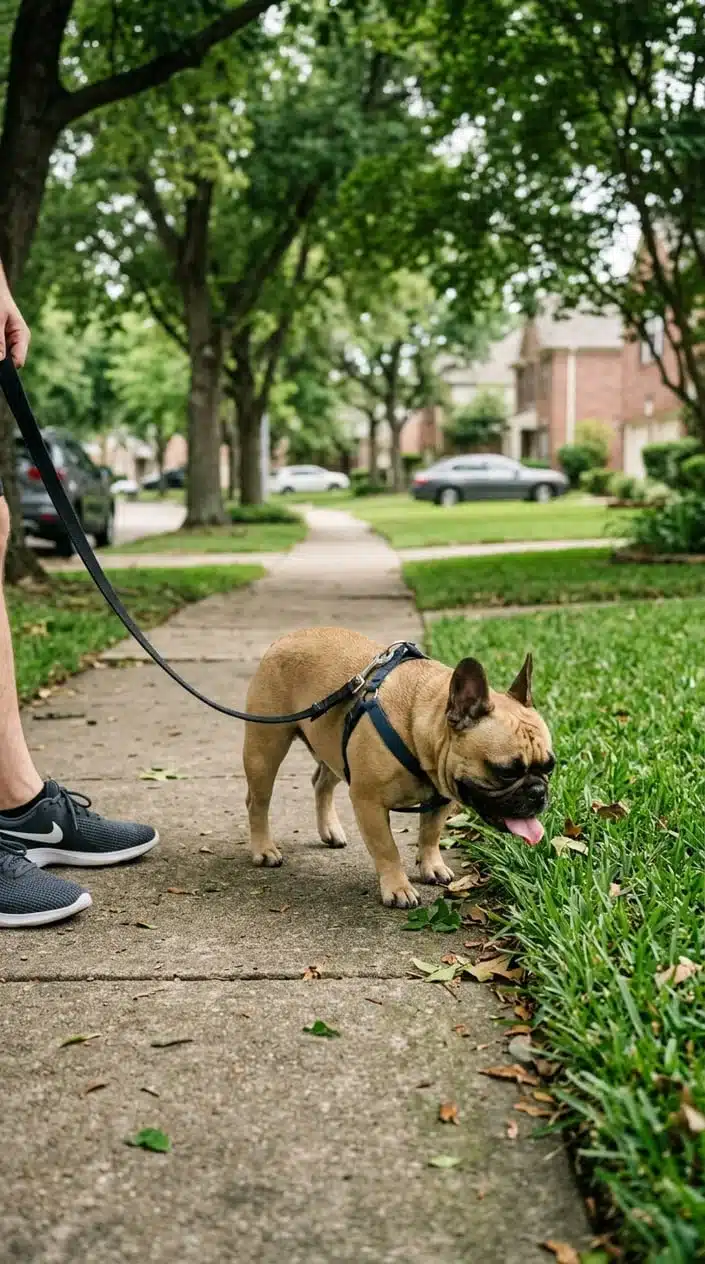
Frenchies need daily movement, mental stimulation, and opportunities to sniff, but they are not built for sustained running or intense exercise. The right amount depends on temperature, humidity, airway health, age, fitness, and body condition.
Choose shorter, relaxed walks and pause before your dog becomes exhausted. Let your Frenchie set a comfortable pace, carry water, and use sniffing games or indoor training for additional enrichment. Our detailed guide to French Bulldog exercise limits can help you build a safer routine.
Stop activity if breathing becomes much louder, the tongue grows unusually dark red or purple, your dog falls behind, seems disoriented, drools heavily, or cannot recover promptly after rest.
5. Don’t Skip Training and Safe Socialization
A small dog still needs life skills. Without patient training, a Frenchie may struggle with recall, leash walking, handling, visitors, other dogs, or being left alone.
Teach useful behaviors in short sessions using food, play, praise, and access to things your dog enjoys. Socialization should create positive, controlled experiences—not force a frightened puppy to tolerate overwhelming people, dogs, noises, or environments.
Training is also preventive healthcare. A dog that can calmly accept ear checks, fold cleaning, nail care, a harness, and veterinary handling is easier to examine and less likely to panic.
6. Don’t Use Physical Punishment or Aversive Tools
Hitting, yelling, alpha rolls, leash jerks, shock collars, choke chains, and prong collars can cause fear, stress, pain, and damage to the human-dog bond. They may suppress a warning signal without resolving the emotion driving the behavior.
The American Veterinary Society of Animal Behavior recommends reward-based methods for dog training and behavior modification. Reward the behavior you want, prevent rehearsal of unsafe behavior, and make tasks easy enough for your dog to succeed.
Growling should never be punished. It is valuable communication that a dog is uncomfortable. Create distance and seek professional help if your Frenchie shows fear, guarding, or aggression.
Don’t Do This
Never punish a Frenchie for growling, struggling to breathe, toileting from distress, or reacting from pain. Identify the cause and use veterinary or qualified behavior support.
7. Don’t Let Your French Bulldog Overheat
French Bulldogs cool themselves mainly through panting, but shortened airways can make that process less efficient. Heat risk rises with humidity, exertion, obesity, poor airway function, and lack of acclimation.
Never leave a Frenchie in a parked vehicle, conservatory, garage, or poorly ventilated room. Avoid midday exercise in warm weather, test hot pavement, provide shade and water, and move activity indoors when conditions are uncomfortable.
Early heat-stress signs include frantic panting, heavy drooling, restlessness, weakness, vomiting, diarrhea, confusion, or abnormal gum and tongue color. Move the dog to a cool area, begin cooling with cool—not ice-cold—water, use airflow, and contact an emergency veterinarian immediately. Do not wrap the dog in wet towels because they may trap heat as they warm.
Heat Emergency
Collapse, confusion, seizures, vomiting, severe breathing difficulty, or blue, gray, very pale, or dark-red gums can signal a life-threatening emergency. Start safe cooling while arranging immediate veterinary care.
8. Don’t Put Leash Pressure on Their Neck
A neck collar is useful for identification, but repeated pulling against it can place pressure on a Frenchie’s throat and airway. For everyday walks, use a well-fitted harness that does not restrict the shoulders or rub behind the front legs.
A harness is not a substitute for loose-leash training. Check the fit regularly, especially in growing puppies, and never leave a harness on an unsupervised dog where it could snag. If your Frenchie coughs, gags, or struggles to breathe during walks, stop and arrange veterinary advice.
9. Don’t Encourage Repeated Jumps From High Furniture
Jumping from beds, couches, vehicles, or steep stairs creates impact through the limbs and spine. One jump does not guarantee injury, but repeated high-impact movement is an avoidable risk—particularly for a dog with back pain, weakness, poor footing, or known spinal disease.
Use a stable ramp or low, nonslip pet steps where appropriate. Add rugs to slippery floors, lift your dog with one hand supporting the chest and the other supporting the rear, and block access when supervision is not possible.
If your Frenchie cries out, refuses stairs, arches the back, trembles, becomes unsteady, or drags a paw, restrict activity and contact a veterinarian. Read what to do when a French Bulldog develops back pain.
10. Don’t Neglect Skin Folds, Ears, Paws, or the Tail Pocket
Warm, moist skin folds can trap debris and develop irritation or infection. Check facial folds, ears, paws, and the tail area regularly, but do not overclean healthy skin or scrub it aggressively.
Use only veterinarian-approved products, keep moisture out of the ear canal unless using a recommended ear cleaner, and dry folds carefully. Redness, odor, discharge, pain, swelling, persistent licking, or dark debris deserves veterinary assessment.
Some Frenchies have a deep tail pocket that needs individualized care. If that area repeatedly becomes red or smelly, see our guide explaining why a Frenchie’s tail pocket keeps getting irritated.
11. Don’t Allow Unsupervised Swimming
Many French Bulldogs struggle to keep their nose and mouth above water because of their front-heavy build, short legs, and flat face. Even a confident Frenchie can tire or inhale water quickly.
Stay within arm’s reach around pools, lakes, boats, and beaches. Use a properly fitted canine life jacket with a sturdy grab handle, provide an easy exit ramp, and never assume shallow water is safe. Empty small paddling pools after use and secure home pools with a barrier.
Rinse off saltwater or pool chemicals and dry skin folds afterward. Coughing, labored breathing, unusual tiredness, or breathing changes after a water incident requires urgent veterinary advice.
French Bulldog Safety Checklist
Owner Checklist
- Keep your Frenchie lean and measure meals and treats.
- Use short, temperature-appropriate walks with plenty of rest.
- Choose a properly fitted walking harness.
- Learn your dog’s normal breathing sounds and recovery time.
- Prevent repeated jumps from high furniture and vehicles.
- Check and dry folds, paws, ears, and the tail pocket.
- Use reward-based training and gradual alone-time practice.
- Supervise every water activity and use a canine life jacket.
- Arrange veterinary care early when breathing, movement, or behavior changes.
Frequently Asked Questions
What Is the Biggest Mistake French Bulldog Owners Make?
Ignoring breathing and heat intolerance is one of the most dangerous mistakes. Loud breathing, poor exercise tolerance, disturbed sleep, gagging, or slow recovery should not be dismissed simply because flat-faced dogs are known to snore.
Can French Bulldogs Go on Long Walks?
Some fit, healthy Frenchies can enjoy longer relaxed outings in cool conditions, while others need much shorter walks. Distance is less important than breathing comfort, temperature, humidity, pace, and recovery. Never force a struggling dog to continue.
Is a Collar or Harness Better for a French Bulldog?
A flat collar can hold identification tags, but a well-fitted harness is generally the safer option for leash walking because it avoids concentrated pressure on the neck. It should allow comfortable shoulder movement and must not rub the skin.
Can French Bulldogs Swim With a Life Jacket?
A life jacket improves safety but does not make swimming risk-free. Keep your Frenchie within arm’s reach, choose calm conditions, limit the session, and provide an easy exit from the water.
Should French Bulldogs Be Allowed on the Couch or Bed?
They can enjoy furniture if access is controlled safely. Use stable nonslip steps or a ramp, discourage launching from height, and restrict access if your dog has back pain, weakness, or veterinary instructions to limit activity.
How Do I Know If My French Bulldog Is Overheating?
Watch for unusually intense panting, thick drool, weakness, confusion, vomiting, diarrhea, collapse, or abnormal gum and tongue color. Begin safe cooling and contact an emergency veterinarian; do not wait for severe signs to pass.
Final Takeaway
The most important things not to do with a French Bulldog all come back to the breed’s structure and temperament. Avoid excess food, heat, airway pressure, punishing training, uncontrolled jumping, neglected skin care, and unsupervised water access.
Learn what is normal for your individual dog and act early when breathing, movement, skin, appetite, or behavior changes. With thoughtful prevention, reward-based training, appropriate exercise, and regular veterinary care, your Frenchie can enjoy a safer and more comfortable life.
![How Many Puppies Do French Bulldogs Have [Clarified]](https://onlyfrenchbulldog.com/wp-content/uploads/2024/06/how-many-puppies-do-french-bulldogs-have-clarified_3151-768x550.jpg.webp)

![How To Potty Train A French Bulldog [Elaborated]](https://onlyfrenchbulldog.com/wp-content/uploads/2024/06/how-to-potty-train-a-french-bulldog-elaborated_3169-768x550.jpg.webp)


