
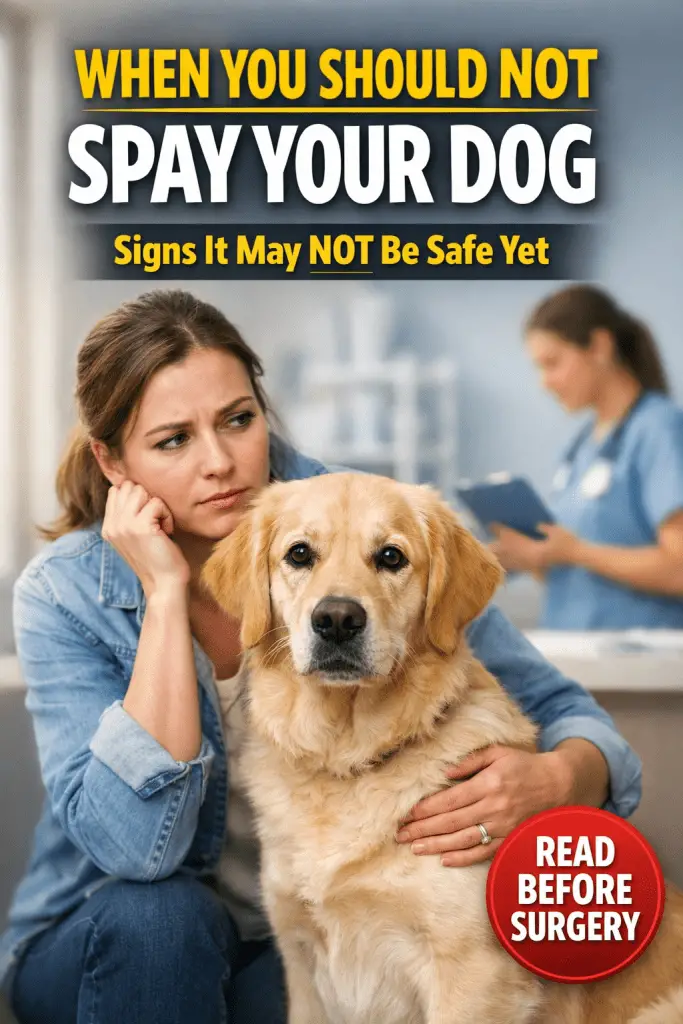
When You Should NOT Spay Your Dog — Warning Signs Every Owner Must Know

You love your dog and want to make the best health decisions for her. But when it comes to spaying, things can feel confusing. You might hear that every female dog should be spayed as soon as possible — yet then you see warnings about timing, health risks, or waiting for certain conditions. That uncertainty can feel stressful.
In my experience, many dog owners assume spaying is always the right choice at any time. The truth is more nuanced. There are situations where you should delay or avoid spaying, and understanding those situations helps you protect your dog’s long-term health.
This guide will walk you through exactly when you should not spay your dog, what risks to consider, and how to make a confident decision with your veterinarian. By the end, you’ll have clear, practical guidance you can trust.
When You Should Not Spay Your Dog?
You should not spay your dog when she is sick, too young or still developing, currently in heat (in many cases), pregnant, or has certain medical conditions that increase surgical risks. Timing and individual health factors matter more than many people realize.
Key situations where you should delay or avoid spaying:
- Your dog is currently in heat or recently finished heat
- She has an active illness or infection
- She is underweight, malnourished, or recovering from injury
- She has underlying health conditions (heart issues, clotting disorders)
- She is pregnant or suspected to be pregnant
- She is a large breed still growing and developing
- A veterinarian recommends waiting for medical reasons
Immediate tips:
- Always schedule a pre-surgical exam before spaying
- Track your dog’s heat cycle to choose the safest timing
- Ask your vet about breed-specific recommendations
NEXT POST: How Much Do Dogs Bleed During Their First Heat? (What’S Normal Vs Not)
Understanding Spaying And Why Timing Matters
Spaying (ovariohysterectomy) is the surgical removal of a female dog’s ovaries and usually the uterus. It prevents pregnancy and eliminates heat cycles.
While spaying offers major benefits — including reduced risk of uterine infections (pyometra) and mammary tumors — timing is everything.
Hormones play an important role in growth, bone development, and metabolism. Spaying too early or during the wrong physiological stage can sometimes increase risks.
According to the American Veterinary Medical Association (AVMA), decisions about spaying should consider breed, age, lifestyle, and health status, not just a fixed age recommendation.
Situations When You Should Not Spay Your Dog
1. When Your Dog Is Sick Or Recovering
Never schedule surgery if your dog is unwell.
Even mild illnesses can increase anesthesia risks and slow healing.
Avoid spaying if your dog has:
- Fever
- Vomiting or diarrhea
- Respiratory infection
- Skin infections
- Recent injury or surgery
Why this matters: Surgery stresses the immune system. A sick body struggles to recover.
Always wait until your vet confirms your dog is healthy.
2. During Or Immediately After Heat Cycle
Many vets prefer not to spay during heat unless medically necessary.
When a dog is in heat:
- Blood vessels around the uterus are enlarged
- Tissue is more fragile
- Bleeding risk increases
If you’re unsure about timing, learning the signs of a dog’s heat cycle helps you plan safely.
Most veterinarians recommend waiting 6–8 weeks after heat ends before surgery.
You can also monitor duration using guides like how long dogs stay in heat to better estimate safe timing.
3. When Your Dog Is Too Young Or Still Growing
Early spaying was once common at 4–6 months.
But research now shows growth hormones matter — especially for large breeds.
Spaying too early may increase risk of:
- Joint disorders
- Hip dysplasia
- Cruciate ligament tears
- Certain cancers in some breeds
Large breeds often benefit from waiting until skeletal maturity.
Small breeds usually mature earlier, so timing varies.
Always ask your vet about breed-specific timing recommendations.
4. If Your Dog Is Pregnant (Or Might Be)
Spaying a pregnant dog is possible medically, but it becomes more complex surgery.
Risks increase due to:
- Increased blood supply to reproductive organs
- Hormonal changes
- Longer recovery
If pregnancy is suspected, your vet may recommend ultrasound confirmation first.
Understanding dog pregnancy stages and symptoms can help you identify early signs.
5. Dogs With Certain Medical Conditions
Some health conditions require caution or delay.
These include:
- Heart disease
- Bleeding disorders
- Hormonal disorders
- Severe obesity
- Chronic illness
Your veterinarian may suggest stabilization first or alternative timing.
A pre-anesthetic blood test is often recommended to evaluate safety.
6. When Your Veterinarian Advises Waiting
Every dog is different.
Sometimes the safest decision is simply: wait.
Veterinary guidance considers:
- Breed risks
- Age
- Weight
- Medical history
- Lifestyle
- Reproductive history
Your vet’s recommendation should always outweigh general advice online.
Signs Your Dog Is Not Ready For Spay Surgery
Watch for these warning signs:
- Low energy or lethargy
- Poor appetite
- Weight loss
- Recent illness
- Abnormal discharge
- Heat cycle symptoms
- Behavioral stress
If you notice anything unusual, postpone surgery and consult your vet.
Common Mistakes Dog Owners Make
Spaying Without Checking Heat Timing
Many owners accidentally schedule surgery during heat.
Tracking cycles matters.
If you’re unsure, guides like how often dogs go into heat help estimate future cycles.
Ignoring Breed Differences
A Chihuahua and a Great Dane should not follow identical timing.
Size and genetics matter significantly.
Skipping Pre-Surgical Testing
Bloodwork helps detect hidden risks.
It’s worth the investment.
Assuming Earlier Is Always Better
This is outdated advice.
Modern veterinary research supports individualized timing.
Safety Considerations Before Spaying
Before surgery, prioritize safety:
Ask your vet these questions:
- Is my dog at a healthy weight?
- Is she currently in heat?
- Should we run blood tests?
- What anesthesia protocol will you use?
- How long is recovery?
Preparing your dog properly improves outcomes dramatically.
Caring For A Dog If You Delay Spaying
If you postpone spaying, management becomes important.
During heat cycles:
- Prevent contact with male dogs
- Use protective dog diapers if needed
- Monitor behavior closely
Helpful resources like caring for a female dog in heat provide practical support.
Some owners also use dog diapers during heat cycles to manage bleeding indoors.
When To See A Veterinarian Immediately
Seek veterinary help if your dog shows:
- Excessive bleeding during heat
- Fever
- Vomiting
- Lethargy
- Swollen abdomen
- Signs of pregnancy complications
These symptoms may indicate serious conditions like infection or pyometra.
According to the American College of Veterinary Surgeons (ACVS), pyometra is a life-threatening uterine infection that often requires emergency spay surgery.
Early treatment saves lives.
Expert Insight: Spaying Is A Medical Decision, Not A Rule
Dr. Margret Casal, veterinary researcher, has noted that optimal spay timing varies widely depending on breed and health factors.
There is no universal age that fits all dogs.
In my opinion, the best approach is personalized care guided by your veterinarian.
Frequently Asked Questions
Is It Ever Too Late To Spay A Dog?
No, healthy adult dogs can still be spayed safely. However, risks may increase with age, so veterinary evaluation becomes more important.
Can A Dog Be Spayed While In Heat?
Yes, but many vets prefer waiting because bleeding risk is higher. It depends on medical necessity and veterinarian experience.
Should I Let My Dog Have One Litter Before Spaying?
No medical evidence supports this idea. It’s a common myth.
What Is The Safest Age To Spay?
It varies by breed and size. Small breeds often 6–9 months. Large breeds sometimes 12–18 months or later.
Always confirm with your vet.
Can A Dog Get Pregnant If Not In Heat?
Generally no, but timing confusion happens. Learn more about whether dogs can get pregnant outside heat to understand risks.
How Do I Know When Heat Is Fully Finished?
You can monitor physical and behavioral changes. A helpful guide on how to tell when a dog is done with heat explains this clearly.
Conclusion
Deciding when to spay your dog isn’t always simple — and that’s okay.
The most important thing to remember is this:
There are real situations when you should delay or avoid spaying, especially if your dog is sick, in heat, still growing, pregnant, or has medical concerns.
Good timing protects your dog’s safety and long-term health.
If you’re unsure, talk openly with your veterinarian. Ask questions. Share concerns.
You’re not just making a medical decision — you’re caring for a family member.
And that means you’re already doing the right thing. 🐾