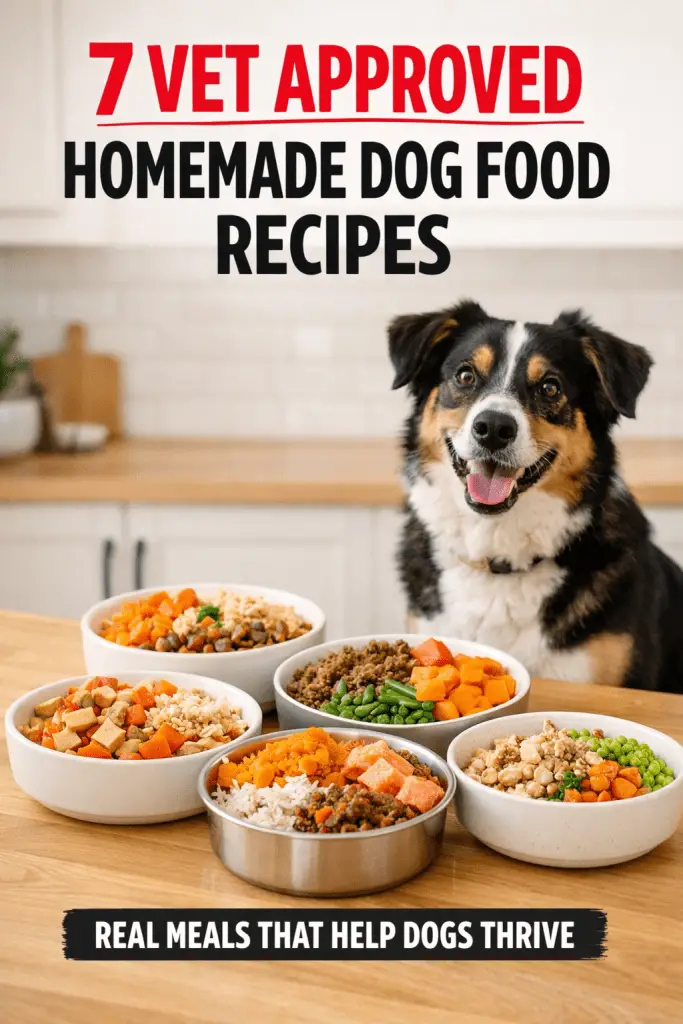
7 Vet Approved Homemade Dog Food Recipes For A Thriving Pup

Many dog owners feel frustrated and confused when it comes to feeding their dogs. You read labels on commercial dog food, and half the ingredients sound unfamiliar or questionable. Maybe your dog has low energy, digestive issues, itchy skin, or just doesn’t seem excited about meals anymore. The biggest problem is not knowing what food is truly healthy, safe, and balanced for your dog.
I’ve spent years researching dog nutrition, testing homemade recipes, and talking to veterinarians about what really works. I think many dog parents genuinely want to do better, but they feel overwhelmed by conflicting advice online. In my opinion, homemade dog food can be a game-changer—when it’s done correctly and approved by vets. I’ve personally seen dogs become more energetic, happier, and healthier with the right meals.
That’s exactly why this article exists. By the end of this guide, you’ll have clear, vet-approved homemade dog food recipes that are simple, balanced, and safe. You won’t be guessing anymore. You’ll know exactly how to feed your pup in a way that supports long-term health and happiness.
Why Vet-Approved Homemade Dog Food Matters
Not all homemade dog food is healthy by default. Dogs need specific nutrients in the right balance, not just tasty ingredients.
Common Problems with Non-Balanced Homemade Diets
- Missing essential vitamins and minerals
- Too much protein or fat
- Calcium and phosphorus imbalance
- Digestive upset over time
Vet-approved recipes solve these problems by ensuring proper nutrition.
FYI: Vets approve recipes based on nutritional balance, not trends.
Key Nutrients Your Dog Needs to Thrive
Before jumping into recipes, it helps to understand what makes dog food truly healthy.
Essential Nutrients in Homemade Dog Food
- Protein: Muscle health and energy
- Healthy fats: Skin, coat, and brain support
- Carbohydrates: Digestive health and fuel
- Calcium: Bone strength
- Vitamins & minerals: Overall immune support
IMO, balance matters more than fancy ingredients.
7 Vet Approved Homemade Dog Food Recipes
Each recipe below is simple, nutritious, and vet-approved when fed in appropriate portions.
1. Chicken and Rice Comfort Meal
A gentle, digestion-friendly option.
Ingredients
- Cooked chicken breast (boneless, skinless)
- White rice
- Carrots
- Fish oil supplement
Steps
- Boil chicken until fully cooked.
- Cook rice separately.
- Steam carrots until soft.
- Mix all ingredients and add fish oil.
Best for: Sensitive stomachs and recovery meals.
2. Beef and Sweet Potato Power Bowl
Packed with energy and nutrients.
Ingredients
- Lean ground beef
- Sweet potatoes
- Green beans
- Calcium powder
Steps
- Brown beef thoroughly.
- Boil sweet potatoes until soft.
- Steam green beans.
- Combine and sprinkle calcium.
Key benefit: Sustained energy and muscle support.
3. Turkey and Quinoa Balanced Plate
A lean protein alternative.
Ingredients
- Ground turkey
- Quinoa
- Spinach
- Olive oil
Steps
- Cook turkey fully.
- Prepare quinoa according to instructions.
- Lightly steam spinach.
- Mix and drizzle olive oil.
Great for: Weight management.
4. Fish and Pumpkin Digestive Support Meal
Excellent for gut health.
Ingredients
- Cooked salmon
- Pumpkin puree (plain)
- Brown rice
- Fish oil
Steps
- Bake or steam salmon.
- Cook brown rice.
- Mix with pumpkin and oil.
Bold takeaway: Pumpkin helps regulate digestion naturally.
5. Lamb and Brown Rice Nourishment Bowl
Ideal for dogs with food sensitivities.
Ingredients
- Lean ground lamb
- Brown rice
- Zucchini
- Calcium supplement
Steps
- Cook lamb thoroughly.
- Prepare rice.
- Steam zucchini.
- Combine and supplement calcium.
6. Egg and Vegetable Protein Boost
Simple and nutrient-dense.
Ingredients
- Eggs
- Cottage cheese
- Carrots
- Peas
Steps
- Scramble eggs fully.
- Steam vegetables.
- Mix with cottage cheese.
Best for: Active dogs needing extra protein.
7. Chicken Liver Nutrient Booster Meal
Rich in essential vitamins.
Ingredients
- Chicken liver
- Rice
- Carrots
- Multivitamin (vet-approved)
Steps
- Cook liver thoroughly.
- Prepare rice.
- Steam carrots.
- Mix and add multivitamin.
Important: Feed liver meals in moderation.
How to Transition Your Dog to Homemade Food
Switching too fast can cause stomach upset.
Safe Transition Steps
- Days 1–3: 75% old food, 25% homemade
- Days 4–6: 50/50 mix
- Days 7–9: 75% homemade
- Day 10+: Fully homemade
Slow changes = happy digestion.
Portion Control and Feeding Tips
Portion size depends on:
- Dog’s weight
- Activity level
- Age
General rule:
- ½ to 1 cup per 10 pounds of body weight per day, split into meals.
Always monitor your dog’s weight and energy levels.
When to Talk to Your Vet
Homemade food is powerful, but professional guidance matters.
Talk to your vet if your dog:
- Has allergies
- Has kidney or liver issues
- Is a puppy or senior
A vet can adjust recipes for your dog’s specific needs.
Frequently Asked Questions
1. Are vet-approved homemade dog food recipes safe long-term?
Yes, when balanced correctly, vet-approved homemade diets can support long-term health and vitality.
2. Can puppies eat homemade dog food?
Puppies have unique nutritional needs. Homemade food is possible, but it must be vet-formulated for growth.
3. Do I need supplements with homemade dog food?
Most recipes require calcium and sometimes multivitamins to stay nutritionally complete.
4. How often should I rotate recipes?
Rotating every 1–2 weeks helps prevent nutrient gaps and keeps meals interesting.
5. Is homemade dog food better than commercial food?
Not always—but high-quality, vet-approved homemade food often offers better ingredient control and freshness.